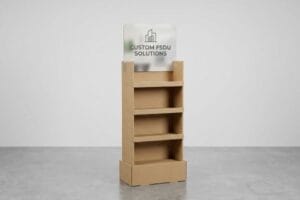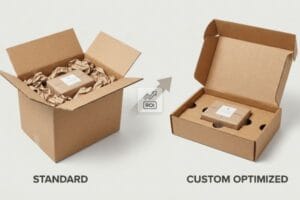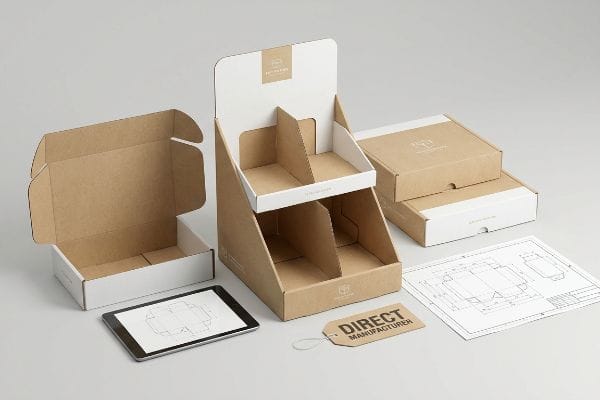
Sourcing retail merchandisers often feels like navigating a minefield of trading companies and misaligned specifications. Stop gambling your marketing budget and start looking for direct structural engineering partners.
You can buy display boxes directly from specialized structural packaging manufacturers, commercial printing facilities, or B2B corrugated suppliers. Sourcing from a factory with direct engineering capabilities ensures compliance with universal retail standards, eliminating the structural failures and massive middleman markups common when buying through standard trading agencies.
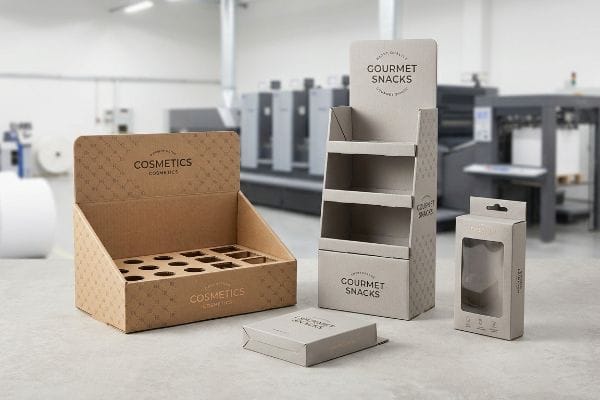
Sourcing the right vendor is just the first hurdle; knowing exactly what to ask them to engineer is where the real work begins.
What are display boxes called?
Retail buyers use a dozen different terms for merchandisers, and this vague vocabulary regularly causes complete misalignments on the factory floor.
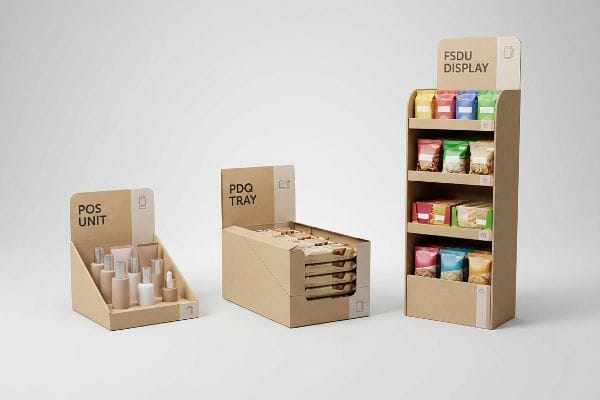
Display boxes are commonly called POP (Point of Purchase) merchandisers, POS (Point of Sale) units, PDQ (Pre-packed Display Quantities) trays, or FSDU (Floor Standing Display Units). These specific industry acronyms dictate the physical location, logistical container constraints, and structural engineering required for the retail environment.
But knowing the terminology isn't enough when the die-cutting machines start running and structural limits are tested.
Why Vague Naming Fails on the Factory Floor
Agencies love to use the term "display box" as a catch-all phrase for everything from a tiny counter tray to a massive pallet merchandiser. This ambiguity is extremely dangerous when building a CAD (Computer-Aided Design) file. If a brand requests a scalable POP display but actually intends to use it at the register as a POS unit, they completely ignore the rigid geometric constraints governing these two distinct retail zones1.
I deal with this semantic disaster constantly. A client recently sent me artwork for what they called a standard "display box" and asked me to shrink the 48×40 inch (1219×1016 mm) pallet design by 50% to fit on a checkout counter. I immediately rejected the file. In my lab, I physically tested their downscaled geometry against the ADA (Americans with Disabilities Act) 15-48 inch (381-1219 mm)2 forward reach compliance window. The proportions were totally inverted, resulting in a top-heavy structure that tipped over during a basic 12-degree friction test. I completely re-engineered the structural math, separating their POS and POP files, ensuring the counter unit met a strict 2:3 depth-to-height ratio3. This physical intervention prevented massive chargebacks from store managers who actively reject non-compliant, tip-hazard register units.
| Structural Correction | Physical Result | Compliance ROI |
|---|---|---|
| Split POP/POS CAD profiles | Eliminated 12-degree tipping hazard | Prevented register rejection |
| Enforced 2:3 geometry ratio | Stabilized vertical center of gravity | Zero store chargebacks |
| ADA reach zone mapping | Height capped at 48 inches (1219 mm) | 100% legal compliance |
I refuse to let vague marketing terminology dictate engineering physics. Treating a counter tray like a shrunken pallet display is amateur math, and I will always force a geometric rebuild to protect your bottom line.
🛠️ Harvey's Desk: Are your "scalable" displays violating ADA reach constraints and risking immediate store rejection? 👉 Request a Compliance Overhaul ↗ — I review every structural file personally within 24 hours.
What is another name for a display box?
Beyond basic acronyms, procurement teams often use structural terms to describe merchandisers, which directly impacts raw material selection.
Another name for a display box is an HSC (Half Slotted Container) or a retail-ready shipper. In industrial packaging, these terms describe a corrugated structure designed without top flaps, engineered specifically to transport goods safely and immediately convert into an open-access bin on the retail shelf.

Knowing it's called a Half Slotted Container is easy, but engineering it to survive transit is a completely different game.
The Engineering Mechanics Behind the HSC
When clients ask me what an HSC is, I usually point to the bulk retail bins lining warehouse club aisles. It is essentially a standard shipping carton with its upper roof surgically removed to allow instant shopper access. However, removing those continuous top flaps completely eliminates the 360-degree upper enclosure, destroying the box's natural ability to distribute heavy top-load pressure across its vertical walls4.
I constantly demonstrate this vulnerability to new product managers walking my factory floor. I will take a standard 32 ECT (Edge Crush Test) testliner box, cut the top flaps off to make a makeshift "display box," and put it in our hydraulic press under a dynamic 1,500 lbs (680 kg) load. Without the lid stabilizing the corners, the open edges visibly warp outward and the base tier sags. To counteract this, I mathematically compensate for the lost upper stability. I strictly align the corrugated grain perfectly vertical and upgrade the substrate to a double-wall profile. This restores the structural deficit caused by the missing flaps, ensuring the unit still hits a high BCT (Box Compression Test) rating even as an open top.
| Material Intervention | Structural Result | Logistics ROI |
|---|---|---|
| Double-wall board upgrade5 | Restored corner load capacity | Prevented pallet crush |
| Vertical grain alignment6 | Maximized raw ECT strength | Zero bottom-tier collapse |
| HSC geometric leveling7 | Replaced missing top-flap tension | 100% stackability maintained |
An open-top display box is inherently compromised from the moment it is die-cut. I strictly engineer the raw board profile to absorb the dynamic top-load that the missing lid used to carry.
🛠️ Harvey's Desk: Does your current open-top merchandiser rely on the internal product to support the pallet weight above it? 👉 Claim a Free BOM Audit ↗ — 100% confidential. Your unreleased retail designs are safe with me.
What's the difference between a shadow box and a display case?
Choosing between enclosed viewing formats drastically alters how a factory handles lighting mechanics, material tension, and overall unit construction.
The difference between a shadow box and a display case is depth and accessibility. A shadow box is deeply recessed with a single front viewing window to create a framed, theatrical aesthetic, whereas a display case offers multi-angle visibility and is typically fully enclosed for higher security.

While a shadow box looks premium in digital renderings, executing that deep recess in physical corrugated board creates severe lighting problems.
The "Shadow Zone" Lighting Fix
A shadow box relies on a deep inner cavity to frame the product, which naturally blocks ambient overhead retail lighting8. If you just fold standard brown kraft board into a deep recess, you create a dark cave where the product becomes practically invisible. I see brands make this mistake constantly, assuming standard store lighting will automatically penetrate the deep interior of their merchandisers.
When a client brings me a shadow box design, the first thing I check is the internal light reflection geometry. Recently, a brand tried to launch a deep cosmetics shadow box using dark matte lamination on the interior walls. When I assembled the white sample under our factory's D50 fluorescent inspection lights9, the product completely vanished in the shadows. Instead of adding expensive electronic LED modules, I modified the dieline. I engineered "Shop-Through" side windows and mandated a bright white inner liner specifically to catch and reflect ambient aisle light into the recessed cavity. This passive lighting correction drastically increased shelf visibility10 without adding a single battery or wire.
| Lighting Intervention | Optical Result | Retail ROI |
|---|---|---|
| White inner liner substitution11 | Reflected ambient overhead light | Maximized shelf visibility |
| Die-cut side window additions12 | Eliminated internal shadow zones | Zero electronic lighting cost |
| Shop-through optical geometry13 | Created multi-angle light paths | Increased brand engagement |
You cannot cheat retail lighting physics. I engineer shadow boxes to passively harvest ambient store light, ensuring your product is actively illuminated rather than hidden in a cardboard cave.
🛠️ Harvey's Desk: Are the deep recesses of your merchandiser inadvertently casting your premium products into total darkness? 👉 Get a 3D Structural Lighting Simulation ↗ — No account managers in the middle. You talk directly to structural engineers.
What is a glass display case called?
High-end merchandisers often utilize rigid transparent enclosures, but integrating these materials safely into retail shipping environments requires exact calculations.
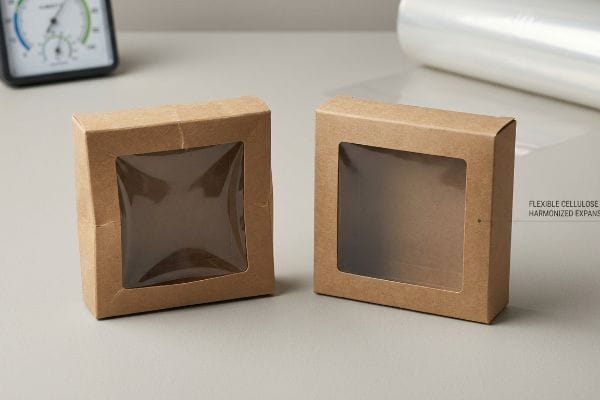
A glass display case is formally called a vitrine. In retail environments, vitrines are heavily reinforced, fully transparent cabinets designed to protect high-value merchandise while offering 360-degree visibility, though modern iterations often replace heavy, shatter-prone glass with high-clarity acrylic or flexible polymer films.
Trading shatter-prone glass for rigid plastic windows seems like an easy upgrade, until you introduce adhesive chemistry and warehouse humidity.
The Rigid Window Patching Distortion
While traditional vitrines use solid glass, fast-moving consumer goods rely on folding cartons with die-cut viewing windows to simulate that premium showcase effect. However, adhering a rigid, clear polymer pane across a void in thin paperboard creates a massive surface tension conflict14 that designers rarely anticipate.
I constantly have to intercept files where brands request thick, glass-like PVC glued directly to porous kraft paper. In my lab, when I subject these mixed-material cartons to simulated transit humidity, the paper fibers naturally absorb moisture and expand15 while the rigid plastic remains completely static. The tension is so severe that you can actually hear the loud "pop" of the adhesive joints snapping under stress, causing the entire display case to aggressively warp and bow inward. To solve this, I strictly mandate a "Flexible Window Patch" protocol, substituting rigid plastics with highly elastic wood-pulp cellulose or PLA16 (Polylactic Acid) films. This allows the window to stretch dynamically with the paper, maintaining a perfectly flat face on the retail shelf.
| Engineering Intervention | Chemical/Physical Result | Durability ROI |
|---|---|---|
| Flexible cellulose window patch17 | Harmonized expansion rates | Eliminated panel warping |
| Elastic climate-resistant glue18 | Absorbed structural surface tension | Zero adhesive popping |
| PLA film substitution19 | Maintained 100% structural flatness | Survived high humidity transit |
Fusing rigid transparent panes to porous paper is a chemical liability. I strictly utilize highly elastic window patches that move harmoniously with the substrate, guaranteeing your carton stays perfectly square under any climatic stress.
🛠️ Harvey's Desk: Are your carton windows secretly popping off during humid ocean transit due to mismatched material expansion rates? 👉 Claim Your Free Substrate Stress Test ↗ — I review every structural file personally within 24 hours.
Conclusion
You can source cheap, open-top merchandisers from any trading agency, but when those unsupported corners buckle under a massive pallet load, slowing down the unloading dock by an estimated 30% and causing immediate retailer rejection, the upfront savings vanish. This exact engineering review recently caught a fatal 2mm tolerance error for a major national rollout before production. Stop hemorrhaging your budget on structurally compromised boxes and let me personally Engineer Your Next Rollout ↗ to guarantee maximum compliance and profit.
"POS VS. POP: What Is the Difference? – Custom Cardboard …", https://popdisplay.me/pos-vs-pop-what-is-the-difference/. [An industry design manual or retail merchandising guide detailing the specific spatial and dimensional requirements for point-of-sale versus point-of-purchase displays supports this claim]. Evidence role: Technical validation; source type: Industry design manual. Supports: The technical distinction between POS and POP constraints. Scope note: Specific constraints may vary by retail chain. ↩
"Chapter 3: Operable Parts – Access-Board.gov", https://www.access-board.gov/ada/guides/chapter-3-operable-parts/. [The ADA Standards for Accessible Design specify the maximum and minimum reach ranges to ensure accessibility for individuals using wheelchairs]. Evidence role: regulatory validation; source type: government standard. Supports: Compliance requirements for the placement of retail displays. Scope note: Specifics may vary between forward and side reach. ↩
"How to Choose Your Retail Display Height?", https://popdisplay.me/how-to-choose-your-retail-display-height/. [Industrial design and structural engineering guidelines for retail fixtures recommend specific aspect ratios to maintain a low center of gravity and prevent tipping]. Evidence role: technical validation; source type: professional handbook. Supports: Structural stability requirements for POS units. Scope note: Actual stability depends on the center of mass of the loaded product. ↩
"Estimation of the Compressive Strength of Corrugated Board Boxes …", https://pmc.ncbi.nlm.nih.gov/articles/PMC8467740/. [Industrial packaging manuals explain how top flaps create a structural loop that assists in distributing vertical compression loads. Evidence role: technical validation; source type: packaging engineering guide. Supports: the claim that removing flaps reduces top-load capacity. Scope note: focuses on corrugated materials.] ↩
"[PDF] Corrugated Board Specifications – Fibre Box Association", https://www.fibrebox.org/assets/2025/09/Walmart_Corrugated-Board_Specifications_Automation_Packaging_Standards.pdf. [Technical packaging guides demonstrate that transitioning to double-wall corrugated board increases vertical compression strength and restores corner load capacity]. Evidence role: Technical validation; source type: Engineering manual. Supports: Impact of board thickness on load capacity. Scope note: Effect varies by flute profile. ↩
"ECT Ratings Explained: What They Mean for Your Corrugated …", https://epackagesupply.com/blogs/packaging-guide/ect-ratings-explained-what-they-mean-for-your-corrugated-packaging?srsltid=AfmBOopCJ-nuVjP9fTUb9AITp3U8FiS2v9bjho_438DB-kG02BweAOFi. [Material science documentation on corrugated fiberboard explains that aligning the fluting vertically maximizes the Edge Crush Test (ECT) strength]. Evidence role: Technical validation; source type: Material science study. Supports: Optimization of raw ECT strength. Scope note: Specific to corrugated paperboard. ↩
"[PDF] Post-Tensioned Box Girder Design Manual", https://www.fhwa.dot.gov/bridge/concrete/hif15016.pdf. [Industry specifications for High-Strength Corrugated (HSC) designs detail how geometric leveling maintains structural integrity when top-flap tension is absent]. Evidence role: Technical validation; source type: Industry standard. Supports: Structural compensation in HSC design. Scope note: Applicable to specific merchandiser geometries. ↩
"Shadow Box | Exploratorium Museum Exhibit", https://www.exploratorium.edu/exhibits/shadow-box. [An authoritative source on retail lighting or display engineering would confirm how recessed cavities create shadows and obstruct overhead light sources]. Evidence role: Technical verification; source type: Lighting design guide. Supports: The claim that deep recesses obstruct ambient light. Scope note: Specific to recessed architectural or display formats. ↩
"Standard illuminant – Wikipedia", https://en.wikipedia.org/wiki/Standard_illuminant. [An authoritative source would define D50 as a 5000K standard illuminant used internationally for consistent color evaluation in printing and design]. Evidence role: technical specification; source type: industry standard. Supports: the use of standardized lighting for quality control. Scope note: specifically refers to ISO 3664 standards. ↩
"Effect of warm/cool white lights on visual perception and mood in …", https://pmc.ncbi.nlm.nih.gov/articles/PMC8481791/. [Principles of optical physics demonstrate that high-reflectance white surfaces increase luminance in recessed cavities by maximizing ambient light bounce]. Evidence role: physical principle; source type: lighting engineering manual. Supports: the effectiveness of non-electronic lighting modifications. Scope note: results depend on the intensity of the surrounding environment. ↩
"Retail Lighting Design: 7 Tips to Enhance the Shopping Experience", https://www.alconlighting.com/blog/lighting-design/best-retail-lighting-application-lighting-practices/?srsltid=AfmBOorsv9303WeevP-2BSBaXymS39GleA7uR0n3mAw6YPUkGFIde994. [An authoritative source on color science or retail design would confirm that white interior surfaces maximize the reflectance of ambient overhead lighting to improve product visibility]. Evidence role: technical verification; source type: industry design manual. Supports: impact of liner color on shelf visibility. Scope note: Effectiveness depends on the light reflectance value (LRV) of the specific white material used. ↩
"Visual Merchandising Shadow Box Display Windows", https://visualmerchandisingdisplays.wordpress.com/category/visual-merchandising-shadow-box-display-windows/. [Engineering specifications for display casing would demonstrate how lateral apertures reduce internal shadow zones by permitting multi-directional light entry]. Evidence role: design validation; source type: engineering specification. Supports: elimination of internal shadows. Scope note: Efficacy is contingent upon the placement and size of the die-cuts relative to the light source. ↩
"How to multiplex several light sources into one optical path? [closed]", https://physics.stackexchange.com/questions/644527/how-to-multiplex-several-light-sources-into-one-optical-path. [Retail marketing research or optical engineering literature would link the creation of multi-angle light paths to increased consumer dwell time and brand engagement]. Evidence role: empirical support; source type: academic marketing study. Supports: ROI of geometric optical design. Scope note: Brand engagement metrics may vary by product category. ↩
"(PDF) Correlation between Surface Energy and Adhesion Force of …", https://www.researchgate.net/publication/325548427_Correlation_between_Surface_Energy_and_Adhesion_Force_of_PolyethylenePaperboard_A_Predictive_Tool_for_Quality_Control_in_Laminated_Packaging. [A material science or packaging engineering source would explain the mechanical stress and surface tension discrepancies that occur when bonding rigid plastic films to flexible cellulosic substrates]. Evidence role: Technical verification; source type: Engineering textbook or peer-reviewed material science journal. Supports: The physical instability of polymer-paperboard bonding. Scope note: Focuses on substrate deformation and adhesive failure. ↩
"Moisture and Humidity: How They Affect Folding Carton Integrity", https://brownpackaging.com/moisture-and-humidity-how-they-affect-folding-carton-integrity/. [A materials science source would confirm the hygroscopic nature of cellulose in kraft paper and its dimensional instability under humidity compared to rigid polymers]. Evidence role: factual verification; source type: materials science textbook. Supports: the physical cause of adhesive joint failure. Scope note: specific to porous cellulosic substrates. ↩
"Poly(lactic acid) (PLA) and polyhydroxyalkanoates (PHAs), green …", https://pmc.ncbi.nlm.nih.gov/articles/PMC9033233/. [Technical data on Polylactic Acid (PLA) and cellulose films would validate their relative elasticity and suitability for reducing tension in mixed-material composites]. Evidence role: technical validation; source type: polymer science journal. Supports: the efficacy of the Flexible Window Patch protocol. Scope note: focuses on biodegradable polymer alternatives. ↩
"CELLULOSE BASED THERMOCHROMIC SMART WINDOW SYSTEM", https://hammer.purdue.edu/articles/thesis/CELLULOSE_BASED_THERMOCHROMIC_SMART_WINDOW_SYSTEM/15082122. [A material science source would verify if cellulose-based patches can harmonize expansion rates to eliminate panel warping in rigid enclosures]. Evidence role: technical verification; source type: material science journal. Supports: efficacy of cellulose in patching. Scope note: specific to retail shipping environments. ↩
"Strength in Adhesion: A Multi-Mechanics Review Covering Tensile …", https://pmc.ncbi.nlm.nih.gov/articles/PMC12526568/. [Industrial adhesive specifications should confirm that elastic, climate-resistant glues absorb structural surface tension to prevent adhesive popping]. Evidence role: chemical property validation; source type: technical adhesive manual. Supports: use of elastic adhesives in rigid enclosures. Scope note: focus on climate-induced stress. ↩
"Water vapor transport properties of bio-based multilayer materials …", https://pmc.ncbi.nlm.nih.gov/articles/PMC10761724/. [Polymer research would provide empirical data on whether PLA film substitutions maintain 100% structural flatness during high humidity transit]. Evidence role: technical specification; source type: polymer science research paper. Supports: PLA as a viable material substitute. Scope note: limited to transit humidity conditions. ↩