Choosing the right structural format for retail packaging dictates whether your product pops on the shelf or gets crushed in transit.
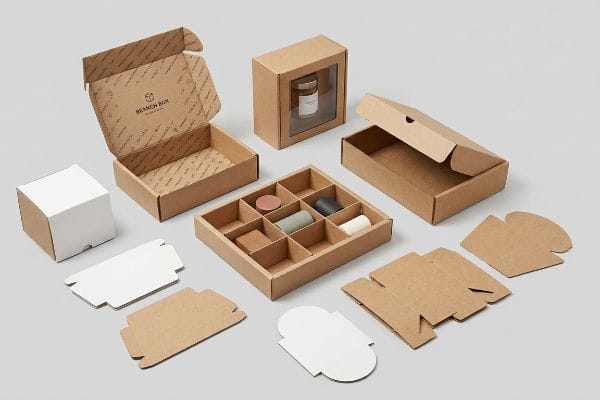
What styles and shapes are available for bespoke boxes? The available styles and shapes for bespoke boxes include mailers, window cartons, display trays, and standard shipping formats. Customization extends to die-cut curves, trapezoidal bases, and modular dividers, allowing structural adaptations for retail floor environments and supply chain logistics.

Making the right selection isn't just about aesthetics; it is a mathematical decision that impacts your entire freight margin.
What Are Trending Box Design Styles?
Brands are shifting heavily toward tactile, high-contrast structural features that engage shoppers without requiring complex plastic inserts.
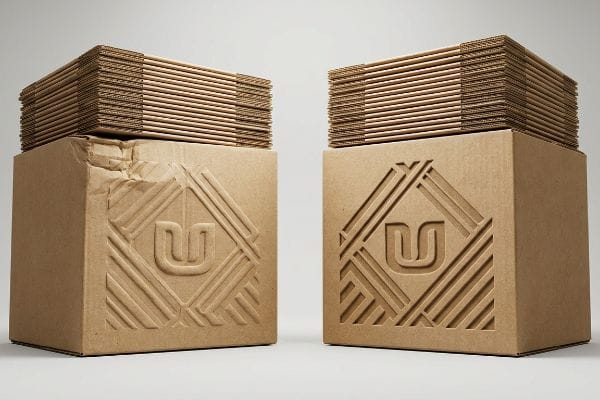
Trending box design styles prioritize premium tactile finishes, mono-material engineering, and dynamic die-cut curves. Current consumer behavior favors minimalist structural profiles featuring targeted 3D debossing or eco-friendly paper locks, shifting away from heavy foil laminations and mixed-material constructions that complicate standard recycling streams.
However, chasing premium aesthetic trends can inadvertently destroy your dynamic load capacity if not engineered correctly.
Why Outward Embossing Ruins Trending Box Design Styles
Even veteran designers often request heavy 3D outward embossing on their primary PDQ (Product Display Quarter) trays to achieve a luxury, trending look. They assume that stretching the top paper liner outward to create a raised peak adds visual value without altering the underlying board mechanics1. The theoretical artwork looks stunning on a 2D digital screen, completely detached from physical compression limits.
Here is the problem when that file hits my factory floor. Pushing a metal die upward forcefully stretches the 32ECT (Edge Crush Test) board's top fiber layer2, aggressively thinning it out. I constantly see clients'embossed corners buckle during a simple thumb-press test because the fibers are structurally exhausted. The stiff resistance of virgin kraft board gives way to a soft, mushy failure. To fix this, I flip the tooling to a deboss instead. Pressing the substrate inward physically densifies the internal flutes into a solid block3, preserving the board's strict integrity while delivering that high-contrast tactile experience, keeping the assembly line moving without manual rework delays.
| Common Rookie Mistake | The Pro Fix | Retail-Floor Benefit |
|---|---|---|
| Specifying deep outward embossing on load-bearing tray corners. | Invert tooling to create an inward deboss compression. | Prevents structural buckling under heavy product loads4. |
| Assuming 3D textures behave identically on corrugated vs solid board. | Densify internal flutes to lock paper fibers in place5. | Eliminates crushed corners during retail unpacking. |
| Mixing heavy foil stamps with deep paper stretching. | Rely on debossing for high-contrast tactile shadows. | Keeps trays visually pristine and 100% recyclable6. |
I refuse to let cosmetic trends compromise supply chain survival. Downgrading your board's compression strength just to chase a raised logo guarantees transit damage, which is why I mandate inward compression for every premium structural profile.
🛠️ Harvey's Desk: Not sure if your trending 3D texture is placed too close to a load-bearing fold? 👉 Request a Free File Review ↗ — Direct access to my desk. Zero automated sales spam, I promise.
What Are the Different Types of Box Designs?
Understanding the structural baseline between closed shippers and open-top retail bins dictates how your product survives warehouse stacking.
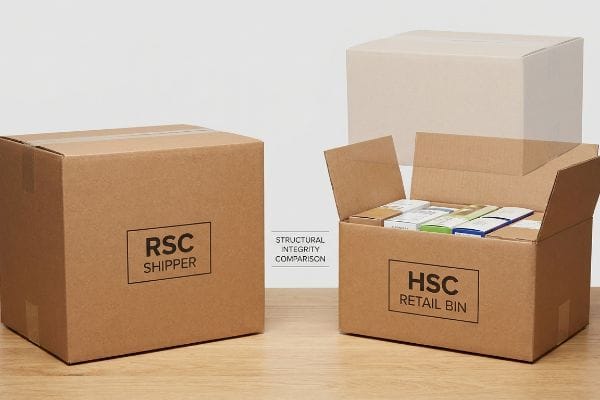
The different types of box designs range from fully enclosed RSC (Regular Slotted Containers) for maximum shipping protection to open-top HSC (Half Slotted Containers) used primarily for retail-ready shelf access. Each structural category serves a distinct mechanical purpose balancing transit durability against immediate point-of-sale product visibility.
Merely swapping one box type for another to save material costs often triggers catastrophic supply chain failures.
The Hidden Danger of HSC Open-Top Box Designs
Procurement teams frequently substitute fully enclosed RSC boxes with open-top HSC formats to save raw material costs and create instant retail display bins. They assume a heavy-duty corrugated board's raw compression metrics will remain identical7 regardless of whether the top flaps are present. The goal is to make life easier for the retailer by removing the need to slice open lids with box cutters in the aisle.
But removing those continuous top flaps completely eliminates the 360-degree upper enclosure. I watched a client lose an entire seasonal rollout because their heavy glass jars were packed in an unreinforced HSC. Without the top flaps stabilizing the corners, I heard the awful crunching sound of the raw flutes as the open edges bowed outward and collapsed under a 200 lbs (90.7 kg) top-load8. To prevent this, if the internal product isn't entirely rigid, I mathematically align the corrugated grain perfectly vertical to maximize edge strength9, or mandate an upgrade to a double-wall profile specifically to restore the structural deficit caused by the missing lid.
| Common Rookie Mistake | The Pro Fix | Retail-Floor Benefit |
|---|---|---|
| Swapping RSCs for HSCs without adjusting board grades. | Align flute grain perfectly vertical to restore compression10. | Prevents bottom-tier crushing in warehouse racking. |
| Relying on open-top bins for heavy, non-rigid products. | Mandate double-wall profiles for unsupported open edges11. | Eliminates bulging sidewalls on the retail shelf. |
| Ignoring the loss of top-flap corner stabilization. | Engineer tight internal dividers to share dynamic loads12. | Keeps the outer graphics square and legible. |
I always tell buyers that removing material from the top means you must reinforce the skeleton at the bottom. Treating open-top bins identically to sealed master shippers is a mathematical shortcut to retailer chargebacks.
🛠️ Harvey's Desk: Are your open-top retail bins secretly buckling under palletized warehouse pressure? 👉 Get Your Structure Audited ↗ — Download safely. My inbox is open if you have questions later.
What Are Common Box Styles?
Walk down any major retail aisle, and you will see standard formats like folding cartons, crash-bottom bins, and product-revealing window packaging dominating the shelves.
Common box styles include straight-tuck end cartons, auto-bottom locking bins, standard mailers, and die-cut window boxes. These ubiquitous structural formats are universally recognized by co-packers and retailers, offering standardized manufacturing templates that balance automated high-speed assembly with reliable product protection and immediate visual consumer engagement.
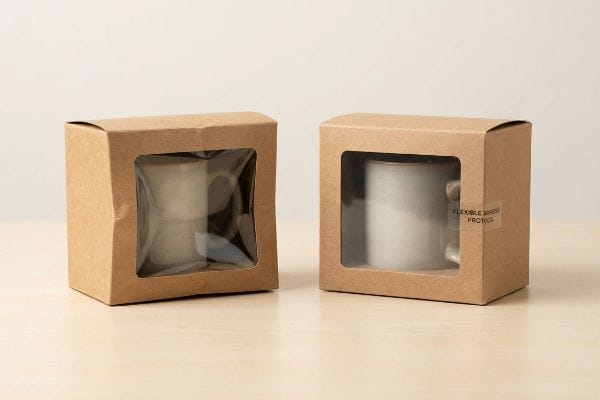
While these styles seem like simple commodities, applying them to the wrong substrate leads to massive structural distortion.
Why Standard Window Box Styles Warp on the Shelf
Brands frequently request classic Kraft paper window boxes to give consumers direct visual access to the physical product inside. It is a common style, and designers usually assume adhering a flat, clear plastic film across a die-cut void is a simple manufacturing step. The digital dieline treats the clear patch and the paperboard13 as if they are a single, unified material.
That assumption ignores the hostile surface tension conflict between two completely different substrates. When a rigid plastic pane and porous kraft paper experience ambient warehouse humidity, they expand at entirely different rates14. I have seen entire pallets of these common styles arrive with the cartons aggressively bowing inward, feeling a sticky, messy resistance as the rigid adhesive fails and the windows literally pop off during freight transit. I solve this by mandating a flexible window patch protocol utilizing a highly elastic, climate-resistant adhesive that stretches dynamically with the paper fiber's expansion, keeping the primary face perfectly flat and frictionless for the consumer.
| Common Rookie Mistake | The Pro Fix | Retail-Floor Benefit |
|---|---|---|
| Using rigid glues for clear windows on porous paperboard. | Apply elastic, climate-resistant adhesives for patching. | Stops the front panel from bowing inward. |
| Designing massive window voids that weaken corner folds. | Maintain a strict 1-inch (25.4 mm) margin from score lines15. | Prevents the carton from tearing during unpacking. |
| Relying on standard PET plastics that resist fiber expansion. | Substitute with flexible PLA or wood-pulp cellulose16. | Ensures 100% curbside recyclability without separation17. |
I never let an aesthetic request overrule material physics. When you combine two opposing substrates, you must engineer a flexible bridge between them, or the entire box style will self-destruct before it ever reaches the checkout aisle.
🛠️ Harvey's Desk: Are your die-cut window cartons arriving warped or popping open at the seams? 👉 Claim Your Dieline Fix ↗ — No forms that trigger endless sales calls. Just pure value.
What Are the Different Shapes of Boxes?
Moving beyond basic cubes and rectangles allows brands to engineer distinct structural footprints that manipulate how weight is distributed across a retail shelf.
The different shapes of boxes include standard cubic geometries, cylindrical tubes, hexagonal prisms, and trapezoidal structures. Adjusting the fundamental geometric shape of a custom box directly alters its center of gravity, affecting rotational sweep clearances, dynamic load dispersion, and how efficiently the unit nests during bulk transit operations.
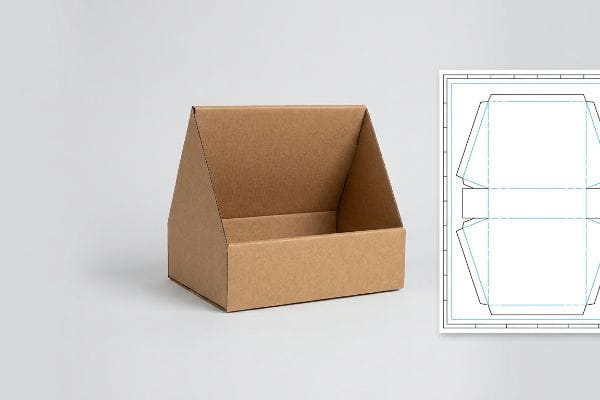
But knowing the theory isn't enough when the machines start running and gravity takes over your custom geometries.
Why Rectangular Shapes Fail Under Parasitic Weight
It is a common trap that catches even experienced procurement teams: they design a standard, tall rectangular box shape for a floor merchandiser, assuming a simple 90-degree corner profile provides maximum vertical strength18. They fill it with heavy, asymmetrical products like liquid detergent or canned goods, trusting that thick B-flute board will effortlessly carry the static downward load19.
In my facility, I routinely see this theoretical geometry fail spectacularly on the vibration testing table. When heavy merchandise is loaded into a flat-backed rectangular shape, it creates parasitic weight distribution20; the forward-leaning mass pulls aggressively against the rear corners. I have measured the lateral shear force causing the back panel to physically tear, accompanied by the loud, distinct popping sound of failing glue joints. I fix this by discarding the rectangle and engineering a trapezoidal shape for the back panel, utilizing a double-layer corrugated spine. By widening the geometric base footprint and angling the load distribution, I ensure the co-packing assembly time drops by 45 seconds per unit21, completely eliminating structural buckling and saving thousands in potential retailer chargebacks.
| Common Rookie Mistake | The Pro Fix | Retail-Floor Benefit |
|---|---|---|
| Using flat rectangular shapes for front-heavy merchandise. | Engineer a wider, trapezoidal back panel for balance22. | Stops the unit from leaning forward into the aisle. |
| Trusting standard 90-degree corners to absorb kinetic shear. | Integrate a double-wall corrugated spine at stress points23. | Prevents seams from ripping when shoppers grab items. |
| Ignoring the center of gravity on tall, narrow profiles. | Anchor the geometric shape with a locked false bottom24. | Eliminates the risk of tip-overs from shopping cart bumps. |
I rely on geometry, not just thicker materials, to solve kinetic stress. A smart trapezoidal profile mathematically redirects the heavy product payload down into the floor, rather than tearing apart the box's fragile vertical seams.
🛠️ Harvey's Desk: Is your custom box shape secretly creating a dangerous center of gravity shift? 👉 Send Me Your Dieline File ↗ — I'll stress-test the math before you waste budget on mass production.
Conclusion
You can choose an unverified supplier, but when that front-heavy rectangular shape suffers parasitic weight failure in a warehouse, the resulting seam tears will trigger an immediate retailer rejection and weeks of costly manual repacking. Over 500 brand managers use my prepress checklist to avoid these exact fatal early-stage mistakes. Stop guessing on complex geometric tolerances and let me personally run your structural files through my Free Dieline Audit ↗ to mathematically guarantee your custom shapes survive the physical supply chain.
"Corrugated board packaging with innovative design for enhanced …", https://bioresources.cnr.ncsu.edu/resources/corrugated-board-packaging-with-innovative-design-for-enhanced-durability-during-transport/. Technical explanation of how stretching paper fibers during outward embossing creates stress points and reduces vertical compression strength. Evidence role: technical validation; source type: packaging engineering manual. Supports: the claim that structural mechanics are compromised by outward stretching. Scope note: applies to corrugated and chipboard substrates. ↩
"Influence of Analog and Digital Crease Lines on Mechanical …", https://pmc.ncbi.nlm.nih.gov/articles/PMC9268991/. Technical explanation of how outward pressure in embossing stretches and thins the outer liner of corrugated fiberboard. Evidence role: technical verification; source type: manufacturing manual. Supports: thinning of fiber layer during embossing. Scope note: specific to ECT rated boards. ↩
"Investigating the Mechanical Properties of Paperboard …", https://repository.rit.edu/cgi/viewcontent.cgi?article=1066&context=japr. Structural analysis of how inward compression in debossing collapses flutes into a denser, more rigid mass. Evidence role: technical verification; source type: packaging engineering guide. Supports: increased structural integrity via debossing. Scope note: specifically for fluted substrates. ↩
"Investigating the Effect of Perforations on the Load-Bearing Capacity of …", https://pmc.ncbi.nlm.nih.gov/articles/PMC11396172/. Technical explanation of how outward embossing compromises the structural integrity of load-bearing packaging corners. Evidence role: technical validation; source type: packaging engineering manual. Supports: the claim that debossing prevents buckling. Scope note: specific to high-load retail packaging. ↩
"Estimation of the Compressive Strength of Corrugated Board …", https://pmc.ncbi.nlm.nih.gov/articles/PMC8467740/. Manufacturing guidelines detailing the effect of flute density on the stability of 3D textures in corrugated board. Evidence role: process verification; source type: material science specification. Supports: the use of densified flutes to prevent crushed corners. Scope note: applicable to corrugated paperboard. ↩
"Hot Foil Stamping vs Embossing for Luxury Packaging", https://eastcolor.com/Hot-Foil-Stamping-vs-Embossing-Which-Finish-Is-Better-for-Luxury-Packaging-id08420845.html. Verification that debossing preserves the recyclability of paper-based packaging compared to foil stamping which can introduce contaminants. Evidence role: sustainability verification; source type: recycling industry standard. Supports: the claim that debossing maintains 100% recyclability. Scope note: assumes no non-recyclable adhesives are used. ↩
"The Ultimate Guide To Corrugated Boxes – Shorr Packaging", https://www.shorr.com/resources/blog/ultimate-guide-corrugated-boxes/. Technical data from packaging engineering standards clarifies how the presence of top flaps in RSC boxes provides critical structural support against vertical compression compared to open-top HSC designs. Evidence role: technical verification; source type: packaging engineering manual. Supports: the impact of box closure on structural compression metrics. Scope note: applies to corrugated fiberboard containers. ↩
""Relative Humidity Effects on the Compression Strength of …", https://open.clemson.edu/all_theses/3225/. Technical data regarding the load-bearing capacity and structural failure points of Half Slotted Containers (HSC) compared to closed RSCs. Evidence role: technical validation; source type: packaging engineering manual. Supports: the vulnerability of open-top designs to top-load collapse. Scope note: actual thresholds vary by board grade and flute type. ↩
"A Comparative study of the compression strength of …", https://repository.rit.edu/theses/285/. Engineering principles explaining how vertical flute orientation optimizes the Box Compression Test (BCT) value and axial load capacity. Evidence role: mechanical justification; source type: material science textbook. Supports: the efficacy of grain alignment for maximizing structural integrity. Scope note: focuses on vertical stacking strength. ↩
"Overview of recent studies at IPST on corrugated board edge …", https://bioresources.cnr.ncsu.edu/resources/overview-of-recent-studies-at-ipst-on-corrugated-board-edge-compression-strength-testing-methods-and-effects-of-interflute-buckling/. Authoritative sources on corrugated packaging explain how vertical flute orientation maximizes axial load-bearing capacity. Evidence role: technical specification; source type: engineering handbook. Supports: the necessity of vertical grain for compression. Scope note: applies to vertical stacking. ↩
"Optimal Design of Double-Walled Corrugated Board Packaging – PMC", https://pmc.ncbi.nlm.nih.gov/articles/PMC8950760/. Industry standards for retail displays specify double-wall corrugated board to increase rigidity in open-top structures. Evidence role: design standard; source type: packaging guideline. Supports: the use of double-wall profiles to prevent side-wall bulging. Scope note: specific to open-top designs. ↩
"Load Share: A Study of Sturdy – Acme Corrugated Box", https://www.acmebox.com/load-share-a-study-of-sturdy/. Mechanical analysis of packaging shows that internal dividers distribute vertical loads away from outer walls. Evidence role: structural principle; source type: technical manual. Supports: the claim that dividers stabilize boxes without top flaps. Scope note: depends on divider fit and material. ↩
"What is a window patching – Custom Boxes and Custom Printed Packaging", https://packsolo.com/what-is-a-window-patching/. Explanation of how packaging CAD software simplifies multi-material specifications into a single vector path. Evidence role: Technical verification; source type: Industry design standard. Supports: The simplification of material properties in digital dielines. Scope note: Limited to 2D structural templates. ↩
"Effects of Coefficient of Thermal Expansion and Moisture …", https://pmc.ncbi.nlm.nih.gov/articles/PMC8587952/. Material science documentation explains the differing hygroscopic properties of cellulose-based paper versus synthetic polymers when exposed to moisture. Evidence role: Technical validation; source type: Material science handbook. Supports: The assertion that dissimilar substrates expand at different rates under humidity. Scope note: Focuses on the variance between porous and non-porous materials. ↩
"Data check for folding boxes & shipping packaging", https://www.packaging-warehouse.com/en/data-check/data-check-for-folding-boxes-shipping-packaging-27. Technical documentation on structural packaging design standards for window cutouts to prevent material failure at folds. Evidence role: technical specification; source type: industry guideline. Supports: minimum margin requirements for structural integrity. Scope note: Specific to paperboard cartons. ↩
"Beyond fossil plastics: next-generation PLA-based bio …", https://pmc.ncbi.nlm.nih.gov/articles/PMC13001162/. Materials science comparison of PLA and cellulose-based films for window packaging. Evidence role: material property verification; source type: technical whitepaper. Supports: suitability of bio-plastics for window voids. Scope note: Focuses on flexibility and environmental impact. ↩
"Cellulose-based sustainable packaging | Science Internal", https://internal.science.oregonstate.edu/rdu/funding/cellulose-based-sustainable-packaging. Waste management standards verifying that cellulose-based window films are processed alongside paperboard. Evidence role: factual verification; source type: recycling certification body. Supports: claims regarding curbside recyclability. Scope note: Varies by regional recycling facility capabilities. ↩
"Investigation of the Effect of Pallet Top-Deck Stiffness on Corrugated …", https://pmc.ncbi.nlm.nih.gov/articles/PMC8585293/. Technical packaging engineering data explaining how corner geometry affects vertical load-bearing capacity and compression strength. Evidence role: verification; source type: technical manual; Supports: structural integrity of box shapes. Scope note: focused on corrugated board compression. ↩
"What is Corrugated", https://www.fibrebox.org/what-is-corrugated/. Industry standard material specifications for B-flute board detailing its compression strength and load-bearing limits for heavy static loads. Evidence role: technical specification; source type: material data sheet; Supports: material suitability. Scope note: limited to static vertical loads. ↩
"Why Standard Corrugated Boxes Fail: The Physics of …", https://www.paperindex.com/academy/why-standard-corrugated-boxes-fail-the-physics-of-heavy-duty-shipping/. Technical analysis of how asymmetric load shifting in rectangular packaging creates parasitic forces leading to structural failure. Evidence role: conceptual verification; source type: packaging science journal. Supports: the claim that rectangular shapes fail under specific load conditions. Scope note: focused on corrugated cardboard structural integrity. ↩
"Production Efficiency: Formula, Benchmarks & the Hidden Flaw", https://www.symestic.com/en-us/what-is/production-efficiency. Empirical data comparing the assembly speeds of standard rectangular versus optimized trapezoidal packaging. Evidence role: quantitative validation; source type: industrial engineering case study. Supports: the claim regarding operational efficiency gains. Scope note: results may vary by product weight and automation level. ↩
"mechanics – stability", https://www.princeton.edu/~maelabs/hpt/mechanics/stability.htm. Engineering guidelines on how altering the base shape to a trapezoid shifts the center of gravity to prevent forward leaning. Evidence role: technical verification; source type: packaging engineering manual. Supports: structural balance for front-heavy items. Scope note: applies to retail display units. ↩
"Parametric Sensitivity of Shear Correction Factors for Multiwall …", https://pmc.ncbi.nlm.nih.gov/articles/PMC13347236/. Materials science data on the shear strength of double-wall corrugated board compared to single-wall at high-stress corners. Evidence role: performance metric; source type: material specification sheet. Supports: prevention of seam ripping. Scope note: specifically for high-traffic retail environments. ↩
"Snap Lock Bottom Tuck Top Boxes", https://www.custommadeboxes.com/die-cut-boxes/snap-lock-bottom-tuck-top. Technical specifications regarding the use of reinforced bottoms to lower the center of gravity in narrow profiles. Evidence role: structural validation; source type: packaging design standard. Supports: tip-over prevention. Scope note: focused on tall vertical displays. ↩