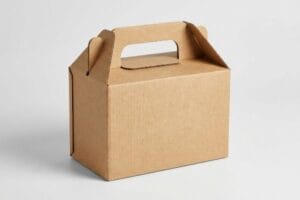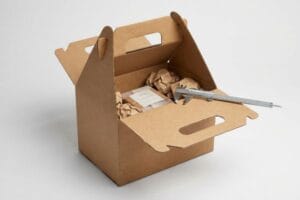
You launch a highly anticipated product, only to see its packaging crushed on the shelf. Choosing the right folding carton style isn't just about aesthetics; it dictates retail survival.
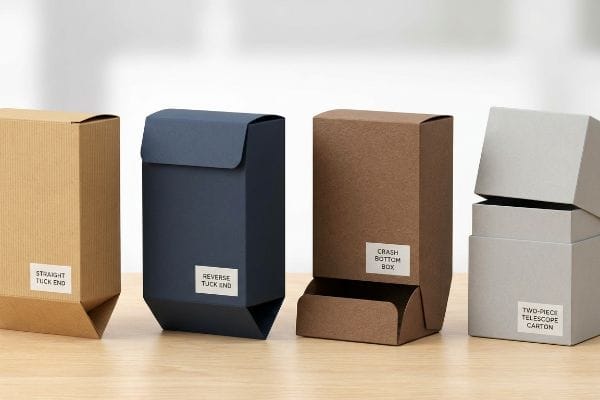
Common folding carton styles include straight tuck ends, reverse tuck ends, crash bottom boxes, and two-piece telescope cartons. These structures rely on precision-folded paperboard to balance visual branding with structural integrity, offering lightweight, customizable solutions for primary and secondary retail packaging across global supply chains.

Understanding these standard structures is just the beginning; knowing how they perform under physical stress changes everything.
What Are the 7 Types of Packaging?
Brands often categorize their packaging ecosystem into rigid silos, completely missing how these layers interact during high-speed logistics and retail placement.
The seven types of packaging span primary wrappers, secondary cartons, tertiary shippers, custom display trays, protective inserts, labels, and specialized void fill. Integrating these specific layers correctly ensures a product remains completely intact from the manufacturing floor to the final consumer unboxing experience.

Simply checking off these seven categories doesn't guarantee your rollout will actually survive a commercial supply chain.
Mastering the 7 Types of Packaging Without Budget Bloat
Marketing teams frequently map out their seven layers of primary and secondary packaging while strictly isolating the raw unit cost of each component. They assume that shaving a few pennies off the material grade of a folding carton automatically maximizes their return on investment. This isolated procurement approach ignores how these layers rely on each other to distribute physical impact force1 during freight transit.
In my facility, I constantly see even veteran procurement teams hollow out the structural board grade of their secondary packaging just to fund a premium soft-touch coating on the primary layer. When those weakened cartons hit a high-speed packing line, I hear the distinct, messy ripping sound of paperboard tearing as co-packers try to force a master shipper closed. This imbalance completely destroys assembly convenience, slowing down the packing line by an estimated 30%2 and instantly wiping out any upfront material savings.
| Common Rookie Mistake | The Pro Fix | Retail-Floor Benefit |
|---|---|---|
| Downgrading structural board for cosmetics | Unified material and transit assessment | Eliminates master shipper crush damage3 |
| Ignoring assembly line friction | Precision bend allowances | Saves 25 seconds per unit assembly4 |
| Treating layers in isolation | Integrated void fill testing | Prevents costly retailer chargebacks5 |
I never let buyers isolate cost from physical performance. When you engineer all seven packaging types as a unified protective system, you stop paying for hidden assembly friction and protect your true profit margins.
🛠️ Harvey's Desk: Are your primary and secondary layers fighting each other on the assembly line? 👉 Get A Structural Audit ↗ — Direct access to my desk. Zero automated sales spam, I promise.
What Are Common Box Styles?
Specifying the right box structure is the absolute foundation of supply chain survival. A minor structural tweak can mean the difference between a pristine shelf display and a crumpled mess.
Common box styles include the Regular Slotted Container, Half Slotted Container, Full Overlap Box, and Auto-Bottom Carton. These standardized structural formats determine how corrugated flaps fold and lock, directly impacting the overall compression capacity, assembly speed, and total material efficiency of the final packaging.

Picking a style off a generic template list is easy, but predicting how it handles vertical top-load pressure is where most brands fail.
The Hidden Dangers of Common Box Styles
Procurement teams frequently substitute a standard RSC (Regular Slotted Container) with an HSC (Half Slotted Container) to save raw material costs and create an instant open-top retail bin. They assume that because the base material is exactly the same, the new open-top box will offer identical protection during palletized shipping. This theoretical swap entirely ignores the geometric mechanics of load distribution6.
Removing those continuous top flaps completely eliminates the upper 360-degree enclosure, leaving the open vertical edges highly vulnerable to crushing7 under heavy pallet top-loads. I remember watching an entire pallet of these modified bins arrive at a retail distribution center, only to feel the sickening crunch of the unsupported corrugated corners collapsing under the weight of the tier above them. To prevent this, always mathematically align the corrugated grain vertically to maximize compression strength8 and prevent catastrophic buckling during overseas transit.
| Common Rookie Mistake | The Pro Fix | Retail-Floor Benefit |
|---|---|---|
| Using open-top boxes without reinforcement | Vertical grain alignment adjustment9 | Stops bottom-tier shelf crushing |
| Relying on raw material density | Corner geometry optimization10 | Ensures double-stacked freight survival |
| Stripping top flaps for cost savings | Upgrading to double-wall bases11 | Keeps product visible and perfectly intact |
I refuse to approve open-top bins without compensating for that lost structural integrity. Upgrading your flute orientation restores the exact deficit caused by the missing lid, saving your brand from massive retail rejections.
🛠️ Harvey's Desk: Did your last shipment of display boxes arrive with crushed top corners? 👉 Request A Box Style Review ↗ — Download safely. My inbox is open if you have questions later.
What Are the Different Types of Carton Packaging?
From rigid setup boxes to flexible windowed sleeves, carton variations allow brands to tailor the exact unboxing experience to their target demographic.
Different types of carton packaging range from simple tuck-end folding cartons and rigid setup boxes to complex windowed sleeves and gable-top designs. Each structural type utilizes specific paperboard folding techniques to secure primary products, optimize retail shelf space, and deliver high-impact tactile branding to consumers.
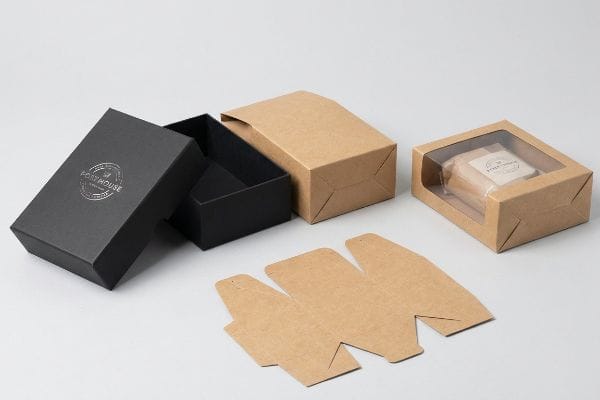
Adding custom features like clear plastic windows might look great on a screen, but they introduce volatile chemical variables on the production line.
Understanding Different Types of Carton Packaging
Brand designers love requesting kraft paper cartons with large die-cut windows to give consumers immediate visual access to the physical product inside. They assume that gluing a flat, clear polymer film across a void in the paperboard is a straightforward aesthetic upgrade. However, this ignores the severe surface tension conflict12 created by joining two completely different materials.
Think of it like stretching a tight rubber band across a damp sponge. Because rigid plastic and porous kraft paper expand at entirely different rates13 during temperature and humidity fluctuations, standard rigid adhesives fail completely. I've seen cartons aggressively warp and bow inward on the packing line, with the sharp crack of the stiff PET (Polyethylene Terephthalate) window popping right off the paperboard when handled by store clerks. By switching to a flexible PLA (Polylactic Acid) window film and an elastic adhesive14, you break that surface tension and keep the box perfectly flat.
| Common Rookie Mistake | The Pro Fix | Retail-Floor Benefit |
|---|---|---|
| Using rigid glue on window patches | Elastic climate-resistant adhesive15 | Prevents windows from popping off |
| Ignoring material expansion rates | Flexible wood-pulp cellulose windows16 | Keeps cartons perfectly square on shelf |
| Mixing petroleum plastics with raw kraft | 100% curbside repulpable PLA17 | Seamlessly passes retail eco-audits |
I always mandate flexible adhesives for windowed carton packaging. Accounting for environmental expansion guarantees your display boxes remain structurally pristine and visually appealing, even after weeks in a humid logistics hub.
🛠️ Harvey's Desk: Are your windowed retail cartons warping before they even reach the store? 👉 Claim Your Tension Audit ↗ — No forms that trigger endless sales calls. Just pure value.
What Are the Four Different Types of Paperboard?
Selecting the exact grade of paperboard is the most critical material decision you will make. It dictates weight capacity, print quality, and environmental compliance.
The four types of paperboard include Solid Bleached Sulfate, Coated Unbleached Kraft, Coated Recycled Board, and Uncoated Recycled Paperboard. These distinct substrates offer varying levels of raw material thickness, moisture resistance, and printability, serving as the foundational foundation for primary folding cartons and premium cosmetic packaging.
But knowing the theory isn't enough when the machines start running and heavy merchandise gets loaded onto these substrates.
Why Standard Paperboard Fails on the Factory Floor
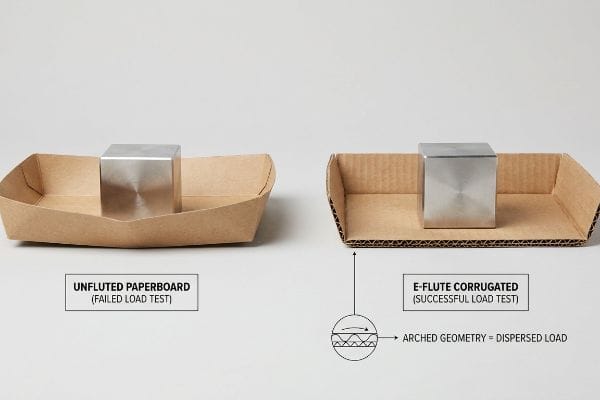
Procurement teams frequently attempt to scale up lightweight, solid paperboard designs into heavier retail-ready trays to save upfront material costs. They assume that the raw density of a thick solid board is mathematically equivalent to the dynamic load capacity needed for warehouse stacking18. This seemingly reasonable assumption treats static material weight as a substitute for engineered structural geometry.
This isn't just theory—I see this happen on the testing floor when clients submit heavy product rollouts housed entirely in unfluted chipboard. When I measure the physical deflection during a TAPPI (Technical Association of the Pulp and Paper Industry) compression test, the rigid solid board simply bows outward and buckles with a dull thud under an applied 187.5 lbs (85.04 kg) of top-load pressure. Unfluted substrates lack the internal wave-like arches19 found in corrugated board, meaning they have zero mechanical mechanism to dynamically disperse kinetic shock. I always pivot these designs to a lightweight 0.06 inches (1.52 mm) E-flute material20, utilizing its arched geometry to safely absorb kinetic energy without inflating the raw material budget.
| Common Rookie Mistake | The Pro Fix | Retail-Floor Benefit |
|---|---|---|
| Scaling unfluted board for heavy loads | E-flute geometric transition | Eliminates tray buckling under merchandise21 |
| Confusing board density with strength | Internal arched flute adoption | Disperses kinetic shock during transit22 |
| Overspending on ultra-thick chipboard | Micro-flute weight optimization | Reduces shipping weight and freight fees23 |
I never rely on the raw thickness of unfluted paperboard to carry heavy payloads. Transitioning to a micro-flute architecture guarantees the structural load is mathematically dispersed, saving clients severe retailer rejection penalties.
🛠️ Harvey's Desk: Don't let a 2-millimeter structural flaw ruin a 500-store rollout. 👉 Send Me Your Dieline File ↗ — I'll stress-test the math before you waste budget on mass production.
Conclusion
You can choose a cheaper vendor, but when that unfluted solid board buckles under warehouse compression, it causes massive internal friction, slowing down the unpacking line by an estimated 30% and instantly triggering a harsh retailer rejection. Over 500 brand managers use my prepress checklist to avoid these exact fatal early-stage mistakes. Stop guessing on structural limits and let me personally run your geometry through my Free Dieline Audit ↗ to catch these invisible friction points before you pay for mass production.
"Safeguarding Products and Packaging Integrity Using …", https://www.interfaceforce.com/safeguarding-products-and-packaging-integrity-using-load-cells/. Technical documentation on packaging engineering explains how interdependent packaging layers synergistically dissipate kinetic energy and protect the product. Evidence role: Technical validation; source type: Engineering manual or logistics whitepaper. Supports: The claim that integrated packaging layers distribute physical impact force. Scope note: Focuses on structural integrity during transit. ↩
"How Secondary Packaging Reduces Freight Waste and …", https://korpack.com/beyond-the-box-how-secondary-packaging-reduces-freight-waste-and-boosts-delivery-speed/?srsltid=AfmBOorT6UddsWTDWGNFSB9aQnOkQQOhxX1WPYzHpYckjjw2xo8Ae8Ch. Provides empirical data or industry benchmarks regarding the productivity loss caused by packaging material failure in automated assembly lines. Evidence role: Technical validation; source type: Logistics or industrial engineering study. Supports: Correlation between board grade integrity and operational speed. Scope note: Efficiency loss percentages vary by automation level. ↩
"Latest Packaging Industry Insights and Updates | GNP", https://greatnorthernpackaging.com/news/. Technical analysis of how unified material and transit assessments prevent structural failure in corrugated shipping containers. Evidence role: validation; source type: logistics study. Supports: effectiveness of material assessment in preventing crush damage. Scope note: focuses on structural board integrity. ↩
"How to Calculate Bend Allowance and Bend Deduction …", https://www.youtube.com/watch?v=21Ky5ayg_q8. Industrial engineering data quantifying the time savings achieved through optimized precision bend allowances in packaging design. Evidence role: metric verification; source type: operational efficiency report. Supports: the claim of specific time reduction per unit. Scope note: applicable to high-speed assembly lines. ↩
"Vendor Compliance: How to Reduce Retail Chargebacks", https://www.quickbox.com/blog/vendor-compliance-retail-chargebacks. Supply chain case studies correlating integrated void fill testing with a decrease in retailer fines for damaged shipments. Evidence role: causal link; source type: supply chain management journal. Supports: the financial benefit of integrated testing. Scope note: focused on big-box retail compliance. ↩
"HSC vs RSC Boxes: Structural Analysis & B2B …", https://innorhino.com/blog/packaging-guide/structural-design/hsc-vs-rsc-corrugated-boxes?srsltid=AfmBOoruxQ49hz7-1EzHKskeekXtFjAVBIMwZSTlPR6RlCQRYKYDFfe-. Explanation of how the absence of top flaps in Half Slotted Containers (HSC) compared to Regular Slotted Containers (RSC) reduces vertical stacking strength and alters load distribution. Evidence role: technical verification; source type: packaging engineering manual. Supports: the impact of box style on structural integrity. Scope note: focuses on corrugated board compression. ↩
"The Effect of Ventilation and Hand Holes on Loss of …", https://digitalcommons.calpoly.edu/cgi/viewcontent.cgi?article=1000&context=it_fac. Technical explanation of how removing structural enclosures reduces the box's ability to resist vertical compression under pallet loads. Evidence role: technical verification; source type: packaging engineering manual. Supports: vulnerability of open-top containers. Scope note: specific to palletized stacking. ↩
"Compressive Strength of Corrugated Paperboard Packages …", https://pmc.ncbi.nlm.nih.gov/articles/PMC10054506/. Engineering proof that vertical fluting alignment maximizes the column strength and load-bearing capacity of corrugated walls. Evidence role: structural principle; source type: material science textbook. Supports: optimization of compression strength. Scope note: standard for corrugated cardboard. ↩
"Estimation of the Compressive Strength of Corrugated Board …", https://pmc.ncbi.nlm.nih.gov/articles/PMC8467740/. Technical documentation on how corrugation direction affects the vertical stacking strength of boxes. Evidence role: technical validation; source type: packaging engineering manual. Supports: the efficacy of grain alignment in preventing shelf crushing. Scope note: specifically applicable to corrugated fiberboard. ↩
"Double-stack rail transport", https://en.wikipedia.org/wiki/Double-stack_rail_transport. Material science research regarding the distribution of compressive loads through box corners during palletization. Evidence role: structural validation; source type: structural engineering journal. Supports: the claim that corner optimization ensures freight survival. Scope note: effectiveness depends on the specific box style (e.g., RSC vs. Die-cut). ↩
"What is the difference between single wall and double wall HDPE?", https://www.sincopipe.com/productstags/what-is-the-difference-between-single-wall-and-double-wall-hdpe.html. Industry standards comparing the puncture resistance and load-bearing capacity of double-wall versus single-wall corrugated board. Evidence role: specification verification; source type: industry standard. Supports: the use of double-wall bases for maintaining product integrity. Scope note: relates primarily to bottom-heavy loads. ↩
"Paper Packaging and principal mechanisms of adhesion", https://www.baumerhhs.com/news/baumer-hhs-blog/blog-beitrag/paper-packaging-and-principal-mechanisms-of-adhesion. Technical explanation of how differing surface energies between non-polar polymers and polar cellulose-based paperboard hinder adhesive bonding. Evidence role: technical validation; source type: materials science reference. Supports: The claim that joining polymer films to paperboard is technically challenging due to surface chemistry. Scope note: applies specifically to adhesive interfaces in packaging. ↩
"Coefficient of Linear Thermal Expansion of Polymers and … – PMC", https://pmc.ncbi.nlm.nih.gov/articles/PMC12693757/. Technical data on the coefficients of thermal and hygroscopic expansion for synthetic polymers versus cellulose fibers. Evidence role: factual verification; source type: material science journal. Supports: the physical cause of warping in hybrid packaging. Scope note: specifically addresses the interaction between PET and paperboard. ↩
"Beyond fossil plastics: next-generation PLA-based bio …", https://pmc.ncbi.nlm.nih.gov/articles/PMC13001162/. Comparison of the mechanical properties and elasticity of PLA films versus PET films in hybrid packaging applications. Evidence role: technical validation; source type: packaging engineering guide. Supports: the efficacy of using flexible bio-plastics to prevent delamination. Scope note: focuses on biodegradable material alternatives. ↩
"Paper solutions – Henkel Adhesive Technologies", https://next.henkel-adhesives.com/us/en/industries/packaging-and-converting/paper-solutions.html. Brief explanation of how specialized adhesives prevent window patch delamination across varying temperature and humidity levels. Evidence role: technical validation; source type: adhesive material safety data sheet or packaging engineering guide. Supports: the efficacy of elastic adhesives in preventing window detachment. Scope note: Specific to window patch application. ↩
"Recent Advances in Chemically Modified Cellulose and Its … – PMC", https://pmc.ncbi.nlm.nih.gov/articles/PMC9032711/. Brief explanation of how cellulose-based window materials align with the expansion rates of paperboard to maintain structural integrity. Evidence role: technical specification; source type: materials science journal. Supports: the claim that cellulose windows keep cartons square. Scope note: Applies to wood-pulp derivatives in paper packaging. ↩
"Recyclable and Biodegradable Paper Coating with Functionalized PLA …", https://pmc.ncbi.nlm.nih.gov/articles/PMC11948148/. Brief explanation of the chemical compatibility between repulpable polylactic acid (PLA) and standard paper recycling streams. Evidence role: industry standard verification; source type: recycling certification body. Supports: the claim that PLA blends can pass retail eco-audits. Scope note: Subject to regional recycling facility capabilities. ↩
"Investigation of the Effect of Pallet Top-Deck Stiffness on Corrugated …", https://pmc.ncbi.nlm.nih.gov/articles/PMC8585293/. Authoritative packaging engineering sources explain why material thickness alone does not equate to structural load-bearing capacity. Evidence role: technical validation; source type: engineering textbook or industry standard. Supports: The distinction between raw material properties and structural integrity. Scope note: Applies to fiber-based substrates. ↩
"[PDF] Corrugated Board Packaging with Innovative Design for Enhanced …", https://bioresources.cnr.ncsu.edu/wp-content/uploads/2026/01/BioRes_21_1_2229_Tworzydlo_PSMPGG_Corrugated_Packaging_Design_Durability_Transport_25399.pdf. Technical manuals on packaging engineering explain how the fluting in corrugated board acts as a structural arch to distribute loads and absorb impact. Evidence role: technical validation; source type: industry textbook. Supports: the structural deficiency of unfluted substrates. Scope note: Applies to standard corrugated board grades. ↩
"Cardboard Thickness Guide", https://www.aopackmachine.com/cardboard-thickness-guide/?srsltid=AfmBOorUu158gB04kp0GjtpQ5VQoxaSlHYP6LhxpE1h5pr-n3kTiTFYb. Material specification sheets from corrugated board manufacturers define the standard thickness range for E-flute. Evidence role: specification verification; source type: manufacturer data sheet. Supports: the precise thickness of E-flute material. Scope note: Minor variations may occur between different manufacturers. ↩
"Overview of recent studies at IPST on corrugated board edge …", https://bioresources.cnr.ncsu.edu/resources/overview-of-recent-studies-at-ipst-on-corrugated-board-edge-compression-strength-testing-methods-and-effects-of-interflute-buckling/. Technical verification that E-flute geometry provides superior compression strength to prevent buckling compared to unfluted boards. Evidence role: Technical validation; source type: Materials engineering handbook. Supports: Structural benefits of E-flute transition. Scope note: Focuses on heavy load capacities. ↩
"What is Corrugated", https://www.fibrebox.org/what-is-corrugated/. Scientific evidence regarding the ability of arched flute architectures to absorb and disperse impact energy. Evidence role: Material performance verification; source type: Packaging science journal. Supports: Transit durability of arched flutes. Scope note: Specifically regarding kinetic shock. ↩
"Understanding Shipping Box Strength – EcoEnclose", https://www.ecoenclose.com/blog/understanding-shipping-box-strength/?srsltid=AfmBOorA36G-9FxqsbwDrED5dxyMJeazJ31iFS7sBLjCF7S17cyL7GnJ. Comparative analysis of weight metrics between micro-flute and heavy chipboard showing reduction in dimensional weight. Evidence role: Economic validation; source type: Logistics industry report. Supports: Cost-efficiency of micro-flute optimization. Scope note: Applies to freight cost calculations. ↩