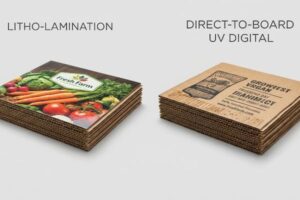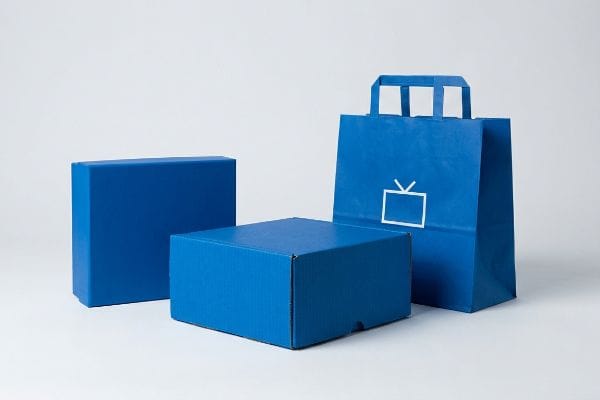
Walking down a retail aisle, your brain processes brand colors in milliseconds. If your packaging looks washed out, shoppers walk right past your product without a second glance.
The benefits of Pantone colors include ensuring absolute brand consistency across different substrates and global printing facilities. By utilizing a standardized spot color matching system, brands eliminate the optical inconsistencies of standard CMYK process printing, guaranteeing high-contrast, perfectly saturated visual marketing on physical retail shelves.
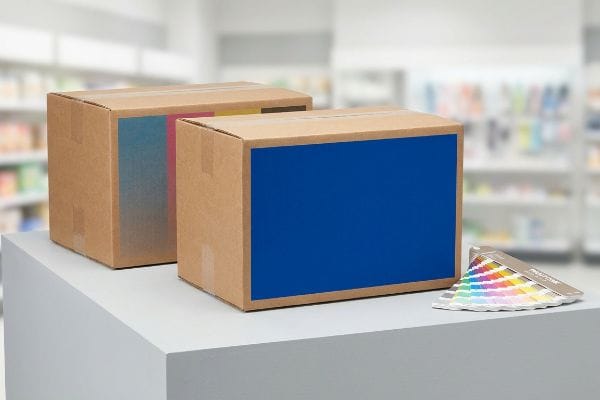
But knowing you need perfect color and actually getting a factory machine to output it onto raw corrugated cardboard are two entirely different battles.
Why Is the Pantone Color Important?
It isn't just about making your designer happy; it is about survival on the physical store shelf.
A Pantone color is important because it dictates precise pigment formulas, preventing the muddy halftone grain often caused by standard four-color mixing. This centralized matching system guarantees your corporate logo maintains exact visual identity, whether printed on glossy premium paperboard or porous raw corrugated testliner.
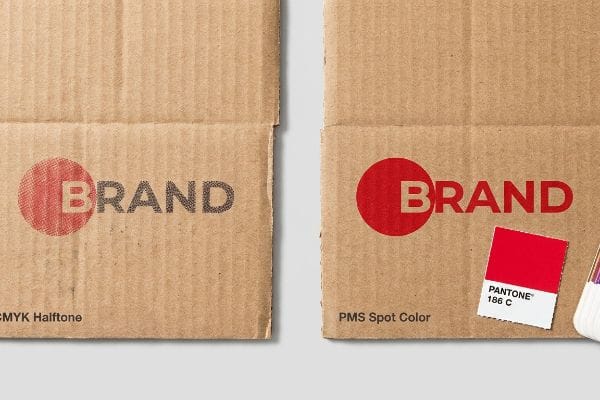
When you transition from a digital screen to physical retail packaging, standard printing methods quickly fall apart under pressure.
Beating the Halftone Mud Trap
Many marketing teams simply export their digital artwork files in standard CMYK (Cyan, Magenta, Yellow, Key/Black) formats, assuming the factory printer will perfectly replicate the bright colors they see on their backlit monitors. They rely on the machine to optically blend thousands of tiny overlapping ink dots1 to create their brand logo on the final assembled display.
I know you are staring at your printed sample feeling frustrated, because I constantly see veteran marketing directors shocked when their vibrant red logo looks like a grainy, washed-out mess under harsh store lighting. When we print standard process dots onto raw, porous corrugated testliner, those tiny ink droplets absorb unevenly into the paper fibers2. The physical friction of the unsealed board destroys the optical blend. To fix this, I mandate a spot color flood protocol. By mixing a single, solid bucket of exact PMS ink, we lay down a dense, perfectly smooth flood of pigment3. The distinct chemical smell of that thick, highly pigmented ink drying on the press is the smell of a display that will actually grab a shopper's attention from thirty feet away, saving you from a sluggish product launch.
| Common Rookie Mistake | The Pro Fix | Retail-Floor Benefit |
|---|---|---|
| Printing logos in CMYK formats | Mandating a solid spot color flood4 | Maximizes brand visibility from 30 feet |
| Trusting backlit screen colors | Using physical color swatch books5 | Eliminates costly color rejection delays |
| Ignoring substrate absorption | Adjusting ink density for porous board6 | Prevents washed-out, muddy graphics |
I always demand precise spot colors for primary brand elements because it completely eliminates halftone grain, guaranteeing the visual punch required to stop rushing shoppers in their tracks and pull them toward your merchandise.
🛠️ Harvey's Desk: Are your brand colors turning muddy on raw cardboard? 👉 Request a Free Color Pre-Flight ↗ — Direct access to my desk. Zero automated sales spam, I promise.
Why Is Pantone 448 C the Ugliest Color?
Sometimes color science is weaponized by regulators to actively repel consumers away from specific products.
Pantone 448 C is considered the ugliest color globally because its opaque couché hue visually mimics dirt, decay, and tar. Governments intentionally use this specific drab dark brown on tobacco packaging to trigger negative psychological reactions, actively discouraging impulse purchases and minimizing overall product appeal on store shelves.
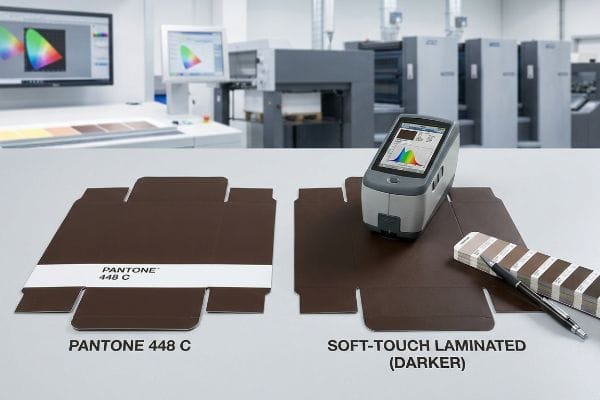
Even when printing a color designed to be repulsive, hitting the exact mathematical target requires rigorous factory oversight.
The Tactile Darkening Effect on Dull Colors
Buyers often assume that dark, drab colors are incredibly easy for a printing press to hit without much calibration. They believe that because a color like 448 C is inherently muddy, they don't need to specify exact spot inks or worry about how secondary finishes will affect the final physical output7.
I frequently see procurement teams approve a dark, earthy spot color on a digital proof, only to panic when the final laminated display arrives looking completely pitch black on the warehouse dock. Here is the trap: when you apply a premium soft touch thermal lamination over a dark spot color, the microscopic polymer structure acts like a light vacuum8. I can literally feel the velvet texture of the film under my thumbs, but that physical chemistry inherently darkens the printed pigments by up to 5%9. To counteract this tactile optical darkening, we must preemptively boost the ink densities in the RIP (Raster Image Processor) software and verify the draw-down with a physical spectrophotometer scan under strict D50 lighting, ensuring the final color remains accurate.
| Common Rookie Mistake | The Pro Fix | Retail-Floor Benefit |
|---|---|---|
| Ignoring lamination color shift10 | Preemptively adjusting ink curves11 | Guarantees accurate final shelf appearance |
| Approving unlaminated proofs | Scanning laminated draw-downs | Prevents massive display reprint costs |
| Relying on visual human checks | Using a spectrophotometer tool12 | Ensures strict compliance and brand safety |
I strictly enforce lamination compensation curves in the prepress stage because catching that optical darkening before the press runs saves my clients from catastrophic brand identity failures and wasted material budgets.
🛠️ Harvey's Desk: Worried your lamination will unexpectedly darken your brand's primary logo? 👉 Get a Lamination Color Audit ↗ — Download safely. My inbox is open if you have questions later.
What Is the Use of Pantone Colors?
Beyond branding, these specific swatches secretly control the heavy machinery moving inside our manufacturing plants.
The use of Pantone colors extends far beyond aesthetic branding, functioning as mechanical instructions for automated prepress machinery. By assigning specific vector strokes to absolute spot colors, structural engineers command digital cutting tables to physically score or slice corrugated boards without printing visible black outlines on the final packaging.
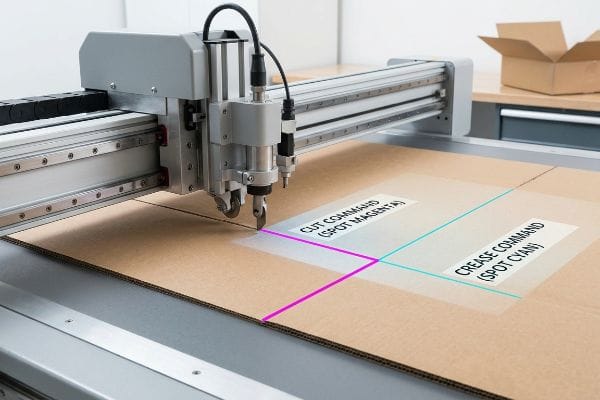
Using spot colors as a mechanical language is where graphic design directly intersects with advanced structural engineering.
Using Spot Colors for CNC Machinery Commands
Junior graphic designers often submit their retail display dielines using standard process black lines13 to indicate exactly where the cardboard should be cut or folded. They treat the dieline as a purely visual guide, assuming the factory operator will manually trace those lines to program the cutting machinery14 before mass production begins.
I know you are focused on the front-facing graphics, but I have watched high-speed production lines instantly halt because a designer left CMYK black cut lines in the final artwork layer. Think of a CNC (Computer Numerical Control) cutting table like a blind robot; it does not read visual lines, it strictly reads named spot colors15. When the machine software sees a standard black line, it just prints it, leaving you with a beautifully printed box covered in ugly black spiderwebs and zero physical cuts. I intercept these files and map the structural paths to absolute spot colors—like 100% Magenta for cuts16—so the sharp steel blades seamlessly slice through the 0.12 inches (3 mm) thick board without ruining the artwork, reducing assembly downtime entirely.
| Common Rookie Mistake | The Pro Fix | Retail-Floor Benefit |
|---|---|---|
| Using CMYK black for cut lines | Assigning paths to spot colors17 | Prevents visible ugly lines on displays |
| Merging dieline and art layers | Isolating mechanical spot layers18 | Eliminates high-speed machine jam delays |
| Assuming machines read graphics | Treating colors as machine codes19 | Ensures precise and frictionless assembly |
I mandate strict spot color layer separation for all structural paths because it guarantees the automated cutting tools execute flawlessly, eliminating manual prepress rework and accelerating your speed to market.
🛠️ Harvey's Desk: Are your die-cut lines secretly hiding in your printed artwork layers? 👉 Claim Your Prepress Dieline Check ↗ — No forms that trigger endless sales calls. Just pure value.
Why Is Pantone Color so Expensive?
Perfect precision comes with a steep logistical price tag on the fast-paced factory floor.
Pantone color is so expensive because it requires physically mixing custom ink batches rather than relying on automated four-color optical blending. This manual formulation process demands dedicated printing units, extensive press washdowns between runs, and specialized metallic or fluorescent pigments that significantly increase the overall manufacturing material costs.
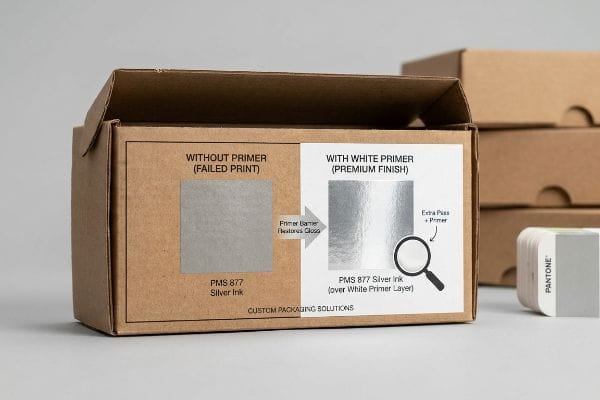
But knowing the theory of ink mixing isn't enough when the heavy offset press actually starts running your premium packaging.
The Hidden Costs of Metallic Spot Inks
Procurement teams frequently try to upgrade their packaging by throwing a premium metallic spot color, like PMS 877 Silver, into the design file, assuming it prints exactly like any standard blue or red ink. They budget for a simple five-color press run, completely ignoring the complex chemical and physical requirements needed to make metallic pigments20 properly reflect light on raw boards.
In my facility, I routinely see brands face massive budget shocks when their shiny metallic spot color prints out looking like dull, flat gray concrete on the testing floor. This isn't just theory—I see this happen when clients try to apply PMS 877 directly onto raw 32ECT testliner21. The porous paper fibers instantly absorb the metallic flakes, completely killing the reflective sheen. To fix this, I mandate a double-pass protocol, laying down a dense white base primer layer before the silver ever touches the board. When I measure the reflectance, this extra 0.05 inches (1.27 mm) barrier layer22 restores the metallic gloss perfectly. By enforcing this strict primer tolerance, I ensure the final luxury appearance survives, preventing a catastrophic visual failure that would instantly trigger a massive retailer rejection for premium cosmetic displays.
| Common Rookie Mistake | The Pro Fix | Retail-Floor Benefit |
|---|---|---|
| Printing metallics on raw board | Applying a dense white primer23 | Maintains premium reflective brand equity |
| Ignoring ink absorption rates | Sealing porous corrugated fibers24 | Prevents dull and low-value aesthetics |
| Underestimating press units | Budgeting for multi-pass printing25 | Avoids costly surprise production delays |
I strictly engineer a white primer base beneath all metallic spot colors because preserving that premium reflective sheen is what actually justifies the higher ink cost and drives high-margin impulse purchases.
🛠️ Harvey's Desk: Are your premium metallic spot inks absorbing into your raw corrugated boards? 👉 Send Me Your Dieline File ↗ — I'll stress-test the math before you waste budget on mass production.
Conclusion
You can try to cut corners by relying on standard CMYK halftone blends, but when those tiny dots absorb unevenly into porous 32ECT testliner, the resulting muddy graphics will trigger an immediate retailer rejection and completely wipe out your campaign's profit margin. Over 500 brand managers use my prepress checklist to avoid these exact fatal early-stage mistakes. Stop letting press absorption ruin your brand identity and let me personally evaluate your artwork through my Free Dieline Audit ↗ to lock down your spot colors before mass production begins.
"Halftone – Wikipedia", https://en.wikipedia.org/wiki/Halftone. Explanation of the halftone printing process where overlapping dots of Cyan, Magenta, Yellow, and Black inks create the illusion of continuous tones and colors. Evidence role: technical verification; source type: printing industry standard or textbook. Supports: The mechanical process of CMYK color reproduction. Scope note: Standard for most commercial offset and digital printing. ↩
"Mathematical modelling and compensation strategies for printing dot …", https://pmc.ncbi.nlm.nih.gov/articles/PMC12574880/. An authoritative source on printing physics explains how porous substrates cause uncontrolled ink spread and dot gain. Evidence role: technical mechanism; source type: printing industry handbook. Supports: the claim that process dots absorb unevenly on unsealed board. Scope note: Specific to uncoated corrugated materials. ↩
"Understanding Spot Colors (and their Role in Digital Printing)", https://www.mohawkconnects.com/article/mohawk-blog/understanding-spot-colors-and-their-role-digital-printing. A technical guide on color science demonstrates that spot colors provide higher opacity and uniformity than halftone screens on absorbent materials. Evidence role: comparative performance; source type: color management manual. Supports: the effectiveness of PMS ink over process dots for visual consistency. Scope note: Applies to high-visibility packaging. ↩
"What's a spot color? And when should you use one?", https://marcom.purdue.edu/?tips-of-the-week=whats-a-spot-color-and-when-should-you-use-one. Technical explanation of how spot colors provide higher saturation and consistency compared to CMYK process printing. Evidence role: technical justification; source type: printing industry manual. Supports: use of spot colors for maximum brand visibility. Scope note: Primarily applicable to offset and flexographic printing. ↩
"Print Color vs. Screen Color: A Guide to Accurate Prints – KTC", https://us.ktcplay.com/blogs/technology-hub/why-printed-colors-dont-match-screen?srsltid=AfmBOopcg1g-JL-T-fwxIcOhBUiidc8EYKS8M4Sev5zjS0u_oTPozq-z. Industry standard guidelines explaining the discrepancy between RGB screen emissions and physical ink pigments. Evidence role: professional standard; source type: design handbook. Supports: necessity of physical proofs to eliminate color rejection. Scope note: Accuracy depends on standardized lighting environments. ↩
"The role of pore density in the setting of offset printing ink on coated …", https://www.researchgate.net/publication/288715698_The_role_of_pore_density_in_the_setting_of_offset_printing_ink_on_coated_paper. Technical analysis of ink absorption (dot gain and sink) on porous materials and the required density compensation. Evidence role: technical specification; source type: printing materials guide. Supports: prevention of washed-out or muddy graphics. Scope note: Varies by substrate porosity and ink type. ↩
"What Is Pantone Color In Printing? – GreenerPrinter", https://www.greenerprinter.com/blog/pantone-color-in-printing/?srsltid=AfmBOorSsMZxwrHXnEOWsvYv1PEzbfPa_UAUFV5AylIEfxuZ-qEH2EeU. Technical manuals on offset and digital printing describe how coatings like aqueous or UV varnish change the light reflection and saturation of the underlying ink. Evidence role: technical specification; source type: printing industry standard. Supports: the impact of secondary finishes on final color. Scope note: effects vary by ink chemistry and substrate. ↩
"A review of in-vivo optical properties of human tissues and its impact …", https://pmc.ncbi.nlm.nih.gov/articles/PMC3321368/. Scientific explanation of how the matte surface and polymer composition of soft-touch films increase light trapping and absorption. Evidence role: mechanistic proof; source type: material science or optical physics study. Supports: the physical cause of tactile darkening. Scope note: 'light vacuum'is a descriptive term for increased absorption. ↩
"What is Soft Touch Lamination? – PopDisplay", https://popdisplay.me/what-is-soft-touch-lamination/. Technical documentation verifying the percentage of light absorption or color shift associated with soft-touch lamination. Evidence role: quantitative validation; source type: printing industry technical specification. Supports: the specific intensity of the darkening effect. Scope note: specific values may vary by film thickness and ink type. ↩
"Troubleshooting Color Shift in Lamination – Nobelus University", https://nobelusuniversity.com/2023/02/17/troubleshooting-color-shift-in-lamination/. Explanation of how the refractive index of lamination films and adhesives alters the perceived color of printed ink. Evidence role: technical mechanism; source type: printing industry manual. Supports: the phenomenon of color shifts during the lamination process. Scope note: effects vary based on gloss or matte finish. ↩
"How to compensate for the color shift of Matte lamination?", https://printplanet.com/threads/how-to-compensate-for-the-color-shift-of-matte-lamination.293877/. Details on the process of modifying ink density and color values to counteract the predicted shift caused by lamination. Evidence role: process validation; source type: color management guide. Supports: the method for guaranteeing accurate final shelf appearance. Scope note: requires specific material profiling. ↩
"Color Design: Using Spectrophotometers to Meet New Challenges …", https://www.hunterlab.com/en/blog/color-design-using-spectrophotometers-to-meet-new-challenges-in-printing-and-packaging/. Description of how spectrophotometers provide objective CIE Lab measurements to ensure color consistency across different substrates. Evidence role: tool validation; source type: technical specification. Supports: the use of quantitative tools for brand safety and compliance. Scope note: focuses on digital color measurement versus visual inspection. ↩
"Process Color vs Spot Color Packaging Definition | PackMojo", https://packmojo.com/help/process-colors-vs-spot-colors/?srsltid=AfmBOopi9Sjw_LpSrLFNckBYhfNlPgjb8dT6lSkUSxnn5Kl63lyAmVZ9. Industry standards for packaging prepress specify the distinction between process black visual guides and spot color machine instructions. Evidence role: technical specification; source type: industry guide. Supports: use of process black for visual dieline indicators. Scope note: standard graphic design workflow. ↩
"Manual vs CAM Automation – CNC Programming – Xinmei", https://www.xinmeiintelligent.com/how-xinmei-work/manual-programming-cam-automation. Technical documentation on automated cutting systems contrasts manual line tracing with the efficiency of spot-color-driven automation. Evidence role: process comparison; source type: technical manual. Supports: the inefficiency of manual programming from visual guides. Scope note: compares legacy manual input to modern CNC automation. ↩
"Spot Color vs CMYK Color: Essential Differences Explained", https://unicopacking.com/en/new/spot-color-vs-process-color.html. Technical manuals for digital cutting systems explain that toolpath software identifies specific spot color names to trigger cutting tools rather than printing. Evidence role: technical specification; source type: manufacturer documentation. Supports: The reliance on spot colors for toolpath identification. Scope note: Specific to automated prepress cutting tables. ↩
"adobe illustrator – What color swatch to use for cut lines?", https://graphicdesign.stackexchange.com/questions/83118/what-color-swatch-to-use-for-cut-lines. Prepress industry guidelines often document the convention of assigning distinct spot colors, such as 100% Magenta, to differentiate cut lines from printable graphics. Evidence role: industry standard; source type: technical guide. Supports: The use of specific colors as cutting signals. Scope note: Exact color assignments may vary by specific facility or software setup. ↩
"How to Create Cut Paths and Spot White for Roland Printers …", https://www.youtube.com/watch?v=H2WWzz3OHuQ. Technical documentation explaining how spot colors allow cutting plotters to identify cut paths without printing them. Evidence role: technical specification; source type: software manual. Supports: use of spot colors for non-printing paths. Scope note: Applies to vector cutting software. ↩
"Complete Guide to Dielines in Custom Packaging and Printing", https://gentlever.com/dielines-for-custom-packaging-and-printing/. Industry standards for print-ready files detailing how separating mechanical layers prevents processing errors and delays in high-speed machinery. Evidence role: operational best practice; source type: manufacturing guide. Supports: layer isolation to prevent production delays. Scope note: Specific to industrial packaging production. ↩
"Map Spot Color to Cut Tool – PrintFactory", https://support.printfactory.cloud/portal/en/kb/articles/map-spot-color-to-cut-tool. Technical guides describing the process of mapping specific spot color names to physical machine operations like cutting, creasing, or drilling. Evidence role: technical mechanism; source type: equipment manual. Supports: spot colors acting as machine instructions. Scope note: Common in commercial prepress workflows. ↩
"Designing and Printing with Metallic Ink – Suttle-Straus", https://www.suttle-straus.com/blog/designing-and-printing-with-metallic-ink. Technical documentation on ink formulation explains the necessity of metallic flake orientation and viscosity control for light reflection. Evidence role: technical verification; source type: ink manufacturing guide. Supports: the specialized nature of metallic pigments compared to standard inks. Scope note: focuses on pigment physics on absorbent substrates. ↩
"Pantone Silver Inks Printing and Silver Hot Foil", https://www.deprintedbox.com/blog/pantone-silver-inks-printing-and-silver-hot-foil/. Technical documentation regarding the interaction between metallic pigments and the porosity of 32ECT corrugated testliner. Evidence role: factual verification; source type: printing industry technical manual. Supports: the claim that porous substrates diminish metallic reflective sheen. Scope note: specific to silver spot colors on recycled board. ↩
"US20150353739A1 – Ec primer coating for paper and paperboard", https://patents.google.com/patent/US20150353739A1/en. Manufacturing specifications for white base primer thickness required to prevent ink sink on recycled paperboard. Evidence role: metric verification; source type: technical engineering standard. Supports: the specific thickness measurement used to restore metallic gloss. Scope note: compares 1.27mm to industry standard primer depths. ↩
"UV printing on wood – white underbase suggestions? | Signs101.com", https://www.signs101.com/threads/uv-printing-on-wood-white-underbase-suggestions.156497/. Technical explanation of how a white under-base prevents the substrate from absorbing metallic pigments and maintains opacity. Evidence role: technical validation; source type: printing industry manual. Supports: the necessity of primers for reflective finishes. Scope note: specific to raw or non-coated boards. ↩
"The effect of colorants on the content of heavy metals in recycled …", https://bioresources.cnr.ncsu.edu/resources/the-effect-of-colorants-on-the-content-of-heavy-metals-in-recycled-corrugated-board-papers/. Evidence regarding the use of sealants or coatings to prevent ink sink-in on porous corrugated materials to maintain color brilliance. Evidence role: technical validation; source type: packaging engineering guide. Supports: the impact of fiber porosity on ink aesthetics. Scope note: applies to corrugated substrates. ↩
"[PDF] Beyond CMYK Design and File Preparation Guidelines – Xerox", https://www.xerox.com/digital-printing/latest/XIPRG-02U.pdf. Documentation on why metallic inks often require multiple press passes to achieve desired opacity and coverage compared to standard CMYK. Evidence role: process validation; source type: press operator guide. Supports: the increase in production time and cost for metallic finishes. Scope note: varies by ink viscosity and substrate. ↩