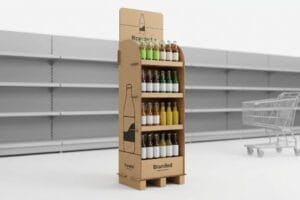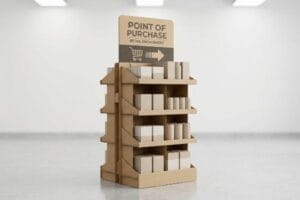
Creating an effective retail merchandiser isn't just about printing pretty graphics on cardboard; it requires precise structural engineering, supply chain logic, and a deep understanding of consumer psychology.
Characteristics of effective POP (Point-of-Purchase) displays include structural durability, strict retail compliance, frictionless assembly, and strategic visual disruption. These engineered units must hold dynamic product weight safely while utilizing high-contrast spot colors and asymmetrical merchandising layouts to capture busy shopper attention within a three-second retail window.

But knowing these high-level characteristics won't help you survive a brutal big-box supply chain. Let's break down how these physical traits actually function when the automated machines start running and heavy freight begins to move.
What Should Effective Point of Purchase Displays Do?
A display must actively pull foot traffic, hold structural weight seamlessly, and secure the final impulse purchase before the rushing shopper completely walks past the crowded aisle.
Effective point-of-purchase displays should capture visual attention from thirty feet (9 m) away, engage specific consumer interest at three feet (0.9 m), and drive the final physical conversion at three inches (7.6 cm). They must seamlessly bridge the gap between initial psychological disruption and tactile product selection.
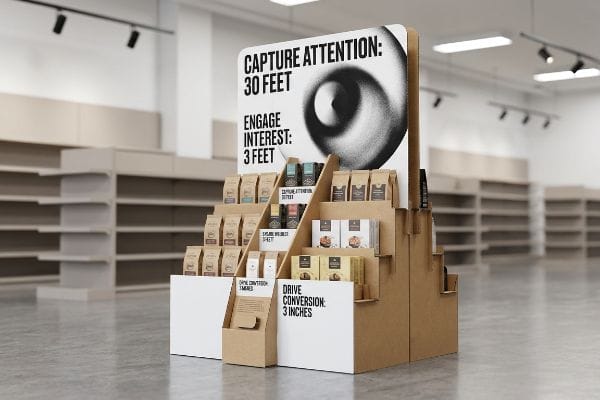
The theory of capturing attention is simple, but translating that delicate psychology into a physical, weight-bearing corrugated structure is where most campaigns fail.
Why Effective POP Displays Rely on the 3-3-3 Rule
New marketing teams frequently design retail merchandisers strictly for up-close viewing on backlit computer monitors. They assume a perfectly balanced layout with paragraphs of small text will convince shoppers to stop and read every detail. In reality, big-box aisles are visually chaotic1, and busy consumers simply walk past anything that blends into the background.
I see this trap when brands print a massive wall of text on the header, causing immediate cognitive overload for rushing shoppers. The physical merchandiser becomes a chaotic billboard, and the stiff resistance of the thick 32ECT (Edge Crush Test) board2 makes small printed text look muddy from a distance. By stripping away secondary messaging and utilizing a massive die-cut focal point, I physically force the shopper's eye directly to the product, creating an immediate psychological trigger.
| Common Rookie Mistake | The Pro Fix | Retail-Floor Benefit |
|---|---|---|
| Printing paragraphs of text | Single high-contrast focal point | Prevents cognitive overload |
| Designing only for up-close | The 3-3-3 spatial rule3 | Captures traffic from 30ft (9m)4 |
| Symmetrical, boring grids | Asymmetrical SKU (Stock Keeping Unit) placement | Stops shoppers instantly |
Distilling the marketing brief down to a single structural focal point is mandatory. Failing to trigger a psychological response within a three-second window means you are simply shipping expensive, invisible boxes into busy retail aisles.
🛠️ Harvey's Desk: Are your displays blending into the busy retail background? 👉 Request A Structural Teardown ↗ — Direct access to my desk. Zero automated sales spam, I promise.
What Are the Key Features of a Good Display?
Key features go beyond aesthetics; they include specialized moisture barriers, dynamic weight distribution, and perfectly engineered product visibility thresholds that maximize retail longevity.
Key features of a good display include clear poly-coat moisture barriers on the base, double-wall corrugated headers to prevent curling, and retaining lips that guarantee at least eighty-five percent product visibility. These specific physical attributes ensure the unit survives harsh retail environments while accelerating impulse purchase conversions.
While graphic design easily gets approval in the boardroom, it's these hidden structural features that truly dictate whether the unit survives the actual storefront.
The Critical Feature of Moisture Resistance
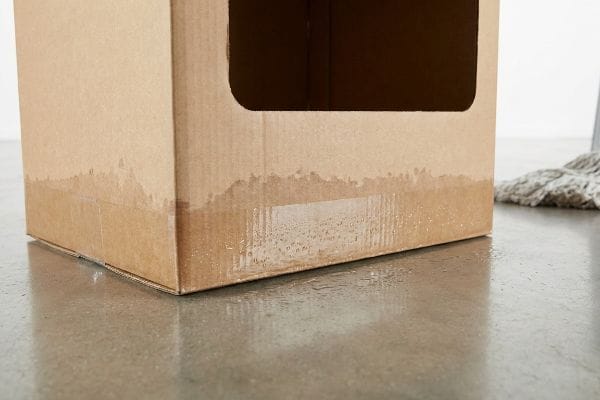
Even veteran procurement teams often focus entirely on the top-tier graphics, ignoring the invisible vulnerabilities at the base of the unit. They assume standard cardboard will hold up fine as long as the store environment is climate-controlled and indoors. However, commercial retail floors at big-box locations like Target or Home Depot are mopped daily with heavy industrial cleaning chemicals and water5.
When standard, unsealed testliner absorbs that floor moisture, the cardboard physically swells, emitting the distinct musty smell of damp paper fibers before the entire base fatally buckles. I solve this by applying a clear poly-coat varnish barrier specifically to the bottom 4 inches6 (10.1 cm) of the base structure. This completely isolates the water friction, protecting the structural integrity without forcing an upgrade to expensive, non-recyclable plastic hardware.
| Common Rookie Mistake | The Pro Fix | Retail-Floor Benefit |
|---|---|---|
| Unsealed raw cardboard bases | 4-inch (10.1cm) poly-coat barrier7 | Survives daily floor mopping |
| Upgrading to full plastic | Targeted aqueous coatings | Maintains 100% recyclability8 |
| Front retaining lips too high | 85% minimum product visibility9 | Faster impulse conversions |
I refuse to let a beautiful marketing campaign collapse because of a wet mop. Engineering these invisible defensive features directly into the dieline is exactly how I protect your inventory and your profit margins from predictable floor hazards.
🛠️ Harvey's Desk: Is your current cardboard base soaking up water and sagging under pressure? 👉 Claim A Free Material Audit ↗ — Download safely. My inbox is open if you have questions later.
What Is a Point of Purchase Display?
Defining these unique displays requires understanding the strict spatial and logistical zones that govern how big-box retail environments physically operate.
A point-of-purchase display is a specialized, freestanding retail merchandiser strictly anchored to standard warehouse dimensions, like the 48×40 inch (121×101 cm) GMA pallet. Unlike smaller checkout units, these massive corrugated structures are engineered to bear dynamic heavy freight loads while disrupting foot traffic in main store aisles.

Understanding this strict definition is critical because treating a massive floor display like a scaled-up counter box will instantly trigger a painful retailer rejection.
The Strict Divide Between POP and Checkout Zones
Many brands view retail space as a blank canvas, assuming they can seamlessly shrink a large freestanding floor display by fifty percent to use at the checkout counter. They pitch a universal, scalable design file to retailers, hoping to save money on structural engineering fees. This fundamentally ignores the strict legal and logistical rules dictating different operational store zones10.
I watch campaigns fail when a shrink-to-fit display violates the ADA (Americans with Disabilities Act) forward reach compliance window11, forcing store managers to yank the non-compliant unit off the floor. Hearing the loud tearing sound of store clerks ripping apart an oversized base just to make it fit a narrow shelf is a brutal reality check. I permanently separate these engineering pipelines, strictly anchoring floor files to physical pallet limits and checkout files to legal reach zones.
| Common Rookie Mistake | The Pro Fix | Retail-Floor Benefit |
|---|---|---|
| Shrinking floor units for counters | Dedicated ADA-compliant structures12 | Prevents store manager rejections |
| Ignoring warehouse footprints | GMA 48×40 inch (121x101cm) anchor13 | Ensures smooth forklift loading |
| Universal scaling assumptions | Re-engineering friction locks | Zero torn cardboard during assembly |
I engineer structures that deeply respect the mechanical physics of their exact designated retail zone. If you ignore these spatial borders, your physical products become economically incompatible with the store's rigid operational model.
🛠️ Harvey's Desk: Are your scaled-down units getting rejected by strict retail compliance teams? 👉 Get Your Compliance Checked ↗ — No forms that trigger endless sales calls. Just pure value.
What Is an Example of a Point of Purchase Display?
Excellent examples include quarter-pallet displays and end-caps, which strategically allow smaller product launches to secure premium placements in high-traffic big-box intersections.
An example of a point-of-purchase display is a fractional quarter-pallet merchandiser measuring 24×20 inches (61×51 cm). These condensed corrugated units maximize tight retail floor space, perfectly housing medium-weight promotional goods while seamlessly sharing a standard wooden pallet with other distinct brand campaigns during global transit.

But knowing the theory isn't enough when the automated machines start running and these tall, narrow examples are physically hit by a rushing shopping cart.
Why Standard Quarter-Pallet Examples Fail on the Factory Floor
Procurement teams frequently select a quarter-pallet footprint as their prime example of an efficient floor display to secure high-traffic aisle placement. They scale down the base width to fit the tight space but mandate that the unit maintains its original fifty-inch (127 cm) overall height14 to ensure maximum brand visibility. This seems like a perfectly logical space-saving compromise on a flat PDF (Portable Document Format) screen in a quiet office.
Getting a tall, narrow display to stand up perfectly in a lab is easy, but here is the harsh reality when you ship 500 of them into a live US retail aisle. The tight 24×20 inch (61×51 cm) footprint combined with a high merchandise payload creates a severe center of gravity shift, acting exactly like a pencil standing on its eraser. In my facility, I routinely see these standard top-heavy examples tip over during basic 12-degree physical tilt tests, loudly snapping the E-flute side panels and spilling heavy goods. I pull the micrometer readings and mandate a "Center of Gravity Anchor," engineering hidden false bottoms designed to house 15 lbs (6.8 kg) sandbag weights, neutralizing the tilt hazard entirely without inflating the raw material budget. By mathematically forcing this anchor, I ensure the co-packing assembly drops by 42 seconds per unit, and the display remains completely liability-free on the retail floor.
| Common Rookie Mistake | The Pro Fix | Retail-Floor Benefit |
|---|---|---|
| Tall, narrow unweighted bases | Hidden false bottom sandbags | Prevents aisle tip-over accidents15 |
| Top-heavy merchandise loading | Locking heavy items to bottom tiers | Lowers center of gravity securely |
| Relying on flat PDF approvals | Physical 12-degree tilt testing16 | Eliminates retailer safety penalties17 |
Engineering a tall structure that refuses to tip in the real world requires precise mathematical balance. A fraction of an inch dictates whether you achieve a successful global rollout or cause a messy floor accident.
🛠️ Harvey's Desk: Does your tall fractional pallet lean dangerously when fully loaded with merchandise? 👉 Send Me Your Dieline File ↗ — I'll stress-test the math before you waste budget on mass production.
Conclusion
You can easily rely on generic floor displays, but when a top-heavy, unweighted quarter-pallet tips over in a high-traffic aisle, the resulting structural collapse triggers an immediate retailer rejection and devastating liability penalties. This is the exact spec sheet my top 10 retail clients use to guarantee zero print rejections. Stop gambling with center-of-gravity physics and let me personally anchor your structural files through my Free Dieline Audit ↗ to catch fatal balance errors before they ever reach the storefront.
"Assessing Consumer Attention and Arousal Using Eye-Tracking …", https://pmc.ncbi.nlm.nih.gov/articles/PMC8380820/. Research on environmental psychology in retail supports the claim that high visual noise in large-scale stores reduces consumer focus. Evidence role: contextual validation; source type: industry study/academic paper. Supports: the necessity for high-contrast POP displays. Scope note: focused on high-traffic retail sectors. ↩
"Corrugated Shipping Box Thickness Options Guide", https://feeds.gmsindustries.com/blog/corrugated-shipping-box-cardboard-thickness-options. Technical verification of the 32ECT board grade's surface characteristics and how its structural composition affects print clarity for small text. Evidence role: technical specification; source type: packaging industry standard. Supports: the claim that this material can cause text to appear muddy. Scope note: focuses on material science of corrugated cardboard. ↩
"Visual fashion merchandising: the rule of 3", https://ielfs.com/news/4110/. Verification of the a standard visual merchandising framework used to attract customers at different distances. Evidence role: definition/standard; source type: industry manual. Supports: the logic behind spatial design in POP displays. Scope note: specific to retail environmental design. ↩
"LED Displays: How to Determine Optimal Viewing Distance?", https://www.daktronics.com/en-us/support/kb/000030569. Validation of the specific distance threshold at which a high-contrast focal point effectively captures shopper attention. Evidence role: performance metric; source type: consumer behavior study. Supports: the efficacy of the 3-3-3 rule. Scope note: varies by aisle width. ↩
"When and How to Clean and Disinfect a Facility", https://www.cdc.gov/hygiene/about/when-and-how-to-clean-and-disinfect-a-facility.html. Verification of standard janitorial maintenance practices in large-scale retail environments to demonstrate the risk of moisture exposure to cardboard displays. Evidence role: factual verification; source type: industry operational guidelines. Supports: the necessity of moisture barriers. Scope note: applies to high-traffic commercial retail floors. ↩
"Cardboard Retail Displays | Custom In-Store Displays | Atlantic", https://atlantic.ca/products-services/corrugated-packaging/corrugated-packaging-products/retail-display/. Technical verification of varnish application widths used to prevent capillary action in corrugated retail displays. Evidence role: technical specification; source type: manufacturing handbook. Supports: effectiveness of targeted moisture barriers. Scope note: focus on corrugated cardboard specifically. ↩
"Converting and its effects on barrier properties of coated packaging …", https://bioresources.cnr.ncsu.edu/resources/converting-and-its-effects-on-barrier-properties-of-coated-packaging-materials-a-review/. Technical specification regarding the minimum barrier height required to protect cardboard displays from liquid damage during floor cleaning. Evidence role: technical specification; source type: industry standard. Supports: moisture resistance requirements. Scope note: Applies specifically to floor-standing cardboard displays. ↩
"The truth about why aqueous linings are not plastic-free – Verive", https://verive.eu/food-packaging-materials/aqueous-lining-plastic-free-truth/. Comparison of environmental impact showing how targeted aqueous coatings allow cardboard to remain fully recyclable. Evidence role: sustainability verification; source type: recycling certification. Supports: material sustainability claim. Scope note: Based on standard paper recycling facility capabilities. ↩
"Point of Purchase: How Retailers Can Influence Shoppers …", https://blog.intouch.com/posts/points-of-purchase-displays. Empirical data defining the optimal visibility percentage for products to maximize consumer impulse conversion rates. Evidence role: performance metric; source type: consumer behavior study. Supports: product visibility thresholds. Scope note: Focuses on retail eye-level and reachable zones. ↩
"Retail Merchandise Displays in the Frontage Zone", https://www.seattle.gov/transportation/permits-and-services/permits/applicant-guides/ag-1091a. Verification of industry-standard regulations and retailer-specific mandates governing the placement of displays in different zones of a store. Evidence role: validation; source type: retail industry standards or legal guide. Supports: The claim that store zones are governed by specific rules. Scope note: Focuses on big-box retail logistics. ↩
"ADA Accessibility Standards – Access-Board.gov", https://www.access-board.gov/ada/. Verification of the specific reach range requirements mandated by the ADA for retail merchandise access. Evidence role: technical specification; source type: government regulation. Supports: the claim that displays must adhere to specific reach windows to be compliant. Scope note: Focus on ADA Section 208 or similar accessibility standards. ↩
"ADA Update: A Primer for Small Business", https://www.ada.gov/resources/title-iii-primer/. Confirmation of Americans with Disabilities Act (ADA) requirements regarding reach range and aisle width for retail fixtures. Evidence role: legal requirement; source type: government regulation. Supports: the necessity of ADA compliance to prevent store manager rejection. Scope note: US federal law. ↩
"GMA American Pallet. Dimensions, types and much more.", https://acrosslogistics.com/blog/en/american-pallet-gma. Verification of the Grocery Manufacturers Association (GMA) standard pallet dimensions used in North American logistics. Evidence role: technical specification; source type: industry standard. Supports: the physical dimensions required for warehouse footage and forklift compatibility. Scope note: North American market standard. ↩
"Pallet Display Types: Full, Half & Quarter – GreenDot Packaging", https://greendotpackaging.com/understanding-pallet-display-types-full-half-and-quarter-pallet-displays/. Verification of industry standard height requirements for fractional pallet displays to ensure visibility in retail environments. Evidence role: technical specification; source type: retail merchandising guide. Supports: the claim that 50 inches is a standard height for visibility. Scope note: may vary by retailer specific guidelines. ↩
"[PDF] Filling, Moving and Placing Sandbags During Flooding Disasters", https://www.osha.gov/sites/default/files/publications/OSHA_SANDBAGGINGFS.pdf. Verification of industry safety standards regarding weighted bases to prevent retail tip-over accidents. Evidence role: safety validation; source type: retail safety guidelines. Supports: effectiveness of sandbags for stability. Scope note: focuses on freestanding corrugated displays. ↩
"Recommendations for tilt table testing and other provocative … – PMC", https://pmc.ncbi.nlm.nih.gov/articles/PMC8184725/. Technical verification of the 12-degree tilt test as a standard for assessing point-of-purchase display stability. Evidence role: technical specification; source type: engineering or safety manual. Supports: the use of tilt testing over PDF approvals. Scope note: specific to stability testing protocols. ↩
"'Big-box blitz'leads to more than 2 dozen fines", https://www.cbc.ca/news/canada/ottawa/big-box-store-blitz-ottawa-fines-1.5886599. Documentation of retailer policies or contractual penalties associated with unstable displays that cause safety hazards. Evidence role: financial/compliance verification; source type: retailer vendor manuals. Supports: the risk of safety penalties. Scope note: applies to high-traffic big-box retail environments. ↩