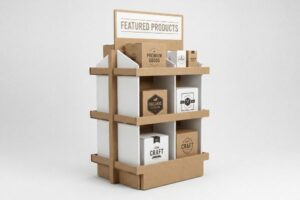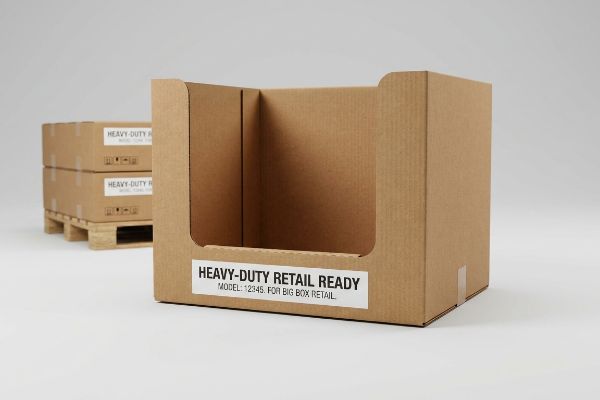
Launching a brand into major national chains requires more than just a great product. You need to understand the exact mechanics of massive retail ecosystems to survive the shelves.
The big box retailer meaning refers to giant retail stores exceeding 50,000 square feet. Leaders like Walmart and Home Depot use economies of scale to sell high merchandise volumes at competitive prices. Brands must meet rigorous retail packaging and supply chain standards to secure highly coveted shelf space.
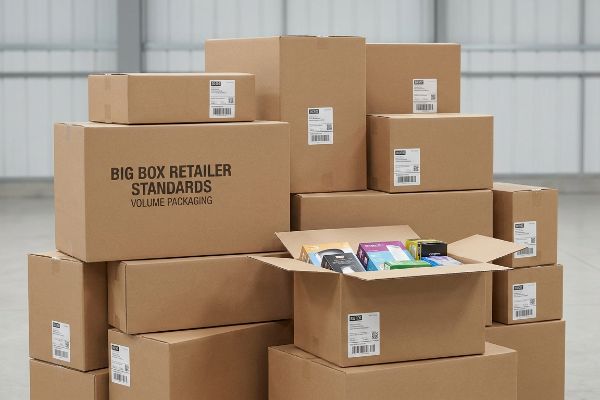
Securing a purchase order from one of these giants is only the beginning. The real challenge is engineering your physical merchandising to survive their brutal, high-volume environment.
Is Costco a Big Box Retailer?
Many brand owners confuse standard grocery channels with the unique demands of warehouse clubs.
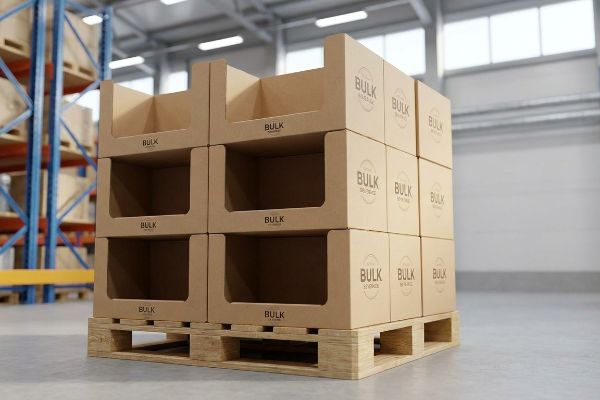
Yes. Costco is a big box retailer that operates strictly under a warehouse club model. Unlike traditional grocery chains, it requires merchandise to be sold directly off standardized pallets. Vendors must design club-store-ready packaging that supports vertical stacking without relying on separate retail display shelves.
Aligning Your Retail Strategy with Costco's Club Model
Even veteran marketers often overlook the structural differences when transitioning from standard grocery shelves to club stores. They take a standard promotional display campaign, scale it up to fit a massive wooden pallet1, and assume basic cardboard will naturally appeal to the high-volume shopper while supporting heavy bulk merchandise.
The reality of club-store merchandising is entirely centered around self-service shopping and rapid inventory turnover. Because Costco relies heavily on a shop-through model, enclosing your merchandise in standard bulk bins completely blocks product visibility and limits shopper access. Successful brands strategize around four-sided shop-through layouts2, ensuring consumers can easily grab products from any angle. By prioritizing clear sightlines and easy access over traditional graphic enclosures, vendors can drastically increase their product velocity and perfectly align with the core operational strategy of the big-box club format.
| Common Strategy Mistake | The Big-Box Solution | Retail Floor Benefit |
|---|---|---|
| Designing fully enclosed bulk bins | Using 4-sided shop-through layouts3 | Increases product visibility and shopper access |
| Focusing only on front graphics | Planning for 360-degree brand messaging4 | Engages consumers from every aisle angle |
| Ignoring pallet shoppability | Prioritizing easy grab-and-go access | Drives higher inventory turnover rates5 |
Shipping traditional enclosures to club stores fundamentally limits product interaction. Strategizing for 360-degree shoppability maximizes your sales velocity and keeps bulk inventory moving incredibly fast.
🛠️ Harvey's Desk: Not sure if your club store pallet can handle a 2,500 lbs (1133.98 kg) top-load without buckling? 👉 Get a Free 3D Stress Test ↗ — Direct access to my desk. Zero automated sales spam, I promise.
What Is Big-Box Retailing?
Stepping into the massive footprint of national chains requires a fundamental shift in how you build your physical retail campaigns.
Big-box retailing is a commercial strategy where massive facilities dominate local market shares through immense product volume and aggressive pricing. These retail ecosystems demand vendors perfectly align their packaging, logistics, and merchandising programs with strict corporate frameworks to survive the high-speed, self-service shopping environment.
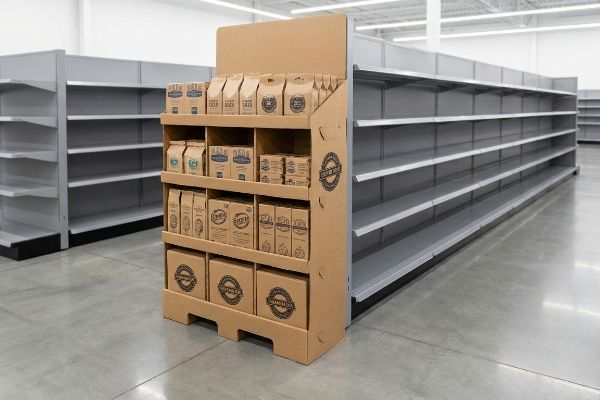
Strategic Merchandising Within Big-Box Frameworks
Marketing teams frequently design point-of-purchase units based purely on aesthetic goals, treating the massive big-box physical store as an empty canvas. They assume that if a promotional display looks stunning on a computer monitor and carries bold branding, it will naturally drive consumer engagement and sales in any large retail format.
In the fast-paced retail ecosystem, strategic placement and shopper traffic flow dictate a campaign's success far more than simple aesthetics. National chains operate with extremely strict spatial guidelines6, meaning promotional units must perfectly fit within designated high-traffic zones like end-caps or action alleys. If a brand ignores these physical floor boundaries, their promotional items often get sidelined into low-visibility aisles. Properly mapping your physical retail footprint to the retailer's specific spatial rules ensures your product remains in the primary shopper journey, ultimately generating a much stronger return on investment.
| Common Strategy Mistake | The Big-Box Solution | Retail Floor Benefit |
|---|---|---|
| Designing one universal footprint | Customizing sizes to specific retailer aisles | Guarantees placement in high-traffic zones |
| Ignoring store flow patterns | Mapping displays to action alleys7 | Captures maximum shopper impulse buys |
| Relying on complex setup | Planning for simple drop-and-sell formats8 | Encourages faster deployment by store staff |
Aligning your campaign footprints directly with retailer guidelines prevents costly aisle rejections. Proper spatial planning effortlessly secures prime locations and protects your overall promotional investment from operational bottlenecks.
🛠️ Harvey's Desk: Are your seasonal merchandisers physically clashing with the strict spatial limits of your retail buyer's floor plan? 👉 Claim Your Framework Checklist ↗ — Download safely. My inbox is open if you have questions later.
Is Walmart a Big Box Retailer?
Successfully pitching to the world's largest corporation means adapting to an environment where microscopic logistical errors trigger massive financial penalties.
Yes. Walmart is a big box retailer that operates an incredibly complex, data-driven logistical network. Winning shelf space here requires absolute compliance with rigid vendor scorecards, meaning your master cartons and retail displays must flawlessly pass automated warehouse scanning systems to avoid severe operational chargebacks.
Why Standard Master Cartons Fail the Walmart Supply Chain
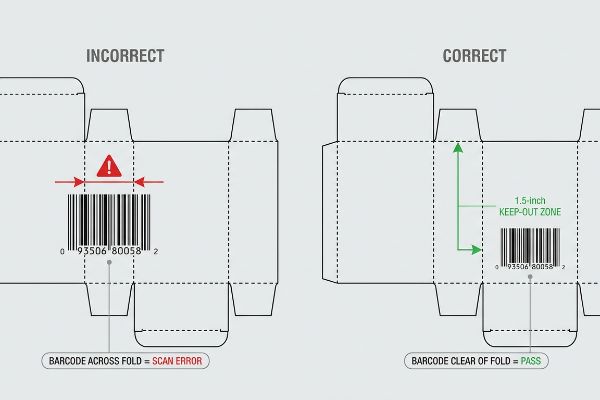
Procurement teams frequently treat mandatory logistics barcodes as a minor afterthought, simply slapping them onto their master shipper designs wherever there happens to be blank space. They incorrectly assume that as long as the graphic designer places the UCC-128 (Uniform Code Council) label9 somewhere visible on the digital artwork, the automated distribution warehouse will easily process and receive the massive incoming freight.
In my facility, I routinely witness how this theoretical prepress assumption completely shatters under real manufacturing conditions. A generic dieline often places the critical barcode too close to the master carton's structural score lines. When heavy 32ECT (Edge Crush Test) corrugated board10 is folded 90 degrees during factory assembly, the outer paper liner physically stretches, pulling the printed ink directly around the edge radius. When these warped boxes hit high-speed 3PL optical scanners at Walmart's distribution centers, the distorted black geometry triggers a harsh read error. The massive automated conveyor belt instantly diverts the pallet, and that mechanical rejection beep signifies severe financial chargebacks. By rigorously enforcing a strict 1.5-inch (38.1 mm) keep-out zone11 during prepress, I guarantee the scannable data stays perfectly flat and readable.
| Common Rookie Mistake | The Pro Fix | Retail-Floor Benefit |
|---|---|---|
| Placing barcodes on structural fold lines | Enforcing a 1.5-inch (38.1 mm) keep-out zone12 | Ensures 100% first-pass optical scanning |
| Using CMYK (Cyan, Magenta, Yellow, Key) for data | Printing barcodes with a solid spot color13 | Prevents optical scanner misreads |
| Ignoring board caliper stretch | Applying dynamic stretch compensation to art14 | Maintains perfect barcode geometry after folding |
Locking barcode zones away from structural creases is absolutely mandatory before any master carton hits the press. Protecting scannable data from physical distortion remains the only reliable way to survive a brutal automated supply chain audit.
🛠️ Harvey's Desk: Do you know if your current UCC-128 labels will warp when your thick master cartons are fully folded? 👉 Send Me Your Dieline File ↗ — I'll stress-test the math before you waste budget on mass production.
Conclusion
You can choose a cheaper vendor, but when a warped UCC-128 barcode triggers a massive 3PL scanning failure, the resulting manual rework fees will completely wipe out your profit margin and stall the rollout. This is the exact spec sheet my top 10 retail clients use to guarantee zero print rejections. Stop gambling on warehouse compliance and let me personally run your files through my Free Dieline Pre-Flight Audit ↗ to catch fatal barcode errors before production.
"Club Store Displays: endcaps, pallets & more for bulk merchandise", https://www.qpack.com/retail-displays/pallet/club-store. Retail logistics manuals confirm that warehouse clubs utilize standardized pallets for product display to minimize labor and maximize efficiency. Evidence role: Technical specification; source type: Retail industry guide. Supports: The requirement for pallet-ready packaging. Scope note: Limited to warehouse club retail models. ↩
"Warehouse and Club Store Packaging Optimization Consulting", https://www.boldtsmithpackagingconsultants.com/industries/warehouse-club-stores/. Technical specifications from vendor compliance manuals regarding multi-sided accessibility for pallet-ready displays. Evidence role: technical specification; source type: vendor compliance guide. Supports: Strategic packaging design for big-box clubs. Scope note: Applies to high-volume pallet merchandising. ↩
"Retail Store Layout Optimization for Maximum Product Visibility – ADS", https://ui.adsabs.harvard.edu/abs/arXiv:2105.09299. Retail design documentation explaining how open-access layouts improve customer flow and visibility compared to enclosed bins. Evidence role: technical specification; source type: retail design guide. Supports: the effectiveness of open layouts for bulk items. Scope note: applicable to high-volume warehouse club environments. ↩
"360 Degree Branding | Build a Scalable Brand Strategy – Pixel Parlor", https://pixelparlor.com/blog/what-is-360-degree-branding-and-why-its-essential-for-your-business-strategy/. Marketing research on consumer engagement patterns in wide-aisle environments where products are visible from multiple directions. Evidence role: empirical evidence; source type: marketing study. Supports: the necessity of multi-angle branding for consumer engagement. Scope note: focuses on consumer psychology in big-box settings. ↩
"Inventory turnover: The key to warehouse efficiency", https://www.interlakemecalux.com/blog/inventory-turnover. An industry report or retail study demonstrating the correlation between ease of product accessibility and the rate of stock depletion. Evidence role: causal link; source type: industry analysis. Supports: the benefit of prioritizing pallet shoppability. Scope note: specific to wholesale and bulk retail contexts. ↩
"Real-time retail planogram compliance application using computer …", https://pmc.ncbi.nlm.nih.gov/articles/PMC12708730/. Industry standards and corporate vendor manuals verify that national retail chains enforce rigid spatial guidelines through planograms to maintain brand consistency. Evidence role: factual validation; source type: industry manual. Supports: the claim that retailers impose strict layout constraints on vendors. Scope note: applies to big-box frameworks. ↩
"What Is Action Alley? – 8th & Walton", https://www.8thandwalton.com/blog/action-alley/. Authoritative retail layout guides explain the strategic use of action alleys to increase foot traffic and impulse purchasing. Evidence role: causal link; source type: retail industry manual. Supports: the efficacy of action alley placement for sales. Scope note: impact may vary by product category. ↩
"4 Lessons From a Major Store in a Box Deployment – CDW", https://www.cdw.com/content/cdw/en/articles/hardware/4-lessons-major-store-box-deployment.html. Logistics and merchandising standards document how pre-configured, low-complexity displays reduce labor requirements for store personnel. Evidence role: operational efficiency; source type: retail logistics study. Supports: the correlation between simple formats and faster deployment. Scope note: efficacy depends on store staffing levels. ↩
"GS1-128 barcodes in logistics – Interlake Mecalux", https://www.interlakemecalux.com/blog/gs1-128-barcode-logistics. Verification of the UCC-128 (now GS1-128) as the global standard for logistics labeling in automated distribution centers. Evidence role: technical specification; source type: industry standard documentation. Supports: The technical requirement for master shipper barcodes. Scope note: Standard transition from UCC to GS1. ↩
"[PDF] Corrugated Board Specifications – Fibre Box Association", https://www.fibrebox.org/assets/2025/09/Walmart_Corrugated-Board_Specifications_Automation_Packaging_Standards.pdf. Technical validation of Edge Crush Test (ECT) standards and the structural properties of 32ECT corrugated fiberboard. Evidence role: specification verification; source type: packaging industry standard. Supports: Material strength and physical behavior during folding. Scope note: Applies to corrugated shipping containers. ↩
"Secondary Packaging Supply Chain Standards", https://p2pi.com/file/PtPI16509cf4c7b5d4070798853/Walmart%2520Supply%2520Chain%2520Packaging%2520Guide%2520August%25202023.pdf. Validation of industry-standard or retailer-specific barcode 'quiet zone'or keep-out requirements to ensure optical readability. Evidence role: technical specification; source type: vendor compliance guide. Supports: Prepress standards for avoiding barcode distortion. Scope note: Specific measurements may vary by distribution center. ↩
"What are Walmart's Secondary Packaging Standards?", https://www.spscommerce.com/community/articles/what-are-walmarts-secondary-packaging-standards. Verification of specific distance requirements for barcode placement to avoid fold-line interference as mandated by retail compliance standards. Evidence role: technical specification; source type: corporate supplier manual. Supports: specific clearance measurement for scanning reliability. Scope note: may vary by packaging size. ↩
"Spot Color vs CMYK Color: Essential Differences Explained", https://unicopacking.com/en/new/spot-color-vs-process-color.html. Technical printing standards explain why spot colors prevent registration errors and color bleed compared to CMYK, reducing scanner failure. Evidence role: technical standard; source type: printing industry guide. Supports: the rationale for using spot colors over process colors. Scope note: applies to industrial high-speed scanners. ↩
"Estimation of the Compressive Strength of Corrugated Board Boxes …", https://pmc.ncbi.nlm.nih.gov/articles/PMC8467740/. Packaging engineering documentation details how material thickness (caliper) affects artwork dimensions and the necessity of compensation for barcode readability. Evidence role: engineering principle; source type: technical whitepaper. Supports: method for preventing barcode distortion. Scope note: specific to corrugated cardboard materials. ↩