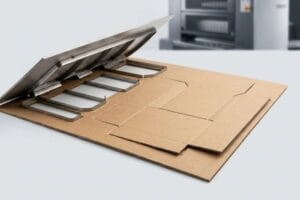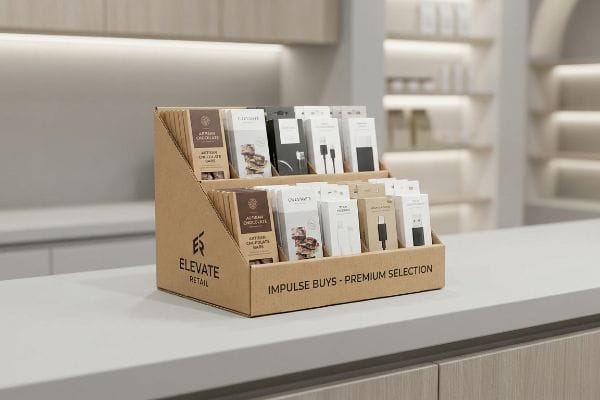
Понимание аббревиатур в сфере розничной торговли — основополагающий шаг для успешного запуска продукта. Если вы хотите доминировать в зоне кассы, освоение конструкции торгового стенда — ваш первый и главный конструктивный приоритет.
CDU (Counter Display Unit) — это компактная, специально разработанная торговая витрина, предназначенная для размещения на кассовых прилавках или полках магазинов. Она стратегически размещает мелкие товары на уровне глаз, стимулируя импульсивные покупки и максимально увеличивая узнаваемость бренда в торговых зонах с высокой проходимостью и ограниченным пространством.
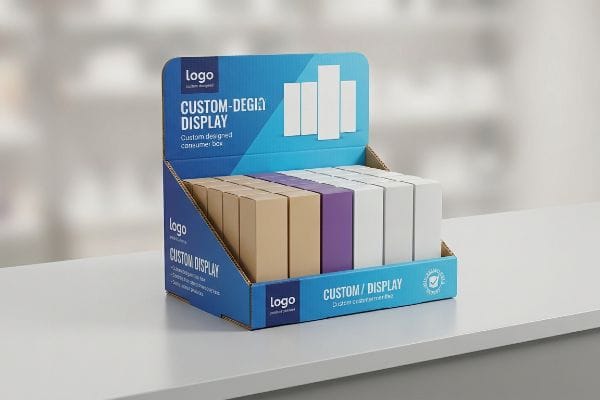
Отойдя от базового маркетингового определения, давайте рассмотрим технические аспекты, необходимые для того, чтобы эти небольшие устройства выдерживали суровые условия розничной торговли, не опрокидываясь.
Что такое дисплей CDU?
Касса — это самое ценное пространство в розничной торговле. Ваша витрина должна бороться за миллиметры, выдерживая вес тяжелых товаров, предназначенных для импульсивных покупок, и постоянное взаимодействие с покупателем.
Витрина CDU представляет собой локализованную, подверженную сильному трению конструкцию, предназначенную для размещения товаров в точке продажи. В отличие от массивных паллетных конструкций, она использует гофрированный картон с микроребрами и определенное соотношение глубины и высоты, что позволяет безопасно размещать товары высокой плотности, не опрокидываясь и не загораживая обзор кассиру.
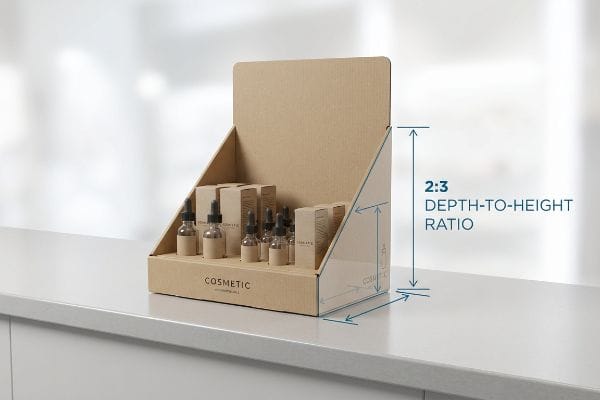
Чтобы понять, как эти устройства на самом деле функционируют в условиях переполненной кассы, нам необходимо изучить их основные геометрические ограничения в условиях производственного цеха.
Коэффициент устойчивости столешницы 2:3
По своей сути, проектирование настольной витрины требует строгого соблюдения законов пространственной физики. Поскольку эти витрины свободно располагаются на гладких стеклянных или ламинированных кассовых прилавках, их центр тяжести крайне неустойчив. В основе архитектуры лежит правило соотношения глубины и высоты 2:3¹.Эта структурная основа гарантирует, что на каждые три дюйма (76,2 мм) вертикальной высоты основание выступает на два дюйма (50,8 мм) назад, создавая естественную опору, предотвращающую случайные столкновения с покупателями.
Это соотношение служит основным защитным механизмом от кинетических сил опрокидывания².Когда вы загружаете витрину плотными товарами, такими как тяжелые охотничьи аксессуары или жидкая косметика, масса неизбежно смещается вперед к переднему удерживающему выступу. За счет удлинения физической подставки назад и математического распределения полезной нагрузки по более широкой горизонтальной плоскости, конструктивная основа нейтрализует вращательный момент³.Это предотвращает падение витрины на пол торгового зала, обеспечивая надежную презентацию товара без использования грязных клейких лент или постоянных зажимов.
| Структурная метрика | Общий подход | Искусственно созданная реальность |
|---|---|---|
| Глубина-Высота | Площадь основания 1:1 | строгое соотношение 2:34 |
| Центр масс | Спереди | Основание закреплено5 |
| Сопротивление наконечника | Низкий уровень (требуется лента) | Высокий (самостоятельный) |
Я проектирую каждую настольную витрину таким образом, чтобы она устойчиво стояла даже при интенсивном движении покупателей. Сбалансированная геометрическая форма защищает ваш товар от падений и предотвращает выбрасывание неустойчивой витрины в мусорное ведро.
🛠️ Рабочий стол Харви: Ваша текущая конструкция витрины рискует опрокинуться под воздействием реальных условий розничной торговли? 👉 Запросите бесплатный калькулятор коэффициентов ↗ — Я лично проверяю каждый структурный файл в течение 24 часов.
Каково назначение установки контролируемого выпуска деионизированной жидкости (УЗИ)?
Правильное размещение кассового аппарата — это только половина дела. Истинная функция настольного кассового аппарата заключается в мгновенном и беспрепятственном визуальном привлечении покупателя непосредственно перед тем, как он покинет магазин.
Цель зоны приема и размещения товаров (CDU) — активно нарушать поток покупателей и стимулировать импульсивные покупки в последний момент. Это достигается за счет структурной изоляции товаров премиум-класса от визуально загроможденных основных проходов, представления товара в оптимальном тактильном диапазоне для немедленного принятия решения о покупке без каких-либо препятствий.
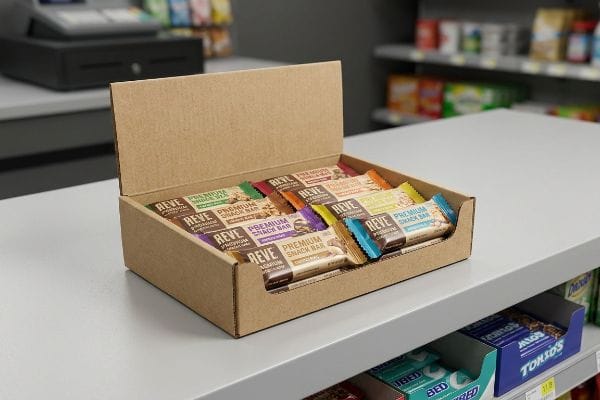
Помимо надежной фиксации товаров, конструкция должна математически гарантировать, что взгляд покупателя остановится на вашем бренде еще до того, как он достанет кошелек.
Правило видимости «высоты губ»
Основная цель настольной витрины — выступать в роли «молчаливого продавца» в течение последних трех секунд розничной сделки. Для этого витрина должна демонстрировать основную упаковку товара без каких-либо структурных помех. Я применяю строгий архитектурный принцип «Продукт прежде всего» к передней удерживающей панели, проектируя профиль таким образом, чтобы как минимум 85% основного товара оставалось видимымдля приближающегося покупателя.
Этот порог видимости напрямую определяет коэффициент физической конверсии7 на кассе. Если передняя гофрированная стенка слишком высокая, она физически закрывает основной логотип вашего бренда и важные данные о соответствии требованиям, превращая ваш товар в анонимный наполнитель. Используя эффектный волнообразный срез или опуская передний профиль до формата низкого подноса, архитектура активно побуждает к тактильному взаимодействию. Несущая панель надежно удерживает вес товаров, полностью устраняя визуальный барьер между рукой покупателя и продуктом, ускоряя цикл импульсивных покупок8.
| Функция мерчандайзинга | Общий подход | Искусственно созданная реальность |
|---|---|---|
| Высота передней губы | 50% охват | Максимальное покрытие 15%9 |
| Тактильная доступность | Высокое физическое трение | Извлечение без трения |
| Узнаваемость бренда | Закрыто картоном | 85% беспрепятственно10 |
Я не позволю высоким гофрированным стенкам скрывать вашу дорогую основную упаковку. Срезание переднего защитного бортика гарантирует максимальную узнаваемость бренда, привлекая внимание покупателя непосредственно к вашему продукту в тот самый момент, когда он собирается совершить покупку.
🛠️ За столом Харви: Скрывают ли высокие гофрированные подпорные стены тайну вашей премиальной упаковки продукции и снижают ли они коэффициент конверсии при оформлении заказа? 👉 Получите конфиденциальный обзор ↗ — 100% конфиденциально. Ваши еще не выпущенные дизайны для розничной торговли в безопасности со мной.
Сколько стоит установка CDU?
Расчет стоимости настольной витрины исключительно на основе веса сырья — это огромная ошибка при закупках. Трудности сборки полностью определяют реальные накладные расходы вашей кампании.
Стоимость блока управления производством (CDU) зависит от марки материала, требований к оснастке и объема производства. Однако истинное финансовое влияние проявляется в общей стоимости владения. Некачественно спроектированные малоформатные дисплеи экспоненциально увеличивают затраты на ручной труд, создавая серьезные задержки в сборке, которые могут подорвать прибыльность всего вашего розничного бизнеса.
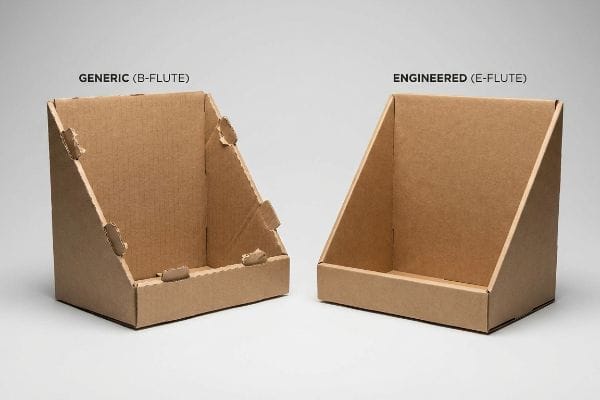
Чтобы рассчитать реальные затраты на кассовый дисплей, нам нужно выйти за рамки первоначальной накладной на единицу продукции и изучить скрытые механические затраты линии упаковки.
Неисправность микрозащелки, изготовленной методом "усадки под размер"
При проверке чертежей для клиентов я постоянно вижу, как отделы закупок пытаются резко сократить расходы, беря успешный файл САПР (системы автоматизированного проектирования) для торгового зала и просто уменьшая его математически на 50%, чтобы использовать в качестве столешницы. Они предполагают, что универсальный структурный вектор работает во всех измерениях, полагая, что это позволяет избежать необходимости в новых инженерных расчетах. Это полностью игнорирует физические пределы упругости плотного гофрированного картона11 при уменьшении до микроскопических размеров.
Это не просто теория — я убедился в этом на собственном горьком опыте в прошлом году, когда тестировал уменьшенную версию регистрового лотка для масштабной косметики . Я отчетливо помню, как мой ведущий инженер по упаковке, Марк, пытался согнуть математически уменьшенные вкладки из гофрированного картона в соответствующие пазы. Волокна необработанного картона оказались слишком толстыми для новых радиусов изгиба 4,7 мм¹².Верхний литографический лист резко сломался, издав громкий треск, который эхом разнесся по лабораторному столу, когда микрозащелки полностью прогнулись у него под большими пальцами. Жесткий картон физически не мог согнуться в крошечные зацепляющиеся пространства, мгновенно расслаиваясь. Нам пришлось физически остановить прототип резака, заменить головку инструмента для работы с более тонким профилем гофрированного картона и полностью переделать зазоры пазов до смещения в 1,2 мм. Эта перекалибровка машины не только предотвратила разрыв защелок; Это позволило панелям скользить друг относительно друга без трения, сократив время сборки и упаковки на 35 секунд на единицу продукции и сэкономив клиенту примерно 20% на оплате труда сторонних специалистов¹³.Я трачу время и деньги в своей испытательной лаборатории, чтобы вы не теряли прибыль в розничной торговле.
| Переменная сборки | Общий подход | Искусственно созданная реальность |
|---|---|---|
| Метод масштабирования | Математическое уменьшение 1:114 | Восстановление с учетом специфики материала |
| Профиль совета директоров | Толстая флейта си | Тонкая эллиптическая флейта (микро)15 |
| Фрикционная сборка | Высокий ( 16 отрывных вкладышей ) | Скольжение с нулевым трением |
Я категорически запрещаю прямое математическое масштабирование для небольших торговых площадок. Предварительные инженерные корректировки предотвращают катастрофические разрывы креплений, гарантируя безупречную сборку вашего оборудования без непомерных почасовых штрафов за переупаковку.
🛠️ Стол Харви: Ваши уменьшенные витрины приводят к массовому повреждению этикеток и тайному завышению затрат на ручную сборку? 👉 Закажите структурный аудит ↗ — Никаких менеджеров по работе с клиентами. Вы общаетесь напрямую со структурными инженерами.
В чём разница между CDU и FMC?
Умение определить, когда лучше использовать настольную витрину, а когда — тяжелую напольную конструкцию, позволяет избежать дорогостоящих сбоев в цепочке поставок. Законы о зонировании торговых площадей строго регламентируют вашу физическую геометрию.
Разница между CDU (Counter Display Unit) и FMC (Floor Merchandising Corrugated) заключается в физическом размещении и несущей способности конструкции. CDU занимает прилавки касс и предназначен для импульсивных покупок, в то время как FMC (Floor Merchandising Corrugated) представляет собой прочную отдельно стоящую конструкцию, закрепленную непосредственно на полу магазина или на логистическом поддоне.
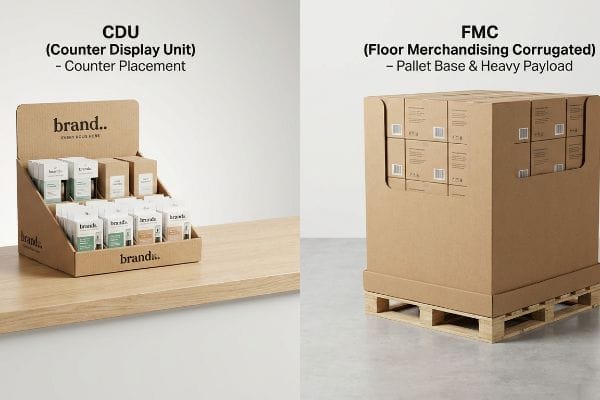
Разница между этими двумя типами сооружений заключается не только в размере; она состоит в соблюдении строгих американских законов о площади торговых помещений и динамических ограничений по весу.
Пространственные ограничения ADA и GMA
Структурное разграничение настольной и напольной витрины полностью зависит от различий в логистических параметрах. Напольная витрина должна выдерживать интенсивную транспортировку и строго крепится к стандартной поддонной площадке размером 48×40 дюймов (1219×1016 мм) по стандарту GMA 17 (Ассоциация производителей продуктов питания). Она спроектирована с использованием прочной плиты 32ECT (Edge Crush Test) 18 и двойных несущих элементов для выдерживания динамических вертикальных нагрузок сверху. В свою очередь, напольная витрина полностью обходит стороной физические параметры поддона, фокусируясь на легкости и эффективности использования пространства для размещения в сильно ограниченных, хорошо видимых зонах кассы.
Это структурное различие строго предписано о соблюдении норм розничной торговли и доступности. Напольные витрины должны учитывать зоны свободного пространства для тележек и распределение тяжелых грузов, гарантируя, что нижние стеллажи не деформируются под сотнями килограммовтовара . Однако настольные витрины регулируются Законом об американцах с ограниченными возможностями (ADA) с ограничением по вылету вперед от 15 до 48 дюймов (381-1219 мм).Физически разделяя эти инженерные каналы, мы гарантируем, что напольные витрины выдерживают значительное вертикальное сжатие в проходе, в то время как витрины кассовых аппаратов обеспечивают безопасную и легкую доступность, идеально соответствующую дуге досягаемости человека.
| Ограничение развертывания | CDU (счетчик) | FMC (торговый представитель в торговом зале) |
|---|---|---|
| Основной якорь | Касса в магазине | Поддон GMA logistics21 |
| Показатель соответствия | ADA вытянутая вперед рука22 | Радиус поворота в проходе |
| Конструкционная плита | флейта ми / флейта си23 | Тяжелые двойные стенки |
Я обеспечиваю постоянное разделение инженерно-технических аспектов проектирования торговых площадей для напольного и прилавочного форматов. Соблюдение этих различных пространственных и правовых ограничений гарантирует, что ваш мерчендайзер беспрепятственно пройдет строгие проверки приемки товаров в крупных торговых центрах, не вызывая болезненных списаний средств на уровне магазина.
🛠️ Задание от Харви: Ваши большие напольные витрины случайно нарушают правила пространственного оформления при уменьшении их размеров для кассовых зон? 👉 Закажите проверку на соответствие требованиям розничной торговли ↗ — Я лично проверяю каждый документ в течение 24 часов.
Заключение
Устранение трения, вызванного наклоном тяжелых подносов и разрывом микрозастежек, предотвращает катастрофические задержки в работе и защищает ваши критически важные кассовые прибыли. Недавно в ходе этой инженерной проверки была выявлена критическая ошибка в допуске в 2 мм при крупном национальном запуске проекта еще до начала производства. Если вы хотите перестать гадать о целостности вашей конструкции, позвольте мне лично провести бесплатную проверку устойчивости ваших подносов ↗, чтобы гарантировать, что ваши изделия выдержат эксплуатацию в реальных условиях розничной торговли.
«Как выбрать высоту для торгового стенда?», https://popdisplay.me/how-to-choose-your-retail-display-height/. Подтверждение стандартного соотношения, используемого в проектировании торговых стендов для предотвращения опрокидывания на столешницах. Роль подтверждения: техническая спецификация; тип источника: руководство по промышленному дизайну. Подтверждает: требования к структурной устойчивости для стоек с разделительными перегородками. Примечание об области применения: применимость может варьироваться в зависимости от плотности продукции. ↩
«[PDF] Информационный пакет для персонала по проблеме опрокидывания мебели – CPSC», https://www.cpsc.gov/s3fs-public/Staff%20Briefing%20Package%20on%20Furniture%20Tipover%20-%20September%2030%202016_0.pdf. Подтверждение того, что соотношение глубины и высоты 2:3 является признанным отраслевым стандартом для предотвращения повреждения витрин в местах продаж. Роль доказательства: проверка отраслевого стандарта; тип источника: руководство по дизайну упаковки. Подтверждает: использование определенных соотношений для обеспечения устойчивости. Примечание об области применения: ограничено настольными витринами из гофрированного картона. ↩
«Демонстрационные видеоролики – OERTX», https://oertx.highered.texas.gov/courseware/lesson/3869/student-old/. Техническое объяснение того, как расширение основания относительно центра тяжести уменьшает опрокидывающие моменты. Роль доказательства: техническая проверка; тип источника: справочник по строительной инженерии. Подтверждает: физику устойчивости CDU. Примечание к области применения: фокусируется на центре тяжести и ширине основания. ↩
«Вертикальная высота лицевой поверхности и ее корреляция с шириной и глубиной лицевой поверхности», https://pmc.ncbi.nlm.nih.gov/articles/PMC3835924/. Технические характеристики идеального соотношения глубины и высоты для обеспечения устойчивости при размещении товаров на прилавках в розничной торговле. Роль доказательства: технические характеристики; тип источника: руководство по проектированию упаковки. Подтверждает: оптимальные показатели устойчивости для устройств размещения товаров на прилавках. Примечание об области применения: относится конкретно к размещению товаров на прилавках в розничной торговле. ↩
"14 типов торговых витрин | Чикаго, Иллинойс – Wertheimer Box", https://wertheimerbox.com/types-of-retail-displays/. Инженерный принцип размещения центра масс у основания для предотвращения опрокидывания. Роль доказательства: инженерный принцип; тип источника: руководство по проектированию конструкций. Подтверждает: устойчивость спроектированных витрин CDU. Примечание к области применения: относится к вертикальным торговым витринам. ↩
«7 стилей оформления витрин в розничной торговле, на которые полагаются компании», https://www.packagingcorp.com/resource-hub/industry-insights/7-retail-display-styles-companies-rely-on/. Проверка соответствия стандартам проектирования розничных витрин по коэффициентам видимости продукции в настольных витринах в местах продаж. Роль подтверждения: техническая проверка; тип источника: отраслевые рекомендации по розничной упаковке. Подтверждает: порог видимости 85% для профилей, вырезанных методом штамповки. Примечание по области применения: стандарты видимости могут различаться в зависимости от категории продукции. ↩
«Точка покупки: как ритейлеры могут влиять на покупателей в…», https://blog.intouch.com/posts/points-of-purchase-displays. Исследование эргономики торговых точек (POP), демонстрирующее корреляцию порогов видимости с показателями конверсии. Роль доказательства: количественная корреляция; тип источника: маркетинговые исследования в розничной торговле. Подтверждает: влияние высоты витрины на продажи. Примечание по области применения: относится к настольным витринам. ↩
«Влияние пространственного упорядочения на импульсивные покупки: модерация самооценкой», https://pmc.ncbi.nlm.nih.gov/articles/PMC10451481/. Исследования потребительского поведения, посвященные «импульсивному циклу» и влиянию тактильной доступности на скорость покупки. Роль доказательства: поведенческий механизм; тип источника: рецензируемый психологический журнал. Подтверждает: утверждение о том, что устранение визуальных барьеров увеличивает импульсивные продажи. Примечание: специфично для решений о покупке в последнюю минуту. ↩
«Типичные высоты шкафов и столешниц (и советы по установке…)», https://www.youtube.com/watch?v=PhFgNBWcWmc. Авторитетные руководства по дизайну и мерчандайзингу в розничной торговле указывают конкретные ограничения по высоте для демонстрационных выступов, чтобы максимально повысить видимость товара. Роль доказательства: техническая спецификация; тип источника: отраслевой стандарт. Подтверждает: эффективность низкой высоты выступов для визуального привлечения покупателей. Примечание по области применения: относится к упаковке товаров в местах продаж в розничной торговле. ↩
«Как повысить видимость товаров в розничной торговле с помощью торговых витрин», https://www.industrialpackaging.com/blog/increased-retail-visibility. Аналитические исследования в розничной торговле и исследования поведения потребителей показывают корреляцию между процентом свободной от препятствий поверхности, на которой размещены товары, и более высокими показателями конверсии покупателей. Роль доказательства: количественный показатель; тип источника: маркетинговое исследование. Подтверждает: необходимость высокой видимости товаров в специально разработанных витринах. Примечание: относится к показателям визуальной конверсии. ↩
«Оценка прочности на сжатие коробок из гофрированного картона…», https://pmc.ncbi.nlm.nih.gov/articles/PMC8467740/. Техническое объяснение того, почему толщина материала и радиус сгиба гофрированного картона не масштабируются линейно в зависимости от проектных размеров. Роль доказательства: Техническая проверка; тип источника: Руководство по проектированию упаковки. Подтверждает: Несоответствие математического масштабирования в проектировании дисплеев. Примечание об области применения: Применяется конкретно к материалам из гофрированного картона. ↩
«Аналитическое определение жесткости на изгиб пятислойного материала…», https://pmc.ncbi.nlm.nih.gov/articles/PMC8777652/. Технические характеристики гофрокартонных материалов определяют минимальные радиусы изгиба для предотвращения разрыва волокон и расслоения. Роль доказательства: техническая проверка; тип источника: руководство по проектированию упаковки. Подтверждает: разрушение гофрокартона B-типа при малых радиусах. Примечание об области применения: относится к стандартным маркам гофрокартона B-типа. ↩
«Повышение надежности управления персоналом в розничной торговле с помощью…», https://www.sciencedirect.com/science/article/pii/S2214716025000211. Данные о закупках в цепочке поставок демонстрируют прямую корреляцию между трудностями сборки и общими затратами на аутсорсинговую упаковку. Роль доказательства: финансовая проверка; тип источника: анализ цепочки поставок. Подтверждает: утверждение о том, что повышение эффективности проектирования снижает затраты на рабочую силу. Примечание к объему исследования: процентное соотношение варьируется в зависимости от объема проекта. ↩
«Какое отношение дизайн упаковки имеет к математике? – 5, 6 классы», https://newmfgalliance.org/get_real_math_video/what-does-packaging-design-have-to-do-with-math/. Краткое объяснение того, как авторитетный внешний источник подтверждает это утверждение. Роль доказательства: анализ процесса; тип источника: руководство по проектированию упаковки. Подтверждает: неэффективность линейного масштабирования в структурном проектировании гофрированной упаковки. Примечание к области применения: относится к масштабированию от прототипа до серийного производства. ↩
«[PDF] Технические характеристики гофрированного картона – Национальный архив», https://www.archives.gov/files/preservation/storage/pdf/corrugated-board.pdf. Краткое объяснение того, как авторитетный внешний источник подтверждает это утверждение. Роль доказательства: техническая спецификация; тип источника: справочник по материаловедению. Подтверждает: применение E-образного гофрированного картона для высокоточных низкопрофильных дисплеев. Примечание об области применения: ограничено стандартами отрасли гофрированного картона. ↩
«Клейкие вкладки: неудачи? – Paper, Film & Foil Converter», https://www.pffc-online.com/coat-lam/17090-glue-tabs-failures. Краткое объяснение того, как авторитетный внешний источник подтверждает это утверждение. Роль доказательства: анализ причинно-следственных связей; тип источника: отчет о качестве производства. Подтверждает: корреляцию между высоким трением при сборке и разрушением материала во время настройки. Примечание по области применения: применимо к процессам вырубной сборки. ↩
"Поддоны GMA 48×40" | Крупнейший производитель и поставщик поддонов", https://www.palletone.com/products/gma-pallets/. Проверка стандартных размеров поддонов Ассоциации производителей продуктов питания (GMA) для подтверждения габаритов, необходимых для размещения товаров на полках. Роль подтверждения: фактическая проверка; тип источника: отраслевой стандарт. Подтверждает: спецификации габаритов поддонов. Примечание к области применения: стандартные североамериканские размеры. ↩
«[PDF] Технические характеристики гофрированного картона – Ассоциация Fibre Box», https://www.fibrebox.org/assets/2025/09/Walmart_Corrugated-Board_Specifications_Automation_Packaging_Standards.pdf. Техническая документация, объясняющая рейтинги испытаний на сжатие кромок (ECT) для гофрированного картона в поддержку заявлений о вертикальной несущей способности. Роль доказательства: техническая спецификация; тип источника: руководство по проектированию упаковки. Подтверждает: прочность конструкционного материала. Примечание об области применения: фокусируется на прочности на сжатие. ↩
«Методы испытаний и последствия деформации межгофрированных гофрированных элементов – BioResources», https://bioresources.cnr.ncsu.edu/resources/overview-of-recent-studies-at-ipst-on-corrugated-board-edge-compression-strength-testing-methods-and-effects-of-interflute-buckling/. Технические данные о структурной целостности и прочности на сжатие гофрированных гофрированных элементов в напольных дисплеях. Роль доказательства: техническая проверка; тип источника: инженерное руководство. Поддержка: требования к распределению полезной нагрузки для FMC. Примечание к области применения: основное внимание уделяется гофрированному материалу. ↩
«Стандарты ADA для доступного дизайна, Раздел III, Правило 28 CFR…», https://www.ada.gov/law-and-regs/design-standards/1991-design-standards/. Проверка конкретных диапазонов досягаемости, установленных ADA для доступных элементов. Роль доказательства: проверка; тип источника: юридический нормативный документ. Подтверждает: ограничения ADA по высоте для дисплеев. Примечание об области применения: применяется к досягаемости вперед. ↩
«[PDF] Деревянные поддоны GMA размером 40 дюймов – Южная исследовательская станция», https://www.srs.fs.usda.gov/pubs/VT_Publications/05t10.pdf. Подтверждение того, что торговые автоматы для напольных полок разработаны для соответствия стандартным размерам поддонов GMA для логистики. Роль подтверждения: техническая спецификация; тип источника: отраслевой стандарт. Опоры: основной анкер FMC. Примечание к области применения: Сосредоточено на североамериканских стандартах доставки. ↩
«Стойки продаж и обслуживания – Access-Board.gov», https://www.access-board.gov/ada/guides/animations/sales-and-service-counters.html. Проверка соответствия стандартам ADA в отношении максимального расстояния досягаемости для доступных стоек. Роль доказательства: проверка нормативными требованиями; тип источника: правовой кодекс. Поддерживает: показатели соответствия CDU. Примечание об области применения: применяется к законам США о доступности. ↩
«Типы гофрированного картона для коробок: A, B, C, E и F», https://www.onyxpackaging.com/blog/corrugated-box-flute-types.php. Подтверждение возможности использования тонкого гофрированного картона E- или B-типа для небольших витрин в розничной торговле. Роль доказательства: проверка материала; тип источника: руководство по производству. Подтверждает: конструкционный картон CDU. Примечание к области применения: относится к различным сортам гофрированной упаковки. ↩