Ожидание сроков поставки упаковки может полностью сорвать запуск продукта. Когда установленные для розничной торговли , строго соблюдаются, попытки угадать сроки производства представляют собой огромный логистический риск.
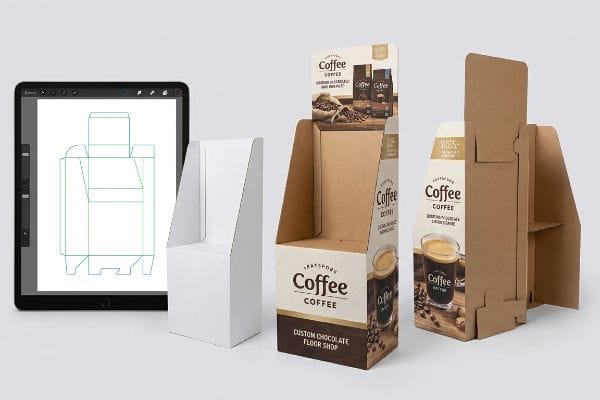
Изготовление напольных картонных конструкций на заказ занимает в среднем от трех до шести недель. Этот срок в значительной степени зависит от согласования с инженерами-конструкторами, физического отбора образцов и автоматизированных процессов допечатной подготовки. Ускоренные тиражи с использованием прямой цифровой печати на картоне иногда позволяют сократить этот сложный производственный график всего до четырнадцати дней.
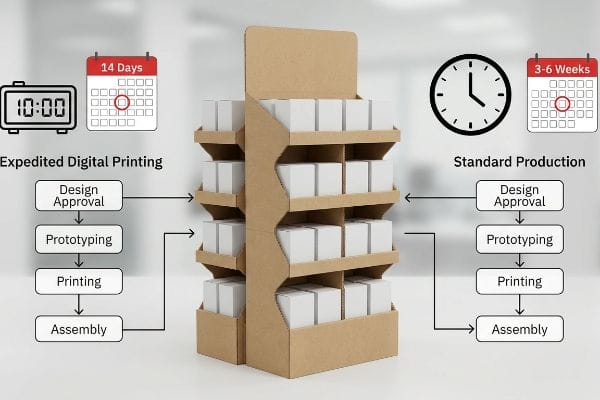
Но прежде чем точно рассчитать сроки запуска следующего коммерческого проекта, необходимо понять физические ограничения самого материала.
Каков срок службы картона?
Чтобы оценить, как долго ваша упаковка будет служить в розничной торговле, необходимо не только взглянуть на визуальный дизайн, но и изучить состав исходной целлюлозы.
Обычно срок службы картона составляет от шести до двенадцати месяцев в условиях контролируемого климата в розничной торговле. Однако при воздействии высокой влажности, больших объемов продукции или сильной вибрации в цепочке поставок незащищенные волокна гофрированной бумаги быстро изнашиваются и теряют свою прочность на сжатие в течение нескольких недель.
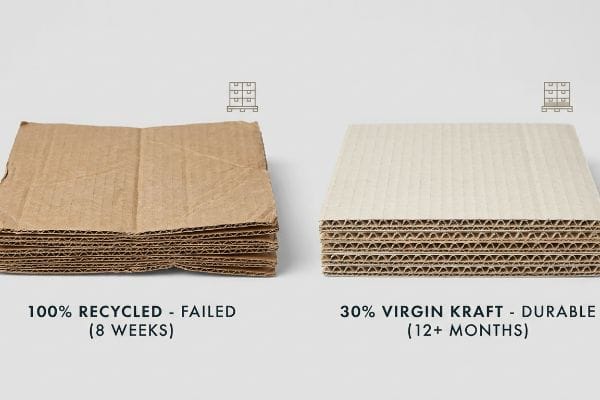
Знание этого базового показателя полезно, но теоретический срок службы резко меняется, как только вы фактически загружаете его тяжелыми товарами.
Почему переработанные гофрированные витрины преждевременно выходят из строя
Бренды, стремящиеся к максимальной экологичности, часто требуют использования 100% переработанного тестлайнера для своих временных торговых стендов. Обычно предполагается, что переработанный картон обладает точно такими же физическими свойствами, как и свежий материал¹.Отделы закупок просто смотрят на теоретический показатель ECT (тест на прочность кромки) в PDF-файле (Portable Document Format) и предполагают, что стенд выдержит шестимесячную рекламную кампанию без проблем.
Даже опытные дизайнеры часто упускают из виду этот недостаток при проектировании подносов для демонстрации товаров повышенной прочности. Я часто вижу, как структурно изношенные переработанные картонные подносы выходят из строя во время испытаний под реальной нагрузкой, потому что микроскопические целлюлозные волокна физически укорачиваются и ослабевают после пяти-семи циклов переработки2.В прошлом квартале я наблюдал, как полностью загруженный нижний ярус из переработанного картона медленно прогибался наружу, и отчетливый, резкий звук разрыва необработанного картона под огромным давлением верхней нагрузки эхом разносился по моему испытательному залу. Чтобы исправить это, я применяю строгий гибридный подход к материалам, вводя ровно 30% первичного крафт-материала3 непосредственно в несущие гофры. Это стратегическое введение длинных, свежих бумажных волокон мгновенно восстанавливает динамическую прочность на сжатие, необходимую для того, чтобы выдержать двухъярусную морскую перевозку. Укрепляя эту основную структуру, я гарантирую, что линия совместной упаковки не остановится из-за обрушившихся подносов, предотвращая массовые списания со стороны розничных продавцов и экономя клиентам значительные средства на ручную переделку.
| Распространённая ошибка новичков | Профессиональное решение | Преимущества для торговых площадей |
|---|---|---|
| Используется 100% переработанный тестовый слой для плотных оснований | Введение 30% первичного крафт-волокна в гофрокартон4 | Предотвращает смятие нижнего яруса под нагрузкой |
| Опираясь на показатели ECT плоских плат5 | Тестирование полностью сложенной 3D-геометрии | Гарантирует сохранность при перемещении поддонов |
| Не принимая во внимание влажность воздуха в магазине | Применение целенаправленных влагозащитных барьеров6 | Предотвращает провисание полок во время предвыборной кампании |
Я никогда не рискую, используя отработанные переработанные волокна при запуске общенационального проекта. Укрепление внутренних гофр с помощью первичного материала — единственный математический способ гарантировать, что ваша конструкция выдержит суровые реалии логистики крупных розничных сетей.
🛠️ За столом Харви: Не уверены, что ваши нынешние экологичные плиты изношены? 👉 Запросите аудит материалов ↗ — Прямой доступ ко мне. Никакого автоматического спама с рекламой, обещаю.
Как печатаются изображения на картоне?
Нанесение цифрового изображения высокого разрешения на необработанную гофрированную поверхность — гораздо более сложная задача, чем нажатие кнопки печати.
Изображения печатаются на картоне преимущественно с использованием флексографии, литографии-ламинирования или цифровых планшетных систем прямой печати на картоне. Литография-ламинирование предполагает нанесение чернил на высококачественный верхний слой перед приклеиванием его к гофрированному картону, что обеспечивает высочайшую визуальную точность для сложных торговых витрин и требовательной упаковки товаров в местах продаж.
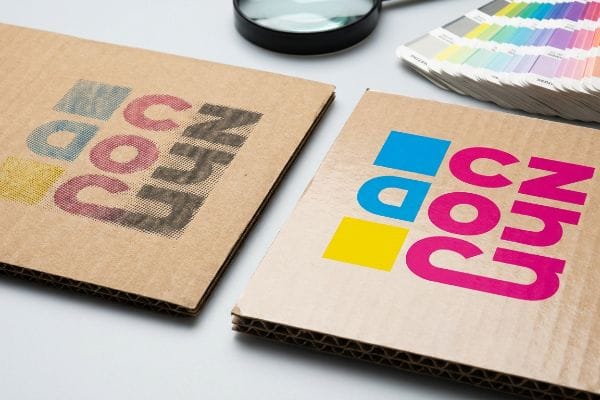
Хотя литографическое ламинирование обеспечивает потрясающее качество, применение стандартных принципов коммерческой печати к необработанному картону сопряжено с серьезными визуальными рисками.
Полутоновая ловушка для грязи CMYK на пористом картоне
Маркетинговые команды часто преобразуют стандартные корпоративные логотипы в стандартные форматы CMYK (голубой, пурпурный, желтый и черный)7, полагая, что технология печати идеально подойдет для отображения на экранах их цифровых компьютеров. Они отправляют эти файлы на фабрику, ожидая, что четырехцветная матричная печать идеально сочетается и воссоздаст яркую фирменную идентичность на конечном продукте или дисплее.
Это распространённая ловушка, в которую попадают даже опытные отделы закупок, которые считают, что картон впитывает чернила так же, как глянцевая журнальная бумага. Стандартная четырёхцветная печать основана на крошечных перекрывающихся полутоновых точках, но когда они попадают на необработанный, незапечатанный тестовый образец, чернила неравномерно впитываются в глубокие пористые волокна бумаги⁸.Я регулярно вижу образцы белого цвета первого тиража, где яркий логотип бренда превращается в зернистое, блеклое, мутное пятно под резким флуоресцентным освещением в розничных магазинах. Можно физически провести голой рукой по картону и почувствовать влажные, перенасыщенные чернила, которые не закрепились должным образом на поверхности. Чтобы устранить эту полутоновую зернистость, я ввожу протокол заливки точечным цветом, смешивая точные чернила PMS (система подбора цветов Pantone) для заливки конкретной зоны брендинга. Замена перекрывающихся точек одним плотным слоем сплошного пигмента⁹гарантирует высокую контрастность изображения с расстояния двадцати футов (6,09 м), полностью исключая риск отбраковки партии розничным продавцом из-за плохого визуального соответствия.
| Распространённая ошибка новичков | Профессиональное решение | Преимущества для торговых площадей |
|---|---|---|
| Использование CMYK для создания узнаваемых корпоративных логотипов | Заливка сплошных участков определенными точечными цветами ПМС10 | Устраняет зернистые и нечеткие изображения бренда |
| Игнорируя пористость необработанного тестлайнера | Печать на мелованном литографическом ламинирующем листе11 | Текст остается четким и идеально читаемым |
| Использование цифровых пробных оттисков с подсветкой | Проверка физических цветовых решений в лайтбоксе12 | Обеспечивает точное соответствие цветов при ярком освещении в магазине |
Я категорически не рекомендую использовать CMYK-модели для основных логотипов на пористых материалах. Единственный способ защитить имидж бренда и гарантировать, что ваши графические элементы будут выделяться в переполненном торговом зале, — это использовать настоящий плашечный цвет Pantone.
🛠️ Задание от Харви: Цвета вашего бренда на текущей упаковке из гофрированного картона становятся тусклыми и блеклыми? 👉 Получите бесплатное руководство по цветовому оформлению ↗ — Скачайте безопасно. Мой почтовый ящик открыт, если у вас возникнут вопросы позже.
Как был изобретен картон?
Переход от плоской бумаги к жестким упаковочным материалам, которые мы используем сегодня, был обусловлен исключительно необходимостью поглощения кинетических ударов во время транспортировки.
Картон был изобретен путем адаптации волнистой бумаги, первоначально использовавшейся в качестве подкладки для высоких шляп в девятнадцатом веке. Поместив эту волнистую, гофрированную бумагу между двумя плоскими листами картона, инженеры создали современный гофрированный картон. Эта внутренняя арочная геометрия придала легкому материалу невероятную структурную жесткость и динамическую амортизацию ударов.
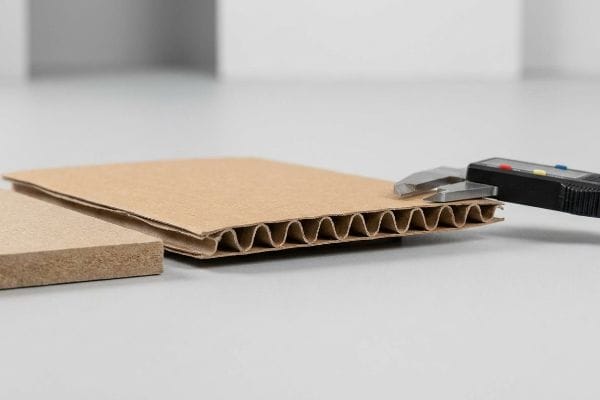
Но знания теории, лежащей в основе этих внутренних волнообразных арок, недостаточно, когда автоматизированные машины начинают работать на высоких скоростях.
Почему игнорирование архитектуры Flute приводит к снижению грузоподъемности
Отделы закупок часто пытаются масштабировать конструкции из легкого, прочного картона до более тяжелых лотков, готовых к розничной продаже , чтобы сэкономить на стоимости сырья. Они исходят из предположения, что сама плотность толстого, плоского картона равна динамической несущей способности. Это приводит к огромным структурным «слепым зонам», поскольку в нерифленых подложках отсутствуют внутренние волнообразные арки,которые присутствуют в настоящем гофрированном картоне.
Это не просто теория — я вижу это на испытательном полигоне, когда клиенты пытаются перегрузить сплошное картонное основание. Под воздействием больших вертикальных нагрузок сверху, сплошной картон без рифлений просто выгибается наружу и деформируется, потому что статическая плотность материала не может заменить геометрическое смещение нагрузки. В моем цехе, когда я измеряю прогиб на вибростенде ISTA (Международная ассоциация безопасной транспортировки), лоток из сплошного картона с грузом 20,6 кг (45,5 фунтов) резко ломается по углам. Звук разрушения клеевых швов жесткого картона — это огромный тревожный сигнал. Решение проблемы происходит на вырубном станке; я устанавливаю опору материала на легкую микрорифленую подложку B-типа, точно калибруя стальную линейку так, чтобы она зацеплялась за картон, не раздавливая внутренние арки. Благодаря строгому допуску на толщину рифления в 0,11 дюйма (2,79 мм)¹⁴, я гарантирую, что арочная геометрия безопасно поглощает кинетическую энергию. Это простое механическое усовершенствование позволяет сократить время сборки упаковки на 35 секунд на единицупродукции¹⁵, полностью исключая повреждения при транспортировке во время тяжелых перевозок.
| Распространённая ошибка новичков | Профессиональное решение | Преимущества для торговых площадей |
|---|---|---|
| Масштабирование плоских ДСП для перевозки тяжелых грузов | Переход к микрорифленой подложке типа B-рифленой поверхности16 | Предотвращает деформацию подноса на полке |
| Раздавливание канавок из-за неправильного давления в матрице | Калибровка раскройных столов с точностью до диаметра канавки | Сохраняет динамическое поглощение ударов |
| Предположим, что плотность материала равна прочности | Использование геометрических арок для смещения верхней нагрузки17 | Позволяет безопасно укладывать изделия в два яруса на складах |
Я никогда не позволяю командам по закупкам жертвовать физическими свойствами гофрированного картона ради дешевого цельного картона. Использование этой внутренней арочной геометрии — это лучшая защита от кинетических ударов при транспортировке, обеспечивающая сохранность вашей продукции от завода до производственного цеха.
🛠️ Совет от Харви: Не позволяйте двухмиллиметровому структурному дефекту испортить запуск продаж в 500 магазинах. 👉 Пришлите мне файл с чертежами ↗ — Я проверю расчеты, прежде чем вы потратите бюджет на массовое производство.
Заключение
Можно сократить расходы, печатая CMYK на необработанном тестовом листе, но когда эти чернила неравномерно впитываются в пористые волокна и создают нечеткий логотип бренда, это немедленно приводит к отказу со стороны розничных продавцов и обнуляет вашу прибыль. Это именно та спецификация, которую используют мои 10 крупнейших розничных клиентов, чтобы гарантировать отсутствие отказов в печати. Перестаньте рисковать, полагаясь на пористость чернил, и позвольте мне лично оценить ваш макет с помощью моего бесплатного аудита высечки на этапе допечатной подготовки ↗, чтобы выявить фатальные эстетические ошибки до начала производства.
«Влияние гофрированной упаковки на окружающую среду», https://www.internationalpaper.com/resources/blog/environmental-impact-corrugated-packaging-why-balanced-fiber-approach-best. Техническое сравнение длины волокон и прочности на сжатие между 100% переработанным тестлайнером и первичным крафт-лайнером. Роль доказательств: опровержение/подтверждение; тип источника: исследование в области материаловедения. Подтверждает: разрыв между теоретическим значением ECT и реальной долговечностью. Примечание к области исследования: фокусируется на деградации целлюлозных волокон в процессе переработки. ↩
«[PDF] Что происходит с целлюлозными волокнами в процессе производства бумаги и переработки…», https://bioresources.cnr.ncsu.edu/BioRes_02/BioRes_02_4_739_788_Hubbe_VR_Recycling_Cellulosic_Fibers_Review.pdf. Техническое подтверждение снижения длины и механических свойств целлюлозных волокон в течение нескольких циклов переработки. Роль доказательства: техническое подтверждение; тип источника: журнал по материаловедению. Подтверждает: механизм укорочения волокон. Примечание: относится конкретно к переработанному гофрированному картону. ↩
«Прочность на сжатие гофрированной картонной упаковки с…», https://pmc.ncbi.nlm.nih.gov/articles/PMC10054506/. Отраслевой стандарт или эмпирические данные, обосновывающие использование 30% первичного волокна для восстановления прочности на сжатие. Роль доказательства: эталон спецификации; тип источника: справочник по проектированию упаковки. Подтверждает: стратегию использования гибридных материалов. Примечание к области применения: фокусируется на несущей способности гофрирования. ↩
«[PDF] Исследование механических свойств картонной упаковки…», https://repository.rit.edu/cgi/viewcontent.cgi?article=1066&context=japr. Техническое подтверждение того, как определенные проценты первичного крафт-волокна повышают прочность на сжатие гофрированного картона по сравнению с переработанными аналогами. Роль доказательства: техническая спецификация; тип источника: журнал по материаловедению. Подтверждает: повышение прочности основания. Примечание к области применения: специфично для торговых витрин с большой нагрузкой. ↩
«Объяснение рейтингов ECT: что они означают для вашей гофрированной упаковки…», https://epackagesupply.com/blogs/packaging-guide/ect-ratings-explained-what-they-mean-for-your-corrugated-packaging?srsltid=AfmBOorKWdNhwS9ARaiiT3fo77z9e2V5MMTCab-MZ69w8-hxeSqZNMdi. Объяснение расхождения между рейтингами испытаний на сжатие кромок (ECT) для плоских листов и фактической несущей способностью сложенных 3D-структур. Роль доказательства: сравнение со стандартами испытаний; тип источника: справочник по проектированию упаковки. Подтверждает: необходимость 3D-тестирования. Примечание об области применения: применяется к палетизированной розничной торговле. ↩
«Влияние влажности и температуры на механические свойства…», https://bioresources.cnr.ncsu.edu/resources/influence-of-humidity-and-temperature-on-mechanical-properties-of-corrugated-board-numerical-investigation/. Доказательства того, как водные покрытия предотвращают поглощение целлюлозными волокнами влаги из окружающей среды и потерю структурной жесткости. Роль доказательств: проверка химических свойств; тип источника: отраслевой аналитический документ. Подтверждает: предотвращение провисания полок. Примечание к области применения: фокусируется на условиях окружающей среды в магазинах. ↩
«Экранные и печатные цвета: понимание RGB и CMYK», https://www.hickmanlabel.com/2024/07/17/on-screen-vs-printed-colors-understanding-rgb-and-cmyk/. Техническое объяснение субтрактивной цветовой модели CMYK и ее принципиального отличия от аддитивной цифровой цветовой модели RGB. Роль источника: базовое определение; тип источника: руководство по науке о цвете. Подтверждает: техническую причину несоответствия цветов между экранами и печатью. Область применения: общие стандарты печати. ↩
«Математическое моделирование и стратегии компенсации для печатной точки…», https://pmc.ncbi.nlm.nih.gov/articles/PMC12574880/. Техническое объяснение того, как пористость исходного картона вызывает впитывание чернил и увеличение размера полутоновых точек по сравнению с мелованными материалами. Роль доказательства: технический механизм; тип источника: руководство для полиграфической промышленности. Подтверждает: объяснение нарушения целостности чернил на пористом картоне. Примечание к области применения: конкретно относится к незапечатанному тестовому образцу. ↩
«Разница между плашечными цветами и цветами CMYK», https://www.deprintedbox.com/blog/spot-vs-process-color/. Подтверждение того, что сплошные слои чернил PMS обеспечивают более высокую непрозрачность и контрастность на пористых подложках, чем полутоновые цвета CMYK. Роль доказательства: техническая спецификация; тип источника: руководство по цветовой науке. Подтверждает: эффективность протоколов заливки плашечными цветами. Примечание к области применения: фокусируется на плотности пигмента. ↩
«Плавные цвета против CMYK в дизайне упаковки – что лучше?», https://stampaprints.com/blog/spot-color-vs-cmyk-for-packaging/?srsltid=AfmBOop4TzdHc5hcjud9Hye_cIMaywNRE8IU1ruVYRZs-kYd1be8m8pA. Техническая документация об эффективности системы подбора цветов Pantone (PMS) для предотвращения размытия чернил на пористых подложках. Роль доказательства: техническая проверка; тип источника: руководство для полиграфической промышленности. Подтверждает: использование плашечных цветов для обеспечения единообразия бренда. Примечание: относится конкретно к сплошным заливкам. ↩
«Преимущества литографически ламинированной упаковки», https://www.peekpackaging.com/benefits-of-litho-laminated-packaging/. Отраслевые стандарты, объясняющие, как литографическая ламинация предотвращает впитывание чернил (просачивание) по сравнению с необработанным тестлайнером. Роль доказательства: проверка материаловедческих принципов; тип источника: руководство по проектированию упаковки. Подтверждает: утверждение о том, что листы с покрытием сохраняют четкость текста. Примечание к области применения: основное внимание уделяется пористости поверхности. ↩
«Световые короба против традиционных вывесок – Tectonics», https://tectonics.com/light-box-displays-vs-traditional-signage/. Стандарты цветоведения, касающиеся необходимости физических пробных оттисков при контролируемом освещении (D50/D65) во избежание метамеризма в розничной торговле. Роль доказательства: процедурная проверка; тип источника: учебник по управлению цветом. Подтверждает: точность физических оттисков на экранах с подсветкой. Примечание об области применения: применяется к окончательному контролю качества. ↩
«Сравнительное руководство по упаковке из ДСП и картона», https://feeds.gmsindustries.com/blog/chipboard-box-vs-cardboard. Техническое сравнение материалов, демонстрирующее потерю структурной жесткости при удалении гофрированного слоя. Роль доказательства: техническая проверка; тип источника: инженерное руководство. Подтверждает: утверждение о том, что плоские подложки обладают меньшей динамической несущей способностью, чем гофрированный картон. Примечание к области применения: основное внимание уделено прочности на сжатие и амортизации ударов. ↩
«[PDF] Технические характеристики гофрированного картона – Ассоциация Fibre Box», https://www.fibrebox.org/assets/2025/09/Walmart_Corrugated-Board_Specifications_Automation_Packaging_Standards.pdf. Проверка толщины (диаметром) стандартного отраслевого образца для гофрированного картона B-типа для обеспечения технической точности. Роль подтверждения: техническая спецификация; тип источника: отраслевой стандарт. Подтверждает: указанную точность допуска материала. Примечание об области применения: относится к подложкам из гофрированного картона B-типа. ↩
«Революционизация производства и оптимизации гофрированного картона с помощью…», https://bioresources.cnr.ncsu.edu/resources/revolutionizing-corrugated-board-production-and-optimization-with-artificial-intelligence/. Эмпирические данные или тематические исследования, демонстрирующие, как переход на гофрированные подложки повышает скорость сборки и снижает повреждения. Роль доказательства: показатель производительности; тип источника: исследование в области промышленной инженерии. Подтверждает: утверждение о сокращении времени и устранении повреждений. Примечание: производительность может варьироваться в зависимости от типа продукта. ↩
«Понимание прочности упаковочных коробок – EcoEnclose», https://www.ecoenclose.com/blog/understanding-shipping-box-strength/?srsltid=AfmBOorbt4b1YdLEsSWyvZOA3_gwH0eo_3y7ruTauAJGvpe6NHIrBpOe. Технические данные из стандартов на упаковку подтверждают структурные свойства и несущую способность гофрированного картона по сравнению с ДСП. Роль доказательства: техническая спецификация; тип источника: отраслевой стандарт. Поддержка: эффективность гофрированного картона при больших нагрузках. Примечание об области применения: ограничено стандартами для гофрированного картона. ↩
«Понимание прочности транспортных коробок – EcoEnclose», https://www.ecoenclose.com/blog/understanding-shipping-box-strength/?srsltid=AfmBOoo_suerD65IeaOmcXwQ0pWHqFpdNumI9GNPZugk0CerLMIQC6lw. Инженерный анализ физики арки объясняет, как гофрированная среда распределяет вертикальные сжимающие нагрузки. Роль доказательства: теоретическое доказательство; тип источника: учебник по машиностроению. Подтверждает: использование геометрии вместо плотности для определения прочности. Примечание по области применения: фокусируется на структурной механике. ↩