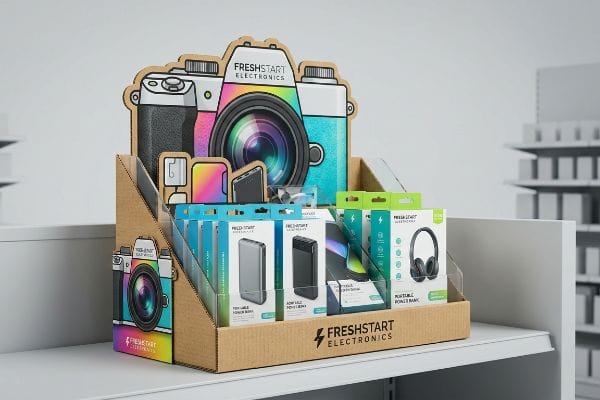
Вы вкладываете огромные бюджеты в разработку продукта, а он в итоге оказывается незаметным на переполненных полках. Пора перестать надеяться на органический рост продаж и начать их стимулировать.
Торговая витрина — это структурный инструмент розничной торговли, предназначенный для привлечения потока посетителей и стимулирования импульсивных покупок. В отличие от обычных стеллажей, эти изготовленные на заказ физические конструкции используют яркую графику, вырезанные формы и пространственное расположение для активного превращения случайных покупателей в клиентов.
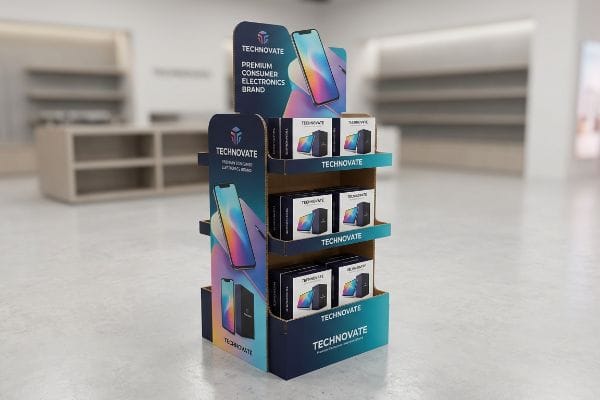
Понимание теории трансформации розничной торговли — это лишь первый шаг. Для того чтобы действительно защитить вашу рентабельность инвестиций, нам необходимо преодолеть разрыв между концепциями цифрового маркетинга и суровой физической реальностью производственного цеха.
Какие существуют примеры POS-дисплеев?
Существует множество форматов на выбор, но для подбора подходящего торгового оборудования необходимо точно понимать, как покупатель перемещается по торговому пространству.
Примерами POS-дисплеев являются напольные витрины, палетная упаковка, настольные модули и готовые к размещению на полках подносы. Эти конкретные торговые конструкции активно привлекают поток посетителей на определённом расстоянии, завоёвывая внимание проходящих мимо покупателей и стимулируя немедленные импульсивные покупки.
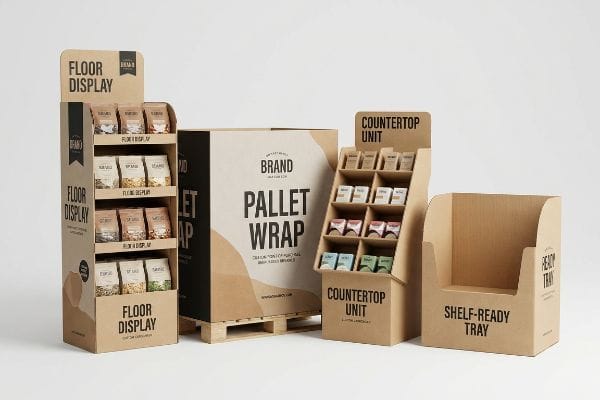
Выбрать формат из каталога поставщика легко, но оптимизация его для человеческого поведения требует целенаправленного пространственного проектирования.
Примеры применения пространственной модели 3-3-3 в розничной торговле
Многие маркетинговые команды подходят к форматам оформления торговых точек, просто размещая логотип своего бренда на стандартных шаблонах. Они предполагают, что большой напольный стенд и небольшой настольный стенд работают в одном визуальном направлении, не адаптируя свою типографику и структурные элементы к условиям розничной торговли¹ .
Даже опытные дизайнеры часто упускают из виду, как физическое расстояние определяет визуальную структуру. Я всегда разрабатываю примеры, основываясь на пространственном правиле 3-3-3² . На расстоянии 9 метров (10 метров) ваша напольная витрина должна иметь массивные вырезанные элементы и яркие акцентные цвета, чтобы привлечь внимание от основного прохода. На расстоянии 90 метров (1 метра) эргономика полки должна наклонять товар к покупателю, побуждая его к просмотру. Наконец, на расстоянии 7,5 см (3 дюйма) передний защитный бортик должен быть обрезан достаточно низко, чтобы было видно 85 % упаковки³ , устраняя все препятствия для покупки. Если выбранный вами формат не соответствует ни одному из этих визуальных расстояний, покупатель просто пройдет мимо.
| Распространённая ошибка новичков | Профессиональное решение | Преимущества для торговых площадей |
|---|---|---|
| Печать мелкого текста на напольных дисплеях | Применение высококонтрастных точечных цветовых заливок | Привлекает внимание с расстояния 9 метров4 |
| Использование высоких бортиков на полках | Снижение видимости передних губ до 85%5 | Повышает эффективность импульсивного захвата |
| Симметричная, плоская укладка продукции | Использование модульных перегородок для наклонной демонстрации | Визуальное восприятие силы на расстоянии 3 футов6 |
Разработка оптимального пространственного формата гарантирует, что ваши маркетинговые вложения приведут к тактильному взаимодействию, физически направляя руку потребителя непосредственно к вашему продукту.
🛠️ Рабочий стол Харви: Не уверены, что ваш текущий выставочный стенд привлекает внимание с расстояния в тридцать футов? 👉 Пришлите мне свой рендер ↗ — Прямой доступ к моему рабочему столу. Никакого автоматического спама с рекламой, обещаю.
Кто обычно предоставляет POS-дисплеи?
Закупка материальной базы — это тот этап, на котором большинство рекламных кампаний либо обеспечивают себе прибыль, либо теряют деньги из-за разрозненной логистики.
Поставщики POS-дисплеев обычно сотрудничают со специализированными производителями упаковки и инженерными предприятиями, работающими по принципу «под ключ». Опытные директора по маркетингу полагаются на консолидированные цепочки поставок, чтобы исключить узкие места в сборке и гарантировать высокоскоростное выполнение масштабных национальных розничных кампаний.
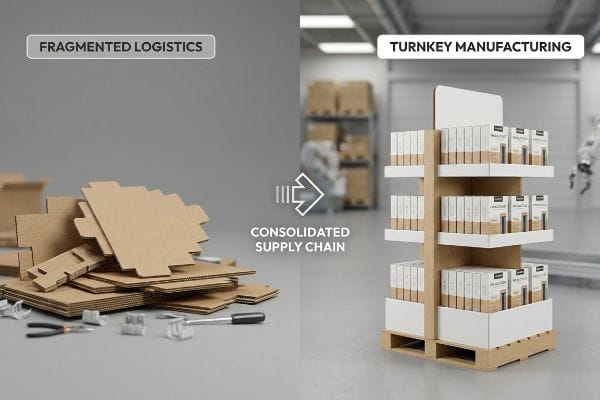
Важно знать, кто производит компоненты, но понимание того, кто несет ответственность при сборке этих компонентов, имеет решающее значение для вашего бюджета.
Ответственность за производство по контракту и производство «под ключ»
Бренды часто пытаются минимизировать первоначальные затраты, используя фрагментарный подход⁷.Они закупают сырье для гофрокартона у местной типографии, покупают пластиковые зажимы у брокера, а затем платят отдельному подрядчику исключительно за ручную сборку. Они предполагают, что эти отдельные маркетинговые элементы просто идеально соединятся во время выполнения заказа.
Фрагментация цепочки поставок неизбежно нарушает график рекламной кампании. Если отдельные компоненты поступают с несоответствием даже на небольшую величину, запуск розничной кампании застопоривается. Объединение допечатной подготовки и сборки под управлением одного поставщика «под ключ» гарантирует правильное согласование всех структурных компонентов. Перекладывая ответственность за совместимость непосредственно на централизованного партнера, вы обеспечиваете предсказуемый и беспроблемный запуск вашей национальной розничной кампании.
| Распространённая ошибка новичков | Профессиональное решение | Преимущества для торговых площадей |
|---|---|---|
| Закупка материалов у нескольких поставщиков | Использование партнера по производству «под ключ» | Исключает плату за простои, связанные с услугами по упаковке9 |
| Обвинение поставщиков в некачественной сборке | Централизация САПР и тестирования сборок | Гарантирует бесперебойную и быструю упаковку |
| Предположим, что прочности сырья достаточно | Предварительное тестирование полностью собранного устройства | Предотвращает скрытые микротрещины при транспортировке10 |
Блестящий визуальный дизайн становится совершенно бесполезным, если разрозненная логистика разрушает ваш бюджет на сборку на конвейере.
🛠️ Вопрос от Харви: Вас беспокоит, что ваши отдельные поставщики услуг печати и сборки создают вам проблемы из-за простоев производственной линии? 👉 Запросите аудит «под ключ» ↗ — Скачайте безопасно. Мой почтовый ящик открыт, если у вас возникнут вопросы позже.
Какие распространённые ошибки допускаются при использовании рекламных стендов в местах продаж?
Прекрасное изображение на экране компьютера может легко превратиться в дорогостоящую ошибку, если в его основе лежат неверные математические расчеты.
К распространённым ошибкам при создании рекламных стендов относятся: обращение с гофрированным картоном как с плоской бумагой, игнорирование фактической толщины, измеренной штангенциркулем, и неадекватное использование полей для литографического ламинирования. Эти структурные ошибки в проектировании неизбежно приводят к появлению незакрашенных коричневых краёв и смещению стыков при окончательной сборке.
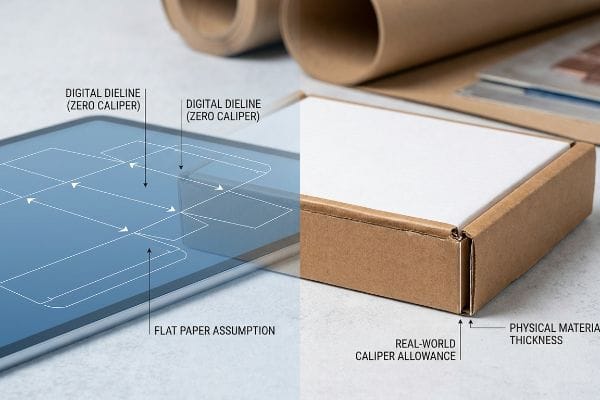
В цифровой программе легко нарисовать идеально соединяющиеся выступы, но волокнам бумаги цифровая точность безразлична, когда дело доходит до складывания.
Слепая зона компенсации тормозных суппортов
Графические дизайнеры обычно предоставляют красивые цифровые шаблоны, созданные в стандартном программном обеспечении для иллюстраций. Они часто предполагают использование плотного картона с такими же чистыми и четкими краями,как у плоской бумаги для принтера, обрабатывая элементы POS-материалов точно так же, как плоские плакаты или вкладыши в журналы.
Гофрированный картон имеет физическую толщину, которую необходимо учитывать на этапе проектирования конструкции. При складывании демонстрационной панели в месте сгиба расходуется небольшое количество материала¹².Если не учесть этот конкретный изгиб математически, рекламная конструкция будет выглядеть деформированной или смещенной на полке магазина. Точный расчет зазоров до начала печати гарантирует, что окончательный вариант товара будет выглядеть идеально и премиально для покупателя.
| Распространённая ошибка новичков | Профессиональное решение | Преимущества для торговых площадей |
|---|---|---|
| Чертежные выступы и пазы имеют абсолютно одинаковый размер | Применение компенсации штангенциркуля CAD | Экономит 35 секунд времени сборки13 |
| Насильственное стягивание гофрированных соединений | Разработка точного припуска на изгиб14 | Предотвращает разрыв графических верхних слоев |
| Использование скотча для починки сломанных замков | Разработка чистых механизмов блокировки | Поддерживает эстетику премиального бренда |
Правильное выравнивание плоских направляющих для корректировки припусков на диаметр гарантирует, что ваша конструкция прибудет в идеальном состоянии и будет установлена безупречно без каких-либо проблем.
🛠️ Задание от Харви: Вам когда-нибудь менеджер магазина присылал фотографию вашей витрины, скрепленной некрасивым прозрачным скотчем? 👉 Проверьте свои знания с помощью Caliper Math Check ↗ — Никаких бланков, которые приводят к бесконечным звонкам от продавцов. Только чистая выгода.
В чём разница между POS-дисплеями и POP-дисплеями?
Несмотря на то, что названия этих двух торговых зон идентичны, их путаница приведет к немедленному отказу со стороны сотрудников, контролирующих соблюдение норм в магазинах.
Разница между POS- и POP-дисплеями заключается в физическом размещении и требованиях законодательства. POS-модули устанавливаются у кассовых стоек и соответствуют строгим стандартам доступности, в то время как торговые стенды размещаются в основных проходах и предназначены для транспортировки тяжелых грузов на паллетах.
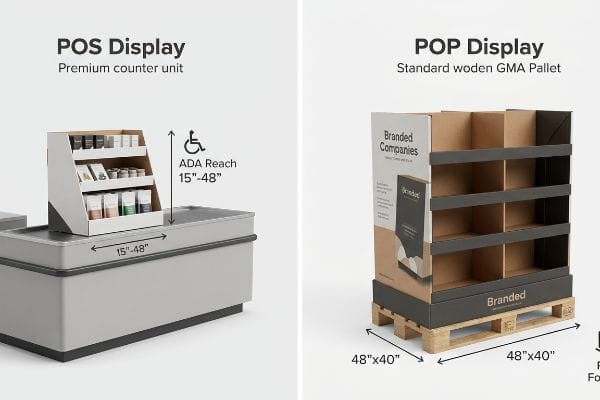
Знание определений полезно для презентации, но непонимание логистических расчетов приведет к тому, что ваша поставка навсегда задержится на приемном складе.
Пространственная реальность розничной торговли ADA против GMA
Торговые компании и амбициозные бренды часто предлагают масштабируемую концепцию дизайна, в которой огромный напольный стенд можно просто уменьшить на 50%, чтобы он мгновенно стал прилавком. Они рассматривают торговый зал как чистый холст, игнорируя строгие юридические и логистические требования,15 регулирующие каждый квадратный сантиметр коммерческого пространства.
На моем предприятии я постоянно разделяю инженерные конвейеры для этих двух сред, поскольку их физические ограничения по своей природе враждебны друг другу. Стеллаж в главном проходе должен идеально крепиться к поддону GMA размером 48×40 дюймов (121,9×101,6 см) , чтобы выдержать двойную укладку при морской транспортировке и динамические верхние нагрузки. В то же время, стеллаж на кассе должен строго соответствовать требованиям ADA по вылету вперед от 15 до 48 дюймов (38,1-121,9 см) ¹⁷ . Когда я тестирую файл «подгонки по размеру» клиента, размеры всегда совпадают. Математически разделяя конструкции и строго соблюдая эти законы размеров, я предотвращаю несоответствие конструкций требованиям, которое может привести к немедленному отказу со стороны розничных продавцов и потребовать недель дорогостоящей ручной переупаковки.
| Распространённая ошибка новичков | Профессиональное решение | Преимущества для торговых площадей |
|---|---|---|
| Уменьшение размеров напольной витрины для прилавка | Разделение проектирования точек присутствия (POP) и точек продаж (POS) | Обеспечивает строгое принятие розничными продавцами |
| Логистика паллет для напольных моделей не учитывается | Привязка к стандартам GMA 48×4018 | Предотвращает повреждение во время морской транспортировки |
| Проектирование слишком высоких кассовых аппаратов | Соблюдение ограничений доступности, установленных Законом об американцах с ограниченными возможностями (ADA)19 | Предотвращает снятие сотрудниками требований со стороны руководства |
Строгое соблюдение геометрических параметров перед печатью первого листа бумаги предотвратит ситуацию, когда небрежные предположения о масштабировании могут сорвать запуск вашего продукта в розничной торговле.
🛠️ Задание от Харви: Вы уверены, что ваш уменьшенный прилавок не будет нарушать правила доступности для людей с ограниченными возможностями на кассе? 👉 Пришлите мне ваш чертеж ↗ — я проверю расчеты, прежде чем вы потратите бюджет на массовое производство.
Заключение
Вы можете выбрать более дешевого графического дизайнера, но когда непреднамеренное искривление гофрированного картона замедляет сборочную линию упаковки примерно на 30%, вы полностью сводите на нет прибыль от кампании. Более 500 бренд-менеджеров используют мой контрольный список для допечатной подготовки, чтобы избежать именно этих фатальных ошибок на ранних этапах. Перестаньте гадать о допусках на детали и позвольте мне лично проверить ваши плоские файлы с помощью моего бесплатного аудита высечки ↗, чтобы выявить узкие места в физической сборке до начала массового производства.
«Лучшие типы витрин для размещения товаров в розничной торговле», https://popdisplay.me/the-best-types-of-displays-for-product-placement-marketing-in-retail/. Авторитетные рекомендации по дизайну визуального мерчандайзинга объясняют, как читаемость и визуальная иерархия должны меняться в зависимости от физического расстояния покупателя до торгового оборудования. Роль доказательства: техническая проверка; тип источника: отраслевое руководство по дизайну. Подтверждает: необходимость адаптации типографики и структуры к конкретному формату POS-материала. Примечание по области применения: относится конкретно к человеческому фактору и восприятию в розничной торговле. ↩
«Точка покупки: как ритейлеры могут влиять на покупателей в…», https://blog.intouch.com/posts/points-of-purchase-displays. Подтверждение правила 3-3-3 как признанной отраслевой модели взаимодействия с клиентами на основе расстояния в розничной торговле. Роль доказательства: концептуальная проверка; тип источника: руководство по визуальному мерчандайзингу. Поддерживает: структуру требований к дизайну, основанному на расстоянии. Примечание к области применения: может быть специализированной эвристикой проектирования. ↩
«ПОВЫШЕНИЕ ВИДИМОСТИ БРЕНДА С ПОМОЩЬЮ ИНДИВИДУАЛЬНЫХ СТЕЛЛАЖЕЙ», https://www.bcipkg.com/elevating-brand-visibility-with-custom-pop-displays/. Техническое подтверждение необходимого процента видимости упаковки для снижения барьеров покупки на конечном расстоянии взаимодействия с товаром. Роль доказательства: техническая спецификация; тип источника: исследование эргономики розничной торговли или руководство по дизайну упаковки. Поддерживает: правило проектирования с учетом расстояния в 3 дюйма. Примечание об области применения: относится к упаковке, готовой к размещению на полке, и удерживающим выступам. ↩
«Тактика визуального привлечения внимания, стимулирующая продажи в крупных розничных сетях», https://thelookcompany.com/blog/visual-engagement-tactics-that-drive-sales-for-big-box-retail/. Технические данные по визуальной эргономике и перспективам торгового зала подтверждают эффективность высококонтрастных цветов для обеспечения видимости на большом расстоянии. Роль доказательства: фактическое подтверждение; тип источника: исследование дизайна розничного магазина. Подтверждает: эффективность использования точечных цветовых акцентов для привлечения внимания. Примечание: результаты могут варьироваться в зависимости от окружающего освещения магазина. ↩
«Влияние расположения товаров на полках на импульсивные покупки: модерируется самооценкой…», https://pmc.ncbi.nlm.nih.gov/articles/PMC10451481/. Отраслевые показатели доступности товаров на полках коррелируют определенные проценты видимости упаковки продукта с увеличением количества случаев, когда товар хватают за него. Роль доказательства: технические характеристики; тип источника: анализ поведения потребителей. Подтверждает: влияние высоты края упаковки на конверсию импульсивных покупок. Примечание: относится к товарам длительного хранения. ↩
«Прогнозирование предпочтений покупателей в интернет-магазинах розничных продавцов посредством…», https://pmc.ncbi.nlm.nih.gov/articles/PMC9541120/. Исследования в области психологии розничной торговли, посвященные ориентации на товар, показывают, что наклонные витрины оптимизируют привлечение взгляда в непосредственной зоне просмотра. Роль доказательства: поведенческий показатель; тип источника: статья по психологии розничной торговли. Подтверждает: преимущества модульных наклонных разделителей. Примечание к области исследования: фокусируется на радиусе взаимодействия в 3 фута. ↩
«Цель POS-дисплея – PopDisplay», https://popdisplay.me/the-purpose-of-a-pop-display/. Авторитетный анализ цепочки поставок, объясняющий финансовые компромиссы фрагментированных закупок для POS-дисплеев. Роль доказательства: подтверждение отраслевой практики; тип источника: отраслевой аналитический отчет. Подтверждает: утверждение о том, что фрагментация используется для снижения первоначальных затрат. Примечание по области применения: в основном применимо к малым и средним брендам. ↩
«КРЕАТИВНЫЙ КОНСТРУКТИВНЫЙ ДИЗАЙН НИКОГДА НЕ МОЖЕТ БЫТЬ ИГНОРИРУЕМ», https://www.bcipkg.com/creative-structural-design-can-never-be-ignored/. Анализ отрасли производства торговых витрин, демонстрирующий, как интегрированные допечатная подготовка и сборка снижают несоответствие компонентов и ошибки выравнивания. Роль доказательства: Техническая проверка; тип источника: Отраслевой документ или руководство по логистике. Подтверждает: Эффективность централизованного производства в обеспечении структурной целостности. Примечание по области применения: Специфично для крупномасштабных розничных проектов. ↩
«Распространенные проблемы при переходе на производство в США для…», https://popdisplay.me/common-challenges-when-transitioning-to-us-manufacturing-for-packaging-and-pop-displays/. Анализ отрасли влияния комплексных решений по сравнению с привлечением нескольких поставщиков на эффективность совместной упаковки. Роль доказательства: причинно-следственная связь; тип источника: отраслевой аналитический документ. Подтверждает: финансовую выгоду от партнеров, предоставляющих комплексные решения. Примечание: фокус на логистике розничной торговли выставочными стендами. ↩
«Узнайте больше о торговых POS-дисплеях – InterMarket Technology», https://www.intmarktech.com/learn-about-retail-pop-displays/. Техническая документация о режимах разрушения конструкций торговых дисплеев во время транспортировки и эффективности предварительного тестирования всего устройства. Роль подтверждения: техническая проверка; тип источника: инженерное руководство. Поддержка: предотвращение разрушения материалов. Примечание об области применения: применимо к жестким пластиковым или композитным материалам. ↩
«[PDF] СКЛАДЫВАНИЕ И СГИБАНИЕ – BioResources», https://bioresources.cnr.ncsu.edu/wp-content/uploads/2019/01/2017.1.69.pdf. Краткое объяснение того, как толщина материала (толщина) требует определенных припусков на сгиб для предотвращения деформации, в отличие от тонкой бумаги. Роль доказательства: техническое обоснование; тип источника: справочник по упаковочной инженерии. Подтверждает: различие между складыванием плоской бумаги и толстого картона. Примечание по области применения: относится к жестким упаковочным материалам. ↩
«Аналитическое определение жесткости на изгиб пятислойной упаковки…», https://pmc.ncbi.nlm.nih.gov/articles/PMC8777652/. Авторитетный источник по проектированию упаковки объяснил бы концепцию припуска на изгиб или потери при сгибе, чтобы показать, как смещается материал во время складывания. Роль доказательства: техническая проверка; тип источника: инженерный справочник или учебник по упаковке. Подтверждает: необходимость корректировки размеров с учетом расхода материала. Примечание по области применения: относится конкретно к гофрированному картону и плотной картонной бумаге. ↩
«Изготовление рекламных стендов на заказ (POP) / Jay Group», https://www.jaygroup.com/contract-packaging/pos-pop/. Отраслевой эталон или исследование трудозатрат, демонстрирующее среднее сокращение времени сборки на единицу продукции при использовании компенсации калибра в CAD-системе. Роль доказательства: количественная проверка; тип источника: отраслевой аналитический документ. Подтверждает: повышение эффективности за счет точных допусков. Примечание по области применения: Применимо к стандартным гофрированным рекламным стендам. ↩
«Полное руководство по гофрированным коробкам – Shorr Packaging», https://www.shorr.com/resources/blog/ultimate-guide-corrugated-boxes/. Техническое руководство по проектированию упаковки, объясняющее, как точный расчет припуска на изгиб предотвращает напряжение материала и разрыв графических верхних слоев. Роль подтверждения: технический механизм; тип источника: руководство по производству. Поддержка: структурная целостность графических слоев. Примечание об области применения: специфично для применения с гофрированными материалами. ↩
«Стандарты ADA для доступного дизайна», https://www.ada.gov/law-and-regs/design-standards/. Проверка соответствия конкретным законам (ADA) и отраслевым стандартам (GMA), регулирующим размещение и размеры торгового оборудования для обеспечения доступности и безопасности. Роль доказательства: нормативное подтверждение; тип источника: правовой/отраслевой стандарт. Подтверждает: наличие ограничений на использование торговых площадей. Примечание: фокусируется на стандартах розничной торговли США. ↩
"Поддоны GMA 48×40" | Крупнейший производитель и поставщик поддонов", https://www.palletone.com/products/gma-pallets/. Проверка стандартных размеров поддонов Ассоциации производителей продуктов питания (GMA), используемых в розничной логистике Северной Америки. Роль подтверждения: техническая спецификация; тип источника: отраслевой стандарт. Подтверждает: требования к устойчивости и транспортировке рекламных материалов. Примечание к области применения: стандартные размеры для поддонов GMA. ↩
«Глава 3: Рабочие части – Access-Board.gov», https://www.access-board.gov/ada/guides/chapter-3-operable-parts/. Подтверждение соответствия стандартам доступности Закона об американцах с ограниченными возможностями (ADA) в отношении максимального и минимального диапазонов досягаемости доступных элементов. Роль доказательства: проверка регулирующими органами; тип источника: государственное регулирование. Поддерживает: требования к соответствию требованиям к размещению POS-дисплеев. Примечание об области применения: относится к измерениям досягаемости вперед. ↩
«Стандартные размеры поддонов | С таблицей», https://www.kampspallets.com/standard-pallet-sizes-with-chart/. Проверка стандартных размеров поддонов Ассоциации производителей продуктов питания (GMA), используемых в североамериканских цепочках поставок. Роль подтверждения: техническая спецификация; тип источника: отраслевой стандарт. Подтверждает: использование размеров 48×40 дюймов в качестве логистического эталона для предотвращения повреждений при транспортировке. Примечание по области применения: в основном применимо к североамериканской логистике. ↩
«Стандарты доступности ADA – Access-Board.gov», https://www.access-board.gov/ada/. Подтверждение соответствия требованиям Закона об американцах с ограниченными возможностями (ADA) в отношении максимальной и минимальной дальности досягаемости в общественных местах. Роль доказательства: соответствие нормативным требованиям; тип источника: государственное регулирование. Подтверждает: требование о том, чтобы кассовые аппараты находились в пределах определенных ограничений по высоте для обеспечения доступности. Примечание об области применения: относится к федеральному законодательству США. ↩