Рост импортных пошлин выжимает все соки из прибыли. Если не учитывать влияние пограничных сборов на ваши картонные витрины, запуск продаж в розничную сеть будет приносить убытки еще до того, как товар попадет на полки.
Тарифы оказывают существенное влияние на упаковочную отрасль, значительно завышая стоимость сырья и вынуждая бренды перепроектировать картонные витрины для максимальной эффективности использования пространства. Адаптация конструктивных решений, облегчение гофрированного картона и правовая оптимизация кодов HS (Гармонизированной системы) являются обязательными стратегиями для компенсации этих агрессивных трансграничных финансовых санкций.
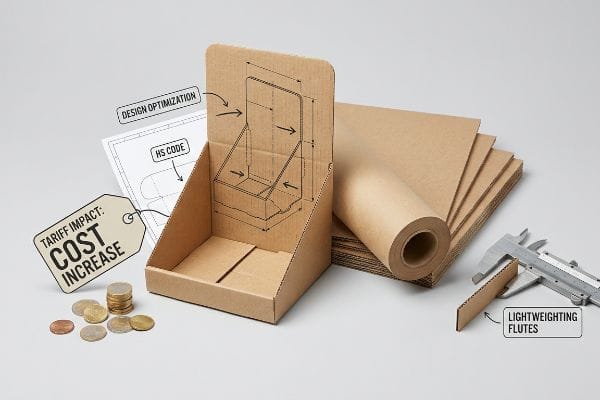
Понимание макроэкономики — это только первый шаг. Давайте посмотрим, как эти налоги приводят к физическим изменениям на заводских площадках.
Как повлияют тарифы на обрабатывающую промышленность?
Когда импорт сырья облагается высокими налогами, стоимость стандартного картона резко возрастает за одну ночь. Производственные линии должны немедленно перестраиваться, чтобы избежать перекладывания этого значительного повышения цен на покупателей.
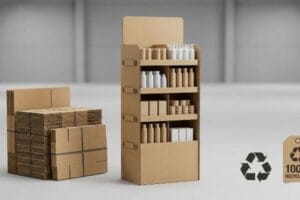
Тарифы влияют на обрабатывающую промышленность, ускоряя переход к высокоэффективным облегченным конструкциям. Заводы заменяют стандартные тяжелые листы на специально разработанные микрофрезы, обеспечивая сохранение структурной целостности и значительно сокращая объем облагаемого налогом сырья, необходимого для каждой торговой точки.
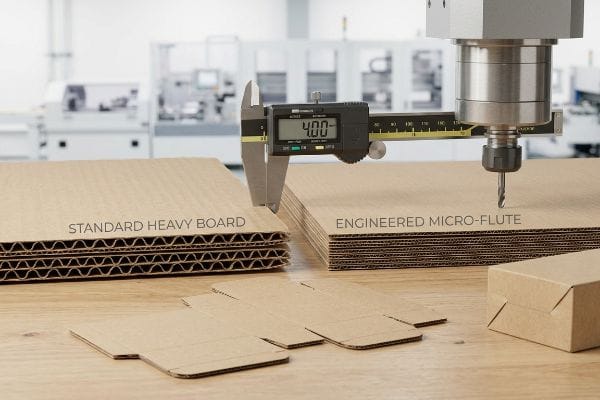
Нельзя просто смириться с резким повышением налогов, не пересмотрев при этом физическое устройство своих торговых точек.
Обязательство по снижению налоговой нагрузки для компенсации налогов в обрабатывающей промышленности
Многие бренды ошибочно полагают , что для поддержания долговечности продукции в розничной торговле необходима тяжелая, громоздкая гофрированная бумага. Когда импортные пошлины внезапно начинают взимать штрафы за избыточный вес материала¹ , использование традиционных увеличенных листов бумаги уничтожает вашу прибыль еще до запуска сборочной линии.
Я часто вижу, как опытные отделы закупок паникуют и требуют более дешевую бумагу более низкого качества, чтобы компенсировать финансовые потери. Но когда я пропускаю их бумагу более низкого качества через станок ЧПУ (компьютерное числовое управление), я слышу характерный звук разрываемого под лезвием картона. Более разумное решение — это высокоэффективное облегчение материала, например, замена стандартной канавки B на более плотную и тонкую канавку R².Это позволяет уменьшить структурный излишек, значительно сократив затраты на сырье, при этом сохраняя прочность кромки, необходимую для крупных розничных сетей.
| Распространённая ошибка новичков | Профессиональное решение | Преимущества для торговых площадей |
|---|---|---|
| Использование тяжелых досок из С-образной гофрированной стали | Переход на плотную флейту ми3 | Сохраняет силу при снижении веса |
| Снижение качества бумаги | Высокоэффективное облегчение конструкции | Предотвращает разрывы при резке4 |
| Объем материала не учитывается | Расчет точных коэффициентов нагрузки5 | Компенсация внезапных скачков импортных пошлин |
Я никогда не позволяю своим клиентам жертвовать структурной целостностью ради уклонения от повышения налогов. Переход на усовершенствованные микрофрезы значительно сокращает объем облагаемой налогом бумаги, обеспечивая прибыльность вашей кампании без риска обрушения торговых рядов.
🛠️ За столом Харви: Ваши текущие спецификации материалов приводят к неоправданным пограничным налогам и снижению прибыли? 👉 Запросите аудит материалов ↗ — Прямой доступ ко мне. Никакого автоматического спама от отдела продаж, обещаю.
Как пошлины повлияют на упаковочную отрасль?
Как только меняются пограничные пошлины, классификация ваших розничных грузоотправителей превращается в финансовое минное поле. Одна-единственная ошибка в таможенном документе может привести к катастрофическим переплатам.
Тарифы влияют на упаковочную отрасль, вынуждая к строгой оптимизации международных кодов доставки. Правильная классификация конструктивных элементов и предварительно склеенных модульных лотков позволяет брендам законно минимизировать таможенные пошлины, предотвращая завышение трансграничных налогов при запуске глобальных розничных продаж из-за использования общих категорий.
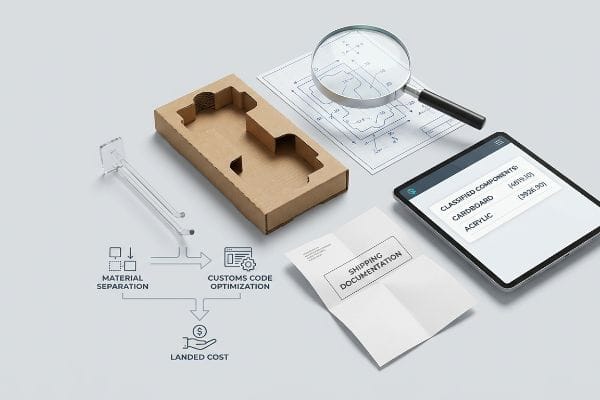
Давайте не будем рассматривать сам картон и изучим скрытые административные механизмы, определяющие вашу окончательную стоимость с доставкой.
Стратегическая переклассификация кодов для розничных грузоотправителей
При координации зарубежного производства бренды часто позволяют своим логистическим партнерам применять общую классификацию «бумажная продукция» к своим фирменным витринам. Такой пассивный подход открывает широкие возможности для агрессивных таможенных агентов применять максимальные таможенные ставки на основе широких, высокооблагаемых налогомкатегорий⁶.
Я вижу, как директора по маркетингу приходят в замешательство, когда на их счет неожиданно начисляется 25% надбавка из-за того, что сложный многокомпонентный POS-терминал был неправильно помечен в порту. На моем предприятии я изучаю технические характеристики, чтобы юридически отделить гофрированное основание от металлических элементов. Когда я чувствую плавное скольжение акрилового крючка , защелкивающегося в картонном пазу, я понимаю, что эти компоненты должны быть закодированы отдельно, чтобы юридически снизить общую сумму ущерба7.Точность классификации значительно снижает затраты на таможенное оформление контейнеров без изменения ни одного физического элемента конструкции.
| Распространённая ошибка новичков | Профессиональное решение | Преимущества для торговых площадей |
|---|---|---|
| Общие описания таможенных правил | Точная оптимизация кода | Позволяет избежать масштабных переплат в портах |
| Упаковка смешанных материалов | Разделение классификаций компонентов | Снижает общую себестоимость продукции |
| Игнорирование категорий обязанностей | Предварительное согласование проектной документации | Ускоряет доставку в конечный магазин |
Я не позволю неясным документам разрушить тщательно спланированный маркетинговый бюджет. Разработка структурной схемы в соответствии с выгодными категориями обязанностей так же важна, как и графическая печать на верхнем листе.
🛠️ Вопрос от Харви: Ваша текущая классификация юридически подвергает ваш бренд максимальным импортным штрафам? 👉 Получите анализ плана ↗ — Скачайте безопасно. Мой почтовый ящик открыт, если у вас возникнут вопросы позже.
Как пошлины влияют на упаковку?
Трансграничные налоги сильно наказывают за неиспользуемое пространство при транспортировке. Когда пошлины рассчитываются исходя из стоимости доставки, огромный физический объем ваших упакованных товаров определяет ваше финансовое выживание.
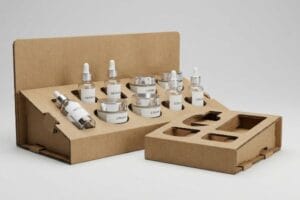
Тарифы влияют на розничную упаковку, требуя существенного уменьшения её объёмного пространства. Инженеры-конструкторы теперь внедряют логистику вложенной упаковки, проектируя внутренние модульные лотки, идеально подходящие для полых подставок под товары, что значительно уменьшает размер основной коробки и сокращает объём, облагаемый высокими налогами при транспортировке.
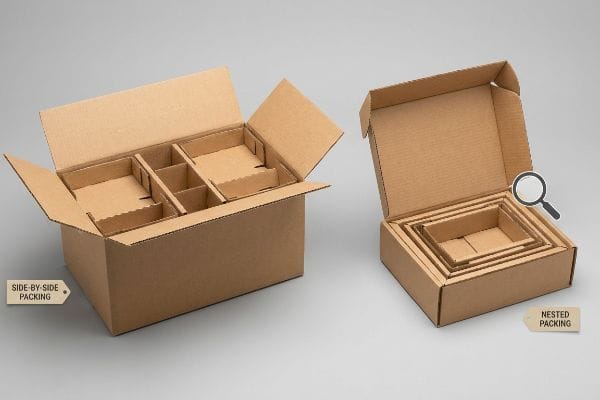
Чтобы противостоять растущим сборам, вам необходимо полностью переосмыслить использование пустого пространства внутри ваших упаковочных коробок.
Преимущества многослойной упаковки на рынке с высокими налогами
Стандартный подход к плоской упаковке предполагает размещение каждой отдельной полки и перегородки рядом друг с другом в широкой картонной коробке. Хотя это кажется логичным для конвейерной линии по совместной упаковке, это создает огромную, раскинувшуюся площадь, что влечет за собой серьезные финансовые потери, когда к общему объемному весу добавляются тарифы и транспортные сборы⁸ .
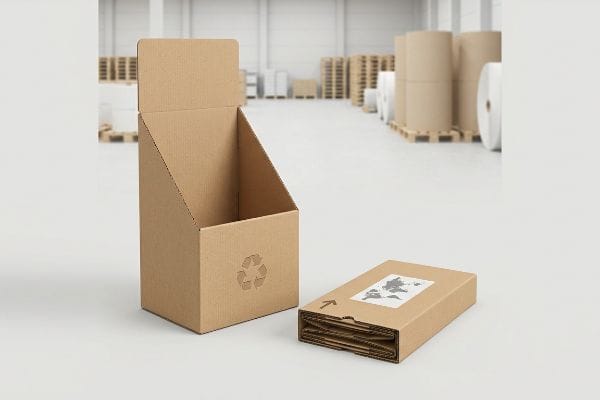
Недавно я наблюдал, как один клиент упорно использовал коробку большого размера, полагая, что это безопаснее для транспортировки. Когда я продемонстрировал стратегию вложенной упаковки на полу, идеально вставив сложенный внутренний лоток в полость основного основания, громкое, приятное трение плотно упакованного картона доказало, что мы только что устранили 76,2 мм (3 дюйма) пустого пространства. Благодаря конструкции, компоненты которой физически складываются друг в друга во время транспортировки, вы значительно уменьшаете размеры основной коробки, законно избегая повышения объемных налоговбыструю и беспроблемную сборку для продавцов в магазине.
| Распространённая ошибка новичков | Профессиональное решение | Преимущества для торговых площадей |
|---|---|---|
| Грузоперевозки по широким, пустым воздушным каналам | Конструкция внутренних лотков, вложенных друг в друга | Снижает штрафы за объемный налог |
| Плоская упаковка рядом друг с другом | Использование полых оснований | Увеличивает плотность штабелирования поддонов |
| Крупногабаритные мастер-картоны | Сокращение общей площади занимаемой территории | Обеспечивает прибыльную конверсию при доставке |
При проектировании каждой линии высечки я учитываю окончательные размеры основной коробки. Заставляя компоненты располагаться друг относительно друга, как детали пазла, я эффективно устраняю неиспользуемое пространство, которое так любят облагать налогом таможенники.
🛠️ Задание от Харви: Вы неосознанно платите импортные пошлины за пустое пространство внутри ваших контейнеров? 👉 Закажите аудит вашего пространства ↗ — Никаких форм, которые приводят к бесконечным звонкам от отдела продаж. Только чистая выгода.
Как тарифы влияют на судоходную отрасль?
Морские контейнеры — это своего рода котлы под давлением, где решается вопрос о повышении рентабельности. Когда таможенные пошлины бьют по вашему бюджету, увеличение плотности размещения контейнеров перестает быть просто желательным, а становится суровой, математически необходимой задачей.
Тарифы влияют на судоходную отрасль, вынуждая к постоянной оптимизации контейнерных перевозок и строгим требованиям к отсутствию выступающих частей паллет. Максимальная плотность морских перевозок компенсирует скачки таможенных пошлин при трансграничных перевозках, обеспечивая использование каждого квадратного дюйма паллеты без ущерба для прочности на вертикальное сжатие во время международных перевозок.
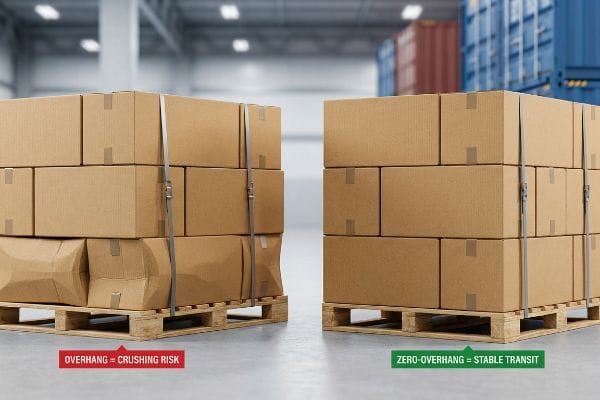
Но знания теории недостаточно, когда запускаются станки и поддоны загружаются на морское судно.
Почему избыток поддонов — это финансовое самоубийство при высоких тарифах?
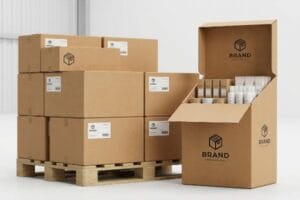
Отделы закупок, испытывающие сильное налоговое давление, часто пытаются вернуть себе прибыль, увеличивая размеры основной коробки, чтобы уместить больше единиц товара в одну партию. Они заставляют коробки выступать за пределы стандартной платформы поддона GMA (Ассоциация производителей продуктов питания) размером 48×40 дюймов (1219×1016 мм)дюйма , полагая, что прочный гофрированный картон естественным образом выдержит вес.
Это не просто теория — я вижу это на испытательном полигоне, когда мы проводим стандартный тест на сжатие коробки (BCT). Недавно я оценивал контейнерную партию, где покупатель искусственно увеличил выступ на 0,35 дюйма (8,8 мм), чтобы сэкономить объем груза и избежать штрафов за нарушение таможенных пошлин. Поскольку несущие углы выступали за пределы деревянной конструкции, я наблюдал, как нижний ярус заметно выгнулся наружу и катастрофически раздавился под давлением 850 фунтов (385,5 кг) веса верхней части. Математически задав строгий нулевой выступ в ограничивающем прямоугольнике и искусственно уменьшив площадь основания коробки ровно на 0,5 дюйма (12,7 мм) в нашем программном обеспечении CAD (система автоматизированного проектирования), я восстановил вертикальное распределение нагрузки. Эта корректировка на 12,7 мм полностью исключила деформацию контейнера, сэкономив клиенту примерно 28% потенциальных задержек с заменой без увеличения площади основания при транспортировке.
| Распространённая ошибка новичков | Профессиональное решение | Преимущества для торговых площадей |
|---|---|---|
| Выдвижение коробок за пределы поддона | Ограничивающий прямоугольник без выступающих частей | Предотвращает катастрофическое разрушение нижнего яруса11 |
| Опираясь на прочность сырья | Выравнивание углов для вертикальной нагрузки12 | Гарантирует безопасную транспортировку морских контейнеров |
| Игнорирование микроизмерений | Вычитание 0,5 дюйма в программном обеспечении | Защищает низкую рентабельность рекламных кампаний |
Я провожу замеры микрометром, чтобы доказать, что истинная эффективность транспортировки заключается не в чрезмерном нависании деревянного основания. Она заключается в неукоснительной структурной дисциплине, обеспечивающей выживание вашей цепочки поставок во время морской перевозки и уплаты налогов.
🛠️ Задание от Харви: Неужели крошечный, незначительный выступ угрожает разрушить весь ваш международный контейнерный груз? 👉 Пришлите мне файл с чертежами вырубки ↗ — я проверю расчеты, прежде чем вы потратите бюджет на массовое производство.
Заключение
Вы можете попытаться игнорировать финансовые трудности, связанные с импортными пошлинами, но когда даже незначительный выступ паллеты приводит к катастрофическому повреждению ваших картонных коробок в морском контейнере, этот коллапс цепочки поставок уничтожит всю вашу розничную прибыль. Более 500 бренд-менеджеров используют мой контрольный список для допечатной подготовки, чтобы избежать именно этих фатальных ошибок на ранних этапах. Перестаньте гадать о допусках при транспортировке и позвольте мне лично проверить ваши чертежи с помощью моего бесплатного аудита высечки ↗, чтобы выявить дорогостоящие структурные повреждения до начала массового производства.
«Эффект домино от тарифов на упаковку», https://www.ashtonne.com/blog/the-ripple-effect-of-tariffs-on-packaging. [Авторитетный торговый или экономический источник должен продемонстрировать, как тарифы на импорт сырья увеличивают стоимость товаров в зависимости от объема или веса используемых материалов]. Роль доказательства: фактическая проверка; тип источника: анализ торговой политики или отраслевой отчет. Подтверждает: экономический фактор сокращения использования материалов. Примечание: эффективность варьируется в зависимости от конкретной структуры тарифа (адвалорный против специфической пошлины). ↩
«Оценка сопротивления смятию кромок гофрированного картона с использованием…», https://pmc.ncbi.nlm.nih.gov/articles/PMC9961700/. [Технические характеристики из руководств по проектированию упаковки подтверждают, что R-гофрированный картон обладает высокой структурной плотностью и прочностью на смятие кромок при меньшей толщине, чем B-гофрированный картон]. Роль доказательства: техническая проверка; тип источника: отраслевая спецификация. Подтверждает: эффективность R-гофрированного картона для снижения веса без ущерба для целостности. Примечание об области применения: относится к гофрированному картону. ↩
«Понимание прочности упаковочных коробок», https://www.ecoenclose.com/blog/understanding-shipping-box-strength/?srsltid=AfmBOopaEnTVbEiIYaQv2BJuDLkLfSv2sQCjwGD59Fbh6hhHnwXIjKpP. [Технические характеристики гофрированного картона подтверждают, что E-образный гофр обеспечивает более высокое соотношение прочности к весу и лучшую устойчивость к сжатию для конкретных видов упаковки по сравнению с C-образным гофрированным картоном]. Роль подтверждения: технические характеристики; тип источника: отраслевой стандарт; Поддержка: эффективность использования материала; Примечание по области применения: эффективность зависит от конкретных требований к нагрузке на продукт. ↩
«Какие материалы может резать картонная бумага на станке для резки?», https://www.igolden-cnc.com/what-types-of-materials-can-cardboard-paper-cutting-machine/. [Инженерные данные по высокоэффективным облегченным материалам показывают, что сохранение целостности волокон предотвращает разрыв кромок во время высокоскоростной автоматизированной высечки]. Роль доказательства: техническая проверка; тип источника: производственный документ; Поддержка: надежность производства; Примечание об области применения: специфично для автоматизированных промышленных линий резки. ↩
«Снижение затрат на упаковку и доставку», https://www.boldtsmithpackagingconsultants.com/solutions/cost-reduction/. [Принципы промышленной инженерии показывают, что точные расчеты коэффициента нагрузки позволяют уменьшить объем материала без ущерба для структурной целостности, снижая общие затраты на сырье]. Роль доказательства: операционная методология; тип источника: учебник по логистике; Поддержка: снижение затрат; Примечание по области применения: требуются точные данные о весе и распределении упакованного продукта. ↩
«Часто задаваемые вопросы о классификации товаров по тарифам…», https://www.usitc.gov/harmonized_tariff_information/frequently_asked_questions. [Авторитетный источник по вопросам соблюдения торговых правил или таможенного права объяснит, как широкие классификации Гармонизированной системы (ГС) могут приводить к более высоким тарифным ставкам по сравнению с конкретными, оптимизированными подпунктами]. Роль доказательства: Техническая проверка; тип источника: Руководство по таможенному регулированию. Подтверждает: Финансовый риск неправильной классификации продукции. Примечание об объеме: Тарифные ставки различаются в зависимости от страны и конкретных торговых соглашений. ↩
«Коды Гармонизированной системы (ГС) – Управление международной торговли», https://www.trade.gov/harmonized-system-hs-codes. [Таможенные правила и руководящие принципы Гармонизированной системы (ГС) подробно описывают, как многокомпонентные товары могут быть классифицированы отдельно, чтобы избежать более высоких пошлин, связанных с «композитными товарами»]. Роль подтверждения: техническая проверка; тип источника: нормативное руководство. Поддерживает: стратегию кодирования на уровне компонентов для снижения налогов. Примечание об области применения: Подлежит Общим правилам толкования (ОМТ) системы ГС. ↩
«Объемный вес: расчет и экономия на доставке», https://www.letmeship.com/blog/volumetric-weight/. [Авторитетный источник по международной логистике должен объяснять расчет объемного веса и то, как он увеличивает стоимость доставки и связанные с ней пошлины]. Роль подтверждения: проверка финансового механизма; тип источника: руководство по логистическим или таможенным правилам. Подтверждает: связь между объемом упаковки и финансовыми штрафами. Примечание по тематике: фокусируется на стандартах авиа- и морских перевозок. ↩
«Что такое объемный вес и как он влияет на стоимость доставки», https://gls-group.com/ES/en/blog/what-is-volumetric-weight-and-how-does-it-affect-shipping-costs. [В таможенном или логистическом документе объяснялось бы, как уменьшение объемного веса посылки снижает базовую стоимость, используемую для расчета импортных пошлин]. Роль доказательства: Техническая проверка; тип источника: Нормативно-правовое руководство. Подтверждает: Утверждение о том, что уменьшение объемного веса снижает налоговую нагрузку. Примечание об объеме применения: Эффективность зависит от конкретных региональных таможенных законов и тарифных кодов]. ↩
"Термообработанный деревянный поддон GMA – 48 x 40 дюймов H-1260 – ULINE", https://www.uline.com/Product/Detail/H-1260/Pallets/Heat-Treated-Wood-GMA-Pallet-48-x-40. [Отраслевые стандарты Ассоциации производителей продуктов питания подтверждают, что размер 48×40 дюймов является основным стандартом для поддонов в Северной Америке]. Роль подтверждения: проверка отраслевого стандарта; тип источника: техническая спецификация. Подтверждает: фактическую основу для определения размеров поддонов. Область применения: Северная Америка. ↩
«Прогнозирование влияния выступающих частей поддона на сжатие коробки…», https://vtechworks.lib.vt.edu/items/a44b58f5-f8a2-4e60-b709-23a013411d58. Инженерные данные по гофрокартону подтверждают, что выступающие части поддона значительно снижают прочность нижнего слоя при вертикальном штабелировании, увеличивая риск разрушения конструкции. Роль доказательства: техническая проверка; тип источника: руководство по проектированию упаковки. Подтверждает: механический риск, связанный с выступающими частями поддона. Примечание по области применения: в основном применимо к гофрокартону. ↩
«Оценка прочности на сжатие коробок из гофрированного картона для…», https://pmc.ncbi.nlm.nih.gov/articles/PMC9864211/. Логистические стандарты указывают, что выравнивание вертикальных углов транспортных коробок максимизирует несущую способность, предотвращая деформацию при штабелировании в контейнерах с высокой плотностью. Роль доказательства: техническая спецификация; тип источника: руководство по логистике цепочки поставок. Подтверждает: необходимость выравнивания углов для безопасности транспортировки. Примечание об области применения: применяется к стандартным обычным контейнерам с прорезями (RSC). ↩