Бренды часто теряют прибыль, когда упаковка одежды оказывается некачественной на полке магазина. Выбор правильной коробки для одежды имеет решающее значение для эстетической привлекательности и гарантирования сохранения целостности во время логистики цепочки поставок.
Выбор подходящих коробок для одежды требует соответствия толщины стенки и марки материала вашим конкретным логистическим ограничениям. Для оптимальной производительности всегда отдавайте предпочтение прочному гофрированному картону перед стандартными складными картонными коробками, чтобы обеспечить многоточечную прочность на сжатие при больших объемах транспортировки одежды и хранении в розничной торговле.
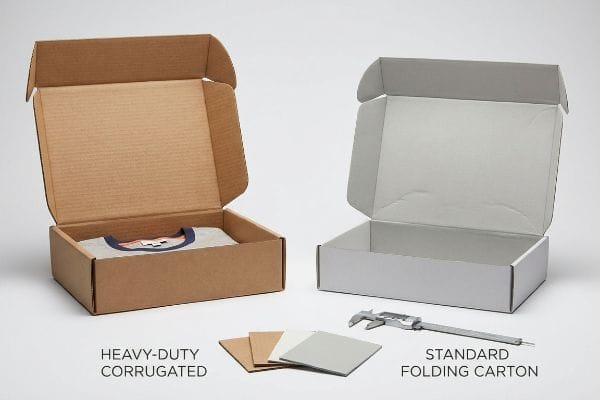
Давайте разберем конкретные инженерные параметры, необходимые для защиты вашей одежды и обеспечения стабильной прибыли на фабрике.
Что такое правило 3-3-3 для одежды?
Механизмы визуального мерчандайзинга напрямую определяют скорость продаж одежды.
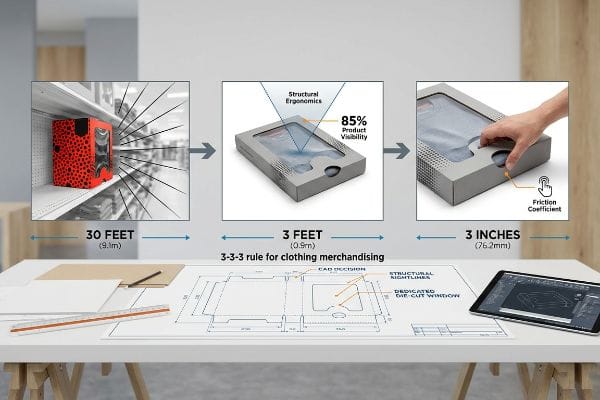
Правило 3-3-3 для мерчандайзинга одежды гласит, что витрина должна привлекать внимание с расстояния 9,1 м, вызывать интерес покупателя на расстоянии 0,9 м и стимулировать физическое тактильное восприятие ровно на расстоянии 76,2 мм, чтобы максимизировать эффект в розничной торговле.
Переход от теоретической маркетинговой стратегии к практической реализации на заводе требует точного пространственного проектирования.
Инженерные принципы, лежащие в основе пространственного мерчандайзинга
При разработке готовой к розничной продаже упаковки для брендов одежды мы используем правило 3-3-3 в качестве основополагающей геометрической модели¹.На расстоянии 9,1 м (тридцать футов) мы используем высококонтрастные цветовые заливки вместо стандартных полутонов CMYK²( голубой, пурпурный, желтый и основной цвета), чтобы создать визуальный эффект отвлечения внимания покупателя на проходе. Когда покупатель приближается к отметке 0,9 м (три фута), структурная эргономика коробки должна представлять ключевые особенности одежды без когнитивной перегрузки. Наконец, на расстоянии 76,2 мм (три дюйма) (три дюйма) (три дюйма) (три дюйма) тактильный порог, упаковка должна обеспечивать легкое физическое взаимодействие, не нарушая защитный удерживающий бортик.
Этот пространственный континуум определяет каждое решение, принимаемое нами в процессе проектирования с помощью САПР (компьютерного проектирования) непосредственно на производстве. Я определяю структурные линии видимости, чтобы гарантировать 85% видимости товара, когда коробка находится в стандартной вертикальной зоне удара размером 50 дюймов (1270 мм)³. Благодаря проектированию специальных вырубных окон и точному расчету коэффициента трения для облегчения извлечения одежды, я гарантирую, что физическая коробка активно способствует продаже, а не препятствует покупателю. Этот методичный подход напрямую согласует структурную целостность картона с психологией человеческого поведения, упрощая путь к покупке.
| Пространственное расстояние | Общий подход | Искусственно созданная реальность |
|---|---|---|
| 30 футов (9,1 м) | Выбеленный CMYK | Точечный цветовой поток4 |
| 3 фута (0,9 м) | Плоская графика | Эргономичный угол |
| 3 дюйма (76,2 мм) | Высокое трение | 85% видимость5 |
Я математически проектирую каждую коробку для одежды, чтобы она точно соответствовала этому визуальному континууму. Структурно оптимизированная упаковка без труда привлекает покупателей, доказывая, что точное проектирование — это самый эффективный маркетинговый инструмент, который ваш бренд может использовать в торговом зале.
🛠️ Задание от Харви: Ваши коробки с одеждой не привлекают внимания на расстоянии тридцати футов? 👉 Запросите бесплатный анализ видимости ↗ — Я лично изучаю каждый документ в течение 24 часов.
Нужно ли упаковывать коробки с одеждой?
Обёртывание толстого гофрированного картона печатными верхними слоями вносит существенные механические изменения.
Да. Для создания эстетически привлекательного внешнего вида в розничной торговле коробки для одежды следует упаковывать с помощью автоматизированных процессов литографического ламинирования. Эта технология производства предполагает физическое приклеивание высококачественного печатного бумажного листа к более толстой структурной основе, сочетая яркую графику с необходимой прочностью на сжатие.
Для создания безупречной, высококачественной пленки требуется гораздо больше, чем просто красивый цифровой файл с изображением.
Механические допуски литографически ламинированной упаковки для одежды
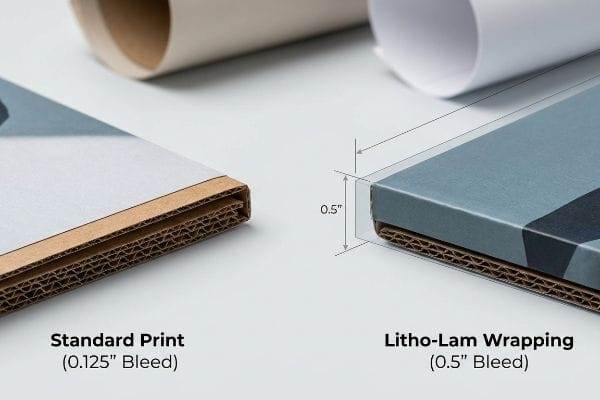
Когда я проверяю чертежи для коробок с упаковкой одежды, я постоянно вижу, как графические команды применяют стандартные коммерческие поля для обрезки. Они обрабатывают толстый гофрированный картон точно так же, как плоскую страницу журнала, предполагая, что стандартного поля обрезки в 0,125 дюйма (3,17 мм) достаточно. Они не учитывают физическую механику автоматизированной сборки, где большие листы естественным образом смещаются, проходя через высокоскоростные клеевыевалики⁶.
В моей компании я регулярно наблюдаю, как эти теоретически идеальные файлы начинают разрушаться, как только попадают в ламинатор. Поскольку клей ПВА (поливинилацетат) на водной основе вызывает небольшое набухание верхнего слояво время ламинирования, узкий вылет неизбежно приводит к обнажению необработанных коричневых картонных краев, что портит премиальный внешний вид одежды. Даже опытные дизайнеры часто упускают из виду этот недостаток. Чтобы исправить это, я полностью перехватываю файл допечатной подготовки и задаю огромный вылет в 0,5 дюйма (12,7 мм)15 % на возврате бракованной продукции.
| Производственный показатель | Стандартная печать | Литографическая упаковка |
|---|---|---|
| Край вытекания | 0,125 дюйма (3,17 мм)9 | 0,5 дюйма (12,7 мм)10 |
| Краевая гидроизоляция | Высокий риск | Нулевое воздействие11 |
| Коэффициент доработки | Частые задержки | Выход продукции без трения |
Я не позволю слишком жёсткому допечатному файлу испортить запуск люксовой коллекции одежды. Математически расширяя запасы прочности перед обжигом печатных форм, я гарантирую, что ваши упакованные коробки будут выглядеть безупречно даже при ярком освещении в торговом зале.
🛠️ За столом Харви: Не портят ли незащищенные края картона роскошный внешний вид ваших упакованных коробок с одеждой? 👉 Закажите аудит структурной вырубки ↗ — 100% конфиденциально. Ваши еще не выпущенные для розничной торговли дизайны в безопасности со мной.
Какой тип коробки лучше всего подходит для отправки одежды?
Логистика исходящих B2B-заказов требует совершенно иной структурной основы, чем стандартная рассылка потребительских товаров.
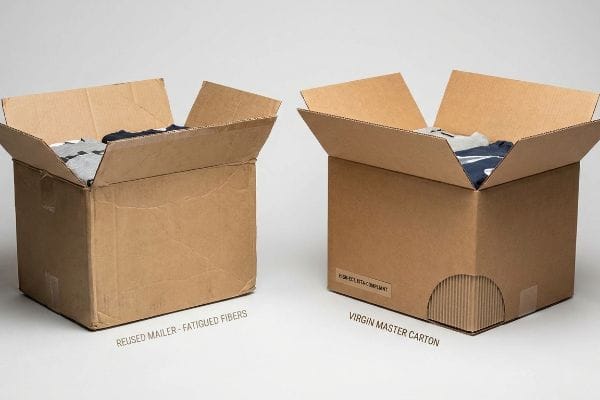
Наилучшим типом коробки для отправки одежды является картонная коробка из первичного гофрированного картона, специально разработанная для того, чтобы выдерживать многоосевую вибрацию при транспортировке. Для оптимальной защиты во время перевозки тяжелых грузов B2B всегда используйте материалы с высокой прочностью на сжатие по краю (ECT), чтобы предотвратить структурную усталость и сохранить внутреннюю упаковку одежды.
Правильный выбор упаковочного материала — единственный способ предотвратить катастрофические разрушения от сжатия во время транспортировки.
Невидимая усталость структурных бумажных волокон
В своей испытательной лаборатории я доказал, что использование вторично переработанных или в значительной степени вторично используемых коробок для отправки одежды B2B — это катастрофическая операционная ловушка. Стартапы часто развивают свою логистику за счет повторного использования поступающих картонных коробок, полагая, что визуально неповрежденная коробка сохраняет свою первоначальную заводскую прочность. Они не понимают, что гофрированный картон действует как механический амортизатор¹² , который подвергается невидимой, необратимой усталости после одного цикла транспортировки¹³ .
Я отчетливо помню, как в прошлом году мой ведущий инженер, Марк, тестировал партию повторно использованных почтовых конвертов на нашем вибрационном стенде. Клиент настаивал, что их коробки из переработанного материала достаточно прочны для раздачи тяжелых зимних пальто. Через двадцать минут по лаборатории разнесся отвратительный звук трескающихся бумажных волокон, когда ранее нагруженный гофрированный картон полностью расслоился под воздействием имитированной нагрузки. Чтобы спасти их логистическую стратегию, мы с Марком немедленно изменили все технические характеристики, используя новый вкладыш из первичной крафт-бумаги 32ECT¹⁴.Мы перекалибровали роторный щелевой станок на заводе, чтобы убедиться, что новые складки идеально равномерны, без предварительного сжатия нового картона. Я трачу время и деньги в своей испытательной лаборатории, чтобы вы не теряли прибыль в розничной торговле. Это немедленное обновление материала восстановило 100% динамической грузоподъемности коробки¹⁵,полностью исключив повреждения при транспортировке и предотвратив потенциальный возврат 20% средств розничным продавцам за поврежденный товар.
| Стоимость доставки варьируется | Повторно используемые почтовые конверты | Virgin Master Carton |
|---|---|---|
| Целостность флейты | Микротрещина16 | 100% целые |
| Выживание при вибрации | Высокий процент отказов | Соответствует требованиям ISTA17 |
| Повреждения при транспортировке | Частое раздавливание | Нулевые потери урожая18 |
Я никогда не рискую всем ассортиментом одежды бренда, используя изношенные бумажные волокна. Только поставка свежих, прочных картонных коробок гарантирует, что ваша одежда прибудет в идеальном состоянии и будет готова к немедленной продаже.
🛠️ Задание от Харви: Не разрушает ли скрытая усталость материала ваши упаковочные коробки еще до того, как они попадут в распределительный центр? 👉 Проведите аудит плотности груза ↗ — Никаких менеджеров по работе с клиентами. Вы общаетесь напрямую с инженерами-конструкторами.
Как выбрать подходящую упаковочную коробку?
Для достижения баланса между визуальной эстетикой и структурной физикой необходима строгая дисциплина в процессе закупок.
Для выбора подходящей упаковочной коробки необходимо рассчитать динамический вес полезной нагрузки, прежде чем выделять бюджет на отделку. Необходимо установить строгие структурные параметры, чтобы гарантировать, что основной материал сможет физически выдерживать вес ваших предметов одежды без деформации, независимо от того, какие высококачественные пленки или ламинаты используются для внешней отделки.
Погоня за роскошной эстетикой при игнорировании основополагающих принципов — верный путь к сбою в цепочке поставок.
Скрытая ловушка снижения качества электросудорожной терапии в сфере продажи одежды
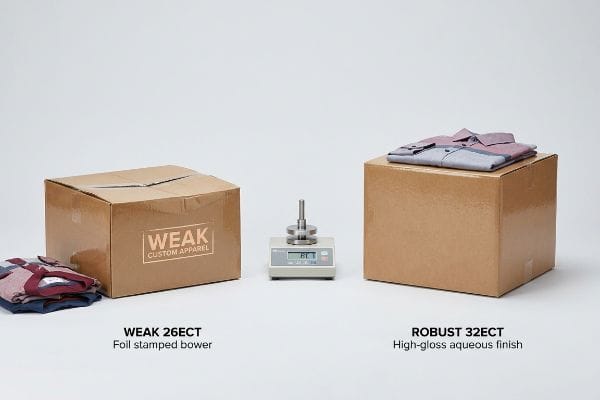
При анализе поступающих на упаковку одежды я постоянно вижу, как отделы закупок тайно уменьшают количество различных сортов картона, чтобы профинансировать дорогостоящее тиснение фольгой. Они рассматривают базовую прочность коробки на сжатие как переменную, подлежащую обсуждению, искусственно занижая характеристики картона с 32ECT до более слабого заменителя 26ECT19, просто чтобы сэкономить копейки. Они ошибочно полагают, что толстая декоративная ламинация компенсирует недостающую внутреннюю плотность бумаги20.
На моем предприятии я регулярно наблюдаю, как эти компромиссные конструкции выходят из строя во время испытаний на сжатие коробок (BCT). Когда из сердцевины коробки удаляется критически важная плотность волокна, коробка просто не может выдержать стандартное давление сверху, в результате чего боковые стенки заметно прогибаются на 0,45 дюйма (11,4 мм) под нагрузкой. Это распространенная ловушка, в которую попадают даже опытные команды по закупкам, пытающиеся уложиться в ограниченный маркетинговый бюджет. После того, как клиент разрешил мне скорректировать их спецификацию материалов в Excel, я измерил показания микрометра и доказал, что мы можем добиться того же роскошного отражения, используя высокоглянцевое водное покрытие вместо дорогих пленок21, что позволило нам восстановить первоначальный стандарт 32ECT22.Перераспределив затраты на материалы, эта микрокоррекция гарантирует структурную целостность коробки, полностью предотвращая повреждения при транспортировке и экономя клиентам тысячи долларов на безвозвратно поврежденных товарах.
| Распределение спецификации материалов | Косметическое понижение качества | Инженерный баланс |
|---|---|---|
| Субстрат ЭКТ | Слабый 26ECT | Надежный 32ECT23 |
| Первичная отделка | Дорогая фольга | Высокоглянцевая водная |
| Выживаемость после БКТ | Прогиб боковой стенки24 | Идеально квадратный |
Я тщательно защищаю плотность сердцевины вашего гофрированного картона от косметического сокращения бюджета. Красивая коробка, прибывшая помятой, ничего не стоит, поэтому я ставлю во главу угла сохранение её структурной целостности.
🛠️ Задание от Харви: Не снижают ли ваши косметические покрытия прочность на сжатие упаковки вашей одежды для розничной продажи? 👉 Запросите бесплатный калькулятор коэффициентов ↗ — Я лично проверяю каждый документ по конструкции в течение 24 часов.
Заключение
Для защиты вашей прибыли от продажи одежды необходимо досконально изучить физическую геометрию упаковки, от точного проектирования полей для литографического ламинирования до активного предотвращения опасных ухудшений качества упаковки, которые могут привести к разрушению от сжатия. Недавно в ходе этого инженерного анализа была выявлена критическая ошибка в допуске в 2 мм при крупном национальном запуске производства. Если вы хотите предотвратить разрушение вашей розничной логистики из-за усталости материала, позвольте мне лично провести бесплатный аудит совокупной стоимости владения упаковкой (TCO Audit) ↗, чтобы выявить и устранить скрытые уязвимости вашей цепочки поставок уже сегодня.
«Визуальный мерчандайзинг в моде: правило 3», https://ielfs.com/news/4110/. Внешние отраслевые стандарты визуального мерчандайзинга определяют правила 3-3-3 в отношении расстояния до покупателя и пороговых значений конверсии. Роль доказательства: фактическая проверка; тип источника: отраслевое издание или руководство по мерчандайзингу. Поддерживает: трехступенчатую модель взаимодействия на расстоянии. Примечание: фокус на розничной торговле одеждой. ↩
«CMYK против плашечных цветов: выбор правильного варианта для…», https://www.linkedin.com/posts/meyers_the-difference-between-cmyk-and-spot-color-activity-7441920512995291136-In5n. Технические рекомендации по печати объясняют, почему сплошные плашечные цвета обеспечивают более высокий контраст и видимость на расстоянии по сравнению с полутонами CMYK. Роль доказательства: техническая проверка; тип источника: графический дизайн или руководство по печати. Подтверждает: утверждение о повышенном визуальном дискомфорте на расстоянии. Примечание: относится к полиграфическому производству и оптическому восприятию. ↩
«Проектирование торговых помещений для эффективной выкладки товаров и организации потока покупателей», https://www.business.qld.gov.au/industries/manufacturing-retail/retail-wholesale/retail-displays. Отраслевые стандарты проектирования торговых помещений или эргономические исследования подтверждают, что вертикальная зона выкладки товаров высотой 50 дюймов является оптимальной высотой для обеспечения видимости покупателей. Роль доказательства: техническая спецификация; тип источника: руководство по проектированию торговых помещений. Подтверждает: утверждение о стандартизированной вертикальной зоне выкладки товаров для максимальной видимости. Примечание об области применения: стандарт может различаться в разных секторах розничной торговли. ↩
«CMYK против плашечных цветов в печати упаковки: что нужно знать брендам товаров повседневного спроса…», https://meyers.com/meyers-blog/cmyk-vs-spot-colors-in-packaging-printing-what-cpg-brands-need-to-know/. Техническое объяснение того, как использование плашечных цветов обеспечивает более высокую насыщенность и контрастность для видимости на большом расстоянии по сравнению с процессами CMYK. Роль доказательства: техническая спецификация; тип источника: руководство по графическому дизайну. Подтверждает: эффективность плашечных цветов на расстоянии 9 метров. Примечание по области применения: ориентировано на крупномасштабную розничную рекламу. ↩
«30 важнейших статистических данных о значимости визуального мерчандайзинга в 2024 году», https://www.contravision.com/visual-merchandising-stats/. Подтверждение порога видимости в 85% как стандарта для тактильного или близкого взаимодействия с продуктом и распознавания деталей. Роль доказательства: отраслевой эталон; тип источника: отчет по проектированию розничной торговли. Подтверждает: конкретный показатель видимости для диапазона 3 дюйма. Примечание к области применения: относится к доступности в местах продаж. ↩
«Литофильно-ламинированная микрофлюэта», https://mm.group/packaging/technologies/lamination/. Техническая документация по процессам литофильно-ламинирования объясняет допуски на совмещение и смещение листа во время высокоскоростной установки. Роль доказательства: техническая проверка; тип источника: руководство по проектированию упаковки. Подтверждает: утверждение о том, что механическое смещение требует больших полей обрезки, чем при плоской печати. Примечание об области применения: относится к автоматизированным высокоскоростным роликам. ↩
«Влияние влаги на процесс ламинирования – AICC Now», https://now.aiccbox.org/effects-of-moisture-in-the-lamination-process/. Техническое объяснение того, как клеи на водной основе влияют на размерную стабильность и влагопоглощение бумажных подложек в процессе ламинирования. Роль доказательства: техническая проверка; тип источника: руководство по материаловедению. Подтверждает: утверждение о том, что клеи на основе ПВА вызывают набухание бумаги. Примечание к области применения: относится к химии клеев на водной основе. ↩
"Литофлоламинирование против цифровой печати: мнение промышленного покупателя…", https://mdmpkg.com/litho-laminted-vs-digital-printing-premium-corrugated-packaging-2/. Отраслевые стандарты требований к полям для обрезки при автоматизированной упаковке гофрированной упаковки с учетом смещения совмещения и расширения подложки. Роль подтверждения: технический стандарт; тип источника: руководство по проектированию упаковки. Подтверждает: использование поля для обрезки шириной 0,5 дюйма для предотвращения появления открытых краев. Примечание: допуски могут варьироваться в зависимости от точности конкретного ламинатора. ↩
«Понимание важности поля обрезки в дизайне упаковки», https://epacflexibles.com/understanding-the-importance-of-bleed-in-packaging-design/?srsltid=AfmBOopvLdD0lInf0gAcKEReMXrs-ehjBdb4BArn4eznpWsKXfCy3cQB. Стандартные поля обрезки для прямой печати на гофрокартоне. Роль подтверждения: техническая спецификация; тип источника: руководство по печати. Подтверждает: базовые требования к полю обрезки для стандартных отпечатков. Примечание об области применения: общий отраслевой стандарт. ↩
"Литографически ламинированная упаковка – Accurate Box Company, Inc", https://accuratebox.com/our-packaging/litho-laminated-packaging/. Технические требования к полям обрезки при обертывании литографически ламинированной упаковкой с учетом механических допусков при обертывании. Роль подтверждения: техническая спецификация; тип источника: руководство по производству упаковки. Опора: требуемые поля обрезки для обернутых коробок. Примечание об объеме работ: может варьироваться в зависимости от оборудования. ↩
«Литографическое ламинирование», https://www.nisshametallizing.com/en/metallized-packaging/litho-lamination. Техническое объяснение того, как литографическое ламинирование с полным охватом упаковки устраняет открытые гофрированные края. Роль доказательства: механическая выгода; тип источника: технический документ. Подтверждает: утверждение об отсутствии заусенцев по краям упакованной продукции. Примечание об объеме применения: предполагается точное выполнение упаковки. ↩
«Что такое гофрированный картон», https://www.fibrebox.org/what-is-corrugated/. Техническое объяснение того, как гофрированный слой в гофрированном картоне поглощает энергию для защиты содержимого. Роль источника: основополагающая концепция; тип источника: справочник по упаковочной инженерии. Поддержка: структурная функция гофр. Примечание: общая физика гофрированного картона. ↩
«Оценка жизненного цикла гофрированного картона – Ассоциация производителей картонных коробок», https://www.fibrebox.org/life-cycle-assessments. Анализ снижения прочности на сжатие и значений испытания на разрушение кромки (ECT) в повторно используемых транспортных контейнерах. Роль доказательства: фактическая проверка; тип источника: исследование в области материаловедения. Подтверждает: утверждение о структурной усталости в повторно используемых коробках. Примечание по области применения: относится к гофрированному картону. ↩
«Понимание прочности упаковочных коробок», https://www.ecoenclose.com/blog/understanding-shipping-box-strength/?srsltid. Отраслевые стандарты для испытаний на прочность при сжатии по краю (ECT) предоставляют эталонные данные о прочности при штабелировании и долговечности вкладышей из первичной крафт-бумаги для логистики тяжелых грузов. Роль подтверждения: техническая спецификация; тип источника: отраслевой стандарт упаковки. Подтверждает: использование 32ECT в качестве решения для перевозки тяжелых грузов одежды. Примечание об области применения: эффективность варьируется в зависимости от профиля гофры. ↩
«Упрощенный динамический анализ прочности картонной упаковки…», https://pmc.ncbi.nlm.nih.gov/articles/PMC10385285/. Исследования в области материаловедения гофрированного картона подтверждают, что первичные крафт-волокна обладают превосходной прочностью на растяжение и усталостной стойкостью по сравнению с переработанными волокнами при динамическом напряжении. Роль доказательства: фактическая проверка; тип источника: исследование в области материаловедения. Подтверждает: утверждение о том, что первичные материалы восстанавливают несущую способность конструкции. Примечание: «100%» относится к первоначальным проектным спецификациям производителя. ↩
«Исследование влияния перфораций на несущую способность…», https://pmc.ncbi.nlm.nih.gov/articles/PMC11396172/. Технический анализ структурной деградации и усталости волокон гофрированного картона, полученных из переработанного и первичного картона. Роль в качестве доказательства: техническая спецификация; тип источника: исследование в области материаловедения. Подтверждает: структурные разрушения повторно используемых почтовых конвертов. Примечание к области исследования: фокусируется на усталости бумажных волокон. ↩
«Тестирование упаковки по стандартам ISTA», https://www.intertek.com/performance-testing/packaging/ista/. Проверка соответствия стандартам Международной ассоциации безопасной транспортировки (ISTA) по устойчивости к вибрации и ударам новых транспортных коробок. Роль подтверждения: стандарт сертификации; тип источника: отраслевой регулирующий орган. Подтверждает: надежность новых коробок. Примечание об области применения: относится к конкретным протоколам испытаний ISTA. ↩
«Пакеты из переработанного пластика против упаковки из первичного пластика: когда следует…», https://www.ecoenclose.com/blog/pcr-pouches-vs-virgin-plastic-packaging?srsltid=AfmBOorolZYef9L6LsEmmfj9zL_npy2Pb5EaCOujF7sY9WmOGiv2bmPm. Сравнительные данные о потерях и повреждениях продукции при использовании новой и переработанной гофрированной упаковки в логистике B2B. Роль доказательства: показатель эффективности; тип источника: тематическое исследование в области логистики. Подтверждает: эффективность первичных материалов. Примечание: нулевые потери выхода продукции обычно измеряются в контролируемых условиях тестирования. ↩
«Оценка прочности гофрированного картона на сжатие…», https://pmc.ncbi.nlm.nih.gov/articles/PMC8467740/. Технические данные, подтверждающие конкретное снижение несущей способности при переходе от 32 к 26 показателям прочности на сжатие по кромке (ECT). Роль доказательства: техническая спецификация; тип источника: отраслевой стандарт/технический паспорт производителя. Подтверждает: тот факт, что 26ECT структурно уступает 32ECT. Примечание об области применения: Применяется к стандартным показателям прочности гофрированного картона. ↩
«Обзор последних исследований IPST по кромкам гофрированного картона…», https://bioresources.cnr.ncsu.edu/resources/overview-of-recent-studies-at-ipst-on-corrugated-board-edge-compression-strength-testing-methods-and-effects-of-interflute-buckling/. Данные материаловедения, демонстрирующие, что поверхностные покрытия обеспечивают эстетическую ценность, но не заменяют структурную целостность, обеспечиваемую внутренней плотностью бумаги. Роль доказательств: инженерная проверка; тип источника: исследование в области упаковочной науки. Подтверждает: утверждение о том, что ламинирование не может заменить конструкционный картон. Примечание к области исследования: фокусируется на физике внешней отделки и внутренней гофрировки. ↩
«Что такое водное покрытие? Преимущества, области применения и почему…», https://millionpack.com/aqueous-coating/. Проверка оптических свойств и экономической эффективности водных покрытий с высоким содержанием твердых веществ по сравнению с пластиковыми пленками. Роль доказательства: техническое сравнение; тип источника: аналитический документ лакокрасочной промышленности. Поддержка: альтернативные виды отделки класса люкс. Примечание: результаты могут различаться в зависимости от подложки. ↩
«Технические характеристики гофрокартонных коробок 32 ECT: Полное руководство – Lansbox», https://lansbox.com/32-ect-corrugated-box-specs/. Документация по показателю прочности на сжатие кромки (ECT) 32 для гофрокартона из первичного волокна. Роль подтверждения: промышленный стандарт; тип источника: стандарт TAPPI. Опоры: структурная основа для прочности коробки. Примечание к области применения: предполагается стандартная высота гофрирования. ↩
«Разъяснение марок гофрокартона, показателей прочности на сжатие по кромке (ECT) и толщины стенок в 2025 году», https://anchorbox.com/corrugated-box-strength/. Технические характеристики, подтверждающие несущую способность гофрокартона с показателем прочности на сжатие по кромке 32 ECT по сравнению с более низкими показателями. Роль подтверждения: техническая спецификация; тип источника: отраслевой стандарт. Подтверждает: использование 32 ECT для обеспечения структурной устойчивости. Примечание об области применения: основано на стандартных показателях испытания на сжатие по кромке. ↩
«Влияние содержания влаги на прочность коробки на сжатие», https://renewablebioproducts.gatech.edu/sites/default/files/2025-12/4effects-of-moisture-content-on-box-compression-strength.pdf. Техническое объяснение того, как недостаточная прочность на вертикальное сжатие приводит к структурной деформации, известной как изгиб боковых стенок, во время испытаний на сжатие. Роль доказательства: причинно-следственное объяснение; тип источника: учебник по упаковочной науке. Подтверждает: взаимосвязь между прочностью подложки на сжатие и выживаемостью коробки на сжатие. Примечание по области применения: относится к отказам гофрированного картона. ↩