Вы вкладываете тысячи долларов в разработку продукта, но если ваши розничные коробки окажутся неэффективными, все это не имеет значения. Плохой конструктивный дизайн мгновенно превращает товары с высокой прибылью в уцененный, поврежденный товар.
Цель картонной упаковки — физическая защита товара во время транспортировки и визуальное представление продукции на полках магазинов. Она служит структурным щитом от повреждений при транспортировке, а также является основным маркетинговым инструментом для привлечения внимания потребителей и эффективной передачи ценности бренда.
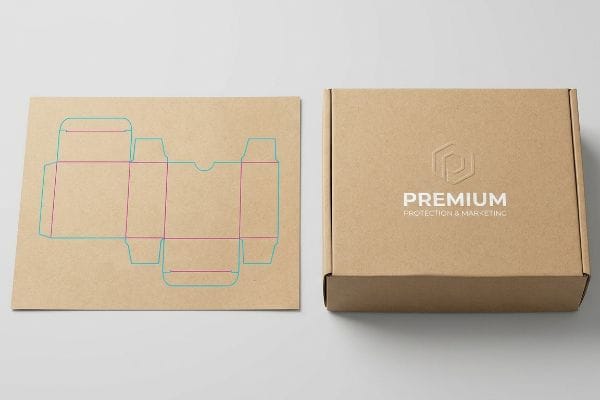
Но знание базового определения не спасет вашу прибыль, когда тысячи единиц продукции окажутся на влажном полу склада.
В чём преимущества картонной упаковки?
Сокращение расходов на транспортировку начинается с продуманной геометрии конструкции, а не просто с переговоров о более низких тарифах на доставку.
Преимущества картонной упаковки включают в себя максимальную эффективность цепочки поставок, снижение объемных транспортных расходов и обеспечение возможности персонализации узнаваемости бренда. Она обеспечивает легкую структурную защиту, которая значительно снижает транспортные расходы, и позволяет быстро и качественно офсетно печатать, что приводит к ощутимому росту розничных продаж на мировых рынках.
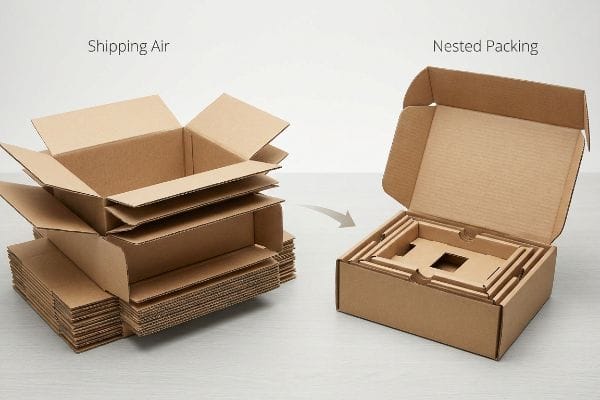
Давайте посмотрим, как эти преимущества проявляются на практике при оплате морских контейнерных перевозок.
Экономия на транспортных расходах благодаря логистике с использованием вложенной упаковки
Большинство отделов закупок исходят из того, что главное преимущество картона заключается лишь в его более низкой стоимости по сравнению с пластиком или металлом. Они полностью сосредотачиваются на стоимости сырья на единицу продукции, рассматривая упаковочную коробку исключительно как неизбежные расходы. Такой подход полностью игнорирует объемную гибкость гофрированного картона.
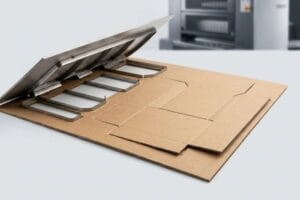
Я постоянно вижу этот упущенный потенциал. Бренды разрабатывают великолепные выставочные образцы, но отправляют их с огромными пустыми воздушными зазорами внутри основной коробки. Вместо того чтобы отправлять воздух, я проектирую внутренние лотки для продукции , которые физически встраиваются в полое основание основной конструкции. Вы можете услышать точный «шуршание» трения, когда необработанные картонные компоненты идеально скользят друг в друга. Благодаря такому вложенному расположению элементов в CAD-модели (системе автоматизированного проектирования), я могу уменьшить окончательный объем основной коробки до 30%¹. Это позволяет разместить тысячи дополнительных единиц в одном транспортном контейнере, что напрямую снижает стоимость доставки за единицу продукции.
| Распространённая ошибка новичков | Профессиональное решение | Преимущества для торговых площадей |
|---|---|---|
| Пустое пространство для отправки | Конструкция с внутренними лотками, расположенными друг над другом2 | Снижает стоимость доставки на единицу продукции |
| Игнорируя объемный вес | Разработка жестких допусков на изгиб3 | На одном поддоне помещается больше единиц товара |
| Громоздкие предварительно собранные блоки | Конструкция с плоским полым основанием4 | Экономит место для хранения в подсобном помещении |
Я никогда не принимаю структурные файлы, в которых отсутствует необходимая информация. Оптимизация внутренней геометрии раскроя перед массовым производством — это самый простой способ мгновенно увеличить прибыль бренда при запуске продаж по всей стране.
🛠️ За столом Харви: Вы платите за перевозку пустых контейнеров из-за границы? 👉 Получите объемный аудит ↗ — Прямой доступ к моему рабочему месту. Никакого автоматического спама с рекламой, обещаю.
Что такое картонная упаковка?
Прежде чем одобрить массовый тираж, необходимо точно понимать, какой материал проходит через печатный станок.
Картонная упаковка — это универсальный складной картон или гофрированный материал, предназначенный для размещения, защиты и демонстрации товаров в розничной торговле. В ней используются многослойные бумажные волокна для создания жестких, легких и прочных оболочек, которые поддерживают автоматизированные процессы сборки, высокоскоростную упаковку продукции и динамическое графическое ламинирование в условиях жесткой конкуренции на рынке розничной торговли.
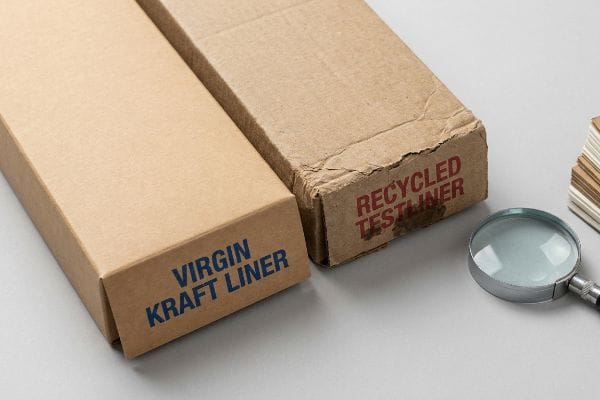
Понимание теории — это хорошо, но настоящая проверка происходит, когда чернила действительно попадают на волокна бумаги.
Суровая реальность сравнения первичной крафт-бумаги и переработанного тестлайнера
Распространенный подход новичков заключается в том, чтобы просто заказать у поставщика стандартную картонную коробку, не проверяя характеристики материала. Они полагаются на визуальные цифровые макеты и предполагают, что весь коричневый картон ведет себя одинаково под физическим воздействием. Это игнорирует существенные химические и структурные различия , присущие коммерческой бумаге⁵ .
Часто покупатели спрашивают, почему их коробки выглядят мутными или легко рвутся по линиям сгиба. Ответ обычно сводится к материаловедению. Недавно я оценивал работу клиента, чей предыдущий поставщик использовал дешевый переработанный лайнер для экономии. Когда я провел большим пальцем по линии сгиба, короткие переработанные волокна6 показались мне шероховатыми и мгновенно порвались под давлением. Я немедленно заменил их на первичный крафт-картон. Более длинные, целые волокна первичной древесной целлюлозы7 прекрасно впитывают чернила и складываются с чистым, острым краем, предотвращая растрескивание дорогостоящей фирменной графики прямо на заголовке витрины.
| Распространённая ошибка новичков | Профессиональное решение | Преимущества для торговых площадей |
|---|---|---|
| Указание типового картона | Обязательное использование верхнего слоя Virgin Kraft8 | Обеспечивает четкие, неповрежденные складки |
| Печать на пористом тестлайнере | Точечные цветовые пятна на герметизированной доске9 | Предотвращает выцветание логотипов бренда |
| Не принимая во внимание длину волокна | Указание точных степеней токсичности ЭКТ10 | Выдерживает грубое обращение на складе |
Я всегда проверяю точное происхождение бумажной массы, прежде чем включать печатный станок. Указание правильного сорта подложки заранее полностью исключает неожиданные разрывы изображения и структурные повреждения во время выполнения заказа.
🛠️ Стол Харви: Задумываетесь, почему ваши складки на витрине выглядят потрескавшимися и непрофессионально? 👉 Запросите проверку характеристик материала ↗ — Скачайте безопасно. Мой почтовый ящик открыт, если у вас возникнут вопросы позже.
Каково назначение картонной упаковки?
Ваш дисплей должен выдержать суровые условия транспортировки от заводского цеха до центрального прохода крупного торгового центра.
Цель картонной упаковки заключается в создании прочного, несущего барьера, защищающего товары от повреждений при транспортировке. Она служит структурным защитным механизмом, поглощающим удары при транспортировке, обеспечивающим устойчивость при вертикальном штабелировании и сохраняющим абсолютную ценность бренда в сложных глобальных цепочках поставок и сетях выполнения заказов.
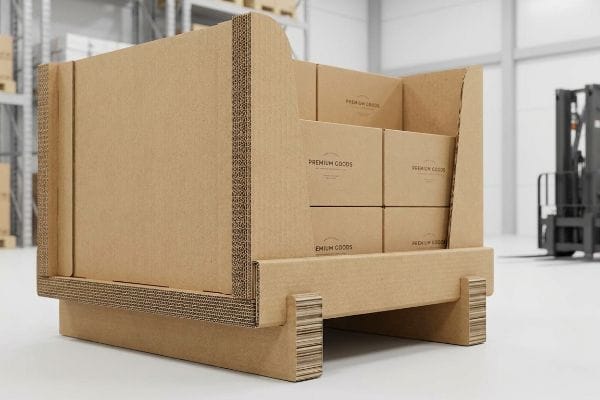
Но выжить в контролируемом лабораторном испытании на падение — это совсем не то же самое, что выжить в хаотичном складском помещении.
Защита ценности бренда с помощью правила 50 касаний
Многие проектные группы создают свои физические прототипы, используя легкие однослойные плиты, чтобы сэкономить на стоимости доставки. Они бережно обращаются с этими белыми образцами на чистых столах в конференц-залах, полагая, что их прочности достаточно. Это создает ложное чувство безопасности относительно реальных физических нагрузок, которым устройство подвергнется в реальных условиях.
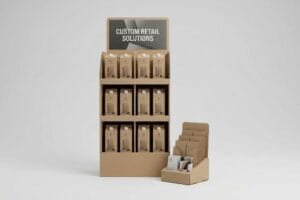
Представьте себе торговую витрину как сданный багаж: её бросают, толкают и тащат, прежде чем она достигнет места назначения. В розничной логистике мы используем правило 50 касаний, зная, что коробку десятки раз трогают погрузчики, работники склада и агрессивные покупатели. Я наблюдал, как продавцы таскали хлипкие однослойные витрины по шероховатым бетонным полам, слушая мучительный скрежет, когда дно рвётся и тяжёлый товар рассыпается повсюду. Чтобы этого избежать, я ввожу строгие требования к конструкции из двухслойного гофрированного картона для любых напольных оснований, гарантируя, что конструкция сохранит свою первоначальную форму и защитит вашу прибыль даже после нескольких недель интенсивного движения покупателей.
| Распространённая ошибка новичков | Профессиональное решение | Преимущества для торговых площадей |
|---|---|---|
| Утверждение однослойных цоколей | Введение обязательного использования двойных стен для напольных шкафов. | Предотвращает деформацию оснований в проходах11 |
| Игнорирование трения на складе | Проектирование складной двухстенной балки | Предотвращает скручивание графических заголовков12 |
| Разработка конструкции для лабораторных условий | Разработка дизайна с учетом правила 50 касаний13 | Поддерживает премиальный имидж бренда |
Я не допускаю, чтобы отличный продукт вышел из строя из-за слабой конструктивной основы. Я гарантирую, что ваша витрина выдержит физические условия современного торгового потока, благодаря тщательному проектированию тех компонентов, которые непосредственно соприкасаются с полом.
🛠️ Стол Харви: Ваша нынешняя витрина шатается, когда полностью загружена товаром? 👉 Закажите проверку целостности конструкции ↗ — Никаких форм, которые приводят к бесконечным звонкам от отдела продаж. Только чистая выгода.
Картонная коробка — это полезная вещь или отходы?
Витрина приносит доход только в том случае, если сотрудники магазина могут её изготовить самостоятельно.
Зависит от ситуации. Картонная коробка очень полезна, если она правильно спроектирована с учетом жизненного цикла продукта и возможности переработки, но она сразу же становится отходами, если структурные повреждения происходят до начала использования. Неправильно спроектированные допуски или неконтролируемое поглощение влаги могут сделать материалы физически непригодными для использования, вынуждая производителей преждевременно выбрасывать целые производственные партии.
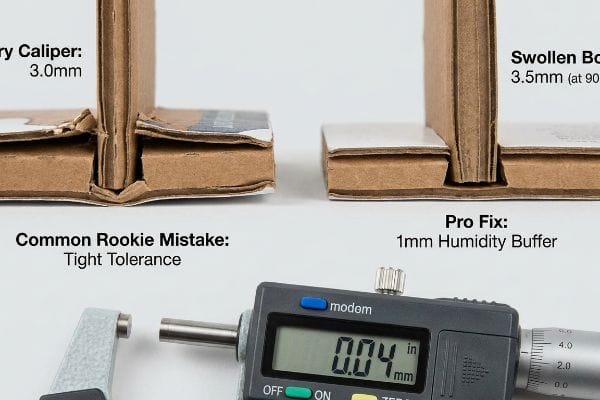
Установить один дисплей в лабораторных условиях несложно, но вот суровая реальность, с которой вы сталкиваетесь, когда перевозите 500 таких дисплеев через океан.
Реальность: крах устойчивости к набуханию от влаги
Большинство графических дизайнеров, работающих в офисах с кондиционированием воздуха, устанавливают допуски на прорези для штампов, основываясь на абсолютном диаметре сухого листа. Они предполагают, что прорезь для приемника, вырезанная точно на 0,12 дюйма (3 мм), идеально подойдет к выступу диаметром 0,12 дюйма (3 мм) навсегда. Это, казалось бы, разумное, но на самом деле опасное предположение, игнорирующее физику влажности окружающейсреды¹⁴.
Это не просто теория — я вижу это на испытательном полигоне, когда контейнеры прибывают в места с высокой влажностью. Пористая бумага 32ECT (тест на сжатие края) впитывает влагу из окружающей среды, и она физически набухает. Когда я измеряю это цифровым микрометром, оказывается, что этот идеальный гофрированный лист толщиной 3,17 мм значительно раздувается. Я наблюдал, как рабочие на сборочной линии физически потеют, пытаясь втиснуть эти разбухшие выступы в узкие пазы, разрывая напечатанный верхний слой и превращая изделие в мгновенный мусор. Я измерил это микрометром и доказал, что мне не нужны дорогие пластиковые зажимы — мне просто нужно было математически заложить дополнительный буфер влажности в 0,04 дюйма (1 мм) в приемные пазы на структурном файле. Благодаря точному допуску в 1 мм, я гарантирую, что время сборки упаковки сократится на 45 секунд на единицу, что экономит клиентам тысячи долларов на оплате ручного труда и предотвращает огромные потери в розничной торговле.
| Распространённая ошибка новичков | Профессиональное решение | Преимущества для торговых площадей |
|---|---|---|
| Использование размеров пазов сухого штангенциркуля | Добавление буфера влажности толщиной 0,04 дюйма (1 мм)15 | Ускоряет сборку в подсобном помещении |
| Игнорируя влажность при транспортировке по океану16 | Проверка допусков на разбухание платы | Предотвращает разрыв верхнего слоя |
| Обвинение рабочих сборочного цеха | Корректировка структурных файлов | Устраняет необходимость в прозрачной ленте |
Я не позволяю погодным условиям определять успех запуска продукта. Включение невидимых буферов влажности непосредственно в расчеты — это то, как я гарантирую, что ваши дисплеи останутся полезным активом, а не дорогостоящими отходами со склада.
🛠️ Вопрос от Харви: Знаете ли вы точное содержание влаги в картоне вашего нынешнего поставщика гофрокартона до ламинирования? 👉 Пришлите мне файл с чертежом высечки ↗ — Я проверю расчеты, прежде чем вы потратите бюджет на массовое производство.
Заключение
Вы можете выбрать более дешевого поставщика, который игнорирует законы физики окружающей среды, но когда пористая гофрированная бумага разбухает во время транспортировки и вызывает катастрофические разрывы на сборочной линии, замедляя выполнение заказов примерно на 40%, весь ваш запуск в розничную торговлю оказывается под угрозой. Это точная спецификация, которую используют мои 10 крупнейших розничных клиентов, чтобы гарантировать отсутствие брака при печати. Перестаньте гадать о допустимых уровнях влажности и позвольте мне лично проверить ваши файлы плоских деталей с помощью моей бесплатной проверки высечки ↗, чтобы выявить фатальные ошибки микротрения до начала массового производства.
«СНИЖЕНИЕ ЗАТРАТ НА ОБЪЕМНУЮ УПАКОВКУ С ПОМОЩЬЮ УМНЫХ МЕТОДОВ…», https://www.bcipkg.com/reducing-dimensional-weight-costs-with-smart-corrugated-packaging-design/. [Данные по проектированию упаковки и примеры логистических проектов предоставляют эмпирические доказательства снижения объема за счет вложенной структурной геометрии]. Роль доказательства: техническая проверка; тип источника: исследование в области промышленной инженерии. Подтверждает: утверждения о снижении объемных затрат на транспортировку. Примечание: результаты зависят от конкретного соотношения продукта и упаковки. ↩
«[PDF] Доставка внутри коробки: контейнеризация и торговля – А. Керем Косар», https://keremcosar.uvacreate.virginia.edu/publications/cd_box.pdf. [Отраслевые стандарты логистики демонстрируют, как размещение компонентов упаковки друг на друге уменьшает общий объем и снижает затраты на доставку на единицу продукции]. Роль доказательства: техническая проверка; тип источника: отраслевой аналитический документ. Подтверждает: снижение стоимости фрахта. Примечание к области применения: фокусируется на объемной эффективности. ↩
«Исследование влияния жесткости верхней части поддона на гофрированный картон…», https://pmc.ncbi.nlm.nih.gov/articles/PMC8585293/. [Технические спецификации по упаковке показывают, что минимизация допусков на сгиб уменьшает внешние размеры коробок, что позволяет повысить эффективность использования поддонов]. Роль доказательства: техническая спецификация; тип источника: производственный стандарт. Подтверждает: увеличение количества единиц на поддоне. Примечание к области применения: относится к технологиям точного складывания. ↩
«Влияние формата упаковки на грузоперевозки, хранение и площадь складских помещений», https://www.cdf1.com/flat-or-assembled-how-packaging-format-impacts-freight-storage-and-floor-space/[Исследования в области управления цепочками поставок показывают, что конструкция в виде плоской упаковки значительно уменьшает объем складских запасов по сравнению с предварительно собранными единицами]. Роль доказательства: фактическое утверждение; тип источника: исследования в области управления цепочками поставок. Подтверждает: оптимизацию складских помещений. Примечание к области исследования: фокусируется на эффективности складского хранения. ↩
«Крафт-бумага против тестлайнера: прочность, стоимость и экологичность – LinkedIn», https://www.linkedin.com/posts/fahd-malik-54047a17_packagingindustry-kraftpaper-testliner-activity-7355463111815901184-7J57. [Авторитетный источник по материаловедению подробно описывает, как длина волокон, прочность сцепления и чистота различаются между первичной крафт-бумагой и переработанными волокнами, влияя на структурную целостность]. Роль доказательства: техническая проверка; тип источника: отраслевой стандарт или учебник по материаловедению. Подтверждает: различия в физических характеристиках картона. Примечание к области применения: конкретно сравнение первичной и переработанной целлюлозы. ↩
«Влияние содержания первичного волокна на прочность и жесткость…», https://bioresources.cnr.ncsu.edu/resources/effect-of-virgin-fiber-content-on-strength-and-stiffness-characteristics-of-a-three-layer-testliner/. [Техническая литература по переработке целлюлозы и бумаги показывает, что переработанные волокна укорачиваются в процессе повторной переработки, что снижает структурную целостность сгиба]. Роль доказательства: техническая спецификация; тип источника: научный журнал. Подтверждает: снижение прочности переработанного тестлайнера. Примечание к области применения: относится к механической прочности. ↩
«[PDF] Сравнительное исследование физических свойств переработанного…», https://repository.rit.edu/cgi/viewcontent.cgi?article=1299&context=theses. [Промышленная документация по крафт-процессу подтверждает, что длинноволокнистая древесная целлюлоза из первичной древесины обеспечивает более высокую прочность на разрыв и лучшую гладкость поверхности для печати]. Роль доказательства: техническая спецификация; тип источника: отраслевой стандарт. Подтверждает: превосходные характеристики первичной крафт-целлюлозы. Примечание к области применения: относится к длине волокна и восприимчивости чернил. ↩
«Как используется крафт-бумага в упаковке? – PopDisplay», https://popdisplay.me/how-is-kraft-paper-used-in-packaging/. [Технические характеристики длины целлюлозного волокна подтверждают, что первичные крафт-волокна обеспечивают превосходную прочность на сгибание и устойчивость к растрескиванию по сравнению с переработанными материалами с короткими волокнами]. Роль доказательства: техническая проверка; тип источника: справочник по материаловедению. Подтверждает: структурную целостность складок. Примечание об области применения: относится к применению в качестве подложки. ↩
«Влияние условий производства бумаги на впитывание чернил и перепечатку…», https://bioresources.cnr.ncsu.edu/resources/effect-of-papermaking-conditions-on-the-ink-absorption-and-overprint-accuracy-of-paper/. [Стандарты полиграфической промышленности объясняют, как герметизированные или покрытые поверхности предотвращают проникновение чернил в подложку, тем самым поддерживая насыщенность цвета и предотвращая «вымывание»]. Роль доказательства: валидация процесса; тип источника: техническое руководство по печати. Подтверждает: визуальную точность логотипа бренда. Примечание к области применения: фокусируется на пористости поверхности. ↩
«Испытание на сжатие кромки: важные сведения для гофрированной упаковки», https://www.testresources.net/blog/edge-crush-test-essential-insights-for-corrugated-packaging. [Отраслевые стандарты для гофрированного картона определяют испытание на сжатие кромки (ECT) как основной показатель для измерения прочности при штабелировании и сопротивления сжатию во время транспортировки]. Роль подтверждения: техническая спецификация; тип источника: стандарт ISO/ASTM. Подтверждает: прочность при неаккуратном обращении. Примечание об области применения: применяется специально к сортам гофрированного картона. ↩
«Торговые витрины из гофрированного картона – BoxMaker», https://www.boxmaker.com/retail-displays/. [Технические данные по гофрированному картону подтверждают, что двухслойная конструкция значительно увеличивает прочность на вертикальное сжатие по сравнению с однослойной, снижая вероятность разрушения конструкции под нагрузкой]. Роль доказательства: техническая спецификация; тип источника: инженерное руководство. Подтверждает: необходимость двухслойных оснований для напольных витрин. Примечание об области применения: относится к напольным витринам, выдерживающим большие нагрузки. ↩
«Картонные коробки с двойными стенками – Smurfit Kappa», https://www.smurfitkappa.com/us/products-and-services/packaging/double-wall-cardboard-boxes. [В рекомендациях по дизайну упаковки поясняется, что создание складной конструкции с двойными стенками увеличивает момент инерции, обеспечивая жесткость, необходимую для противодействия натяжению и влажности, которые вызывают скручивание однослойных графических элементов]. Роль доказательства: техническая спецификация; тип источника: руководство по дизайну упаковки. Подтверждает: использование складных коробок с двойными стенками. Примечание по области применения: акцент делается на стабильности материала в условиях розничной торговли. ↩
«Дизайн упаковки как инструмент брендинга в косметической индустрии – PMC», https://pmc.ncbi.nlm.nih.gov/articles/PMC9123395/. [Исследования в области логистики и цепочек поставок определяют «Правило 50 касаний» как критерий общего количества ручных манипуляций, которым подвергается торговая витрина от производства до полки]. Роль доказательства: отраслевой показатель; тип источника: аналитический документ по логистике. Подтверждает: требование к долговечной упаковке для поддержания ценности бренда. Примечание к области применения: относится к цепочкам поставок торговых витрин (POP). ↩
«Влияние относительной влажности на прочность на сжатие…», https://open.clemson.edu/all_theses/3225/[Авторитетные источники по материаловедению объясняют, как гигроскопическая природа целлюлозных волокон приводит к расширению и набуханию гофрированного картона по мере увеличения содержания влаги]. Роль доказательства: техническая проверка; тип источника: учебник по материаловедению или инженерный стандарт. Подтверждает: утверждение о том, что измерения сухим штангенциркулем недостаточны для определения допусков в реальных условиях. Примечание к области применения: скорость расширения варьируется в зависимости от сорта бумаги и типа гофрирования. ↩
«Влияние влажности и температуры на механические свойства…», https://bioresources.cnr.ncsu.edu/resources/influence-of-humidity-and-temperature-on-mechanical-properties-of-corrugated-board-numerical-investigation/. [Технические стандарты упаковки или инженерные руководства определяют точные допуски для учета гигроскопического расширения гофрированных материалов]. Роль доказательства: техническая спецификация; тип источника: отраслевое руководство. Подтверждает: конкретное измерение для буферизации влаги в конструкции щелей. Примечание об области применения: Применяется к конструктивному проектированию гофрированного картона. ↩
«[PDF] Влияние относительной влажности на сжатие… – Clemson OPEN», https://open.clemson.edu/context/all_theses/article/4232/viewcontent/Brown_clemson_0050M_15634.pdf. [Исследование в области материаловедения, посвященное логистике, подробно описывает, как высокая влажность во время морских перевозок вызывает поглощение влаги и набухание бумажной упаковки]. Роль доказательства: причинно-следственный механизм; тип источника: исследование в области материаловедения. Подтверждает: утверждение о том, что условия транспортировки требуют испытаний на устойчивость к набуханию картона. Примечание к области исследования: фокусируется на условиях интермодальных перевозок. ↩