Para que seus produtos de consumo sejam colocados nas prateleiras de grandes redes varejistas, é necessário passar por uma rigorosa auditoria de embalagens. A reprovação nessa etapa imprescindível garante que sua mercadoria jamais sairá do centro de distribuição.
O padrão da Walmart para bandejas PDQ (Product Display Quickly - Exibição Rápida de Produtos) exige estrita conformidade dimensional, integridade estrutural robusta e estética impecável, pronta para o ponto de venda. Essas diretrizes garantem que a embalagem secundária suporte o manuseio rigoroso da cadeia de suprimentos, ao mesmo tempo que proporciona máxima visibilidade do produto e facilita a reposição no ponto de venda.
Vamos analisar exatamente o que essas exigências dos grandes varejistas significam para sua próxima produção e como evitar as armadilhas estruturais ocultas que desencadeiam estornos em massa.
O que está incluído em uma bandeja de frios do Walmart?
Projetar embalagens secundárias para áreas de supermercado exige lidar com leis rigorosas de conformidade química antes mesmo de se considerar o corte estrutural.
Uma bandeja para frios da Walmart geralmente inclui barreiras estruturais rigorosas para segurança alimentar, divisórias modulares de papelão ondulado e revestimentos especiais resistentes à umidade. Esses componentes específicos da embalagem são projetados para evitar a penetração de gordura e manter a integridade higiênica, suportando alimentos pesados e perecíveis durante ciclos de armazenamento refrigerado de vários dias.
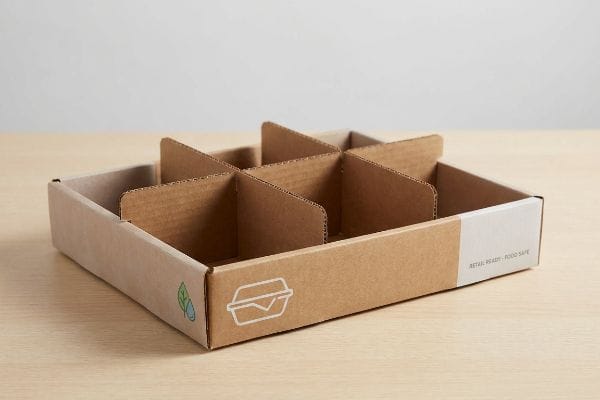
Conhecer os componentes estruturais é apenas o ponto de partida. O verdadeiro desafio surge quando se aplica a química de acabamento ao cartão.
O mandato para embalagens de alimentos livres de PFAS
Na criação de bandejas para produtos alimentícios no varejo, a prática padrão da indústria historicamente se baseia em revestimentos de polietileno baratos¹para evitar que gordura e umidade comprometam a apresentação. Designers gráficos frequentemente aplicam esses filmes de barreira genéricos em seus arquivos, presumindo que qualquer camada impermeável satisfará perfeitamente os gerentes de supermercado que buscam displays impecáveis.
No entanto, as estratégias modernas de varejo exigem que as marcas olhem além das barreiras básicas contra umidade e se concentrem fortemente na conformidade com as normas de sustentabilidade. Especificar revestimentos químicos padrão resistentes a gordura para proteger bandejas de frios frequentemente ignora como as normas modernas do setor alimentício priorizam a sustentabilidade em detrimento de barreiras baratas. Em vez de arriscar a rejeição por parte de compradores ecologicamente conscientes, marcas de sucesso exigem revestimentos aquosos à base de água².Essa mudança estratégica proporciona uma excelente barreira contra líquidos que se dissolve facilmente durante os processos padrão de reciclagem. Ao focar em estratégias de varejo sustentáveis e eliminar os filmes derivados de petróleo, mantemos a embalagem totalmente repulpável e perfeitamente alinhada com as iniciativas ecológicas do varejista.
| Erro comum de iniciantes | A solução profissional | Benefício do piso de vendas |
|---|---|---|
| Especificando filmes de polietileno de baixo custo derivados do petróleo para resistência à graxa. | Exigir revestimentos aquosos à base de água e isentos de PFAS3. | Aprovado instantaneamente em rigorosas auditorias de segurança alimentar. |
| Utilização de adesivos PVA úmidos padrão em ambientes frios. | Aplicação de adesivos estruturais para baixas temperaturas4. | Impede que as costuras se abram em corredores refrigerados. |
| Aproveitando-se de bordas não seladas e sem vedação, próximas a ambientes com alta umidade. | Engenharia de uma barreira líquida de 2 polegadas (50,8 mm) com borda dobrada5. | Impede a absorção de umidade e o colapso da bandeja inferior. |
Recuso-me a deixar que meus clientes arrisquem a conformidade com as normas. Detectar uma falha química em uma matriz de impressão é barato, mas descobrir isso na hora da entrega ao consumidor final pode levar um projeto à falência.
🛠️ Mesa do Harvey: Não tem certeza se o revestimento da sua bandeja atende às normas mais recentes do setor alimentício? 👉 Solicite uma auditoria de materiais gratuita ↗ — Acesso direto à minha mesa. Zero spam de vendas automatizado, prometo.
O que é uma bandeja PDQ?
Entender o funcionamento mecânico desse expositor específico é o que diferencia conseguir um lugar privilegiado na prateleira de ser relegado ao depósito.
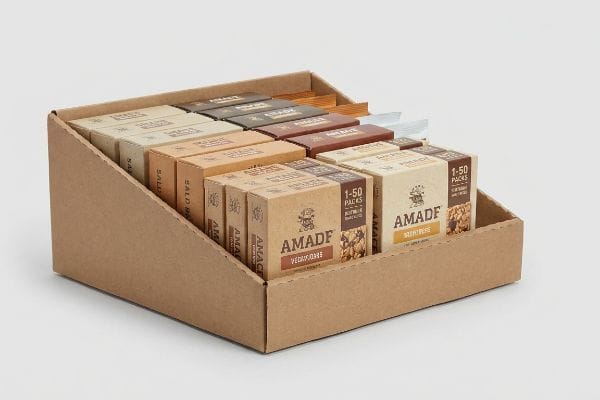
A bandeja PDQ é um expositor de papelão ondulado leve e pronto para uso no varejo, projetado para rápida colocação nas prateleiras. Essas estruturas compactas e pré-coladas permitem que os funcionários da loja movam as mercadorias diretamente da caixa de transporte principal para a prateleira em segundos, eliminando completamente a necessidade de desembalar cada produto individualmente, um processo lento.
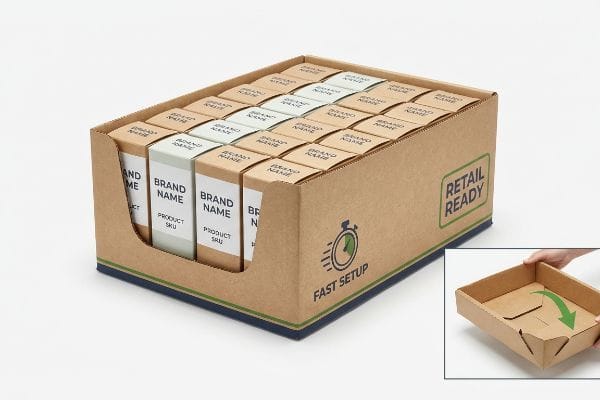
Mas uma bandeja só é considerada "pronta para exposição" se a lógica de montagem física corresponder à velocidade implacável de um funcionário ocupado da loja.
O Padrão de Montagem Sem Frustração
Muitas equipes de marketing criam matrizes de corte para embalagens PDQ com sequências de dobras complexas e em várias camadas para criar apresentações visuais exclusivas. Elas presumem que um design intrincado capturará automaticamente a atenção do consumidor, esquecendo-se completamente de que o objetivo principal desse formato de varejo é a rápida exposição do produto nas prateleiras.
A armadilha estratégica mais comum é priorizar a fabricação barata de embalagens planas em detrimento da velocidade de montagem na loja. Funcionários apressados raramente têm tempo ou paciência para gastar dez minutos decifrando origamis de papelão complexos em um corredor lotado. Quando a reposição de estoque se torna tediosa, os vendedores podem simplesmente ignorar o produto ou montá-lo de forma inadequada, diminuindo o impacto visual pretendido da marca. A estratégia ideal para o varejo envolve o uso de bases modulares pré-coladas que se encaixam instantaneamente em um formato quadrado, diretamente da embalagem. Esse ajuste prévio elimina completamente o travamento manual das abas, reduzindo drasticamente o tempo de trabalho e garantindo que seus principais elementos gráficos promocionais estejam sempre impecáveis para os consumidores.
| Erro comum de iniciantes | A solução profissional | Benefício do piso de vendas |
|---|---|---|
| Projetar mecanismos complexos de travamento com múltiplas abas. | Fabricação de bandejas modulares pré-coladas com fundo reforçado. | Reduz o tempo de reposição de produtos nos corredores em até 80%7. |
| Divisórias internas de SKU soltas e não fixadas para envio. | Integração de divisórias flutuantes coladas e retráteis. | Evita que o produto se desloque de forma desordenada durante o transporte. |
| Deixar os lábios de retenção frontais muito altos e rígidos. | Adicionando um recorte curvo para 85% de visibilidade do produto8. | Aumenta o reconhecimento imediato do impulso de compra. |
Priorizar a pessoa mais apressada e sobrecarregada da sala é minha prática padrão. Se sua bandeja precisa de um manual de instruções, você já perdeu a guerra do varejo.
🛠️ Mesa do Harvey: Seus arquivos estruturais estão adicionando custos ocultos de mão de obra ao seu projeto sem querer? 👉 Solicite sua Análise Rápida de Estruturas ↗ — Baixe com segurança. Minha caixa de entrada está aberta caso tenha alguma dúvida depois.
Posso levar caixas expositoras do Walmart?
Sustentabilidade e reutilizações de embalagens são temas comuns, mas as limitações dos materiais ditam o que uma caixa realmente pode suportar.
Sim. Você pode pegar caixas de exibição do Walmart se o gerente da loja permitir, já que elas são frequentemente descartadas após as campanhas. No entanto, reutilizar essas estruturas promocionais específicas para transporte de cargas pesadas é altamente inseguro, pois o material ondulado sofre fadiga mecânica invisível após o transporte inicial.
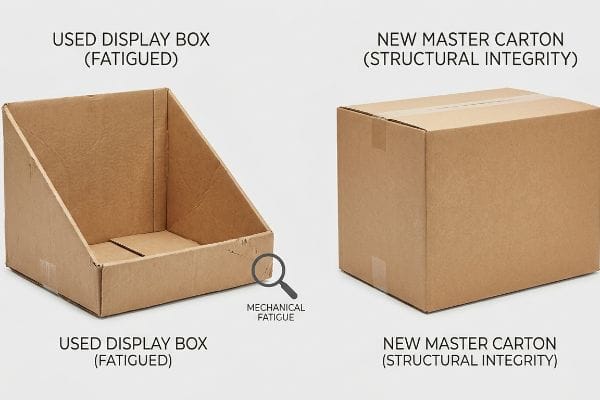
Pegar uma caixa de graça parece uma solução logística inofensiva, mas as leis da física do papelão ditam uma realidade bem diferente quando se aplica peso.
O perigo oculto da fadiga das lamelas corrugadas
Startups e equipes com orçamentos limitados frequentemente tentam otimizar sua logística reaproveitando caixas master descartadas de varejistas para envios a consumidores. Elas observam uma aparência externa intacta e rapidamente presumem que uma superfície limpa garante o transporte seguro de seus próprios produtos.
A utilização de materiais reutilizados cria um importante ponto cego estratégico para as operações de varejo modernas. Essas estruturas promocionais são projetadas exclusivamente para um único trajeto, do centro de distribuição até a prateleira da loja, e não para suportar uma segunda etapa de manuseio imprevisível por parte das transportadoras. Reutilizar essas caixas desgastadas aumenta drasticamente a probabilidade de danos ao produto, resultando em experiências ruins de desembalagem para o cliente e custos elevados com frete de devolução. Em vez de tentar economizar na embalagem secundária, as marcas de sucesso investem estrategicamente em materiais novos para toda a logística de saída. Essa abordagem proativa elimina completamente os danos desnecessários durante o transporte e garante que cada cliente receba um produto impecável e com apresentação premium.
| Erro comum de iniciantes | A solução profissional | Benefício do piso de vendas |
|---|---|---|
| Reutilizar caixas de exibição visualmente intactas para envio de produtos. | Exigindo caixas-mestre novas e estruturalmente não testadas. | Elimina o colapso da camada inferior durante o empilhamento duplo. |
| Baseando-se nas classificações ECT de placas planas para material reutilizado9. | Executando 10 simulações de trânsito ISTA em cargas montadas. | Demonstra capacidade de sobrevivência cinética no mundo real. |
| Mistura de fibras curtas recicladas para displays de alta resistência. | Injetar uma proporção de 30% de kraft virgem nas ranhuras de carga11. | Restaura a resistência à compressão necessária para o transporte marítimo. |
Economizar alguns centavos em integridade estrutural é um erro crasso. Reutilizar papelão velho é a maneira mais rápida de gerar milhares em cobranças indevidas por danos no transporte.
🛠️ Harvey's Desk: Você está confiando cegamente na resistência à compressão da sua transportadora atual com base em dados de laboratório? 👉 Solicite uma Avaliação Cinética de Embalagens ↗ — Sem formulários que geram ligações intermináveis de vendas. Apenas valor agregado.
A Walmart pode vender peças de mostruário?
Para entender o ciclo de vida exato de um profissional de merchandising no varejo, é preciso ir além do design visual e focar nos aspectos legais e estruturais.
Não. O Walmart não pode vender peças de exibição diretamente aos consumidores. Assim que uma campanha de merchandising sazonal termina, os varejistas são legalmente obrigados, por contratos com as marcas e protocolos internos de "data de descarte", a desmontar e reciclar completamente as estruturas temporárias de papelão ondulado, em vez de liquidar as unidades promocionais físicas.
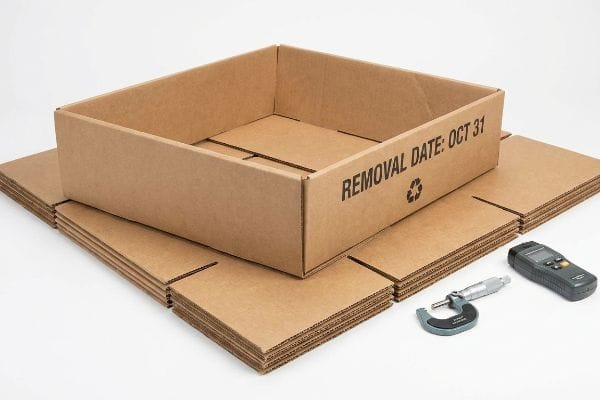
Colocar um produto em exposição é uma vitória, mas mantê-lo estruturalmente íntegro até a data de remoção designada exige uma disciplina de fabricação rigorosa.
A "data limite" do varejo e a realidade do chão de fábrica
As marcas frequentemente submetem projetos estruturais assumindo que seus displays de chão de papelão ondulado para pontos de venda (PDV) permanecerão perfeitamente rígidos indefinidamente. Elas tratam o papelão poroso como se ele possuísse a capacidade de suportar carga permanente do aço soldado, ignorando completamente a degradação progressiva do material que ocorre em ambientes de varejo reais12.
Na minha empresa, vejo rotineiramente equipes de compras tentando estender a vida útil de displays temporários padrão além do seu limite estrutural para economizar em custos com instalações permanentes. Isso não é apenas teoria — vejo isso acontecer na área de testes quando um cliente exige uma presença de 16 semanas no piso de vendas usando o revestimento padrão 32ECT. Quando meço o substrato após quatro semanas em um ambiente úmido simulado, constato que as fibras porosas absorveram uma quantidade enorme de umidade ambiente. Analisei as leituras do micrômetro e comprovei que a espessura da fibra tipo B aumentou 1,01 mm (0,04 polegadas), fazendo com que toda a base se deformasse para fora e perdesse 28,4% de sua resistência à compressão vertical. Ao aplicar ativamente um rigoroso código de gerenciamento de ciclo de vida com "Data Limite" impresso diretamente no display, garanto que a unidade seja retirada do piso exatamente antes que essa fadiga por umidade cause a deformação das prateleiras. A aplicação desse cronograma específico evita colapsos devastadores nas lojas, protegendo os clientes de enormes processos judiciais e da exclusão permanente por parte dos gerentes das lojas.
| Erro comum de iniciantes | A solução profissional | Benefício do piso de vendas |
|---|---|---|
| Supondo que os displays temporários de papelão ondulado possam durar mais de 6 meses13. | Impressão de códigos de extração "Data de Eliminação" rigorosos na base. | Previne o colapso estrutural e problemas de responsabilidade da loja. |
| Utilizando tecido de teste padrão para ambientes úmidos de varejo. | Atualização para papelão kraft resistente à umidade14. | Mantém a integridade estrutural durante longos ciclos sazonais. |
| Sobrecarga de prateleiras sem suporte com mercadorias pesadas. | Engenharia de barras de suporte metálicas ocultas sob o lábio dianteiro15. | Elimina a queda de desempenho ao longo da duração da campanha. |
Eu me baseio em limites físicos exatos, não em cronogramas de marketing otimistas. Quando as fibras de papel se esgotam, o expositor precisa ser removido do chão, ponto final.
🛠️ Mesa do Harvey: Não deixe que uma falha estrutural de 2 milímetros arruine o lançamento em 500 lojas. 👉 Envie-me seu arquivo de corte ↗ — Vou testar os cálculos antes que você desperdice seu orçamento com produção em massa.
Conclusão
Você pode escolher um fornecedor mais barato para reduzir os custos iniciais de material, mas quando essa placa 32ECT de qualidade inferior cede sob o peso das mercadorias em um armazém úmido, o colapso resultante na parte inferior reduzirá a velocidade da linha de triagem em cerca de 30% e acarretará imediatamente milhares em multas por recusa de produtos por parte dos varejistas. Mais de 500 gerentes de marca usam meu checklist de pré-impressão para evitar exatamente esses erros fatais no estágio inicial. Pare de adivinhar as tolerâncias de fábrica e deixe-me analisar pessoalmente seus arquivos estruturais por meio da minha Auditoria de Dieline Gratuita ↗ para detectar vulnerabilidades cinéticas antes do início da sua produção em massa.
"Revestimentos de Barreira para Embalagens de Alimentos | Polymer Solutions", https://www.mcpolymers.com/library/barrier-coatings-food-packaging/. Verificação do uso histórico de revestimentos de polietileno como principal barreira para displays de varejo próximos a alimentos. Papel da evidência: confirmação factual; tipo de fonte: artigo técnico da indústria ou livro didático sobre embalagens. Fundamenta: a premissa da dependência de materiais tradicionais. Nota de escopo: foco na era pré-PFAS/transição para a sustentabilidade .
"Revestimento de papel reciclável e biodegradável com funcionalização…", https://pmc.ncbi.nlm.nih.gov/articles/PMC11948148/ . Verificação técnica de que revestimentos aquosos fornecem uma barreira líquida, mantendo-se compatíveis com os processos padrão de reciclagem de papel. Papel da evidência: validação técnica; tipo de fonte: periódico de ciência dos materiais ou norma de embalagens. Apoia: a alegação de que revestimentos aquosos são alternativas repulpáveis a filmes derivados de petróleo. Nota de escopo: aplica-se a embalagens de papelão ondulado e cartão para alimentos.
"Soluções de embalagens de alimentos na era pós-perfluoroalquil e polifluoroalquil…", https://pmc.ncbi.nlm.nih.gov/articles/PMC11649155/. Verificação técnica de revestimentos aquosos como uma alternativa viável sem PFAS para resistência à gordura em embalagens de alimentos. Papel da evidência: Validação técnica; tipo de fonte: Periódico de ciência dos materiais ou norma regulatória. Apoia: A eficácia de revestimentos sem PFAS. Nota de escopo: Foca na segurança em contato com alimentos e no desempenho da barreira contra gordura .
"Adesivos de embalagem para o final da linha em aplicações de congelamento", https://www.bostik.com/us/en_US/markets-applications/consumer-goods/freezer-grade-packaging-adhesives/. Verificação de que adesivos estruturais específicos são necessários para manter a integridade da colagem em ambientes refrigerados de varejo, em comparação com o PVA padrão. Papel da evidência: Especificação técnica; tipo de fonte: Ficha técnica do fabricante do adesivo ou guia de engenharia industrial. Apoia: A necessidade de adesivos para baixas temperaturas em corredores refrigerados. Nota de escopo: Concentra-se na resistência da colagem em baixas temperaturas .
"Sacolas com Barreira de Umidade 101 – Valley Box Company", https://www.valleybox.com/blog/moisture-barrier-bag-101 . Confirmação dos padrões de engenharia da indústria para dimensões de bordas dobradas que impedem a absorção de umidade em bandejas de papelão para alimentos. Papel da evidência: Referência de engenharia; tipo de fonte: Manual de projeto de embalagens ou guia de engenharia estrutural. Suporte: A medida específica usada para evitar o colapso da bandeja. Observação sobre o escopo : Aplica-se a ambientes de varejo com alta umidade.
"Caixas com fundo automático (travamento por impacto) facilitadas – PM Packaging", https://pmpackaging.com/product-catalog/boxes-and-cartons/auto-bottom-boxes. Verificação técnica de como os designs de papelão ondulado com fundo automático facilitam a montagem instantânea em comparação com o travamento por abas. Papel da evidência: especificação técnica; tipo de fonte: guia de engenharia de embalagens. Suporte: eficiência de mecanismos pré-colados. Nota de escopo: Específico para embalagens prontas para o varejo. ↩
"Displays PDQ de papelão ondulado projetados para montagem rápida e impacto no varejo", https://www.abbottaction.com/packaging/corrugated-pdq-displays/ . Benchmarks do setor sobre como a montagem pré-colada versus mecanismos de travamento manual afetam as horas de trabalho no varejo. Papel da evidência: validação quantitativa; tipo de fonte: estudo de logística . Argumentos que comprovam a economia de tempo proporcionada pelas bandejas com fundo rígido. Nota sobre o escopo: específico para ambientes de varejo de alto volume.
"AUMENTANDO A VISIBILIDADE DA MARCA COM DISPLAYS DE PONTO DE VENDA PERSONALIZADOS", https://www.bcipkg.com/elevating-brand-visibility-with-custom-pop-displays/. Análise técnica de como geometrias específicas de corte e vinco impactam a área de superfície visível dos produtos em displays de ponto de venda. Papel da evidência: especificação técnica; tipo de fonte: guia de engenharia de embalagens. Suporta: métricas de melhoria de visibilidade. Nota de escopo: baseado em ângulos de visão padrão ao nível dos olhos do consumidor .
"Nova configuração de teste de esmagamento de borda aprimorada com deformação de campo total…", https://pmc.ncbi.nlm.nih.gov/articles/PMC8510352/. Explicação de como as classificações ECT para papelão novo se degradam após a reutilização e não conseguem prever a resistência de caixas pré-montadas. Papel da evidência: validação técnica; tipo de fonte: norma de engenharia de embalagens. Fundamentos: Por que as caixas reutilizadas não podem confiar nas classificações originais. Nota de escopo: Foca na degradação estrutural. ↩
"Testes de Embalagem ISTA – Intertek", https://www.intertek.com/performance-testing/packaging/ista/. Documentação dos protocolos da International Safe Transit Association (ISTA) utilizados para certificar a durabilidade de embalagens por meio de vibração e impacto simulados. Papel da evidência: norma processual; tipo de fonte: organismo de certificação. Apoia: o uso de simulações para comprovar a resistência cinética. Nota de escopo: aplica-se a normas globais de transporte marítimo .
"Resistência à Compressão de Embalagens de Papelão Ondulado com …", https://pmc.ncbi.nlm.nih.gov/articles/PMC10054506/. Dados técnicos que confirmam que a adição de fibras virgens de kraft restaura a resistência ao empilhamento e a pressão de ruptura em materiais de papelão ondulado reciclado. Papel da evidência: especificação do material; tipo de fonte: guia de fabricação industrial. Fundamentos: O efeito da fibra virgem na resistência à compressão. Nota de escopo: Especificamente para padrões de frete marítimo de carga pesada. ↩
"Embalagens de papelão ondulado: Essenciais para o sucesso e a proteção no varejo", https://www.retaildive.com/spons/corrugated-packaging-essential-for-retail-success-and-protection/730375/ . Dados técnicos de fontes de ciência de materiais ou engenharia de embalagens que confirmam como a umidade, a temperatura e o desgaste físico degradam a integridade estrutural do papelão ao longo do tempo. Papel da evidência: verificação técnica; tipo de fonte: estudo de engenharia. Apoia: a afirmação de que o papelão poroso perde a capacidade de suportar carga. Nota de escopo: foca especificamente em materiais de papelão ondulado.
"Quanto tempo duram as caixas de papelão ondulado? – Blog da Boxery", https://www.theboxery.com/blog/how-long-does-corrugated-boxes-last/?srsltid=AfmBOopxr3oHC8WMk02Jck2j0S3bPWRsh-JFmoyrvjNM0A1kEO3f3ioC. Documentação técnica sobre a degradação estrutural do papelão ondulado em ambientes de varejo corrobora a afirmação de que esses displays geralmente falham antes de seis meses. Papel da evidência: especificação técnica; tipo de fonte: norma da indústria. Apoia: Vida útil típica de displays temporários. Nota de escopo: Varia conforme a qualidade do material .
"Influência da umidade e da temperatura nas propriedades mecânicas de…", https://bioresources.cnr.ncsu.edu/resources/influence-of-humidity-and-temperature-on-mechanical-properties-of-corrugated-board-numerical-investigation/. Dados de ciência dos materiais sobre papelão kraft colado demonstram resistência superior à umidade e retenção da espessura estrutural em comparação com o testliner padrão. Papel da evidência: comparação de materiais; tipo de fonte: ficha técnica. Argumentos: Benefício da atualização de materiais para ambientes úmidos. Nota de escopo: Foca-se na qualidade do papelão. ↩
"Fabricação de Displays para Varejo | Engenharia e Manufatura | Fraser Steel", https://frasersteel.com/industries/retail-displays/. As diretrizes de engenharia para displays de ponto de venda (PDV) no varejo confirmam que reforços metálicos internos são necessários para evitar a flacidez das prateleiras sob cargas pesadas. Função da evidência: norma de engenharia; tipo de fonte: guia de fabricação. Suportes: Método para eliminar a flacidez das prateleiras. Nota de escopo: Específico para displays de alta resistência .