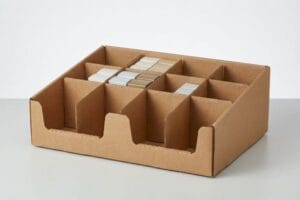
O varejo é extremamente dinâmico. Se seus promotores de vendas levarem vinte minutos e um rolo de fita adesiva para montar os displays no corredor, os funcionários da loja, ocupados com a correria, simplesmente os jogarão no compactador.
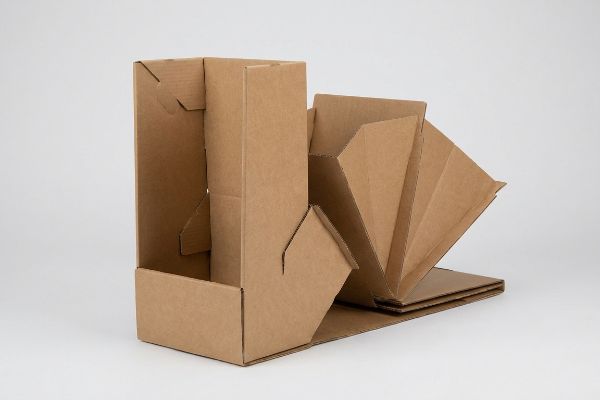
As vantagens do expositor de papelão de montagem em um segundo se concentram na arquitetura modular pré-colada. Ao eliminar abas de travamento manual e clipes soltos, essas estruturas de ponto de venda (PDV) de montagem automática reduzem o atrito na montagem pelo varejista, maximizam a conformidade e diminuem drasticamente os custos de mão de obra de co-embalagem em lançamentos de grande volume.

Para realmente aproveitar essa alta velocidade de execução, precisamos entender a engenharia mecânica subjacente que torna essas configurações fisicamente possíveis sem sacrificar a capacidade de carga útil elevada.
Quais são as vantagens do papelão?
A velocidade não vale absolutamente nada se a estrutura desmoronar no momento em que você a carregar com mercadorias reais para o consumidor.
Entre as vantagens do papelão, destaca-se sua capacidade única de ser moldado em estruturas cinéticas. Utilizando bandejas pré-coladas e memória de forma, o papelão ondulado se transforma, de forma plana e compacta, em uma estrutura rígida e totalmente resistente para uso comercial em menos de três segundos.

Mas conhecer a teoria por trás dos mecanismos de dobragem não o protege automaticamente de desastres nos corredores.
A Armadilha das Tabelas de Montagem Superdimensionadas
A prática comum muitas vezes assume que adicionar mais abas de encaixe torna a estrutura naturalmente mais resistente. Designers iniciantes frequentemente submetem projetos planos com camadas de dobras complexas no estilo origami, acreditando genuinamente que estão criando uma unidade de varejo , capaz de suportar qualquer ambiente de loja.
Vejo essa teoria falhar constantemente quando um funcionário da loja tenta montar uma base complexa no chão da loja. Eles ficam olhando para um diagrama confuso, suando para encaixar uma aba rígida em uma ranhura apertada por quinze minutos, até que finalmente desistem e pegam um rolo de fita adesiva transparente. O som alto do papelão rasgando quando eles arrancam a aba por pura frustração é algo que ouço com muita frequência ao auditar montagens malsucedidas. Para resolver isso, utilizo bandejas modulares pré-coladas, projetadas diretamente em nossas máquinas de dobrar e colar. Isso elimina completamente a necessidade de encaixes manuais, o que significa que seu parceiro de embalagem pode abrir o expositor com um único movimento, economizando cerca de quarenta segundos de trabalho manual por unidade¹e garantindo que a estrutura fique impecável sob as luzes da loja.
| Erro comum de iniciantes | A solução profissional | Benefício do piso de vendas |
|---|---|---|
| Abas de origami complexas | Bases modulares pré-coladas | Reduz o tempo de montagem em 40 segundos2 |
| ferragens de plástico soltas | Memória de dobra cinética3 | Nenhuma peça perdida durante o transporte |
| Juntas reforçadas com fita adesiva | Fechaduras internas de suporte de carga4 | Estética de marca impecável |
Recuso-me a deixar que projetos mal elaborados frustrem um funcionário do varejo. Ao priorizar bases de montagem automática, protejo sua campanha de ser descartada no estoque antes mesmo de um cliente vê-la.
🛠️ Mesa do Harvey: Seus displays atuais estão frustrando os funcionários da loja e fazendo você perder espaço valioso nas prateleiras? 👉 Solicite uma Auditoria de Montagem Estrutural Gratuita ↗ — Acesso direto à minha mesa. Zero spam de vendas automatizado, eu prometo.
Quais são os pontos fortes do papelão?
Para um olhar destreinado, pode parecer um simples pedaço de papel, mas, quando manipulado corretamente, suporta cargas pesadas como o aço estrutural.
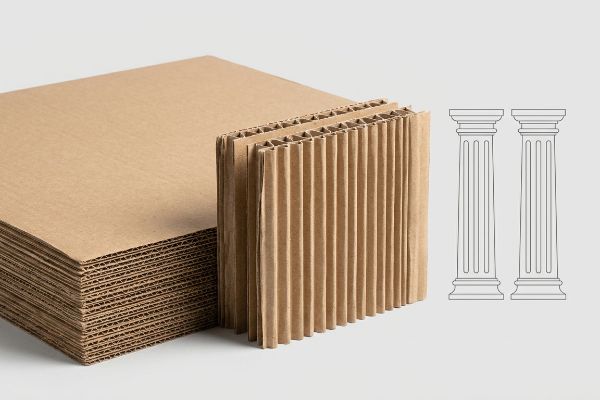
A resistência do papelão provém da arquitetura geométrica de suas ondulações internas. Quando alinhadas matematicamente para suportar pressão de carga superior, uma folha de papelão ondulado de parede dupla padrão pode suportar um peso dinâmico enorme, proporcionando uma relação resistência/peso incrivelmente alta para cadeias de suprimentos de varejo rigorosas.
No entanto, a resistência estrutural não se resume apenas a investir dinheiro no material mais espesso disponível.
Por que materiais espessos ainda cedem sob cargas de paletes?
Um equívoco comum entre as equipes de compras é que a atualização para um testliner mais pesado resolve automaticamente os problemas de suporte de carga5. Elas especificam cegamente materiais ultra-espessos, presumindo que a densidade do papel impedirá que as prateleiras cedam quando carregadas com garrafas de vidro pesadas ou produtos líquidos.
Até mesmo compradores experientes ignoram a física básica da orientação das ondulações. Frequentemente, me deparo com projetos onde a fibra ondulada interna corre horizontalmente na base, em vez de verticalmente. Quando um funcionário do armazém deixa cair uma caixa pesada de 22,6 kg (50 lbs) de mercadoria sobre essa prateleira desalinhada, é possível ouvir as ondulações internas se comprimirem e quebrarem como gravetos secos. Para evitar essa falha invisível, aplico uma regra rigorosa de alinhamento vertical da fibra em todas as paredes principais de sustentação de carga, otimizando a classificação ECT (Teste de Compressão de Borda) da placapara 6.Ao tratar as ondulações como colunas arquitetônicas microscópicas, maximizo naturalmente a resistência à compressão sem adicionar um centavo sequer ao custo da matéria-prima, garantindo que seu expositor sobreviva a uma travessia marítima com duas caixas empilhadas.
| Erro comum de iniciantes | A solução profissional | Benefício do piso de vendas |
|---|---|---|
| Direção horizontal da fibra | Orientação da coluna vertical7 | Impede a flacidez da camada inferior |
| Pagar caro por uma tábua grossa | Classificação ECT otimizada8 | Reduz os custos excessivos de materiais |
| Ignorando a carga superior dinâmica | Espinhos de parede dupla direcionados9 | Sobrevive ao empilhamento duplo |
Eu nunca mascaro uma estrutura frágil com papelão pesado e desnecessariamente caro. Orientar corretamente as fibras do papel é a maneira mais inteligente de obter resistência à prova de balas, preservando sua margem de lucro.
🛠️ Mesa do Harvey: Você sabe se seus gabaritos de corte atuais estão lutando contra as leis da física da fibra do papel? 👉 Solicite uma Análise Gratuita de Gabaritos de Corte ↗ — Baixe com segurança. Minha caixa de entrada está aberta caso tenha alguma dúvida depois.
Qual a importância da exibição?
Uma caixa estruturalmente indestrutível não significa absolutamente nada se os compradores apressados passarem direto por ela.
A importância da exposição reside na sua capacidade de desencadear comportamentos de compra por impulso. Um expositor bem projetado interrompe os padrões de fluxo de clientes, captando a atenção do consumidor através de assimetrias estruturais calculadas e pontos focais gráficos de alto contraste, antes de facilitar, de forma natural, a retirada física do produto.
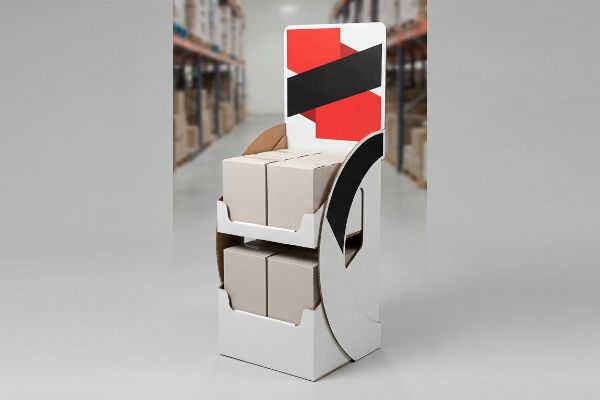
A estratégia de merchandising muitas vezes falha porque os designers gráficos tratam os corredores físicos das lojas como telas planas de computador.
Quebrando a Maldição da Invisibilidade no Varejo
Muitas equipes de marketing preenchem cada centímetro quadrado do cabeçalho com textos minúsculos e detalhados e fileiras de produtos perfeitamente simétricas. Elas partem do princípio de que os compradores ficarão parados em frente à unidade, lendo atentamente os principais destaques da marca como se fossem uma página de revista.
Essa abordagem é como sussurrar em um show de rock barulhento. Os clientes em uma loja de departamentos estão com pressa, e se o seu display depende de parágrafos densos para explicar o valor, eles simplesmente o ignorarão. É quase possível sentir a superfície lisa e estéril de um cabeçalho plano e sem inspiração se misturando fisicamente às prateleiras de metal frias, tornando a campanha invisível. Para garantir o engajamento, utilizo a regra espacial 3-3-3¹⁰.Usamos curvas estruturais agressivas e recortadas para interromper o corredor a uma distância de nove metros, posicionamos o produto exatamente a 127 cm do chão¹¹para o engajamento a um metro de distância e reduzimos a borda frontal de retenção para 7,6 cm para garantir que o cliente pegue o produto sem esforço na etapa final.
| Erro comum de iniciantes | A solução profissional | Benefício do piso de vendas |
|---|---|---|
| Gráficos densos de livros didáticos | Cores pontuais de alto contraste12 | Interrompe o tráfego no corredor |
| Empacotamento simétrico de blocos | Tensão visual assimétrica13 | Aciona paradas de impulso |
| Lábios de alta retenção | altura livre frontal baixa14 | Acesso ao produto sem atrito |
Eu projeto displays para atrair ativamente a clientela, não apenas para armazenar estoque. Se o seu expositor não chamar a atenção visualmente a dez metros de distância, você está desperdiçando seu orçamento de marketing.
🛠️ Harvey's Desk: Sua arte está se perdendo no caos visual de um enorme galpão de clube? 👉 Solicite sua renderização visual em 3D ↗ — Sem formulários que geram ligações intermináveis de vendas. Apenas valor puro.
Quais são os benefícios do papelão ondulado?
É econômico, altamente personalizável e totalmente reciclável. Mas manipulá-lo exige cálculos matemáticos exatos em escala microscópica.
As vantagens do papelão ondulado derivam da sua versátil combinação de rigidez, leveza e total reciclabilidade. Atuando como um amortecedor de impacto durante o transporte, o material protege mercadorias de alto valor, ao mesmo tempo que oferece uma superfície impecável para impressão litográfica direta de alta fidelidade.
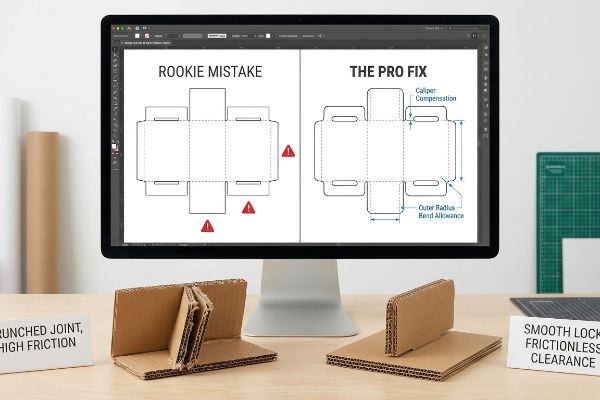
Mas conhecer a teoria não basta quando as máquinas começam a funcionar e as folhas planas se transformam em objetos tridimensionais.
Por que os moldes padrão para papelão ondulado falham na linha de produção?
Uma suposição aparentemente razoável, mas na verdade perigosa, que os artistas gráficos fazem é tratar o material ondulado como papel de impressora fino comum. Eles desenham um modelo vetorial plano com larguras de ranhura exatas de 1:115, assumindo que um pedaço rígido de papelão deslizará perfeitamente em um orifício de tamanho idêntico sem resistência.
Montar um único display em um laboratório é fácil, mas eis a dura realidade quando se envia um grande volume diretamente para uma exigente central de embalagem. Na minha empresa, vejo rotineiramente arquivos planos do Illustrator onde o designer ignorou completamente a espessura física da chapa ondulada tipo E dobrada. Quando uma chapa de 1,5 mm (0,06 polegadas) de espessura¹⁶é dobrada a 90 graus, ela consome material geometricamente. Os funcionários da central de embalagem tentam encaixar as abas apertadas, sentindo a resistência rígida da chapa grossa antes que ela se quebre ruidosamente, causando enorme atrito, reduzindo a velocidade da linha de montagem em cerca de 30% e eliminando a margem de lucro do projeto. Eu resolvo isso processando cada arquivo em nosso software de análise estrutural paramétrica para aplicar compensação algorítmica de espessura. Ao alargar mecanicamente as ranhuras para levar em conta especificamente a tolerância de curvatura do raio externo¹⁷42segundos por unidade, economizando milhares em custos inesperados de mão de obra para os clientes em uma produção padrão.
| Erro comum de iniciantes | A solução profissional | Benefício do piso de vendas |
|---|---|---|
| Largura da ranhura plana 1:1 | Compensação paramétrica de paquímetro18 | Mecanismo de travamento suave |
| Ignorando o consumo de dobras | tolerância de curvatura do raio externo19 | Elimina o empenamento da tábua |
| Forçando uma montagem apertada | Amortecedores de folga sem atrito20 | Reduz drasticamente as taxas de co-embalagem |
Recuso-me a deixar que desenhos teóricos de escritório causem gargalos dispendiosos na linha de montagem. Um gabarito de corte devidamente compensado é a diferença crucial entre uma campanha lucrativa e um pesadelo logístico.
🛠️ Mesa do Harvey: Não deixe que uma falha estrutural de 2 milímetros arruine o lançamento em 500 lojas. 👉 Envie-me seu arquivo de corte ↗ — Vou testar os cálculos antes que você desperdice seu orçamento com produção em massa.
Conclusão
Você pode escolher um fornecedor mais barato, mas quando as abas onduladas sem compensação travam e causam atrito excessivo na linha de embalagem, reduzindo a produção em cerca de 30%, você elimina completamente a margem de lucro da sua campanha. Mais de 500 gerentes de marca usam meu checklist de pré-impressão para evitar exatamente esses erros fatais no início do processo. Pare de adivinhar as tolerâncias estruturais e deixe-me analisar seus arquivos pessoalmente com minha Auditoria de Corte e Vinco gratuita ↗ para identificar gargalos dispendiosos na montagem antes do início da produção em massa.
"As caixas de exposição de chão são fáceis de montar? – PopDisplay", https://popdisplay.me/are-the-floor-display-boxes-easy-to-assemble/. Verificação da redução do tempo médio de montagem ao substituir a construção manual com encaixes por designs modulares pré-colados em ambientes de varejo. Papel da evidência: validação quantitativa; tipo de fonte: estudo de caso do setor ou relatório de eficiência operacional. Argumentos que comprovam: o benefício da modularidade pré-colada em termos de economia de mão de obra. Observação: a economia real varia de acordo com a complexidade da exposição .
"Como montar os displays de papelão? – PopDisplay", https://popdisplay.me/how-do-i-assemble-the-cardboard-displays/ . Dados empíricos que demonstram a redução do tempo de montagem no varejo utilizando bases pré-coladas. Papel da evidência: quantificação; tipo de fonte: relatório de engenharia industrial. Fundamentos: ganhos de eficiência na montagem. Observação : os resultados podem variar de acordo com o tamanho do display.
"[PDF] Investigando as propriedades mecânicas de embalagens de papelão…", https://repository.rit.edu/cgi/viewcontent.cgi?article=1066&context=japr. Explicação técnica da capacidade do material de manter a dobra sem o uso de ferragens. Papel da evidência: especificação técnica; tipo de fonte: periódico de ciência dos materiais. Fundamentos: eliminação de ferragens soltas. Nota de escopo: refere-se a técnicas específicas de vinco. ↩
"Investigando o Efeito das Perfurações na Capacidade de Carga…", https://pmc.ncbi.nlm.nih.gov/articles/PMC11396172/ . Análise de engenharia de projetos de encaixe para carga em estruturas de papelão ondulado. Papel da evidência: validação técnica; tipo de fonte: guia de engenharia estrutural. Suportes: integridade estrutural sem adesivos. Nota de escopo : específico para papelão de alta gramatura.
"Embalagens de papelão ondulado com design inovador para maior durabilidade…", https://bioresources.cnr.ncsu.edu/resources/corrugated-board-packaging-with-innovative-design-for-enhanced-durability-during-transport/. A documentação de engenharia de embalagens explica que a resistência estrutural é o resultado do peso do revestimento, da geometria das ondulações e da integridade da colagem, o que significa que o peso do revestimento por si só é insuficiente. Papel da evidência: verificação técnica; tipo de fonte: manual da indústria. Apoia: a afirmação de que revestimentos mais pesados não são uma solução garantida para falhas sob carga. Nota de escopo: limitado a papelão ondulado .
"[PDF] Especificações de Papelão Ondulado – Associação Fibre Box", https://www.fibrebox.org/assets/2025/09/Walmart_Corrugated-Board_Specifications_Automation_Packaging_Standards.pdf. As normas de embalagens industriais comprovam que a orientação vertical das ondulações maximiza o valor do Teste de Compressão de Borda (ECT) ao alinhar o caminho da carga com o eixo estrutural das ondulações. Função da evidência: verificação técnica; tipo de fonte: norma industrial. Fundamenta: a alegação de que o alinhamento vertical das fibras otimiza a capacidade de carga. Nota de escopo: aplica-se a papelão ondulado. ↩
"Estimativa da resistência à compressão de caixas de papelão ondulado…", https://pmc.ncbi.nlm.nih.gov/articles/PMC8467740/. Documentação técnica sobre a física estrutural do papelão ondulado explica como o alinhamento vertical das ondulações maximiza a capacidade de suportar carga vertical, prevenindo falhas por compressão. Papel da evidência: validação técnica; tipo de fonte: manual de engenharia. Benefícios: estabilidade estrutural e prevenção de deformação. Nota de escopo: Aplica-se especificamente ao papelão ondulado .
"Classificações ECT explicadas: o que elas significam para suas embalagens de papelão ondulado…", https://epackagesupply.com/blogs/packaging-guide/ect-ratings-explained-what-they-mean-for-your-corrugated-packaging?srsltid=AfmBOop8lhevVAK2zAYnDEsWCsaZaBhSrBIzLAIXHll0x6MZvwWoUtIV. Os padrões da indústria para o Teste de Compressão de Borda (ECT) fornecem uma métrica precisa para a resistência ao empilhamento, permitindo que os engenheiros reduzam a espessura do material sem sacrificar a capacidade de carga. Função da evidência: verificação de especificações; tipo de fonte: padrão da indústria. Benefícios: redução de custos por meio da otimização de materiais. Nota de escopo: métrica padrão para contêineres de transporte de papelão ondulado .
"Projeto Ótimo de Embalagens de Papelão Ondulado de Parede Dupla – PMC", https://pmc.ncbi.nlm.nih.gov/articles/PMC8950760/. A análise estrutural indica que a integração de seções de parede dupla como reforços aumenta significativamente a resistência a cargas dinâmicas superiores durante o empilhamento duplo. Papel da evidência: justificativa do projeto; tipo de fonte: estudo de engenharia de embalagens. Suporte: resistência a altas cargas de empilhamento. Nota de escopo: Refere-se ao reforço direcionado, e não ao reforço da folha inteira .
"A Importância da Regra dos 3 para seus Displays Personalizados de Loja", https://mcintyredisplays.com/blog/custom-store-displays/. Verificação da regra 3-3-3 como uma estrutura reconhecida de design de varejo para engajamento do consumidor à distância. Papel da evidência: validação da metodologia; tipo de fonte: manual de design de varejo. Apoia: a abordagem estruturada para interromper o fluxo de compradores. Nota de escopo: pode ser uma heurística proprietária ou específica do setor .
"Capítulo 2: Escolhendo a Altura Ideal de Exibição para Seus Clientes", https://www.creativedisplaysnow.com/guides/understanding-the-retail-customer/chapter-2-how-to-choose-the-right-display-height-for-your-customers/. Dados empíricos sobre a "zona de impacto" ou altura ideal na linha dos olhos para visibilidade do produto em grandes lojas de varejo. Papel da evidência: especificação técnica; tipo de fonte: estudo de ergonomia ou comportamento do consumidor. Apoia: a afirmação de que 50 polegadas (127 cm) é a altura ideal para engajamento. Nota de escopo: a altura ideal pode variar de acordo com a altura do público-alvo .
"INSIGHTS NO PONTO DE VENDA: O IMPACTO DOS DISPOSITIVOS DE PONTO DE VENDA NO VAREJO…", https://www.bcipkg.com/point-of-purchase-insights-the-impact-of-retail-pop-displays-on-consumer-behavior/. Pesquisas sobre saliência visual e psicologia das cores explicam como elementos de alto contraste atraem a atenção em ambientes desorganizados. Papel da evidência: validação; tipo de fonte: estudo de psicologia de marketing. Apoia: a afirmação de que cores pontuais interrompem o fluxo de pessoas nos corredores. Observação: a eficácia varia de acordo com a paleta de cores e a iluminação .
"O impacto do merchandising visual nas compras por impulso do consumidor…", https://www.academia.edu/26921302/The_Impact_of_Visual_Merchandising_on_Consumer_Impulse_Buying_Behaviour . Os princípios do merchandising visual descrevem como composições assimétricas criam uma tensão dinâmica que captura a atenção do comprador de forma mais eficaz do que a simetria. Papel da evidência: suporte teórico; tipo de fonte: manual de design. Apoia: a afirmação de que a assimetria desencadeia paradas por impulso. Nota de escopo: Depende do equilíbrio geral do layout da loja.
"Normas da ADA para Design Acessível, Título III, Regulamento 28 CFR…", https://www.ada.gov/law-and-regs/design-standards/1991-design-standards/ . Estudos ergonômicos sobre displays de ponto de venda demonstram que a redução de barreiras físicas para a obtenção de produtos aumenta as taxas de conversão. Papel da evidência: prova empírica; tipo de fonte: relatório de UX no varejo. Apoia: a alegação de acesso ao produto sem atritos. Nota de escopo: Aplica-se especificamente a ambientes de varejo de autosserviço.
"Guia completo sobre tolerância dimensional de caixas de papelão ondulado – Upack", https://www.upack.in/blog/post/complete-guide-on-corrugated-box-dimension-tolerance?srsltid=AfmBOoqCUFDpfNJMhD8mNMwem22LGDuhoncxdI_8lLePpURQIN5dpnO6. Manuais de engenharia de embalagens especificam a necessidade de adicionar tolerâncias às linhas de corte para compensar a espessura do material e as perdas por dobra, comprovando que as proporções de 1:1 são ineficazes. Papel da evidência: validação técnica; tipo de fonte: norma da indústria. Fundamentos: a falha das proporções de 1:1. Observação: os valores de tolerância específicos variam de acordo com o tamanho da ondulação .
"[PDF] Especificações para Papelão Ondulado – Arquivos Nacionais", https://www.archives.gov/files/preservation/storage/pdf/corrugated-board.pdf. Verificação da espessura padrão da indústria para papelão ondulado tipo E para confirmar a espessura especificada. Função da evidência: verificação factual; tipo de fonte: ficha técnica. Suporte: precisão da espessura do material. Observação sobre o escopo: as tolerâncias podem variar ligeiramente de acordo com o fabricante. ↩
"Determinação Analítica da Rigidez à Flexão de uma Embalagem de Cinco Camadas…", https://pmc.ncbi.nlm.nih.gov/articles/PMC8777652/. Documentação técnica sobre o consumo geométrico de material durante a dobragem de papelão ondulado e a exigência de engenharia para tolerância à flexão. Papel da evidência: princípio técnico; tipo de fonte: manual de engenharia de embalagens. Fundamentos: a necessidade de compensação algorítmica da espessura da embalagem. Nota de escopo: aplica-se à dobragem de papelão ondulado rígido .
"[PDF] DOBRAS E VINCOS – BioResources", https://bioresources.cnr.ncsu.edu/wp-content/uploads/2019/01/2017.1.69.pdf. Documentação técnica sobre projeto estrutural para embalagens de papelão ondulado, explicando como a compensação de espessura garante um encaixe preciso. Papel da evidência: especificação técnica; tipo de fonte: manual de engenharia. Fundamentos: a necessidade de ajustes baseados em espessura para larguras de ranhura. Nota de escopo: aplica-se a papelão ondulado de grau industrial. ↩
"[PDF] Rigidez à flexão do papelão ondulado", https://www.fpl.fs.usda.gov/documnts/pdf1992/luo92a.pdf. Normas de fabricação que detalham o cálculo das tolerâncias de curvatura para compensar o deslocamento do material. Papel da evidência: princípio mecânico; tipo de fonte: guia de engenharia de embalagens. Fundamentos: o uso da tolerância de curvatura para eliminar a curvatura do papelão. Observação: varia de acordo com o tipo de ondulação e a qualidade do papelão. ↩
"Shorr aproveitou as capacidades de co-embalagem para resolver um gargalo de uma empresa de bens de consumo..." https://www.shorr.com/resources/blog/shorr-leveraged-copacking-capabilities-to-resolve-a-cpgs-bottleneck-and-optimize-operations/. Análise do setor sobre como tolerâncias de folga precisas reduzem o tempo de montagem e os custos de mão de obra em operações de co-embalagem. Papel da evidência: métrica operacional; tipo de fonte: white paper do setor. Apoia: a afirmação de que as margens de segurança reduzem as taxas de co-embalagem. Observação sobre o escopo: depende do nível de automação da montagem .