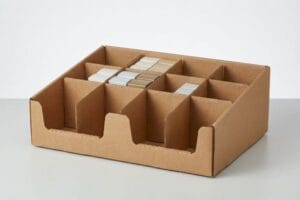
O lançamento de um SKU (Unidade de Manutenção de Estoque) sazonal exige que seu produto cause impacto visual imediato antes que os compradores distraídos passem pelo corredor. Os promotores de vendas são suas principais armas.
Utilizar bandejas PDQ para destacar produtos novos ou sazonais significa implantar expositores compactos de papelão ondulado, prontos para o varejo, em áreas de grande circulação. Essas estruturas leves aceleram as conversões por impulso e eliminam a necessidade de montagem complexa na loja, garantindo que suas campanhas sazonais conquistem, sem problemas, uma posição privilegiada nas prateleiras do varejo.

Mas projetar uma bandeja de venda rápida exige mais do que simplesmente estampar um logotipo em uma caixa de papelão. Vamos analisar como projetar essas unidades para que resistam à realidade física do ponto de venda.
O que é uma bandeja PDQ?
Você já os viu em todas as grandes lojas de varejo, mas projetar um deles exige uma disciplina espacial rigorosa para maximizar o impacto.
A bandeja PDQ é um expositor compacto de papelão ondulado, projetado para ser colocado diretamente nas prateleiras das lojas ou nos caixas. Os varejistas utilizam essas unidades leves para organizar produtos de consumo de alta rotatividade, aumentar a visibilidade da marca e facilitar a reposição rápida, sem a necessidade de estruturas permanentes complexas ou espaço dedicado no piso da loja.
Acertar nas dimensões estruturais é o que determina se a maioria das campanhas sazonais obtém um sucesso brilhante ou um fracasso instantâneo.
A regra de visibilidade de 85% para bandejas PDQ
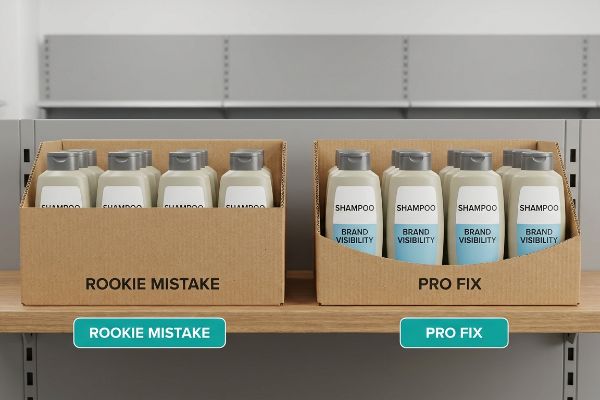
A prática padrão do varejo dita que os produtos devem ser mantidos com segurança, ao mesmo tempo que permanecem altamente visíveis1. Designers de embalagens juniores muitas vezes constroem a aba de retenção frontal muito alta, presumindo que o material ondulado extra garante melhor estabilidade estrutural durante o transporte e reabastecimento.
Vejo esse ponto cego constantemente ao auditar novos arquivos prontos para o varejo. Um designer cria uma borda frontal sólida de 101,6 mm (4 polegadas) para acomodar frascos pesados de xampu, obscurecendo completamente o rótulo principal da marca. Ao expor esses protótipos em ambientes reais de loja, a falha estratégica se torna óbvia: os compradores simplesmente não conseguem ler o que estão comprando. Implementar a regra "Produto em Primeiro Lugar" resolve isso utilizando um recorte dinâmico na borda frontal para garantir pelo menos 85% de visibilidade do produto².Você ouvirá um estalo satisfatório quando as travas internas se encaixarem, proporcionando a tensão necessária sem criar uma parede de papelão que esconda a mercadoria. Essa simples mudança estrutural preserva o valor visual da sua marca e agiliza as conversões no caixa.
| Erro comum de iniciantes | A solução profissional | Benefício do piso de vendas |
|---|---|---|
| Lábios altos e planos que retêm a luz | Curvas frontais recortadas e projetadas | Garante 85% de visibilidade da etiqueta3 |
| Apoiar-se nas paredes frontais para obter resistência | Abas de travamento internas para tensão4 | Impede a identificação sazonal oculta |
| Ignorando linhas de visão de impulso | Reduzindo a borda para 1,5 polegadas5 | Aumenta as vendas em caixas de checkout de ritmo acelerado |
Uma parede frontal alta nunca deve comprometer o lançamento de uma peça sazonal. Transferir a tensão estrutural para abas laterais internas protege a visibilidade da marca, mantendo a unidade em total conformidade com as normas para prateleiras de grandes lojas.
🛠️ Mesa do Harvey: Não tem certeza se a borda frontal da sua bandeja está escondendo o rótulo principal? 👉 Obtenha uma Análise Gratuita de Corte e Vinco ↗ — Acesso direto à minha mesa. Zero spam de vendas automatizado, prometo.
O que é um produto PDQ?
Nem todos os itens se encaixam em um formato de venda rápida; a seleção de produtos deve ser altamente estratégica.
Um produto PDQ é qualquer bem de consumo de alta compra e rápida movimentação, com tamanho e embalagem específicos para venda em bandejas de fácil exposição. Esses itens geralmente apresentam apelo imediato ao consumidor, não exigem demonstração na loja e são leves o suficiente para serem empilhados com segurança em configurações modulares de papelão ondulado perto de áreas de caixa de grande circulação.

Escolher o item certo é apenas o começo; organizá-los com segurança dentro da unidade determina sua margem de lucro.
Protegendo os produtos PDQ com divisórias modulares
As marcas que lançam uma rotação sazonal muitas vezes tentam amontoar vários SKUs diferentes em uma única caixa aberta. A suposição padrão é que a gravidade e o atrito manterão naturalmente os produtos menores na posição vertical e organizados durante o horário de funcionamento da loja.
Imagine uma gaveta bagunçada — sem organizadores, tudo vira uma pilha desorganizada. Vejo essa falha de organização constantemente ao auditar programas com SKUs variados. Quando implementados em ambientes de varejo, as finas paredes de papelão se curvam para fora sob o peso dos produtos, deixando- os espalhados pela prateleira. Isso pode ser resolvido integrando divisórias flutuantes ou modulares diretamente na estrutura da base. A resistência da divisória de papelão ondulado, ao se encaixar na base, separa instantaneamente os itens, mantendo cada produto perfeitamente voltado para a frente. Essa abordagem estratégica reduz o tempo de trabalho de co-embalagem e evita prateleiras desorganizadas .
| Erro comum de iniciantes | A solução profissional | Benefício do piso de vendas |
|---|---|---|
| Embalagem mista de SKUs com cavidade aberta | Divisórias modulares dedicadas8 | Mantém os produtos perfeitamente na vertical |
| A estabilidade depende do atrito | Inserções flutuantes corrugadas9 | Impede que os objetos caiam |
| Embalagem avulsa de produtos sazonais | slots de produtos projetados10 | Elimina a aparência desorganizada das prateleiras |
Seus produtos premium nunca devem parecer uma pilha de ofertas. Fixar uma divisória de papelão ondulado simples na bandeja garante que os itens sazonais mantenham sua apresentação impecável até o caixa.
🛠️ Mesa do Harvey: Seus produtos com vários SKUs estão soltos dentro de uma bandeja mal otimizada? 👉 Solicite uma estratégia de divisórias ↗ — Baixe com segurança. Minha caixa de entrada está aberta caso tenha alguma dúvida depois.
Que tipo de expositor de ponto de venda é normalmente colocado perto dos caixas para promover produtos?
A área dos caixas é o espaço imobiliário mais valioso no varejo, exigindo uma arquitetura altamente especializada.
Um expositor de balcão é uma unidade específica de PDV (Ponto de Venda) geralmente colocada perto dos caixas para promover produtos de compra por impulso. Essas estruturas compactas e reforçadas são meticulosamente projetadas para se encaixarem com segurança em superfícies de caixa padrão, capturando a atenção do cliente de última hora sem obstruir a área de transação ou violar as normas de espaço do varejista.
Mas projetar para o caixa registradora não se resume apenas a imprimir gráficos vibrantes; requer geometria física precisa.
Dominando a proporção de profundidade para altura de 2:3
As equipes de design adoram maximizar o espaço vertical no caixa para exibir grandes gráficos de marketing sazonais. Frequentemente, elas esboçam displays altos e esguios, partindo do princípio de que um cabeçalho chamativo é tudo o que é necessário para impulsionar as vendas no caixa.
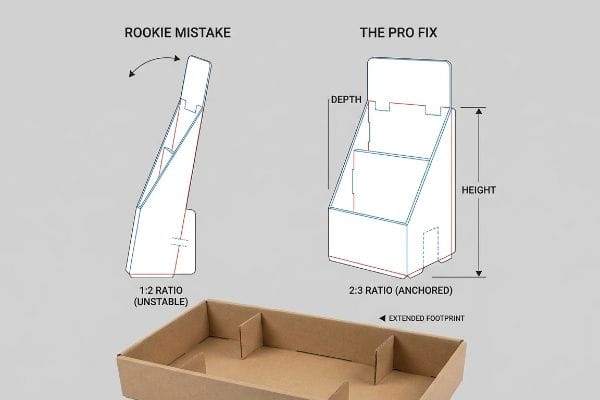
Muitas vezes, os compradores ignoram o risco de tombamento causado por estruturas de papelão com o centro de gravidade muito alto. Quando um cliente apressado pega um item de uma unidade mal equilibrada, toda a estrutura pode cair no chão, espalhando mercadorias por toda parte. Aplicar uma proporção rigorosa de 2:3 (Profundidade x Altura)¹¹ durante a fase de planejamento evita esse problema. Ao estender estrategicamente a base para uma maior profundidade, a unidade se fixa firmemente ao balcão da loja. Essa regra espacial simples elimina completamente o risco de tombamento e garante que os gerentes da loja mantenham a sua exposição ativa, em vez de descartá-la.
| Erro comum de iniciantes | A solução profissional | Benefício do piso de vendas |
|---|---|---|
| Balcão alto e estreito | Proporção de profundidade para altura: 2:312 | Impede completamente o tombamento da unidade13 |
| Ignorar a força de interação do comprador | Ampliar a área de base14 | As âncoras são exibidas com segurança durante os horários de pico |
| Priorizando a altura em detrimento da estabilidade | Projetando uma base mais ampla | Evita acidentes na fila do caixa |
O balanceamento preciso de cada unidade de balcão, utilizando geometria rigorosa, evita desastres no varejo. A expansão da profundidade da base ancora com segurança o lançamento sazonal, garantindo que a vitrine resista às compras por impulso sem tombar.
🛠️ Harvey's Desk: Seu expositor de caixa está perigosamente instável e corre o risco de tombar? 👉 Solicite uma Auditoria de Estabilidade ↗ — Sem formulários que geram ligações intermináveis de vendas. Apenas valor agregado.
O que significa PDQ em embalagens?
Todos querem rapidez no lançamento de produtos no mercado, mas a velocidade logística depende inteiramente de cálculos estruturais impecáveis.
"PDQ" significa "Pretty Darn Quick" ou "Product Display Quickly" (Exibição Rápida do Produto) em embalagens para varejo. Essa sigla representa expositores de papelão ondulado pré-montados e prontos para o varejo, projetados especificamente para uma instalação ágil e eficiente nas lojas. Essas unidades permitem que as equipes de logística evitem a demora na desembalagem manual, transferindo os produtos diretamente dos paletes para as prateleiras dos consumidores instantaneamente.
Mas conhecer a teoria não basta quando as máquinas automatizadas começam a funcionar e as linhas de montagem de co-embalagem ficam congestionadas.
Por que o "Pretty Darn Quick" falha na linha de produção?
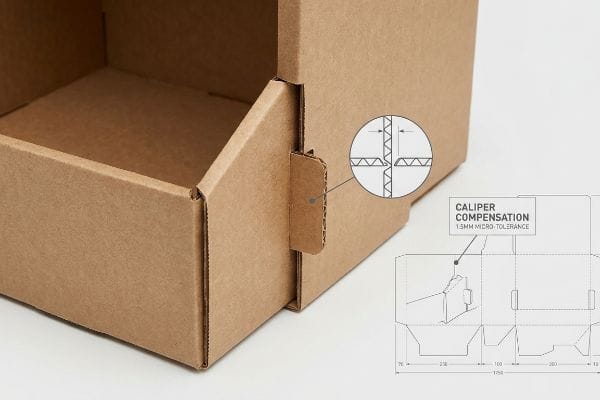
Os designers gráficos costumam criar abas planas de encaixe e ranhuras dobráveis em software de ilustração digital com a mesma largura exata do painel correspondente. Eles presumem que uma linha digital se traduz perfeitamente em uma dobra física sem atrito no chão da embalagem, sem levar em conta a espessura do material15.
Na minha empresa, vejo rotineiramente arquivos planos submetidos com tolerância de dobra zero para material ondulado tipo E espesso.Quando você dobra uma peça de papelão ondulado de 1,5 mm (0,06 polegadas) de espessuraem 90 graus, o material é consumido. Se eu não perceber isso, a ranhura de recebimento permanece exatamente 1,5 mm (0,06 polegadas) mais apertada. Na linha de co-embalagem, os funcionários forçam as peças umas contra as outras, resultando em um forte ruído de rasgo quando as fibras do papelão bruto se rompem. Eu resolvo isso inserindo matematicamente uma "Compensação de Calibre" diretamente nas ranhuras da matriz de corte antes de gravarmos as chapas de corte. Ao impor esse ajuste preciso de microtolerância de 1,5 mm, garanto que o tempo de montagem na co-embalagem diminua em 25 segundos por unidade, economizando milhares em custos de mão de obra para os clientes em uma produção em massa padrão e, de fato, tornando o display rápido de ser implementado.
| Erro comum de iniciantes | A solução profissional | Benefício do piso de vendas |
|---|---|---|
| Largura dos slots digitais 1:1 | Cálculo de compensação de paquímetro18 | Montagem instantânea e sem atrito |
| Ignorando a espessura da flauta | Adicionando tolerâncias de dobra exatas19 | Impede que as abas do papelão se rasguem |
| Forçar mecanismos de travamento apertados | Alargamento das ranhuras em 1,5 mm20 | Reduz drasticamente o tempo de trabalho de co-embalagem |
Suposições digitais não devem comprometer o orçamento de co-embalagem física. Calcular o estiramento exato da espessura das fibras do papelão ondulado garante que essas unidades sejam montadas sem esforço, protegendo ativamente os prazos críticos e as margens de lucro do varejo.
🛠️ Mesa do Harvey: Não deixe que uma falha estrutural de 2 milímetros arruine o lançamento em 500 lojas. 👉 Envie-me seu arquivo de corte ↗ — Vou testar os cálculos antes que você desperdice seu orçamento com produção em massa.
Conclusão
Você pode escolher um fornecedor mais barato, mas quando aquela unidade de caixa registradora desequilibrada cai de cara no corredor do caixa porque a proporção rígida de 2:3 entre profundidade e altura foi ignorada, a bagunça resultante provoca uma rejeição imediata do varejista e prejudica permanentemente seus relacionamentos com os compradores. Mais de 500 gerentes de marca usam meu checklist de pré-impressão para evitar exatamente esses erros fatais no estágio inicial. Pare de chutar proporções básicas e deixe-me pessoalmente analisar seus cálculos estruturais com minha Auditoria de Estabilidade de Balcão Gratuita ↗ para detectar riscos cinéticos antes de enviar para grandes lojas.
"Aumente as Vendas no Varejo: Lista de Verificação para Displays no Ponto de Venda", https://www.manifest.ly/use-cases/retail/point-of-purchase-display-checklist. [As diretrizes de design da indústria para displays de ponto de venda especificam o equilíbrio entre segurança e visibilidade do produto para otimizar a conversão do consumidor]. Papel da evidência: padrão da indústria; tipo de fonte: manual de design profissional. Suporta: requisitos fundamentais de design para bandejas PDQ. Nota de escopo: concentra-se em padrões gerais de embalagens para o varejo. ↩
"O que significa PDQ no varejo? – PopDisplay", https://popdisplay.me/what-does-pdq-mean-in-retail/. [Um guia confiável sobre engenharia de embalagens para pontos de venda especificaria a área de superfície visível mínima necessária para o reconhecimento da marca pelo consumidor em bandejas de varejo]. Papel da evidência: especificação técnica; tipo de fonte: manual padrão do setor. Suporta: a métrica de visibilidade de 85%. Nota de escopo: Aplica-se especificamente a mercadorias com a frente voltada para o consumidor em displays de papelão ondulado. ↩
"Displays de papelão ondulado PDQ projetados para montagem rápida e impacto no varejo", https://www.abbottaction.com/packaging/corrugated-pdq-displays/ . [Um guia de design de varejo ou padrão de embalagem do setor verificaria a métrica de visibilidade de 85% como referência para a exposição do rótulo do produto]. Papel da evidência : verificação da métrica do setor; tipo de fonte: padrão de embalagem de varejo. Apoia: eficácia dos recortes frontais. Nota de escopo: específico para posicionamento em prateleiras de varejo.
"Guia de Projeto Estrutural de Embalagens de Papel", https://greendotpackaging.com/paper-packaging-structural-design-guide/. [A documentação técnica de engenharia de embalagens explicaria como as abas de travamento internas fornecem a tensão estrutural necessária em bandejas de papelão ondulado]. Papel da evidência: especificação técnica; tipo de fonte: manual de engenharia. Suportes: integridade estrutural sem paredes frontais altas. Nota de escopo: aplica-se à construção de papelão ondulado. ↩
"Quais produtos funcionam melhor com os displays PDQ? Itens pequenos primeiro…", https://popdisplay.me/which-products-work-best-with-pdq-displays-small-items-first-bold-designs-matter/. [Especificações de ergonomia ou embalagem do varejo confirmariam se 1,5 polegadas é a altura recomendada para otimizar a visibilidade para compras por impulso]. Papel da evidência: especificação técnica; tipo de fonte: guia de design de varejo. Benefícios: aumento nas vendas no caixa. Observação sobre o escopo: pode variar de acordo com as dimensões do produto. ↩
"Falhas em Expositores de Varejo: Problemas de Projeto Estrutural – LinkedIn", https://www.linkedin.com/posts/paxsolutions_packaging-display-fail-activity-7448039212622254080-5eMb. [Uma fonte confiável em engenharia de embalagens explicaria as limitações de carga estrutural e as tendências de deformação do papelão de baixa espessura em ambientes de varejo de alto tráfego]. Papel da evidência: validação técnica; tipo de fonte: manual de engenharia de embalagens. Suporte: a falha mecânica de paredes de papelão não reforçadas. Nota de escopo: específico para materiais de papelão fino.] ↩
"Co-Packing vs. Embalagem Interna: Qual delas gera mais economia?", https://braysolutions.com/blog/co-packing-vs-in-house-packaging-which-one-saves-you-more/. [Os benchmarks do setor para co-packing em armazéns e no varejo quantificariam a redução de tempo obtida com o uso de divisórias pré-estruturadas em comparação com o alinhamento manual do produto]. Função da evidência: métrica operacional; tipo de fonte: white paper da cadeia de suprimentos. Argumentos que sustentam: ganhos de eficiência no processo de embalagem. Nota de escopo: foca na fase de co-packing.] ↩
"Entendendo as Embalagens PDQ no Varejo – LinkedIn", https://www.linkedin.com/pulse/understanding-pdq-packaging-retail-moss-tvthc. [Uma fonte confiável sobre embalagens para varejo explicaria como os divisores modulares fornecem suporte estrutural para manter a orientação vertical do produto]. Papel da evidência: especificação técnica; tipo de fonte: guia do setor. Suporte: estabilidade do produto em embalagens PDQ. Observação sobre o escopo: Específico para designs de divisores modulares. ↩
"Resistência à Umidade e Estabilidade Dimensional em Insertos", https://brownpackaging.com/moisture-resistance-and-dimensional-stability-in-inserts/. [Normas de engenharia de embalagens detalhariam como os insertos flutuantes distribuem a pressão e estabilizam os itens de forma mais eficaz do que as embalagens baseadas em fricção]. Papel da evidência: especificação técnica; tipo de fonte: manual de engenharia de embalagens. Suporte: estabilidade de itens PDQ. Nota de escopo: Focado na aplicação em material ondulado. ↩
"Merchandising que agiliza a movimentação de produtos – YouTube", https://www.youtube.com/watch?v=f2p-Fmk6h_0. [Estudos de merchandising no varejo confirmam que espaços com corte preciso reduzem o deslocamento dos produtos durante o transporte e a exposição, mantendo a ordem visual]. Papel da evidência: afirmação factual; tipo de fonte: melhores práticas de merchandising. Apoio: apresentação visual de produtos sazonais. Nota de escopo: foco na engenharia de espaços .
"O Guia Completo para Expositores PDQ: Definições, Tipos, Designs…", https://www.hedarack.com/blogs-detail/pdq-display. [As normas de engenharia de embalagens para o varejo especificam as proporções ideais entre profundidade e altura para manter um centro de gravidade estável e evitar tombamentos]. Papel da evidência: especificação técnica; tipo de fonte: norma da indústria. Apoiado por: a proporção 2:3 como referência de estabilidade. Nota de escopo: aplicável principalmente a unidades temporárias de papelão para balcão .
"Display de ponto de venda (POP) vs. display de ponto de venda (PDV): Qual é o certo para mim? – PopDisplay", https://popdisplay.me/pop-vs-pos-display-which-is-right-for-me/. [Os padrões de design da indústria para acessórios de varejo especificam as proporções ideais de profundidade e altura para garantir que o centro de gravidade permaneça estável]. Papel da evidência: Especificação técnica; tipo de fonte: Manual de design de varejo. Suportes: A proporção recomendada para evitar tombamento. Nota de escopo: Específico para balcões estreitos. ↩
"[PDF] Tipover-Prevention-Project-Anchors-without-Tools.pdf", https://www.cpsc.gov/s3fs-public/pdfs/Tipover-Prevention-Project-Anchors-without-Tools.pdf. [Cálculos de estabilidade baseados em princípios físicos para móveis autoportantes demonstram que proporções específicas da base eliminam os riscos de tombamento sob cargas operacionais padrão]. Papel da evidência: Validação de desempenho; tipo de fonte: Estudo de engenharia industrial. Apoia: A eficácia da proporção 2:3. Nota de escopo: Assume distribuição de carga normal. ↩
"7 Características de um Expositor de Alto Impacto para Varejo – Smurfit Westrock", https://www.smurfitwestrock.com/blog/7-features-of-a-high-impact-retail-display. [Aumentar a área de apoio da base do expositor eleva o limite de resistência às forças horizontais externas aplicadas pelos consumidores]. Papel da evidência: Princípio estrutural; tipo de fonte: Guia de engenharia mecânica. Suportes: O uso de bases mais largas para ancoragem durante picos de movimento. Nota de escopo: Aplicável a unidades independentes. ↩
"O que é um Fator K? | Explicação da Tolerância de Dobra em Chapas Metálicas", https://www.youtube.com/watch?v=kUizKC1gkg0. [Guias técnicos sobre projeto de embalagens estruturais especificam que 'tolerâncias de dobra' ou folgas devem ser adicionadas aos modelos digitais para levar em conta o volume físico do material durante a dobragem]. Papel da evidência: verificação técnica; tipo de fonte: manual de engenharia. Argumenta: A afirmação de que ignorar a espessura do material leva à falha na montagem. Nota de escopo: Aplicável principalmente a materiais de papelão ondulado e cartolina grossa .
"Determinação Analítica da Rigidez à Flexão de uma Embalagem de Cinco Camadas…", https://pmc.ncbi.nlm.nih.gov/articles/PMC8777652/. [Manuais de engenharia estrutural para embalagens explicam como a tolerância à flexão evita interferências e deformações do material durante dobras de 90 graus]. Papel da evidência: princípio técnico; tipo de fonte: manual de engenharia. Fundamentos: Necessidade de tolerâncias à flexão. Nota de escopo: Cálculos precisos dependem da qualidade do material e do ângulo de dobra .
"[PDF] Especificações para Papelão Ondulado – Arquivos Nacionais", https://www.archives.gov/files/preservation/storage/pdf/corrugated-board.pdf. [As especificações técnicas para embalagens de papelão ondulado confirmam a faixa de espessura padrão para material de onda E]. Função da evidência: verificação factual; tipo de fonte: especificação técnica da indústria. Suporte: Precisão da espessura do material. Observação: A espessura pode variar ligeiramente de acordo com o fabricante. ↩
"Projeto Ótimo de Embalagens de Papelão Ondulado de Parede Dupla – PMC", https://pmc.ncbi.nlm.nih.gov/articles/PMC8950760/ . [Manuais técnicos de engenharia de embalagens explicam como a compensação de espessura leva em conta a espessura do material para garantir encaixes precisos na montagem]. Papel da evidência: verificação técnica; tipo de fonte: manual de engenharia. Fundamenta: a necessidade de cálculos de espessura do material em escala digital 1:1. Nota de escopo: Específico para substratos ondulados e dobráveis.
"[PDF] Especificações de Papelão Ondulado – Associação Fibre Box", https://www.fibrebox.org/assets/2025/09/Walmart_Corrugated-Board_Specifications_Automation_Packaging_Standards.pdf. [As normas da indústria para o design de papelão ondulado especificam que as tolerâncias de dobra devem ser calculadas com base na espessura da ondulação para evitar tensão e rasgos no material]. Função da evidência: verificação técnica; tipo de fonte: norma da indústria. Benefícios: prevenção de rasgos nas abas do papelão. Observação sobre o escopo: Varia de acordo com o tipo de ondulação (por exemplo, ondulação B vs. ondulação C). ↩
"O Guia Definitivo para Caixas de Papelão Ondulado – Shorr Packaging", https://www.shorr.com/resources/blog/ultimate-guide-corrugated-boxes/ . [Guias de design de embalagens geralmente recomendam uma tolerância específica, como 1,5 mm, para minimizar o atrito e reduzir o tempo de trabalho durante a montagem manual]. Papel da evidência: validação métrica; tipo de fonte: artigo técnico. Fundamentos: o ganho de eficiência resultante do aumento da folga entre as ranhuras. Observação sobre o escopo : a aplicação depende da espessura do papelão.