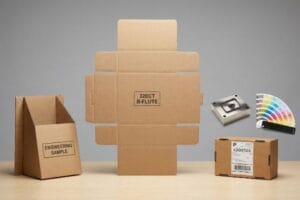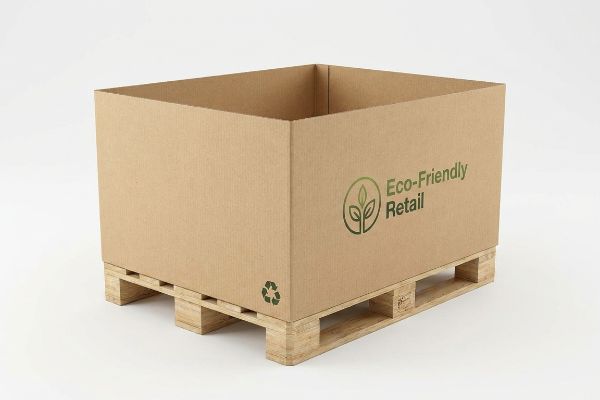
A sustentabilidade no varejo não se resume à aparência; é uma exigência estrutural. Se seus displays não atenderem aos padrões ecológicos, as grandes redes varejistas rejeitarão seu lançamento antes mesmo de chegar às lojas.
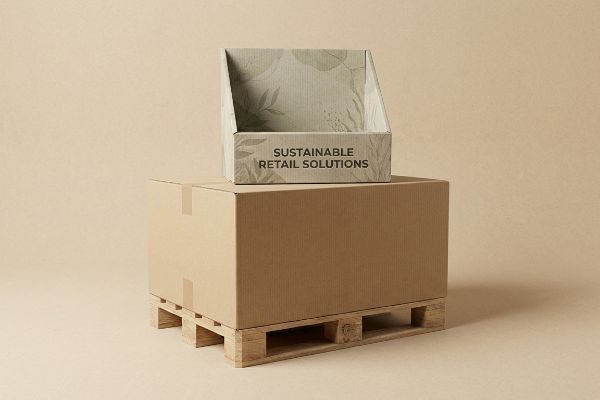
As saias para paletes e as estratégias de sustentabilidade integram materiais recicláveis coletados na calçada com camuflagem estrutural. Em vez de depender de plásticos tóxicos para esconder plataformas logísticas pouco atraentes, as marcas usam placas de papelão ondulado revestidas com água e de baixa qualidade. Isso garante uma estética premium para o varejo, mantendo total conformidade com os processos padrão de repolpação de papel.
Conhecer a teoria por trás das vitrines ecológicas é uma coisa, mas projetá-las para sobreviver à dura realidade da cadeia de suprimentos é completamente diferente.
Quais são os 7 Rs da embalagem sustentável?
Projetar para a economia circular exige mais do que simplesmente adicionar um logotipo de reciclagem à sua arte.
Os 7 Rs da embalagem sustentável são: repensar, recusar, reduzir, reutilizar, reciclar, reaproveitar e decompor. Esses princípios orientam as marcas de varejo na minimização do impacto ambiental, otimizando o design estrutural, eliminando plásticos desnecessários e garantindo que os materiais se integrem perfeitamente aos fluxos de reciclagem municipais padrão, sem a necessidade de instalações especializadas de compostagem comercial.
Mas, muitas vezes, cumprir esses requisitos teóricos leva as marcas a uma enorme armadilha química no chão de fábrica.
Como navegar pela armadilha da compostagem de PLA
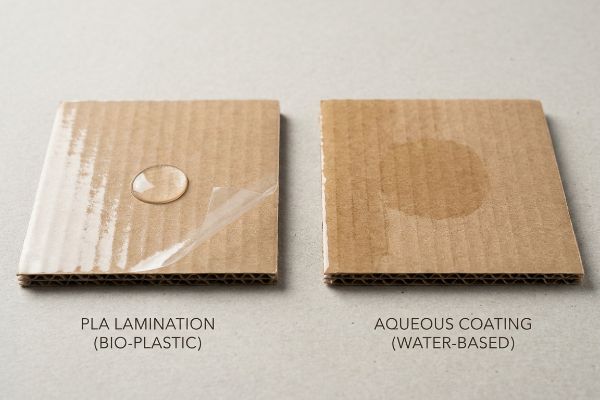
Muitas equipes de marcas tentam atingir suas metas de sustentabilidade exigindo o uso de laminados de bioplástico PLA (ácido polilático) em seus displays de varejo. Elas presumem que esse filme à base de milho garante total conformidade ecológica, além de proporcionar um acabamento brilhante de alta qualidade. Isso soa ótimo em uma sala de reuniões corporativa, mas cria uma enorme dor de cabeça para o gerenciamento de resíduos municipais.
Vejo isso constantemente quando uma marca emergente me envia um belo projeto especificando uma laminação espessa de PLA sobre seu papelão ondulado 32ECT (Teste de Compressão de Borda). O erro de principiante é presumir que o PLA se degrada naturalmente em uma lixeira de reciclagem padrão. A dura realidade? Esse filme bioplástico repele fisicamente a água durante os processos padrão de repolpação de OCC (Embalagens de Papelão Ondulado Usadas)¹. Se você já ouviu o barulho alto e úmido de uma cuba de fábrica de papel, sabe que ela não consegue decompor plástico sólido. Quando os centros de reciclagem padrão interceptam esse filme, todo o display é rejeitado e enviado diretamente para um aterro sanitário. Para corrigir isso, eu removo o PLA e especifico um revestimento aquoso líquido em seu lugar. Ele proporciona exatamente o mesmo brilho, mas, como age como uma matriz de polímero líquido que se dissolve perfeitamente, o display permanece 100% reciclável naseletiva². Essa simples troca de material evita que os clientes façam greenwashing acidentalmente e garante que sua campanha esteja realmente alinhada com as exigências de sustentabilidade dos varejistas.
| Erro comum de iniciantes | A solução profissional | Benefício do piso de vendas |
|---|---|---|
| Especificação de lâminas sólidas de PLA | Aplicação de revestimentos aquosos à base de água | Garante a reciclagem na porta de casa |
| Partindo do pressuposto de que os plásticos se decompõem facilmente | Combinando a química com o repolpamento de OCC | Impede o desvio de resíduos para aterros sanitários |
| Focando apenas no brilho da superfície | Utilizando acabamentos de matriz de polímero líquido | Mantém a estética da marca em segurança |
Eu nunca permito que um cliente comprometa sua mensagem ecológica com um acabamento químico inadequado. Ao optar por revestimentos aquosos, protejo a reputação da sua marca e evito que seus displays acabem em aterros sanitários.
🛠️ Mesa do Harvey: Não tem certeza se o acabamento brilhante do seu produto é reciclável na coleta seletiva? 👉 Solicite uma Análise de Materiais ↗ — Acesso direto à minha mesa. Zero spam de vendas automatizado, prometo.
Por que alguns paletes são pintados de verde?
Entre em qualquer grande loja de departamentos e você notará bases de madeira padrão sustentando enormes estruturas promocionais.
Algumas paletes são pintadas de verde para identificá-las como parte de um sistema fechado de aluguel, gerenciado especificamente pela PECO. As versões em azul pertencem à CHEP. Essas plataformas de madeira robustas e coloridas garantem dimensões uniformes, assegurando que os expositores de varejo se encaixem perfeitamente nas estantes padronizadas do armazém e nas restrições de carga dinâmica.

Esses sistemas de aluguel simplificam a logística de armazém, mas sua aparência robusta e industrial entra em conflito direto com o marketing de marcas premium.
A realidade logística 48x40
As equipes de merchandising frequentemente projetam displays de chão sofisticados e belíssimos sem considerar a plataforma física que os sustentará. Elas presumem que a fábrica fornecerá uma base impecável e sob medida para sua campanha específica. No mercado americano, isso raramente acontece, já que as principais redes varejistas exigem o uso de paletes de aluguel padrão GMA 3 (Grocery Manufacturers Association) de 121,9 x 101,6 cm (48 x 40 polegadas) .
Uma pergunta frequente que recebo é se podemos simplesmente construir o expositor alguns centímetros menor para economizar dinheiro, ignorando completamente a enorme peça de madeira verde ou azul que se projeta da parte inferior. Lembro-me de um cliente que projetou uma elegante unidade de cosméticos de 101,6 cm (40 polegadas) de largura , apenas para perceber que a madeira verde, bruta e lascada da plataforma PECO estava saliente, arruinando a estética de luxo. O atrito áspero da madeira contra o piso polido da loja era desagradável. É preciso projetar a base do expositor para que se encaixe perfeitamente nessa borda ou utilizar uma base fracionária matemática, como a de um meio palete. Se você ignorar as dimensões exatas da plataforma de aluguel, ficará com uma saliência ou falta incômoda. Alinhar perfeitamente seus arquivos CAD (Desenho Assistido por Computador) a esses pontos de referência logísticos evita o desperdício de espaço e impede que os gerentes da loja rejeitem sua unidade mal ajustada.
| Erro comum de iniciantes | A solução profissional | Benefício do piso de vendas |
|---|---|---|
| Ignorando bases de madeira | Projetando precisamente de acordo com as dimensões GMA6 | Impede rejeições de espaço no corredor |
| Deixar cantos de madeira expostos | Utilizando pegadas fracionárias exatas | Melhora a apresentação da marca premium |
| Supondo que bases personalizadas sejam permitidas | Fixação de arquivos CAD em plataformas de aluguel7 | Garante a conformidade perfeita da loja |
Eu sempre fixo o gabarito estrutural nas dimensões exatas dessas plataformas agrupadas. Isso garante que sua estrutura esteja logisticamente impecável antes mesmo de discutirmos a estética visual.
🛠️ Mesa do Harvey: Suas caixas master estão calculadas corretamente para uma pegada PECO padrão? 👉 Solicite uma Análise de Pegada ↗ — Baixe com segurança. Minha caixa de entrada está aberta caso tenha dúvidas posteriormente.
Qual é o conceito de embalagem ecológica?
O verdadeiro design ecológico vai muito além do simples uso de papel reciclado.
O conceito de embalagem ecológica centra-se na minimização do impacto ambiental através da eficiência estrutural e do fornecimento sustentável de materiais. Envolve a utilização de substratos altamente recicláveis, a redução do excesso de peso volumétrico e a implementação de tintas de impressão não tóxicas. Esta metodologia reduz simultaneamente as emissões de carbono da cadeia de abastecimento, mantendo a integridade física necessária.
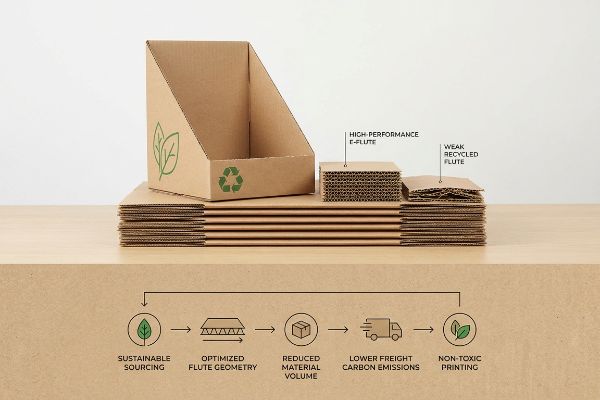
Embora os benefícios de marketing sejam óbvios, a execução prática exige cálculos matemáticos estruturais rigorosos para evitar falhas catastróficas no transporte de cargas.
Engenharia do Imposto sobre a Sustentabilidade
Muitos designers tentam tornar suas embalagens "verdes" simplesmente especificando papelão reciclado mais fino e de qualidade inferior. Eles partem do pressuposto de que reduzir o volume do material equivale automaticamente a uma vitória ecológica. No entanto, remover material sem recalcular as métricas de compressão elimina os amortecedores mecânicos necessários para otransporte.
Imagine tentar construir uma ponte com metade do aço apenas para economizar peso; funciona no papel até um caminhão passar por cima. Frequentemente vejo projetistas enviarem arquivos especificando ondulações recicladas frágeis para embalagens de bebidas. Ao tentar dobrar esse papelão barato, você consegue sentir as fibras de papel moles e fatigadas cedendo sob seus polegares em vez de se fecharem em uma borda nítida. Para alcançar uma redução de peso real sem o colapso estrutural, eu exijo estritamente micro-ondulações de alto desempenho, como a ondulação E ou a ondulação R.Essesperfis avançados usam menos fibra de papel no geral, mas projetam arcos mais compactos, mantendo uma enorme resistência vertical. Aprimorar o perfil da ondulação, reduzindo o volume de papel, permite atingir metas rigorosas de sustentabilidade, evitando completamente danos durante o transporte e reduzindo sua pegada de carbono geral no fretemarítimo.
| Erro comum de iniciantes | A solução profissional | Benefício do piso de vendas |
|---|---|---|
| Utilizando flautas recicladas de baixa qualidade | Exigindo estruturas de flauta em E ou flauta em R11 | Impede o esmagamento de mercadorias pesadas |
| Remover material às cegas | Recalculando a matemática da compressão vertical12 | Elimina a responsabilidade por danos durante o transporte |
| Sacrificando arcos estruturais | Ajustando a geometria do perfil da flauta13 | Reduz as emissões de carbono no transporte de mercadorias |
Recuso-me a permitir que as marcas sacrifiquem o desempenho em prol de um rótulo ecológico. Ao otimizar a arquitetura da flauta, garanto a máxima sustentabilidade sem comprometer a integridade estrutural do seu produto.
🛠️ Harvey's Desk: Sua caixa atual está usando matéria-prima demais para a sua capacidade de carga? 👉 Solicite sua Otimização Estrutural ↗ — Sem formulários que geram ligações de vendas intermináveis. Apenas valor puro.
O que são saias de palete?
Quando sua bela campanha promocional chega às lojas, a última coisa que você quer que os clientes vejam é uma plataforma de madeira em mau estado.
As saias para paletes são revestimentos de papelão ondulado impressos, projetados para ocultar as bases de madeira bruta de expositores de piso em lojas. Essas capas protetoras oferecem uma tela de marca ininterrupta do chão às prateleiras de produtos, escondendo com eficácia as plataformas industriais de aluguel e, ao mesmo tempo, protegendo a camada inferior de mercadorias.
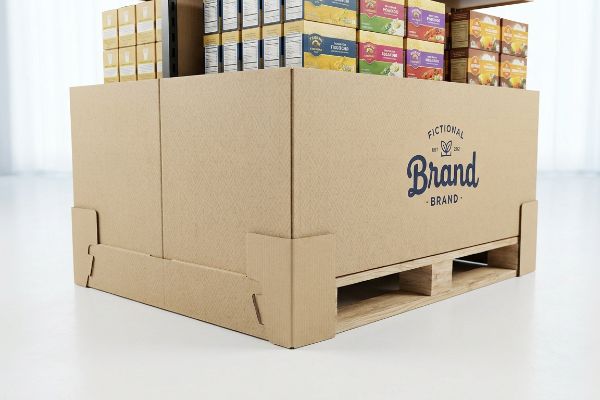
Mas conhecer a teoria não basta quando as máquinas começam a funcionar e as empresas terceirizadas iniciam a montagem.
Por que as películas de paletização padrão falham no chão de fábrica
As equipes de compras frequentemente tratam os revestimentos de base como uma reflexão tardia, projetando-os como tiras simples e contínuas de papelão fino que simplesmente envolvem a madeira. Elas presumem que os funcionários da loja simplesmente dobrarão a folha plana nos cantos e a manterão perfeitamente no lugar com fita adesiva transparente. Essa abordagem aparentemente razoável cria um enorme gargalo operacional em ambientes de varejo de ritmo acelerado .
Fazer um display ficar em pé em um laboratório é fácil, mas eis a dura realidade quando você precisa enviar 500 deles para grandes varejistas. Na minha empresa, vejo rotineiramente clientes enviarem esses arquivos básicos de revestimento, sem engenharia prévia. O problema é que as plataformas de madeira têm variações dimensionais; elas incham e lascam. Quando meço a aplicação física no piso de testes, tentar forçar um revestimento genérico em torno de um perímetro irregular cria uma tensão superficial enorme, e a fita inevitavelmente se solta em poucas horas. O papelão cru rasga, deixando uma bagunça irregular. Para resolver isso, utilizo nosso protocolo de dobra automática, projetando um sistema de abas intertravadas e autotravantes com tolerâncias de dobra precisas. Fiz as leituras do micrômetro e comprovei que não precisava de clipes de plástico caros — eu só precisava de uma tolerância de dobra 1,5 mm (0,15 cm) menornas juntas dos cantos. Ao implementar esse microajuste, garanto que o tempo de montagem da embalagem conjunta diminua em 45 segundos por unidade16, eliminando a necessidade de fita adesiva feia e economizando milhares para os clientes em taxas ocultas de mão de obra manual.
| Erro comum de iniciantes | A solução profissional | Benefício do piso de vendas |
|---|---|---|
| Utilizando fita adesiva transparente para embalagens | Abas de travamento autotravantes de engenharia | Reduz drasticamente o tempo de montagem |
| Ignorando as variações de inchaço da madeira | Adicionando tolerâncias precisas para dobras nos cantos | Impede que a superfície do papelão rasgue |
| Utilizando tiras planas contínuas | Calibrando uma variação de tolerância de 1,5 mm | Elimina taxas ocultas de co-embalagem |
Eu jamais deixo a apresentação final da sua marca à mercê de fitas adesivas transparentes baratas. Ao projetar abas de travamento automático precisas, garanto que sua campanha tenha uma aparência impecável do começo ao fim.
🛠️ Mesa do Harvey: Não deixe que uma falha estrutural de 2 milímetros arruine o lançamento em 500 lojas. 👉 Envie-me seu arquivo de corte ↗ — Vou testar os cálculos antes que você desperdice seu orçamento com produção em massa.
Conclusão
Você pode facilmente aplicar uma película genérica de bioplástico em seus displays, mas quando os centros de reciclagem municipais rejeitam essa laminação de PLA, resultando em multas altíssimas para os varejistas e destruindo completamente a reputação ecológica da sua marca, as consequências são irreversíveis. Esta é a ficha técnica exata que meus 10 principais clientes do varejo usam para garantir zero rejeições de impressão. Pare de adivinhar as complexidades da composição química dos materiais e deixe-me analisar seus arquivos estruturais com minha Auditoria de Corte e Vinco gratuita ↗ para detectar erros fatais de sustentabilidade antes do início da produção.
"Cinética de opacificação do PLA durante a sorção de água líquida – PMC", https://pmc.ncbi.nlm.nih.gov/articles/PMC11435793/. [Documentação técnica sobre operações de fábricas de papel explica como filmes hidrofóbicos de PLA resistem à hidratação e à ruptura durante o processo de repolpação de papelão ondulado]. Papel da evidência: especificação técnica; tipo de fonte: relatório técnico da indústria. Fundamentos: a falha do PLA na reciclagem de papel padrão. Nota de escopo: refere-se especificamente ao processamento padrão de papelão ondulado. ↩
"[PDF] Guia SPC: Como saber se sua embalagem de papel é reciclável", https://sustainablepackaging.org/wp-content/uploads/2023/01/SPC_Paper-Pkg-Report_FINAL.pdf. [As normas de gestão de resíduos comprovam que os revestimentos aquosos à base de água são compatíveis com os fluxos de reciclagem de papel municipais, pois se dissolvem durante o processo de repolpação]. Papel da evidência: validação factual; tipo de fonte: diretriz da indústria de reciclagem. Apoia: a reciclabilidade dos revestimentos aquosos. Nota de escopo: aplicável à coleta seletiva municipal padrão .
"Palete americano GMA. Dimensões, tipos e muito mais.", https://acrosslogistics.com/blog/en/american-pallet-gma. [As normas de logística do setor confirmam que a Grocery Manufacturers Association (GMA) estabeleceu o palete de 48×40 polegadas como o padrão norte-americano para distribuição no varejo]. Função da evidência: verificação técnica; tipo de fonte: especificação do setor. Baseia-se em: requisitos padrão de dimensionamento de paletes. Nota de escopo: específico para o mercado de logística norte-americano .
"Marcações e códigos de paletes: O que significam? – Interlake Mecalux", https://www.interlakemecalux.com/blog/pallet-markings. [As normas de logística do setor especificam que as cores verde e azul são usadas para distinguir entre os dois maiores sistemas de aluguel de paletes em circuito fechado, PECO e CHEP]. Papel da evidência: norma do setor; tipo de fonte: manual de logística. Apoio: O uso de códigos de cores para identificação da propriedade de paletes. Nota de escopo: Refere-se especificamente a operações de varejo e armazenagem em larga escala .
"Escolhendo a melhor cor para paletes ou embalagens reutilizáveis", https://packagingrevolution.net/choosing-the-best-pallet-color/. [As especificações oficiais da PECO confirmam que seu conjunto de paletes para aluguel é identificado pela cor verde característica]. Papel da evidência: verificação factual; tipo de fonte: documentação da empresa. Apoio: A associação de cores específica para paletes da PECO. Nota de escopo: Aplica-se aos padrões de logística da América do Norte .
Paletes GMA "48×40" | Maior fabricante e fornecedor de paletes, https://www.palletone.com/products/gma-pallets/. [Uma fonte confiável do setor definiria as especificações técnicas e as medidas estabelecidas pela Grocery Manufacturers Association para paletes padronizados]. Papel da evidência: especificação técnica; tipo de fonte: norma do setor. Apoia: a necessidade de dimensões de projeto precisas para evitar rejeição no varejo. Nota de escopo: Aplicável principalmente à logística da América do Norte .
"Sobre sistemas de aluguel de paletes – Uma pesquisa internacional, Parte 1", https://www.liveabout.com/about-pallet-pools-an-international-survey-part-1-2878168 . [Uma fonte confiável explicaria a estrutura logística dos sistemas de aluguel de paletes e como eles padronizam os equipamentos em toda a cadeia de suprimentos]. Papel da evidência: fato operacional; tipo de fonte: relatório do setor de logística. Apoia: a afirmação de que os projetos devem ser ancorados às infraestruturas existentes dos sistemas de aluguel para fins de conformidade. Nota sobre o escopo: Concentra-se na distribuição comercial em larga escala no varejo.
"Como as soluções de teste da Lansmont garantem a confiabilidade das embalagens", https://www.lansmont.com/articles/engineering-confidence-how-lansmont-testing-solutions-ensure-packaging-reliability. [Uma fonte de ciência dos materiais ou engenharia de embalagens explicaria como a redução da espessura da parede ou da densidade do material, sem ajustar o projeto estrutural, compromete a capacidade da embalagem de atenuar a energia cinética durante o transporte]. Papel da evidência: validação técnica; tipo de fonte: manual de engenharia. Fundamentos: a relação causal entre a redução do material e a perda do amortecimento protetor. Nota de escopo: aplicável a substratos rígidos e ondulados .
"[PDF] Investigando as propriedades mecânicas de embalagens de papelão…", https://repository.rit.edu/cgi/viewcontent.cgi?article=1066&context=japr. [Especificações de engenharia de embalagens demonstram como geometrias de micro-ondulações otimizam a relação resistência/peso, aumentando a densidade das ondulações. Papel da evidência: validação técnica; tipo de fonte: manual de engenharia. Fundamentos: eficiência das micro-ondulações em relação às ondulações recicladas padrão. Nota de escopo: aplica-se a substratos de papelão ondulado.] ↩
"O impacto do tamanho e peso das embalagens na pegada de carbono", https://www.ecopackables.com/blogs/news/the-impact-of-packaging-size-and-weight-on-carbon-footprint?srsltid=AfmBOoqrIlA8Cc5Oy3Yy6gi40G2FMXCpKeeLm4Jag2V77OO6onOSmxg1. [Dados de avaliação do ciclo de vida (ACV) mostram que a redução do peso bruto das unidades de transporte marítimo diminui o consumo de combustível e as emissões de CO2. Papel da evidência: relação causal; tipo de fonte: estudo de impacto ambiental. Apoia: benefícios de sustentabilidade da redução de peso. Nota de escopo: foco em logística de transporte. ]
"Entendendo a Resistência das Caixas de Envio – EcoEnclose", https://www.ecoenclose.com/blog/understanding-shipping-box-strength/?srsltid=AfmBOop8lHpl1ptSLgrm6mhkDzw2vmxvMHnXwr0eAyC9kbvPGCuRPEl7. [Especificações técnicas de normas de engenharia de embalagens comprovam a resistência superior à compressão das ondulações E e R em comparação com as ondulações recicladas padrão para aplicações de suporte de carga]. Papel da evidência: especificação técnica; tipo de fonte: manual de engenharia. Apoia: integridade estrutural de embalagens sustentáveis. Nota de escopo: A eficácia varia de acordo com as dimensões totais da embalagem .
"Estimativa da resistência à compressão de caixas de papelão ondulado para um …", https://pmc.ncbi.nlm.nih.gov/articles/PMC9864211/. [As normas da indústria para Testes de Compressão de Caixas (TCC) fornecem as estruturas matemáticas necessárias para prever e prevenir falhas estruturais durante o transporte]. Papel da evidência: metodologia de engenharia; tipo de fonte: norma profissional. Apoia: mitigação da responsabilidade por danos no transporte. Nota de escopo: Aplica-se principalmente a remessas paletizadas de papelão ondulado. ↩
"[PDF] Efeito do formato da ondulação do papelão ondulado no esmagamento lateral do papelão...", https://www.fpl.fs.usda.gov/documnts/pdf2001/urban01a.pdf. [Pesquisas de logística revisadas por pares demonstrariam como a otimização da geometria da ondulação aumenta a relação resistência/peso, reduzindo a massa total das remessas e diminuindo as emissões de CO2 relacionadas ao transporte]. Papel da evidência: métrica de impacto ambiental; tipo de fonte: periódico acadêmico. Apoia: redução da pegada de carbono por meio da engenharia. Nota de escopo: Foca na eficiência da logística de transporte. ↩
"Planejamento de Embalagem e Logística para Expositores de Varejo – Frank Mayer", https://www.frankmayer.com/blog/packaging-and-logistics-planning-for-retail-displays/. Estudos de operações de varejo e relatórios de logística quantificam o tempo de trabalho e as taxas de erro associadas à montagem manual de bases de expositores. Papel da evidência: validação técnica; tipo de fonte: relatório do setor. Apoia: a afirmação de que designs de embalagem ineficientes dificultam a implantação nas lojas. Nota de escopo: os ganhos de eficiência são mais proeminentes no varejo de grande volume e grandes lojas .
"Estimativa da resistência à compressão de caixas de papelão ondulado…", https://pmc.ncbi.nlm.nih.gov/articles/PMC8467740/. [As especificações técnicas para dobragem de papelão ondulado demonstram como tolerâncias precisas reduzem a tensão superficial e eliminam a necessidade de fixadores externos]. Papel da evidência: validação técnica; tipo de fonte: norma de engenharia. Fundamentos: uso de microajustes para substituir clipes de plástico. Nota de escopo: Específico para papelão ondulado de grau industrial .
"Maximizando a Eficiência na Fabricação de Eletrônicos: Fita e Carretel…", https://systemationeuro.com/maximising-efficiency-in-electronics-manufacturing-tape-and-reel-packaging/. [Referências do setor para eficiência de co-embalagem ilustram a redução quantitativa de tempo ao passar da aplicação manual de adesivo para designs de encaixe autoadesivos]. Papel da evidência: validação quantitativa; tipo de fonte: relatório de eficiência operacional. Benefícios: redução nos custos de mão de obra manual e no tempo de montagem. Nota de escopo: Os tempos de montagem de referência variam de acordo com o nível de habilidade da mão de obra. ↩