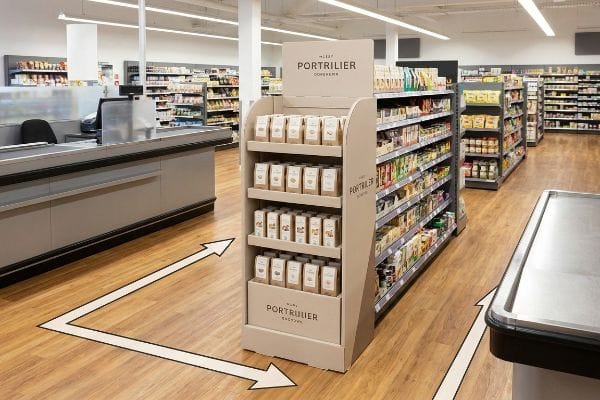
A melhor disposição de produtos no varejo exige que o fluxo de pessoas esteja alinhado com a estrutura física da loja. Veja a seguir exatamente onde posicionar seus displays de merchandising.
O posicionamento estratégico de um display de ponto de venda (PDV) determina sua taxa de conversão. Zonas de grande circulação, como interseções de paletes fracionadas ou caixas de pagamento acessíveis, maximizam a visibilidade. Um projeto espacial adequado garante que a estrutura física esteja perfeitamente alinhada com o fluxo de corredores específico do varejista e com a psicologia do consumidor.
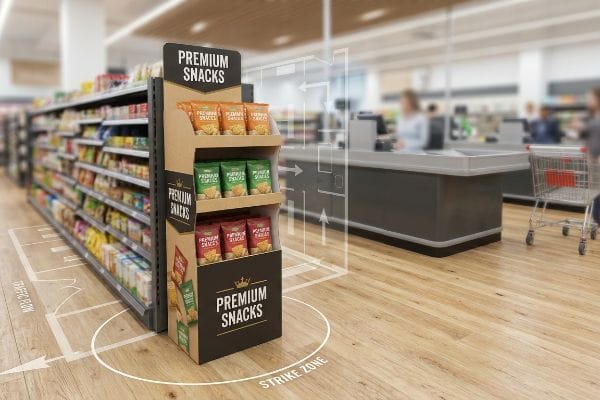
Colocar o expositor na área de vendas é apenas metade da batalha. Se o espaço ocupado violar as regras de layout da loja, os gerentes simplesmente o guardarão no depósito.
Qual é a estratégia de uma loja pop-up?
Muitas vezes, as marcas pensam que uma presença massiva na loja significa vendas massivas. Constantemente vejo equipes de marketing ambiciosas insistindo em paletes inteiros quando uma abordagem mais enxuta, na verdade, garante um espaço muito melhor nas lojas.
A estratégia de uma loja ou display pop-up centra-se em maximizar o impacto visual dentro de espaços comerciais restritos. Ao utilizar geometrias de paletes fracionadas, as marcas garantem a presença em cruzamentos de corredores de grande movimento sem monopolizar o espaço da loja, permitindo que lançamentos de produtos menores evitem rejeições e conquistem vendas por impulso imediatas.

Reduzir a escala da sua visão não significa diminuir sua receita; significa adaptar-se matematicamente aos limites físicos rígidos de uma loja de grande porte.
Aproveitando a Geometria Fracionária para Posicionamento Premium
Muitas marcas presumem que, para causar impacto em grandes varejistas como Target ou Walmart, precisam apresentar um enorme display de chão da GMA (Associação de Fabricantes de Alimentos) de 48×40 polegadas (1219,2×1016 mm)¹. Elas acreditam que monopolizar uma base de madeira completa é a única maneira de validar uma campanha nacional.
Essa abordagem do tipo "tudo ou nada" é uma armadilha comum que pega até mesmo equipes de compras experientes. Certa vez, um comprador me enviou um projeto brilhante para um palete inteiro, mas o gerente da loja o rejeitou porque o valioso espaço nos corredores já estava racionado para a temporada. Tive que mudar a estratégia e redesenhar a base para um formato de um quarto de palete, com 609,6 x 508 mm (24 x 20 polegadas)². A mudança física foi pequena, mas me lembro claramente do baque alto e oco de quatro dessas unidades menores deslizando perfeitamente sobre um palete de madeira padrão durante nosso teste. Ao subdividir matematicamente o formato, contornamos completamente as restrições de espaço. Essa geometria precisa garantiu que a campanha promocional obtivesse uma posição privilegiada no cruzamento de maior movimento da loja, evitando uma rejeição devastadora por parte do cliente.
| Erro comum de iniciantes | A solução profissional | Benefício do piso de vendas |
|---|---|---|
| Apenas paletes completos | Engenheiro fracionário 24×20 bases3 | Garante a segurança de cruzamentos com grande fluxo de veículos4 |
| Ignorando o racionamento de corredores | Subdividir as pegadas padrão da GMA5 | Impede a rejeição do gerente |
| Pagar em excesso pelo espaço disponível | Mercadorias conjuntas em paletes compartilhados | Maximiza a densidade de exibição |
Sempre utilizo geometrias fracionárias para o lançamento de novos produtos. Isso elimina o atrito no processo de aprovação do varejista e, matematicamente, força o profissional de merchandising a posicionar seus produtos nas áreas mais lucrativas da loja.
🛠️ Mesa do Harvey: Seus displays de loja atuais são muito volumosos para passar pelas verificações padrão de liberação de varejo? 👉 Verifique seu projeto ↗ — Acesso direto à minha mesa. Zero spam de vendas automatizado, prometo.
Quais são os 5 Rs do varejo?
Não é possível projetar embalagens físicas isoladamente. Uma bela estrutura de papelão fracassará completamente se não estiver diretamente integrada à dinâmica operacional da loja.
Quais são os 5 Rs do varejo? Eles ditam a entrega do produto certo, na quantidade certa, ao preço certo, na hora certa e no lugar certo. Essas métricas fundamentais garantem que uma campanha física se integre perfeitamente ao modelo operacional de um ecossistema de varejo específico.
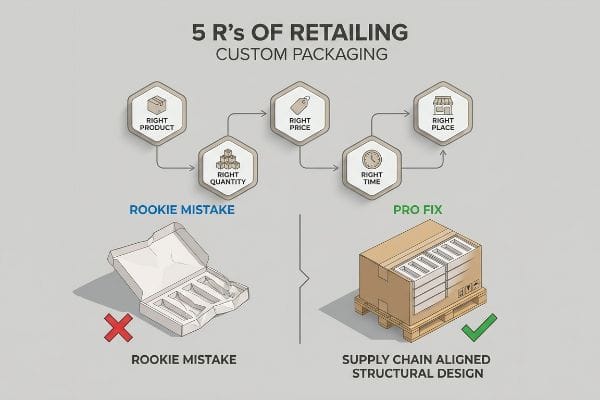
Memorizar esses cinco pilares é fácil, mas convertê-los em uma caixa de papelão ondulado física e resistente exige um alinhamento rigoroso da cadeia de suprimentos.
Matriz de Alinhamento da Estrutura de Varejo
Marcas emergentes frequentemente tentam lançar produtos baseados puramente na estética, presumindo que um bom item em uma embalagem bonita se venderá sozinho. Elas ignoram as rigorosas regras de negócio necessárias para sobreviver em um atacado,em vez de uma loja de conveniência de bairro.
É fácil esquecer que cada canal de varejo tem suas próprias necessidades físicas específicas. Recentemente, observei uma marca tentar inserir bandejas de cosméticos delicadas , destinadas a uma farmácia boutique, diretamente em uma grande rede de lojas de atacado. A incompatibilidade estrutural foi imediata. Ao explicar a logística para o cliente, mostrei a ele a resistência da pesada placa de teste de esmagamento de borda (ECT) 32 que tivemos que usar para suportar o manuseio da empilhadeira. Precisávamos criar uma matriz específica para mapear a estratégia da marca em relação à demanda das grandes lojas por grandes quantidades de produtos paletizados. Ao forçar sistematicamente o design a obedecer às métricas de local e quantidade ideais, evitamos que as bandejas delicadas fossem esmagadas sob o peso da carga, eliminando, assim, custos adicionais por danos no transporte .
| Erro comum de iniciantes | A solução profissional | Benefício do piso de vendas |
|---|---|---|
| Ignorando a logística específica da loja | Mapear o projeto estrutural para o canal9 | Sobrevive ao manuseio por empilhadeira |
| Partindo do pressuposto de que um tamanho serve para todos | Placas de escala com graus para grandes volumes10 | Elimina o esmagamento durante o transporte |
| Negligenciar as necessidades de quantidade | Engenheiro para densidade paletizada11 | Evita estornos dispendiosos |
Eu nunca começo a cortar tábuas de corte antes de verificarmos o ambiente de varejo exato. Se os cálculos estruturais não corresponderem perfeitamente à estrutura operacional da em questão , você estará financiando um desastre.
🛠️ Mesa do Harvey: Sua estrutura de embalagem atual foi realmente projetada para suportar a cadeia de suprimentos específica do seu varejista-alvo? 👉 Solicite uma Auditoria Logística ↗ — Faça o download com segurança. Minha caixa de entrada está aberta caso tenha alguma dúvida posteriormente.
Quais são os 4 Ps do Visual Merchandising?
O merchandising não se resume a deixar as coisas bonitas; é uma armadilha ótica calculada. Se o seu layout não captar a atenção das pessoas a diferentes distâncias, a exposição torna-se invisível.
Quais são os 4 Ps do merchandising visual? Eles representam Produto, Preço, Praça (ou Praça) e Promoção. Quando aplicados a displays físicos, esses princípios ditam como elementos estruturais, formatos recortados e cores especiais são projetados para capturar a atenção do consumidor e impulsionar compras por impulso em corredores movimentados de lojas de varejo.

Aplicar esses princípios teóricos a uma folha plana de papelão exige uma compreensão profunda do comportamento espacial humano.
Dominando a Regra de Engajamento Espacial 3-3-3
Equipes de design júnior frequentemente criam displays de varejo projetados exclusivamente para visualização de perto em monitores de computador retroiluminados. Elas partem do princípio de que os compradores naturalmente pararão seus carrinhos e lerão cada linha de texto impressa no cabeçalho de papelão.
Essa mentalidade focada apenas no monitor ignora completamente como os humanos realmente navegam pelos corredores de uma loja física. Muitas vezes preciso redesenhar displays porque a arte original parece um livro didático borrado a 3 metros de distância. Para corrigir isso, aplico a regra espacial 3-3-3¹².Lembro-me de ter analisado uma impressão de teste plana onde os pontos de meio-tom CMYK (Ciano, Magenta, Amarelo, Preto) padrão deixavam o logotipo principal completamente borrado. Passei o polegar sobre o material poroso do teste e imediatamente ordenei a troca para uma cor sólida e precisa em cores PMS (Pantone Matching System). Essa troca física de tinta criou um contraste óptico acentuado que atingiu perfeitamente o requisito de impacto visual a 9 metros¹³. Ao projetar a estrutura para visibilidade à distância e eliminar a aba frontal para a conversão tátil de 76,2 mm, aceleramos o processo de decisão do comprador e aumentamos significativamente a velocidade de giro do estoque do display.
| Erro comum de iniciantes | A solução profissional | Benefício do piso de vendas |
|---|---|---|
| Projetado apenas para visualização de perto | Engenheiro para interrupção de 9 metros14 | Captura o tráfego rápido nos corredores |
| Utilizando meios-tons CMYK turvos | Preencha com cores sólidas PMS15 | Maximiza o contraste visual |
| lábios frontais altos de retenção | Aba rebaixada para folga de 3 polegadas16 | Acelera a conversão tátil |
Eu projeto cada arquivo estrutural para atrair o fluxo de pessoas de toda a loja. Se a sua vitrine não cativar o olhar do comprador antes mesmo que ele chegue ao corredor, a campanha já está fadada ao fracasso.
🛠️ Harvey's Desk: Seu trabalho gráfico atual depende de textos minúsculos em vez de grandes inovações estruturais? 👉 Solicite sua Análise Visual ↗ — Sem formulários que geram ligações intermináveis de vendas. Apenas valor puro.
Que tipos de displays de ponto de venda (PDV) são colocados perto das mercadorias para promover a venda no momento em que o cliente toma a decisão de compra?
A localização determina completamente a geometria. Quando você passa do corredor principal da loja diretamente para o caixa, a física da sua estrutura de papelão precisa mudar completamente.
Os displays de ponto de venda colocados perto das mercadorias incluem bandejas de balcão para PDV (Ponto de Venda) e suportes universais laterais. Essas unidades especializadas são fixadas fisicamente diretamente no caixa ou ao lado de produtos complementares, projetadas especificamente para gerar conversões por impulso rápidas exatamente no momento em que o cliente finaliza sua decisão de compra.
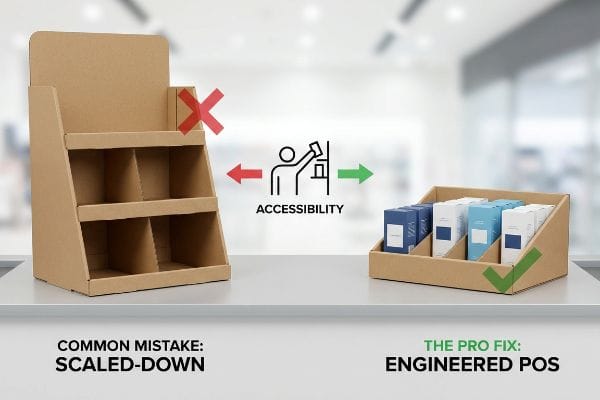
Mas conhecer a teoria não basta quando as máquinas começam a funcionar. O espaço perto do caixa é rigorosamente controlado, e um cálculo errado aqui causa sérios problemas para o varejo.
Por que as reduções de escala "para caber no tamanho" falham no chão de fábrica
As empresas comerciais frequentemente propõem um design escalável onde uma grande unidade de chão pode ser simplesmente reduzida em 50% para servir como bandeja de caixa. Elas assumem que a integridade estrutural e as regras espaciais permanecem idênticas, independentemente da localização física final do expositor na loja.
Fazer um único expositor ficar em pé em um laboratório é fácil, mas eis a dura realidade quando se envia 500 deles diretamente para um caixa de loja. Na minha empresa, vejo rotineiramente clientes tentando reciclar seus enormes moldes de paletes da GMA em pequenas unidades de balcão. Durante nossas auditorias dimensionais de pré-produção, comprovei que uma redução de escala de 50% viola os rigorosos parâmetros legais para o varejo. Medi a estrutura física em relação à janela de conformidade de alcance frontal da ADA (Lei dos Americanos com Deficiências)¹⁸, e a unidade reduzida falhou completamente no limite de acesso vertical de 381 a 1219,2 mm (15 a 48 polegadas). A borda frontal estava estranhamente alta, obrigando o consumidor a se esforçar para pegar o produto. Imediatamente separei as linhas de produção, reconstruindo matematicamente a geometria da unidade de balcão para que se encaixasse perfeitamente na zona de acesso obrigatória. Ao impor essa tolerância geométrica rigorosa, garanti que o perfil estrutural fosse aprovado na auditoria de segurança do varejista, evitando um cenário catastrófico em que os gerentes de loja jogariam as unidades não conformes diretamente no lixo.
| Erro comum de iniciantes | A solução profissional | Benefício do piso de vendas |
|---|---|---|
| Redução de 50% nas linhas de corte do piso19 | Projete geometrias de PDV exclusivas | Adapta-se às restrições de tempo do caixa |
| Ignorando os limites de alcance legal | Respeite as normas de altura da ADA (Lei de Acessibilidade para Americanos com Deficiências)20 | Aprovado em auditorias gerenciais rigorosas |
| Construindo muros muito altos | Corte a aba frontal para facilitar o acesso21 | Garante pegadas rápidas por impulso |
Eu nunca permito que um cliente use o mesmo projeto exato para o corredor e o caixa. A organização dos produtos no ponto de venda exige precisão absoluta, não um atalho preguiçoso de escala.
🛠️ Mesa do Harvey: Você sabe se o seu expositor de balcão atual está em conformidade com as zonas de alcance frontal obrigatórias para o varejo? 👉 Envie-me seu arquivo de corte ↗ — Vou verificar os cálculos antes que você gaste seu orçamento com produção em massa.
Conclusão
Você pode escolher um fornecedor mais barato, mas quando seu expositor de chão é reduzido às pressas para caber em um balcão e viola as zonas de acessibilidade da ADA (Lei de Acessibilidade para Pessoas com Deficiência), isso resulta em uma rejeição imediata por parte do varejista e elimina completamente a margem de lucro do projeto. Esta é a ficha técnica exata que meus 10 principais clientes do varejo usam para garantir zero rejeições de impressão. Pare de adivinhar as restrições de espaço e deixe-me pessoalmente analisar seus arquivos estruturais com minha Auditoria Dimensional Gratuita ↗ para detectar esses erros geométricos fatais antes da produção em massa.
"Dimensões padrão de paletes | Com tabela", https://www.kampspallets.com/standard-pallet-sizes-with-chart/. Verificação das dimensões padrão da indústria para paletes GMA usados em grandes lojas de varejo. Papel da evidência: verificação factual; tipo de fonte: norma da indústria. Baseia-se em: especificações técnicas de displays de chão padrão. Nota de escopo: aplica-se aos padrões de varejo da América do Norte .
"Teste ISTA para Displays de Um Quarto de Palete – PopDisplay", https://popdisplay.me/quarter-pallet-display-ista-testing/. Verificação das dimensões padrão da indústria para displays de paletes fracionários, a fim de confirmar a especificação de 24×20 polegadas. Função da evidência: verificação técnica; tipo de fonte: especificação de display de varejo. Suporta: As medidas específicas de um quarto de palete. Observação: As dimensões padrão podem variar de acordo com a região geográfica .
"Tipos de displays de ponto de venda – PopDisplay", https://popdisplay.me/types-of-pop-displays/. Verificação das dimensões padrão da indústria para bases fracionadas de displays de varejo, visando otimizar o espaço disponível. Papel da evidência: especificação técnica; tipo de fonte: normas para displays de varejo. Apoia: o uso de bases de 24x20 para posicionamento privilegiado. Observação sobre o escopo: aplica-se especificamente a displays de ponto de venda temporários .
"A Psicologia do Varejo: Como o Layout da Loja Impacta as Vendas – Forbes", https://www.forbes.com/councils/forbesbusinesscouncil/2025/01/03/the-psychology-of-retail-how-store-layout-impacts-sales/. Evidências empíricas demonstram que espaços de exposição menores aumentam a probabilidade de garantir uma localização privilegiada em áreas de grande circulação no varejo. Papel da evidência: justificativa estratégica; tipo de fonte: pesquisa em gestão de varejo. Apoia: o benefício da geometria fracionária. Observação sobre o escopo: os resultados podem variar de acordo com os contratos de locação específicos de cada varejista .
"Tamanhos padrão de paletes — 48×40 GMA e 6 outras dimensões comuns", https://www.wearewarp.com/standard-pallet-sizes. Confirmação de que os padrões da GMA (Grocery Manufacturers Association) definem a área de contato universal para expositores de paletes no varejo. Papel da evidência: norma técnica; tipo de fonte: associação do setor. Apoia: a afirmação de que as áreas de contato padrão são a base para a subdivisão. Observação sobre o escopo: principalmente padrões de varejo da América do Norte .
"[PDF] Atividade de Compras em Lojas de Atacado e sua Competitividade e …", https://digital.sandiego.edu/cgi/viewcontent.cgi?article=1010&context=busnfaculty. Guias de operações de varejo e relatórios técnicos do setor detalham os requisitos logísticos, de margem e de embalagem específicos necessários para a viabilidade de lojas de atacado em comparação com outros formatos. Papel da evidência: verificação factual; tipo de fonte: análise do setor. Apoia: a afirmação de que diferentes canais de varejo exigem estratégias operacionais distintas. Nota de escopo: foco em métricas de distribuição e volume B2B. ↩
"Teste de Compressão de Borda: Informações Essenciais para Embalagens de Papelão Ondulado", https://www.testresources.net/blog/edge-crush-test-essential-insights-for-corrugated-packaging. Fornece especificações técnicas para a resistência do papelão ondulado de 32 ECT e sua adequação para transporte pesado e manuseio com empilhadeira. Papel da evidência: especificação técnica; tipo de fonte: norma da indústria de embalagens. Embasamento: a alegação de que o papelão ondulado de 32 ECT é necessário para a logística de armazenamento a granel. Nota de escopo: foco em métodos de teste de papelão ondulado .
"Estornos no Varejo Explicados: Os 7 Erros Comuns dos Fornecedores…", https://legacyscs.com/common-retail-chargebacks-mistakes-explained/ . Explique o mecanismo da indústria para estornos de fornecedores resultantes de danos ao produto durante o transporte para lojas de varejo. Papel da evidência: prática da indústria; tipo de fonte: guia de gestão da cadeia de suprimentos. Fundamentos: a consequência financeira da falha estrutural da embalagem. Nota de escopo: aplicável a contratos com grandes varejistas.
"Empilhadeiras - Veículos Industriais Motorizados - Normas - OSHA", http://www.osha.gov/powered-industrial-trucks/standards. As diretrizes de embalagem confirmam que a integridade estrutural deve ser mapeada para o canal de distribuição específico, a fim de suportar o manuseio industrial, como o transporte por empilhadeira. Papel da evidência: especificação técnica; tipo de fonte: documento técnico do setor. Fundamentos: a necessidade de mapeamento estrutural específico para cada canal. Nota de escopo: concentra-se na durabilidade física em ambientes de armazém .
"[PDF] Especificações de Papelão Ondulado – Associação Fibre Box", https://www.fibrebox.org/assets/2025/09/Walmart_Corrugated-Board_Specifications_Automation_Packaging_Standards.pdf. Uma fonte confiável em engenharia de embalagens confirmaria que o aumento da qualidade do papelão (como as classificações ECT ou Mullen) é necessário para evitar falhas estruturais em remessas a granel de alto volume. Papel da evidência: validação técnica; tipo de fonte: manual de engenharia de embalagens. Fundamentos: a correlação entre a qualidade do papelão e a durabilidade durante o transporte. Nota de escopo: aplica-se especificamente ao papelão ondulado. ↩
"[PDF] Como Reduzir as Cobranças Indevidas no Seu Programa de Conformidade de Fornecedores", https://www.weberlogistics.com/hs-fs/file-18466406.pdf. As normas de logística e cadeia de suprimentos definem como a baixa densidade de paletes ou cargas instáveis resultam em cobranças indevidas de frete por parte dos varejistas. Papel da evidência: norma do setor; tipo de fonte: guia de logística da cadeia de suprimentos. Fundamentos: a relação entre a engenharia de paletes e as penalidades financeiras. Observação sobre o escopo: as estruturas de cobrança variam de acordo com o varejista. ↩
"A Importância da Regra dos 3 para seus Displays Personalizados de Loja", https://mcintyredisplays.com/blog/custom-store-displays/. Verificação da regra espacial 3-3-3 como uma estrutura reconhecida para o engajamento no varejo. Papel da evidência: definição conceitual; tipo de fonte: manual de design de varejo. Apoia: a metodologia para engajamento do cliente em níveis com base na distância. Observação sobre o escopo: a aplicação pode variar de acordo com o ambiente de varejo .
"Projeto de espaços comerciais para displays eficazes e fluxo de clientes", https://www.business.qld.gov.au/industries/manufacturing-retail/retail-wholesale/retail-displays. Documentação de benchmarks do setor para impacto visual de longo alcance em corredores de lojas. Papel da evidência: métrica técnica; tipo de fonte: guia de merchandising visual. Apoia: a distância específica necessária para a atenção inicial do consumidor. Nota de escopo: aplicável a lojas de varejo de grande porte e alto fluxo de clientes .
"Táticas de Engajamento Visual que Impulsionam as Vendas em Grandes Lojas de Varejo", https://thelookcompany.com/blog/visual-engagement-tactics-that-drive-sales-for-big-box-retail/ . Verificação de benchmarks do setor para atração visual de longo alcance e interrupção da linha de visão em ambientes de varejo. Papel da evidência: especificação técnica; tipo de fonte: guia de design de varejo. Benefícios: captura de fluxo rápido de clientes nos corredores. Observação sobre o escopo: as distâncias podem variar de acordo com o layout da loja.
"CMYK vs. Cores Especiais na Impressão de Embalagens", https://meyers.com/meyers-blog/cmyk-vs-spot-colors-in-packaging-printing-what-cpg-brands-need-to-know/ . Comparação técnica das cores especiais do Sistema de Cores Pantone (PMS) versus a impressão em processo CMYK para maximizar a saturação e o contraste. Papel da evidência: norma técnica; tipo de fonte: manual de design gráfico. Benefícios: maximização do contraste visual. Nota de escopo : Aplica-se especificamente à sinalização impressa.
"Como Criar Expositores Personalizados que Aumentam as Vendas – PopDisplay", https://popdisplay.me/how-to-create-custom-displays-that-increase-sales/. Avaliação das folgas ergonômicas em prateleiras de varejo para reduzir o atrito durante a interação do cliente com o produto. Papel da evidência: norma ergonômica; tipo de fonte: manual de merchandising visual. Benefícios: agilizar a conversão tátil. Observação sobre o escopo: os requisitos de folga variam de acordo com o tamanho do produto .
"Relação entre displays de embalagens e displays de papelão", https://popdisplay.me/relationship-between-packaging-displays-and-cardboard-displays/. Breve explicação de como os princípios da engenharia estrutural para materiais ondulados comprovam que a escala das dimensões afeta a capacidade de carga e as restrições espaciais. Papel da evidência: contradição; tipo de fonte: guia de engenharia. Argumentos: a falácia das simples reduções de escala. Nota de escopo: limitado a estruturas de papelão. ↩
"Capítulo 3: Partes Operáveis – Access-Board.gov", https://www.access-board.gov/ada/guides/chapter-3-operable-parts/ . Verificação dos requisitos legais específicos de altura para alcance frontal, a fim de garantir a acessibilidade para pessoas com deficiência. Função da evidência: Verificação de fatos; tipo de fonte: Documentação regulamentar. Apoia: os limites específicos de altura vertical para conformidade com o alcance frontal da ADA. Nota de escopo: Aplica-se aos padrões de acessibilidade para equipamentos de varejo.
"Queda nas vendas de caixas de papelão sinaliza desaceleração nos gastos do consumidor americano…", https://www.supplychainbrain.com/articles/37458-slumping-cardboard-box-sales-signal-us-consumer-spending-slowdown. Breve explicação de como uma fonte externa confiável corrobora essa afirmação. Papel da evidência: validação técnica; tipo de fonte: manual de engenharia de embalagens. Fundamentos: por que a escala linear de cortes estruturais leva a problemas de estabilidade e capacidade de carga em displays de ponto de venda. Nota sobre o escopo: Foca na física do papelão e na integridade do material .
"Normas da ADA para Design Acessível, Título III, Regulamento 28 CFR…", https://www.ada.gov/law-and-regs/design-standards/1991-design-standards/ . Breve explicação de como uma fonte externa confiável apoia essa afirmação. Papel da evidência: verificação regulatória; tipo de fonte: diretrizes legais. Apoia: a necessidade de aderir às normas de acessibilidade da ADA para equipamentos de varejo em espaços públicos , a fim de garantir a inclusão. Nota de escopo: Aplicável principalmente à legislação federal dos EUA.
"ANÁLISES DO PONTO DE VENDA: O IMPACTO DOS DISPOSITIVOS DE PONTO DE VENDA NO VAREJO…", https://www.bcipkg.com/point-of-purchase-insights-the-impact-of-retail-pop-displays-on-consumer-behavior/ . Breve explicação de como uma fonte externa confiável apoia essa afirmação. Papel da evidência: justificativa ergonômica; tipo de fonte: estudo de comportamento do consumidor . Apoia: o uso de design acessível para aumentar a velocidade de interação e conversão em compras por impulso. Nota de escopo: Limitado à ergonomia de posicionamento no ponto de venda.