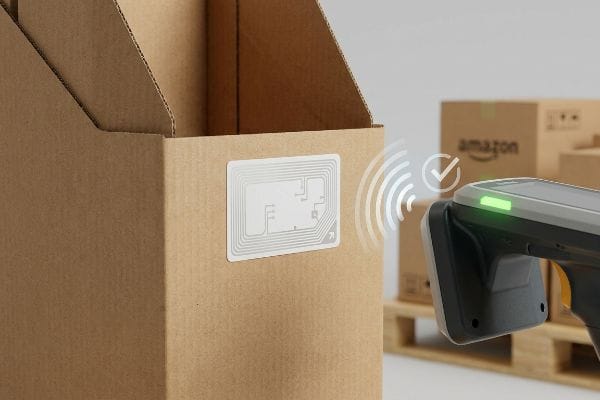
As normas de conformidade do varejo de grandes lojas são implacáveis. Se seus envios de displays não atenderem aos requisitos de leitura digital do Walmart, você enfrentará rejeição imediata e estornos massivos. Veja como sobreviver a essa exigência.
Entre os motivos que levaram o Walmart a adotar a tecnologia RFID estão a melhoria da visibilidade da cadeia de suprimentos, a prevenção de rupturas de estoque não identificadas e a aceleração da contagem de inventário. Essa tecnologia garante o reabastecimento preciso das lojas, reduz o trabalho manual pesado e otimiza o atendimento omnichannel sem exigir a leitura direta do código de barras.
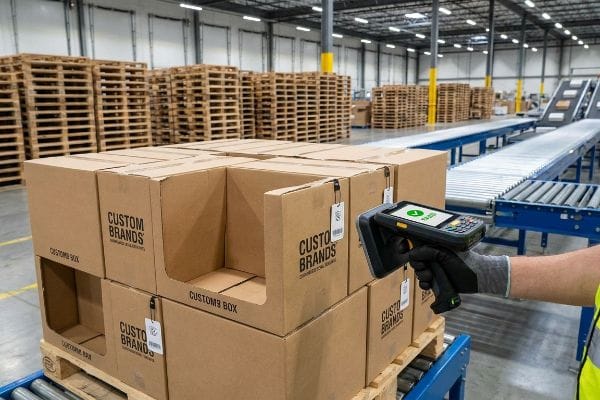
Você pode projetar uma vitrine belíssima, mas se a engenharia estrutural interferir na comunicação digital com o cliente, a campanha estará fadada ao fracasso.
Por que o Walmart exige etiquetas RFID?
O Walmart lida com bilhões de produtos diariamente, o que significa que a contagem manual de estoque é matematicamente impossível.
O Walmart utiliza etiquetas RFID para garantir o controle preciso do estoque em toda a sua vasta cadeia de suprimentos. Esses rastreadores digitais eliminam erros de contagem manual, asseguram que os produtos cheguem à área de vendas no momento certo e fornecem os dados necessários para a execução de operações de retirada de compras online na loja sem interrupções.
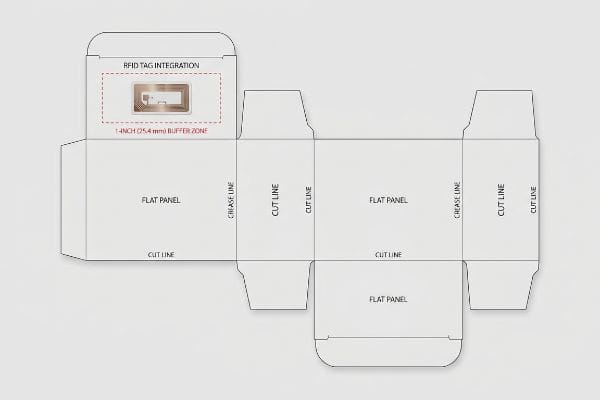
Compreender esse requisito digital é apenas o primeiro passo antes de projetarmos o dispositivo físico.
Os 5 Rs da Visibilidade do Inventário
Muitas equipes de marketing presumem que as exigências das grandes redes varejistas são simplesmente obstáculos burocráticos criados para arrecadar taxas de conformidade. Elas veem as etiquetas digitais como uma mera formalidade, colando-as nas caixas master onde houver espaço em branco, sem considerar o ecossistema operacional mais amplo da loja.
O mandato, na verdade, reforça as cinco regras do varejo¹:ter o produto certo, na quantidade certa, ao preço certo, na hora certa e no lugar certo. O posicionamento adequado exige a compreensão desses fundamentos do varejo, em vez de tratá-lo como um mero exercício de adesivos. Ao alinhar o rastreador digital com zonas claras e desobstruídas na embalagem externa²,as marcas garantem a transmissão contínua de dados em toda a rede de varejo. Esse alinhamento estratégico assegura que os sistemas de estoque reconheçam instantaneamente a chegada de novos produtos, evitando custos elevados com a falta de estoque no ponto de venda.
| Erro comum de iniciantes | A solução profissional | Benefício do piso de vendas |
|---|---|---|
| Colocação de etiquetas nas dobras | Integração de painéis planos | Nenhuma quebra de antena |
| Ignorando a folga da etiqueta | Zona de amortecimento de 1 polegada (25,4 mm)3 | 100% de sucesso na digitalização4 |
| Tratar etiquetas como adesivos | Incorporação em CAD de linha de corte5 | Impede retrabalho manual |
Ao integrar estrategicamente o posicionamento das etiquetas na fase inicial do projeto, garanto que cada display de varejo seja perfeitamente reconhecido assim que chegar à loja.
🛠️ Mesa do Harvey: Não tem certeza se o seu gabarito de impressão atual deixa espaço suficiente para uma digitalização segura? 👉 Solicite uma Análise de Gabarito ↗ — Acesso direto à minha mesa. Zero spam de vendas automatizado, prometo.
É possível ler etiquetas RFID através da roupa?
As leis da física das ondas de rádio determinam a eficiência da comunicação entre uma etiqueta e um receptor.
Sim. As etiquetas RFID podem ser lidas através de roupas e da maioria dos materiais de varejo padrão. As ondas de radiofrequência penetram facilmente em tecidos, papelão ondulado e filmes plásticos, permitindo que os funcionários da loja escaneiem instantaneamente centenas de peças de vestuário embaladas em caixas de papelão seladas, sem precisar abri-las.
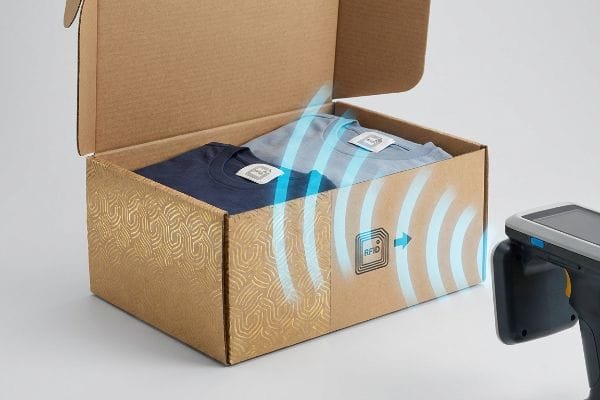
Embora os tecidos não representem uma ameaça ao sinal, os materiais de embalagem que envolvem essas peças de roupa podem causar interferências catastróficas.
Navegando na Zona Amigável à RFID
As equipes de compras frequentemente aprimoram suas embalagens de varejo com acabamentos metálicos premium, presumindo que cosméticos de alta qualidade se traduzem naturalmente em maiores vendas. Elas raramente consultam as equipes de embalagem sobre como essas melhorias estéticas afetam a funcionalidade digital da caixa master6.
Embora materiais básicos como camisetas de algodão ou papelão comum não representem ameaça ao sinal7, elementos metálicos bloqueiam completamente a transmissão de radiofrequência8.Essa é uma armadilha comum para marcas que solicitam tintas metálicas de cobertura total ou folhas decorativas em seus displays sem entender a interferência que isso causa. O posicionamento estratégico exige a movimentação desses rastreadores para zonas designadas e sem impressão, bem longe de quaisquer enfeites metalizados. O estabelecimento dessas zonas livres mantém a aparência premium da embalagem, garantindo que a comunicação digital ocorra instantaneamente no ponto de venda.
| Erro comum de iniciantes | A solução profissional | Benefício do piso de vendas |
|---|---|---|
| Etiquetagem sobre tinta metálica9 | Zonas dedicadas sem impressão | Transmissão de sinal desbloqueada |
| Utilizando papel alumínio perto de rastreadores10 | Mudando para gloss aquoso | Mantém a aparência premium com segurança |
| Colocar perto de ferragens metálicas | folga de metal de 3 polegadas (76,2 mm)11 | Impede interferências digitais |
Remover os elementos metálicos da zona de leitura é a maneira mais simples de proteger o sinal e garantir que o visor permaneça perfeitamente visível para os leitores de código de barras no varejo.
🛠️ Mesa do Harvey: Seus acabamentos metálicos premium para impressão estão bloqueando secretamente seus sinais de estoque e aumentando o risco de rejeição por parte dos varejistas? 👉 Solicite uma Análise de Materiais ↗ — Baixe com segurança. Minha caixa de entrada está aberta caso tenha alguma dúvida posteriormente.
A tecnologia RFID impede furtos em lojas?
Grandes varejistas perdem bilhões com furtos e perdas todos os anos, e o controle do estoque físico é uma batalha constante.
Não. A tecnologia RFID não impede fisicamente o furto em lojas. No entanto, ela fornece aos varejistas dados de estoque precisos e em tempo real, permitindo que identifiquem com exatidão quais itens foram furtados e quando. Essa visibilidade detalhada ajuda os gerentes de loja a repor rapidamente o estoque perdido e a analisar áreas com alto índice de furtos para aprimorar as estratégias gerais de prevenção de perdas.

Saber o que desapareceu é crucial, mas evitar danos físicos à vitrine que continha esses produtos é onde a engenharia estrutural entra em ação.
Precisão do inventário e segurança estrutural
As marcas frequentemente se preocupam excessivamente com o rastreamento digital de suas mercadorias, investindo pesadamente em etiquetas inteligentes para monitorar as perdas.Elas presumem que, contanto que os dados digitais sejam precisos, a apresentação física do produto no ponto de venda se ajustará naturalmente.
Um inventário digital perfeito não significa nada se a exibição física não suportar as interações diárias dos compradores. Os sistemas de rastreamento mais avançados apenas relatam itens faltantes¹³;eles não conseguem impedir que uma bandeja de papelão ondulado se deforme quando os clientes puxam produtos rapidamente da prateleira. O verdadeiro sucesso no varejo exige combinar essa visibilidade digital com durabilidade estrutural básica, como a utilização de painéis frontais reforçados que resistam a rasgos. Ao priorizar a segurança física fundamental juntamente com os dados digitais, as marcas garantem que seu estoque restante permaneça organizado, apresentável e prontamente disponível para o próximo comprador.
| Erro comum de iniciantes | A solução profissional | Benefício do piso de vendas |
|---|---|---|
| Lábios de retenção frágeis | Painéis frontais dobráveis de parede dupla14 | Impede que o cliente rasgue o produto |
| Depender exclusivamente do digital | Auditorias estruturais físicas | Protege o estoque restante |
| produtos aninhados firmemente | SKU com folga de 0,25 polegadas (6,35 mm)15 | Remoção de produto sem atrito |
Etiquetas digitais informam ao varejista exatamente o que foi perdido, mas um projeto estrutural inteligente garante que as unidades restantes permaneçam perfeitamente organizadas e prontas para venda.
🛠️ Mesa do Harvey: Sua estrutura de exposição atual é resistente o suficiente para suportar clientes agressivos puxando produtos das prateleiras? 👉 Solicite sua Avaliação Estrutural ↗ — Sem formulários que geram ligações intermináveis de vendas. Apenas valor agregado.
Qual é o maior problema do Walmart?
A logística de grandes lojas opera em velocidades assustadoras, o que significa que qualquer pequena ineficiência na embalagem desencadeia enormes gargalos sistêmicos.
O maior problema da Walmart na gestão da cadeia de suprimentos é a velocidade de processamento e a conformidade com o recebimento automatizado. Quando as caixas master apresentam códigos de barras distorcidos ou etiquetas digitais mal posicionadas, os leitores ópticos falham. Esse gargalo sistêmico força o reembalamento manual dispendioso, atrasa a distribuição em todo o país e gera severas penalidades financeiras para as marcas que não cumprem as normas.
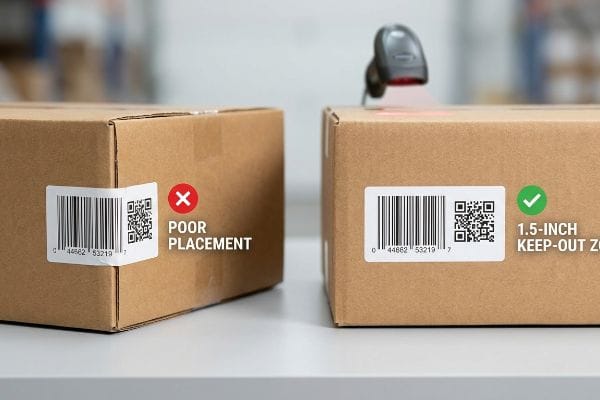
Mas conhecer a teoria não basta quando as máquinas começam a funcionar e as caixas chegam às esteiras transportadoras.
Por que a formatação logística padrão falha no chão de fábrica
As equipes de compras frequentemente presumem que, contanto que a etiqueta de rastreamento necessária esteja presente em algum lugar da caixa, o varejista a aceitará. Elas tratam o molde da caixa master como uma sugestão vaga, colocando etiquetas de logística perigosamente perto das linhas de vinco estruturais16 sem considerar a espessura física do papelão ondulado.
Conseguir que um único display seja escaneado com sucesso em uma mesa é fácil, mas eis a dura realidade quando você envia 500 deles por meio de uma instalação automatizada de logística terceirizada (3PL). Em minhas instalações, vejo rotineiramente arquivos de clientes onde o código de barras está posicionado a meros 2,79 mm (0,11 polegadas) de uma dobra de papelão ondulado. Quando essa placa espessa dobra 90 graus, ela consome material e o revestimento externo de papel se estica fisicamente.Isso faz com que o código de barras impresso literalmente contorne o raio da borda. Quando testo isso com um scanner óptico, o teste falha instantaneamente. Eu obtenho as leituras do micrômetro e imponho uma zona de exclusão rigorosa de 38,1 mm (1,5 polegadas) para todos os dados escaneáveis. Ao impor essa folga matemática específica, garanto que a etiqueta permaneça perfeitamente plana, evitando falhas na triagem automatizada e economizando para os clientes cerca de US$ 4.500 em taxas manuais de reembalagemlote .
| Erro comum de iniciantes | A solução profissional | Benefício do piso de vendas |
|---|---|---|
| Etiquetas próximas às linhas de pontuação | Zona de exclusão de 38,1 mm (1,5 polegadas)19 | Taxa de digitalização 100% automatizada20 |
| Ignorando o paquímetro da placa | Linhas de corte com compensação de calibre21 | Impede a distorção de dados |
| Escala de código de barras para adivinhação | Testes ópticos de pré-produção | Elimina multas por reembalagem |
Não permito que práticas comerciais comuns comprometam a conformidade logística. Ao definir a geometria espacial antes da produção em massa, garanto que a remessa passe sem problemas pelo recebimento automatizado.
🛠️ Mesa do Harvey: Não deixe que uma falha estrutural de 2 milímetros arruine o lançamento em 500 lojas. 👉 Envie-me seu arquivo de corte ↗ — Vou testar os cálculos antes que você desperdice seu orçamento com produção em massa.
Conclusão
Você pode escolher um fornecedor mais barato que ignore as tolerâncias de dobra física, mas quando essas caixas master esticam os códigos de barras nas bordas, os leitores ópticos falham, atrasando a linha de recebimento automatizada em cerca de 40% e gerando multas enormes para os varejistas por reembalagem. Esta é a especificação exata que meus 10 principais clientes do varejo usam para garantir zero rejeições de impressão. Pare de arriscar com palpites estruturais e deixe-me auditar pessoalmente seus layouts por meio da minha Auditoria Prévia de Corte e Vinco gratuita ↗ para garantir sua logística antes de imprimir.
"Como etiquetar líquidos, metais e itens pequenos para o RFID do Walmart…", https://www.impinj.com/library/blog/what-walmart-suppliers-should-know-about-tagging-t. Documentação do setor conecta a estratégia de RFID do Walmart ao princípio fundamental da logística dos 'cinco direitos' do estoque. Papel da evidência: validação conceitual; tipo de fonte: análise do setor. Apoia: os objetivos operacionais do mandato. Nota de escopo: a nomenclatura para regras de varejo pode variar de acordo com a fonte .
"Conformidade de Embalagens RFID do Walmart: O Que Você Precisa Saber", https://popdisplay.me/walmart-rfid-packaging-compliance-what-you-need-to-know/. As diretrizes técnicas para implementação de RFID especificam o posicionamento para evitar interferência de metais ou líquidos. Função da evidência: verificação técnica; tipo de fonte: manual do fornecedor corporativo. Suporta: o requisito de posicionamento específico da etiqueta para garantir a transmissão. Observação sobre o escopo: aplica-se a materiais que causam atenuação do sinal de RF .
"Alcance de Detecção Ideal de Etiquetas RFID para Posicionamento Baseado em RFID…", https://pmc.ncbi.nlm.nih.gov/articles/PMC3291925/. Especificações técnicas de fabricantes de hardware RFID detalhando a distância necessária de superfícies metálicas para evitar desafinação. Papel da evidência: especificação técnica; tipo de fonte: padrão da indústria. Suporta: o espaçamento recomendado para otimização do sinal. Nota de escopo: Aplicável principalmente a etiquetas RFID UHF .
"Posicionamento de Etiquetas RFID: Melhores Práticas para Maior Precisão – AssetPulse", https://www.assetpulse.com/blog/rfid-tag-placement. Benchmarks de desempenho que ilustram como o posicionamento otimizado de etiquetas e zonas de buffer eliminam falhas de leitura em ambientes de varejo. Função da evidência: métrica de desempenho; tipo de fonte: white paper técnico. Suporta: a correlação entre espaço livre e precisão de leitura. Nota de escopo: Representa o desempenho em condições ideais .
"Embalagens com RFID integrado estão revolucionando as embalagens para o varejo", https://www.finelinetech.com/rfid-integrated-packaging-is-revolutionizing-retail-packaging/ . Diretrizes de engenharia de embalagens que explicam o processo de incorporação de marcadores de antena RFID em matrizes CAD para produção automatizada. Papel da evidência: procedimento de fluxo de trabalho; tipo de fonte: manual de engenharia. Suporte: o método profissional para garantir a consistência no posicionamento das etiquetas. Observação sobre o escopo: Específico para fabricação em alto volume.
"Etiqueta RFID funciona em embalagens metálicas, mesmo com líquidos", https://www.packagingdigest.com/smart-packaging/rfid-tag-works-on-metal-packaging-even-with-liquids . Explicação técnica de como materiais metálicos causam reflexão ou atenuação de sinais de ondas de radiofrequência. Papel da evidência: verificação técnica; tipo de fonte: manual de engenharia ou estudo de física. Apoia : a alegação de que acabamentos metálicos interferem na leitura digital. Nota de escopo: específico para interferência de radiofrequência.
"É possível ler etiquetas RFID através da roupa? – XMINNOV", https://www.rfidtagworld.com/news/NFC-RFID-IOT-Knowledge_6327.html. Dados empíricos demonstrando a baixa atenuação de sinais de radiofrequência através de materiais orgânicos não condutores. Papel da evidência: verificação factual; tipo de fonte: relatório de teste de radiofrequência ou estudo acadêmico. Apoia: a afirmação de que materiais de vestuário padrão são transparentes a RFID. Nota de escopo: exclui materiais com alto teor de umidade .
"Materiais de Blindagem e Bloqueio RFID – RFID4U", https://rfid4u.com/rfid-shielding-and-blocking-materials/. Explicação científica de como materiais condutores refletem ou absorvem ondas de radiofrequência, impedindo a penetração do sinal. Papel da evidência: verificação técnica; tipo de fonte: livro didático de física ou guia de engenharia de RF. Apoia: a afirmação de que metais bloqueiam sinais RFID. Nota de escopo: aplica-se especificamente às frequências UHF RFID comuns .
"Interferência de Materiais em RFID: Como Metais e Líquidos Afetam…", https://www.rfidlabel.com/rfid-materials-interference-how-do-metals-and-liquids-affect-performance/?srsltid=AfmBOoqiHGQagb3Y6pqOf2dPYL0KkDBN5SZyjBMYDvGg219GUYOxoCbo. Uma fonte confiável em engenharia de RF deve explicar como as tintas metálicas condutoras atenuam ou refletem ondas de rádio, bloqueando a transmissão do sinal. Papel da evidência: verificação técnica; tipo de fonte: manual de engenharia. Apoio: Interferência causada por tintas metálicas. Nota de escopo: Aplica-se a RFID UHF passivo .
"Hum, quão eficaz é a folha de alumínio no bloqueio de RFID? Apesar de…", https://news.ycombinator.com/item?id=2061861. Os princípios científicos da blindagem eletromagnética explicam como as folhas metálicas atuam como uma barreira aos sinais de radiofrequência, criando um efeito de gaiola de Faraday. Papel da evidência: verificação técnica; tipo de fonte: livro didático de física. Apoio: Interferência de materiais com rastreadores RFID. Nota de escopo: Aplica-se a materiais condutores em forma de folha. ↩
"RFID em Metal: Etiquetas RFID e Superfícies Metálicas – atlasRFIDstore", https://www.atlasrfidstore.com/rfid-insider/rfid-tags-on-metal-surfaces/?srsltid=AfmBOooCZfffqfkY8ijlk4REcIgMicgg4H7NI1WbR8yzOmmC0kRqQSZh. Os padrões da indústria para implantação de RFID especificam a distância mínima das superfícies metálicas para evitar a dessintonização da antena e a perda de sinal. Função da evidência: verificação métrica; tipo de fonte: guia de implementação técnica. Suporta: Espaçamento necessário para evitar interferência digital. Observação sobre o escopo: A folga específica pode variar de acordo com a frequência e o projeto da antena. ↩
"RFID para Prevenção de Perdas: Como Reduzir as Perdas no Varejo – Beontag", https://www.beontag.com/blog/rfid-for-loss-prevention/ . Relatórios de pesquisa de mercado sobre gastos com tecnologia no varejo e taxas de adoção de sistemas RFID para mitigar perdas de estoque. Papel da evidência: suporte factual; tipo de fonte: análise do setor. Apoia: a afirmação de que as marcas estão investindo em tecnologia de rastreamento para reduzir as perdas. Nota de escopo: Aplica- se principalmente a grandes varejistas de grande porte.
"Como as etiquetas de segurança RFID revolucionam a prevenção de furtos no varejo", https://checkpointsystems.com/blog/security-tags-retail-theft-prevention/. Uma análise técnica das capacidades da RFID confirma que o rastreamento de estoque identifica perdas, mas não oferece dissuasão física contra furtos. Papel da evidência: confirmação; tipo de fonte: white paper do setor. Apoia: a afirmação de que o rastreamento digital carece de propriedades preventivas físicas. Nota de escopo: aplica-se a sistemas RFID passivos .
"14 Tipos de Expositores para Varejo | Chicago, IL – Wertheimer Box", https://wertheimerbox.com/types-of-retail-displays/. Verificação das especificações de embalagens padrão da indústria para expositores de varejo, visando prevenir adulteração e rasgos. Função da evidência: validação técnica; tipo de fonte: manual de engenharia de embalagens. Suporte: segurança estrutural dos expositores físicos. Observação sobre o escopo: aplica-se a expositores de papelão ondulado ou plástico para varejo .
"A tecnologia que os varejistas precisam para reduzir o atrito", https://biztechmagazine.com/article/2024/03/technology-retailers-need-reduce-friction . Verificação da métrica específica para liberação de SKUs, visando otimizar a recuperação de produtos e minimizar o atrito. Papel da evidência: validação de métrica; tipo de fonte: diretriz de merchandising de varejo. Benefícios : eficiência do acesso ao estoque físico. Observação sobre o escopo: específico para layouts de produtos aninhados.
"Guia de Rotulagem e Embalagem para Conformidade no Varejo 2026", https://www.warehousequote.com/resources/retail-compliance-labeling-packaging-guide. Manuais oficiais de fornecedores de varejo e padrões de embalagem GS1 especificam distâncias mínimas de segurança entre as etiquetas e as bordas e linhas de vinco para evitar distorções no código de barras. Função da evidência: especificação técnica; tipo de fonte: guia de conformidade corporativa. Apoia: a alegação de que a colocação incorreta da etiqueta causa falhas na leitura. Observação: as medidas exatas variam de acordo com o varejista .
"Determinação Analítica da Rigidez à Flexão de uma Embalagem de Cinco Camadas…", https://pmc.ncbi.nlm.nih.gov/articles/PMC8777652/ . Explicação detalhada de como as propriedades físicas do papelão ondulado tipo B causam estiramento e distorção do revestimento durante uma dobra de 90 graus, afetando a legibilidade do código de barras . Papel da evidência: mecanismo técnico; tipo de fonte: manual de engenharia de embalagens. Fundamentos: a causa física da falha do leitor óptico. Nota de escopo: específico para a física do papelão ondulado.
"Reembalagem para Conformidade no Varejo: Walmart, Costco e Grandes Lojas de Departamento…", https://nautical-direct.com/retail-compliance-repackaging-walmart-costco-and-big-box-requirements-explained/. Verificação de estornos e penalidades financeiras padrão do setor, impostas por grandes varejistas por embalagens não conformes que exigem intervenção manual. Função da evidência: validação financeira; tipo de fonte: guia de conformidade do fornecedor do varejo. Apoio: o impacto econômico de erros de embalagem. Observação sobre o escopo: os custos variam de acordo com o varejista e o volume. ↩
"[PDF] Rotulagem – Serviço de Inspeção e Segurança Alimentar – USDA", https://www.fsis.usda.gov/sites/default/files/media_file/2021-03/FPLIC_2a_Labeling.pdf. Verificação da medida padronizada para posicionamento da etiqueta, a fim de garantir a compatibilidade com leitores automatizados. Função da evidência: especificação técnica; tipo de fonte: manual padrão do setor. Suporte: autorização necessária para leitura automatizada. Observação sobre o escopo: os padrões podem variar ligeiramente de acordo com o varejista. ↩
"Uso e implicações de segurança do sistema de administração de medicamentos por código de barras", https://pmc.ncbi.nlm.nih.gov/articles/PMC11784319/. Dados que demonstram a correlação entre a adesão às especificações de layout e a obtenção de precisão de leitura perfeita em centros de distribuição automatizados. Papel da evidência: métrica de desempenho; tipo de fonte: estudo de caso de logística. Apoia: a eficácia da zona de exclusão. Nota de escopo: refere-se à eficiência máxima teórica .
"Influência das linhas de vinco analógicas e digitais nas propriedades mecânicas… – PMC", https://pmc.ncbi.nlm.nih.gov/articles/PMC9268991/ . Explicação técnica do ajuste das medidas da linha de corte para compensar a espessura do material (calibre) e evitar a contração ou distorção do código de barras. Papel da evidência: método técnico; tipo de fonte: guia de engenharia de embalagens estruturais. Benefícios: prevenção da distorção de dados. Nota de escopo: específico para materiais de papelão ondulado e cartão grosso.