Ao entrar numa loja, seu produto se perde em meio a uma pilha de caixas de papelão. Escolher a estrutura de merchandising errada garante que sua campanha seja ignorada pelos compradores apressados.
Para atrair o máximo de clientes, é necessário um expositor projetado para alto contraste visual e acessibilidade estrutural. As unidades de merchandising mais eficazes utilizam estrategicamente posicionamentos fracionados no piso, formatos dinâmicos e zonas de visibilidade de produtos direcionadas para interromper a rotina dos compradores e atrair fisicamente o fluxo de clientes para a sua campanha promocional específica.
Antes de encomendar cegamente um espaço baseado apenas numa imagem de agência, precisamos ancorar a sua estratégia na realidade física.
Quais são os 5 tipos de displays? Veja alguns exemplos
Compreender as opções estruturais disponíveis é a base fundamental de qualquer lançamento no varejo.
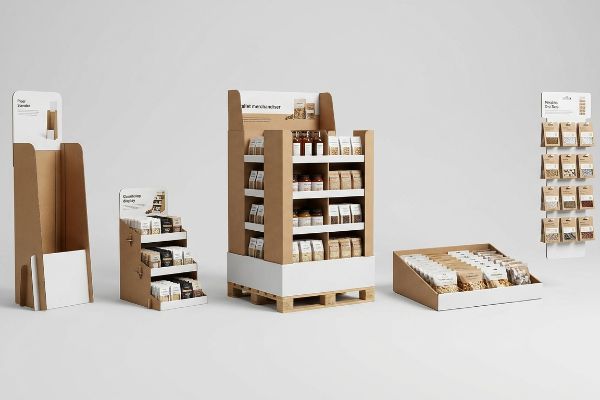
Os 5 tipos de expositores incluem displays de chão, unidades de balcão, expositores de paletes, bandejas prontas para prateleira e tiras de exposição. Cada estrutura serve a uma zona espacial distinta dentro do ambiente de varejo, otimizando a acessibilidade do produto e capturando padrões específicos de fluxo de clientes com base no layout específico dos corredores da loja.
Selecionar um tipo é fácil, mas convencer o varejista a realmente colocá-lo em sua loja exige cálculos espaciais precisos.
Navegando pelo aperto fracionário do palete
Uma abordagem comum para marcas emergentes é optar por um expositor de chão de tamanho normal. Elas projetam uma ilha promocional enorme, de quatro lados, presumindo que estruturas maiores geram naturalmente maior velocidade de vendas. Essa mentalidade de tudo ou nada ignora o rigoroso racionamento espacial ditado pelos gerentes de grandes lojas dedepartamento¹.
Os compradores frequentemente propõem essas unidades de chão de tamanho normal, de 121,9 x 101,6 cm (48 x 40 polegadas)², apenas para enfrentar rejeição imediata, pois o espaço privilegiado nas interseções é ferozmente disputado. Em minha empresa, vejo constantemente marcas desperdiçando semanas de engenharia CAD (Desenho Auxiliado por Computador) em espaços enormes. A solução é projetar expositores de grande porte precisamente em dimensões fracionárias padrão, como meio palete ou um quarto de palete. Lembro-me de ver um funcionário de merchandising frustrado tentando forçar uma unidade grande demais e fora das normas em um de ponta de gôndola ; ele acabou rasgando a base de papelão ondulado para que coubesse. Ao subdividir matematicamente o espaço, duas ou quatro campanhas distintas podem compartilhar perfeitamente uma única base de madeira GMA (Associação de Fabricantes de Alimentos)³, garantindo que sua unidade em escala reduzida realmente chegue ao piso de vendas.
| Erro comum de iniciantes | A solução profissional | Benefício do piso de vendas |
|---|---|---|
| Unidades de piso superdimensionadas para instalação | Dimensões do quarto de palete de projeto4 | Garante posicionamento privilegiado no corredor |
| Ignorando os limites de espaço da loja | Compartilhamento fracionário de base de madeira5 | Impede a rejeição total por parte do comprador |
| Forçar unidades em espaços apertados | Engenharia matemática de pegada exata6 | Elimina o rasgo da base durante a montagem |
Eu nunca permito que os clientes projetem paletes inteiros sem um plano B. Projetar uma área fracionada desde o início evita as objeções de espaço do varejista e mantém seu projeto em andamento sem problemas.
🛠️ Mesa do Harvey: Está enfrentando resistência de um comprador do varejo em relação ao espaço necessário na sua loja? 👉 Solicite uma Análise Espacial ↗ — Acesso direto à minha mesa. Zero spam de vendas automatizado, prometo.
Quais são as tendências em displays de varejo?
As exigências de sustentabilidade estão reescrevendo completamente a forma como projetamos as estruturas físicas de marketing.
As tendências atuais em displays para o varejo priorizam, em sua grande maioria, a engenharia de materiais ecologicamente correta, especificamente a substituição de plásticos não recicláveis por estruturas onduladas de um único material. Outras tendências incluem estética minimalista, integração de tecnologias inteligentes e sistemas modulares altamente funcionais que reduzem o desperdício na cadeia de suprimentos, ao mesmo tempo que atendem rigorosamente às complexas normas ambientais das grandes redes varejistas.
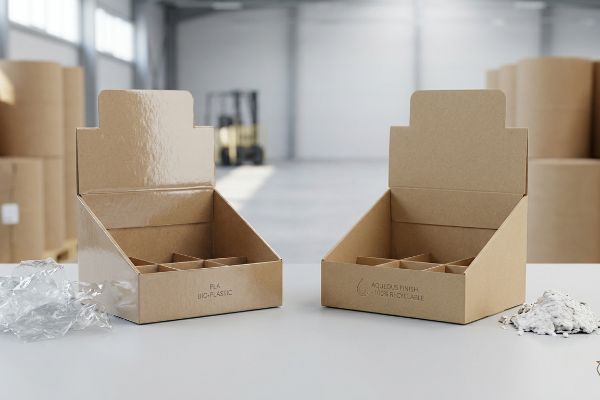
No entanto, marcar uma caixa verde em um projeto muitas vezes leva a graves conflitos químicos na linha de produção.
A armadilha da reciclagem de bioplástico PLA
As marcas estão ansiosas para demonstrar seu compromisso ambiental, muitas vezes exigindo bioplásticos para acabamentos brilhantes. Uma solicitação frequente é a aplicação de uma laminação de PLA (ácido polilático) sobre o papelão impresso para obter uma aparência premium, alegando que o material é à base de milho e compostável.
Até mesmo designers experientes muitas vezes ignoram a realidade química de como as instalações municipais processam o papelão ondulado usado (OCC). Quando submeto essas placas revestidas com PLA aos nossos testes de repolpação, a película física sólida repele completamente a água. Isso exige compostagem comercial especializada, que a maioria das cidades não possui.Já vi operadores de centros de reciclagem comuns rejeitarem instantaneamente essas placas híbridas brilhantes, desviando toda a unidade diretamente para um aterro sanitário. Em vez de bioplásticos pesados, exijo um protocolo de revestimento aquoso líquido. Como esse acabamento à base de água se dissolve perfeitamente sem deixar resíduos plásticos pesados,a embalagem permanece 100% reciclável na coleta seletiva e passa sem esforço pelos tanques de reciclagem padrão das fábricas de papel.
| Erro comum de iniciantes | A solução profissional | Benefício do piso de vendas |
|---|---|---|
| Utilizando laminação de filme PLA | Mude para revestimento aquoso líquido | Garante 100% de reciclagem na coleta seletiva10 |
| Partindo do pressuposto de que todos os bioplásticos são recicláveis | Exigir acabamentos solúveis em água11 | Aprovado em rigorosas auditorias ecológicas da loja |
| Misturar plástico com papel | Mantenha-se fiel às estruturas monomateriais12 | Elimina os riscos de desvio de resíduos para aterros sanitários |
Recuso-me a projetar um display que pareça ecológico, mas que falhe na reciclagem. A utilização de um acabamento aquoso proporciona o brilho premium desejado, eliminando completamente os problemas de descarte posterior.
🛠️ Mesa do Harvey: Tem certeza de que seu acabamento brilhante atual não causará um grande problema de conformidade ambiental no varejista? 👉 Verifique as especificações do seu acabamento ↗ — Baixe com segurança. Minha caixa de entrada está aberta caso tenha dúvidas posteriormente.
O que caracteriza uma boa vitrine de loja?
Uma caixa funcionalmente adequada é inútil se se confundir com o ambiente caótico de uma loja.
Uma boa vitrine de varejo aproveita eficazmente o alto contraste visual e a acessibilidade estrutural para atrair o fluxo de clientes. Ela deve manter uma estabilidade perfeita da carga dinâmica, ao mesmo tempo que oferece um layout assimétrico e intuitivo que simplifica as operações de reposição e incentiva psicologicamente o engajamento físico imediato e sem atritos do consumidor que passa pelo local.
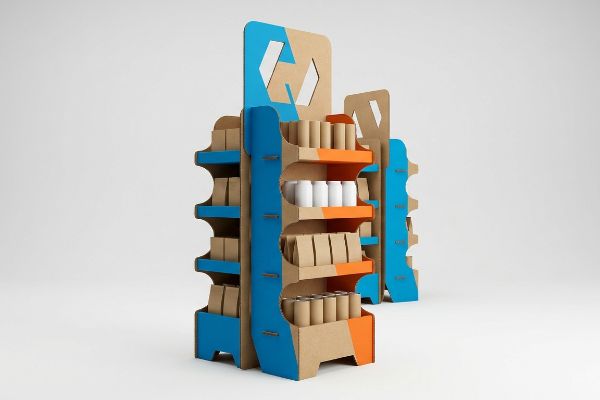
Criar esse envolvimento imediato exige uma abordagem matemática rigorosa do comportamento espacial humano.
Dominando a Regra de Engajamento Espacial 3-3-3
Muitas equipes avaliam seus trabalhos gráficos simplesmente olhando para um monitor de computador plano e retroiluminado a uma distância de sessenta centímetros. Elas analisam a arte isoladamente, ignorando completamente a realidade física de um de loja de departamentos .
Imagine um corredor de loja como uma rodovia movimentada; se o seu outdoor só funciona quando alguém está estacionado bem na frente dele, você já perdeu. Quando caminho pelo corredor, vejo displays bonitos e repletos de texto falhando porque os compradores apressados simplesmente não conseguem processar a sobrecarga cognitiva. Para resolver isso, aplico rigorosamente a regra 3-3-3. Seu display deve chamar a atenção a 9 metros de distância usando formatos agressivos com recortes, despertar o interesse a 90 cm com ergonomia otimizada para prateleiras de 127 cm¹³eimpulsionar a conversão física a 7,5 cm. Ao cortar a borda frontal para garantir 85% de visibilidade do produto¹⁴,você reduz drasticamente a barreira da hesitação, direcionando o fluxo de clientes diretamente para a sua zona de impacto específica.
| Erro comum de iniciantes | A solução profissional | Benefício do piso de vendas |
|---|---|---|
| Texto minúsculo nas camadas inferiores | Otimizar zona de impacto de 50 polegadas15 | Chama a atenção do comprador |
| Lábios frontais de alta retenção | Corte na aba para 85% de visibilidade16 | Incentiva a interação física rápida |
| Projetado apenas para close-up | Use recortes de 9 metros (30 pés) em negrito17 | Atrai tráfego do corredor principal |
Sempre lembro aos meus clientes que uma vitrine precisa atrair fisicamente o consumidor para o outro lado do corredor. Se a sua estrutura não se destacar a dez metros de distância, os detalhes de perto nunca serão vistos.
🛠️ Mesa do Harvey: Preocupado que seu arquivo de arte atual se misture e desapareça sob a forte iluminação fluorescente da loja? 👉 Deixe-me revisar seu gabarito ↗ — Sem formulários que geram ligações intermináveis de vendas. Apenas valor puro.
Como você organiza e exibe os produtos para atrair clientes?
A disposição interna dos seus produtos determina se um cliente realmente pega uma unidade.
Organizar e exibir produtos para atrair clientes exige assimetria estratégica para criar tensão visual. Utilizar divisórias modulares para agrupar itens em conjuntos de números ímpares evita sobrecarga cognitiva, enquanto garantir espaços físicos precisos elimina completamente o risco de rasgos nas caixas de papelão durante a reposição diária e apressada das prateleiras por funcionários da loja.
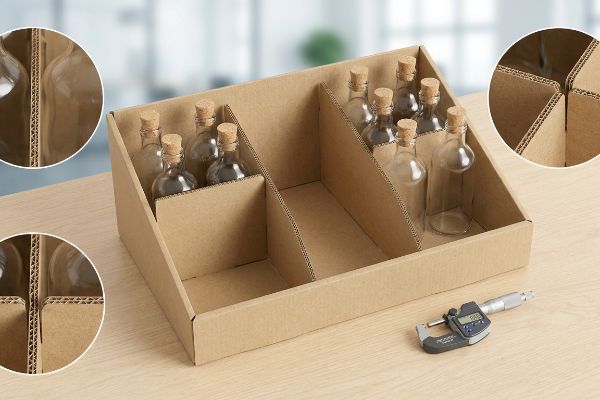
Mas conhecer a teoria de posicionamento de produto não basta quando as linhas de embalagem de alta velocidade começam a funcionar.
O microfricção da grade simétrica
As equipes de compras naturalmente querem maximizar cada milímetro quadrado de espaço na prateleira, muitas vezes exigindo uma grade densa e perfeitamente simétrica de mercadorias. Elas presumem que embalar o maior volume possível de produtos em uma única bandeja de papelão ondulado resulta diretamente em maior eficiência de vendas18.
Criar um layout denso e perfeito em laboratório é fácil, mas a dura realidade é que, ao enviar 500 deles para corredores movimentados de grandes lojas, vejo rotineiramente as consequências dessas grades superlotadas. Um layout perfeitamente simétrico faz com que o olhar humano o ignore, mas, mais perigosamente, cria um atrito físico enorme durante a reposição. Meço a folga exata com um micrômetro digital no setor de testes e, quando um funcionário força uma garrafa de 63,5 mm (2,5 polegadas) em um compartimento de 63,7 mm (2,51 polegadas), a borda ondulada inevitavelmente rasga. Resolvo isso aplicando a regra 3-5-7. Ao projetar divisórias modulares dedicadas que agrupam itens em conjuntos assimétricos de três ou cinco , criamos uma folga física obrigatória de 6,35 mm (0,25 polegadas). Este microajuste evita rasgos no papelão, reduz o tempo de montagem de embalagens conjuntas em nossas esteiras automatizadas e acelera o reabastecimento nas lojas em cerca de 25% 20 , economizando custos significativos de mão de obra, mantendo uma estética estrutural perfeita.
| Erro comum de iniciantes | A solução profissional | Benefício do piso de vendas |
|---|---|---|
| Grades de produtos com folga zero | Adicione uma margem de segurança de 0,25 polegadas21 | Impede que os lábios se rasguem durante o reabastecimento |
| Blocos visuais simétricos | Agrupe-se em grupos de 3, 5 ou 722 | Cria uma tensão visual envolvente |
| Superlotação da prateleira | Divisórias modulares de engenharia | Agiliza a manutenção diária dos corredores |
Eu nunca permito um encaixe com tolerância zero em bandejas de varejo. Deixar apenas um quarto de polegada de espaço livre para a mercadoria preserva a aparência impecável da sua marca e evita que funcionários frustrados da loja danifiquem seu investimento em papelão ondulado.
🛠️ Mesa do Harvey: Você sabe a folga exata em milímetros entre a sua embalagem primária e a aba de retenção do papelão ondulado? 👉 Envie-me seu arquivo de corte ↗ — Vou verificar os cálculos antes que você desperdice seu orçamento com produção em massa.
Conclusão
Você pode escolher um fornecedor mais barato, mas quando aquela bandeja superlotada e sem folga rasga no chão e é jogada fora por funcionários frustrados, você estará diante de um enorme prejuízo no retorno sobre o investimento (ROI) da sua campanha. Mais de 500 gerentes de marca usam meu checklist de pré-impressão para evitar exatamente esses erros fatais no estágio inicial. Pare de adivinhar as tolerâncias estruturais e deixe-me auditar pessoalmente sua configuração com uma Auditoria de Corte e Vinco gratuita ↗ para detectar esses pontos de atrito ocultos antes do início da produção em massa.
"Grandes lojas de varejo", http://www.columbia.edu/itc/architecture/bass/newrochelle/extra/big_box.html. Padrões da indústria sobre como grandes varejistas gerenciam a área e alocam espaços para displays promocionais. Papel da evidência: verificação contextual; tipo de fonte: manual de operações de varejo. Apoia: a afirmação de que os gerentes de loja limitam rigorosamente o tamanho dos displays. Observação sobre o escopo: pode variar de acordo com a rede varejista específica .
"Tamanhos padrão de paletes | Com tabela – Kamps Pallets", https://www.kampspallets.com/standard-pallet-sizes-with-chart/. Um manual de logística ou cadeia de suprimentos confiável confirmaria 48×40 polegadas como o tamanho padrão de paletes na América do Norte. Função da evidência: especificação técnica; tipo de fonte: norma da indústria. Aplica-se a: dimensionamento padrão de unidades de piso. Nota de escopo: Aplicável principalmente aos mercados de varejo da América do Norte .
"[PDF] Paletes de madeira estilo GMA de 40 polegadas – Estação de Pesquisa do Sul", https://www.srs.fs.usda.gov/pubs/VT_Publications/05t10.pdf. A documentação da associação comercial define as especificações para o palete da Grocery Manufacturers Association (GMA), que serve como referência do setor para logística de varejo. Papel da evidência: padronização; tipo de fonte: diretrizes da associação comercial. Apoia: o uso de uma base padronizada para displays de varejo. Nota de escopo: Refere-se ao padrão estrutural físico. ↩
"Tipos de Exibição em Paletes: Completo, Metade e Um Quarto – GreenDot Packaging", https://greendotpackaging.com/understanding-pallet-display-types-full-half-and-quarter-pallet-displays/ . Um guia do setor sobre merchandising no varejo deve confirmar que a utilização de espaços menores, como paletes de um quarto, aumenta a probabilidade de garantir uma boa localização em corredores de grande circulação. Papel da evidência: suporte factual; tipo de fonte: guia do setor. Apoia: estratégia espacial para posicionamento em corredores. Nota de escopo : aplicável a grandes lojas de varejo.
"7 Estilos de Expositores de Varejo nos Quais as Empresas Confiam", https://www.packagingcorp.com/resource-hub/industry-insights/7-retail-display-styles-companies-rely-on/ . Os padrões de compras do varejo devem verificar se a otimização da eficiência da base por meio do compartilhamento ou dimensionamento fracionado reduz o risco de rejeição pelo comprador devido a restrições de espaço . Papel da evidência: suporte factual; tipo de fonte: manual de compras do varejo. Suporte: critérios de aceitação do comprador. Nota de escopo: foco em displays de ponto de venda (PDV).
"PROJETO ESTRUTURAL DE EXPOSITORES PARA VAREJO INTERATIVO…", https://www.bcipkg.com/display-structural-design-for-interactive-retail-displays/. As especificações técnicas para expositores de varejo devem explicar como a engenharia de precisão da base evita danos estruturais, como rasgos na base, durante o processo de montagem. Papel da evidência: verificação técnica; tipo de fonte: guia de engenharia estrutural. Suportes: integridade estrutural durante a montagem. Nota de escopo: específico para bases de papelão ou compósito de madeira. ↩
"Uma revisão sobre o potencial do polímero de base biológica ácido polilático (PLA) em... – PMC", https://pmc.ncbi.nlm.nih.gov/articles/PMC11091039/. Verificação técnica da origem química do PLA e sua compostabilidade certificada sob condições industriais específicas. Papel da evidência: verificação técnica; tipo de fonte: periódico de ciência dos materiais ou norma de certificação ambiental. Argumentos que sustentam: a alegação de que o PLA é derivado do milho e compostável. Nota de escopo: a compostabilidade normalmente requer instalações industriais, e não compostagem doméstica .
"Materiais à base de PLA/PHB totalmente biodegradáveis sob ambas as condições... – PMC", https://pmc.ncbi.nlm.nih.gov/articles/PMC9572414/ . Explicação técnica dos requisitos de temperatura e umidade para a degradação do PLA e a falta de infraestrutura de compostagem industrial em fluxos de resíduos municipais. Papel da evidência: verificação factual; tipo de fonte: relatório de gestão de resíduos. Apoia: a afirmação de que o PLA não é compostável em coleta seletiva. Nota de escopo: foco na capacidade de processamento de resíduos municipais.
"5 Tipos de Revestimento Aquoso – PopDisplay", https://popdisplay.me/5-types-of-aqueous-coating/. Dados de engenharia comparando a repulpabilidade de placas revestidas com solução aquosa versus placas laminadas com plástico em fábricas de papel. Papel da evidência: validação técnica; tipo de fonte: artigo técnico de ciência dos materiais. Apoia: a afirmação de que os revestimentos aquosos mantêm a reciclabilidade. Nota de escopo: aplica-se ao processamento padrão de papelão ondulado (OCC) .
"Revestimento de papel reciclável e biodegradável com funcionalização…", https://pmc.ncbi.nlm.nih.gov/articles/PMC11948148/ . Documentação técnica que confirma que os revestimentos aquosos são compatíveis com os processos padrão de polpação de papel, ao contrário dos filmes de PLA. Papel da evidência: verificação técnica; tipo de fonte: norma da indústria de gestão de resíduos. Apoia: a alegação de que os revestimentos aquosos permitem a reciclagem completa na coleta seletiva. Nota de escopo: aplicável a substratos de papel para o varejo.
"Análise abrangente de bioplásticos: avaliação do ciclo de vida, resíduos…", https://pmc.ncbi.nlm.nih.gov/articles/PMC11401513/. Normas da indústria que explicam como os acabamentos solúveis em água facilitam a separação dos revestimentos dos substratos durante a reciclagem para atender à conformidade ambiental. Papel da evidência: especificação técnica; tipo de fonte: certificação de embalagens sustentáveis. Apoia: o uso de acabamentos solúveis em água para aprovação em auditorias ecológicas. Nota de escopo: específico para alternativas de bioplásticos .
"Embalagens Monomateriais: Simplificando o Processo de Reciclagem", https://www.berlinpackaging.com/insights/sustainability/mono-material-packaging-simplifies-the-recycling-process?srsltid=AfmBOorWDkjcR-oCA16VuDDYITr14Xzf74iDRVkqr-ZWeQCp-KhnsdB_. Pesquisa ambiental demonstrando que os materiais monomateriais reduzem significativamente a contaminação nos fluxos de reciclagem, diminuindo assim as taxas de descarte em aterros sanitários. Papel da evidência: verificação factual; tipo de fonte: estudo de ciências ambientais. Apoia: a relação entre o design monomaterial e a redução do descarte em aterros sanitários. Nota de escopo: aplica-se a displays de varejo compostos. ↩
"[PDF] Diretrizes para Supermercados - Ergonomia para... - OSHA", https://www.osha.gov/sites/default/files/publications/OSHA3192.pdf. Verificação de padrões da indústria para altura de prateleiras e alcance ergonômico em displays de varejo para otimizar o engajamento do consumidor. Papel da evidência: especificação técnica; tipo de fonte: guia de design de varejo ou estudo ergonômico. Apoia: a afirmação de que 50 polegadas (127 cm) é uma altura ideal para o engajamento do cliente. Nota de escopo: A aplicabilidade pode variar de acordo com a altura do público-alvo .
"Como aumentar a visibilidade no varejo com displays de ponto de venda", https://www.industrialpackaging.com/blog/increased-retail-visibility . Dados empíricos que relacionam a altura da borda de retenção de um display com a porcentagem de produto visível e seu efeito na hesitação do consumidor. Papel da evidência: métrica empírica; tipo de fonte: artigo de pesquisa em merchandising. Apoia: a afirmação de que 85% de visibilidade reduz a barreira psicológica à compra. Nota de escopo : O efeito pode variar dependendo das dimensões da embalagem do produto.
"Projeto de espaços comerciais para exibição eficaz e fluxo de clientes", https://www.business.qld.gov.au/industries/manufacturing-retail/retail-wholesale/retail-displays. Os padrões da indústria para merchandising visual e ergonomia definem a altura ideal da "zona de impacto" para compradores adultos, a fim de maximizar a visibilidade. Papel da evidência: validação; tipo de fonte: guia de merchandising visual. Embasamento: a altura específica para visibilidade ideal do produto. Observação: Pode variar de acordo com a altura média do público-alvo .
"AG 1091A: Expositores de Mercadorias no Varejo na Zona Frontal", https://www.seattle.gov/transportation/permits-and-services/permits/applicant-guides/ag-1091a . Especificações técnicas referentes à altura da borda da prateleira para garantir a máxima visibilidade do produto e facilidade de acesso para os consumidores. Papel da evidência: especificação técnica; tipo de fonte: manual de design de embalagens. Apoia: o limite de visibilidade de 85% para melhor interação. Nota de escopo: Específico para expositores com frente aberta.
"O Papel da Visibilidade e da Sinalização na Seleção de Locais de Varejo", https://kennmar.com/the-role-of-visibility-signage-in-retail-site-selection/. Análise espacial de varejo e estudos de psicologia ambiental sobre a distância a partir da qual elementos gráficos de grande escala atraem compradores dos corredores principais. Papel da evidência: dados empíricos; tipo de fonte: análise espacial de varejo. Fundamentos: o uso de marcadores de visibilidade de 9 metros (30 pés) para atrair clientes. Nota de escopo: a eficácia varia de acordo com a largura do corredor e a iluminação da loja .
"O Efeito da Variedade de Produtos e dos Níveis de Estoque no Varejo…", https://www.hbs.edu/faculty/Pages/item.aspx?num=37388 . Análise da correlação entre alta densidade de produtos em displays de varejo e a eficiência geral de vendas. Papel da evidência: validação; tipo de fonte: relatório de análise de varejo. Apoia: a relação percebida entre volume e eficiência. Nota de escopo: foca em bens de consumo de alta rotatividade.
"Estratégias eficazes de merchandising visual envolvem várias…", https://popdisplay.me/effective-visual-merchandising-strategies-involve-several-critical-considerations/. Fontes confiáveis em merchandising visual e psicologia cognitiva explicam como agrupamentos com números ímpares criam tensão visual e evitam a cegueira de padrões. Papel da evidência: validação teórica; tipo de fonte: guia de design. Apoia: o uso de agrupamentos assimétricos para atrair a atenção. Observação: a eficácia pode variar de acordo com a categoria do produto .
"Otimizando Embalagens Secundárias para Impacto nas Prateleiras do Varejo", https://www.pdachain.com/2025/06/02/optimizing-secondary-packaging-for-retail-shelf-impact/. Estudos de engenharia industrial sobre logística de varejo quantificam a correlação entre as tolerâncias de embalagem e a eficiência da mão de obra na reposição de prateleiras. Papel da evidência: verificação quantitativa; tipo de fonte: estudo de caso de logística. Argumenta: que o espaçamento otimizado reduz o tempo de reposição. Observação: as porcentagens podem variar de acordo com o tamanho da loja e o treinamento da equipe .
"Ajustabilidade da Altura das Prateleiras: Como Otimizar o Espaço Vertical para Visibilidade", https://wzrack.com/shelf-height-adjustability-how-to-optimize-vertical-space-for-visibility/. Especificação técnica para espaçamento entre prateleiras visando evitar danos às embalagens durante a reposição de estoque. Papel da evidência: norma técnica; tipo de fonte: manual de operações de varejo. Benefícios: redução do atrito físico em layouts de grade. Observação sobre o escopo: foco no espaçamento mecânico. ↩
"Como Dominar o Agrupamento no Merchandising Visual", https://www.springfair.com/news/master-grouping-visual-merchandising-comprehensive-guide. Aplicação da Regra dos Ímpares para criar assimetria visual e engajamento do consumidor. Papel da evidência: princípio psicológico; tipo de fonte: guia de design. Fundamentos: afirmação de que agrupamentos com número ímpar de elementos criam tensão visual. Nota de escopo: teoria do design generalizada .