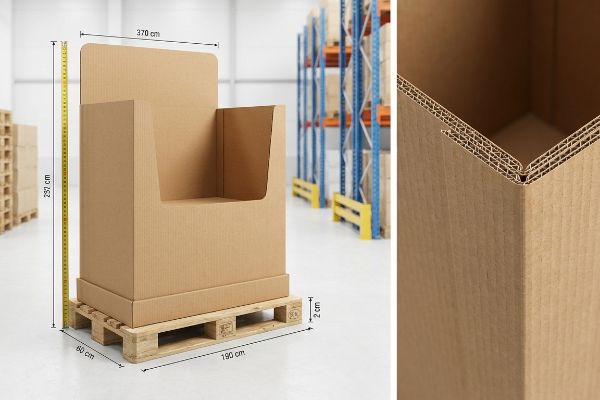
Garantir a apresentação da campanha é crucial, mas executar uma campanha física na maior varejista do mundo parece decifrar uma língua arcaica. Vamos analisar essas regras operacionais rigorosas.
Os requisitos de exposição de produtos da Walmart impõem limites dimensionais rigorosos, diretrizes de resistência do material e protocolos precisos de roteamento logístico. Essas especificações obrigatórias para o varejo garantem a segurança estrutural, maximizam o espaço nos corredores e asseguram uma integração perfeita em redes de paletes padrão, impactando diretamente a decisão dos gerentes de loja em aceitar ou rejeitar seus produtos.
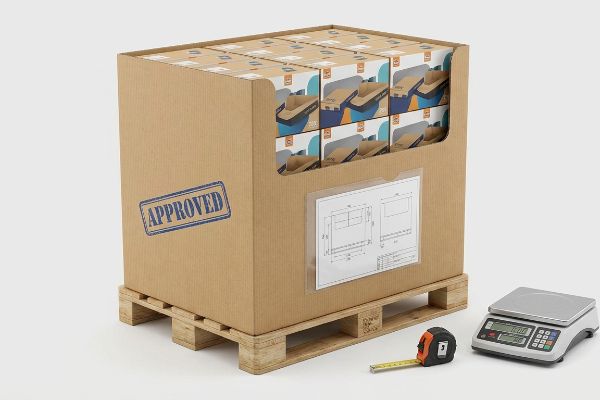
Ter sua arte aprovada é apenas o aquecimento; sobreviver à doca de recebimento do armazém exige um nível completamente diferente de disciplina de engenharia.
Qual é a política do Walmart em relação a produtos em exposição?
Abordar esse gigante do varejo significa deixar de lado seu ego criativo e seguir rigorosamente o manual de logística deles. Se você ignorar o manual de operações, seus paletes voltarão para você.
A política da Walmart para itens em exposição exige conformidade absoluta com dimensões padronizadas, capacidades de peso específicas e posicionamento exato da etiqueta UCC-128. Essa estrutura operacional rigorosa garante um processamento eficiente da cadeia de suprimentos, evita custos elevados com reembalagem e assegura que cada unidade de papelão ondulado se encaixe perfeitamente nos sistemas de estantes padrão do armazém.

A colocação dessa etiqueta pode parecer uma mera formalidade administrativa, mas controla diretamente suas margens de lucro.
Eliminação da penalidade de reembalagem do UCC-128
Muitas equipes de marca presumem que, contanto que os gráficos impressos tenham boa aparência, o armazém de recebimento cuidará do resto. Elas entregam caixas master genéricas a fornecedores de logística terceirizados, ignorando completamente as restrições específicas de roteamento de código de barras1.
Vejo esse erro constantemente ao revisar planos de logística de entrada. Um cliente cria uma caixa master impecável, mas coloca o código de barras UCC-128 diretamente sobre uma costura central selada com fita adesiva. Quando ouço o som alto e irregular de um estilete cortando o código de barras durante a desembalagem, sei que o cliente acabou de gerar uma enorme taxa de reembalagem. O leitor do armazém não consegue ler as linhas cortadas, forçando a entrada manual de dados, o que atrasa a linha de recebimento em cerca de 25%². Para corrigir isso, defino uma zona de etiqueta dedicada e sem fita adesiva na própria matriz CAD (Desenho Auxiliado por Computador), garantindo que os leitores automatizados a detectem instantaneamente.
| Erro comum de iniciantes | A solução profissional | Benefício do piso de vendas |
|---|---|---|
| Códigos de barras sobre as costuras da caixa | Zona dedicada para etiquetas CAD | Previne um atraso de recebimento de 25%3 |
| Ignorando o roteamento do armazém | Colocação rigorosa em UCC-1284 | Elimina a entrada manual de dados |
| Reforçar a tampa das caixas com fita adesiva | Janelas de digitalização sem fita | Evita custos elevados de reembalagem5 |
Recuso-me a deixar que atritos administrativos corroam suas margens de lucro. Definir o posicionamento dos códigos de barras durante a fase de engenharia estrutural garante que seus displays circulem sem problemas pelo centro de distribuição, evitando penalidades inesperadas para os varejistas.
🛠️ Mesa do Harvey: Não tem certeza se sua embalagem master atende às diretrizes de roteamento específicas do varejista? 👉 Solicite uma auditoria da sua embalagem ↗ — Acesso direto à minha mesa. Zero spam de vendas automatizado, prometo.
Qual é a regra dos 3 metros (10 pés) no Walmart?
As métricas de atendimento ao cliente influenciam a forma como os compradores percorrem os corredores físicos das lojas. Compreender esses gatilhos comportamentais nos ajuda a projetar estruturas que atraiam visitantes, em vez de simplesmente se misturarem ao ruído ambiente.
A regra dos 3 metros (10 pés) no Walmart é uma diretriz de atendimento ao cliente que exige que os funcionários cumprimentem os compradores a uma distância de até 3 metros. Para o merchandising no varejo, esse raio físico define a zona crítica de engajamento espacial, onde os elementos estruturais da loja devem interromper instantaneamente os padrões visuais para estimular o comportamento de compra por impulso.
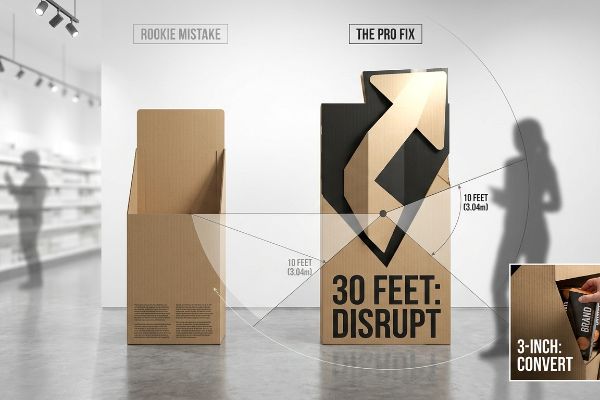
Uma saudação amigável inicia a interação, mas a embalagem física deve concretizar a venda dentro daquele mesmo espaço físico.
A Estratégia de Engajamento Espacial 3-3-3
As equipes de design gráfico frequentemente criam ilustrações com zoom em monitores de computador brilhantes, presumindo que cada pequeno detalhe do texto será lido claramente pelo consumidor. Elas se esquecem da dura realidade dos corredores longos e desorganizados das lojas, sob luz fluorescente.
Traduzir gráficos de tela para papelão físico é um jogo completamente diferente. Frequentemente vejo compradores insistindo em imprimir parágrafos de texto pequeno bem na parte inferior da base. Quando caminho por um corredor de teste e sinto a resistência rígida do papelão kraft virgem refletindo a luz, aquele texto minúsculo desaparece completamente a 3 metros de distância. Os compradores simplesmente passam sem parar. Em vez de paredes de texto, implemento a regra 3-3-3⁶:projetamos formas recortadas grandes e de alto contraste para chamar a atenção a 9 metros de distância e reservamos os detalhes finos para a zona de conversão tátil de 76,2mm⁷.
| Erro comum de iniciantes | A solução profissional | Benefício do piso de vendas |
|---|---|---|
| Parágrafos nos painéis de base | Formas recortadas de alto contraste | Interrompe instantaneamente os padrões visuais |
| Projetando exclusivamente para telas | A regra espacial 3-3-38 | Chama a atenção a 9 metros de distância9 |
| Colocar os detalhes fora de alcance | Zona de conversão tátil de 3 polegadas10 | Impulsiona compras por impulso imediatas |
Eu projeto a disrupção visual no próprio painel físico. Ao forçar a estrutura a romper agressivamente com o plano visual do corredor, garantimos que seu merchandising atraia ativamente o fluxo de clientes, em vez de servir apenas como um dispensável elemento decorativo.
🛠️ Mesa do Harvey: Seu merchandising atual é invisível a três metros de distância? 👉 Solicite uma Análise Espacial ↗ — Baixe com segurança. Minha caixa de entrada está aberta caso tenha alguma dúvida depois.
Quem pode usar o display no local do Walmart?
Garantir um espaço promocional privilegiado não se resume apenas a ter um ótimo produto; exige comprovar que sua cadeia de suprimentos consegue atender a rigorosos e inflexíveis padrões operacionais antes mesmo do envio de uma única unidade.
As marcas elegíveis para usar displays nas lojas Walmart devem passar consistentemente por rigorosas auditorias de fábrica, incluindo certificações FCCA, SEDEX ou BSCI. Esse processo de avaliação rigoroso garante que os fornecedores aprovados possuam as capacidades de fabricação, os padrões de fornecimento ético e a engenharia estrutural precisa necessários para suportar grandes lançamentos em redes varejistas nacionais.

A aprovação nessas auditorias comprova que sua fábrica consegue lidar com grandes volumes, mas traduzir essa aprovação em execução física exige uma atenção obsessiva aos detalhes.
Garantindo a vantagem de uma cadeia de suprimentos preparada para auditorias
Marcas emergentes frequentemente tentam economizar utilizando intermediários não verificados ou instalações de baixa qualidade para produzir rapidamente seu primeiro grande lote de produtos. Elas presumem que um preço unitário baixo compensará quaisquer pequenos problemas operacionais durante o processo de recebimento.
Já vi campanhas promissoras fracassarem completamente porque uma marca escolheu uma instalação que não atendia aos requisitos da FCCA11.Imagine tentar entrar em um prédio de segurança máxima sem crachá; não importa o quão boa seja sua apresentação se você não conseguir passar pela porta da frente. Quando uma remessa chega sem a devida documentação de auditoria, eu já senti fisicamente o peso morto de um palete carregado e pronto para exposição sendo empurrado direto para a zona de quarentena de rejeição. Para evitar esse obstáculo fatal, eu conduzo todos os projetos por meio de canais totalmente certificados, garantindo que você nunca enfrente uma rejeição inesperada no centro de distribuição.
| Erro comum de iniciantes | A solução profissional | Benefício do piso de vendas |
|---|---|---|
| Utilizando corretoras não verificadas | Instalações aprovadas pela FCCA12 | Garante a entrada na rede de varejistas |
| Ignorar a verificação da cadeia de suprimentos | Monitoramento rigoroso de conformidade | Impede o recebimento de rejeições no cais13 |
| Em busca de preços unitários baixos | Fabricação pronta para auditoria | Protege relacionamentos de marca a longo prazo |
Incorporo a conformidade na base do seu processo de fabricação. Ao utilizar exclusivamente instalações preparadas para auditorias, eliminamos a ansiedade regulatória e garantimos que seus produtos passem por todas as etapas de verificação do varejista sem problemas.
🛠️ Mesa do Harvey: Você está preocupado que seu fornecedor atual possa ser reprovado em uma auditoria surpresa de varejista? 👉 Lista de verificação para reivindicar sua fábrica ↗ — Sem formulários que geram ligações intermináveis de vendas. Apenas valor puro.
O que significa "código preto" no Walmart?
Existem protocolos de emergência para ameaças graves à segurança, e introduzir estruturas fisicamente instáveis em um ambiente comercial movimentado representa um risco direto que você não pode ignorar.
Um código preto no Walmart indica, de fato, um alerta de mau tempo ou tornado. No entanto, na logística de embalagens, falhas estruturais catastróficas causadas por saliências de paletes ou cantos de papelão ondulado amassados criam um risco igualmente grave nos corredores, exigindo limpeza imediata e gerando enormes prejuízos financeiros por parte do varejista.
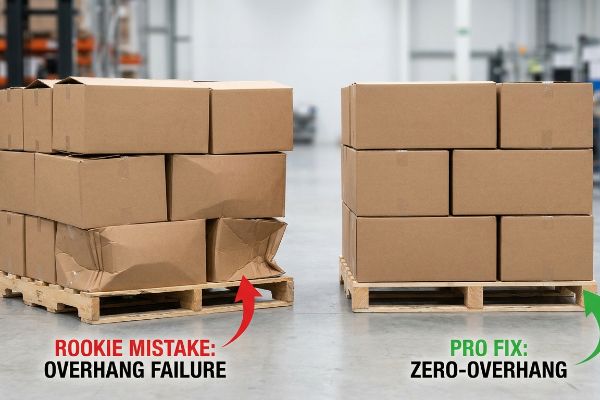
Embora as condições climáticas severas estejam fora do seu controle, um colapso estrutural no piso da loja é totalmente evitável com uma previsão matemática adequada.
O perigo oculto das falhas causadas pela saliência dos paletes
As equipes de compras frequentemente tentam maximizar a densidade de envio esticando as dimensões da caixa master até a borda absoluta do deck de madeira. Elas calculam o volume perfeitamente, mas ignoram completamente a física agressiva do transporte de carga empilhada dupla14.
Na minha empresa, vejo rotineiramente as consequências desse erro de cálculo específico durante a fase de testes de compressão. Um cliente envia um molde que ultrapassa em apenas 12,7 mm (0,5 polegadas) o tamanho padrão de um palete GMA de 1219 x 1016 mm (48 x 40 polegadas). Quando coloco esse palete de teste na prensa hidráulica e aplico peso na parte superior, ouço o estalo abafado e desagradável dos cantos da ondulação B, sem suporte, cedendo para dentro. Como as caixas de papelão ondulado obtêm 60% de sua resistência ao teste de compressão de caixas (BCT)¹⁵ estritamente desses cantos verticais, uma saliência destrói instantaneamente a integridade estrutural. Extraio as leituras do micrômetro e forço um protocolo rigoroso de caixa delimitadora com saliência zero no software, reduzindo ligeiramente a área de contato para garantir que a carga repouse perfeitamente sobre a madeira maciça. Ao impor essa microtolerância, garanto que as caixas resistam à viagem marítima, evitando uma perda estimada de 15% do produto e mantendo a presença da sua empresa no corredor totalmente livre de riscos.
| Erro comum de iniciantes | A solução profissional | Benefício do piso de vendas |
|---|---|---|
| Esticar as caixas sobre as bordas | Delimitação CAD sem saliência | Previne perdas de 15% do produto |
| Ignorando o alinhamento vertical | 60% de utilização dos cantos BCT | Impede o esmagamento de trens de carga empilhados em conjunto |
| Maximizar o volume às cegas | Dimensionamento de paletes com microtolerância | Elimina riscos graves à segurança |
Eu projeto margens de segurança estruturais que protegem tanto os consumidores quanto seus resultados financeiros. Eliminar o atrito em balanços garante que sua carga sobreviva ao transporte sem causar esmagamento catastrófico ou relatórios de incidentes de segurança dispendiosos.
🛠️ Mesa do Harvey: Não deixe que uma falha estrutural de 2 milímetros arruine o lançamento em 500 lojas. 👉 Envie-me seu arquivo de corte ↗ — Vou testar os cálculos antes que você desperdice seu orçamento com produção em massa.
Conclusão
Aumentar as dimensões da sua caixa master além da paletização pode parecer eficiente, mas quando esses cantos ondulados sem suporte se deformam sob o peso do armazém, isso gera custos adicionais significativos para os varejistas e elimina toda a sua margem de lucro. Mais de 500 gerentes de marca usam meu checklist de pré-impressão para evitar exatamente esses erros fatais no estágio inicial. Pare de adivinhar as tolerâncias da paletização e deixe-me analisar pessoalmente seus cálculos estruturais com minha Auditoria de Corte e Vinco gratuita ↗ para identificar esses pontos de atrito destrutivos antes do início da produção em massa.
"Guia de Etiquetas de Conformidade GS1/UCC-128 para Varejo – WarehouseQuote", https://www.warehousequote.com/resources/gs1-ucc-128-retail-compliance-label-guide. [Os manuais de conformidade de fornecedores do Walmart especificam o posicionamento exato do código de barras e os padrões de roteamento exigidos para o recebimento automatizado em armazéns]. Função da evidência: especificação técnica; tipo de fonte: manual de conformidade corporativa. Apoia: a existência de protocolos de roteamento rigorosos para logística. Observação sobre o escopo: aplica-se a unidades de papelão ondulado enviadas pelo fornecedor .
"Códigos de barras GS1-128 na logística – Interlake Mecalux", https://www.interlakemecalux.com/blog/gs1-128-barcode-logistics. [Os benchmarks da indústria logística quantificam a perda de produtividade incorrida quando falhas na leitura automatizada exigem entrada manual de dados. Papel da evidência: verificação quantitativa; tipo de fonte: estudo operacional de logística. Apoia: o impacto operacional de erros de código de barras. Nota de escopo: a porcentagem pode variar de acordo com o nível de automação da instalação] .
"Guia de roteamento do Walmart: Embalagens que previnem estornos e…", https://g10fulfillment.com/blog/walmart-routing-guide-packaging. [Um manual de logística oficial ou um guia de conformidade para fornecedores do Walmart quantificaria a perda de eficiência causada por códigos de barras mal posicionados]. Função da evidência: suporte quantitativo; tipo de fonte: manual de conformidade corporativa. Apoia: o impacto do posicionamento do código de barras na velocidade de recebimento. Nota de escopo: específico para métricas de atraso no recebimento .
"Etiquetagem GS1 para Varejo: Requisitos para Walmart, Target e Mais", https://getproductiv.com/gs1-labeling-retail. [As diretrizes para fornecedores do Walmart especificam as coordenadas e a orientação exatas para etiquetas UCC-128, permitindo a leitura automatizada em armazéns]. Função da evidência: especificação técnica; tipo de fonte: documento de requisitos do fornecedor. Apoia: a necessidade de etiquetagem padronizada. Nota de escopo: aplica-se a caixas de remessa de saída .
"Reembalagem para Conformidade no Varejo: Walmart, Costco e Grandes Lojas de Departamento…", https://nautical-direct.com/retail-compliance-repackaging-walmart-costco-and-big-box-requirements-explained/. [A política de conformidade de fornecedores do Walmart descreve as penalidades financeiras específicas aplicadas aos fornecedores por remessas que exigem reembalagem manual devido a erros de leitura de código de barras]. Função da evidência: verificação de penalidade financeira; tipo de fonte: contrato com o fornecedor. Comprova: o custo associado à embalagem não conforme. Observação sobre o escopo: concentra-se nas taxas de reembalagem. ↩
"A Regra 80/20 do Merchandising – Bloomreach", https://www.bloomreach.com/en/library/guides/80-20-rule-of-merchandising. [Uma fonte confiável sobre merchandising visual definiria os parâmetros e os limites de distância da regra 3-3-3 para o engajamento do consumidor]. Papel da evidência: especificação técnica; tipo de fonte: manual do setor. Apoia: a abordagem em camadas para a atenção do comprador. Nota de escopo: específico para design de displays no ponto de venda .
"PDDG Capítulo 3 – Controles Básicos de Design – Mass.gov", https://www.mass.gov/info-details/pddg-chapter-3-basic-design-controls. [Padrões de design ergonômico e de varejo definiriam a proximidade necessária para que um comprador passe da visualização ao toque de um produto]. Função da evidência: métrica; tipo de fonte: padrão de design. Suporta: o estágio final da hierarquia de engajamento visual. Nota de escopo: limitado à interação física com o produto. ↩
"Narrativa Espacial no Varejo: 3 Novas Lojas – Design Pataki", https://www.designpataki.com/3-new-stores-elevating-the-retail-experience-through-spatial-storytelling/. [Um guia completo sobre design espacial no varejo explica a regra 3-3-3 para engajamento visual em diferentes distâncias]. Papel da evidência: definição; tipo de fonte: manual do setor. Apoia: estratégia de engajamento visual. Nota de escopo: Aplica-se a displays físicos de varejo. ↩
"O que é a Regra 3-3-3 no Marketing? – High Five Media", https://www.highfivemedia.com/h5-blog/what-is-the-3-3-3-rule-in-marketing. [Estudos de psicologia do varejo estabelecem as distâncias específicas em que os clientes percebem estímulos visuais em um ambiente de loja]. Papel da evidência: métrica quantitativa; tipo de fonte: estudo acadêmico. Fundamentos: atração baseada na distância. Nota de escopo: Específico para o primeiro estágio da regra 3-3-3 .
"Visual Merchandising Online Institute Session 3: Touch Please", https://icbainc.com/aiovg_videos/vmoi-session-3-touch-please-vm-techniques-to-support-personalization-engagement-and-sales/. [Os padrões de merchandising definem a proximidade ideal para a interação tátil do cliente a fim de desencadear uma decisão de compra]. Papel da evidência: especificação técnica; tipo de fonte: publicação comercial. Suporta: métricas de interação física. Nota de escopo: Foca no ponto final de contato físico. ↩
"[PDF] Requisitos do Fornecedor – DigitalOcean", https://wikirate-production-storage.fra1.cdn.digitaloceanspaces.com/files/13016721/33538616.pdf. Manuais de conformidade para o varejo especificam a necessidade de auditorias de Avaliação de Capacidade e Habilidade da Fábrica (FCCA) para fornecedores aprovados, a fim de garantir a prontidão da produção. Função da evidência: verificação; tipo de fonte: manual de conformidade corporativa. Argumenta: que certificações específicas das instalações são pré-requisitos para a distribuição. Observação sobre o escopo: aplicável a grandes implantações nacionais no varejo. ↩
"Quais são as principais diferenças nos requisitos de exibição no varejo…", https://popdisplay.me/what-are-the-key-differences-in-retail-display-requirements-between-walmart-and-target-for-baby-aisle-products/. [Uma fonte confiável do setor confirmaria os padrões e certificações específicos exigidos pela FCCA para que os fabricantes de displays de varejo se qualifiquem para as redes varejistas]. Papel da evidência: Validação técnica; tipo de fonte: Organismo de certificação; Apoia: A necessidade de instalações certificadas para entrada no mercado. Nota de escopo: Limitado aos padrões específicos da FCCA]. ↩
"Soluções de Cross-Docking para Varejo | Melhore o OTIF e Reduza o Frete…", https://www.odwlogistics.com/resources/retail-cross-docking-solutions-improve-otif-reduce-freight-costs. [Guias de logística e operações de varejo demonstrariam como a estrita adesão ao rastreamento de conformidade impede que as remessas sejam rejeitadas no cais de recebimento]. Papel da evidência: Validação operacional; tipo de fonte: Manual de logística; Suporte: A correlação entre o rastreamento de conformidade e o recebimento bem-sucedido da remessa. Nota de escopo: Protocolos gerais de recebimento de varejo] .
"Previsão do efeito da saliência do palete na compressão da caixa…", https://www.researchgate.net/publication/372349298_Predicting_the_effect_of_pallet_overhang_on_the_box_compression_strength. [Fontes confiáveis de engenharia de embalagens demonstram que a saliência do palete reduz significativamente a resistência à compressão vertical de caixas master de papelão ondulado, levando ao colapso durante o empilhamento duplo]. Papel da evidência: Validação técnica; tipo de fonte: Manual de engenharia. Apoia: A afirmação de que o empilhamento duplo de caixas com dimensões inadequadas causa falha estrutural. Nota de escopo: Aplica-se especificamente a embalagens de papelão ondulado .
"Estimativa da resistência à compressão de caixas de papelão ondulado para uma …", https://pmc.ncbi.nlm.nih.gov/articles/PMC9864211/. [Normas de engenharia de embalagens ou livros didáticos sobre física de papelão ondulado quantificam a proporção da resistência à compressão atribuída aos cantos verticais]. Papel da evidência: especificação técnica; tipo de fonte: manual de engenharia. Apoia: a afirmação sobre a importância crítica dos cantos em caixas de papelão ondulado. Nota de escopo: As porcentagens reais podem variar de acordo com a qualidade do papelão e o tamanho da ondulação. ↩