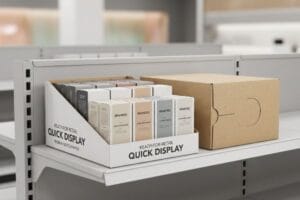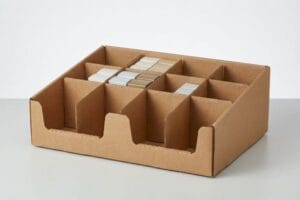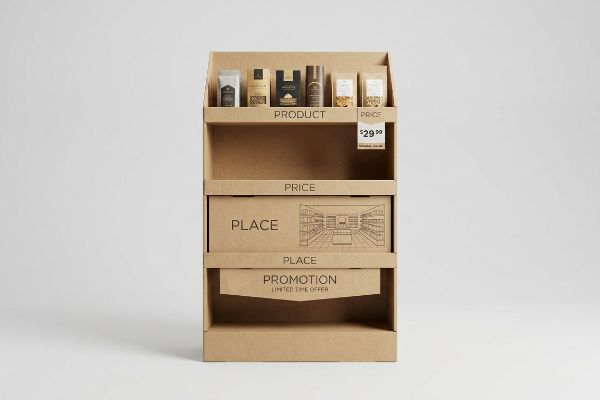
Para que o lançamento de uma loja física seja um sucesso, é preciso mais do que uma caixa bonita. É necessário um planejamento cuidadoso. Vamos explorar os mecanismos por trás de espaços de varejo físicos com alta taxa de conversão.
Os 4 Ps do merchandising visual são Produto, Preço, Praça (ou Distribuição) e Promoção. Essa estrutura fundamental de negócios alinha seu estoque físico, estratégias de precificação, posicionamento espacial na loja e mensagens de marketing promocional para maximizar as compras por impulso e se integrar perfeitamente aos ambientes rigorosos de grandes varejistas.
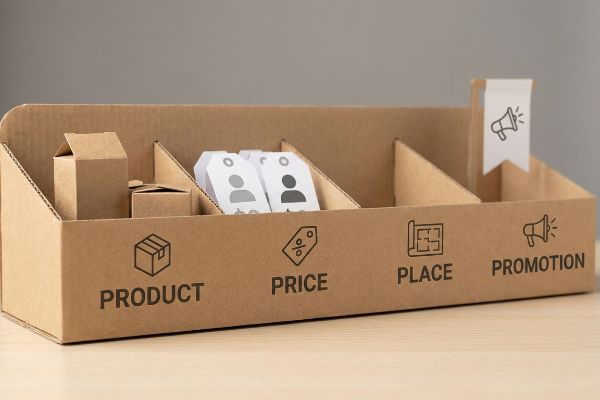
Compreender a teoria é um bom começo, mas traduzir esses quatro pilares em uma estrutura física de papelão ondulado que sobreviva à cadeia de suprimentos exige engenharia de ponta.
Quais são os 4 Ps do Visual Merchandising?
Muitas marcas têm dificuldade em migrar dos conceitos de marketing digital para ambientes de varejo físico. Essa transição exige uma adesão rigorosa às estruturas tradicionais de merchandising.
A execução dos 4 Ps do merchandising visual exige o equilíbrio entre a embalagem do produto, a visibilidade do preço competitivo, a localização estratégica no ponto de venda e a promoção de alto impacto. Essa metodologia precisa garante que seu display de papelão ondulado atenda aos rigorosos padrões comerciais dos varejistas e impulsione a lucratividade consistente no ponto de venda, sem atritos logísticos.
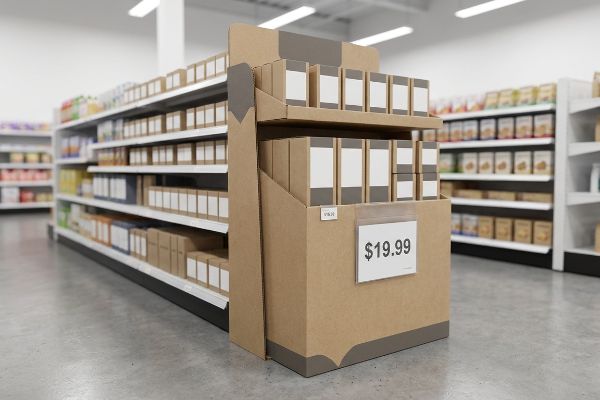
Ao ignorar esses pilares, sua exposição acaba sendo economicamente incompatível com o modelo operacional da loja.
Matriz de "Alinhamento da Estrutura de Varejo"
A maioria das marcas emergentes parte do princípio de que um bom produto se venderá sozinho se colocado numa caixa de cores vibrantes. Elas criam displays genéricos para pontos de venda (PDV) sem dominar os fundamentos do varejo comercial, focando-se exclusivamente na apresentação visual. Essa abordagem isolada ignora completamente as rigorosas regras comerciais necessárias para sobreviver nos sete tipos distintos de lojas físicas devarejo¹.
Até mesmo equipes de marketing experientes caem nessa armadilha. Elas propõem um display enorme, ocupando um palete inteiro, para uma loja de conveniência, ignorando completamente a restrição de "Local". Recentemente, presenciei um funcionário frustrado lutando com o peso de um palete de madeira da GMA (Associação de Fabricantes de Alimentos), simplesmente porque o display da marca era fisicamente incompatível com a planta da loja. Ao mapear sistematicamente sua engenharia estrutural diretamente com o modelo logístico do varejista antes da impressão, você garante que sua campanha seja de fato colocada na área de vendas, em vez de abandonada no estoque.
| Erro comum de iniciantes | A solução profissional | Benefício do piso de vendas |
|---|---|---|
| Ignorando os limites espaciais do formato da loja | Ancorar designs em matemática de paletes fracionárias3 | Garante a aprovação de corredores de alto tráfego |
| Esconder o preço sob lábios de retenção | Recortes especiais de engenharia para espaço livre de etiquetas 4 | Impulsiona a confiança na compra por impulso instantânea |
| A embalagem simétrica de SKUs causa atrito | Implementar espaçamento modular entre divisores5 | Impede rasgos durante o reabastecimento |
Sempre digo aos fundadores de marcas que a embalagem deve ser legal e fisicamente adequada ao espaço que ocupa. Projetar a embalagem para o canal de varejo específico desde o início é a única maneira de proteger a margem de lucro.
🛠️ Mesa do Harvey: Não tem certeza se o seu espaço físico se encaixa nas restrições de grandes lojas? 👉 Faça uma Análise de Tamanho ↗ — Acesso direto à minha mesa. Zero spam de vendas automatizado, prometo.
Quais são os 4 elementos do merchandising visual?
Para dominar um corredor de varejo, sua embalagem deve interagir ativamente com o espaço ao seu redor. A arquitetura de uma loja dita como os consumidores se movem e olham.
A análise dos quatro elementos do merchandising visual revela o exterior da loja, o layout da loja, o design de interiores e os displays internos. Dominar esses elementos espaciais força as marcas a projetar embalagens secundárias que interceptem naturalmente o fluxo de pedestres, criando uma tensão visual intencional que converte visitantes ocasionais em compradores ativos.
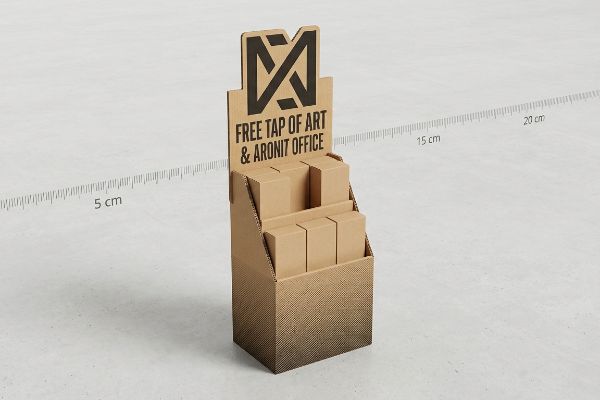
Criar uma vitrine interna que realmente interrompa o layout da loja significa calcular o envolvimento visual em múltiplas distâncias.
A regra "Engajamento Espacial 3-3-3"
Os designers frequentemente criam displays de varejo estritamente para visualização de perto em monitores de computador retroiluminados, presumindo que os compradores irão parar e ler cada palavra. Eles imprimem parágrafos de texto de marketing no cabeçalho, ignorando completamente a realidade física de como os consumidores apressados percorrem corredores lotados. Essa abordagem com excesso de texto causa uma sobrecarga cognitiva massiva⁶,levando o cérebro do consumidor a filtrar o conteúdo como ruído de fundo.
É uma armadilha comum que pega até mesmo equipes de compras experientes. Certa vez, um comprador me enviou um arquivo impecável, mas quando passei a mão sobre o ruído alto da folha superior laminada e brilhante, soube que a fonte minúscula de 12 pontos não funcionaria. Uma apresentação física precisa capturar a atenção visual a 9,1 metros de distância, utilizando formas recortadas impactantes, despertar o interesse a 0,9 metros na zona de impacto e gerar conversão tátil a 7,6 centímetros. É preciso eliminar mensagens secundárias e priorizar os pontos focais estruturais.
| Erro comum de iniciantes | A solução profissional | Benefício do piso de vendas |
|---|---|---|
| Impressão de parágrafos em cabeçalhos | Utilize elementos recortados em 3D de alto contraste | Chama a atenção a 9 metros de distância8 |
| Colocar dados importantes ao nível do chão | Desloque os gráficos para a zona de impacto de 50 polegadas. 9 | Maximiza o envolvimento ao nível dos olhos |
| Perfis de base planos e retangulares | Utilize perfis estruturais curvos e interrompidos | Quebra a monotonia da grade de corredores |
Eu imponho um zoneamento espacial rigoroso a todos os arquivos que chegam à minha mesa. Se a sua mensagem principal não puder ser compreendida em três segundos do outro lado do corredor, o projeto estrutural falhou em seu objetivo principal.
🛠️ Mesa do Harvey: Suas zonas de engajamento visual estão se misturando em uma confusão corporativa? 👉 Solicite uma Auditoria Estrutural ↗ — Baixe com segurança. Minha caixa de entrada está aberta caso tenha alguma dúvida posteriormente.
Quais são os quatro Ps do merchandising?
Embora o marketing dite a estratégia geral, a execução dessa estratégia na loja exige uma organização física rigorosa. A geometria da disposição dos seus produtos impacta diretamente a velocidade de vendas.
Dominar os quatro Ps do merchandising garante que você entregue o Produto certo, a um Preço visível, no Local ideal e com uma Promoção atraente. Na fabricação física, isso significa projetar divisórias modulares e inserções de papelão ondulado que apresentem as mercadorias com segurança, eliminando completamente os atritos na reposição em loja.
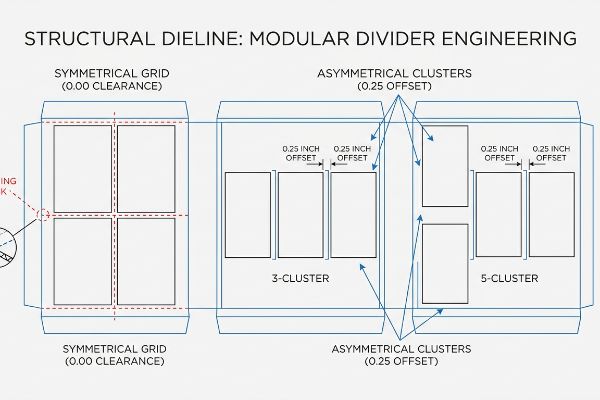
Equilibrar a densidade do produto com a acessibilidade para o consumidor é um desafio matemático que define o seu molde estrutural.
A estratégia de "assimetria 3-5-7" para posicionamento de produtos
Ao tentar maximizar o ROI (Retorno sobre o Investimento), os departamentos de compras muitas vezes ditam que uma prateleira de exposição deve ser preenchida o mais compactamente possível. Eles compactam uma grade densa e perfeitamente simétrica de mercadorias em uma única bandeja , presumindo que uma maior densidade se correlaciona diretamente com maiores vendas. Isso ignora a realidade psicológica do ponto de venda, onde blocos de produtos perfeitamente uniformes não conseguem criar tensão visual .
Imagine tentar arrancar um único tijolo de uma parede muito compacta. Quando os itens não têm folga física, os funcionários da loja têm dificuldade para reabastecer as prateleiras. Frequentemente ouço o som seco e cortante de uma aba de retenção de papelão ondulado, testada com 32ECT (Teste de Compressão de Borda),rasgando porque um funcionário apressado foi forçado a encaixar uma garrafa pesada em um compartimento com tolerância zero. Ao projetar divisórias modulares que agrupam produtos em conjuntos assimétricos de três, cinco ou sete unidades (número ímpar), cria-se naturalmente uma folga de 6,35 mm (0,25 polegadas)que elimina completamente os danos causados pelo manuseio.
| Erro comum de iniciantes | A solução profissional | Benefício do piso de vendas |
|---|---|---|
| Embalagem de produto sem folga | Projete um deslocamento geométrico de 0,25 polegadas13 | Elimina rasgos durante o reabastecimento |
| Layouts de grade simétricos | Agrupe os itens em números ímpares (3, 5, 7)14 | Cria tensão visual psicológica |
| Divisórias internas de papel frágeis | Utilize espirais corrugadas de parede dupla15 | Mantém objetos pesados na posição vertical |
Sempre deixo uma pequena margem de espaço vazio nas bandejas dos meus clientes. Esse minúsculo milímetro de espaço livre é exatamente o que mantém a sua exposição impecável após uma semana de manuseio intenso no varejo.
🛠️ Harvey's Desk: Com dificuldades para equilibrar a densidade de SKUs sem causar atrito e falta de estoque? 👉 Solicite seu modelo gratuito ↗ — Sem formulários que geram ligações intermináveis de vendas. Apenas valor puro.
Quais são os 5 princípios do merchandising visual?
Aplicar as principais teorias de design é necessário, mas a teoria muda quando a tinta entra em contato com o papelão. O processo de fabricação altera drasticamente os resultados estéticos.
Aplicar os 5 princípios do merchandising visual exige equilibrar ênfase, contraste, proporção, ritmo e harmonia. Traduzir esses princípios estéticos em embalagens físicas significa projetar perfis de cores de pré-impressão e tolerâncias estruturais que garantam alta visibilidade da marca sob a forte iluminação fluorescente das lojas de varejo.
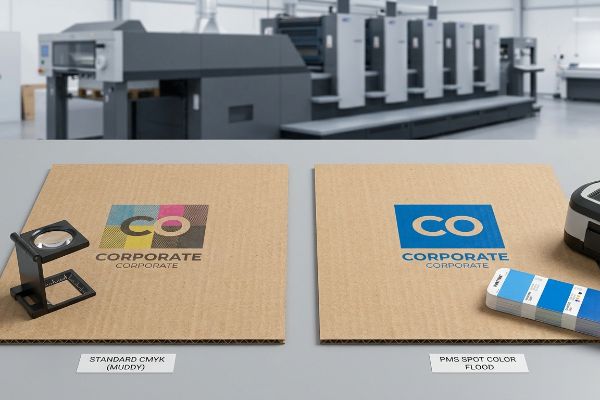
Mas conhecer a teoria não basta quando as impressoras começam a funcionar e o contraste digital desaparece no substrato.
Por que o "contraste" padrão falha no chão de fábrica
Os designers gráficos dependem muito do princípio do "contraste" para criar um ponto focal em suas telas, muitas vezes enviando arquivos com logotipos corporativos sólidos formatados em CMYK padrão (ciano, magenta, amarelo, preto)¹⁶. Eles presumem que a vibrante mistura óptica que veem em seus monitores Apple calibrados será transferida perfeitamente para a embalagem física. Esperam que o arquivo digital gere automaticamente um ponto focal nítido e de alto contraste que ancore sua estratégia promocional.
Na minha empresa, vejo rotineiramente essa mesma suposição destruir o valor da marca na área de impressão. Quando a impressão padrão em quatro cores é aplicada ao testliner de papelão ondulado cru e poroso, os minúsculos pontos de meio-tom sobrepostos são absorvidos de forma irregular pelas fibras do papel<sup>17</sup>. Ao medir o resultado com um espectrofotômetro, frequentemente registro uma queda de 4,2% na densidade visual<sup>18</sup>. A textura pulverulenta do testliner sem revestimento, ao absorver a tinta, cria inerentemente um logotipo granulado e desbotado que se transforma em uma "lama de meio-tom" sob as luzes da loja. Corrijo isso anulando rigorosamente a arte final, exigindo um Protocolo de Preenchimento com Cores Especiais, no qual substituímos a mistura óptica de pontos por uma única tinta PMS (Pantone Matching System) precisamente misturada.
Ao aplicar esse ajuste específico na química de pré-impressão, garanto uma aplicação densa e perfeitamente uniforme de pigmento. Isso elimina completamente a granulação do meio-tom¹⁹, maximizando a visibilidade da marca em alto contraste e economizando milhares de dólares para os clientes, evitando rejeições em massa por parte dos varejistas devido a uma estética turva.
| Erro comum de iniciantes | A solução profissional | Benefício do piso de vendas |
|---|---|---|
| Utilizando CMYK para logotipos sólidos | Exija uma coloração PMS Spot Color Flood (coloração à base de PMS)20 | Elimina a lama granulada dos meios-tons |
| Ignorando a absorção da fibra de papel | Aplique uma camada aquosa de alto brilho e alto teor de sólidos21 | Fixa a densidade e o contraste do pigmento |
| Testando cores sob luminárias de mesa | Digitalize as provas sob a iluminação de fábrica da D5022 | Garante precisão sob iluminação de loja |
Recuso-me a produzir em massa com base apenas em imagens na tela. Analiso matematicamente os limites do papelão bruto para garantir que o contraste da sua marca sobreviva no mundo físico.
🛠️ Mesa do Harvey: Você sabe se a cor principal da sua marca utiliza a mistura de pontos CMYK ou uma cor sólida PMS? 👉 Envie-me seu arquivo de corte ↗ — Vou verificar os cálculos antes que você gaste seu orçamento com produção em massa.
Conclusão
Você pode passar meses debatendo as nuances da teoria de visual merchandising, mas quando seus logotipos impressos em CMYK se transformam em uma lama desbotada em um papel de teste poroso, a consequente falta de contraste visual provoca uma rejeição imediata por parte do varejista, eliminando completamente a margem de lucro do seu projeto. Esta é a ficha técnica exata que meus 10 principais clientes varejistas usam para garantir zero rejeições de impressão. Pare de adivinhar as tolerâncias e deixe-me analisar seus arquivos pessoalmente com minha Auditoria de Corte e Vinco gratuita ↗ para detectar erros fatais antes da produção.
"Lojas de Varejo | Características, Tipos e Exemplos – Lição | Study.com", https://study.com/learn/lesson/retail-stores-types-characteristics-examples.html . Verificação da taxonomia padrão do setor usada para categorizar ambientes físicos de varejo em merchandising comercial. Papel da evidência: validação da classificação; tipo de fonte: livro didático de gestão de varejo ou artigo técnico do setor. Fundamentos: a existência de uma estrutura específica de sete partes para pontos de venda de varejo. Observação sobre o escopo : as categorias podem variar ligeiramente dependendo da estrutura comercial utilizada.
"Dimensões padrão de paletes — 48×40 GMA e 6 outras dimensões comuns", https://www.wearewarp.com/standard-pallet-sizes. Breve explicação de como uma fonte externa confiável corrobora essa afirmação. Papel da evidência: especificação técnica; tipo de fonte: norma do setor. Comprova: As dimensões padrão e as características físicas dos paletes GMA. Observação sobre o escopo: Aplicável principalmente à logística de varejo na América do Norte .
"Expositores para lojas de atacado: pontas de gôndola, paletes e mais para mercadorias a granel", https://www.qpack.com/retail-displays/pallet/club-store . Breve explicação de como o cálculo da área ocupada pelos expositores , com base em frações de paletes padrão, garante a conformidade com as restrições espaciais da loja. Papel da evidência: especificação técnica; tipo de fonte: manual de logística de varejo. Aplica-se a: otimização do layout espacial. Observação sobre o escopo: aplica-se a ambientes de varejo de grande porte.
"ANÁLISES DO PONTO DE VENDA: O IMPACTO DOS DISPOSITIVOS DE PONTO DE VENDA NO VAREJO…", https://www.bcipkg.com/point-of-purchase-insights-the-impact-of-retail-pop-displays-on-consumer-behavior/. Justificativa técnica para a utilização de geometrias específicas de corte em prateleiras para garantir que as etiquetas de preço permaneçam visíveis acima das bordas de retenção. Papel da evidência: padrão de design; tipo de fonte: guia de design industrial. Apoio: fatores de compra por impulso. Nota de escopo: específico para engenharia de acessórios de ponto de venda. ↩
"Como a embalagem modular reduz a sobrecarga de SKUs – VPK Group", https://vpkgroup.com/da/news/vpk-uki—modular-packaging-reduces-sku-overload. Explicação de como a implementação de divisórias modulares não simétricas reduz o atrito e o rasgo do material durante o reabastecimento de SKUs de tamanhos variados. Papel da evidência: eficiência operacional; tipo de fonte: manual de operações de varejo. Suporte: durabilidade do reabastecimento. Nota de escopo: foca na logística de reposição de estoque. ↩
"A Aplicação da Teoria da Carga Cognitiva ao Design de Produtos de Saúde…", https://pmc.ncbi.nlm.nih.gov/articles/PMC12246501/. Uma fonte confiável sobre psicologia cognitiva ou comportamento do consumidor explica como o excesso de informação leva à sobrecarga cognitiva e à filtragem de estímulos em ambientes de varejo. Papel da evidência: Base teórica; tipo de fonte: Periódico acadêmico. Apoia: A afirmação de que muito texto faz com que os consumidores ignorem as informações em displays. Nota de escopo: Aplica-se especificamente à atenção visual em ambientes com alta quantidade de estímulos .
"Táticas de Engajamento Visual que Impulsionam as Vendas em Grandes Lojas de Varejo", https://thelookcompany.com/blog/visual-engagement-tactics-that-drive-sales-for-big-box-retail/ . Verificação de métricas de distância padrão do setor para engajamento do consumidor em merchandising visual. Papel da evidência: validação técnica; tipo de fonte: guia de design de varejo. Suporta: limites de engajamento espacial para compradores. Nota de escopo : aplicável a ambientes de varejo físico.
"Displays personalizados para pontos de venda – Virtual Packaging", https://virtualpackaging.com/point-of-purchase-displays/ . Breve explicação de como uma fonte externa confiável corrobora essa afirmação. Papel da evidência: verificação factual; tipo de fonte: estudo de design de varejo. Argumentos que corroboram: visibilidade de elementos 3D em função da distância. Observação : a eficácia pode variar de acordo com a iluminação da loja e a largura dos corredores.
"Projeto de instalações de varejo para displays eficazes e fluxo de clientes", https://www.business.qld.gov.au/industries/manufacturing-retail/retail-wholesale/retail-displays. Breve explicação de como uma fonte externa confiável apoia essa afirmação. Papel da evidência: especificação técnica; tipo de fonte: norma do setor/guia de varejo. Argumenta: altura ideal para engajamento do consumidor ao nível dos olhos. Observação sobre o escopo: pode variar ligeiramente com base na altura do público-alvo. ↩
"[PDF] ChiWai Li BUF 2203 Estratégias Essenciais de Design de Merchandising Visual…", https://openlab.citytech.cuny.edu/cwl-eportfolio/files/2021/12/Core-Design-Strategies.pdf. Pesquisas em psicologia visual e comportamento do consumidor explicam como arranjos assimétricos criam tensão visual para atrair a atenção. Papel da evidência: suporte teórico; tipo de fonte: livro didático de psicologia ou design. Argumenta: A afirmação de que grades simétricas são menos estimulantes visualmente. Nota de escopo: Específico para estratégia de merchandising visual .
"[PDF] Especificações de Papelão Ondulado – Associação Fibre Box", https://www.fibrebox.org/assets/2025/09/Walmart_Corrugated-Board_Specifications_Automation_Packaging_Standards.pdf. Confirmação da norma 32 ECT como medida da resistência ao empilhamento vertical do papelão ondulado. Papel da evidência: especificação técnica; tipo de fonte: norma da indústria. Suportes: durabilidade do material e pontos de falha. Nota de escopo: aplica-se a embalagens de papelão ondulado padrão. ↩
"Expositores de Varejo Personalizados Direcionados ao Seu Consumidor – PopDisplay", https://popdisplay.me/custom-retail-displays-target-your-consumers/. Validação da relação técnica entre o agrupamento assimétrico de números ímpares e o espaço físico resultante para reabastecimento de produtos. Papel da evidência: métrica de engenharia; tipo de fonte: manual de design de varejo. Argumenta: que padrões de layout específicos eliminam danos por manuseio. Nota de escopo: específico para inserções de merchandising modulares .
"Principais erros de embalagem no varejo — e como evitá-los | Maadho", https://maadho.com/top-retail-packaging-mistakes-and-how-to-avoid-them . Breve explicação de como padrões específicos de espaçamento em prateleiras de varejo previnem o atrito e o rasgo dos produtos durante a reposição. Papel da evidência: especificação técnica; tipo de fonte: manual de operações de varejo. Argumentos: a eficácia de um deslocamento de 0,25 polegadas. Nota de escopo: específico para embalagens de produtos de alta densidade.
"Serviços e Estratégia de Merchandising Visual | T-ROC Global", https://trocglobal.com/visual-merchandising/. Breve explicação do princípio psicológico conhecido como Regra dos Três, que sugere que agrupamentos em número ímpar são mais atraentes visualmente e criam tensão. Papel da evidência: teoria psicológica; tipo de fonte: livro didático de merchandising visual. Argumentos: o uso de agrupamentos assimétricos para atrair a atenção. Nota de escopo: princípio geral de design. ↩
"Projeto Ótimo de Embalagens de Papelão Ondulado de Parede Dupla – PMC", https://pmc.ncbi.nlm.nih.gov/articles/PMC8950760/. Breve explicação da superioridade estrutural e da resistência à compressão vertical do papelão ondulado de parede dupla em relação ao de parede simples. Papel da evidência: especificação do material; tipo de fonte: guia de engenharia de embalagens. Benefícios: capacidade de manter itens pesados na posição vertical. Observação sobre o escopo: aplica-se a divisórias de papelão .
"O que é CMYK para impressão? | Blog da Pakfactory", https://pakfactory.com/blog/cmyk-packaging-print/?srsltid=AfmBOopM5D0bbCznjvD7G7HJAs1RHnIDU_UOqyNA_nu_Gzt1KqyoiJUt. Verificação do processo subtrativo de quatro cores usado na impressão profissional para garantir a consistência da saída física. Papel da evidência: especificação técnica; tipo de fonte: padrão da indústria. Suporta: o formato de arquivo padrão usado para produção gráfica. Observação sobre o escopo: aplica-se principalmente à impressão offset e flexográfica. ↩
"[PDF] 1. O ganho de ponto é o aumento do tamanho dos pontos de meio-tom à medida que a tinta é absorvida em…", https://www.coloradomesa.edu/art/documents/student-resources/study-guide-2019.pdf. Explicação técnica do ganho de tinta e das características de absorção de substratos ondulados porosos. Papel da evidência: Validação técnica; tipo de fonte: Manual de engenharia de impressão. Fundamentos: A alegação de que o testliner bruto causa absorção irregular de pontos. Nota de escopo: Específico para materiais ondulados não revestidos. ↩
"Como medir a consistência de cor em embalagens de papel", https://industrialphysics.com/knowledgebase/articles/how-to-measure-color-consistency-in-paper-and-corrugated-packaging/. Dados empíricos ou referências da indústria referentes à perda de densidade em substratos de papelão ondulado não revestidos. Papel da evidência: Verificação estatística; tipo de fonte: Artigo técnico. Baseia-se em: A medição específica da perda de densidade visual. Observação: As porcentagens reais variam de acordo com o tipo de substrato e a viscosidade da tinta .
"10 dicas de pré-impressão para impressão perfeita de embalagens – Miller Graphics", https://www.millergraphics.com/blog/prepress-tips-for-perfect-packaging-printing . Explicação técnica de como revestimentos sólidos ou densidades específicas de tinta de pré-impressão removem padrões de pontos para criar uma superfície pigmentada lisa. Papel da evidência: validação técnica; tipo de fonte: manual da indústria gráfica. Benefícios: a remoção da granulação para aumentar o contraste visual. Observação : a eficácia depende do método de impressão específico, como flexografia ou offset.
"Impressão em cores especiais versus cores de processo – Pantone", https://www.pantone.com/articles/technical/spot-vs-process-color?srsltid=AfmBOoqAKujnbLHpvy9i13WwmC09ycdk1lO2w0vREoLPiX6lihCPL-lg. Explicação de como as cores especiais do Sistema de Cores Pantone (PMS) proporcionam cobertura de tinta sólida e consistente em comparação com os pontos de meio-tom produzidos pelo CMYK. Papel da evidência: verificação técnica; tipo de fonte: manual da indústria gráfica. Fundamentos: A afirmação de que as cores especiais eliminam os efeitos granulados de meio-tom. Nota de escopo: Aplica-se principalmente à impressão offset e flexográfica profissional .
"Explorando os benefícios do revestimento aquoso (AQ) para impressão e...", https://www.linkedin.com/pulse/exploring-benefits-aqueous-aq-coating-printing-packaging-pakfactory . Explicação técnica de como revestimentos aquosos com alto teor de sólidos criam uma barreira física nas fibras do papel para evitar a absorção de tinta. Papel da evidência: especificação do material; tipo de fonte: guia de engenharia de embalagens. Argumentos que sustentam: a afirmação de que esses revestimentos fixam a densidade e o contraste do pigmento. Nota sobre o escopo : a eficácia depende do substrato de papel específico utilizado.
"Correspondência de cores padronizada segundo a ISO 3664:2009 – JUST-Normlicht", https://www.just-normlicht.com/us/iso-3664-2009.html. Verificação da norma ISO 3664 que especifica a iluminação de luz do dia D50 (5000K) como referência do setor para artes gráficas. Papel da evidência: padrão do setor; tipo de fonte: documentação da norma ISO. Comprova: a alegação de que a iluminação D50 garante precisão e consistência de cores. Nota de escopo: Este é o padrão global para correspondência de cores profissional .