Você passa meses aperfeiçoando seu produto, mas as prateleiras comuns do varejo o escondem. Se os clientes simplesmente passam direto, sua campanha morre. Você precisa de uma estratégia para causar impacto imediato nas prateleiras.
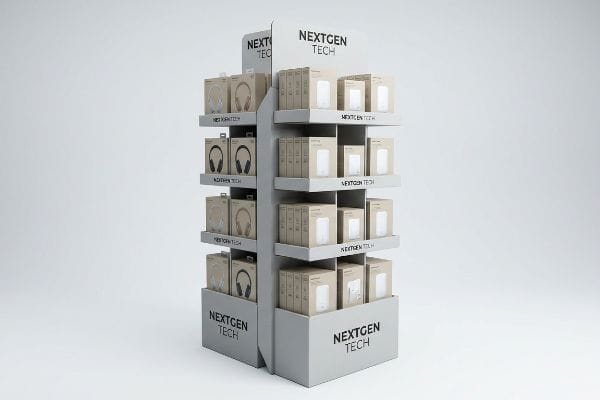
A importância dos displays de ponto de venda (PDV) no varejo reside na sua capacidade de interromper os padrões de comportamento do consumidor, garantir espaço privilegiado na loja e impulsionar compras por impulso. Um display de PDV bem projetado funciona como uma unidade de merchandising independente, aumentando a visibilidade do produto e, ao mesmo tempo, garantindo a conformidade estrutural com os rigorosos padrões logísticos do armazém.
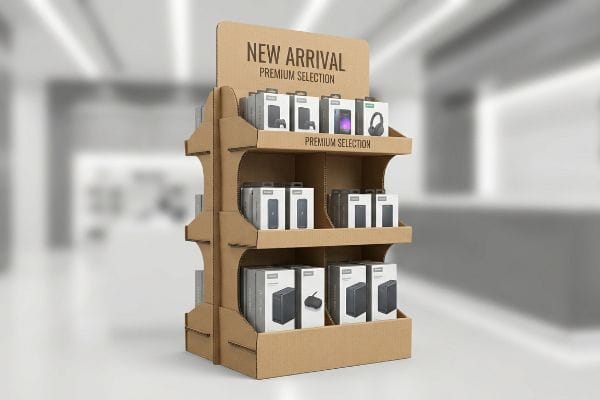
Chamar a atenção é apenas o primeiro passo; sobreviver às exigências físicas do ambiente de loja requer engenharia calculada.
Qual é o papel do pop no varejo?
A função principal é a de causar impacto visual. Sua unidade deve quebrar fisicamente a monotonia visual das prateleiras padrão das lojas para capturar a atenção de quem está desatento.
O papel dos displays de ponto de venda (PDV) no varejo centra-se na disrupção visual psicológica. Em vez de se integrarem aos layouts de prateleiras padrão, essas estruturas independentes utilizam formas estruturais únicas, cores contrastantes e posicionamento estratégico para interceptar o fluxo de pedestres e converter a navegação passiva em interação ativa com os produtos na loja.

Mas a disrupção visual falha se a geometria estrutural não der suporte à visão criativa.
Como a disrupção visual impulsiona o papel do POP (Ponto de Venda)
Muitas equipes de marca assumem que o papel do PDV se resume a imprimir seu logotipo em uma caixa quadrada padrão e colocá-la no final de um corredor. Elas dependem inteiramente de gráficos CMYK brilhantes (ciano, magenta, amarelo e vermelho) para fazer o trabalho pesado, ignorando a silhueta física da própria estrutura1.
Frequentemente vejo designers juniores entregarem gabaritos quadrados, planos e rígidos, porque são mais fáceis de prototipar. O problema é que os corredores das lojas já são um mar de ângulos retos. Quando você coloca mais uma caixa quadrada nesse ambiente, ela se torna uma camuflagem invisível. Lembro-me de ter visto um funcionário de uma loja deslizar um expositor de chão caro e perfeitamente quadrado de uma marca direto para um espaço vazio na prateleira principal — o som seco do papelão raspando na prateleira de metal ecoou enquanto o expositor perdia instantaneamente sua imponência. Para quebrar a linha de visão do comprador, sempre projeto cabeçalhos curvos e recortados ou painéis laterais assimétricos. Essa ruptura física naturalmente força o olhar humano a parar,aumentando instantaneamente o tempo de interação sem a necessidade de um gráfico mais chamativo.
| Erro comum de iniciantes | A solução profissional | Benefício do piso de vendas |
|---|---|---|
| Utilizando silhuetas quadradas rígidas | Painéis laterais curvos cortados sob medida para engenharia3 | Quebra os padrões visuais padrão dos corredores |
| Baseando-se apenas em gráficos impressos | Alterar a forma estrutural física | Obriga os compradores a fazerem uma pausa mais longa4 |
| Imitando as dimensões das prateleiras existentes | Projetando perfis de cabeçalho assimétricos5 | Impede que as unidades se misturem |
Eu nunca permito que os clientes optem por um formato quadrado sem graça só para economizar uma pequena taxa de corte. Investir em um formato personalizado com corte é a maneira mais barata de garantir que sua campanha realmente atraia a atenção de quem passa por um corredor lotado.
🛠️ Mesa do Harvey: Não tem certeza se o formato do seu expositor atual é genérico demais para atrair visitantes? 👉 Solicite uma análise gratuita do seu design ↗ — Acesso direto à minha mesa. Zero spam de vendas automatizado, prometo.
Por que a exposição dos produtos é importante no varejo?
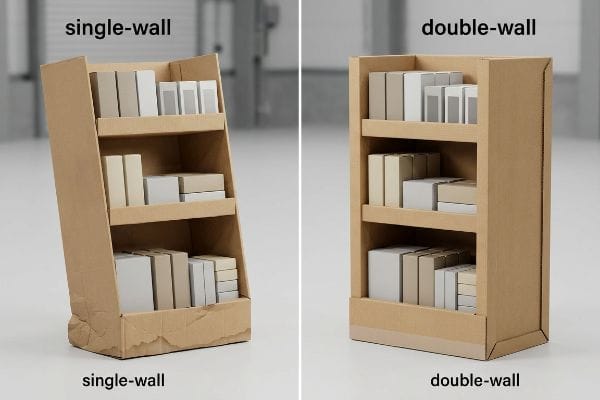
Além da visibilidade, os displays protegem a percepção de qualidade superior da sua marca. Uma estrutura deteriorada e inclinada transmite sutilmente ao consumidor a mensagem de um produto de baixa qualidade.
A importância da exposição em ambientes de varejo depende muito da durabilidade física e da proteção do valor da marca. Uma unidade independente bem construída protege os produtos do fluxo caótico dos corredores, garante uma apresentação impecável durante longos períodos promocionais e evita a fadiga estrutural que, de outra forma, poderia levar a rejeições por parte do varejista ou a associações negativas da marca por parte do consumidor.
Para manter essa apresentação impecável, é preciso entender exatamente o que acontece durante o reabastecimento.
Por que a durabilidade determina o valor da marca
Os compradores muitas vezes se concentram exclusivamente na qualidade de impressão da camada superior, presumindo que uma placa de papelão ondulado de parede simples padrão resistirá facilmente a uma janela promocional de quatro semanas6. Eles tratam a base da estrutura como uma reflexão tardia, priorizando materiais leves para economizar alguns centavos no frete de entrada.
É uma armadilha comum que pega até mesmo equipes de compras experientes quando ignoram a Regra dos 50 Toques. Um display de chão será chutado por carrinhos de compras, esbarrado por enceradeiras e empurrado agressivamente pelas equipes de reposição dezenas de vezes por semana. Certa vez, avaliei a base de parede simples de um concorrente que havia absorvido água de um esfregão; era possível sentir as ranhuras encharcadas e comprimidas cedendo como uma esponja molhada sob apenas 4,53 kg de pressão superior. A unidade inteira inclinou-se para a frente, obrigando o gerente da loja a envolvê-la com fita adesiva transparente e feia apenas para evitar que desabasse. Eu resolvo isso especificando rigorosamente uma base de papelão ondulado de parede dupla para qualquer campanha de display de chão. Essa melhoria reforça drasticamente a zona de impacto inferior, garantindo que sua marca permaneça perfeitamente ereta do dia do lançamento até a desmontagem.
| Erro comum de iniciantes | A solução profissional | Benefício do piso de vendas |
|---|---|---|
| Especificando bases de parede simples | Atualização para estruturas de parede dupla7 | Sobrevive a impactos violentos de carrinhos |
| Ignorando a manutenção diária do piso | Aplicação de revestimentos de fundo resistentes à água | Impede o colapso da flauta de água do esfregão8 |
| Subestimar o tráfego nos corredores | Projetando uma base de apoio ampliada | Elimina os riscos de tombamento da unidade9 |
Sempre digo aos meus clientes que economizar em uma base frágil é uma ilusão. Investir em durabilidade estrutural garante que a imagem premium da sua marca não seja arruinada por um pedaço de papelão cedendo na segunda semana.
🛠️ Mesa do Harvey: Você está preocupado que a estrutura da sua base atual desabe no meio do período promocional? 👉 Solicite um Teste de Resistência Estrutural ↗ — Baixe com segurança. Minha caixa de entrada está aberta caso tenha alguma dúvida depois.
Qual a vantagem dos displays de ponto de venda?
A maior vantagem é controlar o campo de visão do comprador. Você dita exatamente onde o produto entra no campo de visão do consumidor.
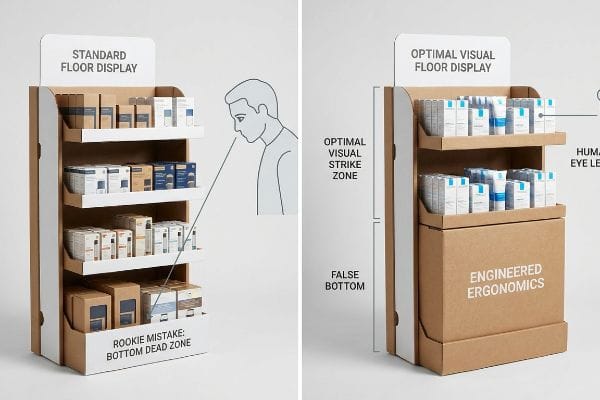
A vantagem dos displays de ponto de venda (PDV) reside na sua capacidade de elevar os produtos principais à zona de impacto visual ideal. Ao posicionar os itens matematicamente ao nível dos olhos, os comerciantes contornam a baixa visibilidade das prateleiras inferiores, acelerando significativamente o comportamento de compra por impulso e maximizando a eficiência do espaço.
No entanto, alcançar esse posicionamento perfeito exige engenharia ergonômica precisa.
Engenharia da Zona de Consumo
Muitas equipes de marketing projetam torres de exposição com prateleiras de produtos distribuídas uniformemente do chão até o topo. Elas partem do princípio de que preencher cada centímetro de espaço vertical disponível com estoque maximiza o retorno sobre o investimento.
Essa abordagem ignora completamente a ergonomia humana e cria zonas mortas. Imagine um outdoor no chão — ninguém olha para baixo enquanto caminha rápido. Vejo com frequência marcas forçando SKUs de alta margem em prateleiras inferiores, a apenas 30,48 cm do chão. A realidade física se impõe quando você observa um comprador se abaixar, olhar com os olhos semicerrados para a prateleira mais baixa e desistir rapidamente porque o ângulo é muito desconfortável. Corrijo isso projetando um fundo falso e mapeando o estoque principal estritamente para a faixa de altura humana de 127 a 137,16 cm (50 a 54 polegadas) ¹⁰ . Posicionar o produto principal exatamente nessa faixa elimina a necessidade de se abaixar, criando uma experiência de "pegar e sair" sem atrito, que aumenta consideravelmente a velocidade de vendas¹¹ .
| Erro comum de iniciantes | A solução profissional | Benefício do piso de vendas |
|---|---|---|
| Colocar o produto ao nível do chão | Instalação de um fundo falso alto12 | Elimina a necessidade de o comprador se curvar de forma desconfortável |
| Distribuir as prateleiras uniformemente em todo o conjunto | Concentração de camadas na zona de ataque13 | Aumenta a velocidade de pegar e levar |
| Ignorando a linha de visão humana | Inclinar as prateleiras inferiores para cima14 | Melhora a visibilidade da camada inferior |
Eu projeto displays para funcionarem em harmonia com a biologia humana, e não contra ela. Posicionar seu estoque na linha de visão natural é a maneira mais eficaz de garantir um aumento imediato nas vendas.
🛠️ Mesa do Harvey: O espaçamento atual das suas prateleiras está escondendo seus itens mais lucrativos na parte inferior, onde não há espaço? 👉 Solicite seu Projeto Ergonômico ↗ — Sem formulários que geram ligações intermináveis de vendas. Apenas valor puro.
Por que os vendedores usam displays de ponto de venda?
Velocidade é a moeda corrente do merchandising moderno. Os varejistas precisam de estoque que passe do caminhão de recebimento para o ponto de venda em segundos.
Os profissionais de merchandising utilizam displays de ponto de venda (PDV) porque reduzem drasticamente a mão de obra na loja e o tempo de reposição. Essas soluções de embalagem prontas para o varejo chegam pré-montadas ou utilizam estruturas de abertura instantânea, permitindo que as equipes de estoque transfiram grandes volumes de produtos do depósito diretamente para a área de exposição, sem precisar desembalar as unidades individualmente.
Mas conhecer a teoria não basta quando as máquinas começam a funcionar, pois atalhos estruturais podem desencadear falhas desastrosas na cadeia de suprimentos.
Por que os recipientes abertos padrão falham no chão de fábrica
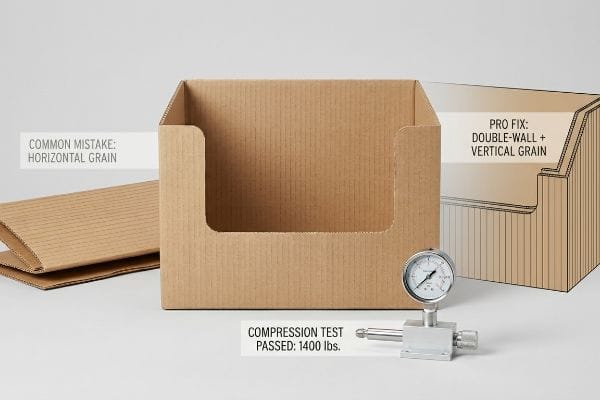
As equipes de compras frequentemente solicitam caixas de varejo abertas para atender às demandas dos comerciantes por rapidez. Para reduzir os custos de matéria-prima, elas simplesmente substituem as caixas fechadas padrão por estruturas HSC (Half Slotted Container - Contêiner com Meia Fenda)15, presumindo que a resistência da madeira bruta ainda protegerá as mercadorias durante o transporte.
Em minhas instalações, vejo rotineiramente essa mesma teoria de redução de custos causar falhas catastróficas durante testes dinâmicos de carga superior . A remoção das abas superiores contínuas de uma caixa elimina completamente seu fechamento superior de 360 graus, reduzindo drasticamente a classificação BCT da estrutura . Quando submeto essas caixas abertas ao teste Mullen, a ausência desses cantos estabilizadores superiores deixa as paredes verticais totalmente sem suporte. Certa vez, observei uma camada inferior inteira dessas caixas abertas modificadas curvar-se visivelmente para fora em 8,89 mm (0,35 polegadas) e ceder sob uma carga de palete de 544,31 kg (1.200 libras), criando uma inclinação acentuada. Corrijo isso alinhando rigorosamente a fibra ondulada perfeitamente na vertical e atualizando o perfil para uma estrutura de parede dupla , especificamente para corrigir a deficiência. Ao impor essa tolerância vertical rígida, garanto que a embalagem resista ao empilhamento duplo, evitando completamente danos durante o transporte que, de outra forma, acarretariam uma cobrança adicional dispendiosa por parte do varejista.
| Erro comum de iniciantes | A solução profissional | Benefício do piso de vendas |
|---|---|---|
| Remover as abas superiores para reduzir custos | Atualização para um perfil de parede dupla | Restaura a resistência à compressão perdida |
| Ignorando a pressão da carga vertical | Alinhando o grão ondulado verticalmente | Resiste ao empilhamento de paletes |
| Confiar na força teórica da caixa | Realização de testes físicos de compressão de Mullen | Evita esmagamento dispendioso durante o transporte |
Recuso-me a permitir que os clientes sacrifiquem a integridade estrutural apenas para reduzir alguns segundos no tempo de reposição de estoque. Reestruturar um recipiente aberto com o alinhamento correto das ranhuras é a única maneira de sobreviver à cadeia logística.
🛠️ Mesa do Harvey: Você sabe se suas caixas expositoras abertas estão perdendo a resistência à compressão durante o transporte? 👉 Envie-me seu arquivo de corte ↗ — Vou testar os cálculos antes que você gaste seu orçamento com produção em massa.
Conclusão
Você pode encontrar caixas expositoras abertas baratas e sem testes, mas quando essas paredes de papelão ondulado sem suporte cedem sob o peso de paletes pesados, isso causa danos enormes durante o transporte e resulta em rejeição imediata por parte do varejista. Esta é a ficha técnica exata que meus 10 principais clientes do varejo usam para garantir zero rejeições de impressão. Pare de adivinhar as tolerâncias de carga dinâmica e deixe-me analisar pessoalmente seus arquivos estruturais com minha Auditoria de Corte e Vinco gratuita ↗ para detectar falhas fatais de compressão antes que você autorize a produção em massa.
"O DESIGN ESTRUTURAL CRIATIVO NUNCA PODE SER IGNORADO", https://www.bcipkg.com/creative-structural-design-can-never-be-ignored/. [Pesquisas de marketing sobre o efeito Von Restorff corroboram a afirmação de que formas físicas distintas criam maior perturbação visual do que formas padronizadas com cores vibrantes]. Papel da evidência: suporte teórico; tipo de fonte: estudo psicológico. Apoia: a afirmação de que a silhueta gera perturbação visual. Nota de escopo: Aplica-se à interceptação do fluxo passivo de pedestres. ↩
"Empirical Insights into Eye-Tracking for Design Evaluation – PMC", https://pmc.ncbi.nlm.nih.gov/articles/PMC11673074/. [Pesquisa em percepção visual e psicologia ambiental explica como a quebra da repetição de padrões e ângulos retos desencadeia uma resposta de orientação em compradores]. Papel da evidência: mecanismo psicológico; tipo de fonte: estudo revisado por pares. Apoia: a eficácia de formas assimétricas em capturar a atenção. Nota de escopo: os resultados podem variar dependendo da densidade do ruído visual circundante. ↩
"Falhas em Expositores de Varejo: Problemas de Design Estrutural – LinkedIn", https://www.linkedin.com/posts/paxsolutions_packaging-display-fail-activity-7448039212622254080-5eMb. [Normas de design industrial para materiais de ponto de venda ilustram como a geometria curva quebra a grade linear das prateleiras padrão para aumentar a visibilidade]. Papel da evidência: especificação técnica; tipo de fonte: manual de design de expositores. Suporte: métodos para quebrar padrões visuais. Nota de escopo: específico para design estrutural físico. ↩
"Tempo de Permanência no Varejo Explicado: Capturando a Atenção do Consumidor e…", https://www.milesight.com/iot/blog/retail-dwell-time. [Uma fonte confiável sobre comportamento do consumidor no varejo quantificaria como formatos físicos não convencionais aumentam o tempo de permanência em comparação com displays retangulares padrão]. Papel da evidência: métrica comportamental; tipo de fonte: estudo de psicologia do consumidor. Argumentos que corroboram: relação entre disrupção estrutural e tempo de pausa. Nota sobre o escopo: o impacto pode variar de acordo com a categoria do produto .
"Capítulo 18 Layout, Design e Marketing Visual da Loja – Quizlet", https://quizlet.com/306119288/chapter-18-store-layout-design-and-visual-marketing-flash-cards/. [Pesquisas sobre a saliência visual em ambientes de varejo demonstram que elementos assimétricos atraem mais atenção do que padrões simétricos]. Papel da evidência: princípio de design; tipo de fonte: pesquisa de marketing visual. Argumentos que corroboram: eficácia de cabeçalhos assimétricos na prevenção da sobreposição de elementos. Nota sobre o escopo: aplica-se principalmente a displays posicionados na altura dos olhos e acima. ↩
"Caixas de papelão ondulado para apresentação impactante de produtos", https://www.halfpricepackaging.com/display-boxes/corrugated-display-boxes. [Uma fonte confiável em engenharia de embalagens ou normas de exibição no varejo verificaria se o papelão ondulado de parede simples mantém a integridade estrutural sob cargas típicas de varejo por 30 dias]. Papel da evidência: Verificação técnica; tipo de fonte: Norma da indústria de embalagens. Suporte: Adequação do material para os prazos promocionais. Observação: O desempenho depende do peso do produto e do ambiente .
"Diferença entre caixas de papelão de parede simples e de parede dupla…", https://packagingbee.co.uk/blog/difference-between-single-wall-cardboard-boxes-vs-double-wall-cardboard-boxes/?srsltid=AfmBOorg2V36wf48G95tNjLUb-EfUailusCX5H4y-5j47pojc-ZyTR_G. [Análise comparativa de materiais de papelão ondulado demonstra que as construções de parede dupla aumentam significativamente a resistência ao esmagamento e ao impacto externo]. Papel da evidência: verificação técnica; tipo de fonte: guia de engenharia de materiais. Fundamentos: o benefício de durabilidade das bases de parede dupla. Nota de escopo: específico para substratos de papelão ondulado. ↩
"O papelão absorve umidade? – Axis Corrugated Container", https://www.accbox.com/blog/does-cardboard-absorb-moisture/. [Estudos técnicos sobre revestimentos hidrofóbicos para materiais à base de celulose mostram que barreiras resistentes à água previnem a ação capilar e o consequente colapso estrutural das ondulações do papelão]. Papel da evidência: verificação técnica; tipo de fonte: estudo de engenharia química. Fundamentos: a eficácia dos revestimentos de base contra a umidade. Nota de escopo: foco na absorção de líquidos na base. ↩
"Como escolher a altura ideal para seu expositor de varejo?", https://popdisplay.me/how-to-choose-your-retail-display-height/. [Princípios de engenharia relativos ao centro de gravidade e à base de apoio indicam que estender a área de contato aumenta o ângulo de inclinação, reduzindo assim a instabilidade]. Papel da evidência: verificação teórica; tipo de fonte: manual de engenharia estrutural. Fundamentos: o benefício de estabilidade proporcionado por bases de contato estendidas. Observação: a eficácia varia de acordo com a altura total da unidade. ↩
"Por que os varejistas posicionam os produtos na altura dos olhos? – PopDisplay", https://popdisplay.me/why-do-retailers-place-products-at-eye-level/. [Uma fonte confiável sobre ergonomia no varejo ou engenharia de fatores humanos validaria essa faixa de altura específica como a zona de impacto visual ideal para compradores adultos]. Papel da evidência: especificação técnica; tipo de fonte: estudo de ergonomia ou manual de design de varejo. Apoio: identificação da janela visual ideal. Observação: a altura real pode variar de acordo com a média de altura do público-alvo .
"[PDF] Analisando como o posicionamento de produtos na altura dos olhos afeta as vendas – ijrpr", https://ijrpr.com/uploads/V6ISSUE4/IJRPR43345.pdf. [Pesquisas de mercado e estudos de comportamento do consumidor fornecem dados empíricos que relacionam o posicionamento de produtos na altura dos olhos a taxas de conversão mais altas e giro de estoque mais rápido]. Papel da evidência: métrica de desempenho; tipo de fonte: relatório de pesquisa de mercado ou estudo de psicologia do consumidor. Apoia: a vantagem financeira do posicionamento de produtos no ponto de venda. Nota sobre o escopo: o resultado pode ser influenciado pela força da marca e pelo preço .
"Eficácia da Exposição no Ponto de Venda: Quais são os benefícios de…", https://www.vanguardpkg.com/point-of-purchase-display-effectiveness-what-are-the-benefits-of-pop-displays/. As diretrizes de merchandising recomendam elevar o nível da base do produto por meio de um fundo falso para otimizar o alcance físico do consumidor médio e evitar que ele se curve excessivamente. Papel da evidência: validação de padrões da indústria; tipo de fonte: manual de acessórios de varejo. Benefícios: redução da necessidade de o consumidor se curvar de forma desconfortável. Observação sobre o escopo: principalmente para displays autônomos .
"CONTEÚDO EXTRA: A Zona de Impacto dos Refrigerantes | Convenience Store News", https://csnews.com/bonus-content-csd-strike-zone. Pesquisas sobre o comportamento do consumidor no varejo demonstram que posicionar itens de alta rotatividade na "zona de impacto" na altura dos olhos reduz a carga cognitiva e o esforço físico, aumentando assim a velocidade de pegar e sair. Papel da evidência: apoio à afirmação empírica; tipo de fonte: estudo de psicologia do consumidor. Comprova: eficácia da concentração na zona de impacto. Observação: os resultados podem variar de acordo com o tamanho do produto. ↩
"Como melhorar a visibilidade do produto em vitrines de varejo", https://www.onidisplay.com/how-to-improve-product-visibility-retail-display-cabinets/. Estudos ergonômicos sobre percepção visual mostram que inclinar as prateleiras inferiores para cima alinha a face do produto com o olhar natural do consumidor, melhorando a visibilidade. Papel da evidência: validação técnica; tipo de fonte: periódico de ergonomia. Benefícios: melhoria da visibilidade da prateleira inferior. Nota de escopo: específico para displays de borda de prateleira .
"Caixas RSC vs. Caixas com Corte e Vinco: Qual o Estilo de Caixa Ideal para Você? – PakFactory", https://pakfactory.com/blog/what-is-rsc-box-vs-die-cut-boxes/?srsltid=AfmBOorZCyOIvGo6-8-vGW17Cj3c7gNgixmKHFQ-sW1XosQKQ51Be5WT . [Normas da indústria de embalagens e análises de custos de materiais comprovam que as estruturas HSC requerem menos papelão ondulado do que as caixas fechadas padrão]. Papel da evidência: verificação factual; tipo de fonte: guia técnico da indústria. Argumenta: que as caixas HSC reduzem os custos de matéria - prima. Observação: a economia depende das dimensões da caixa e do tipo de ondulação.
"Estimativa da resistência à compressão de caixas de papelão ondulado…", https://pmc.ncbi.nlm.nih.gov/articles/PMC8467740/. [Um manual de engenharia de embalagens ou norma técnica quantificaria a perda de rigidez estrutural e o valor do Teste de Compressão da Caixa (TCC) quando as abas superiores são removidas]. Papel da evidência: verificação técnica; tipo de fonte: manual de engenharia. Apoia: a afirmação de que caixas sem aba superior são estruturalmente mais fracas. Nota de escopo: Específico para embalagens de papelão ondulado .
"Projeto Otimizado de Embalagens de Papelão Ondulado de Parede Dupla – PMC", https://pmc.ncbi.nlm.nih.gov/articles/PMC8950760/. [Especificações da indústria para materiais de papelão ondulado fornecem dados comparativos que mostram que a construção de parede dupla aumenta significativamente a capacidade de carga vertical]. Papel da evidência: verificação técnica; tipo de fonte: especificação da indústria. Fundamentos: a eficácia da melhoria do perfil do material para evitar flambagem. Nota de escopo: Normas gerais da indústria de embalagens .