
Se a sua marca está perdendo dinheiro com displays de varejo que levam horas para montar ou chegam amassados à loja, você está falhando na regra fundamental do merchandising de varejo moderno.
No varejo, PDQ significa "Pretty Darn Quick" (Muito Rápido). Refere-se a bandejas de exposição de produtos especializadas, projetadas para montagem rápida e visibilidade imediata da mercadoria. Essas soluções de embalagem prontas para o varejo chegam pré-montadas ou desmontadas, permitindo que os funcionários da loja transfiram os produtos do estoque para o salão de vendas em segundos.

Entender a definição é simples, mas projetar uma estrutura que sobreviva às duras realidades de uma cadeia de suprimentos de alta velocidade exige dominar a física das embalagens de papelão ondulado.
O que significa PDQ em vendas?
A velocidade de vendas depende inteiramente da capacidade do seu produto de interromper a rotina apressada de um comprador, e isso requer uma visibilidade estrutural altamente estratégica.
Em vendas, PDQ significa utilizar unidades de merchandising de alta rotatividade para gerar compras por impulso imediatas. Ao maximizar a visibilidade do produto em áreas de grande circulação, essas bandejas de exposição especializadas combatem a fadiga visual do consumidor, acelerando o giro de estoque e aumentando significativamente a receita geral da marca durante campanhas promocionais de curto prazo no varejo.

Traduzir essa teoria visual em uma estrutura física de papelão exige uma compreensão profunda do envolvimento espacial e da física do layout da loja.
Como um PDQ impulsiona as vendas por impulso
Muitas equipes de marketing presumem que colocar o máximo de produtos possível em uma única bandeja de exposição no ponto de venda (PDV) é a maneira mais eficiente de maximizar a densidade de vendas¹.Elas se baseiam em grades perfeitamente simétricas, projetando seus gráficos exclusivamente para leitura de perto em monitores de computador brilhantes. Essa abordagem teórica ignora a realidade física caótica de como os seres humanos realmente navegam e interagem com corredores de lojaslotados².
Constantemente observo designers juniores criando bandejas voltadas exclusivamente para a visualização de perto, ignorando a regra espacial 3-3-3³:é preciso capturar a atenção visual a 9 metros de distância, despertar o interesse específico a 90 centímetros e impulsionar a conversão tátil a 7,5 centímetros. No mês passado, acompanhei um cliente em uma grande loja de departamentos e vimos um comprador apressado ignorar completamente a bandeja plana e simétrica, pois ela não oferecia nenhuma tensão visual. Quando um funcionário da loja tentou, posteriormente, recolocar um produto de consumo embalado em um espaço apertado naquela disposição superlotada, ouvi o som inconfundível e horrível de papelão rasgando. Redesenhamos a bandeja utilizando divisórias modulares dedicadas que separam naturalmente as mercadorias em grupos assimétricos, proporcionando a folga física precisa de 6,35 mm necessária para eliminar o rasgo do papelão⁴durante a reposição rápida de produtos, aumentando instantaneamente as taxas de conversão nas prateleiras.
| Erro comum de iniciantes | A solução profissional | Benefício do piso de vendas |
|---|---|---|
| Aglomeração simétrica de produtos | Divisórias modulares assimétricas5 | Combate a fadiga visual do consumidor |
| Ignorando o envolvimento espacial | Aplique a regra de projeto 3-3-3. | Captura o tráfego do corredor de 9 metros (30 pés) |
| Liquidação de estoque zero | Buffer projetado de 0,25 polegadas7 | Impede que as bordas do papelão rasguem |
Se a sua exposição não chamar a atenção de quem está no corredor, a engenharia estrutural que a sustenta torna-se completamente irrelevante.
🛠️ Mesa do Harvey: Não tem certeza se o layout atual da sua vitrine está causando fadiga visual ou dificultando a reposição de produtos? 👉 Solicite uma Análise de Layout Gratuita ↗ — Acesso direto à minha mesa. Zero spam de vendas automatizado, prometo.
O que significa PDQ no Walmart?
Grandes varejistas como o Walmart operam com margens de lucro extremamente baixas em relação à mão de obra, o que torna seus manuais de conformidade de embalagens notoriamente rigorosos.
No Walmart, PDQ significa conformidade rigorosa com as Embalagens Prontas para Venda no Varejo. Isso define dimensões específicas, integridade estrutural e diretrizes visuais que os fornecedores devem seguir. Uma bandeja em conformidade garante transições perfeitas do estoque para a prateleira, minimizando o trabalho dos funcionários e maximizando a apresentação do produto nos corredores de varejo altamente otimizados e de ritmo acelerado da loja.

O não cumprimento dessas diretrizes do varejista não significa apenas uma aparência descuidada nas prateleiras; garante estornos financeiros massivos e rejeições imediatas de remessas.
Como seguir as diretrizes para bandejas PDQ do Walmart
Muitas marcas presumem que uma simples caixa de papelão sobreviverá Walmart, confiando em estruturas padrão cortadas a laser para economizar nos custos iniciais de fabricação. Elas se concentram inteiramente na parte gráfica externa, deixando a mecânica de montagem interna como uma mera formalidade para os funcionários da loja resolverem.
Os compradores frequentemente me perguntam se podem usar abas de encaixe padrão para economizar dinheiro, mas é fundamental comunicar explicitamente o método de montagem à fábrica, pois os gerentes de loja rejeitam impiedosamente displays que consomem muito trabalho dos vendedores.Recentemente, auditei uma campanha em que uma marca optou por abas baratas e sem cola; vi um vendedor frustrado suar por cinco minutos tentando encaixar a base à força, até que finalmente pegou um rolo de fita adesiva barata e a usou para colar os cantos com violência, arruinando completamente a impressão da marca. Meu projeto é estritamente voltado para o padrão de montagem sem frustração, utilizando bandejas modulares pré-coladas. Ao passar as peças em branco por uma dobradeira-coladeira automática antes do envio,eliminamos a complexa dobragem manual no ponto de venda, garantindo que a unidade se abra e se encaixe perfeitamente em menos de três segundos.
| Erro comum de iniciantes | A solução profissional | Benefício do piso de vendas |
|---|---|---|
| Abas dobráveis manuais complexas | Cantos pré-colados automatizados | Economiza 3 minutos de montagem10 |
| Reforços de fita baratos | Base estrutural com travamento automático | Mantém a imagem de marca impecável |
| Ignorando os limites de mão de obra para funcionários administrativos | Engenharia sem frustração | Impede estornos por parte do varejista11 |
Os varejistas vendem mercadorias, não quebra-cabeças de embalagens, portanto, sua engenharia estrutural deve priorizar a velocidade operacional absoluta acima de tudo.
🛠️ Mesa do Harvey: Seu arquivo de corte atual corre o risco de sofrer uma grande contestação de pagamento por parte do varejista devido à montagem manual complexa? 👉 Solicite uma Análise de Conformidade ↗ — Baixe com segurança. Minha caixa de entrada está aberta caso tenha alguma dúvida posteriormente.
O que é PDQ na cadeia de suprimentos?
Uma bandeja com um design brilhante não significa nada se o responsável pela sua proteção causar gargalos operacionais durante o recebimento no armazém.
Nas cadeias de suprimentos, o PDQ é uma estratégia logística de embalagem focada em minimizar o atrito no manuseio. Consiste em integrar os produtos primários em caixas de papelão ondulado que se transformam instantaneamente em bandejas prontas para exposição nas prateleiras. Esse sistema unificado reduz drasticamente a mão de obra de co-embalagem, otimiza o volume de carga e elimina o custo da reembalagem manual nos centros de distribuição.

Para alcançar essa transição perfeita, é necessário calcular com precisão as tolerâncias de atrito entre a bandeja interna e a caixa de transporte externa.
Por que as cadeias de suprimentos confiam nas embalagens PDQ?
Uma suposição comum entre iniciantes é que uma caixa de transporte master deve corresponder perfeitamente às dimensões externas exatas da bandeja de varejo pré-cheia em seu interior. As equipes de compras frequentemente exigem essas tolerâncias rigorosas para eliminar espaços vazios12, assumindo que uma proporção de 1:1 proporciona proteção máxima durante o transporte13 para os produtos principais.
Imagine usar sapatos exatamente do mesmo tamanho que suas meias — não há espaço para respirar, causando forte atrito entre os materiais. Uma regra prática é sempre deixar uma margem geométrica calculada para compensar a natureza abrasiva do papelão ondulado. Já vi funcionários de distribuição lutando para retirar uma bandeja de 609,6 mm (24 polegadas) de uma caixa de 609,6 mm (24 polegadas) bem apertada, apenas para as paredes porosas da caixa travarem fisicamente. O atrito intenso forçava o funcionário a puxar com força o painel frontal da bandeja, quebrando as ondulações do papelão e causando um rasgo irregular no logotipo principal antes mesmo da unidade chegar ao caminhão. Eu calculo matematicamente uma margem de segurança mínima absoluta de 6,35 mm (0,25 polegadas) na cavidade interna da caixa master, quebrando o travamento por atrito e garantindo uma experiência de desembalagem tranquila.
| Erro comum de iniciantes | A solução profissional | Benefício do piso de vendas |
|---|---|---|
| dimensões da caixa de encaixe 1:1 | buffer perimetral de 0,25 polegadas15 | Elimina o atrito ao desembalar |
| Ignorando a abrasão do revestimento de teste | Folgas de folga projetadas16 | Impede que o painel frontal rasgue |
| extração manual forçada | Painéis de transporte rebatíveis17 | Agiliza o abastecimento das prateleiras |
Se um funcionário da loja tiver que lutar com a sua embalagem para colocar o produto na prateleira, você já perdeu a batalha logística.
🛠️ Harvey's Desk: Seus principais expedidores estão destruindo suas bandejas primárias devido ao encaixe geométrico apertado? 👉 Solicite sua Análise de Atrito ↗ — Sem formulários que geram ligações intermináveis de vendas. Apenas valor puro.
O que significa a sigla PDQ?
A linguagem da rápida implementação no varejo soa informal, mas os mecanismos industriais necessários para concretizá-la são extremamente precisos.
A sigla PDQ significa "Pretty Darn Quick" (Muito Rápido). Ela serve como um padrão universal da indústria para expositores prontos para o varejo, projetados para instalação imediata. Embora a terminologia soe informal, a execução dessas estruturas de montagem rápida exige engenharia precisa de papelão ondulado, tolerâncias exatas de máquina e testes físicos rigorosos para garantir total confiabilidade.
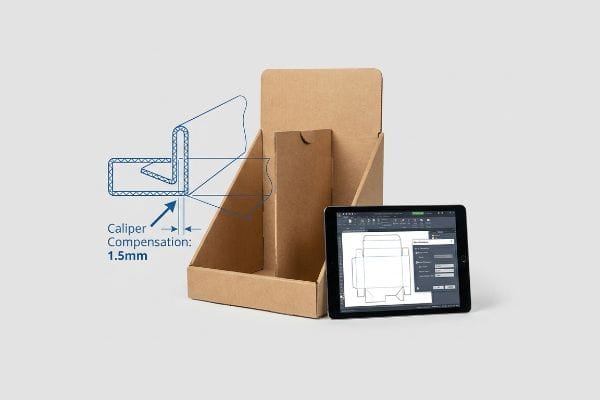
Conseguir que um único monitor fique perfeitamente em pé em um laboratório de design com temperatura controlada é fácil, mas eis a dura realidade quando você precisa enviar 500 deles através do oceano.
Por que o "Pretty Darn Quick" falha na linha de produção?
Uma suposição aparentemente razoável, mas na verdade perigosa, que os designers gráficos fazem é desenhar abas de encaixe em software vetorial com a mesma largura exatado painel correspondente. Eles tratam o material ondulado espesso como se fosse uma folha plana de papel digital, concentrando-se apenas na arte visual. Isso ignora completamente a realidade mecânica da espessura física do substrato e como as fibras do papel se esticam quando forçadas a formar um ânguloreto.
Isso não é apenas teoria — vejo isso acontecer na linha de testes quando um arquivo supostamente de montagem rápida falha em seu primeiro teste físico de protótipo. Em minha empresa, vejo rotineiramente matrizes planas submetidas para displays de fibra ondulada onde a ranhura de recebimento não é alargada para compensar o raio externo da dobra. Quando meço o resultado físico, um painel de 2,79 mm (0,11 polegadas) de espessuraa 90 graus consome material, fazendo com que a aba apertada curve agressivamente toda a parede lateral e criando imenso atrito na montagem. Eu uso um software CAD (Projeto Auxiliado por Computador) paramétrico para aplicar automaticamente algoritmos de compensação de curvatura, adicionando uma tolerância de dobra específica de 1,5 mm (0,05 polegadas)diretamente às ranhuras estruturais. Ao impor essa microtolerância, garanto que o tempo de montagem de co-embalagem caia 42 segundos por unidade, economizando aos clientes custos significativos de mão de obra manual e evitando flambagem estrutural sob cargas pesadas de paletes.
| Erro comum de iniciantes | A solução profissional | Benefício do piso de vendas |
|---|---|---|
| Desenho de encaixes de abas em escala 1:1 | Aplicando compensação de paquímetro22 | Impede o arqueamento da parede lateral |
| Ignorando a espessura da flauta B | Tolerância de dobra de 1,5 mm23 | Garante o travamento rápido da aba |
| Forçando montagens apertadas | Matemática de linha de corte paramétrica | Reduz 42 segundos de tempo de trabalho24 |
A verdadeira velocidade de produção não é alcançada acelerando as máquinas; ela é alcançada eliminando o microatrito nas tolerâncias matemáticas.
🛠️ Mesa do Harvey: Não deixe que uma falha estrutural de 2 milímetros arruine o lançamento em 500 lojas. 👉 Envie-me seu arquivo de corte ↗ — Vou testar os cálculos antes que você desperdice seu orçamento com produção em massa.
Conclusão
Você pode encontrar fornecedores mais baratos que não fazem cálculos de tolerância estrutural, mas quando suas embalagens, amontoadas em um depósito úmido, se juntam, os rasgos resultantes na arte gráfica podem atrasar sua linha de montagem em cerca de 30%, causando rejeições imediatas por parte dos varejistas. Mais de 500 gerentes de marca usam meu checklist de pré-impressão para evitar exatamente esses erros fatais no estágio inicial. Pare de adivinhar as tolerâncias estruturais e deixe-me analisar seus arquivos pessoalmente com minha Auditoria de Corte e Vinco gratuita ↗ para detectar falhas na montagem automatizada antes do início da produção em massa.
"ANÁLISES DO PONTO DE VENDA: O IMPACTO DOS DISPOSITIVOS DE PONTO DE VENDA NO VAREJO…", https://www.bcipkg.com/point-of-purchase-insights-the-impact-of-retail-pop-displays-on-consumer-behavior/. Relatórios do setor sobre análises de varejo fornecem uma definição técnica de densidade de vendas (receita por metro quadrado) e discutem a prática comum do setor de usar a exposição de produtos em grande volume para aumentar essa métrica. Papel da evidência: de apoio; tipo de fonte: guia do setor. Apoia: o objetivo técnico de maximizar a densidade de vendas no varejo. Nota de escopo: específico para otimização do espaço de varejo. ↩
"Explorando o comportamento de navegação e o nível de atenção do consumidor com um…", https://pmc.ncbi.nlm.nih.gov/articles/PMC6895988/. Pesquisas em psicologia ambiental e ciência do varejo demonstram como a congestão física e o layout dos corredores influenciam as formas visuais e físicas pelas quais os consumidores interagem com os displays nos pontos de venda. Papel da evidência: de apoio; tipo de fonte: estudo acadêmico. Apoia: a afirmação de que a interação humana com os displays é moldada pela realidade física do ambiente de varejo. Nota de escopo: aplica-se a zonas de varejo de alto tráfego .
"A Importância da Regra dos 3 para seus Displays Personalizados de Loja", https://mcintyredisplays.com/blog/custom-store-displays/. Verificação da regra 3-3-3 como uma heurística padrão de design de varejo para capturar a atenção do consumidor em intervalos de distância específicos. Papel da evidência: estrutura conceitual; tipo de fonte: guia de merchandising. Apoia: a abordagem estratégica para o engajamento visual em camadas. Observação sobre o escopo: pode ser específico para o design de displays de ponto de venda .
"14 Tipos de Expositores para Varejo | Chicago, IL – Wertheimer Box", https://wertheimerbox.com/types-of-retail-displays/ . Verificação técnica das tolerâncias mínimas de folga para bandejas de expositores de varejo, visando evitar falhas no material durante o reabastecimento frequente. Papel da evidência: especificação técnica; tipo de fonte: norma de engenharia de embalagens. Comprova: a alegação de que folgas específicas previnem rasgos estruturais. Observação sobre o escopo: depende da gramatura e do tipo de ondulação do papelão.
"Quatro Técnicas de Visual Merchandising para o Sucesso no Varejo", https://visualmerchandisingcourses.co.uk/four-visual-merchandising-techniques-for-retail-success/. Breve explicação de como os princípios de design assimétrico no merchandising previnem a fadiga visual do consumidor. Papel da evidência: Psicologia do consumidor; tipo de fonte: Pesquisa de mercado. Benefícios: Melhor visibilidade e engajamento da estrutura. Nota de escopo: Ambiente de varejo em geral .
"Estratégias eficazes de merchandising visual envolvem vários...", https://popdisplay.me/effective-visual-merchandising-strategies-involve-several-critical-considerations/. Breve explicação de como uma fonte externa confiável apoia o uso da regra 3-3-3 para engajamento espacial. Papel da evidência: Padrão técnico; tipo de fonte: Guia de merchandising visual. Apoia: Capacidade de atrair visitantes à distância. Nota de escopo: Específico para layouts de corredores de varejo .
"Displays PDQ de papelão ondulado projetados para montagem rápida e impacto no varejo", https://www.abbottaction.com/packaging/corrugated-pdq-displays/. Breve explicação de como os padrões da indústria para embalagens de papelão justificam uma margem de segurança de 0,25 polegadas para evitar desgaste. Papel da evidência: Especificação técnica; tipo de fonte: Manual de engenharia de embalagens. Benefícios: Durabilidade estrutural durante o reabastecimento. Observação sobre o escopo: Foca em materiais de papelão ondulado .
"Quais são os padrões de embalagem secundária do Walmart? – SupplierWiki", https://www.spscommerce.com/community/articles/what-are-walmarts-secondary-packaging-standards. Verificação das políticas do varejista que penalizam ou rejeitam embalagens que aumentam o trabalho de reposição. Função da evidência: Verificação de conformidade; tipo de fonte: Manual de embalagens do varejista. Comprova: A alegação de que displays que exigem muita mão de obra são rejeitados. Observação sobre o escopo: Varia de acordo com a discrição do gerente de cada loja .
"Aplicador de entrada de alta velocidade para embalagens de papelão – Pack-Smart", https://packsmartinc.com/folding-cartons-application/folding-and-gluing/. Confirmação técnica de que a dobragem e colagem automatizadas agilizam a implementação do RRP (Retail Retail Project) ao pré-configurar dobras estruturais e adesivos. Função da evidência: Validação técnica; tipo de fonte: Guia de fabricação de embalagens. Benefícios: Eliminação da dobragem manual no ponto de venda. Observação sobre o escopo: Aplica-se a embalagens de papelão ondulado e cartão .
"O que exatamente é um PDQ no varejo? – PopDisplay", https://popdisplay.me/what-exactly-is-a-pdq-in-retail/ . Verifique a redução de tempo específica proporcionada pelos cantos pré-colados automatizados em comparação com a dobragem manual para displays de varejo. Papel da evidência: verificação quantitativa; tipo de fonte: estudo de caso da indústria de embalagens. Fundamentos: alegação de ganho de eficiência. Observação : o tempo de montagem pode variar de acordo com o tamanho e a complexidade da bandeja.
"Guia de Conformidade de Embalagens Personalizadas – Blog da Zenpack", https://www.zenpack.us/blog/packaging-compliance-guide/. Confirme que o não cumprimento dos padrões de embalagem que otimizam a mão de obra resulta em penalidades financeiras ou estornos por parte do Walmart. Função da evidência: verificação de procedimento; tipo de fonte: manual de conformidade de fornecedores do Walmart. Fundamenta: alegação de risco financeiro. Observação sobre o escopo: específico para os contratos com fornecedores do Walmart .
"Alinhamento entre Compras e Produção é Fundamental para o Sucesso das Embalagens", https://www.linkedin.com/posts/ryanmkaplan20_common-packaging-mistakes-procurement-teams-activity-7445558789443022849-Knzy. Análise dos padrões de compras da indústria referentes à eliminação de espaços ociosos em caixas master de transporte para otimizar o frete e a proteção. Papel da evidência: Verificação da prática da indústria; tipo de fonte: Manual de operações logísticas. Fundamentos: A afirmação de que o setor de compras se concentra em minimizar espaços ociosos. Observação sobre o escopo: Foca em embalagens de papelão ondulado .
"Remake de Dead Space – Todas as localizações das portas e caixas de controle mestre", https://www.youtube.com/watch?v=-1IujO9tVlk. Avaliação técnica sobre se uma proporção de encaixe de 1:1 entre a embalagem interna e as caixas de transporte otimiza a proteção contra vibração e choque durante o transporte. Papel da evidência: Verificação técnica; tipo de fonte: Pesquisa em engenharia de embalagens. Fundamentos: A suposição de que proporções precisas maximizam a proteção. Observação sobre o escopo: Especificamente para bandejas de varejo em caixas de transporte .
"[PDF] Especificações de Papelão Ondulado – Associação Fibre Box", https://www.fibrebox.org/assets/2025/09/Walmart_Corrugated-Board_Specifications_Automation_Packaging_Standards.pdf. As especificações técnicas de embalagem ou manuais da indústria verificam a folga necessária para evitar o travamento do material e o bloqueio por fricção. Papel da evidência: validação da métrica técnica; tipo de fonte: norma da indústria/manual de embalagem. Apoio: A recomendação de uma folga mínima de 0,25 polegadas para desembalar sem problemas. Nota sobre o escopo: Os requisitos reais podem variar de acordo com a qualidade do papelão e a umidade. ↩
"Display de balcão de papelão ondulado PDQ – Packaging Consultants, Inc.", https://pci-packaging.com/project/titleist-point-of-sale-display/. Breve explicação de como as normas de engenharia de embalagens especificam as margens de segurança para evitar atrito durante a abertura da caixa. Papel da evidência: especificação técnica; tipo de fonte: manual de engenharia de embalagens. Apoia: a eficácia de dimensões específicas das margens de segurança. Observação: Pode variar de acordo com a espessura do material .
"Investigando o Efeito das Perfurações na Capacidade de Carga…", https://pmc.ncbi.nlm.nih.gov/articles/PMC11396172/ . Breve explicação de como espaços específicos impedem a abrasão do material testliner e o consequente rasgo do painel frontal. Papel da evidência: especificação técnica; tipo de fonte: periódico de ciência dos materiais ou embalagens. Fundamentos: a prevenção do rasgo do painel frontal. Nota de escopo : Focado na interação com papelão ondulado.
"Cinco Passos para um Abastecimento de Mercadorias Mais Eficiente no Varejo – Intouch Insight", https://www.intouchinsight.com/blog/retail-stocking-steps. Breve explicação de como painéis perfurados ou rebatíveis reduzem o tempo de manuseio manual durante o abastecimento de prateleiras no varejo. Papel da evidência: métrica operacional; tipo de fonte: estudo de caso de logística. Apoia: a afirmação de que esses painéis aceleram o abastecimento. Nota de escopo: Comparação relativa a métodos de extração manual .
"Estimativa da resistência à compressão de caixas de papelão ondulado…", https://pmc.ncbi.nlm.nih.gov/articles/PMC8467740/ . Manuais de engenharia de embalagens detalham a necessidade de tolerâncias e folgas de curvatura em papelão ondulado para garantir o encaixe adequado. Papel da evidência: validação técnica; tipo de fonte: manual padrão da indústria. Fundamentos: o perigo de ignorar a espessura do material em projetos digitais. Nota de escopo: especificamente para papelão ondulado espesso.
"[PDF] DOBRAS E AMASSADOS – BioResources", https://bioresources.cnr.ncsu.edu/wp-content/uploads/2019/01/2017.1.69.pdf. A análise estrutural de materiais ondulados explica como as fibras de celulose sofrem deformação mecânica e alongamento durante a dobragem. Papel da evidência: comprovação física; tipo de fonte: pesquisa em ciência dos materiais. Fundamentos: a realidade mecânica do comportamento do substrato. Observação sobre o escopo: depende do tamanho da ondulação e da gramatura do revestimento. ↩
"Papelão Ondulado e Tipos de Materiais – Estratégias de Embalagem", https://www.packagingstrategies.com/articles/96269-corrugated-board-and-material-grades. Verificação da espessura padrão da indústria para papelão ondulado tipo B para validar a premissa técnica do cálculo da dobra. Papel da evidência: verificação factual; tipo de fonte: especificação da indústria. Suportes: Dimensões do material. Nota: A espessura pode variar ligeiramente de acordo com o fabricante. ↩
"Determinação Analítica da Rigidez à Flexão de uma Embalagem de Cinco Camadas…", https://pmc.ncbi.nlm.nih.gov/articles/PMC8777652/ . Confirmação técnica da tolerância de curvatura necessária para materiais de papelão ondulado, a fim de evitar flambagem estrutural durante dobras de 90 graus. Papel da evidência: validação técnica; tipo de fonte: manual de engenharia de embalagens. Suporte: normas de montagem de precisão. Nota de escopo: a tolerância varia de acordo com a qualidade e a espessura do papelão.
"Design de Embalagens Estruturais: Elementos-Chave e Processo – Arkay", https://www.arkay.com/resources/structural-packaging-design. Uma fonte confiável sobre design de embalagens de papelão ondulado explicaria como a consideração da espessura do material (calibre) previne deformações estruturais durante a montagem. Papel da evidência: especificação técnica; tipo de fonte: manual de engenharia de embalagens. Fundamentos: a necessidade de compensação do calibre para evitar curvaturas. Nota de escopo: refere-se especificamente a displays dobráveis para o varejo .
"[PDF] Especificações para Papelão Ondulado – Arquivos Nacionais", https://www.archives.gov/files/preservation/storage/pdf/corrugated-board.pdf. Os padrões da indústria para papelão ondulado tipo B geralmente especificam uma tolerância de curvatura precisa para garantir a dobra adequada e o travamento das abas. Papel da evidência: métrica factual; tipo de fonte: ficha técnica do material. Suportes: a medida específica para dobra do papelão ondulado tipo B. Nota de escopo: pode variar ligeiramente com base na densidade da ondulação. ↩
"Dieline de Dimensões, Tamanhos e Modelo de Caixas de Exibição – BoxesGen", https://boxesgen.com/dieline-of-display-box-dimensions-sizes-template/?srsltid=AfmBOoqDL8BznpdtU9rts2Ij68XC7Qqq_hTwWFXrscGgZpCstriz4Oj7. Benchmarks ou estudos de caso de engenharia industrial quantificam a economia de tempo obtida por meio da otimização do cálculo do dieline durante a montagem no ponto de venda. Função da evidência: métrica de desempenho; tipo de fonte: estudo de engenharia industrial. Apoia: alegações de eficiência de mão de obra para design paramétrico. Nota de escopo: reflete uma redução média por unidade .