Você precisa que seus produtos sobrevivam às duras condições das redes de transporte, mas escolher o material de embalagem errado geralmente resulta em mercadorias amassadas, clientes frustrados e danos severos à reputação da marca.
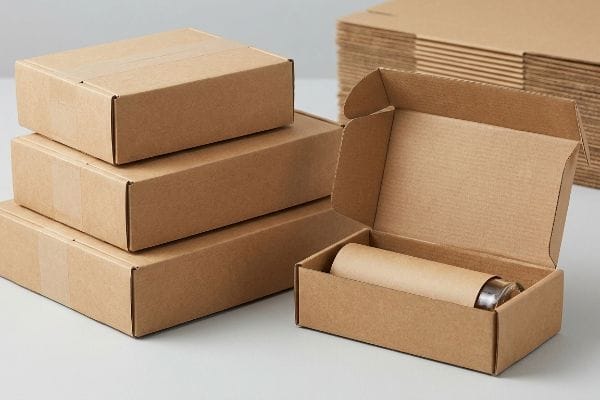
As caixas de papelão Kraft para envio são embalagens duráveis, fabricadas com papelão ondulado não branqueado, apreciadas mundialmente por sua resistência estrutural e composição ecológica. Essas soluções de embalagem versáteis utilizam arcos canelados interligados para absorver o impacto do transporte, garantindo a segurança física do produto em redes de distribuição complexas, sem a necessidade de preenchimento interno com plástico pesado.
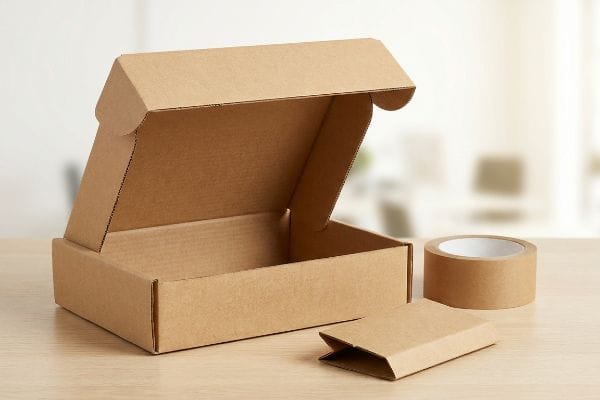
Compreender a matéria-prima é apenas o ponto de partida; para realmente proteger suas margens de lucro, precisamos examinar como essas estruturas se comportam sob estresse operacional.
O que são envelopes Kraft?
A transição de sacos plásticos leves para embalagens rígidas altera completamente a dinâmica da sua cadeia de suprimentos.
Qual é a estrutura dos envelopes kraft? São sistemas de embalagem secundária de alta engenharia, construídos com fibras de celulose bruta. Com uma camada interna de papelão ondulado entre duas placas planas de teste, essas estruturas oferecem rigidez torsional e resistência à compressão vertical excepcionais para operações logísticas de venda direta ao consumidor e de empresa para empresa.
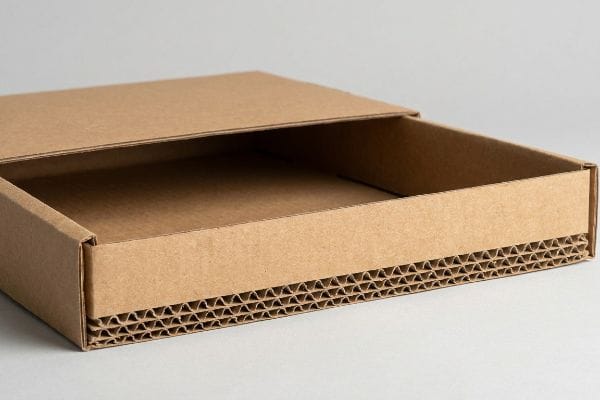
Mas confiar apenas na espessura visual da placa cria um enorme ponto cego operacional.
A física oculta das ondulações das embalagens de papelão ondulado
Muitas marcas emergentes tentam otimizar sua logística reutilizando caixas de e-commerce visualmente intactas para o atendimento de pedidos de varejo. A suposição padrão é que, se uma caixa marrom não tiver rasgos visíveis ou amassados significativos, sua capacidade de compressão original de fábrica permanece perfeitamente intacta para uma segunda viagem¹ .
Vejo essa armadilha pegar até mesmo equipes de compras experientes quando tentam cortar custos com embalagens de papel kraft. É preciso pensar nessas ondulações internas de papelão como amortecedores mecânicos, e não apenas como paredes estáticas. Durante a primeira viagem da caixa, as fibras do papel absorvem impactos microscópicos, vibrações do transporte e umidade do armazém, o que causa fadiga permanente no material. Certa vez, vi um cliente tentar empilhar mercadorias recém-embaladas nessas embalagens "recicladas"; no momento em que a terceira camada foi colocada, era possível ouvir as fibras de papel secas e desgastadas estalando enquanto os cantos inferiores se curvavam para fora. Ao impor um requisito de material virgem e utilizar embalagens novas, pela ISTA (International Safe Transit Association) 6 e pela Amazon SIOC2 (Ships In Own Container), restauramos 100% da capacidade de carga dinâmica³.Isso elimina danos durante o transporte e acaba completamente com as custosas taxas de reembolso para os varejistas.
| Erro comum de iniciantes | A solução profissional | Benefício do piso de vendas |
|---|---|---|
| Reutilizando caixas de e-commerce recebidas | Implementar mandatos relativos a matérias-primas virgens4 | Impede o esmagamento da camada inferior |
| Ignorando a fadiga microscópica da flauta | Utilizando os padrões ISTA 6-Amazon SIOC5 | Elimina as taxas por danos no transporte |
| Partindo do pressuposto de que integridade visual equivale a força | Engenharia de novas flautas com absorção de impacto6 | Garante o empilhamento seguro de paletes pesados |
Eu nunca permito que meus clientes arrisquem o valor da sua marca com papel desgastado. Flautas novas e matematicamente perfeitas garantem que seu produto sobreviva ao rigoroso processo logístico e chegue à prateleira do varejo com uma aparência impecável.
🛠️ Mesa do Harvey: Não tem certeza se seus materiais de embalagem atuais estão sofrendo fadiga estrutural antes mesmo do envio? 👉 Solicite uma Análise de Materiais Gratuita ↗ — Acesso direto à minha mesa. Zero spam de vendas automatizado, prometo.
Para que servem as caixas de correio?
Proteger um único item em trânsito é simples, mas ampliar essa proteção em redes de transporte de carga massivas exige precisão geométrica exata.
As caixas de papelão para envio postal são utilizadas para transportar bens de consumo frágeis, dispositivos eletrônicos e componentes de varejo em grande volume com segurança em redes logísticas complexas. Além da entrega padrão de encomendas, esses contêineres rígidos funcionam como caixas master primárias, projetadas para suportar cargas verticais maciças quando empilhadas firmemente em paletes de madeira padrão para exportação.
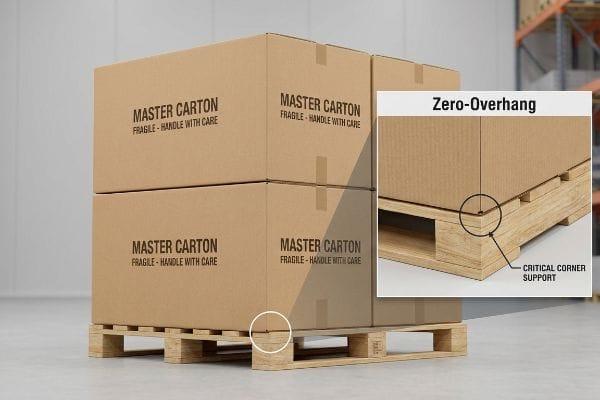
No entanto, embalar o produto com segurança dentro da caixa é apenas metade da batalha.
Como a geometria do palete determina a segurança das operações
Os departamentos de compras frequentemente aumentam as dimensões das caixas master para maximizar a densidade interna de envio, presumindo que as métricas de compressão bruta do papelão ondulado reforçado protegerão automaticamente as mercadorias. Eles preenchem matematicamente a caixa até a borda, ignorando completamente a física externa de como essas caixas devem ser empilhadas sobre uma base de madeira padrão.
É uma armadilha comum que pega até mesmo compradores experientes ao determinar a finalidade das caixas de papelão para envio em operações de transporte de cargas pesadas. Uma caixa de papelão ondulado obtém até 60% de sua resistência ao teste de compressão da caixa (BCT)⁸ estritamente do alinhamento vertical de seus quatro cantos estruturais. Se a sua caixa master ultrapassar um palete GMA padrão de 1219×1016 mm (48×40 polegadas)⁹ por uma fração de polegada, esses cantos não suportam absolutamente nenhuma carga. Já vi o resultado imediato em armazéns: caixas da camada inferior sem suporte, visivelmente curvadas para fora sob o peso excessivo da parte superior, o papelão rangendo alto antes de se esmagar catastroficamente. Corrigimos isso reduzindo artificialmente a área máxima permitida da caixa em nosso software CAD (Desenho Auxiliado por Computador) em exatamente 12,7 mm (0,5 polegadas). Esse ajuste de tolerância preciso garante que os cantos estruturais permaneçam totalmente suportados, eliminando completamente os danos durante o transporte de contêineres internacionais.
| Erro comum de iniciantes | A solução profissional | Benefício do piso de vendas |
|---|---|---|
| Maximizar o tamanho da caixa em relação ao encaixe do palete | Redução da área ocupada no CAD em 0,5 polegadas (12,7 mm)10 | Garante o alinhamento vertical dos cantos |
| Permitir uma pequena saliência do palete | Exigir caixas delimitadoras sem saliências | Impede a deformação da camada inferior |
| Confiando exclusivamente na resistência bruta da tábua | Alinhamento da carga física com as longarinas do palete11 | Sobrevive ao transporte em contêiner marítimo |
Eu sigo rigorosamente os protocolos de zero saliência em todos os contêineres que saem das minhas instalações. Restaurar a resistência crítica de 60% à compressão nos cantos é a única maneira de garantir que sua carga sobreviva a viagens com contêineres empilhados duplamente.
🛠️ Mesa do Harvey: Suas caixas master estão ultrapassando os paletes em apenas 0,6 cm (um quarto de polegada), perdendo silenciosamente 60% da sua resistência? 👉 Calcule a Carga Real do seu Palete ↗ — Baixe com segurança. Minha caixa de entrada está aberta caso tenha alguma dúvida.
Quais são as desvantagens do papel kraft?
Obter uma estética natural e ecológica é altamente desejável, mas os substratos de papel bruto apresentam sérios desafios químicos e ópticos durante a fase de fabricação.
As principais desvantagens do papel kraft incluem sua textura superficial altamente porosa, que absorve agressivamente as tintas de impressão líquidas, e sua falta de resistência natural às intempéries. Esse material bruto e não selado frequentemente faz com que designs gráficos complexos pareçam borrados ou desbotados, além de permanecer altamente suscetível à absorção de umidade ambiental.
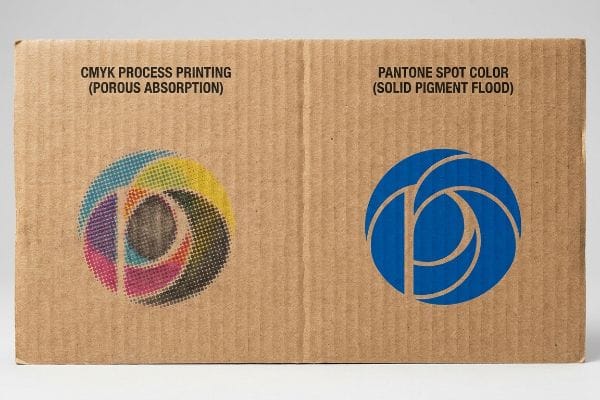
Essa porosidade não é apenas um pequeno incômodo visual; ela destrói ativamente o valor da marca nas prateleiras das lojas.
O perigo óptico da impressão em processos sobre superfícies brutas
As equipes de marketing frequentemente convertem logotipos corporativos sólidos em formatos CMYK padrão (ciano, magenta, amarelo, vermelho) para suas caixas de envio, presumindo que a impressão do processo corresponderá perfeitamente às suas telas de computador digitais. Elas esperam que a precisão digital seja transferida diretamente para o substrato físico sem considerar a interação química da tinta com as fibras de papel não seladas12.
Imagine imprimir em papel kraft cru como tentar pintar um retrato detalhado em uma esponja seca. Quando os clientes me perguntam quais são as desvantagens do papel kraft, sempre aponto para as falhas na mistura óptica. A impressão padrão em quatro cores depende de minúsculos pontos de meio-tom sobrepostos, mas em papelão marrom poroso, esses pontos líquidos são absorvidos de forma irregular e penetram nas fibras da madeira.Recentemente, passei o polegar sobre o logotipo CMYK recém-impresso de um cliente, sentindo a textura áspera do papel através da tinta, que parecia completamente borrada e desbotada sob a forte iluminação fluorescente de uma loja. Como regra geral, exigimos um Protocolo de Preenchimento com Cores Especiais para todos os logotipos principais da marca. Ao substituir a mistura óptica de pontos por uma única tinta de cor especial PMS (Pantone Matching System) precisamente misturada, garantimos um preenchimento denso e perfeitamente uniforme de pigmento que maximiza a visibilidade da marca em alto contraste a seis metros de distância.
| Erro comum de iniciantes | A solução profissional | Benefício do piso de vendas |
|---|---|---|
| Utilizando CMYK para logotipos em papel comum | Exigindo o uso de tintas Pantone em cores especiais15 | Garante visibilidade nítida do logotipo |
| Ignorando a absorção de tinta pelas fibras do papel | Aplicar pigmento sólido sobre a placa | Elimina a granulação opaca dos meios-tons16 |
| Espera-se cores CMYK fiéis à tela | Misturando receitas exatas de corantes líquidos para manchas | Mantém uma reputação de marca consistente |
Recuso-me a deixar que marcas premium pareçam baratas devido à absorção previsível de tinta. A utilização de cores especiais é uma forma matematicamente comprovada de se destacar em fundos escuros e garantir presença nas prateleiras.
🛠️ Harvey's Desk: O logotipo da sua marca está desbotado e granulado nas suas embalagens de papelão ondulado? 👉 Solicite uma Análise de Cores de Pré-impressão Gratuita ↗ — Sem formulários que geram ligações intermináveis de vendas. Apenas valor agregado.
O que significam as caixas Kraft?
A conversão de um projeto bidimensional em uma estrutura física tridimensional exige tolerâncias matemáticas rigorosas que um software genérico simplesmente não consegue fornecer.
O que significam as caixas de papel kraft na indústria? Elas representam um sistema matemático preciso, onde a espessura do papelão deve ser calculada em cada dobra. Essas estruturas tridimensionais de papelão ondulado exigem tolerâncias de curvatura dinâmica e folgas geométricas específicas para garantir uma montagem sem atrito e integridade estrutural em linhas de embalagem de alta velocidade.
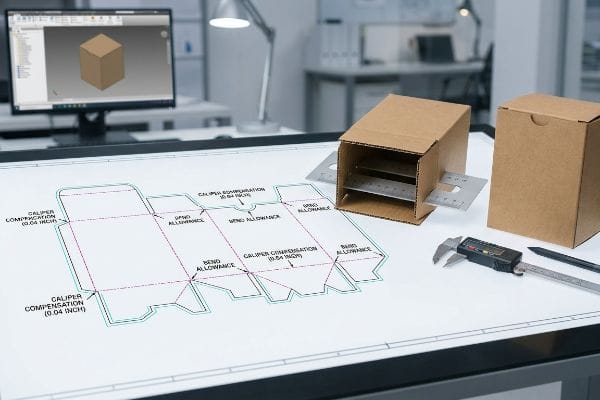
Mas conhecer a teoria não basta quando as máquinas começam a funcionar e as chapas planas são forçadas a dobrar.
Por que os cálculos padrão de paquímetros falham na linha de produção?
Os designers gráficos costumam criar abas interligadas e encaixes dobráveis em softwares de ilustração padrão com a mesma largura exata do painel correspondente. Eles assumem que uma aba de uma polegada se encaixa perfeitamente em um encaixe de uma polegada17, tratando o substrato estrutural denso como se tivesse as propriedades físicas de uma linha digital infinitamente fina e sem peso.
Na minha empresa, vejo rotineiramente essa mesma premissa paralisar completamente linhas de co-embalagem de alta velocidade. Ao abordar o que significam as caixas de papel kraft em termos de tolerâncias físicas, é preciso levar em conta a espessura física exata do substrato. Quando um painel de papelão ondulado de 3,04 mm (0,12 polegadas) de espessura dobra 90 graus, o raio externo se estica e consome material fisicamente<sup>18</sup>. Se a ranhura de encaixe na matriz de corte não for matematicamente alargada para compensar, as peças travam. Recentemente, observei uma equipe de montagem lutando com um arquivo genérico; o papelão cru emitiu um som alto de rasgo enquanto eles forçavam violentamente as abas desalinhadas em ranhuras que estavam 2,3 mm apertadas demais, curvando severamente os painéis laterais. Ao utilizar o design paramétrico para aplicar automaticamente algoritmos de Compensação de Espessura<sup>19</sup>, adicionei uma folga precisa de 1,01 mm (0,04 polegadas) às ranhuras de encaixe específicas. Este único microajuste garante atrito zero durante a montagem, reduzindo o tempo de embalagem em 28 segundos por unidade e economizando ao cliente aproximadamente US$ 2.100 em custos de mão de obra em uma produção padrão.
| Erro comum de iniciantes | A solução profissional | Benefício do piso de vendas |
|---|---|---|
| Desenho com proporção de 1:1 entre aba e ranhura | Aplicando o cálculo da compensação do paquímetro20 | Garante montagem sem atrito |
| Ignorando a espessura da placa nas dobras | Alargamento das ranhuras para permitir dobras21 | Impede o arqueamento do painel lateral |
| Utilizando software de ilustração plana | Utilizando modelagem CAD paramétrica 3D | Economiza 28 segundos por unidade22 |
Confio inteiramente em folgas matemáticas calculadas, nunca em força bruta. Incorporar tolerâncias de curvatura precisas no arquivo mestre é a única maneira de garantir uma implementação física perfeita em larga escala.
🛠️ Mesa do Harvey: Não deixe que uma falha estrutural de 2 milímetros arruine o lançamento em 500 lojas. 👉 Envie-me seu arquivo de corte ↗ — Vou testar os cálculos antes que você desperdice seu orçamento com produção em massa.
Conclusão
Você pode optar por embalagens mais baratas, mas quando suas caixas master perdem 60% da resistência e se deformam catastroficamente em um armazém úmido, os danos resultantes durante o transporte eliminarão completamente a margem de lucro do seu projeto. Esta é a ficha técnica exata que meus 10 principais clientes do varejo usam para garantir zero rejeições de impressão. Pare de adivinhar a geometria dos paletes e deixe-me analisar seus arquivos estruturais com minha Auditoria de Corte e Vinco gratuita ↗ para detectar erros fatais de sustentação de carga antes do início da produção em massa.
"Estimativa da resistência à compressão do papelão ondulado…", https://pmc.ncbi.nlm.nih.gov/articles/PMC8467740/. Evidência técnica que explica como a fadiga estrutural e a exposição ambiental reduzem o valor do Teste de Compressão de Borda (ECT) do papelão ondulado após o primeiro ciclo de transporte. Papel da evidência: verificação técnica; tipo de fonte: norma de engenharia de embalagens. Fundamentos: a distinção entre integridade visual e resistência à compressão estrutural. Nota de escopo: aplicável a embalagens de papelão ondulado kraft padrão .
"Autoteste do Fornecedor", https://www.amazon-packaging.com/vendor-self-testing. Validação dos protocolos de teste específicos da ISTA usados para a certificação "Enviado em Contêiner Próprio" da Amazon, a fim de garantir a integridade estrutural. Papel da evidência: especificação técnica; tipo de fonte: padrão da indústria. Apoia: a eficácia dos remetentes certificados na prevenção de danos durante o transporte. Observação sobre o escopo: aplica-se especificamente à logística dos centros de distribuição da Amazon .
"Embalagens de papelão ondulado com design inovador para maior durabilidade…", https://bioresources.cnr.ncsu.edu/resources/corrugated-board-packaging-with-innovative-design-for-enhanced-durability-during-transport/. Dados empíricos comparando a resistência à compressão e a capacidade de carga da polpa de madeira virgem versus fibras recicladas em embalagens de papelão ondulado. Papel da evidência: dados empíricos; tipo de fonte: estudo de ciência dos materiais. Apoia: a afirmação de que materiais virgens maximizam a capacidade de carga. Nota de escopo: A eficiência varia de acordo com o peso do revestimento e o perfil da ondulação .
"Resistência à Compressão de Embalagens de Papelão Ondulado…", https://pmc.ncbi.nlm.nih.gov/articles/PMC10054506/. Breve explicação de como as fibras virgens proporcionam integridade estrutural e resistência à ruptura superiores em comparação com materiais reciclados, prevenindo o colapso da caixa. Papel da evidência: verificação factual; tipo de fonte: estudo de ciência dos materiais. Benefícios: prevenção do esmagamento da camada inferior. Nota de escopo: Aplica-se ao papelão ondulado .
"Teste de Embalagens da Amazon com o ISTA 6 | Tektronix", https://www.tek.com/en/services/testing-services/ista-6-amazon-package-testing . Especificação detalhada do protocolo de teste ISTA 6 para embalagens Ships in Own Container ( SPO ) visando minimizar danos durante o transporte. Função da evidência: especificação técnica; tipo de fonte: norma da indústria. Benefícios: eliminação de taxas por danos durante o transporte. Observação sobre o escopo: específico para a logística da Amazon.
"Investigação do Efeito da Rigidez da Camada Superior do Palete no Papelão Ondulado…", https://pmc.ncbi.nlm.nih.gov/articles/PMC8585293/. Breve explicação de como geometrias específicas das ondulações e a integridade da fibra nova aumentam os valores do Teste de Compressão de Borda (ECT) para cargas de paletes. Papel da evidência: verificação técnica; tipo de fonte: manual de engenharia. Aplica-se a: estabilidade do empilhamento de paletes pesados. Nota de escopo: Foca na física das ondulações do papelão ondulado .
"Testes BCT e ECT: Avaliando a resistência de caixas de papelão ondulado", https://www.metropack.eu/definition/materials/corrugated-cardboard/ect-edge-crush-test-and-bct-box-compression-test-corrugated-box. A documentação técnica sobre engenharia de embalagens define métricas padrão, como ECT e BCT, usadas para determinar a capacidade de carga de materiais de papelão ondulado. Papel da evidência: validação técnica; tipo de fonte: norma da indústria. Apoia: o uso de dados brutos de compressão para estimar a capacidade de proteção. Nota de escopo: concentra-se na resistência do material independentemente da geometria do palete .
"Como calcular a resistência à compressão de caixas de papelão ondulado", https://lansbox.com/calculate-corrugated-box-compressive-strength/. Dados técnicos de normas de engenharia de embalagens que explicam como o alinhamento vertical dos cantos contribui para o valor total do Teste de Compressão da Caixa (TCC). Função da evidência: verificação técnica; tipo de fonte: manual de engenharia. Fundamenta: a alegação sobre a distribuição da carga em embalagens de papelão ondulado. Observação: as porcentagens podem variar de acordo com o tipo de ondulação e a gramatura do papelão .
"Dimensões padrão de paletes | Com tabela", https://www.kampspallets.com/standard-pallet-sizes-with-chart/. Especificações padrão da indústria que definem as dimensões do palete da Grocery Manufacturers Association (GMA) usado na logística da América do Norte. Papel da evidência: verificação factual; tipo de fonte: norma da indústria. Suporta: as dimensões do palete mencionadas. Nota de escopo: aplica-se especificamente ao padrão GMA, não aos paletes ISO internacionais .
"Qual a capacidade de carga de um palete?", https://unitload.vt.edu/education/white-papers/5-wp-load-carrying-capacity-of-pallets.html. Verificação do padrão da indústria para margens de folga no projeto de embalagens CAD para garantir o empilhamento estável de paletes. Papel da evidência: especificação técnica; tipo de fonte: manual de logística. Suporte: dimensionamento preciso para estabilidade. Observação sobre o escopo: específico para dimensões padrão de paletes. ↩
"Paletes para Transporte Marítimo: O que você precisa saber antes de...", https://www.meridianpkg.com/feeds/blog/ocean-freight-pallets. Comprovação de que distribuir o peso da carga sobre as longarinas do palete maximiza a resistência à compressão vertical e evita o colapso durante o transporte marítimo. Papel da evidência: boas práticas logísticas; tipo de fonte: diretrizes de transporte marítimo. Benefícios: resistência durante o transporte de longa distância. Observação: específico para cargas paletizadas .
"Entendendo o papel das interações papel-tinta em… – PMC", https://pmc.ncbi.nlm.nih.gov/articles/PMC10145729/. Explicação técnica de como a penetração e absorção da tinta em substratos porosos e não selados diferem das superfícies revestidas. Papel da evidência: verificação técnica; tipo de fonte: manual da indústria gráfica. Fundamentos: a premissa de que as fibras brutas alteram a reprodução de cores. Nota de escopo: limitado a substratos de celulose não revestidos .
"Efeito das condições de fabricação de papel na absorção de tinta e…", https://bioresources.cnr.ncsu.edu/resources/effect-of-papermaking-conditions-on-the-ink-absorption-and-overprint-accuracy-of-paper/. Documentação técnica sobre a interação tinta-substrato confirma que a alta porosidade em papel kraft não selado causa ação capilar, levando a um ganho de ponto significativo e sangramento da tinta. Papel da evidência: validação técnica; tipo de fonte: manual de ciência da impressão. Apoia: a afirmação de que placas porosas causam sangramento da tinta líquida. Nota de escopo: aplica-se a tintas aquosas e à base de solvente .
"Impressão em Papel Kraft: Técnicas para Embalagens Premium – Gentlever", https://gentlever.com/how-to-print-on-kraft-paper/. Os padrões da indústria gráfica explicam que as cores especiais possuem maior concentração de pigmentos e opacidade do que as tintas de processo CMYK, o que impede que a tonalidade marrom do substrato neutralize a cor. Papel da evidência: norma técnica; tipo de fonte: guia profissional de impressão. Apoia: o uso de tintas PMS para alta visibilidade e contraste em substratos absorventes. Nota de escopo: foca na densidade e opacidade dos pigmentos .
"Impressão em Papel Kraft Marrom: Como Evitar Cores Desbotadas (Um …", https://pouchespack.com/cmyk-on-brown-paper/. Verificação técnica de que as cores especiais proporcionam a opacidade e a consistência de cor necessárias em substratos absorventes e não brancos, em comparação com a impressão em CMYK. Papel da evidência: validação técnica; tipo de fonte: norma da indústria gráfica; Fundamentos: a exigência de cores especiais para a visibilidade do logotipo no papel. Nota de escopo: específico para substratos de papel poroso. ↩
"1. Ganho de ponto é o aumento do tamanho dos pontos de meio-tom conforme", https://www.coloradomesa.edu/art/documents/student-resources/study-guide-2019.pdf. Explicação de como a aplicação de pigmento sólido previne o sangramento da tinta e o ganho de ponto (impacto) tipicamente causados por padrões de meio-tom em fibras brutas de alta absorção. Papel da evidência: mecanismo técnico; tipo de fonte: manual de engenharia de impressão; Fundamentos: o uso de pigmentos saturados para evitar grãos de meio-tom. Nota de escopo: relaciona-se às propriedades ópticas do papel bruto. ↩
"Dicas essenciais para o projeto de abas e encaixes em peças de chapa metálica…", https://www.youtube.com/watch?v=DHcrX_ZnByA . Diretrizes técnicas para o projeto de embalagens estruturais demonstram que dimensões idênticas para abas e encaixes levam à falha de montagem devido à espessura do material e à tolerância de dobra . Papel da evidência: verificação técnica; tipo de fonte: norma da indústria. Argumenta: a falácia de usar dimensões digitais 1:1 para substratos físicos. Nota de escopo: específico para papelão grosso e materiais ondulados.
"Determinação Analítica da Rigidez à Flexão de uma Embalagem de Cinco Camadas…", https://pmc.ncbi.nlm.nih.gov/articles/PMC8777652/. As normas técnicas de engenharia para materiais de papelão ondulado explicam a relação entre a espessura do substrato e a tolerância à dobra. Papel da evidência: validação técnica; tipo de fonte: manual de engenharia de embalagens. Apoia: a afirmação de que ocorre alongamento do material durante dobras de 90 graus. Nota de escopo: Aplica-se a papelão ondulado e cartolina grossa .
"Uma Plataforma de Inspeção Multiparamétrica para Transparência… – PMC", https://pmc.ncbi.nlm.nih.gov/articles/PMC12736620/. A documentação de projeto industrial define métodos paramétricos para ajustar linhas de corte com base na espessura do material, garantindo o encaixe estrutural. Papel da evidência: validação técnica; tipo de fonte: manual do software CAD/CAM. Suporta: a aplicação de algoritmos automatizados para garantir a folga de montagem. Nota de escopo: Limitado a ambientes de projeto paramétrico. ↩
"Projeto Ótimo de Embalagens de Papelão Ondulado de Parede Dupla", https://pmc.ncbi.nlm.nih.gov/articles/PMC8950760/. Explicação técnica de como o ajuste da espessura do material (calibrador) garante encaixe e funcionamento precisos em embalagens estruturais. Papel da evidência: verificação técnica; tipo de fonte: manual de engenharia. Fundamentos: a necessidade de proporções entre aba e ranhura diferentes de 1:1. Nota de escopo: aplica-se especificamente a materiais de papelão dobráveis .
"Como Fazer Caixas Pequenas de Papelão – PopDisplay", https://popdisplay.me/how-to-make-small-boxes-out-of-cardboard/. Verificação da física por trás do deslocamento do material durante a dobra e a necessidade de alargar as ranhuras para evitar deformações estruturais. Papel da evidência: validação física; tipo de fonte: guia de fabricação. Suportes: prevenção da distorção do painel lateral. Observação: a variação depende da qualidade do papelão e do tipo de ondulação. ↩
"Design de Embalagens com Software CAD: Um Guia Passo a Passo", https://www.esko.com/en/blog/packaging-design-with-cad-software. Dados quantitativos comparando a velocidade de montagem de embalagens modeladas parametricamente em 3D com designs planos ajustados manualmente. Papel da evidência: prova quantitativa; tipo de fonte: estudo de engenharia industrial. Fundamentos: ganhos de produtividade com a modelagem CAD 3D. Nota de escopo: a economia de tempo é baseada nas taxas médias de montagem de unidades .