Você está prestes a lançar uma campanha de varejo massiva, mas ao analisar as especificações do fornecedor, fica em dúvida: você está pagando por um suporte estrutural de alta qualidade ou apenas por um papel de impressora sofisticado?
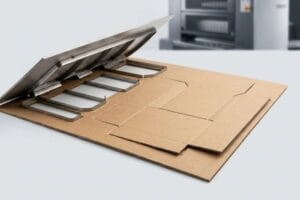
O papelão é um material espesso, à base de celulose, amplamente utilizado para embalagens e merchandising no varejo. Mais espesso que o papel comum, oferece uma excelente relação resistência/peso. Isso permite que os engenheiros dobrem, cortem e construam facilmente unidades pop-up duráveis, caixas dobráveis e displays de varejo de vários níveis.
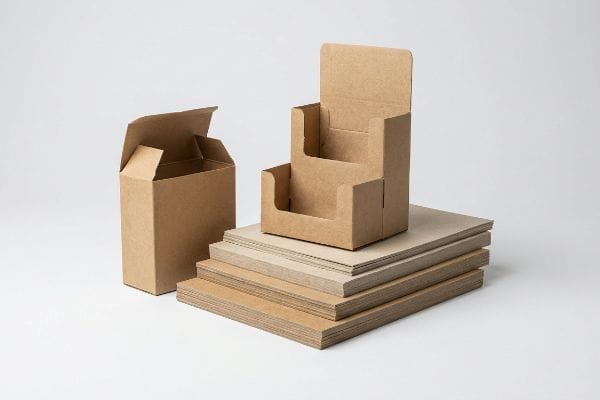
Mas conhecer a definição teórica não vai salvar o lançamento do seu produto no quarto trimestre quando a realidade física chegar às lojas.
Papelão é a mesma coisa que cartão?
Os compradores frequentemente usam esses termos de forma intercambiável em pedidos de compra, presumindo que qualquer lona parda servirá para seus produtos. Essa confusão linguística leva diretamente a falhas estruturais catastróficas.
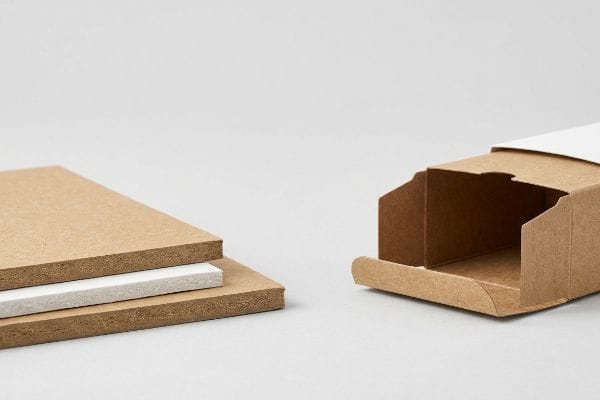
Não. Papelão não é exatamente a mesma coisa que cartão, embora ambos pertençam à mesma família de materiais à base de celulose. Papelão geralmente se refere a um material de papel grosso de camada única usado para caixas dobráveis, enquanto cartão geralmente implica uma estrutura ondulada de múltiplas camadas com uma camada interna canelada para maior durabilidade e resistência a impactos.
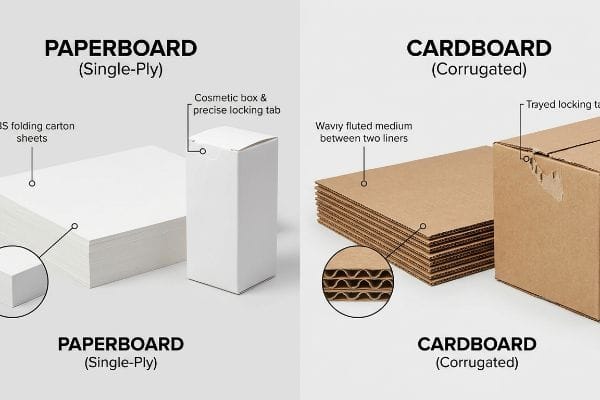
A distinção pode parecer mera semântica no escritório, mas é crucial para a sobrevivência no ponto de venda.
A realidade do papel de teste: Kraft virgem versus papel de teste reciclado
Na prática comum, muitos gerentes de marcas emergentes solicitam "papelão grosso" para balcões de alta qualidade, esperando um acabamento impecável e rígido. Eles não percebem que o papelão ondulado padrão geralmente utiliza material reciclado, que possui fibras mais curtas e frágeis¹.Embora excelentes para caixas de transporte básicas, esses substratos reciclados não possuem a tensão superficial suave²necessária para aplicações gráficas de alta qualidade, deixando a peça impressa final com aparência opaca e estruturalmente comprometida.
Até mesmo designers veteranos muitas vezes ignoram esse ponto cego, presumindo que o termo genérico "papelão" garante resistência estrutural. Já vi vendedores visivelmente frustrados, suando para encaixar à força uma aba de travamento genérica, apenas para ouvir o temido som abafado do papelão reciclado cedendo sob pressão. Quando analiso essas unidades defeituosas, a solução geralmente envolve uma mudança na ciência dos materiais. Ao especificar papelão Kraft virgem para as juntas críticas de sustentação, substituo as fibras recicladas quebradiças por celulose de madeira longa e elástica³.Esse microajuste impede que a aba rasgue, permitindo que o copacker monte a unidade perfeitamente sem recorrer à fita adesiva transparente, preservando, em última análise, a imagem premium da marca e economizando aos clientes semanas de atraso nos lançamentos.
| Erro comum de iniciantes | A solução profissional | Benefício do piso de vendas |
|---|---|---|
| Especificando "papelão" genérico para dobras complexas | Use papelão kraft virgem nas juntas4 | Impede que as abas se rasguem durante a montagem |
| Utilizando papel reciclado para gráficos de alta qualidade | Mude para SBS (sulfato branqueado sólido) de camada única5 | Elimina a absorção de tinta e a perda de nitidez da marca |
| Partindo do pressuposto de que todo papel grosso suporta o peso igualmente, | Adequar o material aos limites de carga dinâmica6 | Impede que as prateleiras se curvem sob o peso de produtos de consumo de massa (FMCG) |
Nunca deixo os clientes na dúvida entre substratos de camada única e estruturas onduladas. Se você só quer a caixa mais barata para enviar ar, eu não sou a pessoa certa, mas projeto exatamente o que as implementações de alto risco no varejo exigem.
🛠️ Mesa do Harvey: Não tem certeza se o seu fabricante lhe ofereceu um tecido reciclado de baixa qualidade ou um papel kraft de alta resistência? 👉 Envie-me as especificações do seu material ↗ — Acesso direto à minha mesa. Zero spam de vendas automatizado, prometo.
Quais são as desvantagens do papelão?
Apesar de sua incrível versatilidade, este material tem um inimigo implacável: a umidade. Ignorar sua natureza porosa transforma um belo projeto estrutural em lixo deformado e inútil.
As desvantagens do papelão incluem sua alta sensibilidade à umidade ambiente, capacidade limitada de carga dinâmica sem reforço e suscetibilidade à deformação química durante a laminação. Quando exposto a alta umidade, as fibras naturais da madeira absorvem água agressivamente, fazendo com que o material inche, enrugue e perca resistência estrutural.
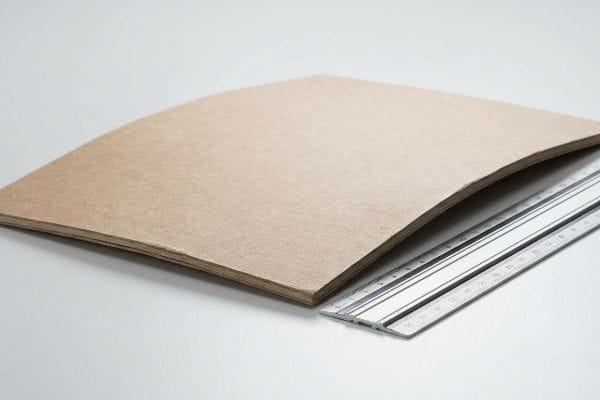
Você pode criar os gráficos mais bonitos do mundo, mas a física sempre tem a palavra final na linha de produção.
A distorção de urdidura causada pela umidade do PVA
Os clientes frequentemente presumem que a montagem de uma folha superior impressa de alta qualidade em uma base rígida de papelão resulta em um painel de exibição perfeitamente plano. Eles aprovam uma renderização digital em 3D e presumem que a fábrica simplesmente prensará os dois materiais juntos como um adesivo gigante. Eles ignoram completamente a realidade química de como a litografia-laminação realmente une esses substratosem um ambiente de produção em massa.
É uma armadilha comum que pega até mesmo equipes de compras experientes, que se perguntam por que seus painéis laterais de 152,4 cm (60 polegadas) de altura chegam em paletes curvados como batatas fritas. O processo de laminação utiliza adesivo PVA (acetato de polivinila) à base de água e, enquanto caminho pelo chão da fábrica, o cheiro característico e azedo da cola PVA secando é um lembrete constante dessa reação química. Conforme a cola úmida seca no ar ambiente, ela encolhe,criando uma imensa tensão superficial que literalmente puxa o substrato para dentro. Para combater isso, aplico um rigoroso "Protocolo de Peso de Cura", empilhando as placas úmidas sob a pressão exata de um peso morto por 24 horas para forçar uma cura plana. Essa disciplina específica de fabricação evita curvaturas catastróficas, garantindo que o expositor fique perfeitamente aprumado no corredor e evitando que as marcas sejam completamente rejeitadas pelos varejistas.
| Erro comum de iniciantes | A solução profissional | Benefício do piso de vendas |
|---|---|---|
| Ignorando a retração do adesivo PVA à base de água9 | Impor uma cura completa de 24 horas para o peso morto10 | Garante que os painéis laterais fiquem retos nos corredores |
| Utilização de laminação unilateral em telas grandes11 | Aplique um delineador duplex equilibrado na parte de trás | Neutraliza a tensão superficial e impede a curvatura |
| Envio de placas sem lacre para climas úmidos | Adicione barreiras de umidade com revestimento de polietileno transparente | Mantém a rigidez vertical durante os lançamentos de verão |
Recuso-me a deixar que a retração química arruine o lançamento de um produto importante da marca. A cura desses substratos exige paciência absoluta e disciplina rigorosa na fábrica, o que se traduz diretamente em uma presença impecável no ponto de venda.
🛠️ Mesa do Harvey: Seus móveis desmontáveis estão chegando deformados ou amassados antes mesmo de chegarem às lojas? 👉 Solicite uma auditoria de fabricação ↗ — Baixe com segurança. Minha caixa de entrada está aberta caso tenha alguma dúvida depois.
Para que serve o papelão?
Além das embalagens padrão, esse substrato é a espinha dorsal do merchandising temporário no varejo, impulsionando compras por impulso em caixas registradoras e cruzamentos de lojas com grande fluxo de pessoas em todo o mundo.
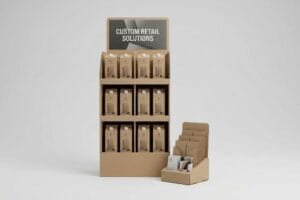
O cartão é utilizado na fabricação de uma ampla variedade de itens estruturais, incluindo caixas dobráveis, expositores de balcão, embalagens de cosméticos e displays de chão de vários níveis. Sua alta imprimibilidade e rigidez, além da possibilidade de corte e vinco, fazem dele o material padrão para transformar folhas planas em ferramentas tridimensionais de marketing para o varejo.
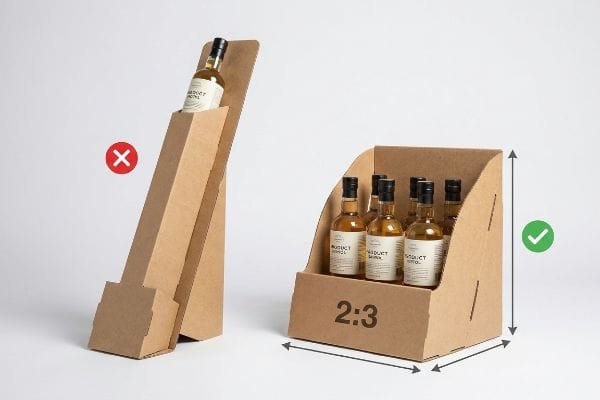
Saber o que produz é útil, mas projetar essas aplicações para que realmente sobrevivam em um ambiente de varejo exige proporções matemáticas rígidas.
Regra de estabilidade do PDQ de bancada
A prática comum em muitas agências de criação é projetar um expositor de balcão para ponto de venda (PDV) que ocupe apenas o tamanho das garrafas do produto, visando o máximo aproveitamento do espaço gráfico. Elas esboçam uma caixa alta e estreita, aplicam um logotipo vibrante no cabeçalho e enviam o arquivo para impressão. Tratam o material como uma tela estática, em vez de uma estrutura física que precisa equilibrar um peso dinâmico.
Isso resulta em unidades PDQ (Product Display Quick - Exibição Rápida de Produtos) com o centro de gravidade muito alto, que falham completamente quando manuseadas por clientes apressados. Imagine construir um arranha-céu sem verificar a base; um solavanco e tudo desaba. Já vi representantes de marcas ansiosos colocarem seus expositores de cosméticos altos e novinhos em folha no caixa, apenas para ouvir a resistência rígida do papelão ceder quando a unidade tomba desajeitadamente para a frente ao ser puxada por um cliente. Eu resolvo isso instantaneamente impondo uma proporção rígida de 2: 3 (Profundidade x Altura) para todas as unidades de pequeno formato. Ao forçar a profundidade da base a suportar matematicamente a altura da estrutura, eliminamos completamente o risco de tombamento, mantendo os produtos seguros, evitando reclamações do gerente da loja e garantindo aquela venda por impulso crucial.
| Erro comum de iniciantes | A solução profissional | Benefício do piso de vendas |
|---|---|---|
| Projetando bancadas | Aplique a proporção rigorosa de 2:3 entre profundidade e altura.13 | Impede que toda a unidade tombe |
| Ignorando o atrito na remoção do produto | Adicione um fundo falso ou um suporte traseiro estendido14 | Mantém o expositor fixo quando os clientes puxam os produtos |
| Colocar garrafas pesadas no nível superior | Desloque o centro de gravidade para a base15 | Impede que a estrutura ceda sob o peso |
Eu projeto displays para impulsionar as vendas, não para serem peças de arte frágeis. Aplicar princípios básicos da física a essas estruturas é a forma como protegemos seu espaço de varejo contra danos acidentais.
🛠️ Harvey's Desk: Seus expositores de balcão estão perigosamente inclinados para a frente quando totalmente carregados com seus produtos pesados? 👉 Solicite sua Avaliação Estrutural ↗ — Sem formulários que geram ligações intermináveis de vendas. Apenas valor agregado.
O papelão é frágil?
A aparente fragilidade desse material é quase sempre sintoma de um projeto estrutural deficiente, e não de uma falha nas próprias fibras de celulose.
Depende. O papelão só é frágil se for fabricado sem a ondulação adequada ou se seus cantos estruturais forem comprometidos durante o transporte. Quando laminado corretamente em uma estrutura ondulada e alinhado verticalmente contra a gravidade, ele pode apresentar uma capacidade de carga dinâmica superior a 907 kg (duas mil libras).
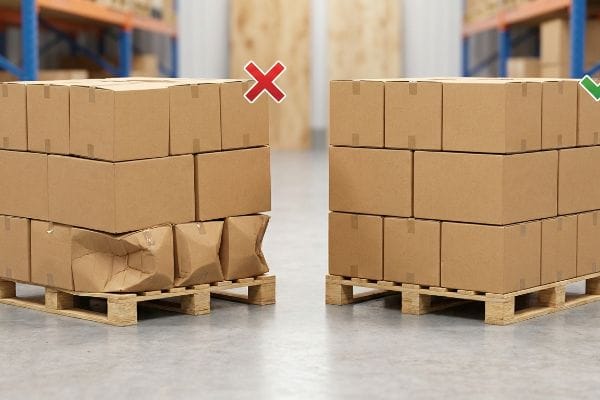
Fazer com que um único monitor fique em pé em um laboratório com temperatura controlada é fácil, mas eis a dura realidade quando você precisa enviar 500 deles através do oceano.
Falha de compressão da saliência do palete
As equipes de compras frequentemente expandem as dimensões das caixas master para maximizar a densidade de envio, presumindo que a compressão bruta do papelão resistente, por si só, protegerá as mercadorias em seu interior. Elas consultam a ficha técnica, veem uma alta classificação no Teste de Compressão da Caixa (BCT) de16e calculam que podem comprimir mais 12,7 mm (0,5 polegadas) de produto na caixa. Ignoram completamente as implacáveis leis da física do empilhamento de paletes em armazéns.
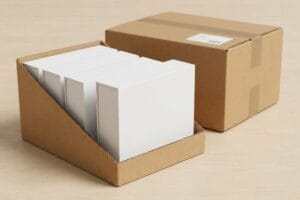
Na minha empresa, vejo rotineiramente esse trabalho teórico de escritório causar problemas na prática durante o transporte da cadeia de suprimentos. Uma caixa de papelão ondulado obtém até 60% de sua resistência vertical¹⁷estritamente do alinhamento de seus quatro cantos. Ao medir as remessas recebidas, frequentemente encontro caixas que ultrapassam o palete padrão de 121,9 x 101,6 cm (48 x 40 polegadas) da GMA (Associação de Fabricantes de Alimentos) por apenas alguns milímetros. Como esses cantos estruturais estão flutuando no ar, sem suportar nenhuma carga, a camada inferior sem suporte se curva visivelmente para fora — e você pode literalmente sentir o pó fino do corte e vinco se desprendendo à medida que os painéis centrais se esmagam catastroficamente. Para corrigir isso, exijo um protocolo rigoroso de caixa delimitadora sem saliência em nosso software CAD (Desenho Auxiliado por Computador), reduzindo artificialmente a área máxima permitida da caixa. Ao aplicar esse ajuste de microtolerância, restauro a resistência crítica à compressão nos cantos, eliminando completamente os danos durante o transporte e evitando estornos massivos no varejo devido ao estoque amassado.
| Erro comum de iniciantes | A solução profissional | Benefício do piso de vendas |
|---|---|---|
| Deixar as caixas de papelão penduradas para fora do palete de madeira | Impor uma caixa delimitadora CAD rigorosa, sem saliências | Impede que a camada inferior desabe de forma catastrófica |
| Baseando-se exclusivamente na espessura da matéria-prima | Alinhe todos os cantos verticais para suportar 60% da carga | Garante a integridade estrutural durante o transporte de contêineres internacionais |
| Maximizar o tamanho da caixa para economizar espaço no frete | A área de contato da embalagem retrátil é de exatamente 0,5 polegadas (12,7 mm) | Elimina as cobranças adicionais do varejista por embalagens primárias danificadas |
Não permito que as teorias de compras se sobreponham à física da logística. Quando fixamos matematicamente os cantos dos seus produtos à plataforma do palete, garantimos que seu investimento estrutural realmente resistirá ao transporte.
🛠️ Mesa do Harvey: Não deixe que uma falha estrutural de 2 milímetros arruine o lançamento em 500 lojas. 👉 Envie-me seu arquivo de corte ↗ — Vou testar os cálculos antes que você desperdice seu orçamento com produção em massa.
Conclusão
Você pode escolher um fornecedor que ignore as leis da logística, mas quando a regra de zero folga é violada e suas caixas master se deformam no palete, os danos ao estoque resultantes acabarão com a margem de lucro da sua campanha e levarão à rejeição imediata do varejista. Mais de 500 gerentes de marca usam meu checklist de pré-impressão para evitar exatamente esses erros fatais no estágio inicial. Pare de contar com o frete internacional e deixe-me auditar pessoalmente seus parâmetros logísticos por meio da minha Auditoria de Corte e Vinco Gratuita ↗ para blindar suas embalagens antes do início da produção em massa.
"Papel Kraft vs. Testliner: Resistência, Custo e Sustentabilidade – LinkedIn", https://www.linkedin.com/posts/fahd-malik-54047a17_packagingindustry-kraftpaper-testliner-activity-7355463111815901184-7J57. [Um guia técnico de ciência dos materiais ou de celulose e papel verificaria que o processo de reciclagem degrada as fibras de celulose, resultando em comprimentos menores e menor resistência à tração em comparação com o papel kraft virgem]. Papel da evidência: Verificação técnica; tipo de fonte: Revista de ciência dos materiais. Fundamentos: Inferioridade estrutural do papelão reciclado. Nota de escopo: Aplica-se a processos padrão de reciclagem mecânica .
"Papel Kraft vs. Testliner: Um Guia Estratégico de Custo e Desempenho", https://packagemanufacturer.com/kraft-paper-vs-testliner/ . [Os padrões da indústria de impressão confirmam que o testliner reciclado apresenta maior porosidade e menor lisura superficial do que os cartões revestidos virgens, impactando a adesão da tinta e a nitidez visual]. Papel da evidência: Especificação técnica; tipo de fonte: Manual da indústria gráfica. Suporte: Degradação da qualidade visual. Nota de escopo: Especificamente em relação a aplicações gráficas de alta qualidade.
"Efeito do teor de fibra virgem nas características de resistência e rigidez…", https://bioresources.cnr.ncsu.edu/resources/effect-of-virgin-fiber-content-on-strength-and-stiffness-characteristics-of-a-three-layer-testliner/. [Uma fonte de ciência dos materiais verificaria que a polpa kraft virgem mantém fibras de celulose mais longas e intactas em comparação com as fibras recicladas, que encurtam e enfraquecem com o processamento repetido]. Papel da evidência: verificação técnica; tipo de fonte: periódico acadêmico ou norma técnica da indústria. Apoia: a afirmação de que a polpa kraft virgem é mais elástica e durável do que o testliner reciclado. Nota de escopo: Concentra-se na morfologia da fibra de celulose .
"Uma visão geral do papel e dos materiais de embalagem de alimentos à base de papel", https://pmc.ncbi.nlm.nih.gov/articles/PMC6801293/. [As especificações técnicas do material confirmariam que as fibras longas do papel kraft virgem proporcionam resistência superior ao rasgo e à dobra em comparação com as fibras recicladas]. Papel da evidência: verificação técnica; tipo de fonte: manual de ciência dos materiais. Benefícios: prevenção do rompimento das abas durante a montagem. Nota de escopo: aplica-se especificamente a pontos de tensão estrutural. ↩
"4 Tipos de Papelão", https://paperbox.org/4-types-of-paperboard/. [Os padrões da indústria de impressão verificariam se o SBS possui uma superfície revestida ou de alta densidade que minimiza a penetração de tinta e maximiza a vivacidade das cores em comparação com o testliner poroso]. Papel da evidência: especificação técnica; tipo de fonte: guia da indústria gráfica. Benefícios: eliminação da absorção de tinta e da perda de nitidez da marca. Nota de escopo: foco na porosidade da superfície e na qualidade de impressão .
"Uma Análise Simplificada da Resistência Dinâmica de Embalagens de Papelão…", https://pmc.ncbi.nlm.nih.gov/articles/PMC10385285/ . [Os princípios da engenharia de embalagens ditam que a seleção de materiais deve estar alinhada com a capacidade de suportar cargas dinâmicas para evitar deflexão e arqueamento estrutural]. Papel da evidência: princípio estrutural; tipo de fonte: livro didático de engenharia. Suportes: impedir que as prateleiras se curvem sob o peso de mercadorias. Nota de escopo: aplica-se a forças de compressão e cisalhamento em ambientes de varejo.
"Entendendo Embalagens Litolaminadas", https://pmpackaging.com/posts/2025/03/understanding-litho-laminated-packaging . [Uma fonte confiável em engenharia de embalagens explicaria a composição química dos adesivos usados na litografia-laminação e como a aplicação desses aglutinantes afeta a integridade estrutural dos substratos]. Papel da evidência: verificação do processo técnico; tipo de fonte: manual da indústria ou livro didático de ciência dos materiais. Apoia: a afirmação de que a laminação envolve ligações químicas complexas em vez de simples pressão. Nota de escopo: foca em métodos de produção industrial em massa.
"Estado da Pesquisa e Tendências no Desenvolvimento do Polivinil…", https://www.scirp.org/journal/paperinformation?paperid=115088. [Documentação de ciência dos materiais sobre acetato de polivinila (PVA) confirma que a evaporação da água durante a cura leva à contração volumétrica e à tensão interna na linha de colagem. Papel da evidência: mecanismo técnico; tipo de fonte: manual de engenharia de adesivos. Suporte: Causa da curvatura do papelão. Nota de escopo: Variável com base na umidade e na concentração da cola. ]
"Adesivo de acetato de polivinila – uma visão geral | Tópicos do ScienceDirect", https://www.sciencedirect.com/topics/engineering/polyvinyl-acetate-adhesive. [A literatura técnica sobre química de adesivos explica como a evaporação da água das colas de PVA cria tensão interna e redução de volume em substratos porosos]. Papel da evidência: explicação técnica; tipo de fonte: livro didático de ciência dos materiais. Fundamentos: a causa da distorção estrutural em papelão. Nota de escopo: específico para formulações à base de água. ↩
"Quanto tempo leva para a cola PVA secar? – YouTube", https://www.youtube.com/watch?v=UzNtlB8c82Y. [As normas de fabricação industrial para montagem de papelão especificam a duração e a pressão mecânica necessárias para neutralizar a tensão do adesivo durante a fase de secagem]. Papel da evidência: especificação técnica; tipo de fonte: manual de fabricação. Suporte: o método para evitar deformações induzidas pela retração. Observação: o tempo pode variar de acordo com a umidade ambiente. ↩
"Laminação unilateral faça você mesmo – YouTube", https://www.youtube.com/watch?v=l4QgITDLDHI. [Guias de engenharia estrutural para sinalização explicam como a tensão superficial assimétrica de filmes de face única induz momentos de flexão no substrato, levando ao arqueamento]. Papel da evidência: explicação técnica; tipo de fonte: guia de engenharia estrutural. Suporte: a causa do arqueamento em telas grandes. Nota de escopo: o efeito é proporcional à área da superfície da tela. ↩
"Displays de Balcão e Bandeja PDQ – Brown Packaging", https://brownpackaging.com/custom-packaging-products/pop-displays/corrugated/countertop-pdq-tray/. [Um guia de engenharia da indústria para embalagens de varejo verificaria as proporções padrão de profundidade para altura necessárias para manter um centro de gravidade estável para displays de papelão de pequeno formato]. Papel da evidência: especificação técnica; tipo de fonte: norma da indústria. Suporta: a regra de estabilidade específica de 2:3 para PDQs. Nota de escopo: aplica-se especificamente a unidades de balcão de pequeno formato. ↩
"O Guia Completo para Displays de Ponto de Venda: Definições, Tipos, Designs…", https://www.hedarack.com/blogs-detail/pdq-display. [Um guia de design da indústria para displays de ponto de venda deve especificar a relação profundidade/altura necessária para garantir a estabilidade estrutural e evitar tombamentos]. Papel da evidência: especificação técnica; tipo de fonte: norma da indústria; Suportes: relações de estabilidade para displays de ponto de venda; Nota de escopo: específico para unidades de balcão de papelão. ↩
"Suportes de cavalete de papelão – Produtos de exibição acessíveis", https://www.affordabledisplayproducts.com/floor-and-table-top-display-easels/easel-backs?page=2&srsltid=AfmBOoo6Ti6YbxJpdX_nz0sdJ7K3O75BQztT-9bSfWlqkwIqJU5uZT8S. [Manuais técnicos para merchandising no varejo devem explicar como fundos falsos ou suportes de cavalete estendidos neutralizam a força da remoção do produto para manter as unidades ancoradas]. Papel da evidência: solução técnica; tipo de fonte: manual de engenharia de embalagens; Suportes: métodos para evitar o movimento do expositor; Nota de escopo: aplica-se a substratos de papelão. ↩
"Estudo de Caso sobre Centro de Gravidade Destaca Testes de Estabilidade e Segurança", https://www.interfaceforce.com/center-of-gravity-case-study-highlights-testing-for-stability-and-safety/. [As diretrizes de engenharia estrutural para displays temporários no varejo devem verificar se o abaixamento do centro de gravidade impede a flambagem e o tombamento sob carga]. Papel da evidência: princípio mecânico; tipo de fonte: guia de engenharia estrutural; Suportes: distribuição de peso para estabilidade; Nota de escopo: física geral aplicada a embalagens de varejo. ↩
"O que é o Teste de Compressão de Caixas segundo a Norma ASTM D642?", https://www.pacorr.com/blog/what-is-box-compression-test-as-per-astm-d642-standard/. [Uma norma da indústria, como a ASTM D642, define o Teste de Compressão de Caixas (TCC) e explica como ele mede a carga máxima que uma caixa de papelão ondulado pode suportar antes de colapsar]. Papel da evidência: especificação técnica; tipo de fonte: norma da indústria; Fundamentos: o uso do TCC como métrica para resistência à compressão bruta; Nota de escopo: aplica-se especificamente a embalagens de papelão ondulado. ↩
"Estimativa da resistência à compressão de caixas de papelão ondulado…", https://pmc.ncbi.nlm.nih.gov/articles/PMC8467740/. [Um guia confiável sobre engenharia de embalagens de papelão ondulado forneceria a porcentagem específica de distribuição da carga vertical concentrada nos cantos]. Papel da evidência: verificação técnica; tipo de fonte: manual da indústria de embalagens. Fundamenta: a premissa de que o alinhamento dos cantos é o principal fator determinante da resistência da pilha. Nota: Essa porcentagem pode variar de acordo com a qualidade específica do papelão e o perfil da ondulação utilizados .