Estratégia PAS. Vender livros no varejo é extremamente competitivo. Se o seu expositor de papelão estiver deformado ou esconder a capa, seu lançamento mais recente se torna um estoque invisível, acumulando poeira.
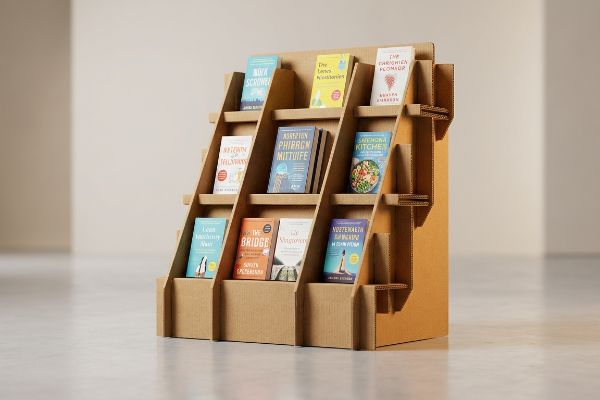
Exibir um expositor de livros de papelão de forma eficaz exige equilibrar a integridade estrutural com a máxima exposição visual. Essas unidades personalizadas organizam volumes pesados de forma eficiente, elevam a arte da capa diretamente ao nível dos olhos do consumidor e criam zonas de merchandising independentes que impulsionam compras por impulso em ambientes de varejo de grande movimento, sem a necessidade de prateleiras permanentes.
Mas fazer com que essas unidades sobrevivam à realidade física de um piso de loja movimentado exige mais do que apenas papel dobrado.
Como expor livros em uma livraria?
Ao entrar numa livraria, você quer que seus títulos estejam em destaque. Mas as prateleiras comuns das lojas são lotadas, o que faz com que as caixas de papelão ondulado sejam a arma definitiva para causar impacto visual.
A exposição de livros em uma livraria envolve o uso estratégico de expositores de chão independentes para quebrar a monotonia dos corredores tradicionais. Ao posicionar expositores de papelão ondulado de alta capacidade perto das entradas ou nas pontas de gôndola, os lojistas podem destacar os lançamentos e direcionar o engajamento do cliente, afastando-o das prateleiras principais congestionadas e garantindo máxima visibilidade.
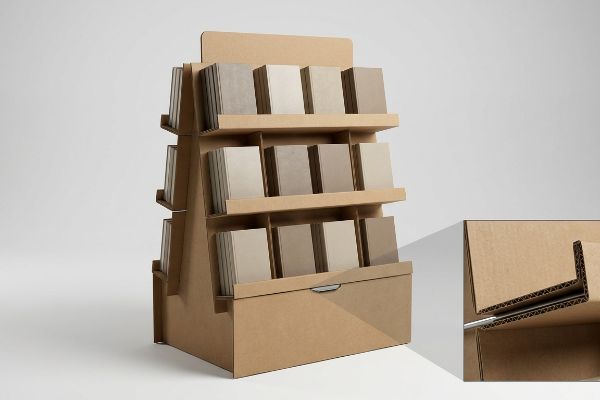
A ideia parece perfeita no papel, mas livros encadernados são incrivelmente densos e a gravidade não perdoa.
Prevenindo o colapso estrutural ao expor livros em livrarias
Uma abordagem comum para editoras independentes é encomendar expositores de chão. Elas partem do princípio de que uma placa de papelão ondulado resistente, com resistência de 32 ECT (Teste de Compressão de Borda)¹ , é suficiente para acomodar 40 livros de capa dura. Os designers criam belos gráficos, concentrando-se inteiramente no cabeçalho para atrair a atenção do leitor.
Vejo essa armadilha constantemente quando compradores juniores ignoram o peso localizado de volumes densos de papel. Certa vez, observei um balconista frustrado tentando consertar com fita adesiva uma prateleira do meio que havia desabado porque os livros de capa dura pesados causaram uma curvatura acentuada. O atrito físico do papelão cru rasgando sob a carga localizada era um sinal claro de falha de projeto. Ao integrar uma barra de suporte de tubo de aço oculta sob a borda frontal, eliminei a curvatura, garantindo que a prateleira permanecesse perfeitamente rígida e evitando a rejeição total da marca pelo varejista.
| Erro comum de iniciantes | A solução profissional | Benefício do piso de vendas |
|---|---|---|
| Utilizando exclusivamente papelão para as prateleiras de livros pesados | Adicionando uma barra de suporte metálica oculta sob a borda2 | Impede que a prateleira do meio ceda sob carga pesada |
| Ignorando a distribuição de peso localizada | Orientação vertical da direção da ranhura para o teste de compressão da caixa (BCT)3 | Mantém o monitor perfeitamente reto |
| Utilizando bases de parede simples para unidades de piso | Exigência de lombadas onduladas de parede dupla4 | Elimina a deformação estrutural do piso |
Eu nunca permito que um cliente envie um expositor de livros com prateleiras sem calcular o peso exato de cada uma. Se os cálculos mostrarem qualquer sinal de deformação, eu exijo reforço estrutural oculto.
🛠️ Mesa do Harvey: Suas prateleiras de papelão estão cedendo sob o peso dos livros de capa dura? 👉 Faça uma Análise de Matemática Estrutural ↗ — Acesso direto à minha mesa. Zero spam de vendas automatizado, prometo.
Quais são algumas maneiras criativas de exibir livros em uma estante?
As prateleiras de lojas de varejo tradicionais costumam parecer um enorme e opressivo arquivo de biblioteca. Para quebrar essa monotonia visual, você precisa de embalagens prontas para exposição que organizem e destaquem o produto de forma dinâmica.
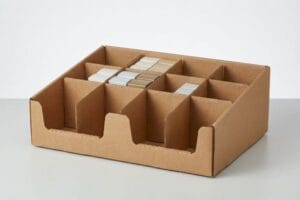
Formas criativas de exibir livros em uma estante incluem o uso de bandejas de papelão ondulado com divisórias modulares ajustáveis. Essa estratégia física transforma fileiras planas e sem graça em apresentações dinâmicas e em camadas, permitindo que os varejistas agrupem livros de diferentes tamanhos com a capa voltada para fora, mantendo a organização rigorosa do estoque dentro dos sistemas de prateleiras tradicionais do varejo.
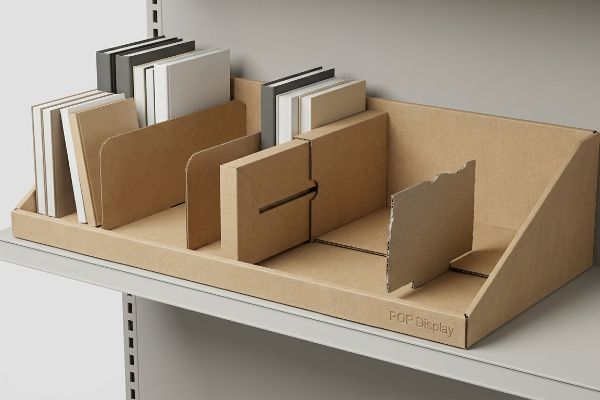
Criar essas bandejas de prateleira dinâmicas parece simples até que o produto final chegue da gráfica.
Gerenciando a flexibilidade de SKUs em maneiras criativas de exibir livros em uma estante
As marcas costumam projetar bandejas estáticas para pontos de venda (PDV) com dimensões específicas para um único livro. Elas partem do princípio de que um encaixe perfeito manterá os livros em pé, então o molde é desenhado com paredes internas fixas e pré-coladas.
Os compradores frequentemente me perguntam como lidar com sortimentos de séries mistas sem comprar ferramentas completamente novas. O problema surge quando um gerente de loja tenta encaixar uma sequência mais grossa, de 400 páginas, em um compartimento rígido projetado para um livro de estreia de 200 páginas, resultando no rasgo estrondoso de uma aba divisória. Resolvi isso utilizando uma estratégia de divisórias modulares flutuantes dentro da bandeja5.Esse sistema ajustável permite que o funcionário deslize as paredes internas para a esquerda ou para a direita, evitando grandes dores de cabeça com a reembalagem e acomodando facilmente diferentes espessuras de lombada.
| Erro comum de iniciantes | A solução profissional | Benefício do piso de vendas |
|---|---|---|
| Colar divisórias estáticas dentro das bandejas das prateleiras | Utilizando divisórias modulares flutuantes6 | Permite ajustes rápidos para diferentes tamanhos de livros |
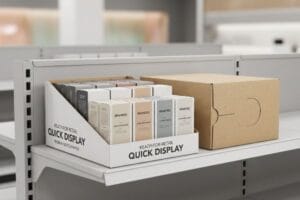
| Projetado exclusivamente para visualização com a lombada para fora | Criação de bandejas PDQ (Product Display Quick) anguladas com a face voltada para fora7 | Captura a atenção do comprador muito mais rapidamente |
| Ignorando as variações na espessura da coluna vertebral | Engenharia de ranhuras deslizantes ajustáveis8 | Impede que a embalagem se rasgue durante o reabastecimento |
Sempre recomendo que as marcas evitem designs de bandejas rígidas e descartáveis. Ao projetar uma estrutura básica com flexibilidade modular, garanto que o acessório suporte múltiplos ciclos de produção.
🛠️ Mesa do Harvey: Quanto do seu orçamento de varejo você está desperdiçando ao imprimir bandejas de prateleira totalmente novas para cada lançamento de livro? 👉 Veja a Solução Modular ↗ — Baixe com segurança. Minha caixa de entrada está aberta caso tenha alguma dúvida depois.
O que caracteriza uma boa exposição de livros?
Um cabeçalho impresso bonito não significa absolutamente nada se o produto em si estiver escondido. A função fundamental de um expositor de loja é tornar a mercadoria visualmente inegável.
Para criar uma boa exposição de livros, é fundamental focar na visibilidade do produto, garantindo que os elementos estruturais nunca obscureçam a capa. Um design eficaz prioriza a facilidade de acesso, mantém a estabilidade vertical mesmo para volumes pesados e comunica claramente o gênero específico do título em até três segundos após o primeiro contato visual.
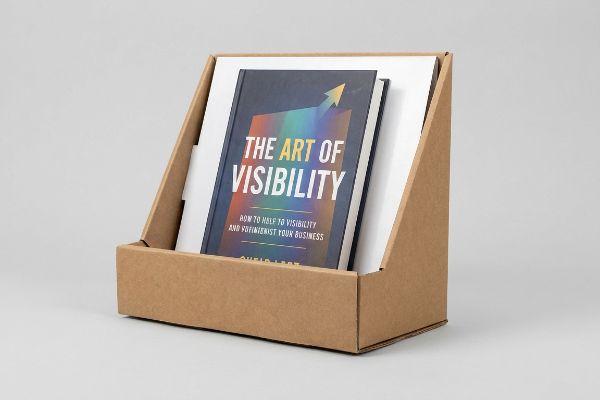
Saber que você precisa de visibilidade clara é fácil, mas projetar a estrutura física de papelão para alcançá-la é onde a maioria das campanhas estruturais falha.
A física da visibilidade que define uma boa exposição de livros
Muitos designers gráficos constroem caixas profundas para acomodar o máximo de livros possível. Eles se concentram bastante em proteger o produto, projetando uma borda frontal alta para evitar que os livros de bolso pesados tombem para a frente, no corredor de compras.
Imagine comprar um outdoor de primeira linha e estacionar um caminhão bem na frente dele. Constantemente vejo capas de livros lindamente impressas completamente escondidas atrás de uma parede frontal ondulada de 10,16 cm (4 polegadas). O som angustiante de um cliente procurando desajeitadamente em uma caixa de livros escondida me indica que o projeto falhou estruturalmente. Eu aplico a regra de altura da borda "Produto em Primeiro Lugar", reduzindo ativamente a altura da parede frontal para garantir pelo menos 85% de visibilidade da capa. Essa simples redução estrutural aumenta drasticamente as taxas de compra por impulso no ponto de venda .
| Erro comum de iniciantes | A solução profissional | Benefício do piso de vendas |
|---|---|---|
| Construção de muros de contenção frontais altos | Implementando a regra de altura do lábio de visibilidade de 85%11 | Apresenta a arte completa da capa do livro |
| Projetando prateleiras com fundo plano | Inclinar as prateleiras inferiores para cima em 15 graus12 | Facilita a leitura de títulos de nível inferior |
| Baseando-se em interiores estampados escuros | Utilizando forros internos brancos13 | Reflete a luz ambiente sobre a mercadoria |
Recuso-me a deixar que limitações estruturais escondam o seu produto. Elimino ativamente cada milímetro de excesso de papelão da área de maior impacto visual para garantir que a arte da capa se venda por si só.
🛠️ Mesa do Harvey: Será que a sua prateleira atual está escondendo o nome do autor dos clientes que passam? 👉 Solicite uma verificação de visibilidade ↗ — Sem formulários que geram ligações intermináveis de vendas. Apenas valor puro.
Qual a melhor maneira de expor livros em uma venda de garagem?
Transportar mercadorias em ambientes externos imprevisíveis exige simplicidade e robustez. Você precisa de estruturas temporárias que resistam a terrenos irregulares, atrito e orvalho da manhã.
A melhor maneira de exibir livros em uma venda de garagem é utilizando caixas de papelão ondulado resistentes e rasas, que elevam os itens do chão úmido. Organizar o acervo com a lombada para cima em caixas baixas facilita a visualização dos livros, ao mesmo tempo que protege as páginas de papel da umidade do concreto e da sujeira externa.

Mas conhecer a teoria não basta quando as máquinas começam a funcionar e essas unidades de papel chegam ao chão.
Por que as vitrines convencionais falham quando você precisa da melhor maneira de exibir livros em uma venda de garagem?
Vendedores independentes costumam usar expositores de chão padrão de lojas de departamento para vender seus produtos em eventos ao ar livre ou feiras de rua. Eles presumem que, se um expositor se mantém bem em uma grande loja com temperatura controlada, ele terá um desempenho perfeito se estiver colocado diretamente em uma entrada de garagem ou gramado.
Na minha empresa, vejo com frequência compradores ignorando a ação capilar devastadora do papelão cru em solo úmido. Eles colocam uma base padrão sem tratamento diretamente sobre o concreto molhado pela manhã e, em poucas horas, o revestimento poroso absorve a umidade, inchando visivelmente. Quando meço o teor de umidade, observo a resistência à compressão evaporar, fazendo com que toda a camada inferior ceda sob o peso de 22,67 kg de livros. Resolvo esse problema aplicando uma barreira transparente específica de Poly-Coat nos 10,16 cm inferiores da estrutura. Ao projetar essa simples proteção contra umidade, evito completamente a infiltração, evitando que o fornecedor tenha um lote de mercadorias encharcadas arruinado e prevenindo uma perda estimada de 40% no valor do estoque.
| Erro comum de iniciantes | A solução profissional | Benefício do piso de vendas |
|---|---|---|
| Colocação de bases onduladas brutas sobre concreto úmido | Aplicação de uma barreira de umidade transparente Poly-Coat14 | Impede o colapso estrutural da camada inferior |
| Utilizando recipientes fundos e estreitos para navegar | Implantação de caçambas de despejo largas e rasas | Agiliza a experiência de navegação do cliente |
| Utilizando fita adesiva padrão para instalações externas | Utilizando abas estruturais intertravadas15 | Mantém a unidade estável em condições de umidade |
Eu nunca confio na borda de papel cru em um piso de concreto. Proteger a fundação com uma barreira física de polímero é a única maneira de garantir que a estrutura resista às intempéries.
🛠️ Mesa do Harvey: Você sabe a taxa exata de absorção de umidade por capilaridade do linerboard da base do seu monitor atual? 👉 Envie-me seu arquivo de corte ↗ — Vou testar os cálculos antes que você gaste seu orçamento com produção em massa.
Conclusão
Você pode escolher um fornecedor mais barato, mas quando uma base de papelão ondulado sem tratamento absorve a umidade do concreto e colapsa completamente, todo o seu estoque de livros pesados cairá no chão, causando uma perda estimada de 40% no valor do produto. Esta é a especificação exata que meus 10 principais clientes do varejo usam para garantir zero rejeições de impressão. Pare de deixar a integridade estrutural dos seus produtos ao acaso e permita que eu pessoalmente analise seus arquivos com minha Auditoria de Corte e Vinco gratuita ↗ para identificar pontos críticos de atrito antes do início da produção em massa.
"Escolhendo entre caixas de 200 e 32 ECT | UCanPack", https://www.ucanpack.com/blog/post/200-vs-32-ect. [Uma fonte confiável de engenharia de embalagens forneceria a resistência à compressão vertical de uma placa de 32 ECT para verificar se ela suporta o peso de 40 livros de capa dura. Papel da evidência: validação técnica; tipo de fonte: especificação da indústria. Suporta: viabilidade estrutural do display. Observação: a capacidade de carga real depende do design e da geometria específicos da unidade de exibição. ]
"Mais de 10 maneiras de restaurar prateleiras arqueadas – YouTube", https://www.youtube.com/watch?v=1QJqUj4zT0E . Guias de projeto estrutural para displays de ponto de venda descrevem como a integração de suportes metálicos redistribui a carga para evitar a flexão do papelão. Papel da evidência: validação do projeto; tipo de fonte: guia de fabricação de displays para varejo. Suportes: prevenção da flexão no meio da prateleira. Observação sobre o escopo: aplica-se a expositores de livros de grande porte.
"Estimativa da resistência à compressão de caixas de papelão ondulado para uma …", https://pmc.ncbi.nlm.nih.gov/articles/PMC9864211/. As normas de engenharia de embalagens explicam como o alinhamento vertical das ondulações maximiza o valor do Teste de Compressão da Caixa (BCT, na sigla em inglês) aproveitando as colunas verticais do papelão ondulado. Papel da evidência: verificação técnica; tipo de fonte: manual de engenharia. Suporte: o método para manter os displays retos sob cargas verticais. Nota de escopo: a eficácia é específica para forças de compressão. ↩
"Projeto Ótimo de Embalagens de Papelão Ondulado de Parede Dupla – PMC", https://pmc.ncbi.nlm.nih.gov/articles/PMC8950760/ . As especificações técnicas para materiais de papelão ondulado demonstram que o papelão de parede dupla aumenta significativamente a resistência ao empilhamento e a resistência à flambagem em comparação com o papelão de parede simples . Papel da evidência: validação do desempenho do material; tipo de fonte: ficha técnica. Apoia: o uso de material de parede dupla para eliminar a flambagem das unidades de base. Nota de escopo: depende da combinação específica de ondulações utilizada.
"Design de embalagens como ferramenta de branding na indústria cosmética – PMC", https://pmc.ncbi.nlm.nih.gov/articles/PMC9123395/. [Uma fonte confiável sobre engenharia de displays de varejo ou design de embalagens validaria o uso de divisórias ajustáveis para acomodar dimensões variáveis de SKUs dentro de uma área fixa]. Papel da evidência: Validação técnica; tipo de fonte: Guia de design de embalagens ou white paper do setor. Argumentos que comprovam: A eficácia de divisórias modulares no gerenciamento da flexibilidade de SKUs. Nota de escopo: Específico para bandejas de varejo de papelão ondulado ou plástico .
"Embalagens prontas para o varejo: dez grandes benefícios | Bennett | RRP | SRP", https://bpkc.com/blogs/blog/retail-ready-packaging-ten-huge-benefits. [Guias de design da indústria para displays de ponto de venda detalham como divisórias modulares permitem flexibilidade de SKU e rápida reconfiguração para diferentes dimensões de produto]. Papel da evidência: especificação técnica; tipo de fonte: guia de design da indústria. Suporta: ajustes rápidos para tamanhos de livros variados. Nota de escopo: aplicável a bandejas de papelão PDQ. ↩
"[PDF] Face Out: The Effect of Book Displays on Collection Usage", https://scholarsarchive.byu.edu/cgi/viewcontent.cgi?article=7099&context=facpub. [Pesquisas acadêmicas sobre merchandising visual confirmam que a orientação dos produtos com a face voltada para fora aumenta a proeminência visual e o engajamento do comprador em comparação com a disposição com a lombada para fora]. Papel da evidência: dados empíricos; tipo de fonte: estudo de marketing de varejo. Argumentos que sustentam: aumento da atenção do consumidor. Nota de escopo: foco em ambientes de varejo de livros. ↩
"Prevenção de perdas no varejo – Wikipédia", https://en.wikipedia.org/wiki/Retail_loss_prevention. [Normas de engenharia de embalagens explicam como ranhuras ajustáveis reduzem a tensão estrutural e o atrito, minimizando assim o risco de rasgos durante a reposição de produtos]. Papel da evidência: especificação técnica; tipo de fonte: manual de engenharia de embalagens. Argumentos: prevenção de embalagens rasgadas. Nota de escopo: refere-se a prateleiras de varejo de alta densidade. ↩
"5 dicas essenciais para exposição de livros em livrarias – Donracks", https://www.donracks.com/blog/top-5-tips-for-book-store-display/. [Normas de design industrial para mobiliário comercial explicam que bordas de retenção são necessárias para contrabalançar a inclinação para a frente de livros de bolso pesados em prateleiras profundas]. Papel da evidência: validação técnica; tipo de fonte: guia de design industrial. Fundamentos: a função mecânica das bordas frontais. Nota de escopo: aplica-se especificamente a prateleiras de armazenamento de alta densidade. ↩
"Impacto do Merchandising Visual nas Compras por Impulso do Consumidor…", https://www.researchgate.net/publication/340962199_Impact_of_Visual_Merchandising_on_Customer_Impulse_buying_behavior_in_retail_stores_in_Sudan. [Pesquisa sobre comportamento do consumidor e merchandising visual demonstra uma correlação positiva entre alta visibilidade do produto e aumento nas taxas de compra por impulso]. Papel da evidência: Validação empírica; tipo de fonte: Pesquisa de mercado ou estudo do setor varejista. Argumenta: Que o aumento da visibilidade da embalagem impulsiona a interação do consumidor. Nota sobre o escopo: A eficácia pode variar de acordo com a categoria do produto e o layout da loja .
"(PDF) Merchandising visual e exposição – Academia.edu", https://www.academia.edu/3194731/Visual_merchandising_and_display. [As normas para expositores de varejo e os guias de merchandising visual especificam a porcentagem de um produto que deve permanecer visível acima de uma borda de retenção para manter o interesse do consumidor]. Papel da evidência: especificação técnica; tipo de fonte: manual do setor. Suporte: a regra de altura específica para visibilidade de livros. Observação sobre o escopo: pode variar de acordo com a categoria do produto. ↩
"Recomendações ergonômicas de altura para supermercados…", https://www.instagram.com/p/DG4oD07TNDJ/?hl=en. [Pesquisa ergonômica sobre linhas de visão e design de displays de varejo estabelece o ângulo ideal para inclinar prateleiras inferiores, a fim de melhorar a legibilidade para clientes em pé]. Papel da evidência: especificação técnica; tipo de fonte: estudo ergonômico. Embasamento: a recomendação de inclinação de 15 graus. Observação sobre o escopo: aplica-se especificamente a prateleiras de nível inferior. ↩
"Efeito de luzes brancas quentes/frias na percepção visual e no humor em…", https://pmc.ncbi.nlm.nih.gov/articles/PMC8481791/. [Os princípios da refletância da luz e da física óptica demonstram que superfícies brancas maximizam a reflexão da luz ambiente sobre as mercadorias em comparação com cores escuras]. Papel da evidência: princípio científico; tipo de fonte: texto de engenharia de iluminação. Argumentos: o benefício de revestimentos brancos para iluminação. Nota de escopo: refere-se às propriedades de reflexão difusa .
"Melhor Barreira de Umidade para Paredes de Bloco de Concreto: Guia de Especialistas", https://polyguard.com/blog/moisture-barrier-cmu-wall. [Especificações técnicas para revestimentos poliméricos em materiais celulósicos demonstram que as barreiras de umidade previnem a ação capilar e o amolecimento estrutural em papelão ondulado]. Papel da evidência: verificação técnica; tipo de fonte: manual de ciência dos materiais. Benefícios: prevenção do colapso estrutural. Nota de escopo: foco em bases de papelão ondulado. ↩
"Unindo Forças: O Papel das Fitas Adesivas em Embalagens", https://www.ucanpack.com/blog/post/sticking-together-the-role-of-adhesive-tapes-in-packaging. [Dados de engenharia sobre falhas adesivas indicam que a umidade degrada a adesão de fitas padrão, enquanto os encaixes mecânicos mantêm a integridade independentemente da umidade]. Papel da evidência: validação técnica; tipo de fonte: guia de engenharia de embalagens. Suporte: estabilidade da unidade em condições úmidas. Nota de escopo: especificamente para instalações temporárias externas .