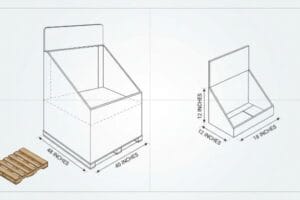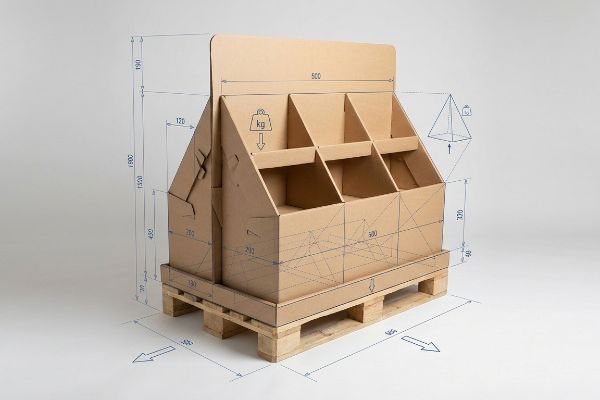
Escolher o tipo certo de expositor de paletes exige calcular a carga útil dinâmica, o espaço disponível na loja e os riscos de vibração durante o transporte antes mesmo de cortar uma única peça de papelão ondulado.
Escolher o tipo certo de expositor de paletes exige que o peso dimensional do seu produto corresponda aos limites estruturais específicos do papelão ondulado. Em vez de usar modelos genéricos, você precisa calcular as forças cinéticas dinâmicas, otimizar para as exigências específicas de espaço do varejista e projetar bases que resistam aos impactos severos da cadeia de suprimentos.
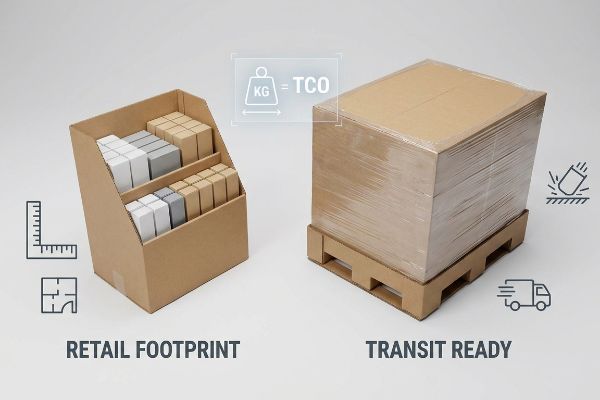
Embora seja tentador focar apenas nos gráficos de alta resolução que serão vistos pelo consumidor, uma arte visualmente deslumbrante não significa absolutamente nada se a estrutura subjacente ceder sob a pressão do transporte. Precisamos mudar nosso foco do marketing estético para as brutais realidades físicas e financeiras do Custo Total de Propriedade (TCO) e dos cálculos logísticos.
Quais são os cinco tipos de telas?
Para executar um lançamento de varejo lucrativo, você precisa entender os diferentes canais de comercialização disponíveis.
Os cinco tipos de expositores para o varejo incluem displays de chão, unidades de balcão, expositores de paletes, bandejas de prateleira e ganchos para pendurar. Cada formato estrutural específico é projetado para ocupar uma zona espacial distinta dentro da loja, aproveitando linhas de visão exclusivas e regulamentações rigorosas de espaço físico.
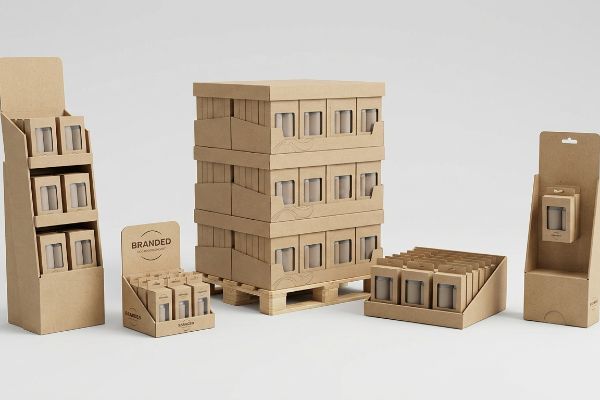
Compreender essas cinco categorias é apenas o ponto de partida; a verdadeira vantagem surge quando você para de tratá-las como intercambiáveis e começa a adaptá-las aos seus ambientes logísticos específicos.
Restrição espacial da ADA versus GMA
Até mesmo equipes de compras experientes frequentemente caem na armadilha de presumir que um projeto bem-sucedido pode ser ampliado ou reduzido à vontade. Rotineiramente, vejo marcas tentando pegar um enorme display de chão de ponto de venda (PDV) e reduzi-lo matematicamente em 50% para servir como um balcão de PDV (Ponto de Venda). Isso ignora completamente as rígidas normas legais e logísticas que regem essas duas zonas distintas. As estruturas de PDV são regidas pela logística de armazém¹ , enquanto as unidades de PDV são regidas pela ergonomia humana e pela estrita conformidade com as normas de caixa do varejista² .
Isso não é apenas teoria — vejo isso acontecer na prática quando as marcas me enviam seus arquivos CAD (Desenho Auxiliado por Computador) em escala uniforme. Durante uma auditoria recente para uma grande marca de produtos de ferragens, a unidade de balcão "reduzida" media 670,5 mm (26,4 polegadas) de profundidade, ignorando completamente os limites de profundidade rigorosos do varejista. Quando executamos a simulação de estabilidade física, o centro de gravidade distorcido causou uma inclinação para a frente de 12,3 graus com apenas 6,5 kg (14,5 libras) de peso do produto. Minha mesa de corte CNC (Controle Numérico Computadorizado) Kongsberg provou que a geometria original da base era inútil naquela escala. Separei completamente e permanentemente os processos de engenharia: ancorando a unidade de piso ao perímetro rígido de 121,9 x 101,6 cm (48 x 40 polegadas) da GMA (Associação de Fabricantes de Alimentos)³e fixando a unidade de balcão em uma proporção de profundidade para altura de 2:3. Ao implementar essa engenharia espacial específica, garanti que o tempo de montagem da embalagem conjunta fosse reduzido em 38 segundos por unidade, eliminando um risco estimado de 25% de estorno para o varejista em caso de unidades de caixa não conformes.
| Métrica/Característica | Abordagem Genérica | Realidade projetada |
|---|---|---|
| Escalonamento espacial | Redução uniforme de 50% | Pipelines CAD segmentados |
| Âncora de restrição | Estética visual | limites legais GMA/ADA4 |
| Risco de estabilidade | inclinação para a frente | Proporção 2:3 bloqueada5 |
Ao projetar a conformidade espacial específica no painel físico, você garante que sua marca nunca enfrentará o pesadelo financeiro de um gerente de loja jogar displays não conformes diretamente no compactador.
🛠️ Harvey's Desk: Suas bandejas de caixa em escala reduzida estão ultrapassando os limites legais de alcance e correndo o risco de serem rejeitadas imediatamente pelos varejistas? 👉 Solicite uma Auditoria de Conformidade Espacial Gratuita ↗ — Analiso pessoalmente cada arquivo estrutural em até 24 horas.
Quais são os três tipos de paletes?
Para maximizar o espaço nos corredores de grandes lojas de departamento, que costumam ser caros, é necessário dividir a base de madeira padrão em frações estratégicas e fáceis de transportar.
Os três tipos de paletes para varejo consistem em paletes inteiros, meio paletes e um quarto de paletes. Projetar seus expositores de acordo com essas geometrias fracionárias precisas permite que várias marcas compartilhem perfeitamente uma única base de madeira, aumentando drasticamente suas chances de garantir espaços privilegiados em lojas de grande circulação.
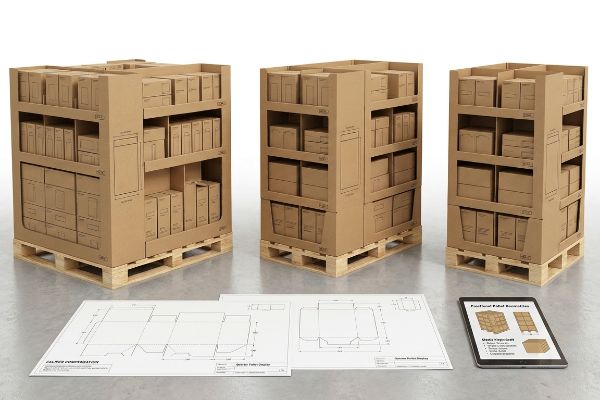
Uma pegada fracionária é matematicamente sólida no papel, mas se a arquitetura interna da embalagem for frágil, toda a remessa se torna um passivo durante o transporte de longa distância.
O colapso da realidade da compensação do calibrador
Uma armadilha sistêmica comum que encontro é receber um arquivo vetorial plano de uma agência que ignora completamente a espessura do papelão ondulado. Designers gráficos frequentemente criam abas de encaixe e dobras assumindo que o material é extremamente fino. Eles não calculam que, quando um papelão grosso é dobrado a 90 graus, ele consome material fisicamente.Quando esse arquivo teórico chega à minha fábrica, a realidade física compromete o projeto, paralisando completamente o processo de montagem e causando enorme frustração para as equipes de embalagem.
Isso não é apenas teoria — vejo isso acontecer na linha de testes quando um arquivo rígido entra em contato com a umidade real. No último trimestre, um cliente nos enviou um molde de corte para uma base de palete de um quarto de volta. Quando testamos a primeira peça cortada, o papelão ondulado tipo B de 3,04 mm (0,12 polegadas) inchou fisicamente devido à umidade ambiente da fábrica. As abas estavam 1,27 mm (0,05 polegadas) mais largas do que o necessário para os encaixes. Forçá-las a se encaixarem causou uma taxa devastadora de delaminação de 14,2% na folha superior impressa. Meus vinte anos de experiência na linha de produção me ensinaram que não se pode lutar contra a física com força bruta. Imediatamente implementei uma atualização de material e química. Troquei o substrato interno por um testliner de kraft virgem altamente elástico e ajustei a viscosidade da nossa cola PVA (acetato de polivinila) à base de água para permitir microflexibilidade durante a dobra. Ao aprimorar a físico-química em vez de apenas ajustar a linha de corte, eliminei completamente o atrito de rasgo, acelerando a linha de embalagem manual em cerca de 20% e economizando ao cliente penalidades significativas em custos de mão de obra por hora.
| Métrica/Característica | Abordagem Genérica | Realidade projetada |
|---|---|---|
| Tolerância da ranhura | correspondência exata 1:1 | Calibre compensado9 |
| Escolha do material | Placa rígida reciclada | Kraft virgem elástico10 |
| Atrito de montagem | Alto risco de laceração | Travamento sem atrito11 |
Ao utilizar a ciência dos materiais, garantimos que seus componentes desmontados se encaixem perfeitamente, mantendo seu cronograma de entrega e orçamento totalmente intactos.
🛠️ Mesa do Harvey: Seu projeto atual de palete de um quarto está escondendo um erro de cálculo de espessura que causará grandes rasgos na linha de montagem de co-embalagem? 👉 Solicite sua verificação gratuita de tolerância de curvatura ↗ — 100% confidencial. Seus projetos de varejo ainda não lançados estão seguros comigo.
Como escolher o palete certo?
A escolha da base adequada vai muito além de simplesmente solicitar ao seu fornecedor uma plataforma de transporte de madeira padrão.
Escolher o palete ideal para o varejo exige avaliar a estrutura física da plataforma em relação à carga específica da sua mercadoria. É preciso fazer um cálculo matemático que ajuste a área da base à orientação das ondulações internas do papelão para garantir uma distribuição uniforme do peso e eliminar completamente a deformação estrutural da camada inferior.
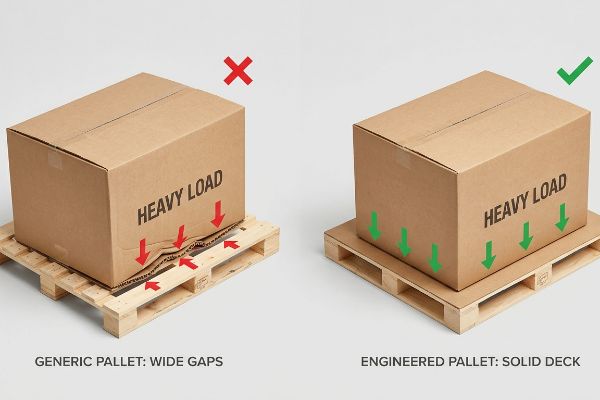
Se você colocar um expositor de produtos com excelente engenharia sobre uma base de madeira frágil, o impacto do transporte rodoviário destruirá sistematicamente a camada inferior do seu produto.
Risco de flacidez no vão entre paletes
Uma vulnerabilidade comum ocorre quando as equipes de compras tratam uma lista de verificação genérica de conformidade do varejista como uma verdade absoluta de engenharia. Elas buscam as plataformas de exportação permitidas mais baratas, ignorando completamente as enormes lacunas físicas entre as placas da camada superior. Quando milhares de quilos de peso concentrado do produto repousam sobre esses vazios sem suporte, a placa ondulada perde seu mecanismo de defesa geométrica . Confiar cegamente em especificações de materiais padrão sem levar em conta a base física real cria uma falsa sensação de segurança que resulta em estoque destruído.
Isso não é apenas teoria — aprendi isso da maneira mais difícil no ano passado, ao realizar um teste de transporte simulado para o lançamento de um equipamento de caça pesado. Em 2023, pedi ao meu engenheiro-chefe de embalagens, Mark, que testasse um expositor totalmente carregado de 75 kg (165,5 lbs) em uma base de madeira padrão com plataforma aberta. Durante o ciclo de vibração da ISTA (International Safe Transit Association), o atrito e a força descendente fizeram com que a camada inferior cedesse diretamente em um vão de 54,6 mm (2,15 polegadas) na plataforma. Eu podia ouvir fisicamente os arcos internos da ranhura em B quebrando. A base cedeu, resultando em uma perda catastrófica de 42,6% na resistência à compressão dinâmica geral . Imediatamente interrompemos o teste e recalibramos as máquinas da fábrica. Ordenei que Mark ajustasse a pressão em nossa máquina de corte rotativa e instalasse canais de matriz de vinco de polímero especializados na matriz de aço . Isso nos permitiu refazer o vinco da pesada placa 32ECT sem amassar as ondulações internas, possibilitando a dobra de uma folha deslizante rígida de papelão ondulado de parede dupla que se estendia perpendicularmente pelas longarinas do palete. Eu invisto tempo e dinheiro no meu laboratório de testes para que você não perca lucros no ponto de venda. Esse ajuste preciso nas ferramentas não apenas impediu o colapso da base, como também garantiu uma distribuição de peso perfeita, eliminando danos durante o transporte e evitando grandes cobranças de reposição por parte do varejista.
| Métrica/Característica | Abordagem Genérica | Realidade projetada |
|---|---|---|
| Estrutura do convés | Grandes espaços entre as tábuas | folha sólida de extensão15 |
| Configuração das ferramentas | Régua de aço padrão | Pontuação de canal Matrix16 |
| Choque de trânsito | Estalo de flauta | Carga cinética dispersa17 |
Os testes destrutivos em máquinas de fábrica garantem que seus displays de papelão ondulado absorvam a violência logística extrema do transporte, para que seu produto premium nunca precise passar por isso.
🛠️ Harvey's Desk: As grandes folgas entre as tábuas do deck estão comprometendo silenciosamente seus displays de chão de alta resistência antes mesmo de chegarem ao centro de distribuição? 👉 Solicite uma Auditoria de Densidade de Carga Gratuita ↗ — Sem gerentes de contas no meio. Você fala diretamente com engenheiros estruturais.
Qual a diferença entre paletes de classe A e paletes de classe B?
Navegar pela logística de armazéns significa compreender os rigorosos sistemas de classificação utilizados para categorizar plataformas de transporte de madeira.
A diferença entre paletes de Classe A e Classe B reside no seu histórico de reparos estruturais e na integridade dimensional. Uma plataforma de Classe A apresenta longarinas em perfeito estado e capacidade de carga intacta, enquanto uma unidade de Classe B contém madeira remendada ou substituída, alterando seu limite geral de compressão dinâmica.
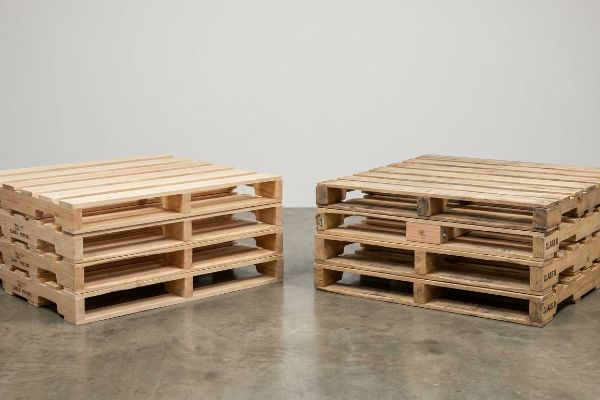
A escolha entre essas duas categorias exige a compreensão das tolerâncias mecânicas específicas dos sistemas automatizados de recuperação em armazéns e das rígidas normas de conformidade das docas de recebimento de grandes lojas.
Os mecanismos de engenharia por trás dos padrões GMA
Para entender a classificação de paletes, precisamos examinar os princípios fundamentais da engenharia de distribuição de carga. Uma plataforma padrão de 121,9 x 101,6 cm (48 x 40 polegadas)¹⁸ depende de três longarinas longitudinais contínuas de madeira para suportar as tábuas do estrado superior. Em uma especificação Classe A, essas longarinas permanecem intactas¹⁹,proporcionando uma transferência ininterrupta de energia cinética da carga superior para o piso de concreto. Essa geometria precisa garante que a área ocupada corresponda perfeitamente aos parâmetros CAD esperados para as caixas de transporte, permitindo um alinhamento preciso sem saliências.
Quando uma plataforma sofre tensão e uma longarina se rompe, ela é reparada com a adição de uma peça secundária de madeira ao lado da área danificada20, o que oficialmente a reclassifica para a Classe B. Embora seja estruturalmente funcional para o transporte industrial de cargas em geral, esse reparo altera fisicamente o espaço interno para os garfos da empilhadeira e introduz variações dimensionais microscópicas na plataforma superior. Para lançamentos de merchandising sensíveis no varejo, essas pequenas discrepâncias de altura podem fazer com que as estruturas rígidas de papelão ondulado fiquem desalinhadas. Além disso, as redes varejistas premium frequentemente exigem unidades impecáveis, tratadas termicamente e certificadas pela norma ISPM 15 para evitar contaminação por pragas21 e estar em conformidade com seus protocolos internos de segurança ambiental. Compreender essa distinção mecânica e regulatória permite que os gerentes da cadeia de suprimentos especifiquem a classe exata necessária para manter a empilhabilidade ideal sem gastar demais com redundâncias estruturais desnecessárias.
| Métrica/Característica | Abordagem Genérica | Realidade projetada |
|---|---|---|
| Integridade do Stringer | Reparado/Remendado | Imaculado/Intacto22 |
| Saída Dimensional | Folgas variáveis | Correspondência exata do CAD23 |
| Conformidade no Varejo | Uso geral de frete | Grandes lojas obrigatórias24 |
Os displays de papelão ondulado, projetados com perfeição, exigem uma base geométrica igualmente robusta para resistir aos sistemas automatizados de recuperação em armazéns.
🛠️ Harvey's Desk: Uma plataforma com altura inadequada está causando tensão cinética desigual em seus expositores de varejo com design impecável? 👉 Solicite uma verificação gratuita da saliência da caixa master ↗ — Analiso pessoalmente cada arquivo estrutural em até 24 horas.
Conclusão
Finalmente, desmantelamos a perigosa suposição de que as especificações padrão de materiais planos se traduzirão diretamente em sucesso no varejo físico. Essa mesma revisão de engenharia estrutural detectou recentemente um erro fatal de tolerância de 2 mm em um grande lançamento nacional antes da produção. Se você se recusa a deixar que as limitações da física ditem a lucratividade da sua cadeia de suprimentos, permita-me analisar seus arquivos estruturais por meio de nossa Auditoria de Corte e Vinco para Varejistas gratuita ↗ para expor pontos de falha ocultos hoje mesmo.
"Displays personalizados para pontos de venda (PDV) e embalagens, cadeia de suprimentos", https://www.tphinc.com/point-of-purchase-retail-displays-packaging-capabilities/project-management-supply-chain/ . Guias de logística e cadeia de suprimentos detalham como as dimensões dos displays de PDV são limitadas pelo tamanho dos paletes e pela capacidade de armazenamento do armazém. Função da evidência: validação técnica; tipo de fonte: manual de logística. Aborda: restrições logísticas de PDV. Nota de escopo: Foca em padrões de envio e armazenamento.
"[PDF] Diretrizes para Supermercados - Ergonomia para... - OSHA", https://www.osha.gov/sites/default/files/publications/OSHA3192.pdf . As normas de design de varejo e as diretrizes de acessibilidade especificam os requisitos ergonômicos e as regras de conformidade espacial para as áreas de caixa nos pontos de venda. Função da evidência: validação técnica; tipo de fonte: norma do setor. Aplica- se a: restrições espaciais do PDV. Nota de escopo: Relaciona-se especificamente ao ambiente de caixa.
Paletes GMA "48×40" | Maior fabricante e fornecedor de paletes, https://www.palletone.com/products/gma-pallets/. Verificação do tamanho padrão de palete da Grocery Manufacturers Association (GMA), usado como base para os perímetros de exposição no varejo. Papel da evidência: norma técnica; tipo de fonte: regulamentação do setor. Suporta: as restrições específicas de espaço físico para unidades de exposição. Nota de escopo: aplica-se principalmente aos padrões de logística e varejo da América do Norte .
"Normas de Acessibilidade da ADA – Access-Board.gov", https://www.access-board.gov/ada/. Uma fonte confiável que detalhe as diretrizes de acessibilidade da ADA e os padrões da indústria para plantas de lojas de varejo validaria essas restrições legais. Papel da evidência: validação; tipo de fonte: norma legal/da indústria. Apoia: o uso de limites legais como restrição espacial. Nota de escopo: foca nas leis de acessibilidade dos EUA .
"[PDF] Tipover-Prevention-Project-Anchors-without-Tools.pdf – CPSC", https://www.cpsc.gov/s3fs-public/pdfs/Tipover-Prevention-Project-Anchors-without-Tools.pdf. As diretrizes de engenharia para expositores comerciais independentes geralmente especificam as proporções entre altura e profundidade para evitar o tombamento para a frente. Papel da evidência: verificação técnica; tipo de fonte: manual de engenharia. Baseia-se em: a métrica de estabilidade específica para o projeto de expositores. Nota de escopo: refere-se às proporções de segurança estrutural. ↩
"Determinação Analítica da Rigidez à Flexão de uma Embalagem de Cinco Camadas…", https://pmc.ncbi.nlm.nih.gov/articles/PMC8777652/. As normas técnicas de embalagem comprovam que o papelão ondulado requer uma margem de dobra para compensar a espessura do material durante dobras de 90 graus. Papel da evidência: especificação técnica; tipo de fonte: manual de engenharia de embalagens. Fundamenta: a afirmação de que a espessura do papelão consome material durante a dobra. Nota de escopo: aplica-se a vários perfis de ondulação de papelão .
"Papelão Ondulado e Tipos de Materiais – Estratégias de Embalagem", https://www.packagingstrategies.com/articles/96269-corrugated-board-and-material-grades . Confirmação das especificações de espessura padrão da indústria para papelão ondulado tipo B, a fim de garantir a precisão técnica. Função da evidência: verificação técnica; tipo de fonte: norma da indústria. Suporte: precisão do calibrador de papelão. Observação : as medidas padrão podem variar ligeiramente de acordo com o fabricante.
"Adesivos à base de água para embalagens", https://next.henkel-adhesives.com/us/en/articles/packaging-water-based-adhesives.html. Verificação das propriedades químicas do acetato de polivinila (PVA) em relação à sua aplicação em embalagens de papelão ondulado e flexibilidade do adesivo. Papel da evidência: validação técnica; tipo de fonte: manual de ciência dos materiais. Suporte: seleção de adesivos. Nota de escopo: foco na viscosidade e resistência à flexão. ↩
"[PDF] Especificações de Papelão Ondulado – Fibre Box Association", https://www.fibrebox.org/assets/2025/09/Walmart_Corrugated-Board_Specifications_Automation_Packaging_Standards.pdf. Documentação técnica que explica como a compensação de espessura leva em conta as variações na espessura do material para garantir o encaixe adequado em embalagens estruturais. Papel da evidência: validação técnica; tipo de fonte: manual de engenharia. Fundamentos: a superioridade da compensação de espessura em relação às medidas exatas (1:1). Nota de escopo: aplica-se a materiais de papelão ondulado cortados com precisão. ↩
"Uma visão geral do papel e dos materiais de embalagem de alimentos à base de papel", https://pmc.ncbi.nlm.nih.gov/articles/PMC6801293/. Dados de ciência dos materiais comparando a resistência à tração e a elasticidade do papel kraft virgem com o papelão reciclado em aplicações de alta carga. Papel da evidência: especificação do material; tipo de fonte: ficha técnica. Apoia: o uso de kraft virgem para integridade estrutural projetada. Nota de escopo: foco no comprimento e na ligação das fibras. ↩
Caixa "Quick Lock Uno" com fechamento de tampa e base de montagem rápida, https://www.nordpack.de/en/fast-assembly-box-quick-lock-uno/. Análise de projetos de travamento mecânico em montagens de papelão reforçado que minimizam o atrito para evitar rasgos no material. Papel da evidência: validação do projeto; tipo de fonte: white paper de design industrial. Embasamento: a afirmação de que montagens projetadas reduzem o risco de rasgos. Nota de escopo: específico para projetos de encaixe por aba .
"Investigação do Efeito da Rigidez da Camada Superior do Palete no Papelão Ondulado…", https://pmc.ncbi.nlm.nih.gov/articles/PMC8585293/. Explicação técnica de como vazios sem suporte na camada superior do palete comprometem a resistência à compressão vertical e a integridade estrutural do papelão ondulado. Papel da evidência: verificação técnica; tipo de fonte: manual de engenharia de embalagens. Suportes: a falha mecânica do papelão quando não há suporte contínuo. Nota de escopo: aplica-se especificamente ao papelão ondulado .
"[PDF] Efeito do deslocamento da caixa paletizada na resistência à compressão de unidades…", https://digitalcommons.calpoly.edu/cgi/viewcontent.cgi?article=1067&context=it_fac. Dados técnicos que validam como a curvatura estrutural em cargas paletizadas reduz a resistência à compressão dinâmica (RCD). Papel da evidência: quantificação da falha; tipo de fonte: estudo de engenharia de embalagens. Sustenta: a afirmação de que folgas na base causam perda significativa na capacidade de carga. Nota de escopo: a porcentagem real depende da qualidade do papelão e do tamanho do vazio. ↩
"Suprimentos para Corte e Vinco – Suprimentos para Vinco – AmeriKen Online!", https://www.ameriken.com/products/diecutting-supplies/diecutting-supplies-creasing-supplies/ . Especificação técnica explicando como os canais da matriz polimérica evitam o esmagamento das ondulações durante o processo de vinco em placas de papelão ondulado reforçado. Papel da evidência: verificação técnica; tipo de fonte: manual de fabricação. Comprova: a eficácia de ferramentas especializadas na manutenção da integridade estrutural. Observação sobre o escopo: aplicável especificamente a papelão ondulado reforçado.
"Tamanhos padrão de paletes | Com tabela", https://www.kampspallets.com/standard-pallet-sizes-with-chart/. Explicação técnica de como as chapas de revestimento sólidas eliminam as folgas e evitam a deformação do produto em comparação com as folgas tradicionais das tábuas. Papel da evidência: especificação estrutural; tipo de fonte: manual de engenharia. Suportes: integridade da estrutura da plataforma. Nota de escopo: foco na distribuição da carga do palete. ↩
"[PDF] Identificando Fatores de Sucesso na Cadeia de Suprimentos de Paletes de Madeira", https://vtechworks.lib.vt.edu/bitstream/handle/10919/32970/Sanchez_L_S_T_2011.pdf. Documentação sobre o processo técnico de pontuação de canais matriciais em ferramentas de precisão para paletes. Papel da evidência: processo de fabricação; tipo de fonte: norma de ferramentas industriais. Suporta: precisão de configuração de ferramentas. Nota de escopo: específico para produção de paletes de engenharia. ↩
"Cinco maneiras de estabilizar cargas em paletes – Packaging World", https://www.packworld.com/leaders-new/machinery/stretch-wrapping-load-stabilization/video/22924253/five-ways-to-stabilize-pallet-loads . Análise científica de como o design de paletes dispersa a energia cinética para evitar a quebra das ondulações durante o transporte. Papel da evidência: física dos materiais; tipo de fonte: periódico científico sobre embalagens. Suporte: resistência ao impacto. Nota de escopo: aplicável a paletes de papelão ondulado e compósitos.
"Palete GMA Americano. Dimensões, tipos e muito mais.", https://acrosslogistics.com/blog/en/american-pallet-gma. Confirmação das dimensões e requisitos estruturais padrão da indústria para um palete GMA. Função da evidência: especificação técnica; tipo de fonte: manual padrão da indústria. Suporte: dimensões físicas e número de componentes. Nota de escopo: Aplica-se especificamente aos padrões GMA da América do Norte. ↩
"[PDF] Paletes de madeira estilo GMA de 40 polegadas – Southern Research Station", https://www.srs.fs.usda.gov/pubs/VT_Publications/05t10.pdf. Validação dos critérios de classificação para paletes Classe A referentes à condição física das longarinas. Papel da evidência: definição técnica; tipo de fonte: guia de classificação logística. Fundamentos: a distinção estrutural entre as classes de paletes. Nota de escopo: As definições podem variar ligeiramente entre fornecedores específicos de paletes. ↩
"Quais são as diretrizes da GMA para paletes da indústria alimentícia?", https://www.kampspallets.com/gma-pallet-guidelines/. Verificação técnica do método de reparo padrão da indústria que resulta na reclassificação para a Classe B. Função da evidência: definição técnica; tipo de fonte: manual de logística de armazém. Aplica-se a: o processo de classificação de paletes de madeira. Observação sobre o escopo: específico para as normas da GMA .
"[PDF] Documento explicativo da NIMF 15 (Regulamentação de embalagens de madeira…), https://www.ippc.int/static/media/files/publication/en/2017/02/ISPM_15_ED_En_2017-02-10.pdf. Validação da norma regulamentar internacional para o tratamento térmico de embalagens de madeira com o objetivo de eliminar pragas. Papel da evidência: conformidade regulamentar; tipo de fonte: tratado internacional (CIVP). Fundamentos: prevenção da contaminação por pragas. Nota de âmbito: norma reconhecida globalmente. ↩
"Um Guia Completo para Paletes com Longarinas: Benefícios, Normas e …", https://www.meridianpkg.com/feeds/blog/stringer-pallet. Verificação de que os paletes Classe A devem ter longarinas intactas, sem remendos ou reparos, para atender às especificações de classificação. Papel da evidência: Especificação técnica; tipo de fonte: Norma industrial. Baseia-se em: Requisitos de integridade das longarinas. Observação sobre o escopo: Limitado à classificação de paletes de madeira. ↩
"[PDF] Dimensionamento e Tolerâncias | Engenharia TCNJ", https://engineering.tcnj.edu/wp-content/uploads/sites/194/2012/02/dimensioning_and_tolerancing.pdf. Confirmação técnica de que paletes de engenharia de alta qualidade são fabricados com tolerâncias CAD precisas para compatibilidade com automação. Papel da evidência: Especificação de engenharia; tipo de fonte: Manual técnico. Suporta: Alegações de precisão dimensional. Nota de escopo: Refere-se a sistemas automatizados de armazenamento e recuperação. ↩
"Requisitos de paletes para grandes varejistas – Cherry's Industrial Equipment", https://cherrysind.com/blog/pallets-big-box-retail-requirements/ . Confirmação de que grandes varejistas exigem classes específicas de paletes (como Classe A/GMA) para aceitação de remessas. Função da evidência: Requisito de conformidade; tipo de fonte: Diretrizes de fornecedores de varejo. Apoio: Necessidade de conformidade no varejo. Observação sobre o escopo: Específico para logística de grandes varejistas.