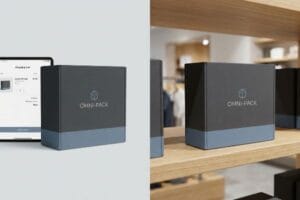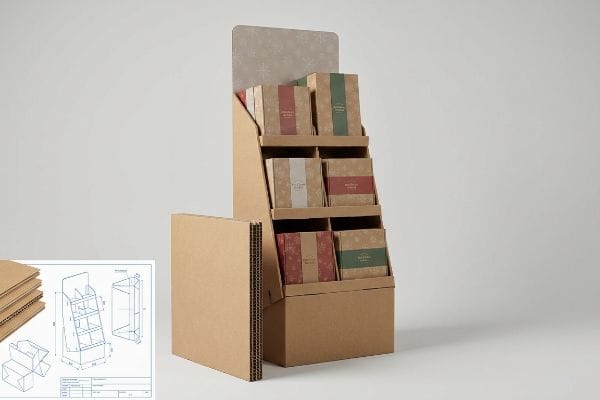
As campanhas sazonais de varejo exigem atenção imediata, mas o desbotamento das embalagens e o desabamento das prateleiras transformam rapidamente as promoções em problemas. Dominar a execução física garante que seu produto sobreviva intacto à correria das festas de fim de ano.
Criar as melhores exposições sazonais para o varejo exige equilibrar uma estética visual de alto impacto com uma engenharia estrutural rigorosa. Unidades promocionais de curto prazo devem suportar um grande fluxo de consumidores, mantendo a integridade da marca. A otimização da escolha do material de papelão ondulado e a padronização das tolerâncias de montagem garantem o desempenho ideal durante os lançamentos de produtos para o varejo nas épocas de festas, que são cruciais para o sucesso.

Compreender a teoria do merchandising sazonal é um bom começo, mas traduzir essas ideias em realidade física exige uma análise mais aprofundada dos mecanismos de fabricação.
Como a criação de uma exposição de produtos atraente pode ajudar o varejista?
Convencer um gerente de loja a ceder espaço valioso exige comprovar o valor direto do produto. Uma unidade mal projetada simplesmente ocupa espaço, enquanto uma estrutura otimizada estimula ativamente a circulação de pessoas.
Ajudar o varejista a criar exposições de produtos atraentes envolve utilizar a fórmula comprovada de aumento de vendas em três segundos. Estruturas temporárias bem projetadas atuam como vendedores silenciosos, capturando compradores por impulso e impulsionando o giro de produtos com alta margem de lucro. Essa velocidade de conversão imediata proporciona aos gerentes de loja o retorno concreto sobre o investimento que eles exigem ao alocar espaço privilegiado nas prateleiras.
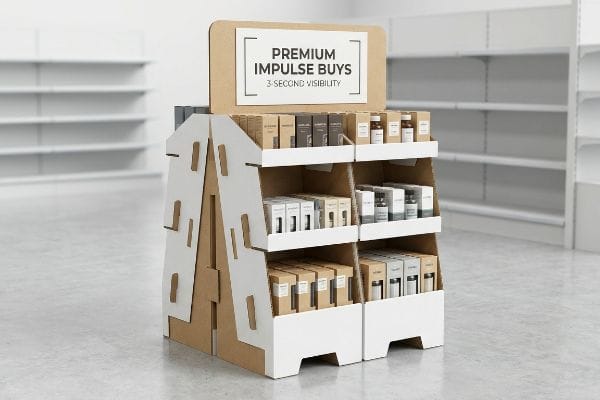
O apelo visual pode até te atrair, mas a execução estrutural em si é que determina se você permanece no andar.
Aumento de vendas em 3 segundos no merchandising de varejo
Muitas equipes de marketing presumem que simplesmente imprimir cores vibrantes em uma caixa genérica é suficiente para garantir uma promoção bem-sucedida. Elas tratam a unidade estrutural como um mero marcador de posição, em vez de uma ferramenta ativa de conversão. Essa abordagem ignora completamente a dinâmica física de como os compradores realmente se movem em ambientes de lojaslotados¹.
Uma armadilha comum que pega até mesmo equipes de compras experientes é ignorar a linha de visão física no ponto de venda. Frequentemente vejo designers posicionando as mensagens principais da marca muito abaixo na base, presumindo que o cliente vai parar e se abaixar para lê-las. Quando caminho pelo salão de uma loja e ouço o barulho áspero de carrinhos de compras passando por um display ignorado, geralmente é porque os elementos gráficos não estão alinhados com a linha de visão natural. Minha regra padrão é posicionar todos os principais elementos de destaque no cabeçalho superior, garantindo que a mensagem seja vista instantaneamente pelo comprador a uma distância de 6 metros (20 pés)². Corrigir essa geometria da linha de visão aumenta diretamente as compras por impulso³,impulsionando uma rápida rotatividade de estoque e mantendo os compradores do varejo ansiosos para aprovar sua próxima campanha.
| Erro comum de iniciantes | A solução profissional | Benefício do piso de vendas |
|---|---|---|
| Colocação de logotipos ao nível do chão | Deslocar elementos gráficos importantes para o cabeçalho | Aumenta a visibilidade imediata para o comprador |
| Layouts de texto confusos | A regra visual dos 3 segundos4 | Acelera a compra por impulso |
| Painéis de base frágeis | Adicionando divisórias de suporte internas5 | Resiste a impactos fortes de carrinhos de compras |
Sempre lembro aos meus clientes que uma bela obra de arte não pode salvar uma unidade estruturalmente invisível. Corrigir a geometria do layout vertical garante que a unidade desempenhe sua função principal, impulsionando a rotatividade e mantendo seus parceiros varejistas altamente lucrativos.
🛠️ Mesa do Harvey: Não tem certeza se sua mensagem principal está atingindo o público-alvo visual? 👉 Solicite uma análise gratuita do seu arquivo ↗ — Acesso direto à minha mesa. Zero spam de vendas automatizado, prometo.
Qual a melhor forma de expor mercadorias?
O posicionamento correto do produto é uma ciência matemática rigorosa, não um palpite aleatório. Acertar o ponto ergonômico ideal garante a máxima interação sem impor desconforto físico aos seus clientes.
A melhor maneira de exibir mercadorias centra-se na utilização do mapa de calor da altura humana. Posicionar produtos de alta margem dentro da zona de impacto de 1270 a 1371 mm (50 a 54 polegadas) maximiza a visibilidade natural. Esse alinhamento ergonômico preciso garante uma interação fácil com o consumidor, traduzindo diretamente a conveniência física em vendas mais rápidas no varejo.
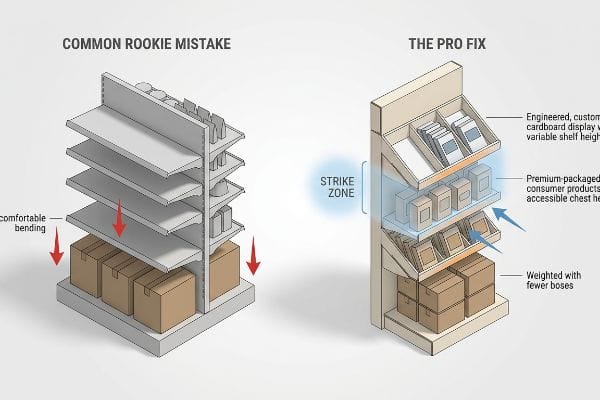
Saber onde colocar as mercadorias é o primeiro passo, mas garantir que a estrutura as suporte com segurança nessa altura exige uma comunicação precisa.
Mapeando a Zona de Impacto dos Consumidores
Ao elaborar seus planos iniciais de merchandising, as marcas frequentemente optam por prateleiras horizontais com espaçamento uniforme. Elas presumem que esse layout simétrico fica visualmente agradável na tela do computador e oferece a maior densidade de produtos. No entanto, as prateleiras uniformes ignoram completamente a biomecânica natural do consumidormédio.
Os compradores frequentemente me perguntam como priorizar diferentes SKUs em um expositor de vários níveis. Uma armadilha comum é colocar produtos pesados e de alta qualidade na prateleira mais baixa, apenas para dar sustentação à unidade, forçando os clientes a se abaixarem desconfortavelmente. Já vi funcionários da loja lutando com o peso e a dificuldade de puxar bandejas de papelão ondulado ao tentar repor um expositor com o peso concentrado na parte inferior, acabando por deixar a mercadoria no estoque. Eu sempre projeto a principal zona de contato na altura do peito , colocando os itens de maior margem exatamente onde as mãos repousam naturalmente. Esse alinhamento físico elimina completamente o atrito na compra, acelerando a movimentação do estoque e reduzindo drasticamente a fadiga da equipe da loja durante a reposição .
| Erro comum de iniciantes | A solução profissional | Benefício do piso de vendas |
|---|---|---|
| Prateleiras com espaçamento uniforme | Zoneamento de altura variável das prateleiras | Coloca produtos premium na altura do peito9 |
| Objetos pesados em cima | Bases estruturais com ponderação inferior | Previne acidentes perigosos de tombamento10 |
| Bandejas profundas e inacessíveis | Prateleiras inclinadas com alimentação por gravidade11 | Torna a pega do produto completamente sem atrito |
Estruturo cada unidade com base na ergonomia humana, em vez de apenas maximizar o espaço disponível na caixa de papelão. Priorizar a zona de contato vertical exata elimina barreiras físicas, guiando naturalmente a mão do comprador diretamente para o seu produto mais lucrativo.
🛠️ Mesa do Harvey: Seus itens de maior margem de lucro estão acidentalmente enterrados na parte inferior da sua prateleira? 👉 Solicite uma Análise Estrutural ↗ — Baixe com segurança. Minha caixa de entrada está aberta caso tenha alguma dúvida depois.
O que torna uma apresentação eficaz?
Uma unidade de merchandising eficaz precisa sobreviver à realidade caótica de uma loja física. Se a estrutura começar a se deteriorar sob a luz forte e a umidade, toda a mensagem de marketing desmorona instantaneamente.
Para criar uma apresentação eficaz, é fundamental integrar proteções estruturais robustas contra a fadiga ambiental. A utilização de um protocolo de cabeçalho de parede dupla dobrada impede que os painéis de papelão longos se enrolem para trás com o tempo. Essa engenharia precisa e eficiente mantém a rigidez estrutural absoluta, garantindo que a apresentação da marca permaneça impecável durante todo o ciclo de vida promocional.
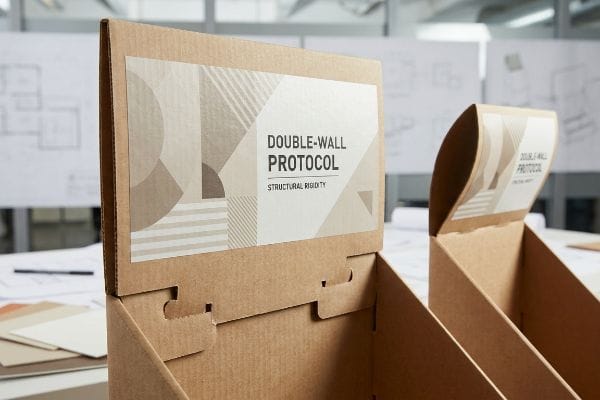
Criar um cabeçalho bonito é empolgante, mas evitar que ele se deteriore uma semana após o início da promoção é onde a verdadeira engenharia começa.
Engenharia do Protocolo de Cabeçalho de Parede Dupla
Muitas vezes, os designers gráficos tratam os cabeçalhos como simples pôsteres, especificando uma única e fina camada de papelão ondulado para economizar alguns centavos na produção. Eles presumem que a peça permanecerá perfeitamente rígida porque parece plana durante a fase inicial de aprovação do design.
Imagine uma fina folha de papel exposta ao sol; ela naturalmente tende a enrolar. Mesmo designers experientes muitas vezes ignoram esse ponto fraco ao lidar com banners promocionais grandes. Constantemente vejo banners de parede simples curvando-se para trás no chão após absorverem a umidade do ambiente, parecendo folhas murchas e depreciando instantaneamente o produto abaixo. É possível sentir a fragilidade e a fragilidade das fibras do papel ao pressionar uma placa curvada. Minha regra estrita é implementar uma estrutura de parede dupla dobrada para qualquer banner com mais de 508 mm (20 polegadas) de largura¹².Isso neutraliza completamente a tensão do material¹³,mantendo o banner em uma posição perfeitamente reta e vertical, que inspira respeito durante toda a duração da campanha.
| Erro comum de iniciantes | A solução profissional | Benefício do piso de vendas |
|---|---|---|
| Cabeçalhos largos de parede simples | O protocolo de parede dupla dobrada14 | Impede que o cartão se curve para trás |
| Abas de cola padrão | Abas de tensão interligadas15 | Fixa firmemente o cabeçalho na base |
| Zonas de brilho intenso | Acabamento fosco nos painéis superiores16 | Mantém o texto legível sob luzes fortes de loja |
Recuso-me a deixar que um pedaço de papelão barato e deformado arruine o lançamento de uma marca cara. Ao reforçar a estrutura superior, você protege seu ativo de maior visibilidade e mantém uma aparência impecável em centenas de pontos de venda.
🛠️ Harvey's Desk: Seu cabeçalho promocional grande corre o risco de murchar em condições de umidade na loja? 👉 Solicite sua Análise de Corte e Vinco ↗ — Sem formulários que geram ligações intermináveis de vendas. Apenas valor puro.
O que é uma exposição sazonal?
Promoções temporárias dependem muito de prazos rigorosos e execução física impecável. Quando unidades de curto prazo falham durante a montagem, a janela de vendas acelerada das festas de fim de ano se fecha antes mesmo de você conseguir concretizar uma venda.
Uma vitrine sazonal é uma estrutura temporária de varejo altamente direcionada, projetada para ciclos promocionais ou de feriados específicos. Essas unidades de rápida implantação exigem execução logística precisa e tolerâncias de fabricação especializadas. Levar em consideração os fatores ambientais e as diretrizes rigorosas do varejista garante que a campanha temporária seja lançada sem problemas, evitando gargalos de montagem dispendiosos.
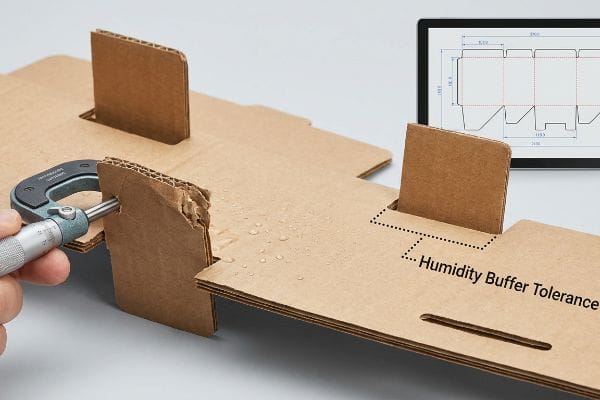
Mas conhecer a teoria não basta quando as máquinas começam a funcionar e enormes paletes de placas de papelão ondulado desmontadas chegam a uma instalação de embalagem centralizada e úmida.
Por que as matrizes de corte padrão falham no teste de umidade?
As equipes de compras frequentemente aprovam embalagens planas sazonais com base em protótipos construídos em escritórios com temperatura controlada, presumindo que as mesmas dimensões de encaixe funcionarão perfeitamente durante a montagem em massa. Elas implementam moldes padrão na produção sem considerar as mudanças ambientais extremas que o papelão sofrerá durante o transporte internacional e o armazenamento local.
Na minha empresa, vejo rotineiramente os resultados desastrosos de ignorar a tolerância ao inchamento por umidade do papelão ondulado cru. A premissa equivocada é que uma placa de onda B com uma espessura seca de 3,04 mm (0,12 polegadas) manterá exatamente essa espessura após ficar armazenada em um depósito úmido de verão, pouco antes do início da produção sazonal. Quando meço essas placas ao chegarem de um contêiner de carga atrasado, elas frequentemente absorveram a umidade ambiente e incharam em até 1,01 mm (0,04 polegadas) . Essa microexpansão transforma um encaixe perfeitamente projetado em uma armadilha de atrito, fazendo com que a equipe de montagem da embalagem amasse agressivamente as ondas e rasgue o papelão cru apenas para forçar as abas a se encaixarem. Eu analiso as leituras do micrômetro e corrijo isso programando permanentemente um buffer matemático de umidade diretamente em nosso software CAD (Desenho Auxiliado por Computador), alargando os encaixes de recebimento especificamente para rotas de transporte úmidas. Ao impor essa tolerância ampliada, garanto que o tempo de montagem da embalagem conjunta diminua em aproximadamente 40 segundos por unidade, eliminando completamente as folhas superiores rasgadas e economizando aos clientes custos significativos de mão de obra durante implantações sazonais rápidas.
| Erro comum de iniciantes | A solução profissional | Benefício do piso de vendas |
|---|---|---|
| Encaixe preciso em placas de gesso cartonado | O buffer de umidade matemática20 | Impede que as abas de encaixe se rasguem |
| Ignorando a umidade durante o transporte | Tolerâncias de ranhura expandidas21 | Reduz drasticamente o tempo de montagem de embalagens conjuntas |
| Forçando componentes apertados | Compensação de calibrador em CAD22 | Garante uma configuração sazonal completamente descomplicada |
Construo estruturas sazonais para a realidade caótica de armazéns úmidos, não para o ambiente estéril de um estúdio de design. Dominar essas tolerâncias físicas ocultas protege seu cronograma de lançamento e mantém os custos exorbitantes de mão de obra completamente fora do seu orçamento sazonal.
🛠️ Mesa do Harvey: Você sabe o teor de umidade exato do papelão ondulado tipo B do seu fornecedor atual antes da litografia-laminação? 👉 Envie-me seu arquivo de corte ↗ — Vou verificar os cálculos antes que você desperdice seu orçamento com produção em massa.
Conclusão
Você pode escolher o fornecedor mais barato para o lançamento sazonal do seu produto, mas quando o papelão ondulado tipo B poroso absorve a umidade do armazém e incha, as abas estruturais rasgadas resultantes podem facilmente atrasar sua linha de montagem de co-embalagem em cerca de 30% e comprometer o lançamento no varejo. Mais de 500 gerentes de marca usam meu checklist de pré-impressão para evitar exatamente esses erros fatais no estágio inicial. Pare de adivinhar as tolerâncias ambientais e deixe-me pessoalmente analisar seus arquivos com minha Auditoria Prévia de Corte e Vinco gratuita ↗ para detectar falhas físicas catastróficas antes da produção em massa.
"Como os clientes alteram a composição de suas cestas de compras quando…", https://pmc.ncbi.nlm.nih.gov/articles/PMC7279729/ . [Estudos revisados por pares sobre psicologia ambiental no varejo e trajetória do consumidor demonstram como obstáculos físicos e congestionamento na loja influenciam o movimento do cliente e as compras por impulso]. Papel da evidência: suporte factual; tipo de fonte: periódico acadêmico. Apoia: o impacto da dinâmica espacial na eficácia da exposição. Nota de escopo: aplica - se especificamente a ambientes de varejo físico com alto fluxo de pessoas.
"Cartões de cabeçalho personalizados / Etiquetas para sacolas – Caixas impressas personalizadas", https://www.boxcoop.com/box-styles/header-cards. [Os padrões da indústria para sinalização no varejo especificam a distância na qual os cartões de cabeçalho devem ser legíveis para chamar a atenção e atrair compradores]. Papel da evidência: especificação técnica; tipo de fonte: guia de merchandising. Suportes: posicionamento dos ganchos principais para visibilidade à distância. Observação sobre o escopo: a eficácia varia de acordo com a tipografia e o contraste de cores .
"A influência de fatores relacionados ao produto e ao varejo no impulso do consumidor…", https://www.sciencedirect.com/science/article/abs/pii/S0969698912000781. [Pesquisas em psicologia ambiental e merchandising de varejo confirmam que otimizar a linha de visão aumenta a probabilidade de compras por impulso]. Papel da evidência: alegação causal; tipo de fonte: estudo acadêmico. Apoia: a ligação direta entre a otimização da linha de visão e o aumento das vendas. Nota de escopo: o impacto pode variar de acordo com os padrões de tráfego da loja .
"A Regra dos 3 Segundos: Projetando a Frente de Embalagem Perfeita – ECRM", https://ecrm.marketgate.com/Blog/2022/04/The-3-Second-Rule-Designing-a-Perfect-Package-Front-Panel . [Um princípio de marketing que afirma que as vitrines de varejo devem comunicar sua proposta de valor principal em até três segundos para capturar a atenção de um comprador por impulso]. Papel da evidência: referência do setor; tipo de fonte: guia de merchandising. Apoia: a velocidade das decisões de compra por impulso. Nota de escopo: Aplica-se especificamente a ambientes de ponto de venda com alto fluxo de pessoas.
"Equilibrando Resistência e Design em Displays de Ponto de Venda – Brown Packaging", https://brownpackaging.com/balancing-strength-and-design-in-pop-displays/. [Diretrizes de engenharia para displays de ponto de venda recomendam reforços internos para mitigar falhas estruturais causadas por impactos laterais]. Papel da evidência: especificação técnica; tipo de fonte: norma de fabricação. Suporta: a durabilidade dos displays de chão contra danos físicos. Nota de escopo: A eficácia depende da densidade do material dos divisores utilizados .
"Medições técnicas de campo da carga muscular durante o abastecimento de prateleiras…", https://pmc.ncbi.nlm.nih.gov/articles/PMC8766430/. [Um estudo sobre antropometria humana e ergonomia no varejo forneceria dados sobre como a altura fixa das prateleiras interfere no alcance e na linha de visão naturais dos compradores]. Papel da evidência: verificação técnica; tipo de fonte: estudo antropométrico. Apoia: a afirmação de que prateleiras uniformes são ergonomicamente ineficientes. Nota de escopo: concentra-se principalmente na média de altura de adultos .
"[PDF] Ergonomia e Design: Um Guia de Referência", https://ehs.oregonstate.edu/sites/ehs.oregonstate.edu/files/pdf/ergo/ergonomicsanddesignreferenceguidewhitepaper.pdf. [Estudos ergonômicos sobre o comportamento do consumidor identificam a área entre a altura dos ombros e da cintura como a "zona de impacto" ideal para maximizar a visibilidade e a interação com o produto]. Papel da evidência: especificação técnica; tipo de fonte: pesquisa ergonômica. Fundamentos: o posicionamento estratégico da zona de impacto. Nota de escopo: Existem variações com base nas médias de altura do público-alvo .
"O Guia Definitivo para Posicionamento de Produtos no Varejo – Expositores S-Cube", https://www.scubefixtures.com/blog/the-power-of-product-placement-in-retail-stores . [Dados de conversão no varejo sugerem que minimizar o esforço físico na busca de produtos aumenta diretamente as taxas de venda, reduzindo o atrito cognitivo e físico]. Papel da evidência: evidência causal; tipo de fonte: análise de varejo. Apoia: a afirmação de que o alinhamento acelera a movimentação de estoque. Nota de escopo : Mais aplicável a produtos de alta margem ou de compra por impulso.
"POSICIONAMENTO DE MARCA E ESCOLHA DO CONSUMIDOR: UMA ANÁLISE NA LOJA...", https://pmc.ncbi.nlm.nih.gov/articles/PMC2741065/. [Estudos de ergonomia no varejo e psicologia do consumidor demonstram que a "zona de impacto" na altura do peito maximiza a atenção visual e as vendas de itens de alta margem]. Papel da evidência: comprovação empírica; tipo de fonte: estudo de pesquisa de mercado. Fundamentos: posicionamento de produtos premium para máxima interação. Observação: A eficácia pode variar de acordo com a altura média dos compradores .
"Limites de Peso das Gôndolas Explicados: Quanto Você Pode…", https://www.millsshelving.com.au/gondola-shelving-weight-limits-explained-how-much-can-you-safely-load/. [As normas de segurança para equipamentos comerciais determinam que colocar cargas mais pesadas nas prateleiras inferiores reduz o centro de gravidade para garantir a estabilidade estrutural]. Papel da evidência: norma de segurança; tipo de fonte: diretrizes de segurança ocupacional. Apoio: mitigação de riscos para unidades de prateleiras. Nota de escopo: Aplica-se principalmente a expositores de varejo independentes. ↩
"A ciência por trás dos trilhos de roletes para prateleiras e sistemas de alimentação por gravidade", https://nova-day.com/the-science-behind-shelf-roller-tracks-and-gravity-feed-systems/ . [Especificações técnicas para expositores de varejo mostram que os sistemas de alimentação por gravidade otimizam a reposição de produtos e reduzem o esforço do cliente para alcançar os itens ]. Papel da evidência: especificação técnica; tipo de fonte: manual de design industrial. Benefícios: melhoria da acessibilidade do produto. Observação sobre o escopo: Mais eficaz para produtos embalados de tamanho pequeno a médio e uniformes.
"[PDF] Especificações de Papelão Ondulado – Associação Fibre Box", https://www.fibrebox.org/assets/2025/09/Walmart_Corrugated-Board_Specifications_Automation_Packaging_Standards.pdf. As normas de engenharia da indústria para displays de ponto de venda (PDV) estabelecem limites de largura específicos a partir dos quais o papelão ondulado de parede simples se torna propenso a deformações e requer reforço de parede dupla. ↩
"Danos em caixas de papelão ondulado: causas, prevenção e melhores práticas", https://feeds.gmsindustries.com/blog/chipboard-box-damage. A ciência dos materiais aplicada a embalagens de papelão ondulado explica como a criação de dobras estruturais aumenta o momento de inércia, resistindo assim às tensões de tração causadas por flutuações de umidade e temperatura .
"O Guia Definitivo para Design de Caixas de Papelão Ondulado – Powell Systems", https://www.powellsystems.com/feeds/blog/corrugated-box-design. [Guias técnicos sobre engenharia de displays para pontos de venda explicam como a construção em papelão ondulado de parede dupla aumenta a rigidez para evitar deformações e curvaturas em cabeçalhos largos]. Papel da evidência: especificação técnica; tipo de fonte: manual da indústria. Suporte: estabilidade estrutural de cabeçalhos de displays. Nota de escopo: específico para aplicações em papelão ondulado. ↩
"Encontrando a Aba de Encaixe Ideal para seu Display de Varejo – Do-It Corporation", https://www.do-it.com/finding-the-right-hang-tab-for-your-retail-display. [Normas de engenharia de embalagens demonstram que abas de encaixe oferecem capacidade de suporte de carga mecânica superior em comparação com abas adesivas em juntas de caixas dobráveis]. Papel da evidência: comparação de engenharia; tipo de fonte: livro didático sobre embalagens. Suportes: fixação segura da cabeça à base. Nota de escopo: aplicável à montagem de papelão estrutural. ↩
"Acabamento fosco vs. acabamento brilhante: principais diferenças e como escolher", https://gentlever.com/matte-finish-vs-gloss-finish/ . [Estudos sobre ergonomia visual em ambientes de varejo confirmam que os acabamentos foscos minimizam a reflexão especular, aumentando assim a legibilidade do texto sob iluminação direta de alta intensidade]. Papel da evidência: princípio óptico; tipo de fonte: guia de design. Benefícios: legibilidade de mensagens de marketing. Nota de escopo: refere-se à redução da perda de contraste induzida pelo brilho.
"Efeitos dos parâmetros de prensagem na estabilidade dimensional de…", https://bioresources.cnr.ncsu.edu/resources/effects-of-press-forming-parameters-on-the-dimensional-stability-of-paperboard-trays/ . [Uma fonte confiável em ciência dos materiais ou engenharia de embalagens explicaria como o papelão higroscópico se expande ou deforma devido à absorção de umidade durante o transporte marítimo]. Papel da evidência: Validação técnica; tipo de fonte: Periódico de ciência dos materiais ou norma da indústria de embalagens. Apoia: A afirmação de que fatores ambientais degradam as tolerâncias estruturais. Nota de escopo: Aplica-se especificamente a materiais de embalagem à base de celulose.
"Papelão Ondulado – Base de Conhecimento de Embalagens", http://pkgsolutions.co.uk/kb/Corrugated_Flutes.php. [As normas da indústria de embalagens fornecem as faixas de espessura nominal e calibre para papelão ondulado tipo B]. Função da evidência: Especificação técnica; tipo de fonte: Norma da indústria de embalagens. Suportes: A espessura base do material utilizado. Observação: A espessura real pode variar ligeiramente de acordo com o fabricante. ↩
"📦 Design à prova de umidade em embalagens de papelão ondulado", https://www.linkedin.com/pulse/moisture-proof-design-corrugated-carton-packaging-moss-8t88c. [Pesquisa em ciência dos materiais sobre as propriedades higroscópicas de embalagens à base de celulose detalha a porcentagem de expansão dimensional que ocorre sob alta umidade]. Papel da evidência: Validação factual; tipo de fonte: Estudo de ciência dos materiais. Suporte: A alegação técnica referente à expansão do papelão. Nota de escopo: As taxas de expansão dependem da qualidade específica do testliner utilizado. ↩
"Influência da umidade e da temperatura nas propriedades mecânicas…", https://bioresources.cnr.ncsu.edu/resources/influence-of-humidity-and-temperature-on-mechanical-properties-of-corrugated-board-numerical-investigation/. [Normas técnicas de engenharia de embalagens descrevem a necessidade de considerar a expansão higroscópica no papelão ondulado para evitar falhas estruturais nas juntas]. Papel da evidência: especificação técnica; tipo de fonte: manual de engenharia. Fundamentos: a exigência de amortecedores de umidade para evitar o rasgo das abas. Nota de escopo: especificamente para substratos à base de fibras. ↩
"Tolerâncias RSC para Montadores e Empacotadores de Caixas – AICC Now", https://now.aiccbox.org/rsc-tolerances-for-case-erectors-and-packers/. [Pesquisas de engenharia industrial sobre montagem de embalagens indicam que tolerâncias otimizadas reduzem o atrito e os erros de montagem, diminuindo assim o tempo total de trabalho]. Papel da evidência: métrica operacional; tipo de fonte: artigo técnico do setor. Apoia: a afirmação de que tolerâncias ampliadas reduzem o tempo de montagem. Nota de escopo: foco em ambientes de montagem manual .
"Como o CAD é implementado durante o processo de design de caixas", https://www.capcitycontainer.com/how-cad-is-implemented-during-the-box-design-process. [A documentação do software CAD para design de embalagens define a compensação de calibre como o ajuste da espessura do material para garantir um encaixe preciso]. Papel da evidência: processo técnico; tipo de fonte: documentação do software. Apoia: o uso do CAD para eliminar a necessidade de forçar os componentes. Nota de escopo: aplica-se a fluxos de trabalho de corte e vinco de precisão. ↩