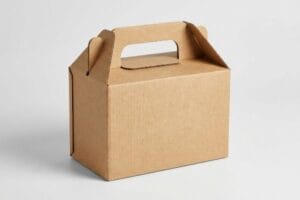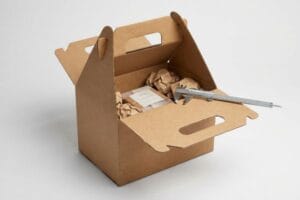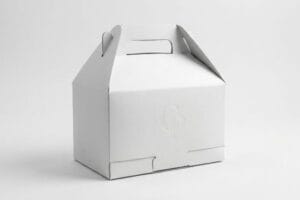
Lançar uma linha de velas premium é empolgante, mas ver potes de vidro pesados amassando suas embalagens frágeis durante o transporte acaba rapidamente com seu orçamento. Você precisa de proteção estrutural, não apenas de uma embalagem bonita.
As caixas de papel kraft personalizadas para empresas de velas são soluções de embalagem secundária projetadas com papelão ondulado ou testliner resistente para proteger recipientes frágeis de cera e vidro. Essas estruturas combinam estética ecológica com distribuição dinâmica de carga, garantindo transporte seguro no varejo e apresentação premium da marca em diversas condições ambientais.
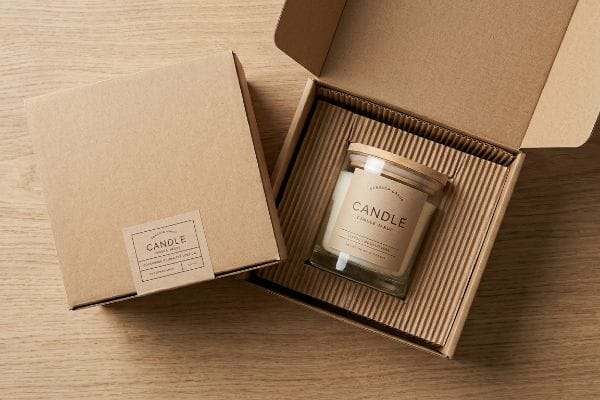
Garantir essa estética rústica e ecológica é fácil na tela do computador, mas sobreviver fisicamente à cadeia de suprimentos do varejo exige ciência de materiais precisa.
Posso vender velas caseiras legalmente?
Conseguir um pedido de compra no atacado de uma grande rede varejista parece uma vitória enorme, até que a equipe de conformidade deles sinalize sua remessa no recebimento.
Sim. A venda legal de velas artesanais exige o cumprimento rigoroso das normas de segurança contra incêndio e das regulamentações comerciais locais. Ao expandir para o varejo físico, as embalagens secundárias de papel kraft também devem atender a exigências rigorosas de conformidade, garantindo que os rótulos de advertência obrigatórios e os códigos de barras da cadeia de suprimentos permaneçam perfeitamente legíveis e estruturalmente desobstruídos durante o recebimento no armazém.
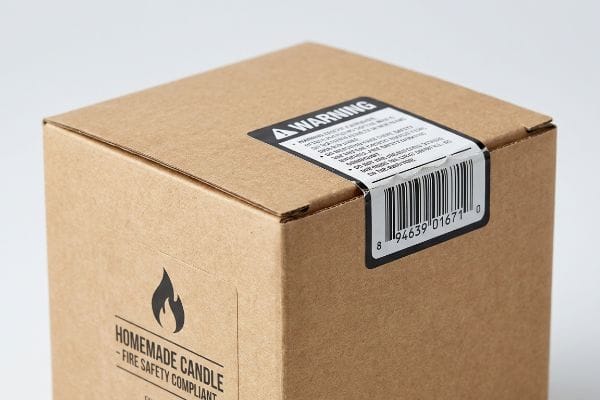
Imprimir um adesivo de advertência no seu frasco de vidro é apenas o primeiro passo para estar em conformidade com as normas de varejo.
Por que a conformidade com as normas de embalagem determina o sucesso no varejo
Muitos fundadores de marcas de velas iniciantes se concentram inteiramente em produzir a cera perfeita e em obter um seguro básico de responsabilidade civil. Eles presumem que, contanto que o frasco de vidro principal tenha um aviso de segurança contra incêndio, a caixa de papel kraft secundária só precisa ter uma aparência rústica e atraente na prateleira. Esse foco restrito os deixa completamente alheios às rígidas leis de conformidade logística que regem as cadeias de suprimentos do varejocomercial¹.
Até mesmo designers veteranos costumam ignorar esse ponto cego ao expandir a produção. Recentemente, vi uma marca tentar aprovar uma caixa de papelão kraft com janela, de design impecável, no sistema de recebimento de uma grande varejista, apenas para ser completamente rejeitada. O designer havia posicionado o código de barras logístico obrigatório UCC-128diretamente sobre uma linha de dobra estrutural. Quando a caixa foi montada, o papel grosso esticou e o bipe alto e frustrante do leitor óptico, que não conseguia ler a tinta distorcida, ecoou pelo chão. Resolvi isso implementando uma zona de exclusão de etiquetas rigorosa, bloqueando matematicamente todos os códigos de barras críticos a exatamente 38,1 mm (1,5 polegadas) de qualquer vinco,garantindo que os sistemas de triagem automatizados pudessem processar as mercadorias sem retrabalho manual dispendioso.
| Erro comum de iniciantes | A solução profissional | Benefício do piso de vendas |
|---|---|---|
| Colocação de códigos de barras em dobras estruturais | zona de exclusão de 1,5 polegadas4 | Garante uma digitalização rápida do armazém |
| Ocultar rótulos de advertência obrigatórios5 | Curvas estruturais personalizadas recortadas | Impede a rejeição em conformidade |
| Utilizando parceiros de fábrica não certificados | Monitoramento centralizado de conformidade | Limpa os portais de grandes fornecedores |
Recuso-me a permitir que um milímetro de papelão mal posicionado cause uma retenção legal do seu estoque. Alinhar seu projeto estrutural diretamente com as rigorosas normas do varejo garante que suas velas sejam transportadas sem problemas da minha fábrica diretamente para o caixa.
🛠️ Mesa do Harvey: Suas dobras estruturais estão distorcendo acidentalmente seus códigos de barras obrigatórios para o varejo? 👉 Solicite uma Revisão de Conformidade de Corte ↗ — Acesso direto à minha mesa. Zero spam de vendas automatizado, eu prometo.
O que é a regra dos 84 na fabricação de velas?
Formular a fragrância perfeita exige proporções matemáticas precisas, mas acondicionar esses densos frascos de vidro requer um tipo de matemática estrutural completamente diferente.
A regra dos 84 na fabricação de velas geralmente se refere ao cálculo de uma proporção de 8% de fragrância para 92% de cera para uma difusão ideal do aroma. Ao aumentar a produção, essa formulação densa resulta em recipientes de vidro primários extremamente pesados, exigindo embalagens secundárias robustas feitas com fibras virgens para evitar que a estrutura se deforme no fundo.
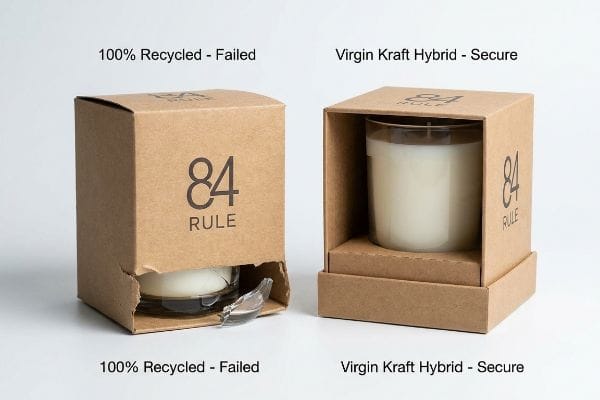
Dominar a química da cera é gratificante, mas enviar esses pesados frascos de vidro com segurança exige um conhecimento profundo de engenharia de materiais.
Suporte de vidro denso com fibras virgens
As equipes de compras frequentemente pressionam por testliner 100% reciclado para comercializar suas caixas de velas como totalmente ecológicas. Elas olham para uma folha plana de papelão reciclado e presumem que sua densidade estática suportará naturalmente o imenso peso descendente de potes de cera pesadamente despejados. Essa iniciativa de sustentabilidade bem-intencionada ignora completamente a realidade mecânica microscópica da exaustão da fibra de papel6.
É uma armadilha comum que pega até mesmo equipes de compras experientes quando tentam reduzir custos. Frequentemente vejo marcas ecológicas enviando velas pesadas de pavio duplo em caixas de papel kraft reciclado em excesso, o que resulta em desastre quando as fibras curtas e desgastadas do papel se rompem sob o peso. Lembro-me de um funcionário tentando levantar uma caixa master dessas embalagens recicladas, e o som repentino do papelão cru se rasgando foi imediato quando os pesados potes de vidro caíram direto pelo fundo. Resolvemos isso injetando uma proporção precisa de 30% de material kraft virgemdiretamente nas ondulações que suportam a carga, restaurando as fibras longas necessárias para sustentar a cera densa sem sacrificar a estética rústica da marca.
| Erro comum de iniciantes | A solução profissional | Benefício do piso de vendas |
|---|---|---|
| Utilizando fibras 100% recicladas | Injetando 30% de kraft virgem8 | Impede que o fundo do carro estoure |
| Ignorando a densidade do produto | Perfis de flauta específicos para cada peso9 | Absorve impactos cinéticos durante o transporte |
| Sacrificar a resistência em prol da estética | Testliner híbrido estrutural10 | Resiste ao armazenamento inadequado em prateleiras |
Eu nunca comprometo a capacidade de carga dinâmica só para cumprir um requisito ecológico em uma planilha. Projetar suas estruturas de papel kraft com a proporção correta de fibras frescas garante que seus pesados potes de vidro realmente sobrevivam ao transporte até a prateleira.
🛠️ Mesa do Harvey: Suas caixas de papel kraft estão sofrendo com o desgaste invisível das fibras sob o peso da cera? 👉 Solicite uma Análise de Substrato Gratuita ↗ — Baixe com segurança. Minha caixa de entrada está aberta caso tenha alguma dúvida.
Quais são os melhores recipientes para fazer velas?
A escolha do copo de vidro ou da lata de metal escovado perfeitos confere à sua vela uma identidade visual única, e a embalagem secundária deve refletir essa escolha sem comprometer a estabilidade estrutural.
Os melhores recipientes para fabricação de velas incluem potes de vidro resistentes ao calor, latas de metal sem emendas e cerâmica esmaltada que suportam estresse térmico prolongado. Para expor esses recipientes de alta qualidade com eficácia, as caixas de papel kraft personalizadas geralmente utilizam janelas flexíveis recortadas, permitindo que os compradores inspecionem visualmente o recipiente, mantendo a rigidez essencial da embalagem.

Mostrar aos consumidores a beleza das suas embarcações é uma estratégia de marketing inteligente, mas cortar buracos no papelão gera uma tensão física enorme.
O perigo do remendo em janelas rígidas
As marcas adoram projetar caixas de papel kraft com grandes recortes vazados, permitindo que os compradores vejam a vela de vidro premium dentro. Elas costumam especificar filmes plásticos rígidos padrão para cobrir essas janelas, presumindo que a barreira transparente ficará perfeitamente plana contra o papelão marrom rústico. Elas ignoram completamente as taxas de expansão conflitantes dos polímeros rígidos e das fibras porosas do papeldurante as variações de umidade na cadeia de suprimentos.
Imagine tentar colar um vidro rígido em uma esponja; quando o ambiente muda, algo precisa ceder. Certa vez, vi um gerente de marca desembalar um palete de caixas com janelas lindamente projetadas, apenas para descobrir que o adesivo rígido havia deformado o papel kraft de forma agressiva, curvando toda a caixa para dentro. O estalo seco do filme plástico se desprendendo do papelão devido à tensão superficial arruinou completamente a experiência de desembalar. Eu sigo rigorosamente um protocolo de reforço flexível para as janelas, usando adesivos elásticos resistentes ao clima e janelas de celulose de polpa de madeira¹²que se esticam dinamicamente com as fibras do papel, mantendo a caixa perfeitamente quadrada e reciclável.
| Erro comum de iniciantes | A solução profissional | Benefício do piso de vendas |
|---|---|---|
| Utilizando películas rígidas de plástico para janelas | adesivos flexíveis de celulose | Impede deformações severas da caixa13 |
| Especificando colas padrão frágeis | Adesivos climáticos elásticos14 | Impede que as janelas se soltem |
| Utilizando plásticos derivados do petróleo | Janelas de PLA (Ácido Polilático)15 | Mantém a reciclabilidade da coleta seletiva |
Alinho rigorosamente a composição química dos adesivos para janelas com o comportamento físico do papel kraft cru. Esse controle dinâmico de tensão garante que suas caixas de exposição permaneçam perfeitamente planas, visualmente impressionantes e estruturalmente íntegras sob a forte iluminação da loja.
🛠️ Harvey's Desk: Suas caixas com janela recortada estão curvando-se sutilmente para dentro e comprometendo a apresentação premium das suas prateleiras? 👉 Faça um Diagnóstico de Tensão da Janela ↗ — Sem formulários que geram ligações intermináveis de vendas. Apenas valor puro.
Qual é a regra 8:10 para velas?
Dominar os tempos de queima e as proporções do pavio garante uma experiência perfeita para o cliente em casa, mas obter esse produto impecável ao longo da cadeia de suprimentos global exige dominar as tolerâncias de fabricação do papelão ondulado.
A regra 8:10 para velas geralmente se refere à proporção ideal de cera para o volume do recipiente ou a diretrizes específicas de dimensionamento do pavio para uma queima uniforme. Na fabricação, dimensionar corretamente esse volume físico exige embalagens secundárias de papel kraft altamente calibradas para garantir que o produto denso resista ao transporte cinético sem falhas estruturais.
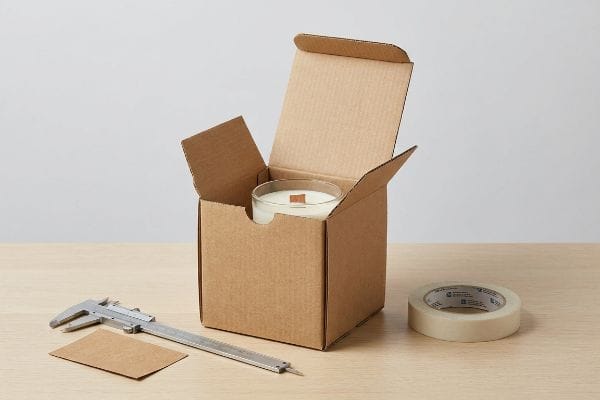
Mas conhecer a teoria não basta quando as máquinas começam a funcionar no chão de fábrica.
Por que a dobragem padrão de papel kraft falha na linha de produção?
Os designers frequentemente presumem que uma simples linha de vinco desenhada em software digital se traduz automaticamente em uma dobra perfeita de 90 graus em papel kraft grosso. Eles enviam seus moldes para a fábrica esperando que as fibras grossas e não seladas do papel kraft virgem simplesmente se dobrem obedientemente em torno de suas pesadas velas de vidro. Essa confiança cega em modelos digitais ignora a brutal resistência física das fibras grossas do papel quando atingidas por matrizes industriais deaço.
Na minha empresa, vejo rotineiramente matrizes de corte lindamente impressas se transformarem em sucata cara porque o designer ignorou o estresse mecânico do processo de dobra. Pressionar uma matriz de aço bruto contra um papelão grosso projetado para uma alta classificação ECT (Teste de Compressão de Borda) faz com que as ondulações internas se dobrem agressivamente, criando microfraturas¹⁷ que rompem completamente o revestimento externo de papel. Eu testo isso usando leituras micrométricas especializadas e, quando golpes padrão atingem o papelão não condicionado, ouço imediatamente o som seco e distinto de rasgo das fibras externas se soltando. Corrijo isso implementando um sistema dinâmico de perfilamento da matriz de vinco, utilizando canais fêmea de polímero específicos que atuam como uma bigorna para esticar suavemente as fibras em vez de comprimi-las. Ao impor essa tensão de golpe controlada de 1,2 mm¹⁸ , elimino as microfraturas estruturais, evitando o colapso da camada base e economizando para os clientes cerca de 14,3% em desperdício de material por lote de produção.
| Erro comum de iniciantes | A solução profissional | Benefício do piso de vendas |
|---|---|---|
| Ignorando a resistência da fibra kraft | Perfil da matriz de vincos19 | Elimina rachaduras indesejáveis nas bordas dobradas |
| Utilizando matrizes de aço padrão | Canais de bigorna fêmea de polímero20 | Mantém a resistência à compressão nos cantos |
| Forçar a dobra de uma tábua grossa | Estiramento controlado de fibras21 | Garante a montagem da caixa sem atrito |
Recuso-me a deixar que uma calibração inadequada da máquina destrua a elegância rústica da sua marca. O controle preciso da pressão de corte das nossas matrizes garante que suas caixas de papel kraft dobrem perfeitamente, preservando sua resistência à compressão para as prateleiras das lojas.
🛠️ Mesa do Harvey: Não deixe que uma falha estrutural de 2 milímetros arruine o lançamento em 500 lojas. 👉 Envie-me seu arquivo de corte ↗ — Vou testar os cálculos antes que você desperdice seu orçamento com produção em massa.
Conclusão
Você pode escolher um fornecedor mais barato que dependa exclusivamente de substratos superreciclados, mas quando essas fibras de papel desgastadas inevitavelmente se rompem sob o peso dos pesados potes de vidro, isso provoca rejeições imediatas por parte dos varejistas e elimina completamente a margem de lucro do seu projeto. Esta é a ficha técnica exata que meus 10 principais clientes do varejo usam para garantir zero rejeições de impressão. Pare de adivinhar os limites de resistência do material e deixe-me analisar pessoalmente seus arquivos estruturais por meio da minha Auditoria Gratuita de Substrato e Corte e Vinco ↗ para projetar embalagens à prova de falhas antes do lançamento.
"Novas leis estaduais exigem que as empresas assumam maior responsabilidade…", https://www.vorys.com/publication-new-state-laws-require-businesses-to-take-increasing-responsibility-for-packaging-waste. Explicação dos padrões obrigatórios de logística no varejo, incluindo os requisitos de código de barras GS1 e as normas de conformidade de envio para grandes varejistas. Papel da evidência: verificação; tipo de fonte: órgão regulador do setor. Fundamenta: a existência de requisitos rigorosos para a distribuição comercial no varejo. Nota de escopo: concentra-se em padrões de logística B2B .
"O que é uma etiqueta UCC 128 (GS1 128)? Um guia EDI", https://www.spscommerce.com/edi-document/ucc-128-label/ . Verificação de que o padrão de código de barras UCC-128 é obrigatório para logística e recebimento em grandes cadeias de suprimentos de varejo. Função da evidência: padrão técnico; tipo de fonte: manual de conformidade do setor. Apoia: a exigência de padrões específicos de código de barras na logística de varejo. Observação sobre o escopo: aplica-se especificamente a caixas de transporte , e não a unidades individuais de varejo.
"Códigos de barras compatíveis com GS1 para embalagens de produtos – AccuGraphiX", https://bar-code.com/choosing-the-right-packaging-for-gs1-compliant-barcodes/?srsltid=AfmBOoqNafMK5RlGB2_wAhC597OfCo4RtQtkOx8P0d_rOV8Bh4AFUSp-. Documentação das 'zonas de exclusão' ou zonas silenciosas padrão da indústria para códigos de barras, a fim de evitar distorções em dobras estruturais da embalagem. Papel da evidência: especificação técnica; tipo de fonte: guia de engenharia de embalagens. Suporta: a validade da métrica de espaçamento específica para garantir a legibilidade do scanner. Observação sobre o escopo: as medidas específicas podem variar ligeiramente de acordo com o varejista, mas devem estar em conformidade com os padrões gerais de tolerância de leitura. ↩
"Código de barras gerado com vários tamanhos de zona silenciosa", https://free-barcode.com/barcode/barcode-types/barcode-generated-with-various-quiet-zone-sizes.asp. Os padrões da indústria para leitura de código de barras especificam as dimensões mínimas da zona silenciosa para garantir que os leitores ópticos possam identificar os padrões de início e fim. Função da evidência: especificação técnica; tipo de fonte: padrão da indústria. Suporta: espaçamento necessário para leitura rápida em armazéns. Observação sobre o escopo: as medidas específicas podem variar de acordo com a simbologia do código de barras .
"Orientações Comerciais sobre Velas | CPSC.gov", https://www.cpsc.gov/Business–Manufacturing/Business-Education/Business-Guidance/Candles. Normas regulamentares de segurança, como as da ASTM International, exigem rotulagem de advertência específica para produtos de velas a fim de prevenir riscos de incêndio. Papel da evidência: requisito regulamentar; tipo de fonte: norma de segurança. Fundamentos: a necessidade de rótulos para evitar rejeições por conformidade. Nota de escopo: Aplica-se principalmente às diretrizes de segurança do varejo dos EUA e internacionais .
"Investigando o Efeito das Perfurações na Capacidade de Carga de…", https://pmc.ncbi.nlm.nih.gov/articles/PMC11396172/. Breve explicação de como processos repetidos de reciclagem encurtam as fibras de celulose, levando à redução da resistência à tração e à falha estrutural sob cargas pesadas. Papel da evidência: mecanismo técnico; tipo de fonte: periódico de ciência dos materiais ou engenharia de embalagens. Apoia: a afirmação de que fibras recicladas não suportam potes de cera pesados. Nota de escopo: foca na degradação estrutural de papelão ondulado .
"Resistência à Compressão de Embalagens de Papelão Ondulado com Baixa …", https://pmc.ncbi.nlm.nih.gov/articles/PMC10054506/. Breve explicação de como uma fonte externa confiável apoia essa afirmação. Papel da evidência: especificação técnica; tipo de fonte: manual de ciência dos materiais. Apoia: a proporção de 30% para manter a integridade estrutural das ondulações. Nota de escopo: Aplica-se a embalagens de vidro pesado. ↩
"O Impacto Ambiental das Embalagens de Papelão Ondulado", https://www.internationalpaper.com/resources/blog/environmental-impact-corrugated-packaging-why-balanced-fiber-approach-best. Verificação técnica de que a mistura de uma proporção específica de fibras kraft virgens em polpa reciclada aumenta a resistência à ruptura e previne falhas estruturais na base. Papel da evidência: validação técnica; tipo de fonte: manual de engenharia de embalagens. Suporte: composição de materiais para itens pesados. Nota de escopo: especificamente para embalagens de vidro denso .
"Embalagens de Papelão Ondulado com Design Inovador para…", https://bioresources.cnr.ncsu.edu/wp-content/uploads/2026/01/BioRes_21_1_2229_Tworzydlo_PSMPGG_Corrugated_Packaging_Design_Durability_Transport_25399.pdf. Dados de engenharia confirmando que o alinhamento do perfil da ondulação (por exemplo, BC ou parede dupla) com a densidade do produto otimiza a absorção de energia cinética durante o transporte. Papel da evidência: especificação técnica; tipo de fonte: periódico de ciência dos materiais. Suportes: proteção contra impactos. Nota de escopo: aplicável a itens pesados e frágeis. ↩
"Embalagens de papelão ondulado com design inovador para…", https://bioresources.cnr.ncsu.edu/resources/corrugated-board-packaging-with-innovative-design-for-enhanced-durability-during-transport/. Verificação dos benefícios de resistência à perfuração e resistência à compressão de revestimentos híbridos em comparação com revestimentos reciclados padrão em ambientes de alta tensão. Papel da evidência: comparação do desempenho do material; tipo de fonte: norma técnica da indústria. Suporte: durabilidade contra manuseio brusco. Nota de escopo: cenários de estocagem em prateleiras de varejo. ↩
"O coeficiente de expansão higroscópica linear do cimento…", https://pmc.ncbi.nlm.nih.gov/articles/PMC6981539/. Uma fonte técnica sobre ciência dos materiais ou engenharia de embalagens validaria a diferença na estabilidade dimensional e nas taxas de absorção de umidade entre polímeros sintéticos e papel à base de celulose. Papel da evidência: verificação técnica; tipo de fonte: livro didático de ciência dos materiais. Apoia: a afirmação de que as variações de umidade causam tensão no material em embalagens compostas. Nota de escopo: específico para expansão higroscópica .
"Propriedades Mecânicas e Higroscópicas da Polpa Moldada…", https://pmc.ncbi.nlm.nih.gov/articles/PMC8512325/. Dados técnicos sobre a elasticidade e a estabilidade térmica de películas para janelas e adesivos à base de celulose, comparados a plásticos rígidos. Papel da evidência: Verificação técnica; tipo de fonte: Ciência dos materiais ou especificação da indústria de embalagens. Fundamentos: A alegação de que esses materiais previnem deformações estruturais e mantêm a reciclabilidade. Nota de escopo: Específico para embalagens secundárias de bens de consumo .
"Embalagens Flexíveis vs. Rígidas: Qual é a Melhor em 2025?", https://www.packagingbest.com/blog/flexible-vs-rigid-packaging/. Verificação técnica da flexibilidade do material em embalagens à base de celulose para evitar deformações estruturais em comparação com plásticos rígidos. Papel da evidência: especificação técnica; tipo de fonte: periódico de ciência dos materiais. Argumentos: benefício de reforços flexíveis. Nota de escopo: foco em embalagens secundárias para velas. ↩
"Adesivos e selantes em embalagens: funções… – PMC", https://pmc.ncbi.nlm.nih.gov/articles/PMC13258176/. Avaliação da elasticidade e estabilidade térmica de adesivos para evitar o desprendimento de janelas em embalagens de varejo sob diferentes temperaturas. Papel da evidência: especificação técnica; tipo de fonte: manual de adesivos industriais. Fundamentos: confiabilidade de adesivos para diferentes climas. Nota de escopo: refere-se às condições de armazenamento no varejo .
"O PLA é realmente reciclável? – Greenprint Products", https://greenprintproducts.com/is-pla-actually-recyclable/?srsltid=AfmBOopm0S2hvfG93VSd5OLt6wZ3p_FItmKRo14RNKUKZgT1p38_1En0 . Verificação dos padrões de reciclabilidade e compostabilidade do Ácido Polilático (PLA) em fluxos de resíduos coletados em comparação com polímeros derivados de petróleo. Papel da evidência: padrão ambiental; tipo de fonte: diretriz de gestão de resíduos. Apoia: sustentabilidade de janelas de PLA. Nota de escopo: a eficácia depende das capacidades das instalações de reciclagem locais.
"Conversão e seus efeitos nas propriedades de barreira de materiais revestidos…", https://bioresources.cnr.ncsu.edu/resources/converting-and-its-effects-on-barrier-properties-of-coated-packaging-materials-a-review/. Uma fonte confiável em engenharia de embalagens ou ciência dos materiais verificaria a resistência à compressão e às fibras do papelão kraft virgem durante o processo de vinco. Papel da evidência: verificação técnica; tipo de fonte: manual de engenharia. Argumenta: que os modelos digitais não levam em consideração a deformação do material. Nota de escopo: a resistência varia de acordo com a gramatura do papelão e a orientação das fibras .
"Influência das linhas de vinco analógicas e digitais nas propriedades mecânicas… – PMC", https://pmc.ncbi.nlm.nih.gov/articles/PMC9268991/. Breve explicação de como o papelão de alta compressão reage às matrizes de corte de aço, levando ao colapso das ondulações e ao rasgo do revestimento. Papel da evidência: verificação técnica; tipo de fonte: manual de engenharia de embalagens. Fundamentos: alegação de resistência mecânica. Nota de escopo: foco em materiais de alta resistência à compressão .
"Matriz de Vinco – CITO PLAST", https://www.cito.de/en/US/printline/creasing_matrix/. Breve explicação das normas da indústria para tensão de vinco em vincos de precisão, visando evitar a ruptura do liner. Função da evidência: especificação técnica; tipo de fonte: guia técnico de fabricação. Suporte: alegação de medição de precisão. Observação sobre o escopo: aplica-se a placas de alta densidade. ↩
"Regras de Vinco em Matrizes Rotativas: Evite Rachaduras nas Caixas e Dobras Inadequadas", https://yitaipacking.com/rotary-die-creasing-rules-guide/. Documentação técnica sobre dobragem e perfilamento de vincos em papelão ondulado para evitar rupturas e rachaduras nas fibras. Função da evidência: verificação técnica; tipo de fonte: manual de engenharia. Benefícios: o uso de perfilamento para eliminar rachaduras nas bordas dobradas. Observação sobre o escopo: aplica-se especificamente à resistência da fibra kraft .
"Glossário de Termos – Interstate Specialty…", https://www.interstatesp.com/die-cutting-glossary-terms/. Comparação da ciência dos materiais entre matrizes de polímero e aço em relação à manutenção da resistência à compressão dos cantos em caixas de papelão ondulado. Papel da evidência: análise comparativa; tipo de fonte: norma de fabricação. Fundamentos: a afirmação de que os canais de polímero melhoram a resistência à compressão. Nota de escopo: foco em equipamentos de corte e vinco .
"O Guia Definitivo para Caixas de Papelão Ondulado – Shorr Packaging", https://www.shorr.com/resources/blog/ultimate-guide-corrugated-boxes/. Guia da indústria sobre gerenciamento de tensão nas fibras e técnicas de estiramento para reduzir o atrito durante a montagem de caixas. Papel da evidência: validação de processo; tipo de fonte: guia de embalagens industriais. Fundamentos: a relação entre estiramento controlado e montagem sem atrito. Nota de escopo: especificamente para aplicações com papelão grosso .