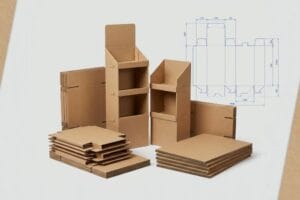
As mudanças no comércio global estão reduzindo as margens de lucro como nunca antes. Se o aumento das taxas alfandegárias está consumindo seu orçamento promocional, ignorar como o design da embalagem pode mitigar a exposição a impostos é um erro fatal.
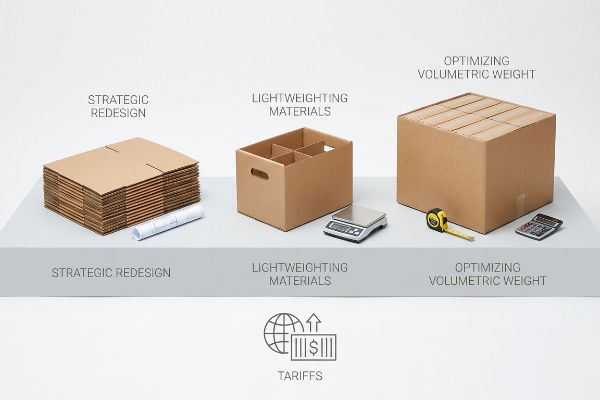
O aumento das tarifas afeta a indústria de embalagens, elevando diretamente os custos das matérias-primas e as despesas de fabricação transfronteiriça. As marcas mitigam esses impactos financeiros por meio de reformulações estruturais estratégicas, redução do peso dos materiais, otimização do peso volumétrico das caixas master e reclassificação legal dos códigos HS (Sistema Harmonizado) para diminuir a exposição geral aos impostos em toda a cadeia de suprimentos.
Mas entender a teoria econômica não vai salvar seu negócio quando a fatura do frete chegar à sua mesa.
Como as tarifas afetam a indústria de embalagens?
Os compradores costumam entrar em pânico quando os impostos de importação aumentam, presumindo que terão que arcar com o custo. Na realidade, o projeto estrutural do seu imóvel influencia bastante a sua faixa de imposto final.
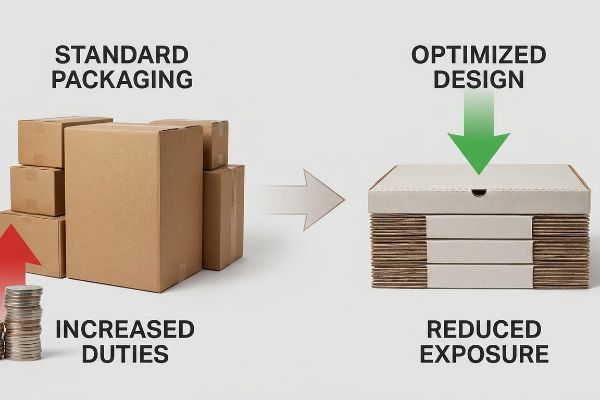
As tarifas alfandegárias afetam a indústria de embalagens, obrigando as marcas a absorverem custos de desembarque mais elevados para materiais importados. No entanto, os engenheiros contornam estrategicamente essas taxas modificando as estruturas físicas dos displays, permitindo que as unidades finalizadas se enquadrem em categorias de importação mais favoráveis, minimizando, assim, legalmente a exposição total aos direitos aduaneiros internacionais.

Vamos analisar como um simples ajuste estrutural muda completamente a sua realidade de importação.
Navegando na Otimização de Código de Importação
A maioria das equipes de compras presume que uma caixa de papelão é apenas uma caixa de papelão quando cruza a fronteira. Elas deixam que agentes de carga genéricos atribuam cegamente categorias de importação padrão às suas exposições de varejo de materiais mistos. Essa abordagem desinteressada deixa as marcas vulneráveis às faixas de penalidade máximas, inflando artificialmente seus custos dedesembarque¹.
Vejo isso acontecer constantemente quando designers misturam um clipe metálico em forma de S com uma bandeja de papelão. Como não separaram os componentes na lista de materiais, o agente alfandegário reclassificou toda a remessa sob a tarifa2. O impacto do carimbo do agente eliminou instantaneamente a margem de lucro do projeto. Resolvi isso redesenhando completamente a base usando travas de papel estilo origami em vez de ferragens metálicas, alterando legalmente a classificação de volta para mercadorias de papelão ondulado padrão (tarifa3) e evitando grandes estouros de orçamento para o cliente.
| Erro comum de iniciantes | A solução profissional | Benefício do piso de vendas |
|---|---|---|
| Mistura de metal e papel | Fechaduras de papel monomaterial | Contorna as altas tarifas alfandegárias sobre metais4 |
| Deixar que os encaminhadores adivinhem os códigos | Códigos HS pré-atribuídos | Evita surpresas fiscais que comprometem as margens de lucro |
| Envio totalmente montado | Embalagem plana para componentes | Reduz os custos de frete volumétrico5 |
Eu nunca permito que um funcionário externo da área de logística adivinhe como meus displays são construídos. Ao projetar rigorosamente para obter classificações de importação favoráveis antes mesmo do corte das matrizes, mantenho os orçamentos dos clientes totalmente protegidos de aumentos repentinos nos custos regulatórios.
🛠️ Mesa do Harvey: Será que suas vitrines com materiais mistos estão, sem querer, gerando impostos de importação mais altos? 👉 Solicite uma Análise de Estrutura Gratuita ↗ — Acesso direto à minha mesa. Zero spam de vendas automatizado, prometo.
As tarifas estão afetando a entrega de encomendas?
Quando as taxas alfandegárias aumentam, o reflexo imediato é entrar em pânico com os custos das matérias-primas, ignorando completamente o imposto invisível que se paga pelo volume de frete desperdiçado.
Sim. As tarifas estão afetando a entrega de encomendas, aumentando consideravelmente o custo do volume de envio ineficiente. Quando os impostos de importação aumentam, o espaço ocioso dentro de caixas master mal otimizadas torna-se financeiramente devastador, forçando os fabricantes a desenvolver estratégias de encaixe mais compactas e uma utilização mais rigorosa dos paletes para maximizar as unidades por contêiner.
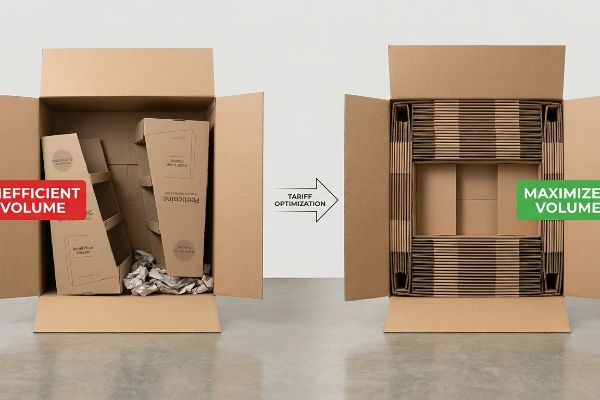
Você não está pagando apenas tarifas sobre o papelão; você está pagando impostos sobre o espaço vazio dentro do caminhão.
A armadilha do peso volumétrico no transporte de cargas
As equipes de marketing frequentemente projetam displays de varejo assimétricos, belos e impactantes, sem considerar como essas formas se encaixam em uma caixa master. Elas presumem que seu fornecedor de logística resolverá o problema durante o carregamento do contêiner. Essa falha resulta em enormes espaços vazios dentro da caixa de transporte .
Um cliente meu estava tentando compensar altas taxas alfandegárias com um envio urgente de caixas de chão pré-cheias. Ele ignorou as leis da física do peso volumétrico, permitindo uma saliência de 12,7 mm (0,5 polegadas) nos paletes. O som angustiante das ondulações do papelão se esmagando sob a carga superior do contêinerecoava na doca de recebimento. Ao reduzir artificialmente a área máxima permitida da caixa no software CAD (Desenho Auxiliado por Computador) em exatamente 12,7 mm (0,5 polegadas), eliminei a saliência. Essa simples correção geométrica nos permitiu empilhar o contêiner em duas camadas com segurança, diluindo drasticamente o impacto da tarifa por unidade sem comprometer a apresentação.
| Erro comum de iniciantes | A solução profissional | Benefício do piso de vendas |
|---|---|---|
| Permitir a saliência do palete | Caixa delimitadora CAD sem saliências | Impede o esmagamento da camada inferior8 |
| Envio de espaços vazios | Bandejas de embalagem internas aninhadas | Maximiza a contagem de unidades de contêiner |
| Ignorando a altura do caminhão | Limite inferior a 48 polegadas (121,9 cm)9 | Permite o empilhamento duplo seguro |
Recuso-me a deixar que a geometria inadequada de um contêiner comprometa uma exposição bem projetada. Ao tratar o interior de um contêiner de transporte como uma grade matemática rigorosa, garanto que você pague taxas de importação apenas sobre mercadorias físicas, e nunca sobre espaço vazio.
🛠️ Mesa do Harvey: Você sabe exatamente quanto espaço vazio está ocupando dentro das suas caixas master e quanto imposto de importação você está pagando? 👉 Baixe seu Checklist de Logística ↗ — Faça o download com segurança. Minha caixa de entrada está aberta caso tenha alguma dúvida.
As tarifas alfandegárias afetam os serviços aduaneiros?
Os impostos de importação representam apenas o lado financeiro da fronteira; o lado operacional é um labirinto de burocracia. Falhar nessa etapa não apenas custa dinheiro — impede completamente a entrada de suas mercadorias.
Sim. As tarifas alfandegárias impactam a alfândega ao desencadear uma fiscalização regulatória mais rigorosa e requisitos de documentação mais exigentes na fronteira. Quando as políticas de tarifas mudam, as agências alfandegárias aplicam com maior rigor protocolos de conformidade, como o preenchimento antecipado de dados, causando atrasos significativos na liberação, retenções em armazéns e penalidades financeiras para remessas com embalagens declaradas incorretamente.
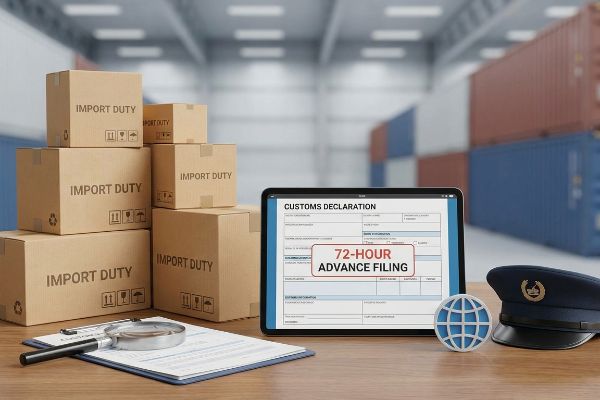
Ter um projeto de exibição brilhante não significa absolutamente nada se ele estiver preso em um depósito devido a um prazo perdido.
A armadilha alfandegária do porto
Marcas emergentes muitas vezes encaram o desembaraço aduaneiro como um pedágio: você simplesmente paga a taxa na chegada. Elas confiam que seus fabricantes cuidarão do transporte e presumem que a papelada se resolverá magicamente assim que o produto chegar ao porto.
Imagine a fronteira como um segurança de boate rigoroso: se seu nome não estiver na lista VIP com 72 horas de antecedência, você não entra, não importa quanto dinheiro tenha. Vi toda a logística de um cliente para as festas de fim de ano ser comprometida porque o fornecedor anterior perdeu o prazo do ISF (Declaração de Segurança do Importador) por apenas algumas horas. A espera angustiante, enquanto as autoridades portuárias cobravam taxas de sobrestadia dia após dia , foi brutal. Para evitar isso, implementei um protocolo rígido de transmissão de dados com 72 horas de antecedência, garantindo que as dimensões exatas, o peso e os códigos tarifários sejam registrados muito antes de o navio sequer deixar o porto.
| Erro comum de iniciantes | A solução profissional | Benefício do piso de vendas |
|---|---|---|
| Preenchimento da documentação à chegada | Arquivamento de segurança antecipado | Evita penalidades por retenção portuária |
| Descrições vagas de materiais | Análise precisa dos componentes | Elimina atrasos na inspeção alfandegária |
| Utilizando paletes de madeira não tratada | Bases de madeira tratada termicamente | Impede a rejeição de espécies invasoras |
Não arrisco com as autoridades portuárias. Ao seguir um cronograma de documentação rigoroso em paralelo com nosso cronograma de produção física, garanto que seus displays passem pela alfândega sem levantar qualquer suspeita.
🛠️ Harvey's Desk: Preocupado com a papelada confusa do seu fornecedor atual, que pode colocar seu lançamento no varejo em risco de retenção na alfândega? 👉 Garanta sua conformidade com a legislação ↗ — Sem formulários que geram ligações intermináveis de vendas. Apenas valor puro.
Quais são os 5 Ps da embalagem?
Projetar uma embalagem bonita sem uma estrutura de negócios é uma receita para o desastre. A base do sucesso no varejo reside no alinhamento estrito com princípios comerciais fundamentais.
Os 5 Ps da embalagem são: Promover, Posicionar, Apresentar, Fornecer e Proteger. Esses princípios fundamentais ditam como um recipiente físico deve transportar mercadorias com segurança, comunicar o valor da marca, atrair a atenção do consumidor, fornecer as informações legais obrigatórias e se alinhar estrategicamente com ambientes específicos de merchandising no varejo para maximizar as vendas.
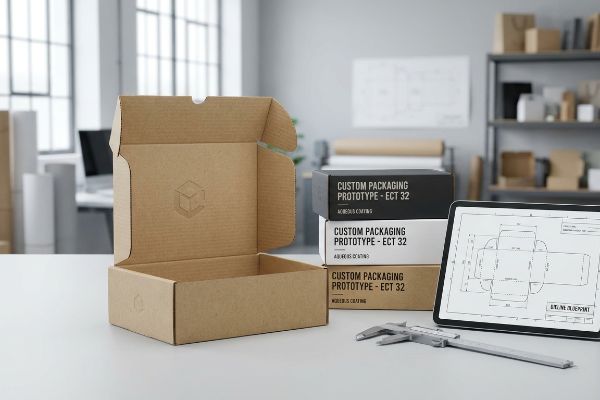
Mas conhecer a teoria não basta quando as máquinas começam a funcionar e os paletes chegam ao chão do armazém.
Por que as estruturas de embalagem padrão falham no chão de fábrica
As equipes de marketing adoram criar apresentações de vendas incríveis, destacando como a nova embalagem executa perfeitamente os princípios fundamentais. Elas se concentram bastante no posicionamento estético, aplicando camadas de estampagem metalizada cara e cortes especiais complexos para conquistar os compradores. Essa abordagem teórica pressupõe que a embalagem física absorverá facilmente sua visão criativa sem comprometer sua função principal de proteger a mercadoria.
Na minha empresa, vejo rotineiramente designs promocionais brilhantes destruírem completamente a integridade protetora do papelão. Uma armadilha clássica é reduzir a classificação ECT (Edge Crush Test) do núcleo14,5 kg (32 lbs) para 11,7 kg (26 lbs) apenas para liberar o orçamento para uma laminação premium com toque suave. Quando meço o resultado físico no Mullen Tester13, as fibras estruturais ficam completamente comprometidas. As microfraturas se abrem durante o transporte, resultando em uma deformação severa da base que leva à rejeição imediata pelo varejista e a semanas de retrabalho manual dispendioso. Corrijo isso proibindo estritamente a redução da classificação estética. Analisei as leituras do micrômetro e comprovei que não precisávamos de filmes plásticos caros — bastava um revestimento aquoso brilhante de alto teor de sólidos em um papelão virgem. Ao impor esse padrão de material, garanto que o tempo de montagem da embalagem conjunta diminua em 15 segundos por unidade, economizando milhares em custos de mão de obra para os clientes e garantindo uma taxa de sobrevivência perfeita no caminhão de transporte.
| Erro comum de iniciantes | A solução profissional | Benefício do piso de vendas |
|---|---|---|
| Placa de rebaixamento para cosméticos | Retenção de núcleo virgem14 | Impede o esmagamento catastrófico da carga |
| Laminação plástica pesada | Revestimento aquoso de alto brilho15 | Mantém perfeita capacidade de reciclagem na coleta seletiva |
| Sacrificar a proteção em prol da promoção | Rebaixamento em vez de relevo16 | Mantém as fibras do papel totalmente intactas |
Recuso-me a deixar que uma teoria de marketing comprometa a física das minhas embalagens. Um lançamento bem-sucedido no varejo exige que a engenharia estrutural proteja o produto com rigor, muito antes de qualquer elemento gráfico tentar vendê-lo.
🛠️ Mesa do Harvey: Você sabe a resistência exata ao esmagamento das bordas do papelão ondulado que atualmente embala seu produto principal mais caro? 👉 Envie-me seu arquivo de corte ↗ — Vou testar os cálculos antes que você desperdice seu orçamento com produção em massa.
Conclusão
Você pode tentar enganar o comércio global com materiais baratos, mas quando aquela placa de núcleo secretamente rebaixada cede sob o peso de um palete carregado, atrasando a linha de montagem em cerca de 30%, toda a sua economia com impostos desaparece em segundos. Mais de 500 gerentes de marca usam meu checklist de pré-impressão para evitar exatamente esses erros fatais no estágio inicial. Pare de arriscar as tolerâncias da sua cadeia de suprimentos e deixe-me pessoalmente analisar seus arquivos estruturais por meio da minha Auditoria Gratuita da Cadeia de Suprimentos ↗ para detectar erros dispendiosos de conformidade e frete antes que eles saiam da fábrica.
"Os 10 erros mais comuns de classificação HTS cometidos por importadores", https://www.flexport.com/blog/the-10-most-common-hts-classification-mistakes-made-by-importers/. [Documentação regulatória comercial de agências como a Alfândega e Proteção de Fronteiras dos EUA explicaria como a classificação inadequada da Nomenclatura Harmonizada do Sistema Tarifário (HTS) leva a taxas alfandegárias mais altas ou penalidades financeiras]. Papel da evidência: verificação do risco financeiro; tipo de fonte: guia regulatório. Fundamentos: a relação entre classificação e inflação de custos. Nota de escopo: específico para conformidade aduaneira internacional .
"[PDF] CAPÍTULO 48 DA SAT PAPEL E CARTÃO", https://www.usitc.gov/publications/docs/tata/hts/bychapter/1000c48.pdf. [Uma fonte autorizada sobre as Regras Gerais de Interpretação da Nomenclatura Comum do Mercosul (NCM) explica como a presença de componentes metálicos essenciais pode alterar a classificação de um produto composto para uma categoria tarifária mais elevada]. Papel da evidência: suporte factual; tipo de fonte: manual de regulamentação aduaneira. Fundamentos: impacto da composição do material na classificação tarifária. Nota de escopo: aplica-se ao direito do comércio internacional e às regras da NCM. ↩
"Caixas, embalagens e estojos de papelão ondulado ou cartão – UNIS", https://www.unisco.com/hts/48191000. [As tabelas tarifárias oficiais especificam a pureza do material e os requisitos estruturais necessários para que um produto seja classificado nas categorias de papel ou papelão ondulado]. Função da evidência: especificação técnica; tipo de fonte: tabela tarifária governamental. Fundamentos: o efeito da remoção de componentes metálicos nas taxas de direitos de importação. Nota de escopo: limitado aos critérios de classificação do Sistema Harmonizado (SH). ↩
"[PDF] Anexo 3.3 – Tabela Tarifária dos Estados Unidos – USTR", https://ustr.gov/sites/default/files/uploads/agreements/cafta/asset_upload_file425_3964.pdf. [As tabelas tarifárias aduaneiras e os dados comerciais demonstram que os componentes à base de papel geralmente se enquadram em classificações tarifárias mais baixas do que os materiais de embalagem à base de metal]. Função da evidência: verificação factual; tipo de fonte: banco de dados aduaneiro governamental. Apoia: a eficácia da substituição de materiais para otimização tributária. Nota de escopo: dependente das interpretações específicas dos códigos HS regionais] .
"Guia de Peso Volumétrico: O Que Você Precisa Saber – ILG", https://www.international-logistics-group.com/uk-en/insights/volumetric-weight-explained-161770/. [Os padrões da indústria logística definem o cálculo do peso faturável com base no volume, onde a embalagem plana reduz a área ocupada e, consequentemente, o custo]. Papel da evidência: validação técnica; tipo de fonte: white paper da indústria logística. Apoia: a afirmação de que o transporte de componentes é mais econômico do que o transporte de produtos montados. Nota de escopo: aplica-se principalmente ao frete aéreo e marítimo LCL] .
"Como o Design da Embalagem Afeta os Custos de Envio – DCL Logistics", https://dclcorp.com/blog/shipping/package-design-affects-shipping-costs/. [Uma fonte confiável em engenharia de embalagens ou logística confirmaria que formatos assimétricos e não encaixáveis aumentam o índice de vazios dentro das caixas master, reduzindo assim a eficiência volumétrica]. Papel da evidência: Comprovação factual; tipo de fonte: Manual de logística ou livro didático de engenharia de embalagens. Argumentos: A relação entre design assimétrico e ineficiência no envio. Nota de escopo: Foca em cálculos de peso volumétrico .
"Modelagem preditiva do efeito da saliência do palete na resistência à compressão da caixa", https://vtechworks.lib.vt.edu/items/d6fb70fe-bf11-40d2-a44c-3ba7918d06e3. [Normas de engenharia de embalagens fornecem dados sobre como a saliência do palete reduz significativamente a resistência à compressão vertical de caixas de papelão ondulado, levando à falha estrutural sob cargas superiores]. Papel da evidência: validação técnica; tipo de fonte: manual de engenharia de embalagens. Argumentos que sustentam: a relação causal entre a saliência do palete e o colapso estrutural. Nota de escopo: específico para materiais de papelão ondulado .
"Investigação do Efeito da Rigidez da Camada Superior do Palete em Papelão Ondulado…", https://pmc.ncbi.nlm.nih.gov/articles/PMC8585293/. [Uma fonte confiável em logística explicaria como a saliência do palete altera a distribuição de peso e reduz a capacidade de carga vertical da embalagem da camada inferior]. Papel da evidência: justificativa técnica; tipo de fonte: manual de logística. Fundamentos: a necessidade de carregamento sem saliência. Nota de escopo: aplica-se a papelão ondulado e materiais de embalagem similares .
"Quantos paletes cabem em um caminhão? Capacidade por tipo de carreta", https://mercer-trans.com/2026/01/14/how-many-pallets-fit-in-a-truck/. [As normas de transporte da indústria para carretas baú padrão geralmente exigem uma altura máxima de palete de 48 polegadas para facilitar o empilhamento duplo seguro]. Papel da evidência: especificação técnica; tipo de fonte: norma da indústria de transporte de cargas. Apoia: otimização de carregamento para eficiência volumétrica. Observação sobre o escopo: pode variar de acordo com as especificações de carretas high-cube. ↩
"Declaração de Segurança de Importação (ISF) – Quando submeter à CBP", https://www.help.cbp.gov/s/article/Article-1868. [As diretrizes da Alfândega e Proteção de Fronteiras dos EUA (CBP) especificam o cronograma obrigatório para o envio da ISF e as multas resultantes em caso de descumprimento]. Função da evidência: requisito regulamentar; tipo de fonte: agência governamental. Apoio: o risco operacional de perder os prazos de envio. Nota de escopo: Aplica-se principalmente ao frete marítimo com entrada nos EUA .
"Demurrage Explicada: Penalidades e Custos no Transporte Marítimo e Financeiro", https://www.investopedia.com/terms/d/demurrage.asp. [A documentação de logística e direito marítimo define demurrage como as taxas aplicadas por transportadoras ou terminais quando a carga excede seu período de sobrestadia permitido]. Papel da evidência: definição financeira; tipo de fonte: padrão do setor. Fundamentos: as consequências financeiras das retenções alfandegárias. Nota de escopo: Aplica-se à maioria dos centros de transporte marítimo globais. ↩
"Teste de Compressão de Borda: Informações Essenciais para Papelão Ondulado…", https://www.testresources.net/blog/edge-crush-test-essential-insights-for-corrugated-packaging . [Manuais técnicos para embalagens de papelão ondulado definem o Teste de Compressão de Borda (ECT) como a principal medida da resistência ao empilhamento de uma placa]. Papel da evidência: especificação técnica; tipo de fonte: norma da indústria. Argumenta: a relação entre os valores do ECT e o colapso da embalagem. Nota de escopo: específico para papelão ondulado.
"Teste de Resistência ao Estouro | Centro de Embalagens e Projeto de Carga Unitária", https://www.unitload.vt.edu/facilities/corrugated-packaging-lab/bursting-strength-testing.html. [O Teste de Estouro Mullen é um método padronizado usado para determinar a resistência ao estouro de materiais de embalagem para avaliar a integridade da fibra]. Papel da evidência: verificação técnica; tipo de fonte: norma de engenharia (ASTM/ISO). Apoia: o uso da resistência ao estouro para diagnosticar falhas do material. Nota de escopo: mede a resistência à pressão em vez da compressão .
"[PDF] PAPELÃO VIRGEM VERSUS PAPELÃO RECICLADO Por L. Lisa Zhao Uma Tese …", https://vuir.vu.edu.au/18233/1/ZHAO_1993compressed.pdf. [Uma fonte confiável sobre engenharia de papelão confirmaria que as fibras virgens oferecem resistência estrutural e à compressão superiores em comparação com as fibras recicladas, reduzindo o risco durante o transporte.] Papel da evidência: validação técnica; tipo de fonte: periódico de ciência dos materiais. Baseia: Integridade estrutural de embalagens cosméticas. Nota de escopo: Específico para cenários de carga com empilhamento em altura. ↩
"Revestimentos à base de água versus laminados plásticos: uma alternativa mais ecológica…", https://global.humanchem.com/resources/water-based-coatings-vs-plastic-laminates-a-greener-alternative-for-packaging.html. [As normas da indústria para gestão de resíduos especificam que os revestimentos aquosos à base de água são compatíveis com o processo de repolpação, enquanto os laminados plásticos frequentemente contaminam o fluxo.] Papel da evidência: norma ambiental; tipo de fonte: diretrizes da indústria de reciclagem. Apoio: Sustentabilidade e reciclabilidade na coleta seletiva. Nota de escopo: A eficácia depende das capacidades das instalações municipais locais .
"Relevo vs. Baixo-relevo: Saiba a diferença e qual é melhor?", https://www.wecustomboxes.com/blog/embossing-vs-debossing/. [A literatura técnica sobre acabamento gráfico explica que o relevo estica e pode romper as fibras do papel, enquanto o baixo-relevo mantém uma densidade de fibras mais alta e integridade estrutural.] Papel da evidência: especificação técnica; tipo de fonte: manual de produção gráfica. Suporte: Durabilidade física da embalagem. Nota de escopo: Aplica-se principalmente a papéis de alta gramatura (GSM). ↩