Pode presumir que o lançamento da sua linha de cuidados com a pele à base de plantas é perfeitamente sustentável, mas um único acabamento químico inadequado pode enviar toda a sua campanha de vendas em embalagens de cartão canelado diretamente para o aterro sanitário.
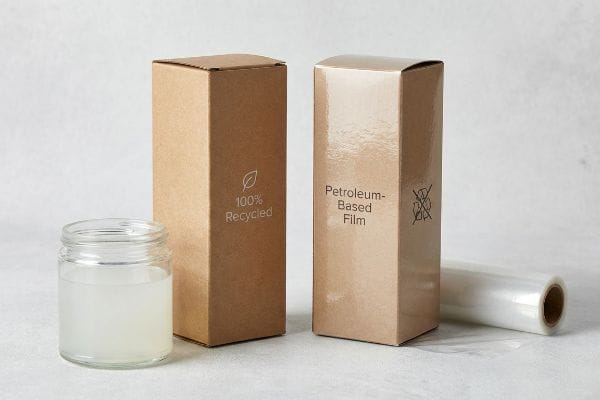
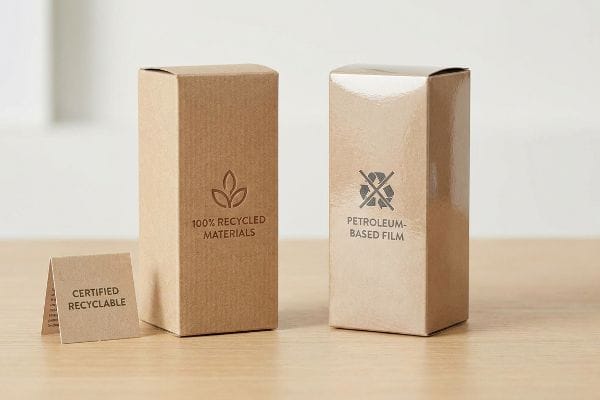
Depende. As embalagens personalizadas para loções são apenas ecológicas quando os seus componentes estruturais e químicos se alinham perfeitamente com os fluxos de reciclagem de papel municipal. A utilização de substratos de cartão canelado 100% reciclado e revestimentos aquosos líquidos garante o total cumprimento das normas de recolha seletiva, enquanto a integração de filmes à base de petróleo torna instantaneamente toda a embalagem não reciclável e tóxica.
Deixemos de lado as alegações de marketing enganosas sobre a sustentabilidade e examinemos a química física rigorosa necessária para cumprir os exigentes padrões ambientais das grandes cadeias de retalho sem sacrificar a capacidade de carga.
Qual é a embalagem de produtos de cuidado da pele mais ecológica?
O setor das embalagens cosméticas recorre frequentemente a jargões ecológicos, mascarando o atrito logístico criado quando os projetos ambientais teóricos se deparam com instalações de triagem automatizadas de alta velocidade.
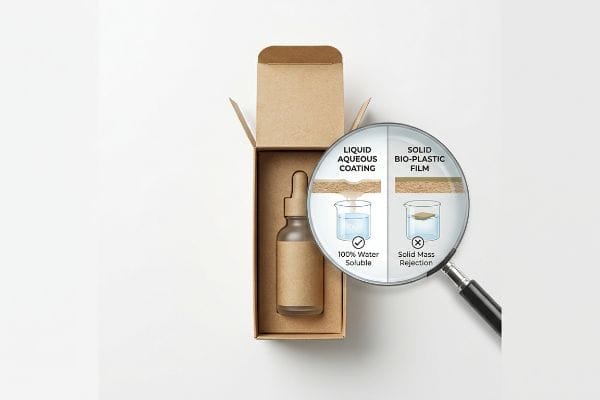
As embalagens de cuidados com a pele mais ecológicas utilizam uma arquitetura monomaterial rigorosa, concebida para reciclagem em fluxo único. Ao substituir as laminações de bioplástico por revestimentos aquosos líquidos de alto desempenho, os fabricantes garantem que as barreiras protetoras se dissolvem perfeitamente em tanques de reciclagem de papel padrão, sem deixar resíduos tóxicos e cumprindo as normas ambientais das grandes cadeias de retalho em todo o mundo.
Precisamos de deixar de lado o jargão estético do marketing e analisar os princípios exatos da físico-química que determinam se a sua caixa se degrada realmente ou simplesmente entope uma fábrica de reciclagem municipal.
A físico-química da dissolução de substratos aquosos
A nível molecular, a verdadeira sustentabilidade na comercialização de produtos de cuidados da pele é regida pela tensão superficial do líquido durante a fase de repolpação¹.Em vez de laminar uma folha sólida de polímero à base de milho sobre o cartão em bruto, utilizámos uma matriz de polímero líquido conhecida como acabamento aquoso. Este composto à base de água cura formando uma película protetora que repele a humidade do retalho, mas comporta-se de forma idêntica à celulose de papel padrão²quando agitado num tanque de reciclagem comercial.
Costumo explicar aos gestores de produto que as barreiras de embalagem devem comportar-se como açúcar em água quente, e não como um invólucro de plástico que flutua à superfície. Quando um biofilme sólido entra no fluxo de reciclagem municipal padrão, as máquinas de triagem não conseguem diferenciá-lo dos plásticos derivados do petróleo³ , fazendo com que toda a unidade estrutural seja rejeitada e desviada para um aterro sanitário. Ao projetar a química da superfície exclusivamente com revestimentos solúveis em água, a integridade estrutural do expositor permanece intacta mesmo sob forte exposição a produtos, enquanto a eliminação no final da vida útil permanece completamente descomplicada para o consumidor e o retalhista.
| Repolpação Métrica | Filme bioplástico sólido | Revestimento Aquoso Líquido |
|---|---|---|
| Dissolução de Cuba | rejeição de massa sólida | 100% solúvel em água4 |
| Fluxo de reciclagem | Requer compostagem especializada5 | OCC padrão na calçada6 |
| Conformidade do Varejista | Elevado risco de rejeição ESG | Aprovação de auditoria sem atritos |
Desenho embalagens para que resistam ao ambiente físico do ponto de venda e desapareçam perfeitamente para o contentor de reciclagem. Se a barreira química não se dissolver em reservatórios de água municipais comuns, o material representa um passivo ambiental, e não uma solução sustentável.
🛠️ Mesa do Harvey: Será que as suas embalagens de cosméticos brilhantes estão a causar secretamente um enorme desvio de resíduos para os aterros sanitários municipais? 👉 Solicite uma Análise Química de Superfície gratuita ↗ — Analiso pessoalmente cada ficheiro estrutural no prazo de 24 horas.
Qual o tipo de embalagem mais ecológico?
As marcas que procuram desesperadamente a melhor imagem ambiental exigem frequentemente especificações de cartão que ficam incríveis nos relatórios corporativos, mas que não possuem qualquer integridade mecânica.
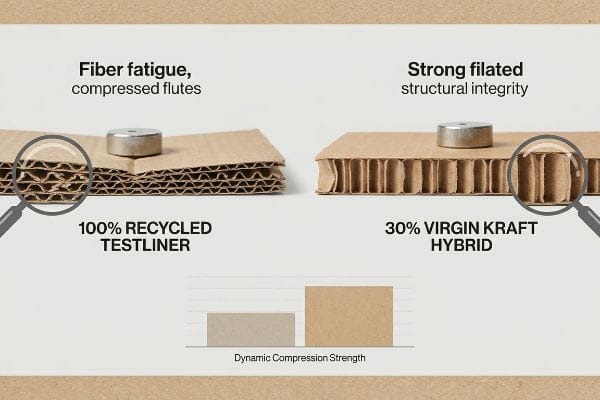
A maioria das arquiteturas de embalagens ecológicas utiliza um substrato híbrido que combina cartão reciclado com papel kraft virgem. Depender exclusivamente de fibras de celulose sobre-recicladas provoca um colapso estrutural severo sob cargas pesadas no retalho, enquanto a injeção de fibras longas virgens restaura instantaneamente a resistência à compressão sem violar as rigorosas quotas de fornecimento sustentável das empresas.
Não pode compensar a pegada de carbono da sua empresa se as embalagens secundárias, estruturalmente desgastadas, se deformarem durante o transporte marítimo e destruírem a mercadoria principal no seu interior.
A realidade da exaustão da microfibra 32ECT
Quando analiso os gabaritos dos clientes para campanhas de cosméticos sustentáveis, vejo constantemente equipas de compras a exigir testliner 100% reciclado para cumprir os mandatos internos de ESG (Ambiental, Social e de Governação). Assumem que o cartão altamente reciclado possui a mesma resistência ao choque cinético que o material virgem. No meu laboratório de ensaios, comprovei que este optimismo teórico ignora completamente a realidade mecânica microscópica do processo de repolpação, onde as fibras do papel encurtam fisicamente e se tornam estruturalmente esgotadas após cinco a sete ciclos de reciclagem .
Isto não é apenas teoria — vejo isto acontecer na linha de testes quando um expositor de caixa supostamente ecológico cede ao abrigo do Teste de Compressão de Borda TAPPI (Associação Técnica da Indústria de Celulose e Papel) T811.As ondulações de 2,79 mm (0,11 polegadas) simplesmente não têm a rigidez interna necessária para suportar uma carga estática de 85 kg (187,5 libras), fazendo com que as paredes exteriores se rompam e colapsem. Os meus vinte anos de experiência na linha de produção ensinaram-me a intercetar este problema exigindo a injeção de 30% de material kraft virgemdiretamente nos arcos de suporte. A adição destas fibras longas e novas de papel restaura instantaneamente a resistência à compressão dinâmica. Ao impor esta tolerância específica para o material híbrido, garanto que a integridade estrutural sobrevive ao transporte de contentores empilhados duplamente, evitando completamente os estornos por parte dos retalhistas e mantendo a pegada de carbono global em conformidade com da Walmart .
| Métrica de suporte de carga | Testliner 100% reciclado | 30% de Kraft Híbrido Virgem |
|---|---|---|
| Comprimento da fibra | Exaustão microscópica10 | Arcos estruturais longos |
| Compressão dinâmica | cisalhamento catastrófico da flauta11 | Carga estática de elevado peso |
| Logística de contentores | Colapso do transporte público de nível básico | empilhamento duplo seguro12 |
Recuso-me a deixar que as exigências de sustentabilidade destruam a capacidade de carga dinâmica. Forçar as fibras estruturalmente exaustas para além dos seus limites físicos garante o colapso catastrófico da carga, o que, em última análise, gera muito mais resíduos ambientais do que a conceção do substrato corretamente desde o início.
🛠️ Mesa do Harvey: O seu expositor de balcão 100% reciclado está a ceder silenciosamente sob o peso dos seus frascos de loção de vidro? 👉 Solicite o seu Teste de Compressão de Substrato Gratuito ↗ — 100% confidencial. Os seus projetos de retalho ainda não lançados estão seguros comigo.
Quais são algumas marcas de embalagens ecológicas?
A exposição de loções orgânicas através de janelas transparentes recortadas leva muitas vezes as marcas a dependerem de plásticos tóxicos, arruinando a própria mensagem ecológica que tentam projetar.
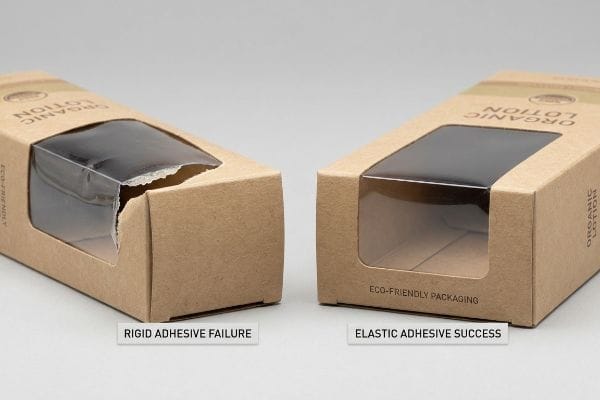
As marcas de embalagens ecológicas inovam em transparência ao substituir as janelas de visualização à base de petróleo por filmes dinâmicos de celulose ou PLA. Ao integrar estes polímeros especializados de origem vegetal com adesivos altamente elásticos, os principais fabricantes sustentáveis mantêm a visibilidade perfeita dos produtos cosméticos, garantindo que toda a embalagem dobrável se mantém totalmente reciclável.
Substituir os plásticos convencionais por filmes sustentáveis resolve a questão da conformidade ambiental, mas introduz imediatamente um conflito físico altamente instável, conhecido como tensão térmica do substrato.
A vulnerabilidade à deformação térmica no merchandising transparente
As marcas de cosméticos de luxo solicitam constantemente caixas de cartão kraft cru com janelas transparentes para enfatizar a sua estética natural, assumindo que os adesivos rígidos padrão manterão a estrutura unida. Ignoram completamente o grave conflito de tensão superficial criado quando uma placa de plástico rígida e o papel kraft poroso se expandem e contraema taxas totalmente diferentes durante as flutuações climáticas. Quando submetidos à humidade descontrolada de uma cadeia de abastecimento global, este desajuste físico destrói rapidamente a geometria da estrutura.
Isto não é apenas teoria — aprendi isto da maneira mais difícil no ano passado, quando pedi ao meu engenheiro-chefe de embalagens, Mark, para realizar uma simulação em câmara climática numa nova caixa de loção orgânica. Utilizámos cola rígida padrão numa janela de PLA (ácido polilático) compostável, assumindo que o filme ecológico teria um desempenho perfeito. Quando a câmara atingiu 88% de humidade, o papel poroso absorveu humidade e inchou 1,01 mm (0,04 polegadas) , enquanto o PLA permaneceu perfeitamente estático. Fiquei ali a observar a tensão violenta a romper a vedação adesiva, arrancando a janela da caixa com um som alto e distinto de rasgo. Recalibrámos imediatamente a máquina de corte rotativo e atualizámos a linha para um adesivo altamente elástico e resistente às intempéries,a expansão da fibra do papel. Este ajuste de flexibilidade eliminou completamente o risco de rutura, evitando uma taxa de rejeição de 40% no retalho para o cliente e garantindo que a sua experiência de desembalagem premium sobrevivesse ao transporte marítimo transpacífico sem um único defeito.
| Integração de janelas | Adesivo tradicional rígido | Matriz climática elástica |
|---|---|---|
| Expansão por umidade | Tensão estrutural violenta16 | Estiramento dinâmico de fibras |
| Durabilidade no transporte | Elevado risco de desprendimento | Delaminação de carga zero17 |
| Recepção de Varejistas | Taxa de rejeição de 40% das unidades18 | Leitura de entrada sem atrito |
Invisto tempo e dinheiro no meu laboratório de testes para que não perca lucros no ponto de venda. Ignorar os limites de expansão física dos materiais mistos transforma uma bela janela estética numa verdadeira bomba estrutural.
🛠️ Harvey's Desk: As colas rígidas estão a fazer com que as janelas premium de cosméticos compostáveis se soltem durante o transporte marítimo em condições de humidade? 👉 Solicite uma Auditoria de Elasticidade Gratuita ↗ — Sem gestores de conta pelo meio. Fala diretamente com engenheiros estruturais.
Quais são as melhores empresas para embalagens ecológicas?
Selecionar um parceiro de fabrico com base apenas no seu folheto de marketing ecológico leva frequentemente a falhas químicas catastróficas na linha de impressão de alta velocidade.
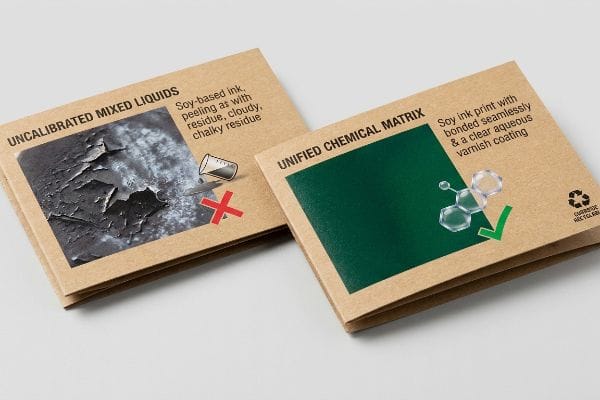
As melhores empresas de embalagens ecológicas implementam matrizes químicas unificadas em todo o seu processo de impressão. Os principais fabricantes previnem a delaminação catastrófica da tinta, combinando matematicamente a energia superficial específica das tintas pesadas à base de soja com vernizes aquosos compatíveis, garantindo uma identidade visual vibrante para os produtos cosméticos no retalho, sem comprometer os rigorosos padrões de reciclagem.
Não se pode simplesmente forçar a mistura de dois líquidos sustentáveis diferentes e esperar uma ligação permanente; a físico-química do ambiente fabril determina exactamente o que sobrevive.
O risco de rejeição da tensão superficial química
Ao auditar ficheiros de impressão de novos clientes, vejo constantemente equipas de compras a combinar cegamente tintas densas à base de óleo e soja com vernizes ecológicos à base de água para atingir duas métricas ambientais diferentes em simultâneo. Assumem que estas duas camadas ecológicas simplesmente secarão e se unirão perfeitamente no chão de fábrica. Ignoram completamente a realidade física fundamental da tensão superficial; pulverizar uma camada superior à base de água diretamente sobre uma camada de tinta à base de óleo não curada garante uma rejeição molecular severa¹⁹antes mesmo de os paletes saírem da fábrica.
Isto não é apenas teoria — vejo isto acontecer na linha de testes quando uma tiragem não calibrada chega à quinadora-coladeira de alta velocidade. O verniz à base de água forma gotas sobre a tinta de soja oleosa20, criando uma micropelícula frágil que se desprende agressivamente como um resíduo esbranquiçado e pulverulento no momento em que as correias da máquina fixam a placa do teste 32ECT (Bording Compression Test)21.Obtive as leituras do micrómetro ao nível da dina e provei que não precisávamos de descartar a iniciativa ecológica; bastava sincronizar matematicamente a taxa de oxidação. Assim que a equipa de compras me permitiu ajustar a sequência de cura e impor um teste obrigatório de aderência da fita adesiva na pré-produção, a matriz química unificada fez o trabalho pesado. Ao estabelecer esta ligação molecular, eliminei a taxa de refugo de 14,5% na fábrica, neutralizando completamente o risco de as caixas de cosméticos empoeiradas e descascadas destruírem a imagem premium da marca nas prateleiras.
| Métrica de acabamento | Líquidos mistos não calibrados | Matriz Química Unificada |
|---|---|---|
| Energia de superfície | Barreira de rejeição molecular22 | ligação correspondente ao nível de dina23 |
| Resposta de fricção | resíduo de descascamento esbranquiçado | Transporte de máquinas sem interrupções |
| Sucata de produção | 14,5% de desperdício de material24 | Rendimento de fábrica otimizado |
Confio na química precisa das superfícies para unir o apelo visual de uma marca de alta qualidade com a sustentabilidade intransigente. Tentar combinar materiais ecológicos incompatíveis de forma indiscriminada resulta apenas em adesivos descascados e enorme desperdício de stock.
🛠️ Harvey's Desk: Os seus gráficos vibrantes impressos com tinta de soja estão a descascar agressivamente dos seus expositores sustentáveis sempre que um funcionário da loja lhes toca? 👉 Obtenha a sua análise gratuita ao nível Dyne ↗ — Analiso pessoalmente cada ficheiro estrutural no prazo de 24 horas.
Conclusão
Criar expositores de cuidados com a pele verdadeiramente sustentáveis exige dominar a física microscópica da exaustão das fibras, a tensão adesiva induzida pelo clima e a ligação química precisa para evitar o colapso estrutural na cadeia de abastecimento. Só no mês passado, a minha auditoria estrutural ajudou 3 marcas a evitar mais de 10.000 dólares em eliminação de stocks e estornos de retalhistas. Antes de finalizar a sua próxima campanha de retalho amiga do ambiente, permita-me analisar os seus ficheiros estruturais através de uma Auditoria de Corte Estrutural Gratuita ↗ para garantir que resistem tanto ao transporte rigoroso como às exigências de sustentabilidade dos retalhistas.
"Relação entre a molhabilidade das fibras de celulose e a resistência à tracção de…", https://pmc.ncbi.nlm.nih.gov/articles/PMC8799655/. Breve explicação de como a tensão superficial afeta o desprendimento dos revestimentos das fibras de celulose durante o repolpamento industrial. Papel da evidência: mecanismo técnico; tipo de fonte: periódico de ciência dos materiais. Fundamenta: a física que rege a sustentabilidade dos revestimentos aquosos. Nota de âmbito: relaciona-se especificamente com matrizes poliméricas aquosas .
"Características da superfície e desempenho de repulpabilidade de…", https://bioresources.cnr.ncsu.edu/resources/surface-characteristics-and-repulpability-performance-of-cellulose-fiber-based-packaging-materials-coated-with-aqueous-dispersions-of-wood-bark-derived-suberin/. Dados comparativos demonstrando que os acabamentos aquosos se decompõem a taxas e com resíduos semelhantes aos da celulose bruta em pulpers industriais. Papel da evidência: verificação do desempenho; tipo de fonte: padrão da indústria de reciclagem. Suporta: a alegação de dissolução perfeita em tanques de reciclagem. Nota de âmbito: limitado a instalações de reciclagem de nível comercial. ↩
"Influências do ácido polilático bioplástico na triagem por infravermelho próximo de…", https://pmc.ncbi.nlm.nih.gov/articles/PMC8488636/. Verificação técnica da capacidade dos sistemas de triagem por infravermelhos próximos (NIR) em instalações de triagem de materiais recicláveis (MRFs) para distinguir entre biofilmes e polímeros tradicionais derivados do petróleo. Papel da evidência: verificação técnica; tipo de fonte: estudo de gestão de resíduos industriais. Sustenta: a alegação de que os biofilmes causam a contaminação dos lotes e o desvio de resíduos para aterros sanitários. Nota de âmbito: limitado à infraestrutura municipal de reciclagem padrão .
"A verdade sobre o porquê de os revestimentos aquosos não serem livres de plástico – Verive", https://verive.eu/food-packaging-materials/aqueous-lining-plastic-free-truth/ . Verificação técnica da taxa de dissolução de revestimentos aquosos durante processos industriais de repolpação. Papel da evidência: Verificação técnica; tipo de fonte: Estudo de ciência dos materiais. Baseia-se em : Solubilidade total dos revestimentos aquosos. Nota de âmbito: Aplica-se a revestimentos poliméricos específicos à base de água.
"Materiais à base de PLA/PHB totalmente biodegradáveis em ambos os ambientes…", https://pmc.ncbi.nlm.nih.gov/articles/PMC9572414/. Evidências que detalham por que razão certos filmes bioplásticos não se decompõem em fluxos de resíduos padrão e requerem instalações de compostagem industrial. Função da prova: Verificação dos factos; tipo de fonte: Relatório de gestão de resíduos ambientais. Fundamentos: Requisitos de eliminação específicos para bioplásticos. Nota sobre o âmbito: Varia de acordo com o tipo de polímero, como o PLA .
"Revestimentos recicláveis são mais utilizados do que a cera em caixas de cartão canelado: relatório", https://www.wastedive.com/news/recyclable-coatings-used-more-than-wax-on-corrugated-boxes-report/407332/ . Verificação de que os revestimentos aquosos não interferem com a recuperação de embalagens de cartão canelado utilizadas nos fluxos de reciclagem municipais. Papel da evidência: Verificação da conformidade; tipo de fonte: Norma da indústria de reciclagem. Apoio: Compatibilidade com a recolha seletiva de papel. Nota de âmbito: Foca-se na recuperação de substratos à base de papel.
"Degradação de Derivados de Celulose em Laboratório, Humano…", https://pmc.ncbi.nlm.nih.gov/articles/PMC9277587/ . A literatura de ciência dos materiais sobre a degradação da celulose detalha o encurtamento das fibras e a perda de cristalinidade durante o processo de repolpação. Papel da evidência: verificação técnica; tipo de fonte: revista académica. Fundamentos: O esgotamento mecânico das fibras recicladas. Nota de âmbito: Os limites de ciclo podem variar consoante a utilização de mistura de fibras virgens e tratamentos químicos.
"Métodos de teste de esmagamento de borda e compressão de caixa…", https://www.tappi.org/publications-standards/tappi-journal/home/2022/aug/edge-crush-testing-methods-and-box-compression-modeling-tappi-journal-august-2022/ . Verificação do protocolo padrão da indústria para medir a capacidade de carga de materiais ondulados. Papel da evidência: verificação técnica; tipo de fonte: norma industrial. Comprova: a validade do teste utilizado para identificar falhas estruturais. Nota de âmbito: aplica-se especificamente à indústria da pasta de papel e do papel.
"O Impacto Ambiental das Embalagens de Cartão Canelado", https://www.internationalpaper.com/resources/blog/environmental-impact-corrugated-packaging-why-balanced-fiber-approach-best. Dados de ciência dos materiais demonstrando como proporções específicas de kraft virgem de fibra longa restauram a resistência à compressão da pasta de papel sobre-reciclada. Papel da evidência: validação técnica; tipo de fonte: estudo de ciência dos materiais. Sustenta: a afirmação de que os substratos híbridos previnem o colapso estrutural. Nota de âmbito: as percentagens ideais podem variar de acordo com a classificação ECT desejada .
"Têxteis reciclados mecanicamente: uma fonte de microplásticos…", https://pmc.ncbi.nlm.nih.gov/articles/PMC12825150/. Explicação técnica de como ciclos repetidos de reciclagem encurtam as fibras de celulose e reduzem a integridade estrutural. Papel da evidência: especificação técnica; tipo de fonte: periódico de ciência dos materiais. Sustenta: a afirmação de que os forros 100% reciclados sofrem de esgotamento do comprimento das fibras. Nota de âmbito: aborda especificamente a degradação da celulose .
"Estimativa da resistência ao esmagamento das arestas do cartão canelado…", https://pmc.ncbi.nlm.nih.gov/articles/PMC9961700/. Dados empíricos comparando as taxas de falha de ondulações recicladas versus ondulações híbridas virgens sob cargas de transporte dinâmico. Papel da evidência: métrica de desempenho; tipo de fonte: relatório de engenharia de embalagens. Defende: que os revestimentos reciclados são propensos a falhas estruturais repentinas durante a compressão. Nota de âmbito: foco na carga dinâmica em vez de estática .
"Resistência à Compressão de Embalagens de Cartão Canelado…", https://pmc.ncbi.nlm.nih.gov/articles/PMC10054506/. Parâmetros de referência da indústria para a percentagem mínima de fibra virgem necessária para manter a resistência à compressão vertical em logística. Papel da evidência: parâmetro de referência; tipo de fonte: norma de logística/embalamento. Argumenta: alegação de que os revestimentos híbridos de papel kraft permitem um empilhamento estável. Nota de âmbito: dependente das classificações ECT específicas. ↩
"Efeitos do Coeficiente de Expansão Térmica e da Humidade…", https://pmc.ncbi.nlm.nih.gov/articles/PMC8587952/. Documentação técnica que detalha os diferentes coeficientes higroscópicos e de expansão térmica dos polímeros sintéticos em comparação com o cartão à base de celulose. Papel da evidência: verificação técnica; tipo de fonte: manual de ciência dos materiais. Fundamentos: a causa da tensão estrutural e da falha em embalagens de materiais mistos. Nota de âmbito: aplica-se a plásticos rígidos standard, como o PET ou o PVC .
"Expansão higroscópica de materiais restauradores estéticos: um ano…", https://pmc.ncbi.nlm.nih.gov/articles/PMC3184730/. Dados técnicos que confirmam a expansão higroscópica do papel a 88% de humidade, comparativamente à estabilidade do PLA. Papel da evidência: validação técnica; tipo de fonte: periódico de ciência dos materiais. Fundamentos: a causa física da falha de selagem adesiva. Nota de âmbito: as taxas de expansão variam de acordo com a gramagem do papel e a composição da fibra .
"Uma revisão sobre o potencial do polímero de base biológica ácido polilático em… – PMC", https://pmc.ncbi.nlm.nih.gov/articles/PMC11091039/. Documentação técnica sobre formulações adesivas especializadas, concebidas para gerir a dilatação diferencial em substratos híbridos papel-PLA. Papel da evidência: especificação técnica; tipo de fonte: guia de engenharia de embalagens. Aplica-se: à utilização de adesivos flexíveis para evitar o rebentamento de vidros. Nota de âmbito: aplicável a condições de transporte transoceânico com humidade elevada. ↩
"Efeitos da Humidade Relativa na Resistência à Compressão de…", https://open.clemson.edu/all_theses/3225/. Análise de ciência dos materiais sobre a tensão estrutural induzida pela expansão higroscópica em ligações adesivas não elásticas. Papel da evidência: mecanismo teórico; tipo de fonte: manual de engenharia. Fundamentos: o modo de falha dos adesivos rígidos tradicionais sob tensão de humidade. Nota de âmbito: foco na interface entre as janelas de plástico e cartão .
"Delaminação de Dispositivos Plastificados em Ambientes de Serviço Dinâmicos", https://pmc.ncbi.nlm.nih.gov/articles/PMC10972266/. Especificações técnicas de desempenho relativas à resistência à separação adesiva (delaminação) em matrizes de embalagens adaptáveis ao clima. Papel da evidência: especificação técnica; tipo de fonte: estudo de ciência dos materiais. Base: durabilidade das matrizes elásticas durante o transporte. Nota de âmbito: relativo aos testes de stress de carga padrão. ↩
"Circularity in Packaging and the Role of Mechanical Recycling", https://www.internationalpaper.com/resources/recycling/white-paper/circularity-packaging-and-role-mechanical-recycling . Dados estatísticos sobre as taxas de rejeição no retalho para embalagens que utilizam adesivos tradicionais durante o controlo de qualidade. Papel da evidência: métrica quantitativa; tipo de fonte: relatório da indústria. Defende: a ineficiência e a taxa de falhas das janelas adesivas rígidas. Nota de âmbito: refere-se à digitalização de um elevado volume de entrada no retalho.
"Como evitar problemas de tensão superficial em trabalhos em madeira…", https://www.scienceforums.net/topic/100022-how-to-avoid-surface-tension-problems-with-woodwork-finish/ . Evidência técnica sobre a incompatibilidade de revestimentos aquosos hidrófilos e tintas à base de óleo hidrófobas devido à incompatibilidade de energia superficial. Papel da evidência: verificação técnica; tipo de fonte: manual de química de impressão industrial; fundamenta: a afirmação de que a sobreposição inadequada de camadas provoca rejeição química. Nota de âmbito: específica para a interação entre substâncias polares e apolares.
"Fatores de Adesão da Energia Superficial e da Tensão Superficial", https://corkindustries.com/adhesion-factors-of-surface-energy-surface-tension/ . Explicação técnica da incompatibilidade de tensão superficial entre os revestimentos aquosos e as tintas à base de soja , que leva à formação de gotas e à baixa adesão. Papel da evidência: validação técnica; tipo de fonte: periódico científico de embalagens. Fundamentos: Rejeição da tensão superficial química. Nota de âmbito: Aplica-se especificamente a tiragens de impressão não calibradas.
"Caixas de Cartão Canelado 32 ECT", https://www.papermart.com/p/corrugated-boxes/161020?srsltid=AfmBOopY0pFDdxS6v-upkRUxo4y7KmmQ76Tio2-8z2k9PFNFAO8-vXf_. Verificação do 32 ECT como métrica padrão de resistência do cartão canelado utilizada em embalagens comerciais. Papel da evidência: especificação técnica; tipo de fonte: norma da indústria (ASTM/TAPPI). Suportes: identidade do substrato do material. Nota de âmbito: medição padrão para resistência à compressão vertical. ↩
"Impressão por jato de tinta multicamadas com energia superficial confinada para… – PMC", https://pmc.ncbi.nlm.nih.gov/articles/PMC12710584/. Validação técnica de como a energia superficial inconsistente cria rejeição química na impressão de alta velocidade. Papel da evidência: mecanismo técnico; tipo de fonte: revista de engenharia química. Suporta: o risco de rejeição por tensão superficial. Nota de âmbito: Aplica-se especificamente a interfaces líquido-substrato. ↩
"Dina test | Surface energy measurement | DyneTEC", https://tantec.com/dyne-test-measuring-surface-energy/. Verificação de padrões de correspondência ao nível da dina para alcançar uma adesão ideal em substratos ecológicos. Papel da evidência: norma da indústria; tipo de fonte: manual de especificações técnicas. Suporta: a eficácia de matrizes químicas unificadas. Nota de âmbito: Foca-se na medição da tensão superficial. ↩
"Realização da Economia Circular dos Plásticos Impressos em 3D: Uma Revisão – PMC", https://pmc.ncbi.nlm.nih.gov/articles/PMC7957743/. Dados empíricos que comprovam a taxa típica de refugo resultante de falhas de tensão superficial na produção não calibrada. Papel da evidência: métrica quantitativa; tipo de fonte: relatório da indústria transformadora. Suporta: o custo da rejeição química da superfície. Nota de âmbito: Pode variar consoante o tipo de substrato .