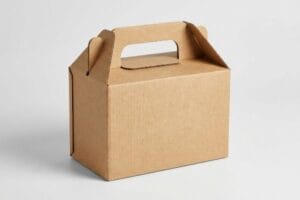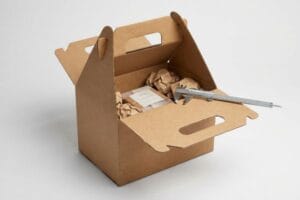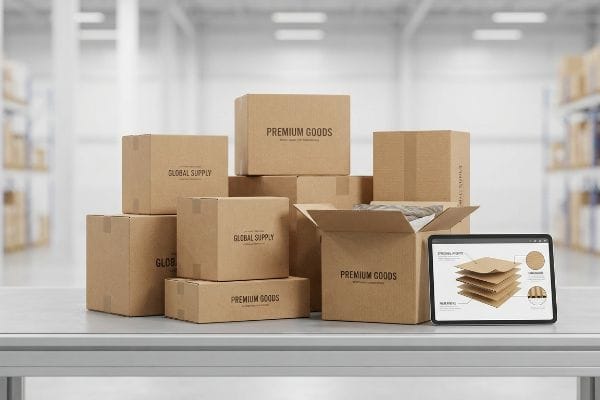
Você vê embalagens de papelão ondulado por toda parte, desde varandas de casas até os corredores de grandes lojas de atacado. Mas projetar essas estruturas exige mais do que simplesmente dobrar um pedaço de papel.
Uma caixa de papelão ondulado é um contêiner estrutural de alta engenharia utilizado em cadeias de suprimentos globais. Esses ativos físicos protegem as mercadorias, otimizam o volume de carga e servem como veículos de marketing interativos em grandes ambientes de varejo, preenchendo a lacuna entre a produção de matérias-primas e os lares dos consumidores em todo o mundo.
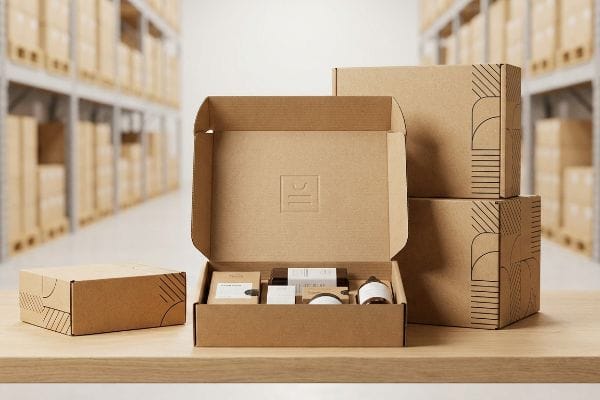
Antes de tratar seu próximo lote de produtos como um item de consumo genérico, vamos analisar os mecanismos ocultos que mantêm essas estruturas intactas.
O que as crianças aprendem brincando com caixas?
As crianças usam embalagens vazias como blocos de construção gigantes, testando os limites físicos do papelão dobrado através de brincadeiras vigorosas.
As crianças aprendem raciocínio espacial, gravidade e geometria estrutural brincando com caixas. Ao empilhar e desmontar essas formas tridimensionais, elas compreendem intuitivamente os limites de carga, o atrito e o equilíbrio, transformando efetivamente o papelão ondulado comum em ferramentas práticas de aprendizado arquitetônico.
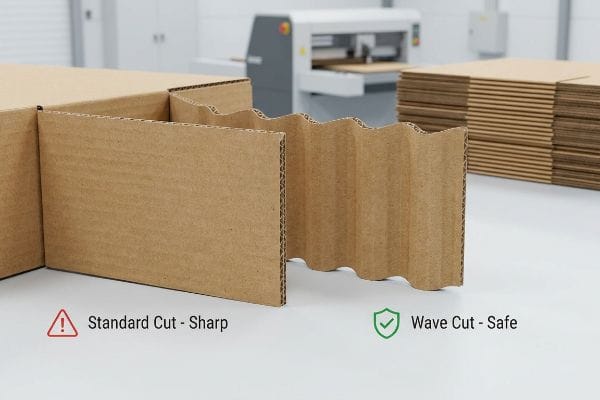
Enquanto as crianças constroem fortes, as marcas precisam garantir que essas mesmas bordas estruturais não causem danos físicos durante o manuseio.
Prevenindo cortes de papel com lâminas de segurança
As operações padrão de corte e vinco priorizam a velocidade, utilizando matrizes de corte retas de aço para perfurar substratos de papelão ondulado espesso. Mesmo designers experientes muitas vezes ignoram o fato de que as bordas de corte reto padrão deixam expostas fibras de papel microscópicas e afiadas comonavalhas¹. Quando os usuários finais ou vendedores deslizam rapidamente as mãos ao longo dessas bordas para montar uma unidade, frequentemente sofrem cortes profundos no papel, criando uma impressão inicial negativa.
Vejo esse ponto cego constantemente quando as marcas insistem na prototipagem rápida. Elas presumem que qualquer linha de corte é segura. Na minha empresa, combato isso substituindo as ferramentas padrão por lâminas Wave Cut especializadas em todas as bordas expostas ao consumidor. A lâmina de aço ondulada interrompe fisicamente a tensão contínua da fibrado papelão, eliminando completamente o efeito de lâmina de barbear. Na primeira vez que uma compradora passou a mão rapidamente pela borda ondulada recém-projetada sem se cortar, ela percebeu que essa simples troca de matriz eliminou o atrito excessivo, evitando ferimentos aos funcionários da embalagem e acelerando a linha de montagem em cerca de 15%.
| Erro comum de iniciantes | A solução profissional | Benefício do piso de vendas |
|---|---|---|
| Utilizando matrizes de aço retas nas bordas expostas | Obrigatoriedade do uso de lâminas Wave Cut nas zonas de consumo3 | Elimina cortes de papel dolorosos |
| Ignorando a tensão microscópica das fibras do papel4 | Interrompendo mecanicamente a geometria da borda5 | Agiliza a montagem manual |
| Tratar todas as linhas de corte de forma idêntica | Especificação de zonas de segurança em arquivos CAD | Previne percepções negativas da marca |
Eu sempre isolo as zonas de manuseio no arquivo estrutural inicial para substituir as lâminas onduladas. Isso não custa nada a mais durante a fase de ferramental, mas protege imediatamente todas as pessoas que tocam no seu produto.
🛠️ Mesa do Harvey: As arestas da sua comunicação com o consumidor estão perigosamente afiadas agora? 👉 Deixe-me analisar seus cortes de corte ↗ — Acesso direto à minha mesa. Zero spam de vendas automatizado, prometo.
Quais são as utilidades das caixas?
Mais do que simplesmente transportar mercadorias do ponto A ao ponto B, a embalagem deve se adaptar dinamicamente a ambientes de merchandising altamente específicos.
As principais utilizações de caixas incluem proteção de carga, organização de produtos e marketing direto no varejo. As estruturas modernas de papelão ondulado funcionam como armações físicas adaptáveis que transportam com segurança mercadorias frágeis, ao mesmo tempo que se transformam facilmente em expositores prontos para exibição, que impulsionam a visibilidade da marca nos corredores das lojas.
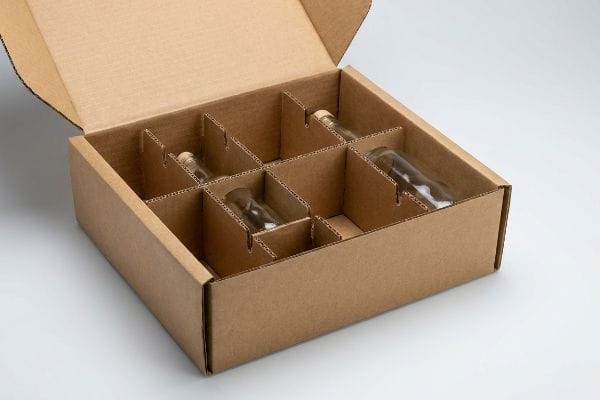
Fazer um recipiente suportar peso é apenas metade da batalha; o verdadeiro desafio é organizar o que vai dentro dele.
O poder das estratégias de divisórias modulares
As marcas frequentemente criam encartes personalizados, feitos sob medida para as dimensões exatas de um único produto, partindo do pressuposto de que uma grade fixa e precisa oferece a melhor apresentação. No entanto, com das promoções sazonais e a evolução dos tamanhos dos produtos, esses encartes rígidos tornam-se obsoletos instantaneamente. Isso obriga as equipes de compras a encomendarem constantemente novas ferramentas e novos lotes de papelãosempre que um SKU (Unidade de Manutenção de Estoque) muda de tamanho.
Certa vez, um cliente me apresentou um projeto de divisórias rígidas que causava enorme atrito na linha de embalagem, pois os funcionários da loja tinham dificuldade para encaixar frascos de xampu um pouco mais largos em espaços fixos. Para solucionar esse problema, desenvolvi um sistema de divisórias modulares flutuantes com abas de papelão ondulado interligadas, que permitem aos funcionários ajustar o espaçamento da grade instantaneamente. É possível ouvir o estalo satisfatório quando a divisória se encaixa na nova posição. Essa simples mudança para uma arquitetura modular evitou custos elevados de estorno por parte dos varejistas<sup>7</sup>, permitiu que a marca combinasse diferentes itens na mesma bandeja principal e reduziu significativamente seus custos com ferramentas sazonais<sup>8.
| Erro comum de iniciantes | A solução profissional | Benefício do piso de vendas |
|---|---|---|
| Projetando inserções rígidas de tamanho único para produtos | Engenharia de sistemas de divisórias modulares flutuantes9 | Permite a exibição de SKUs variados |
| Reabastecer as ferramentas para cada atualização de produto | Utilizando ranhuras de encaixe ajustáveis10 | Elimina custos redundantes de ferramentas |
| Obrigando os funcionários a enfiar os itens em espaços apertados | Criação de zonas de segurança flexíveis11 | Impede que a embalagem se rasgue durante o reabastecimento |
Recuso-me a deixar que os clientes se limitem a um único layout. Incorporar a modularidade desde o projeto inicial evita que você descarte displays perfeitamente bons só porque a embalagem do seu produto mudou em meia polegada (12,7 mm).
🛠️ Mesa do Harvey: Você está pagando por novas ferramentas sempre que o tamanho do seu produto muda? 👉 Solicite sua Análise de Divisórias gratuita ↗ — Baixe com segurança. Minha caixa de entrada está aberta caso tenha alguma dúvida depois.
Guardar caixas é uma boa ideia?
Guardar materiais de embalagem antigos em um canto do armazém parece uma maneira inteligente de reduzir os custos indiretos de logística.
Não. Reutilizar caixas de transporte para grandes volumes de mercadorias no varejo é extremamente arriscado. Embora visualmente intacto, o papelão ondulado usado sofre fadiga microscópica invisível nas fibras devido à vibração durante o transporte e à absorção de umidade. Esse desgaste estrutural oculto reduz drasticamente a resistência à compressão, frequentemente levando ao colapso catastrófico da base sob o peso da carga paletizada.
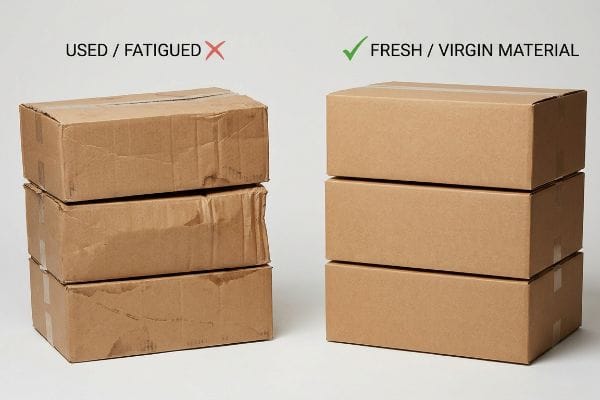
Reutilizar um envelope pequeno para uma devolução residencial é aceitável, mas estender esse hábito para o envio de correspondências comerciais representa um enorme risco.
O perigo oculto da fadiga das lamelas corrugadas
Startups que tentam impulsionar suas operações muitas vezes reaproveitam embalagens de envio B2C (Business-to-Consumer) para embalar remessas de varejo B2B (Business-to-Business). Elas presumem que, se o papelão não estiver fisicamente rasgado ou visivelmente amassado, ele mantém sua resistência original de fábrica. Isso ignora completamente o fato de que as ondulações internas funcionam como amortecedores mecânicos que se degradam permanentementeapós a primeira viagem de transporte.
Imagine um contêiner usado como a suspensão de um carro depois de passar por buracos enormes; pode parecer intacto, mas a mecânica interna está comprometida. Um cliente meu tentou reutilizar caixas de papelão antigas para o lançamento de um grande produto em uma loja de atacado, e a textura pulverulenta do revestimento desgastado e comprometido pela umidade foi um sinal de alerta imediato. Quando submetemos esses contêineres reutilizados a um teste básico de carga superior, eles se curvaram e colapsaram visivelmente instantaneamente. Ao impor rigorosamente o uso de material virgem e utilizar contêineres novos com certificação ISTA (International Safe Transit Association)¹³, garanti que seus cantos mantivessem 100% da capacidade de carga dinâmica¹⁴,eliminando completamente os danos durante o transporte e preservando o relacionamento com o varejista.
| Erro comum de iniciantes | A solução profissional | Benefício do piso de vendas |
|---|---|---|
| Reutilização de caixas antigas de varejo B2C para frete de varejo B2B | Exigindo o envio de matéria-prima virgem aos fornecedores | Garante resistência máxima ao empilhamento de paletes15 |
| Avaliar a resistência da estrutura puramente pela aparência visual | Reconhecendo a fadiga microscópica das fibras de papel16 | Impede o esmagamento do produto de nível inferior |
| Ignorando a umidade ambiente absorvida durante o primeiro trânsito17 | Utilizando revestimentos de papelão ondulado recém-selados | Elimina as custosas cobranças adicionais por danos causados aos varejistas |
Eu jamais arriscaria cargas pesadas de paletes com papel amassado. Os centavos que você economiza reciclando um envelope velho nunca compensarão o enorme prejuízo que você terá quando a camada inferior do envelope se desfizer dentro de um caminhão úmido.
🛠️ Harvey's Desk: Seus remetentes de carga estão sofrendo secretamente de fadiga estrutural? 👉 Solicite uma Análise de Resistência de Materiais ↗ — Sem formulários que geram ligações intermináveis de vendas. Apenas valor agregado.
Quais são os três tipos de caixas?
Classificar embalagens não se resume apenas a nomear formatos; trata-se de compreender como diferentes geometrias estruturais reagem à pressão descendente.
Os três principais tipos de caixas utilizadas no varejo são as Caixas com Abas Regulares (RSC), as Caixas com Meia Aba (HSC) e as pastas personalizadas com corte especial. As RSCs possuem abas fechadas para máxima resistência durante o transporte, as HSCs têm a parte superior aberta para facilitar o acesso às prateleiras e as pastas com corte especial oferecem formatos arquitetônicos complexos para displays de merchandising específicos.
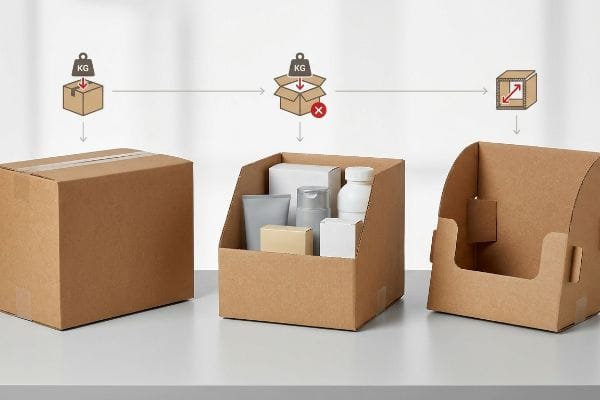
Mas conhecer a teoria não basta quando as máquinas começam a funcionar e um peso enorme é aplicado a essas geometrias.
Por que as embalagens de papelão padrão com abertura superior falham na linha de produção?
As equipes de compras frequentemente substituem contêineres RSC totalmente fechados por contêineres HSC abertos para economizar custos de matéria-prima e criar displays prontos para venda. Elas presumem que a qualidade da placa de base suportará o peso independentemente da ausência das abas superiores. No entanto, essa negligência ignora completamente como um fechamento superior contínuo distribui a pressão dinâmica pelas paredes verticais18.
Na minha empresa, vejo com frequência clientes chocados quando suas estruturas de topo aberto, recém-especificadas, cedem sob o empilhamento padrão de paletes. A realidade é que a remoção das abas superiores elimina a estabilização dos cantos estruturais. Quando meço a resistência em uma prensa de compressão padrão, um HSC sem produtos rígidos internos apresenta uma queda drástica na capacidade de carga, muitas vezes colapsando com apenas 85 kg (187,5 lbs) de pressão superior.Para corrigir isso, compenso matematicamente a perda de estabilidade superior alinhando rigorosamente a fibra ondulada na vertical para maximizar a resistência ao teste de esmagamento de borda (ECT) ou atualizo o perfil para uma estrutura de parede dupla. Esse microajuste restaura a deficiência estrutural, evitando que os clientes sofram flambagens catastróficas que reduzem a velocidade da linha de montagem em cerca de 30%.
| Erro comum de iniciantes | A solução profissional | Benefício do piso de vendas |
|---|---|---|
| Utilizando caixas HSC de topo aberto para cargas pesadas com carregamento superior | Atualização para parede dupla ou alinhamento vertical dos grãos21 | Suporta cargas pesadas de paletes empilhados duplamente |
| Considerando que a resistência da placa plana seja igual à resistência da caixa tridimensional | Cálculo de limites de compressão baseados na geometria22 | Impede que os cantos abertos se rompam |
| Remover as abas superiores sem reforçar a base | Utilizando a física estrutural para equilibrar o déficit | Garante uma aparência impecável nas prateleiras |
Sempre verifico matematicamente a geometria estrutural antes de converter um RSC em um HSC. Não é possível remover as abas estruturais superiores sem projetar um reforço mecânico em algum outro lugar do substrato.
🛠️ Mesa do Harvey: Não deixe que uma falha estrutural de 2 milímetros arruine o lançamento em 500 lojas. 👉 Envie-me seu arquivo de corte ↗ — Vou testar os cálculos antes que você desperdice seu orçamento com produção em massa.
Conclusão
Você pode escolher um fornecedor mais barato, mas quando uma caixa aberta sem suporte adequado colapsa em um armazém úmido, a deformação resultante na base atrasa a linha de montagem em cerca de 30% e provoca rejeição imediata por parte do varejista. Esta é a especificação exata que meus 10 principais clientes varejistas usam para garantir zero rejeições de impressão. Pare de adivinhar as tolerâncias verticais e deixe-me pessoalmente analisar seus arquivos com minha Auditoria Prévia de Corte e Vinco gratuita ↗ para detectar erros fatais de esmagamento de bordas antes do início da produção em massa.
"Influência das linhas de vinco analógicas e digitais nas propriedades mecânicas…", https://pmc.ncbi.nlm.nih.gov/articles/PMC9268991/. Breve explicação de como uma fonte externa confiável apoia essa afirmação. Papel da evidência: Validação técnica; tipo de fonte: Estudo de ciência dos materiais ou engenharia de embalagens. Apoia: O mecanismo físico que causa lacerações na pele devido ao corte e vinco em substratos. Nota sobre o escopo: Foca nos efeitos da lâmina de aço sobre as fibras de celulose .
"Perspectivas para a manutenção da resistência de produtos de papel e cartão…", https://bioresources.cnr.ncsu.edu/resources/prospects-for-maintaining-strength-of-paper-and-paperboard-products-while-using-less-forest-resources-a-review/. Breve explicação de como uma fonte externa confiável apoia essa afirmação. Papel da evidência: Validação técnica; tipo de fonte: Especificação do fabricante de ferramentas. Apoio: A ação mecânica de lâminas de aço onduladas na prevenção do efeito de corte em papelão. Nota de escopo: Especificamente para papelão ondulado .
"Lâmina de Corte Ondulada – Jeewa Plastic", https://jeewaplastic.com/shop/wave-cutter-blade/. Documentação técnica que explica como as bordas onduladas reduzem o estresse de cisalhamento e a afiação do papelão. Papel da evidência: validação técnica; tipo de fonte: especificação de fabricação. Benefícios: redução do risco de cortes no papel. Observação sobre o escopo: limitado a substratos de papelão. ↩
"VARIAÇÃO DA TENSÃO INDUZIDA PELA SECAGEM EM TRAMA DE PAPELÃO", https://bioresources.cnr.ncsu.edu/wp-content/uploads/2020/03/2001.1.737.pdf. Pesquisa em ciência dos materiais que detalha a tensão interna e a deformação das fibras em papelão após um corte mecânico. Papel da evidência: verificação científica; tipo de fonte: periódico acadêmico. Argumenta: a existência de tensão nas fibras que impacta a qualidade da borda. Nota de escopo: refere-se a materiais à base de celulose .
"Corte e Vinco: Peças, Projetos e Considerações", https://www.iqsdirectory.com/articles/die-cutting.html . Dados de engenharia industrial que mostram como a geometria modificada das bordas reduz o atrito e facilita o processo de dobragem durante a montagem manual. Papel da evidência: comprovação operacional; tipo de fonte: estudo de fabricação. Benefícios: velocidade de montagem manual. Nota de escopo : foco em embalagens de alto volume.
"Dicas e estratégias de integração de custos de embalagens personalizadas", https://www.gmatlimited.com/blog/custom-packaging-cost-integration-strategies. Uma análise setorial de aquisição de embalagens validaria o desperdício financeiro e de materiais associado a ferramentas personalizadas rígidas para a troca de SKUs. Papel da evidência: validação da relação custo-benefício; tipo de fonte: white paper do setor. Apoia: a alegação de que inserções rígidas exigem substituições dispendiosas de ferramentas. Nota de escopo: aplicável à fabricação de papelão ondulado personalizado .
"Quais erros de embalagem terceirizada geram cobranças para varejistas…", https://www.industrialpackaging.com/blog/copacker-mistakes-retailer-chargebacks. Análise de como a embalagem adaptável reduz erros de envio e penalidades para varejistas. Papel da evidência: validação; tipo de fonte: relatório do setor de logística. Fundamentos: a relação entre design modular e redução de custos. Nota de escopo: foco na distribuição no varejo. ↩
"Espuma vs. Inserções Personalizadas de Papelão Ondulado para Caixas: Qual é a Melhor Opção para o Seu Negócio…", https://www.jamestowncontainer.com/packaging-resources/blog/foam-vs-custom-corrugated-box-inserts-whats-right-for-your-business/. Estudo comparativo sobre a relação custo-benefício de sistemas modulares de papelão ondulado versus ferramentas fixas para mudanças sazonais de produtos. Papel da evidência: fundamentação; tipo de fonte: guia técnico de fabricação. Argumentos: benefício financeiro da arquitetura modular. Nota de escopo: foco em materiais de papelão ondulado. ↩
"Por que as equipes de operações estão investindo em embalagens modulares…", https://www.packproinc.com/why-operations-teams-are-investing-in-modular-packaging-systems/ . Fontes confiáveis em engenharia de embalagens confirmam que os insertos modulares permitem diversas configurações de SKU em um único layout de embalagem. Função da evidência: validação técnica; tipo de fonte: white paper do setor. Benefícios: versatilidade do design modular. Nota de escopo: aplicável ao merchandising de varejo.
"Soluções de embalagem fáceis para inserção automática que você pode…", https://www.premier-packaging-products.com/fiberboard-dividers/packaging-solutions-for-automatic-insertion/. Os padrões de fabricação para embalagens demonstram que o espaçamento ajustável reduz a necessidade de matrizes personalizadas para cada variação de produto. Papel da evidência: justificativa econômica; tipo de fonte: revista especializada em manufatura. Benefícios: redução de gastos com ferramentas redundantes. Nota de escopo: foco na eficiência de custos de produção .
"Quanto uma embalagem danificada pode realmente custar para sua empresa | Amcor", https://www.amcor.com/insights/blogs/how-much-a-damaged-pack-can-really-cost-your-business . Guias de logística e design de embalagens especificam que a criação de folgas ou zonas de segurança reduz o estresse mecânico nos materiais durante o manuseio manual. Papel da evidência: boas práticas operacionais; tipo de fonte: manual de logística. Apoia: prevenção de falhas na embalagem durante o reabastecimento. Nota de escopo : relaciona-se às operações de loja.
"Estimativa da resistência à compressão do papelão ondulado…", https://pmc.ncbi.nlm.nih.gov/articles/PMC8467740/ . Explicação técnica de como as ondulações do papelão ondulado sofrem fadiga estrutural e perdem resistência à compressão após um único ciclo de transporte. Papel da evidência: verificação técnica; tipo de fonte: periódico de ciência dos materiais ou manual de engenharia de embalagens. Argumenta: alegação de que caixas reutilizadas perdem a integridade estrutural. Nota de escopo: foca na degradação da verticalidade do papelão.
"Procedimentos de Teste", https://ista.org/test_procedures.php . Documentação técnica da ISTA que define os protocolos de teste que garantem que as embalagens atendam aos requisitos específicos de compressão e carga dinâmica. Função da evidência: validação; tipo de fonte: norma da indústria. Apoia: a confiabilidade dos transportadores certificados na prevenção de colapsos. Nota de escopo : Aplica-se a séries de testes específicas da ISTA.
"Embalagens de papelão ondulado com design inovador para…", https://bioresources.cnr.ncsu.edu/resources/corrugated-board-packaging-with-innovative-design-for-enhanced-durability-during-transport/. Pesquisa em ciência dos materiais comparando a integridade estrutural e a resistência à compressão de papelão de fibra virgem com materiais ondulados fatigados ou reutilizados. Papel da evidência: prova factual; tipo de fonte: estudo acadêmico. Apoia: a afirmação de que o novo material previne falhas estruturais relacionadas ao transporte. Nota de escopo: O desempenho varia de acordo com o grau de ondulação e a exposição à umidade. ↩
"Um exame comparativo das propriedades físicas de…", https://repository.rit.edu/cgi/viewcontent.cgi?article=1299&context=theses. Comparação técnica que demonstra como as fibras de celulose virgem proporcionam maior resistência à compressão vertical do que as fibras recicladas. Papel da evidência: validação técnica; tipo de fonte: estudo de ciência dos materiais. Apoia: a afirmação de que os remetentes que utilizam materiais virgens otimizam a resistência ao empilhamento. Nota de escopo: Aplica-se a frete B2B de alta carga .
"Resistência à Compressão de Embalagens de Papelão Ondulado com Baixa …", https://pmc.ncbi.nlm.nih.gov/articles/PMC10054506/. Explicação da degradação mecânica das fibras de celulose após ciclos de tensão em papelão ondulado. Papel da evidência: verificação do mecanismo; tipo de fonte: periódico de engenharia de embalagens. Argumenta: a afirmação de que a fadiga estrutural interna ocorre apesar da integridade visual. Nota de escopo: Específico para ciclos repetidos de reutilização. ↩
"Efeitos da Umidade Relativa na Resistência à Compressão de…", https://open.clemson.edu/all_theses/3225/. Dados sobre como a absorção higroscópica em revestimentos de papelão ondulado reduz os valores do Teste de Compressão de Caixa (BCT). Papel da evidência: suporte factual; tipo de fonte: norma técnica da indústria. Apoia: a alegação de que a umidade absorvida compromete a integridade do transporte. Nota de escopo: concentra-se na perda de resistência induzida pela umidade .
"Estilos de Caixa", https://www.acmebox.com/product-offerings/box-styles/. Explicação técnica de como as abas superiores em caixas com fenda contribuem para a resistência ao empilhamento e a distribuição vertical da carga. Papel da evidência: validação técnica; tipo de fonte: manual de engenharia de embalagens. Sustenta: a alegação de que a remoção das abas superiores compromete a integridade estrutural. Nota de escopo: aplica-se especificamente a caixas de papelão ondulado .
"O que são caixas RSC? – PopDisplay", https://popdisplay.me/what-are-rsc-boxes/. Verificação do ponto específico de falha de compressão para HSCs sem suporte interno. Papel da evidência: métrica técnica; tipo de fonte: relatório de teste de embalagem. Suportes: perda quantitativa da capacidade de carga. Observação: Pode variar conforme a qualidade da placa. ↩
"Estimativa da resistência ao esmagamento das bordas de papelão ondulado…", https://pmc.ncbi.nlm.nih.gov/articles/PMC9961700/. Explicação de como a orientação vertical das ondulações otimiza a classificação do Teste de Esmagamento das Bordas (ECT) para capacidade de carga. Papel da evidência: princípio técnico; tipo de fonte: norma da indústria. Apoia: estratégia para mitigar a flambagem. Nota de escopo: Engenharia padrão de papelão ondulado. ↩
"Estimativa da resistência à compressão de caixas de papelão ondulado para um …", https://pmc.ncbi.nlm.nih.gov/articles/PMC9864211/. A documentação técnica sobre papelão ondulado confirma que a parede dupla e a ondulação vertical aumentam a capacidade de suportar cargas verticais. Papel da evidência: validação técnica; tipo de fonte: guia de engenharia de materiais. Aplicações: melhorias estruturais para transporte de carga em paletes. Nota de escopo: refere-se especificamente à ondulação do papelão ondulado. ↩
"Testes BCT e ECT: Avaliando a resistência de caixas de papelão ondulado", https://www.metropack.eu/definition/materials/corrugated-cardboard/ect-edge-crush-test-and-bct-box-compression-test-corrugated-box. As normas da indústria explicam a diferença matemática entre o Teste de Compressão de Borda (ECT) para placas planas e o Teste de Compressão de Caixa (BCT) para estruturas 3D. Papel da evidência: especificação técnica; tipo de fonte: norma da indústria. Fundamentos: distinção entre resistência baseada no material e na geometria. Nota de escopo: refere-se à geometria de embalagens de papelão ondulado .