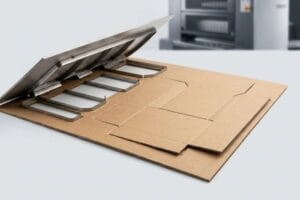
Curating the perfect influencer list is pointless if you send high-end products in flimsy cardboard boxes. Here is the structural reality behind building premium mailers.
A PR (Public Relations) package is a premium, structurally reinforced box sent to influencers or VIPs for promotional unboxing. It demands high-fidelity printing and precisely engineered inserts to ensure products arrive flawlessly, maximizing brand equity and social media visibility.

But designing a box that looks great on your screen is entirely different from engineering a physical kit that survives the postal system.
What does PR package mean?
Many brands think slapping a logo on a standard mailer equals a luxury kit. They miss the complex structural engineering required for a true high-end tactile feel.
Understanding what a PR package means requires looking at construction. It acts as a physical ambassador for your brand, utilizing premium materials like E-flute corrugated board to deliver a flawless unboxing experience that drives viral social media engagement.
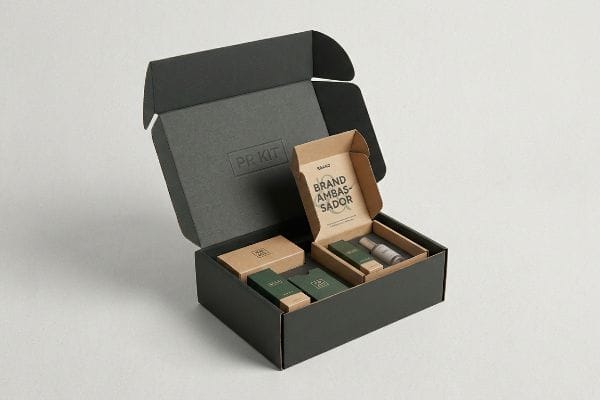
Achieving that viral aesthetic requires more than just good artwork; it requires understanding how paper physically behaves under pressure.
The Psychology of Unboxing and PR Package Construction
Most marketing teams approach influencer kits by focusing entirely on external graphics, assuming standard materials will suffice for the primary box structure. They logically believe that a high-quality, full-color print file will automatically elevate any basic corrugated mailer into a high-end item worthy of a viral unboxing video.
However, the premium unboxing experience heavily relies on a flawless tactile feel and unyielding structural rigidity1. When brands use standard, low-grade corrugated board, the final package feels rough and flimsy in the recipient's hands, instantly undermining the perceived value of the expensive cosmetics or tech inside. Upgrading to a specialized premium substrate with high-end finishing ensures the box acts as a true luxury brand ambassador on camera.
| Common Rookie Mistake | The Pro Fix | Retail-Floor Benefit |
|---|---|---|
| Relying on standard board grades | Upgrading to premium substrates | Enhances tactile feel |
| Using basic glossy finishes | Applying soft-touch coatings | Elevates brand perception |
| Ignoring structural rigidity | Aligning materials for strength | Preserves the unboxing vibe |
I always specify E-flute or Litho-Lam on SBS for influencer mailers. Upgrading the substrate prevents aesthetic failures, ensuring the unboxing experience translates beautifully to high-definition video.
🛠️ Harvey's Desk: Not sure if your chosen corrugated board will show ugly flute lines on camera? 👉 Request a Free Material Audit ↗ — Direct access to my desk. Zero automated sales spam, I promise.
What does PR stand for in packaging?
When you ask what the letters mean, it translates to protecting your public image. A shattered product inside a beautiful box is a public relations nightmare.
In packaging, PR stands for Public Relations, specifically focusing on influencer seeding and brand storytelling. Structurally, these specialized mailers require rigorous transit testing to guarantee the contents survive rough courier handling without compromising visual presentation.

You can have the most beautiful graphic design in the world, but it means absolutely nothing if the box crushes in transit.
Why PR Packaging Fails the Courier Test
Brands often assume that because a custom mailer box looks stunning in a digital 3D mockup, it will naturally arrive in perfect condition. They direct their entire campaign budget toward branded tissue paper, custom ribbons, and beautiful interior aesthetics, completely neglecting the external crush resistance required for modern shipping networks2.
The reality of fulfillment involves standard courier handling, which can quickly degrade poorly planned packaging. When a high-profile influencer receives a crushed or dented box, it instantly triggers negative brand perception and ruins the unboxing presentation3 before the product is even revealed. Incorporating basic protective engineering, such as reinforced impact edges and perfectly snug sizing4, ensures the presentation remains completely pristine from the warehouse to the recipient's desk.
| Common Rookie Mistake | The Pro Fix | Retail-Floor Benefit |
|---|---|---|
| Neglecting transit protection | Implementing basic drop testing5 | Prevents damaged goods |
| Leaving empty void spaces | Adding custom inner supports6 | Stops items from shifting |
| Using single-wall outers | Upgrading to double-layer walls7 | Protects the inner package |
I rely strictly on robust transit testing protocols to evaluate every mailer design before production. Eliminating structural weak points guarantees your VIPs see the exact unboxing presentation you intended.
🛠️ Harvey's Desk: Are you worried your current mailer design will get crushed by the courier? 👉 Get a Drop Test Evaluation ↗ — Download safely. My inbox is open if you have questions later.
What is the meaning of PR?
Understanding this concept goes beyond marketing definitions. In the physical realm of custom manufacturing, it means eliminating every visual flaw that could distract the recipient.
The meaning of PR revolves around managing public perception, which translates to flawless physical execution in custom packaging. A true kit demands meticulous prepress calibration, ensuring printed graphics wrap perfectly around folded edges to conceal all raw cardboard.
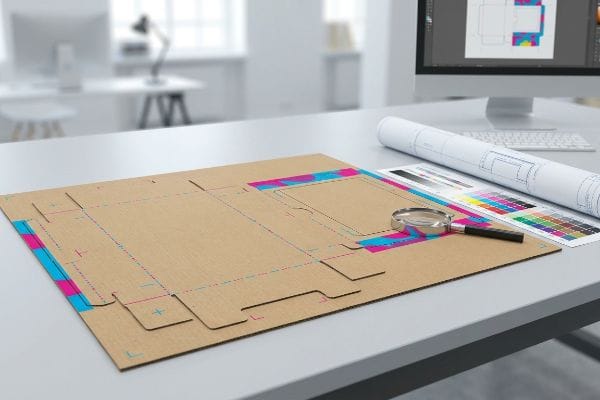
But creating that seamless, high-end look is exactly where most graphic files completely fall apart during the automated printing phase.
The Litho-Lamination Bleed Trap in PR Campaigns
Most graphic designers apply standard commercial print bleeds to their corrugated mailer files, treating the custom packaging project exactly like a flat paper brochure. They logically assume these basic digital margins will seamlessly translate to thick, three-dimensional folding structures without causing any aesthetic issues during final assembly.
In reality, transitioning from flat artwork to a fully folded box requires highly specific design adjustments to maintain a premium appearance. Without adequate margin planning, the printed graphics can easily misalign during folding8, unintentionally exposing ugly bare cardboard edges on the front flap of the final package. Precise artwork calibration and extended bleeds9 ensure a seamless, high-end visual presentation that looks absolutely flawless in high-definition social media content.
| Common Rookie Mistake | The Pro Fix | Retail-Floor Benefit |
|---|---|---|
| Standard digital bleed margins | Enforcing extended artwork bleeds10 | Hides raw cardboard edges |
| Ignoring fold alignments | Calibrating prepress templates11 | Ensures seamless graphics |
| Using CMYK for cut paths | Assigning distinct spot colors12 | Prevents visible printed lines |
I strictly enforce extended bleed margins past the physical cut line for all custom mailers. This strategic design buffer prevents misalignment, guaranteeing pristine, fully printed edges.
🛠️ Harvey's Desk: Does your graphic designer know the correct bleed margins for thick corrugated board? 👉 Claim Your Prepress Audit ↗ — No forms that trigger endless sales calls. Just pure value.
What are PR packages?
These kits are highly engineered structural delivery systems designed to hold heavy, fragile, or irregularly shaped products. They are essentially miniature, high-end retail displays.
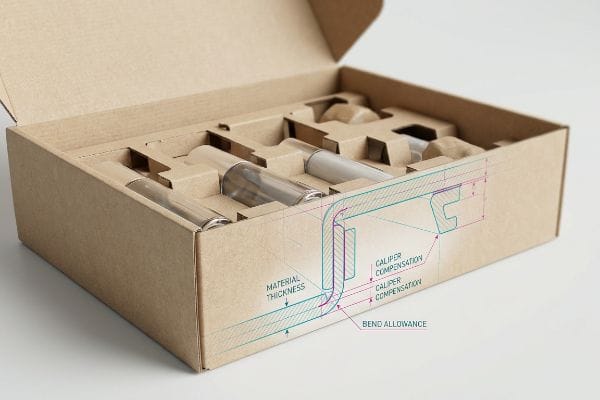
PR packages are specialized presentation boxes engineered to deliver high-value promotional items to influencers. They feature complex interlocking inserts, precision-cut compartments, and advanced material structures designed to securely grip products while maintaining an effortless, friction-free unboxing experience.
But knowing the theory isn't enough when the machines start running and the co-packers try to assemble these complex puzzle pieces.
Why Standard PR Inserts Fail on the Factory Floor
Brand teams frequently design intricate interlocking inserts using flat 2D software13 to securely cradle heavy or fragile items like glass cosmetics. They assume that if the cut paths line up perfectly on their computer screen, the physical cardboard will seamlessly assemble on the co-packing line.
In my facility, I routinely watch this theoretical math collapse during the first prototyping phase because corrugated board consumes physical space when folded. When buyers ignore material caliper thickness, the physical receiving slots become far too tight, causing assembly crews to crush the inner flutes and tear the top sheet while forcing tabs into place. I mandate parametric CAD software to apply specific caliper compensation algorithms14, adding a micro-bend allowance15 that ensures frictionless assembly and protects your profit margins.
| Common Rookie Mistake | The Pro Fix | Retail-Floor Benefit |
|---|---|---|
| Drawing 2D dielines in Canva | Using parametric CAD software16 | Guarantees precise structural math |
| Ignoring material thickness | Applying caliper compensation algorithms17 | Speeds up co-packing assembly |
| Forcing tabs into tight slots | Engineering humidity and bend buffers18 | Prevents torn paperboard inserts |
I mandate a full caliper compensation pass on all structural files before cutting. Adjusting insert slots by a fraction of a millimeter prevents ruined batches and guarantees a profitable campaign.
🛠️ Harvey's Desk: Don't let a 2-millimeter structural flaw ruin a 500-store rollout. 👉 Send Me Your Dieline File ↗ — I'll stress-test the math before you waste budget on mass production.
Conclusion
You can source a beautiful graphic design, but when you ignore the physical reality of caliper thickness and your premium inserts tear during assembly, you are looking at severe delays that completely wipe out the project's profit margin. Over 500 brand managers use my prepress checklist to avoid these exact fatal early-stage mistakes. Stop guessing on structural tolerances and let me personally run your files through my Free Dieline Audit ↗ to catch fatal errors before you launch your campaign.
"Sensory Elements and Perceived Value in Cosmetics Packaging", https://open.clemson.edu/all_theses/4478/. [Research on haptic perception and luxury branding demonstrates that material rigidity and surface texture directly influence a consumer's perception of product quality and prestige]. Evidence role: factual claim; source type: academic journal or industry report. Supports: the link between physical construction and brand perception. Scope note: Limited to the luxury goods sector. ↩
"Packaging Material Testing Standards And Labs – Oxmaint", https://oxmaint.com/industries/delivery-operations-management/packaging-material-testing-standards-labs. [Industry standards such as ISTA or ASTM provide technical specifications for the crush resistance and compression strength required for mailers to survive automated sorting and transit]. Evidence role: Technical validation; source type: Industry standard. Supports: The necessity of structural engineering in PR packaging. Scope note: Applies to standard courier logistics environments. ↩
"How Unboxing Experiences Impact Brand Perception – ShipJoy", https://shipjoy.com/how-unboxing-experiences-impact-brand-perception/. [Marketing research on consumer psychology demonstrates the correlation between the physical condition of packaging and the perceived value of the brand]. Evidence role: validation; source type: marketing study. Supports: the psychological impact of damaged PR packaging. Scope note: specifically concerns high-expectation recipients like influencers. ↩
"The Value of Protective Packaging Standards for Hard Cases", https://www.gemstarmfg.com/hard-cases/design-faq-understanding-the-value-of-protective-packaging-standards-for-hard-cases/. [Packaging engineering guidelines explain how structural reinforcements and precision fit reduce kinetic energy transfer during transit to prevent crushing]. Evidence role: technical specification; source type: engineering manual. Supports: the efficacy of specific protective engineering techniques. Scope note: focuses on physical structural integrity during courier handling. ↩
"Package Drop Testing", https://unitload.vt.edu/facilities/distribution-packaging-lab/package-drop-testing.html. [Industry standards for packaging validation demonstrate that drop testing identifies structural vulnerabilities to prevent transit damage]. Evidence role: technical validation; source type: industry standard. Supports: effectiveness of drop testing. Scope note: results vary by product weight and fragility. ↩
"What is void fill? – SmartShield Packaging", https://www.smartshieldpackaging.com/blog/what-is-void-fill. [Packaging engineering guidelines confirm that custom inner supports eliminate void space to prevent inertial shifting during transport]. Evidence role: technical guideline; source type: packaging engineering handbook. Supports: role of inner supports in stability. Scope note: depends on the precision of the fit. ↩
"Comparing Single Wall and Double Wall Boxes: Understanding the …", https://arvco.com/articles/comparing-single-wall-and-double-wall-boxes-understanding-the-differences/. [Comparative studies on corrugated board strength show that double-wall construction significantly increases puncture resistance and compression strength compared to single-wall]. Evidence role: technical specification; source type: material science study. Supports: superiority of double-wall packaging. Scope note: Applicable to heavy or high-value shipments. ↩
"Packaging Design Preparation Guide: Art Files, Die-Lines & Bleed", https://www.printingblue.com/knowledge-center/posts/packaging-design-preparation-guide. [Technical manuals on packaging prepress detail how folding tolerances and mechanical shifts cause graphics to move relative to the fold line]. Evidence role: technical validation; source type: industry manual. Supports: the risk of exposing raw cardboard. Scope note: applies specifically to foldable substrates. ↩
"How to Prepare Artwork Files for Printing: Custom Packaging Guide", https://epackfactory.com/how-to-prepare-artwork-files-for-printing/. [Print industry standards define the specific margin of bleed required to ensure full ink coverage after cutting and folding processes]. Evidence role: technical specification; source type: printing standard. Supports: the method for achieving a seamless visual. Scope note: based on general offset and digital print standards. ↩
"Glossary of terms used in Cardboard Packaging", https://tailormadepackaging.com.au/glossary/. [Industry standards for corrugated packaging specify that extended bleeds are necessary to compensate for cutting and registration tolerances to prevent unprinted edges from showing]. Evidence role: technical standard; source type: printing manual. Supports: necessity of oversized bleeds for visual perfection. Scope note: specifically for litho-lam packaging. ↩
"Packaging Prepress Tips for Flawless Print-Ready Files", https://alphaprepress.com/packaging-prepress-tips-for-flawless-print-ready-files.php. [Technical documentation on structural packaging design explains that templates must be calibrated to account for material thickness and fold loss to maintain image continuity]. Evidence role: operational best practice; source type: manufacturing guideline. Supports: the link between template calibration and seamless graphics. Scope note: specific to folded corrugated materials. ↩
"Spot vs. Process Color – Seattle Printworks", https://seattleprintworks.com/prepress/how-to-build-professional-files-with-spot-colors/. [Prepress technical guidelines dictate that die-cut paths must be assigned a non-printing spot color to distinguish them from the CMYK process art and prevent accidental ink deposition on the cut line]. Evidence role: technical specification; source type: prepress guide. Supports: prevention of visible print lines. Scope note: applies to professional die-cutting workflows. ↩
"Packaging Design Software | Autodesk Fusion", https://www.autodesk.com/solutions/design-manufacturing/consumer-products/packaging-design-software. [A technical manual or structural packaging guide confirms the industry reliance on 2D vector software to create die-lines for complex interlocking cardboard components]. Evidence role: technical process verification; source type: industry manual. Supports: design methodology for PR packaging. Scope note: applies to standard CAD/CAM workflows in packaging. ↩
"[PDF] Packaging Optimization driven by parametric morphing", https://www.beta-cae.com/pdf/packaging_optimization.pdf. [Technical documentation on packaging engineering explains how parametric software adjusts for material thickness to ensure accurate folding and fit]. Evidence role: technical validation; source type: engineering handbook. Supports: the use of algorithms to compensate for caliper thickness. Scope note: pertains to precision corrugated folding. ↩
"Cardboard Constructions: Calculating Bend Allowance 1 – YouTube", https://www.youtube.com/watch?v=j1n5ojAbAic. [Industry standards for structural design define bend allowances as the necessary extra material required to achieve a specific angle after folding without stressing the substrate]. Evidence role: factual verification; source type: manufacturing standard. Supports: the claim that bend allowances prevent assembly friction. Scope note: applicable to corrugated and folded substrates. ↩
"How can Software help with Structural Packaging Design? – AG/CAD", https://www.agcad.co.uk/en/faq/articles/packaging-design. [Authoritative engineering sources explain how parametric constraints allow for automated updates to dimensions and precise structural calculations.] Evidence role: technical verification; source type: engineering manual. Supports: precision of structural math in packaging. Scope note: refers to software like SolidWorks or AutoCAD. ↩
"Friendly Tips on Caliper Options for Fiberboard Partitions You'll Love", https://www.premier-packaging-products.com/fiberboard-dividers/caliper-options-for-fiberboard-partitions/. [Industry standards for packaging manufacture detail how accounting for material thickness (caliper) prevents interference and eases assembly.] Evidence role: technical verification; source type: industry whitepaper. Supports: speed of co-packing assembly. Scope note: specific to high-tolerance industrial inserts. ↩
"Influence of humidity and temperature on mechanical properties of …", https://bioresources.cnr.ncsu.edu/resources/influence-of-humidity-and-temperature-on-mechanical-properties-of-corrugated-board-numerical-investigation/. [Material science literature on cellulose-based substrates demonstrates how moisture absorption and bend radius adjustments prevent fiber failure.] Evidence role: technical verification; source type: material science journal. Supports: prevention of torn paperboard. Scope note: focuses on hygroscopic properties of paperboard. ↩