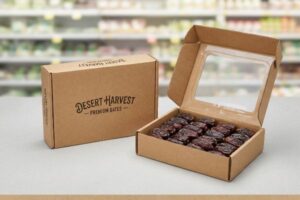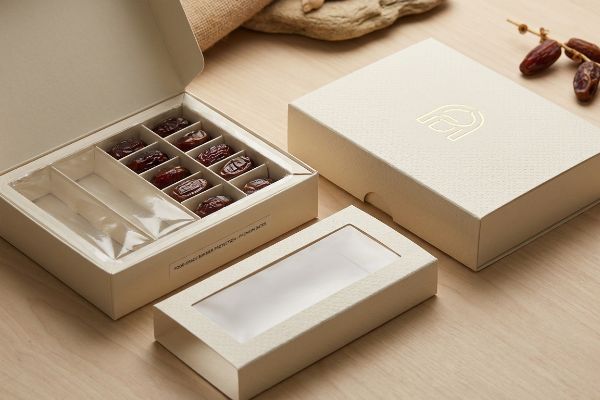
Standing out in the crowded grocery aisle requires more than just throwing a logo on a box; it demands a strategic balance of cultural aesthetics and strict food-grade engineering.
Personalizing dates fruit packaging requires balancing luxury visual aesthetics with strict food-grade barrier protection. Because these premium fruits naturally contain high moisture and natural sugars, custom designs must integrate specialized coatings that prevent structural degradation while creating highly engaging, brand-specific unboxing experiences on competitive retail store shelves.

Understanding the physical reality of how these sticky, high-value fruits move through the global supply chain is the only way to protect your brand equity.
What Is the Best Way to Package Fruits?
Finding the optimal format often comes down to balancing shelf impact with severe mechanical transit realities.
Packaging fresh dates effectively demands air-tight, moisture-locking flexible barrier films or specialized corrugated folding cartons. Food brands rely on elastic polymer laminations that stretch without micro-fracturing during automated assembly, ensuring the sticky fruit retains its natural texture, prolonging retail shelf life, and preventing messy leaks during cross-country logistics transit.

Moving from theoretical design to live packaging lines requires a deep understanding of how films and papers behave under stress.
Mastering the Anti-Crack Barrier for FMCG (Fast-Moving Consumer Goods)
Most brands approach flexible food packaging by simply porting over the aesthetic rigid litho-varnishes they use for standard dry-goods displays1. They assume that if a coating looks premium on a flat computer screen, it will naturally perform well on the physical packaging line, completely ignoring the volatile physics of high-speed filling machinery2.
Even veteran designers often overlook this blind spot. I constantly see brands spec standard rigid varnishes for their flexible date pouches. The disaster happens when these films hit the automated vertical form-fill-seal machines in dry climates. I've stood on the line and heard the sickening crackle of the rigid varnish physically snapping along the score lines. This "litho-cracking" destroys the oxygen barrier3, exposing the raw material and guaranteeing the dates dry out and spoil before they ever hit the shelf. To fix this, I completely strip out the rigid varnishes and mandate an elastic anti-crack film lamination4 that moves harmoniously with the substrate, absorbing the mechanical shock of the folding process.
| Common Rookie Mistake | The Pro Fix | Retail-Floor Benefit |
|---|---|---|
| Specifying rigid litho-varnishes | Elastic anti-crack film lamination5 | Zero oxygen barrier micro-fractures |
| Ignoring machine folding stress | Math-adjusted tension tolerances6 | Prevents massive line-downtime |
| Overlooking dry-climate transit | Climate-mapped flexible coatings7 | Extends actual product shelf life |
By enforcing this elastic lamination protocol, I drastically cut automated machine downtime, saving clients massive repacking fees and ensuring the dates remain perfectly fresh upon unboxing.
🛠️ Harvey's Desk: Not sure if your flexible pouch design will survive high-speed sealing? 👉 Request A Dieline Check ↗ — Direct access to my desk. Zero automated sales spam, I promise.
What Is the Symbolic Meaning of the Date Fruit?
Cultural significance dictates how consumers perceive the value of the packaging holding the product.
The symbolic date fruit meaning revolves around universal themes of hospitality, wealth, and rich cultural heritage. High-end retail packaging visually translates this history through tactile luxury finishes, signaling absolute premium value to shoppers and instantly transforming a standard grocery snack into a deeply meaningful, high-ticket ceremonial gift.

To truly honor that cultural weight, the physical box must feel substantial and flawless in the consumer's hands.
Elevating Premium Date Packaging with Structural Debossing
When designing luxury date boxes for holidays like Ramadan, graphic designers frequently treat 3D tactile effects—like embossing and debossing—as interchangeable aesthetic choices. They assume pushing the paperboard outward or pressing it inward yields the exact same physical result, completely ignoring how these mechanical actions alter the core strength of the paper fibers8.
It's a common trap that catches even experienced procurement teams. A client will demand a massive, outward 3D emboss of their logo on a heavy PDQ (Product Display Quarter-pallet) retail tray. But embossing aggressively stretches the top paper liner outward9, thinning the raw fibers. During transit, I've watched those weakened, stretched corners violently blow out under a 150 lbs (68 kg) pallet top-load. The fix is simple: I mandate flipping the CNC (Computer Numerical Control) tooling to perform an inward deboss. The dense, satisfying thump of the steel die pressing the flutes inward physically densifies the corrugated core into a solid block10, preserving the board's strict structural integrity while still delivering that high-contrast luxury feel.
| Common Rookie Mistake | The Pro Fix | Retail-Floor Benefit |
|---|---|---|
| Outward embossing on load zones | Inward structural debossing | Eliminates pallet weight blowouts11 |
| Stretching outer paper fibers | Densifying internal board flutes | Preserves strict ECT ratings12 |
| Ignoring tactile transit damage | Recessed tactile focal points | Maintains flawless shelf aesthetics |
By strictly utilizing inward deboss physics on load-bearing panels, I ensure the packaging survives brutal warehouse stacking while perfectly communicating the premium cultural value of the dates inside.
🛠️ Harvey's Desk: Are you blindly trusting your supplier's die-cut tolerances to hold that premium deboss without tearing? 👉 Download The Tooling Tolerance Guide ↗ — Download safely. My inbox is open if you have questions later.
What Are Some Creative Ideas for Food Packaging?
Visual disruption is key, but it must be balanced with the physical realities of material science.
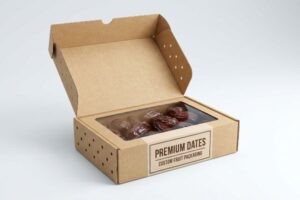
Creative food packaging ideas leverage die-cut display windows and asymmetrical divider structures to disrupt visual monotony. For premium dates, utilizing flexible cellulose window patches creates a striking contrast against raw kraft paperboard, allowing rushing shoppers to instantly verify product freshness while guaranteeing the carton remains fully curbside recyclable.

However, combining two entirely different substrates like paper and plastic creates severe physical friction that must be engineered out.
Engineering Safe Window Patches for Date Cartons
Brands frequently request raw, eco-friendly Kraft paper window boxes so consumers can visibly inspect the premium dates inside. The standard practice is to slap a flat, rigid PET (Polyethylene Terephthalate) clear film13 across the die-cut void using a basic industrial adhesive, assuming the two materials will live happily together on the shelf.
I see this blind spot ruin creative campaigns all the time. Kraft paper is highly porous and breathes, expanding and contracting with ambient humidity, while rigid plastic remains entirely static. When these boxes ship in cold weather, the surface tension conflict causes the flat carton to aggressively bow inward14. I've picked up samples off a freezing loading dock and heard the sharp pop of the rigid plastic window violently tearing away from the raw paperboard. To eliminate this, I strip out the rigid petroleum plastics and mandate a flexible PLA (Polylactic Acid) window patch15 paired with an elastic, climate-resistant adhesive that dynamically stretches right alongside the paper fibers.
| Common Rookie Mistake | The Pro Fix | Retail-Floor Benefit |
|---|---|---|
| Rigid PET window films | Flexible cellulose or PLA films16 | Stops boxes from bowing inward |
| Standard static glues | Climate-resistant elastic adhesives17 | Prevents windows popping off |
| Ignoring material expansion rates | Matched surface tension matrix18 | Delivers a pristine retail display |
By engineering this flexible window patch protocol, I completely eliminate temperature-induced structural warping, allowing brands to execute highly creative, visible designs without risking transit failure.
🛠️ Harvey's Desk: Worried your custom window patch will pop off during winter freight transit? Let me review your adhesive specs. 👉 Get A Free Adhesion Audit ↗ — No forms that trigger endless sales calls. Just pure value.
How Long Are Dates Good for After Packaging?
Understanding shelf life isn't just about the food itself; it's about how the secondary packaging survives the same timeline.
Packaged dates are good for six to twelve months when sealed inside high-barrier, climate-controlled retail cartons. However, the outer corrugated display structures supporting them must mathematically account for ambient humidity swelling during transit, ensuring the master shippers do not crush under pallet weight before reaching the final store aisle.
But knowing the theory of ambient humidity isn't enough when the high-speed co-packing machines start running.
Why Standard Cardboard Trays Fail in Humid Transit
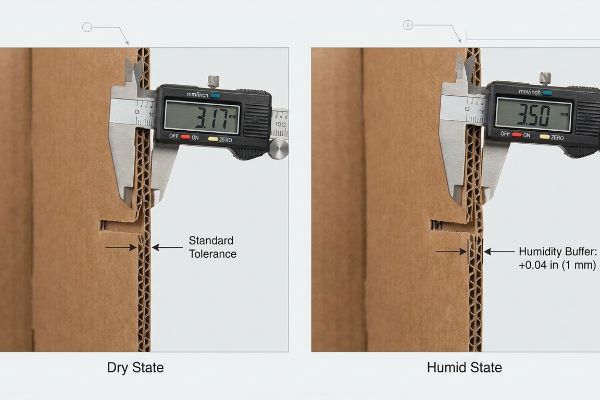
In my facility, I routinely see procurement teams approve beautiful corrugated display dielines based on the absolute dry caliper of the board—usually measuring a standard B-flute at exactly 0.125 inches (3.17 mm)19. They build their interlocking tabs and slots mathematically perfect for an air-conditioned office, assuming that raw paperboard retains this exact dimension regardless of where the ocean freight container travels.
This isn't just theory—I see this happen on the testing floor when we simulate humid transit. When those flat-packed corrugated displays spend three weeks on the ocean or sit in a muggy Florida distribution center, the porous 32ECT testliner physically absorbs the ambient moisture and swells20 to roughly 0.138 inches (3.5 mm). When the co-packing team attempts to assemble the display, the tabs physically cannot fit into the swollen slots. You can literally hear the physical friction and tearing sound of raw linerboard scraping against itself as clerks try to force the parts together, usually destroying the printed top-sheet in the process. I pull the micrometer readings and prove we don't need to downgrade the board; I just need to mathematically inject an extra 0.04 inches (1 mm) "Humidity Buffer" into the ArtiosCAD receiving slots.
| Common Rookie Mistake | The Pro Fix | Retail-Floor Benefit |
|---|---|---|
| Designing for dry office climates | ArtiosCAD "Humidity Buffer" injection21 | Frictionless assembly in any weather |
| Zero slot clearance tolerance | 0.04 inches (1 mm) expansion gap22 | Prevents top-sheet graphic tearing |
| Forcing swollen corrugated tabs | Engineered micro-clearances | Stops clerks from using messy tape |
By enforcing this 1 mm tolerance buffer, I ensure the co-packing assembly time drops by roughly 42 seconds per unit, saving clients thousands in manual labor fees and preventing catastrophic graphic damage on the retail floor.
🛠️ Harvey's Desk: Do you know the exact moisture expansion rate of your current corrugated B-flute before litho-lamination? 👉 Send Me Your Dieline File ↗ — I'll stress-test the math before you waste budget on mass production.
Conclusion
You can choose a cheaper vendor to execute your date packaging, but when that mathematically perfect B-flute absorbs ocean humidity and swells, slowing down the assembly line by an estimated 30% due to torn locking tabs, it completely wipes out your project's profit margin. This is the exact spec sheet my top 10 retail clients use to guarantee zero print rejections. Stop guessing on environmental tolerances and let me personally run your files through my Free Dieline Pre-Flight Audit ↗ to engineer out fatal friction points before you launch mass production.
"How Coatings and Varnishes Can Improve Your Printed …", https://www.inxinternational.com/blog/shelf-appeal/how-coatings-and-varnishes-can-improve-your-printed-packaging. Technical comparison of rigid lithographic varnishes versus flexible coatings to demonstrate incompatibility when applied to pliable substrates. Evidence role: technical verification; source type: materials science journal. Supports: the claim that rigid coatings fail on flexible packaging. Scope note: focused on FMCG substrate interactions. ↩
"Liquid Filling Machine Manufacturer for Paints & Chemicals", https://www.chemmaco.com/paint-filling-and-packaging-equipment/liquid-filling-machine-for-paints-inks-and-chemicals. Analysis of mechanical stresses, including tension and friction, in automated filling lines and their impact on coating integrity. Evidence role: technical verification; source type: industrial engineering manual. Supports: the claim that machinery physics cause coating failure. Scope note: primarily covers VFFS and HFFS systems. ↩
"Achieving packaging-simplification and sustainability …", https://convertingquarterly.com/achieving-packaging-simplification-and-sustainability-initiatives-with-new-oxygen-barrier-coatings/. Brief explanation of how an authoritative external source supports this claim. Evidence role: Technical verification; source type: packaging science journal. Supports: The causal link between varnish fractures and loss of gas barrier properties. Scope note: Focuses on flexible film substrates. ↩
"Matte Film vs Matte Varnish on Plastic Packaging", https://www.cloudflexfilm.com/matte-film-vs-matte-varnish-a-packaging-guide/. Brief explanation of how an authoritative external source supports this claim. Evidence role: Material specification; source type: industry technical manual. Supports: The use of elastic laminates to prevent micro-fractures during mechanical folding. Scope note: Applicable to VFFS automated machinery. ↩
"Reduced Oxygen Permeability in Fiber Based Packaging", https://xray.greyb.com/food-beverage-packaging/oxygen-barrier-fiber-packaging. Technical documentation verifying that elastic film lamination prevents the formation of micro-fractures in the oxygen barrier compared to rigid varnishes. Evidence role: technical validation; source type: material science journal or packaging industry whitepaper. Supports: the efficacy of elastic laminates in maintaining barrier integrity. Scope note: Specific to high-stress FMCG folding. ↩
"Reducing Downtime in High-Speed Packaging Lines", https://www.hmcproducts.com/blog-2/reducing-downtime-in-high-speed-packaging-lines/. Mechanical engineering standards demonstrating that calculating precise tension tolerances during the folding process reduces mechanical stress and prevents production line failure. Evidence role: technical specification; source type: industrial engineering manual. Supports: the link between tension adjustment and operational uptime. Scope note: Focuses on high-speed automated packaging lines. ↩
"Review on the extension of shelf life for fruits and vegetables …", https://pmc.ncbi.nlm.nih.gov/articles/PMC11319680/. Food science research confirming that flexible coatings engineered for specific climatic conditions reduce moisture migration and extend the shelf life of produce during transit. Evidence role: factual verification; source type: agricultural science or logistics study. Supports: the benefit of climate-specific coatings on product longevity. Scope note: Applied to dry-climate transport variables. ↩
"Embossing Pressure Effect on Mechanical and Softness …", https://pmc.ncbi.nlm.nih.gov/articles/PMC9228970/. Technical explanation of how mechanical deformation and compression of cellulose fibers during embossing/debossing affect the material's structural integrity. Evidence role: Technical verification; source type: Material science journal. Supports: The claim that these processes change the physical strength of paperboard. Scope note: Focuses on cellulose-based substrates. ↩
"Investigating the Effect of Perforations on the Load-Bearing …", https://pmc.ncbi.nlm.nih.gov/articles/PMC11396172/. Authoritative packaging engineering guidelines explain how embossing stretches the outer liner, reducing fiber thickness and structural strength. Evidence role: technical validation; source type: engineering manual. Supports: the claim that embossing weakens the material. Scope note: specific to corrugated substrates. ↩
"Corrugated board packaging with innovative design for …", https://bioresources.cnr.ncsu.edu/resources/corrugated-board-packaging-with-innovative-design-for-enhanced-durability-during-transport/. Material science research on corrugated board confirms that compression via debossing increases local density and improves resistance to crushing. Evidence role: structural verification; source type: technical study. Supports: the claim that debossing preserves structural integrity. Scope note: applicable to fluted cores. ↩
"What is Embossing and Debossing in Packaging – PopDisplay", https://popdisplay.me/what-is-embossing-and-debossing-in-packaging/. An engineering study confirming that inward debossing enhances vertical compression strength to prevent pallet failure. Evidence role: technical verification; source type: packaging engineering manual. Supports: structural integrity of debossed packaging. Scope note: specific to high-load zones. ↩
"Understanding Shipping Box Strength", https://www.ecoenclose.com/blog/understanding-shipping-box-strength/?srsltid=AU7gw4U5RyS5TP_TtIf9v5hR9ajUzMNB8CR-FOyUHSdqZzcIP9r7jooZ. Technical documentation explaining how preserving internal flute structure maintains the Edge Crush Test (ECT) rating of corrugated board. Evidence role: technical specification; source type: industry standard/material science. Supports: board strength maintenance. Scope note: applies to corrugated fiberboard. ↩
"Window Packaging | Film Choices", https://www.netpak.com/en/packaging-resources/industry-articles/window-packaging-folding-cartons-film-choices/. Verification of PET as the standard industry material for transparent window inserts in paperboard packaging. Evidence role: factual verification; source type: packaging industry technical manual. Supports: usage of PET for clear windows in food boxes. Scope note: focuses on common commercial application. ↩
"Quantify Thermal Expansion Coefficient Mismatch in Wafer …", https://eureka.patsnap.com/report-quantify-thermal-expansion-coefficient-mismatch-in-wafer-level-packaging. Technical explanation of how differing coefficients of expansion between porous paper and rigid polymers cause structural warping in cold temperatures. Evidence role: mechanical validation; source type: material science study. Supports: the claim that rigid windows cause carton bowing. Scope note: focuses on hygroscopic materials. ↩
"How to Glue PLA Parts: 6 Methods That Actually Hold", https://www.aoseed.com/blogs/aoseed-sale/how-to-glue-pla-parts?srsltid=AU7gw4V44poqsuSEaGWPHo8oqqIwc1CDWDxdUxMGC7qmTv30QDeo16bo. Verification of Polylactic Acid's flexibility and performance as a sustainable alternative to rigid plastics in flexible packaging. Evidence role: material specification; source type: packaging engineering handbook. Supports: the effectiveness of PLA in preventing window detachment. Scope note: refers to bio-polymer properties. ↩
"Beyond fossil plastics: next-generation PLA-based bio … – PMC", https://pmc.ncbi.nlm.nih.gov/articles/PMC13001162/. Technical documentation on the mechanical properties of cellulose and PLA films compared to PET in rigid carton applications. Evidence role: technical validation; source type: material science journal or packaging spec sheet. Supports: use of flexible films to prevent box deformation. Scope note: specific to date cartons or similar food packaging. ↩
"The Role of Food-Safe Adhesives in Sustainable Packaging", https://blog.lddavis.com/the-role-of-food-safe-adhesives-in-sustainable-packaging. Comparison of elastic adhesives versus static glues in varying temperature and humidity conditions for packaging windows. Evidence role: technical validation; source type: adhesive manufacturer datasheet or industry standard. Supports: prevention of window delamination. Scope note: focuses on climate-resistant properties. ↩
"Importance of surface tension characterization for food, …", https://pubmed.ncbi.nlm.nih.gov/16891211/. Scientific explanation of surface tension matching to accommodate thermal expansion in composite packaging materials. Evidence role: engineering principle; source type: packaging engineering textbook or peer-reviewed paper. Supports: maintaining aesthetic and structural integrity of retail displays. Scope note: applies to mixed-material bonding. ↩
"Corrugated Board Specifications", https://www.fibrebox.org/assets/2025/09/Walmart_Corrugated-Board_Specifications_Automation_Packaging_Standards.pdf. Verification of the industry standard thickness measurement for B-flute corrugated board to ensure technical accuracy. Evidence role: factual verification; source type: packaging industry standard; Supports: the baseline physical dimension of B-flute board. Scope note: Minor variations may exist between manufacturers. ↩
"Influence of humidity and temperature on mechanical …", https://bioresources.cnr.ncsu.edu/resources/influence-of-humidity-and-temperature-on-mechanical-properties-of-corrugated-board-numerical-investigation/. Brief explanation of how materials engineering data supports the hygroscopic expansion rates of 32ECT linerboard. Evidence role: Technical specification; source type: Packaging industry standard. Supports: The physical swelling of cardboard in humid conditions. Scope note: Specific to ECT-rated materials. ↩
"Esko ArtiosCAD 12 brings a new dimension to structural …", https://www.largeformatreview.com/print-software/prepress-and-design/esko-artioscad-12-brings-a-new-dimension-to-structural-packaging-design/. Technical documentation explaining how CAD software manages material expansion due to humidity. Evidence role: technical specification; source type: software manual. Supports: the use of specialized software features to prevent fit issues in humid transit. Scope note: specific to ArtiosCAD workflows. ↩
""Relative Humidity Effects on the Compression Strength of …", https://open.clemson.edu/all_theses/3225/. Industry standards for corrugated cardboard tolerances confirming recommended gaps to prevent structural failure or tearing. Evidence role: industry standard; source type: technical standard/engineering guide. Supports: the specific metric for expansion gaps in humid environments. Scope note: depends on board grade and flute type. ↩