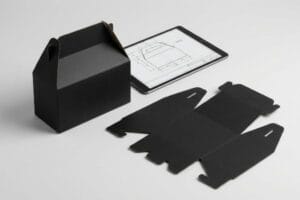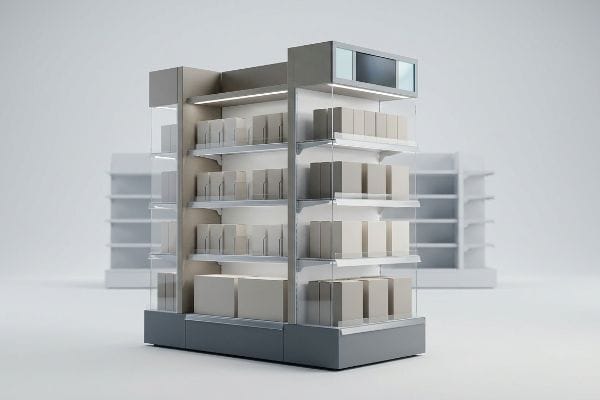
Brands fight brutally for end cap space, but securing the real estate is only half the battle. If your structure fails to convert, retailers will pull it immediately.
Key features of end cap displays include optimized product visibility, modular dividers, interactive structural elements, durable moisture-resistant bases, and strictly engineered fractional pallet dimensions. These strategic retail merchandisers maximize impulse conversions by isolating promotional products directly within high-traffic aisle intersections and secondary placement zones.
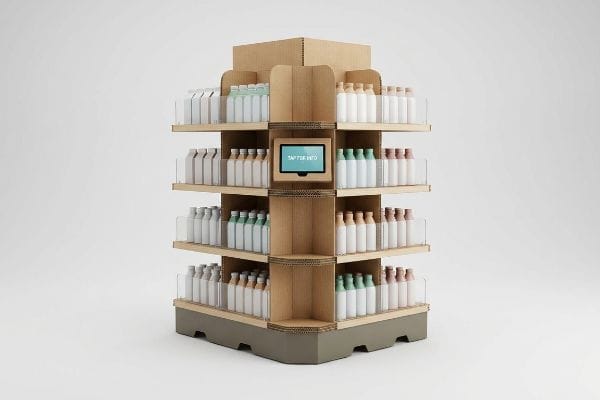
I see too many brands burn their budget on flashy graphics while ignoring the structural math that keeps these units standing under heavy shopping cart traffic.
What Makes a Good Endcap Display?
A beautiful structure is useless if the store manager refuses to put it on the floor.
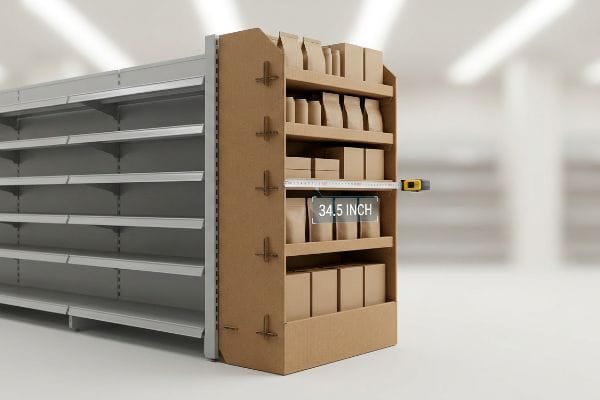
A good endcap display requires strict adherence to the 34.5-inch maximum width standard for US retail environments. Successful merchandisers combine this exact spatial compliance with high-contrast visual disruption, ensuring the temporary corrugated structure perfectly aligns with permanent store gondolas without creating aisle hazards.
Let's look at why focusing purely on aesthetics often triggers massive retailer chargebacks.
Passing the 34.5-Inch Retail Gondola Test
Many brand teams design promotional units based strictly on their internal product volume requirements. They treat the end cap zone as a flexible open canvas, building custom footprints that look great in a digital rendering but fail to account for rigid store architecture.
I see this exact spatial blind spot cripple massive rollouts. Even veteran procurement teams sometimes approve a flat 36-inch (914 mm) wide display, assuming it matches the 36-inch metal gondola. But when my team measures the physical space, those metal uprights consume an inch and a half1. I've watched store clerks sweating on the floor, trying to violently shove an oversized corrugated base between the metal brackets. I can literally hear the tearing sound of raw paperboard as the sides crush inward. By mathematically locking the dieline strictly to 34.5 inches (876 mm)2, we eliminate this friction entirely, ensuring the unit slides right in and reducing co-packing assembly time dramatically.
| Common Rookie Mistake | The Pro Fix | Retail-Floor Benefit |
|---|---|---|
| Designing to exact 36-inch width3 | Engineering a strict 34.5-inch footprint4 | Prevents side-panel crushing |
| Guessing gondola hardware depths | Measuring internal bracket clearance | Avoids instant store rejection |
| Ignoring aisle sweep zones | Tapering the front base corners5 | Stops shopping cart collisions |
I never let a client guess on retailer architecture. By strictly enforcing this spatial footprint before we even touch a CAD (Computer-Aided Design) file, I guarantee the unit survives the store manager's tape measure.
🛠️ Harvey's Desk: Not sure if your new structural file will clear Walmart's gondola brackets? 👉 Send Me Your Flat Dieline ↗ — Direct access to my desk. Zero automated sales spam, I promise.
What Are the Key Features of a Good Display?
You are paying for a silent salesman, not a brown cardboard vault.
Key features of good displays include unobstructed 85% product visibility, mathematically engineered retaining lips, double-wall load support, and zero-friction modular dividers. These structural elements work together to secure heavy merchandise during transit while guaranteeing maximum brand exposure when consumers walk past the retail aisle.

If shoppers cannot instantly read your primary label, your entire marketing budget is wasted on a blind spot.
The 85% Visibility Rule for Retaining Lips
Designers often prioritize transit safety over in-store presentation by creating massive, high-walled front retaining lips on their retail trays. They assume wrapping the product in deep cardboard is the only way to prevent items from tipping over during rough LTL (Less-Than-Truckload) freight movement6.
This is a classic trap where safety kills sales. I frequently review artwork where the brand's primary legal claim or key feature is entirely buried behind a tall, flat corrugated barrier. When I walk a retail floor, I see shoppers grab products and immediately put them back because the display's lip forces them to dig blindly. To fix this, I enforce the "Product First" rule: we mathematically engineer a custom die-cut swoop that dips sharply in the front center. The sharp snap of the interlocking side tabs seating into place still provides the 32ECT (Edge Crush Test) transit rigidity7 you need, but dropping that front wall guarantees at least 85% of your label is fully visible8, drastically accelerating impulse purchases.
| Common Rookie Mistake | The Pro Fix | Retail-Floor Benefit |
|---|---|---|
| High straight-cut retaining walls | Die-cut swooping front lips | Uncovers critical label text |
| Hiding the primary branding | Enforcing 85% product visibility9 | Speeds up shopper decisions |
| Relying on lip height for strength | Using double-wall side anchors10 | Keeps structure perfectly square |
I refuse to let protective packaging act as a physical barrier to your sales. Slashing that front profile forces the consumer's eyes exactly where you want them, turning a basic tray into an active conversion tool.
🛠️ Harvey's Desk: Is your current retail tray hiding the most important part of your brand's label? 👉 Request a Visibility Audit ↗ — Download safely. My inbox is open if you have questions later.
What Are the 5 Most Important Elements of Visual Merchandising?
Merchandising is not about making things look pretty; it is the brutal psychology of capturing human attention.
The elements of visual merchandising involve long-range visual disruption, mid-range product grouping, tactile product accessibility, stark color contrast, and strictly engineered asymmetrical layouts. These psychological triggers break consumer autopilot, guiding them seamlessly from a 30-foot discovery zone down to a physical three-inch conversion on the retail shelf.
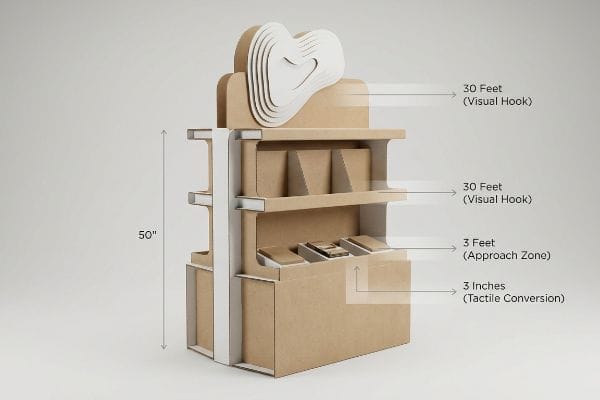
Understanding how a shopper physically moves through space dictates exactly how your structure must be engineered.
Mastering the 3-3-3 Spatial Continuum
Junior marketing teams frequently design POP (Point of Purchase) floor units strictly for up-close viewing on backlit computer monitors. They fill every square inch of the dieline with tiny text and symmetrical product blocks, assuming a denser layout automatically yields a higher volume of sales.
Think of an aisle like a highway; if the billboard has a paragraph of text, drivers ignore it. The same happens in retail. I constantly see brands stuff all seven layers of their consumer research onto the header card. It creates massive cognitive overload, and rushing shoppers simply tune it out. In my facility, I strip this down using the 3-3-3 rule. We deploy a massive 3D contour cut to grab them at 30 feet, position the heaviest SKUs precisely at the 50-inch (127 cm) human strike zone11 for the 3-foot approach, and use smooth E-flute folded edges12 so there is zero abrasive friction when they finally reach in at 3 inches. This deliberate staging stops them dead in their tracks.
| Common Rookie Mistake | The Pro Fix | Retail-Floor Benefit |
|---|---|---|
| Tiny paragraphs of header text | Massive die-cut 30-foot visual hooks | Breaks the shopper's autopilot |
| Placing heavy items near the floor | Utilizing the 50-inch strike zone13 | Reduces physical bending fatigue |
| Symmetrical, tightly packed shelves | Implementing 3-5-7 asymmetrical dividers14 | Creates compelling visual tension |
I approach every layout as a psychological funnel. If your design doesn't violently interrupt a shopper's peripheral vision from three aisles away, the intricate details close up simply do not matter.
🛠️ Harvey's Desk: Are your shoppers walking right past your high-cost seasonal rollout without stopping? 👉 Get a Spatial Layout Review ↗ — No forms that trigger endless sales calls. Just pure value.
What Is the End Cap Feature?
Features are not just marketing bullet points; they are physical defensive mechanisms engineered for survival.
An end cap feature is a highly engineered structural modification—such as a localized moisture-barrier coating, heavy-duty hidden support bars, or targeted double-wall reinforcements—designed to protect the merchandiser from environmental damage. These features ensure the temporary display withstands aggressive retail cleaning protocols and heavy shopping cart impacts.
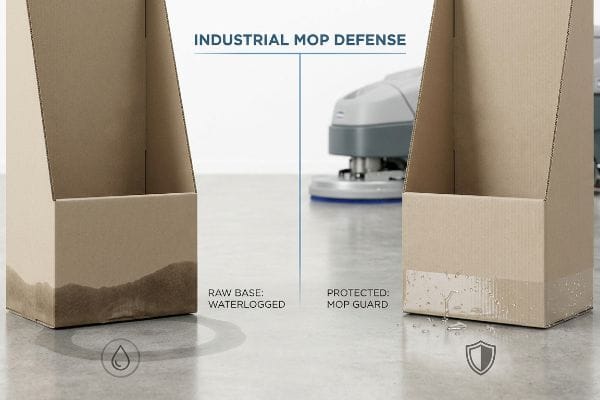
But knowing the theory of structural defense isn't enough when the warehouse machines start running and the floor mops come out.
Why Standard Cardboard Bases Fail on the Factory Floor
Procurement teams usually assume that standard corrugated paperboard can naturally withstand the ambient environment15 of a big-box store. They sign off on basic uncoated bases, believing that because the display is indoors, it won't face severe weather elements or direct water exposure.
Getting one display to stand up in a dry, climate-controlled lab is easy, but here is the harsh reality when you ship 500 of them into active retail environments. In my facility, I routinely see the aftermath of the soggy bottom disaster. Night crews at major retailers use heavy industrial floor scrubbers that slosh bleach and water directly against the bottom edges of these displays. When I measure the wicking effect on standard raw testliner, the moisture rapidly climbs up the paper flutes, instantly degrading the bursting strength by over 40%16. The base buckles under the product payload, leading to an immediate, messy collapse. I fix this by enforcing a strict Mop Guard protocol—applying a localized, clear poly-coat varnish strictly to the bottom 4 inches17 (10.1 cm) of the base. This invisible chemical shield violently repels water, saving clients thousands in destroyed merchandise while completely preventing frustrating retailer chargebacks.
| Common Rookie Mistake | The Pro Fix | Retail-Floor Benefit |
|---|---|---|
| Leaving bottom edges raw and porous | Applying a 4-inch clear poly-coat18 | Blocks industrial mop water |
| Using expensive plastic base trays | Utilizing targeted liquid varnish19 | Saves material and freight costs |
| Assuming indoor retail floors are dry | Engineering for nightly wet-scrubbing20 | Prevents catastrophic base collapse |
I never let untreated paperboard touch a retail floor. By mathematically isolating this moisture barrier exactly where the physical friction occurs, I protect your payload without inflating your entire unit cost.
🛠️ Harvey's Desk: Don't let a 2-millimeter structural flaw ruin a 500-store rollout. 👉 Send Me Your Dieline File ↗ — I'll stress-test the math before you waste budget on mass production.
Conclusion
You can opt for a cheaper vendor, but when that untreated corrugated base absorbs floor water and catastrophically buckles overnight, it creates a massive mess that triggers immediate retailer rejections and effectively wipes out your campaign's ROI. Over 500 brand managers use my prepress checklist to avoid these exact fatal early-stage mistakes. Stop guessing on retail architecture and let me personally run your structural files through my Free Dieline Audit ↗ to intercept these costly blind spots before your displays hit the factory floor.
"Gondola Shelving | DGS Retail", https://www.dgsretail.com/C952/Gondola-Shelving/?srsltid=AfmBOorsniYwcj6ZPbxzrIbMyqTK2MTapXcTAvmO3LCbuiw0rw3ZJDnV. Industry specifications for retail gondolas detail the physical space occupied by structural uprights. Evidence role: technical specification; source type: industry standard. Supports: claim regarding lost width due to brackets. Scope note: based on standard 36-inch gondola configurations. ↩
"End Cap Display Dimensions, Types and Selection Guide – WZ Rack", https://wzrack.com/end-cap-display-dimensions-maximizing-checkout-aisle-impact/. Retail merchandising guidelines define the maximum width for corrugated displays to ensure compatibility with standard shelving. Evidence role: dimensional standard; source type: merchandising guide. Supports: the requirement for a 34.5-inch dieline. Scope note: applies to US retail environments. ↩
"Are there any size limitations for endcap displays? – PopDisplay", https://popdisplay.me/are-there-any-size-limitations-for-endcap-displays/. Documentation of the common misconception regarding nominal 36-inch widths versus the actual clearance required for gondola installation. Evidence role: technical clarification; source type: retail shelving specifications. Supports: identification of the rookie mistake. Scope note: refers to nominal vs actual clearance. ↩
"Gondola Shelving Dimensions Guide", https://rackleaders.com/gondola-shelving-dimensions-guide/. Verification of the industry standard width for retail gondola endcap displays to ensure fit and avoid side-panel crushing. Evidence role: technical specification; source type: retail fixtures manual. Supports: 34.5-inch footprint requirement. Scope note: specific to US retail gondola standards. ↩
"Shopping Cart Collisions: Hidden Dangers You Should Know", https://www.dcreport.org/2025/11/25/shopping-cart-collisions-hidden-dangers-you-should-know/. Confirmation that tapering base corners is a standard design practice to mitigate product damage from shopping carts in high-traffic aisles. Evidence role: design best practice; source type: retail merchandising guide. Supports: collision prevention strategy. Scope note: applies to floor-standing endcaps. ↩
"LTL Freight Packaging Guidelines: What to Know", https://nmfta.org/resource/ltl-freight-packaging-guidelines/. Brief explanation of how LTL transit dynamics, including frequent handling and vibrations, necessitate specific structural stability in retail packaging. Evidence role: technical context; source type: logistics industry standard. Supports: the claim that transit conditions threaten product stability. Scope note: Applies to cardboard retail-ready packaging. ↩
"Edge Crush Test: Essential Insights for Corrugated …", https://www.testresources.net/blog/edge-crush-test-essential-insights-for-corrugated-packaging. Technical verification of 32ECT standards for corrugated cardboard structural integrity during transit. Evidence role: technical specification; source type: industry standard/material science. Supports: the claim regarding material rigidity for shipping. Scope note: pertains to standard corrugated board ratings. ↩
"Point of Purchase: How Retailers Can Influence Shoppers at the Right …", https://blog.intouch.com/posts/points-of-purchase-displays. Empirical data relating the percentage of visible product branding on retail displays to consumer impulse purchase behavior. Evidence role: empirical metric; source type: retail psychology or marketing research. Supports: the correlation between visibility and sales. Scope note: effectiveness may vary by product category. ↩
"Retail Shoppability: – Kelley School of Business", https://kelley.iu.edu/doc/bloomington/faculty-research/departments/marketing/shoppability.pdf. Authoritative retail design guidelines or consumer behavior studies verify how specific visibility thresholds influence purchasing speed. Evidence role: validation of metric; source type: industry standard/academic study. Supports: the claim that 85% visibility optimizes decision making. Scope note: specific to point-of-purchase displays. ↩
"DISPLAY STRUCTURAL DESIGN FOR INTERACTIVE …", https://www.bcipkg.com/display-structural-design-for-interactive-retail-displays/. Packaging engineering manuals explaining the structural benefit of double-wall corrugated reinforcements for maintaining squareness in displays. Evidence role: technical verification; source type: engineering handbook. Supports: the claim that double-wall anchors preserve structural shape. Scope note: applicable to corrugated cardboard displays. ↩
"Retail premises design for effective displays and customer flow", https://www.business.qld.gov.au/industries/manufacturing-retail/retail-wholesale/retail-displays. Brief explanation of how ergonomic retail design standards define the optimal height for consumer interaction. Evidence role: technical validation; source type: industry standard; Supports: the specific height for product accessibility; Scope note: may vary based on target demographic height. ↩
"A Guide to E-Flute Corrugated: What It's Good For and …", https://www.accbox.com/blog/a-guide-to-e-flute-corrugated-what-its-good-for-and-when-to-use-it/. Brief explanation of the technical specifications of E-flute corrugated cardboard and its application in high-finish retail displays. Evidence role: material verification; source type: packaging industry specification; Supports: the use of specific cardboard grades for tactile quality; Scope note: compares E-flute to coarser fluting options. ↩
"How to Choose Your Retail Display Height?", https://popdisplay.me/how-to-choose-your-retail-display-height/. Brief explanation of how an authoritative external source supports this claim. Evidence role: validation; source type: retail ergonomics study. Supports: the effectiveness of placing high-margin items within the prime eye-level and reach zone. Scope note: Specific to average adult human proportions. ↩
"What is the 3-5-7 Rule in Decorating? – MontCarta", https://montcarta.com/blogs/art-guide-inspiration/3-5-7-rule-interior-decorating-guide?srsltid=AfmBOopZdcsRPdiZHIQjax96Q4NhqL8TP8_G12h8n30U8W3ubrQBAqvA. Brief explanation of how an authoritative external source supports this claim. Evidence role: theoretical foundation; source type: visual merchandising textbook. Supports: the psychological principle that odd-numbered groupings create more visual interest and tension than symmetrical ones. Scope note: Focuses on aesthetic perceived value. ↩
""Relative Humidity Effects on the Compression Strength of …", https://open.clemson.edu/all_theses/3225/. Technical documentation on the hygroscopic nature of uncoated paperboard and its susceptibility to degradation in commercial environments. Evidence role: technical contradiction; source type: material science study. Supports: the vulnerability of standard cardboard to indoor ambient humidity and spills. Scope note: focused on uncoated corrugated grades. ↩
"Effects of Moisture content on Box Compression Strength", https://renewablebioproducts.gatech.edu/sites/default/files/2025-12/4effects-of-moisture-content-on-box-compression-strength.pdf. Technical data from material science sources regarding the reduction of Mullen bursting strength in corrugated paper when exposed to high moisture. Evidence role: quantitative validation; source type: engineering study. Supports: the claim of significant strength loss due to wicking. Scope note: results may vary by liner grade. ↩
"What coatings work best for corrugated packaging? – PopDisplay", https://popdisplay.me/what-coatings-work-best-for-corrugated-packaging/. Industry specifications for aqueous or UV coatings used to protect the base of retail displays from floor cleaning chemicals. Evidence role: process validation; source type: industry standard. Supports: the use of localized coatings to prevent water wicking. Scope note: limited to specific coating types. ↩
"EcoShield® Barrier Coating for Paper and Corrugated", https://www.cortecvci.com/products/vpci-packaging-products/ecoshield-barrier-coating-for-paper-and-corrugated/. Technical documentation on the efficacy of polymer coatings in preventing capillary action and water absorption in corrugated cardboard. Evidence role: technical verification; source type: material science data. Supports: efficacy of poly-coat in blocking industrial mop water. Scope note: specific to application height and coating type. ↩
"Acrylic vs. Corrugated Displays: What's Right for Your Business?", https://orangepkg.com/blog/acrylic-vs-corrugated-displays-whats-right-for-your-business/. Comparative analysis of weight and volume reductions when using liquid coatings versus separate plastic base components. Evidence role: cost-benefit analysis; source type: supply chain logistics report. Supports: claim that varnish reduces material and freight costs. Scope note: focused on large-scale distribution. ↩
"How Should I Clean and Maintain POP Displays? – PopDisplay", https://popdisplay.me/how-should-i-clean-and-maintain-pop-displays/. Industry standards for retail facility maintenance and the resulting structural impact of moisture on temporary cardboard displays. Evidence role: operational context; source type: facility management guidelines. Supports: the necessity of water-resistant engineering for retail floors. Scope note: applies to standard commercial janitorial practices. ↩