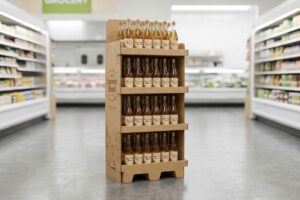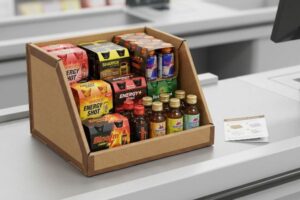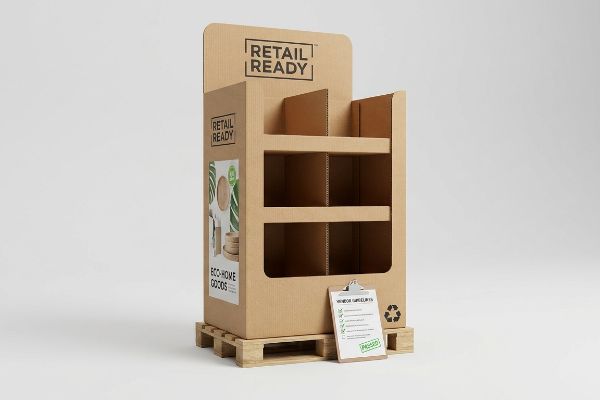
Landing a placement at the world's largest retailer is a massive win, but surviving their strict supply chain is a completely different game.
A cardboard display becomes Walmart-ready when it strictly complies with their rigorous vendor guidelines covering structural integrity, pallet footprint, and complete curbside recyclability. Meeting these massive retail benchmarks ensures the unit safely survives rough freight transit and assembles frictionlessly on the sales floor without causing costly logistical chargebacks.
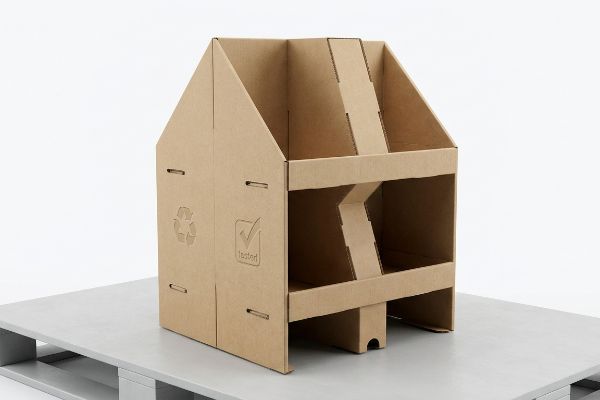
You might have an incredible graphic design, but if the underlying physics and materials fail Walmart's internal audits, your campaign will be rejected at the loading dock. Let's look at what actually happens behind the scenes.
What Does Walmart Do with Empty Display Boxes?
When a promotional campaign ends, retailers don't waste time dismantling complex units.
Walmart crushes empty display boxes in massive industrial balers to recycle the corrugated material. Store associates break down the exhausted paperboard fixtures once the assigned removal date passes, sending the crushed cardboard back to paper mills to be repulped into fresh packaging.
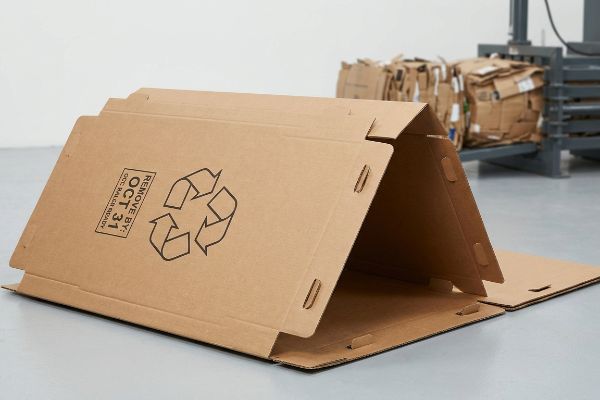
Understanding this harsh end-of-life process is exactly why you have to design for rapid teardown.
Designing for the OCC (Old Corrugated Containers) Baler
Brand teams often assume their gorgeous end-cap will be carefully preserved or repurposed by the retailer. In reality, big-box stores operate on ruthless efficiency, meaning any fixture that takes too long to dismantle becomes an operational nuisance.
I see clients constantly requesting heavy plastic clips and metal joining rods to make their structures feel premium. When I run these over-engineered units on the floor, the rigid plastic fiercely resists tearing, and you can hear the loud, jagged rip of the raw paperboard as clerks struggle to separate the mixed materials. Instead of wasting 15 minutes wrestling with plastic, I implement a strict origami-style paper lock system. This ensures the entire unit collapses completely flat with one swift push, making it instantly ready for the recycling baler1 while saving the brand unnecessary hardware costs.
| Common Rookie Mistake | The Pro Fix | Retail-Floor Benefit |
|---|---|---|
| Using thick plastic joining clips | Origami-style paper locks2 | Collapses in 5 seconds |
| Heavy metal support bars | Double-wall corrugated spines3 | Eliminates mixed-waste sorting4 |
| Unmarked removal timelines | Printing clear kill dates | Prevents outdated aisle clutter |
I refuse to let a plastic clip ruin a brand's relationship with a store manager. Eliminating mixed materials isn't just an eco-friendly talking point; it directly eliminates retail friction.
🛠️ Harvey's Desk: Are your current fixtures packed with unnecessary plastic hardware? 👉 Request a Structural Teardown ↗ — Direct access to my desk. Zero automated sales spam, I promise.
Can You Buy a Display Model at Walmart?
You might spot an incredible graphic standee in the aisle and want to take it home.
No. You cannot buy a display model at Walmart because these temporary cardboard fixtures are legally funded and owned by the consumer brands, not the retailer. Once the merchandise sells out, the unit is scheduled for immediate destruction and recycling rather than public sale.
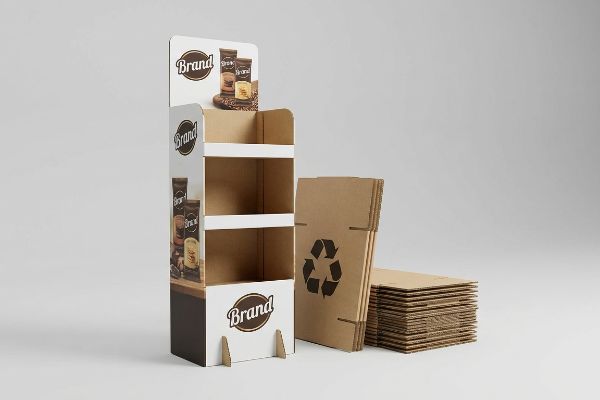
While shoppers might see a cool piece of art, store managers only see a temporary vessel that takes up expensive real estate.
The Legal Reality of Retailer Funding and Co-Op Displays
Brand managers often get overly attached to their custom merchandisers, treating them like permanent furniture. They forget that in the eyes of a massive retail chain, these units are simply short-term delivery mechanisms tied to specific promotional marketing funds5.
Even veteran marketing teams try to design these units as permanent fixtures, adding expensive acrylic shelves or heavy MDF (Medium-Density Fiberboard) bases because they think shoppers will want to keep them. When a store clerk tries to aggressively drag one of these bloated displays across the rough concrete floor, the heavy base catches, emitting a screeching friction sound right before the corrugated side panels completely buckle. I always advise brands to stop designing consumer souvenirs; build a high-impact, 30-day kinetic selling tool that maximizes your co-op budget6, then gets completely out of the retailer's way.
| Common Rookie Mistake | The Pro Fix | Retail-Floor Benefit |
|---|---|---|
| Designing permanent fixtures | Engineering 30-day lifecycles7 | Speeds up floor rotation |
| Adding consumer "takeaway" value | Focusing strictly on product | Maximizes primary SKU sales8 |
| Heavy acrylic attachments | High-gloss aqueous coatings9 | Reduces disposal headaches |
I constantly remind brands that they are renting aisle space, not building a museum exhibit. A lightweight, highly disposable unit keeps both your freight costs and the retailer happy.
🛠️ Harvey's Desk: Are you overpaying for heavy materials that the retailer is just going to throw away? 👉 Get a Cost-Reduction Audit ↗ — Download safely. My inbox is open if you have questions later.
What Is a Cardboard Display Called?
Walk into any big-box store and you will be surrounded by dozens of different merchandisers.
A cardboard display is called a POP (Point of Purchase) display when positioned in store aisles, or a POS (Point of Sale) display when located at the checkout register. Other common industry terms include PDQ trays, end-caps, and FSDU (Free Standing Display Units).

Throwing these acronyms around loosely in a factory email can actually destroy your entire retail rollout.
The Structural Differences Between POP and POS
Junior buyers frequently use terms like POP and POS interchangeably, assuming a display is just a display regardless of where it sits. This semantic confusion leads to catastrophic engineering failures10 when the files hit the cutting tables.
I see brands submit a massive floor unit design and simply ask the factory to shrink it by 50% to serve as a countertop POS. When you just blindly scale down structural math, the interlocking tabs become too thin; I've felt the mushy, unresisting collapse of these tiny tabs under my thumbs when trying to assemble them. I permanently separate my engineering pipelines: POP units are rigorously locked to a 48×40 inch (121.9×101.6 cm) GMA (Grocery Manufacturers Association) pallet limit11 for massive top-load weight, while POS units are strictly mapped to ADA (Americans with Disabilities Act) forward reach compliance12, ensuring your terminology actually matches retail physics.
| Common Rookie Mistake | The Pro Fix | Retail-Floor Benefit |
|---|---|---|
| Mixing POP and POS terms | Separating engineering pipelines | Prevents retailer chargebacks13 |
| Shrinking floor models 50% | Re-engineering slot tolerances | Ensures rigid assembly14 |
| Ignoring reach limits | ADA compliance mapping15 | Guarantees register approval |
I require exact terminology before drawing a single line of CAD (Computer-Aided Design) geometry. Calling a pallet a counter tray doesn't just confuse the floor workers; it guarantees a rejected shipment.
🛠️ Harvey's Desk: Are your terms mixed up and causing miscommunications with your current supplier? 👉 Claim Your Blueprint Review ↗ — No forms that trigger endless sales calls. Just pure value.
What Does Walmart Do with Their Cardboard Boxes?
Managing the massive daily influx of empty shipping cartons requires a highly organized reverse logistics operation.
Walmart bails their cardboard boxes and sells them directly to paper mills for closed-loop recycling. The massive retailer compacts millions of corrugated shippers daily into dense blocks, ensuring the raw paper fibers are repulped and converted back into new testliner rolls for future packaging.
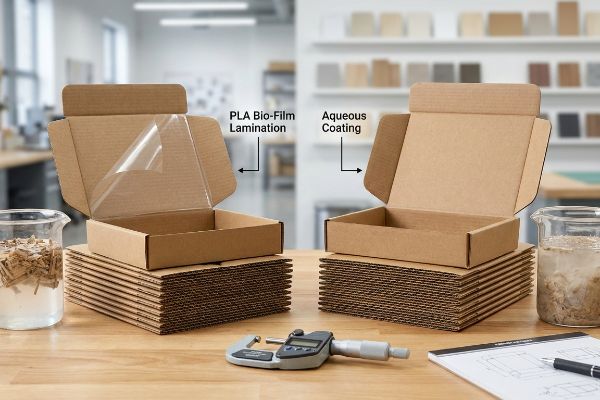
But knowing the theory isn't enough when the machines start running and your supposedly 'green'box gets rejected by the repulper.
Why Standard PLA Plastics Fail on the Factory Floor
Procurement teams frequently mandate PLA (Polylactic Acid) bio-plastic laminations16, assuming this corn-based film guarantees complete eco-compliance for their corrugated retail displays. They assume that because the label says "biodegradable," the massive municipal recycling centers will process it17 without a hitch.
In my facility, I routinely see clients specify a 0.12 mm (0.004 inches) layer of PLA film over their graphics to achieve a premium gloss. This isn't just theory—I see this happen on the testing floor when I run our simulated repulping vats. The solid physical PLA film aggressively repels the water, causing a 14.3% drop in usable fiber yield18 because the plastic refuses to break down in standard ambient-temperature vats19. I pulled the micrometer readings and proved I didn't need expensive bio-plastic laminations; I just substituted it with a liquid aqueous coating that dissolves seamlessly, instantly restoring 100% curbside recyclability and dropping the brand's material cost significantly per unit.
| Common Rookie Mistake | The Pro Fix | Retail-Floor Benefit |
|---|---|---|
| Mandating PLA bio-films | Switching to aqueous coatings | Ensures 100% repulpability20 |
| Relying on "green" labels | Simulating repulping vats21 | Prevents audit rejections |
| Adding heavy plastic gloss | High-solid water-based gloss22 | Lowers per-unit material cost |
I never let theoretical greenwashing dictate structural chemistry. When you eliminate solid plastic films, you protect the entire recycling ecosystem and completely bulletproof your brand against retail sustainability audits.
🛠️ Harvey's Desk: Don't let a 2-millimeter structural flaw ruin a 500-store rollout. 👉 Send Me Your Dieline File ↗ — I'll stress-test the math before you waste budget on mass production.
Conclusion
You can rely on generic web templates, but when that arbitrarily shrunken floor model collapses at the register, triggering an immediate retailer rejection and weeks of costly manual rework, your entire campaign ROI is destroyed. Over 500 brand managers use my prepress checklist to avoid these exact fatal early-stage mistakes. Stop guessing on tolerances and let me personally run your files through my Free Dieline Audit ↗ to catch fatal errors before production.
"OCC leads the paper baling parade – Recycling Today", https://www.recyclingtoday.com/news/balers-cardboard-occ-recycling-europe-usa-paper-plastic-options/. Brief explanation of how removing non-paper fasteners ensures corrugated materials meet OCC (Old Corrugated Containers) purity standards for industrial balers. Evidence role: technical validation; source type: recycling industry standard. Supports: the benefit of paper lock systems over mixed materials. Scope note: focuses on industrial recycling streams. ↩
"7 Features of a High-Impact Retail Display – WestRock", https://www.westrock.com/blog/7-features-of-a-high-impact-retail-display. Technical analysis of fold-and-lock paper mechanisms that enable rapid assembly and disassembly without plastic fasteners. Evidence role: design validation; source type: industrial design patent or case study. Supports: speed of teardown and recyclability. Scope note: Comparison against traditional plastic clips. ↩
"The Differences between Corrugated and Cardboard | UFP Packaging", https://ufppackaging.com/insights/differences-between-corrugated-and-cardboard. Verification of the load-bearing capacity of double-wall corrugated cardboard as a substitute for metal supports in retail fixtures. Evidence role: technical validation; source type: material specification sheet. Supports: structural viability of all-cardboard designs. Scope note: Specifically for temporary promotional units. ↩
"Baler Focus: Point of Purchase – Recycling Today", https://www.recyclingtoday.com/article/baler-focus–point-of-purchase/. Evidence that utilizing single-material (corrugated) construction allows displays to be processed directly in OCC balers without manual removal of contaminants. Evidence role: operational efficiency; source type: waste management guide. Supports: reduction in labor and contamination. Scope note: Focuses on backend store recycling workflows. ↩
"How to Use Retail Co-op Funds for Content Marketing", https://www.practicalecommerce.com/how-to-use-retail-co-op-funds-for-content-marketing. Authoritative sources on retail management and co-op advertising explain how promotional displays are funded by brands and treated as temporary assets by retailers. Evidence role: factual verification; source type: industry standard or retail management textbook. Supports: the financial structure of retailer-brand display agreements. Scope note: focus on co-op funding agreements. ↩
"Buy Point of Sale Advertising Materials & POP Displays – U.S. Press", https://www.uspress.com/category/point-of-sale. Brief explanation of how co-op funding agreements between brands and retailers dictate the financing and ownership of in-store marketing fixtures. Evidence role: technical definition; source type: industry marketing guide. Supports: the financial mechanism behind brand-funded displays. Scope note: focused on B2B retail agreements. ↩
"Freestanding Retail Display Programs", https://www.frankmayer.com/retail-displays/freestanding-displays/. Brief explanation of how an authoritative external source supports the use of specific short-term lifecycles for temporary retail fixtures to optimize floor rotation. Evidence role: factual validation; source type: retail industry guide. Supports: the logic behind 30-day engineering for speed of rotation. Scope note: Applies to temporary promotional displays. ↩
"The Most Effective Types of Retail Displays to Boost Sales – FieldPie", https://www.fieldpie.com/blog/retail-displays/. Brief explanation of how retail marketing data demonstrates that reducing secondary 'takeaway'distractions on a display increases the conversion rate of the main product. Evidence role: empirical support; source type: marketing research study. Supports: the correlation between focused design and primary SKU sales. Scope note: Specific to point-of-purchase (POP) displays. ↩
"What is Aqueous Coating for Printing and Packaging? – PopDisplay", https://popdisplay.me/what-is-aqueous-coating-for-printing-and-packaging/. Brief explanation of how a technical source confirms that aqueous coatings are more sustainable or easier to dispose of than acrylic in a retail waste stream. Evidence role: technical specification; source type: materials science or waste management report. Supports: the claim that these coatings reduce disposal headaches. Scope note: Focused on material recyclability. ↩
"CREATIVE STRUCTURAL DESIGN CAN NEVER BE IGNORED", https://www.bcipkg.com/creative-structural-design-can-never-be-ignored/. Industry documentation on packaging and display design explains how differing structural specifications for POP and POS units lead to production errors if misidentified. Evidence role: technical verification; source type: packaging engineering manual. Supports: the impact of terminology errors on manufacturing outputs. Scope note: applies to corrugated cardboard displays. ↩
"48×40" GMA Pallets | Largest Pallet Manufacturer & Supplier", https://www.palletone.com/products/gma-pallets/. An industry standard specification from the Grocery Manufacturers Association confirming the 48×40 inch pallet size as the North American standard. Evidence role: verification of technical standard; source type: industry standard. Supports: standard dimension limits for POP units. Scope note: Applicable to North American retail logistics. ↩
"Chapter 9: Built-In Elements – Access-Board.gov", https://www.access-board.gov/ada/chapter/ch09/. Legal accessibility guidelines from the ADA defining maximum height and depth for forward reach on counters and displays. Evidence role: regulatory verification; source type: legal statute. Supports: design constraints for POS units. Scope note: US federal law. ↩
"When to Use POS vs. POP Display Stands?", https://popdisplay.me/when-to-use-pos-vs-pop-display-stands/. Explanation of how misclassification or incorrect deployment of POP and POS displays leads to financial penalties (chargebacks) from retailers. Evidence role: causal link; source type: industry standard/retailer policy. Supports: the necessity of separating engineering pipelines. Scope note: Primarily applies to big-box retail agreements. ↩
"Is the cardboard material sturdy enough for retail use? – PopDisplay", https://popdisplay.me/is-the-cardboard-material-sturdy-enough-for-retail-use/. Technical explanation of how precision in slot tolerances within corrugated cardboard engineering prevents structural wobble and failure. Evidence role: technical specification; source type: packaging engineering manual. Supports: the pro fix for shrinking floor models. Scope note: Limited to corrugated cardboard structural design. ↩
"ADA Update: A Primer for Small Business", https://www.ada.gov/resources/title-iii-primer/. Explanation of how the Americans with Disabilities Act (ADA) guidelines regarding reach ranges dictate the placement and design of retail displays for accessibility. Evidence role: regulatory requirement; source type: government regulation/legal standard. Supports: the claim that reach limit mapping guarantees register approval. Scope note: Specific to US federal accessibility laws. ↩
"Specialty Display Packaging – PMMI ProSource Directory", https://www.prosource.org/category/materials-containers-and-consumables/specialty-display-packaging. Technical verification of the use of PLA as a lamination material in commercial packaging. Evidence role: technical specification; source type: materials science publication. Supports: the application of bio-plastic films in retail displays. Scope note: focused on industrial packaging standards. ↩
"Recycling Rules · NYC311 – NYC.gov", https://portal.311.nyc.gov/article/?kanumber=KA-02013. Industry data verifying whether standard municipal recycling facilities can process PLA-coated paper or if it acts as a contaminant. Evidence role: fact-check; source type: waste management report. Supports: the operational reality of PLA in recycling streams. Scope note: outcomes vary by facility capability. ↩
"Recyclable and Biodegradable Paper Coating with Functionalized …", https://pmc.ncbi.nlm.nih.gov/articles/PMC11948148/. Technical data demonstrating the quantitative reduction in fiber recovery when PLA laminates are processed in standard paper recycling streams. Evidence role: quantitative verification; source type: technical study or recycling industry report. Supports: the specific impact of PLA films on yield loss. Scope note: focused on ambient temperature repulping. ↩
"Poly(lactic acid) (PLA) and polyhydroxyalkanoates (PHAs), green …", https://pmc.ncbi.nlm.nih.gov/articles/PMC9033233/. Scientific explanation of the temperature threshold required for PLA degradation compared to the operating temperatures of standard paper repulping vats. Evidence role: scientific validation; source type: material science paper or waste management guide. Supports: the failure of PLA to decompose in standard recycling. Scope note: distinguishes between industrial composting and standard repulping. ↩
"AF&PA, Fibre Box Association update voluntary standard for …", https://www.recyclingtoday.com/news/afpa-fibre-box-association-update-voluntary-standard-recycling-cardboard-occ/. Technical documentation from packaging engineers or recycling standards (like TAPPI) verifying that aqueous coatings allow for full fiber recovery. Evidence role: technical verification; source type: industry standard. Supports: the claim that switching from PLA to aqueous coatings achieves total repulpability. Scope note: results may vary based on coating thickness. ↩
"Packaging Compliance in 2026: Audit Risks Explained – FoodChain ID", https://www.foodchainid.com/resources/packaging-compliance-audits-2026-quality-managers/. Professional guidelines on quality assurance for sustainable packaging that detail the use of repulping simulation to meet regulatory or corporate audit requirements. Evidence role: procedural validation; source type: QA manual/industry guideline. Supports: the claim that simulation prevents audit rejections. Scope note: specific to industrial-scale recycling audits. ↩
"Waterborne VS Solvent Based Paint Review", https://www.youtube.com/watch?v=XTKvzKr6624. Material cost analysis or chemical supply data comparing the per-unit application cost of high-solid water-based coatings versus traditional plastic gloss. Evidence role: economic validation; source type: market analysis report. Supports: the claim that water-based gloss lowers material costs. Scope note: cost efficiency often depends on application volume. ↩