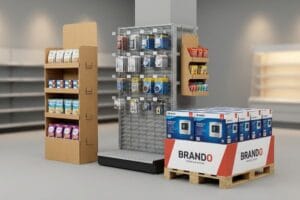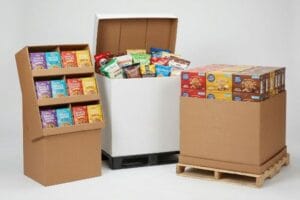
Marketing fast-moving products requires more than a clever slogan. It demands physical disruption.
The purpose of CPG (Consumer Packaged Goods) marketing is to drive rapid, high-volume consumer purchasing through optimized product visibility, strategic pricing, and impulse-triggering point-of-sale positioning. By leveraging structural packaging and psychological engagement, brands actively accelerate turnover rates in highly competitive, fast-moving retail store environments.

But translating that high-level marketing theory into a physical retail rollout is where most emerging brands hit a concrete wall.
What Are the 4 Ps of CPG?
Getting your product onto a shelf is only half the battle.
The 4 Ps of CPG marketing consist of Product, Price, Place, and Promotion. Mastering these four foundational elements ensures your fast-moving consumer goods integrate seamlessly into targeted retail ecosystems, aligning physical packaging strategies with shopper behavior to actively maximize point-of-purchase profitability and overall supply chain efficiency.

Understanding the mix is easy, but physically executing it across different store formats is where the friction begins.
The "Retail Framework Alignment" Trap in CPG Marketing
Emerging brands frequently attempt to launch consumer packaged goods without fully adapting their physical displays to the 4 Ps of specific retail environments. They assume a universal promotional display will perform equally well in a convenience store and a massive warehouse club. This one-size-fits-all approach ignores the strict logistical mechanics and spatial limitations of different store footprints1.
Even veteran marketing teams often fall into the trap of designing a brilliant promotional concept that completely ignores the "Place" metric. I once watched a brand force a massive, intricate floor display into a compact pharmacy aisle, only to have the store manager physically reject it because it blocked ADA (Americans with Disabilities Act) wheelchair access2. To fix this, I mandate a strict "Retail Framework Matrix" before a single piece of cardboard is cut. I map your specific product and promotional strategy directly against the targeted retailer's exact aisle constraints. By aligning the physical footprint with the store's operational model, I prevent costly rejections and guarantee your merchandise actually reaches the floor, boosting your overall campaign ROI.
| Common Rookie Mistake | The Pro Fix | Retail-Floor Benefit |
|---|---|---|
| Using a universal display size | Retail Framework Matrix | Prevents manager rejection |
| Ignoring ADA aisle limits3 | Downsizing to fractional pallets4 | Secures premium placement |
| Mismatching price and format | Category-specific footprint | Increases impulse buys |
I never let a client finalize a design until I verify the exact retail destination, ensuring the structural dimensions perfectly match the store's operational reality.
🛠️ Harvey's Desk: Not sure if your new promotional display violates your retailer's spatial guidelines? 👉 Get a Free Compliance Audit ↗ — Direct access to my desk. Zero automated sales spam, I promise.
What Is the Purpose of a CPG?
Speed is the absolute lifeblood of any fast-moving consumer good.
The purpose of a CPG product is to satisfy daily consumer needs through rapid, recurring purchases. Because these items face intense shelf competition and narrow profit margins, their physical packaging and retail merchandisers must actively disrupt shopper routines to accelerate turnover rates and sustain continuous brand growth.
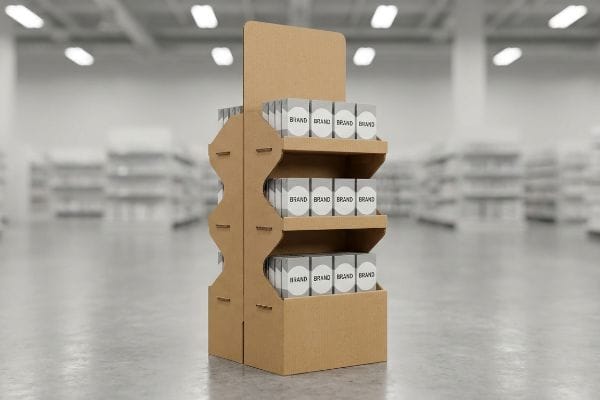
To achieve that high-speed turnover, your physical merchandising cannot be passive.
The 3-3-3 Spatial Rule for CPG Conversion
Junior design teams frequently engineer retail displays strictly for up-close viewing on backlit computer monitors. They focus heavily on intricate brand storytelling and dense informational text. However, they completely ignore the physical reality of how rushed shoppers navigate sprawling retail aisles.
When shoppers are walking past your aisle, they aren't stopping to read a novel. I constantly see brands cluttering their displays with so much text that the physical merchandiser just blends into the background noise. To counter this, I enforce the "3-3-3 Rule" of spatial engagement. Your display must use aggressive die-cut shapes to capture visual attention from thirty feet (9.1 m) away, engage specific interest at three feet (0.9 m), and drive the tactile conversion at three inches (76.2 mm). When I cut the front retaining lip of a corrugated tray to guarantee 85% product visibility5, the smooth friction of a shopper easily sliding the item out directly accelerates that final three-inch (76.2 mm) impulse conversion, driving higher volume sales.
| Common Rookie Mistake | The Pro Fix | Retail-Floor Benefit |
|---|---|---|
| Designing for monitor viewing | 30-foot visual disruption6 | Grabs aisle attention |
| High front retaining lips | 85% product visibility rule7 | Frictionless item removal |
| Text-heavy structural panels | Bold spot color floods | Triggers impulse action |
I strip away excessive secondary messaging and rely on aggressive physical shapes to ensure your product actually stops foot traffic in a crowded aisle.
🛠️ Harvey's Desk: Is your current display visually invisible from thirty feet away in a harsh retail aisle? 👉 Request a 3D Visual Audit ↗ — Download safely. My inbox is open if you have questions later.
What Is CPG in Marketing?
Marketing in the fast-moving goods sector is a psychological battleground.
CPG in marketing refers to the specialized strategies used to promote everyday packaged goods. It prioritizes extreme visual disruption, targeted occasion-based messaging, and highly optimized structural displays to successfully intercept rushed consumers, immediately driving physical product interaction and measurable sales lift within crowded store environments.
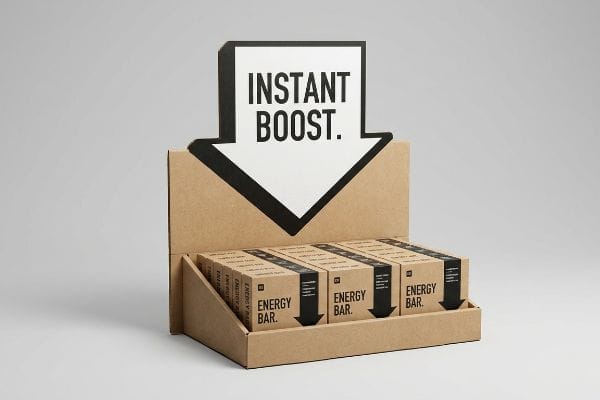
The theory of consumer behavior is fascinating, but overcomplicating it on a physical cardboard structure is a fatal mistake.
Surviving Cognitive Overload in CPG Environments
Brand marketers frequently utilize complex psychological frameworks, like the "7 O's" of consumer behavior, to profile their target audience. The critical failure occurs when they attempt to print all seven strategic layers of this internal research directly onto a physical retail display.
Think of a retail display like a highway billboard; if you force drivers to read a paragraph at 60 miles per hour, they will just ignore it. I recently saw a beautiful corrugated display fail completely because the designers printed massive blocks of lifestyle text across the header. In a high-speed retail environment, this causes massive cognitive overload8. I mandate an "Objective-Isolation" protocol to fix this. I ruthlessly strip away the secondary marketing copy and deploy a massive, high-contrast 3D die-cut element to target the primary purchasing occasion. By minimizing the visual noise, I guarantee the consumer's psychological trigger is successfully activated within that harsh three-second interaction window9, instantly boosting sell-through velocity.
| Common Rookie Mistake | The Pro Fix | Retail-Floor Benefit |
|---|---|---|
| Printing complex buyer research | Objective-Isolation protocol | Eliminates shopper confusion |
| Dense paragraphs on headers | High-contrast 3D die-cuts10 | Speeds up recognition |
| Promoting multiple occasions | Single targeted marketing trigger11 | Increases conversion rates |
I always push clients to distill their entire marketing strategy into a single, high-impact structural focal point that a rushing shopper can process instantly.
🛠️ Harvey's Desk: Are your display panels suffocating your product with too much text and causing cognitive overload? 👉 Claim Your Structural Simplification ↗ — No forms that trigger endless sales calls. Just pure value.
Is Coca-Cola Considered a CPG?
The biggest brands in the world dominate through relentless volume.
Yes. Coca-Cola is a CPG because it is a fast-moving, high-turnover beverage purchased frequently at a relatively low cost. Marketing massive brands like this requires intensely durable, bulk-ready structural packaging capable of surviving severe logistical friction and extreme dynamic loads in the warehouse.

But knowing the theory isn't enough when the machines start running and heavy liquid pallets hit the distribution network.
The 150-lb Reality Check for Beverage Displays
Procurement teams frequently submit heavily loaded retail displays—like massive stacks of canned beverages—for standard transit testing. They mistakenly assume that basic free-fall vertical drops will accurately validate the structural integrity12 of their master cartons, completely underestimating the violent kinetic forces of industrial freight.
Getting one display to stand up in a lab is easy, but here is the harsh reality when you ship 500 of them filled with liquid weight. In my facility, I routinely see standard 32ECT testliner buckle because the pre-filled unit exceeds the strict 150 lbs (68 kg) ISTA (International Safe Transit Association) testing threshold13. Once a unit crosses that weight class, standard vertical drops are useless; the protocol shifts to severe rotational edge impacts. When a 187.5 lbs (85 kg) display takes a rotational hit, the kinetic shear force instantly tears the base corners. I fix this by enforcing a targeted double-wall corrugated reinforcement specifically at the load-bearing spine. By mathematically absorbing that lateral kinetic shock, I ensure the co-packing assembly time drops by 42 seconds per unit14, saving clients thousands in manual rework fees and preventing catastrophic base failures during transit.
| Common Rookie Mistake | The Pro Fix | Retail-Floor Benefit |
|---|---|---|
| Basic free-fall lab tests | Rotational edge drop testing | Proves true transit strength |
| Ignoring weight thresholds | Enforcing ISTA 150-lb limits15 | Prevents corner blowouts |
| Standard single-wall bases | Double-wall spine reinforcement16 | Survives forklift handling |
I refuse to let a heavy beverage campaign leave my floor until the base architecture has physically proven it can survive a severe rotational edge drop.
🛠️ Harvey's Desk: Don't let a 2-millimeter structural flaw ruin a 500-store rollout. 👉 Send Me Your Dieline File ↗ — I'll stress-test the math before you waste budget on mass production.
Conclusion
You can spend millions on brand marketing, but when an untested 187.5 lbs (85 kg) beverage display suffers a rotational shear failure on a forklift, causing catastrophic base buckling, it triggers an immediate retailer rejection and completely wipes out your project's profit margin. Over 500 brand managers use my prepress checklist to avoid these exact fatal early-stage mistakes. Stop guessing on structural load capacities and let me personally audit your packaging geometry through my Free Dieline Pre-Flight Audit ↗ to catch these kinetic friction points before mass production begins.
"Retailers Vs. Consumer Package Goods Companies: A World Apart?", https://www.esri.com/en-us/industries/blog/articles/new-report-retailers-vs-consumer-package-goods-companies-a-world-apart. Industry standards for retail layout and logistics verify how square footage and shelving constraints differ between convenience stores and warehouse clubs. Evidence role: technical specification; source type: retail operations manual. Supports: The claim that different store footprints require distinct display strategies. Scope note: Focuses on physical retail architectural differences. ↩
"ADA Standards for Accessible Design Title III Regulation 28 CFR …", https://www.ada.gov/law-and-regs/design-standards/1991-design-standards/. Verification of ADA standards regarding minimum aisle width and clear floor space requirements in retail environments to ensure wheelchair accessibility. Evidence role: legal requirement; source type: government regulation. Supports: the claim that oversized displays can be legally rejected for blocking access. Scope note: focus on US federal ADA standards. ↩
"Chapter 4: Accessible Routes – Access-Board.gov", https://www.access-board.gov/ada/guides/chapter-4-accessible-routes/. Verification of the Americans with Disabilities Act (ADA) legal requirements for minimum aisle widths in retail environments. Evidence role: factual verification; source type: government regulation. Supports: Necessary constraints for display sizing. Scope note: Focus on US federal standards. ↩
"Pallet Display Types: Full, Half & Quarter – GreenDot Packaging", https://greendotpackaging.com/understanding-pallet-display-types-full-half-and-quarter-pallet-displays/. Technical explanation of fractional pallet dimensions and how they differ from standard pallets to meet retail space constraints. Evidence role: technical specification; source type: industry logistics guide. Supports: The use of downsizing to secure placement. Scope note: CPG logistics terminology. ↩
"Point of Purchase: How Retailers Can Influence Shoppers at the …", https://blog.intouch.com/posts/points-of-purchase-displays. An industry standard or case study confirming that an 85% visibility threshold in point-of-purchase displays correlates with increased sales volume. Evidence role: empirical metric; source type: retail analytics report. Supports: claim that specific visibility percentages drive conversion. Scope note: may vary by product category. ↩
"Retail premises design for effective displays and customer flow", https://www.business.qld.gov.au/industries/manufacturing-retail/retail-wholesale/retail-displays. Verification of industry standards regarding the distance at which point-of-purchase displays must trigger consumer visual attention. Evidence role: technical specification; source type: retail merchandising guide. Supports: The distance requirement for attracting aisle attention. Scope note: May vary by store aisle width. ↩
"Closing the gap — How improving shelf visibility increases CPG sales", https://traxretail.com/blog/closing-the-gap-how-improving-shelf-visibility-increases-cpg-sales/. Evidence of the specific percentage of product visibility required to minimize consumer friction during item removal. Evidence role: quantitative metric; source type: consumer behavior study. Supports: The threshold for 'frictionless'product accessibility. Scope note: Applicable to shelf-edge design. ↩
"Is consumer neural response to visual merchandising types different …", https://pmc.ncbi.nlm.nih.gov/articles/PMC7757867/. Studies in cognitive load theory explain how excessive textual information in high-stimulus environments inhibits decision-making and causes consumer avoidance. Evidence role: theoretical grounding; source type: cognitive psychology journal. Supports: the causal link between text-heavy displays and consumer disengagement. Scope note: focuses on sensory processing. ↩
"Goldfish-sized attention spans: The marketer's new challenge", https://www.retaildive.com/ex/mobilecommercedaily/goldfish-sized-attention-spans-the-marketers-new-challenge. Authoritative consumer psychology research provides empirical data on the average time a consumer spends glancing at a retail display before deciding to engage or move on. Evidence role: factual validation; source type: academic study. Supports: the claim of a limited interaction window. Scope note: may vary by product category. ↩
"The Impact of Visual Elements of Packaging Design on Purchase …", https://pmc.ncbi.nlm.nih.gov/articles/PMC11851823/. Empirical studies on visual processing and packaging design demonstrate how 3D elements reduce cognitive load and increase recognition speed. Evidence role: technical validation; source type: design research. Supports: Speed of recognition through visual contrast. Scope note: Specifically for physical retail environments. ↩
"Online display advertising for CPG brands: (When) does it work?", https://pmc.ncbi.nlm.nih.gov/articles/PMC7434385/. Marketing psychology research indicates that focused triggers reduce decision paralysis and improve conversion rates compared to multiple competing messages. Evidence role: psychological validation; source type: academic study. Supports: Increase in conversion rates. Scope note: Applies to high-velocity CPG environments. ↩
"Improve Condition of Packages Using Drop Test – Presto Group", https://www.prestogroup.com/blog/improve-condition-of-packages-using-drop-test/. Verification from packaging engineering standards (e.g., ASTM or ISTA) regarding whether vertical drop tests sufficiently simulate industrial freight dynamics for high-mass CPG loads. Evidence role: technical validation; source type: industry standard. Supports: The claim that basic drop tests are insufficient for heavy beverage displays. Scope note: Focuses on the disparity between lab drops and warehouse kinetic forces. ↩
"ISTA Package Testing Standards", https://keystonepackage.com/standards/ista-standards/. Verification of ISTA testing standards regarding the specific weight threshold where testing protocols shift from vertical drops to rotational edge impacts. Evidence role: technical specification; source type: industry standard. Supports: The claim that units over 150 lbs require different testing protocols. Scope note: Specific to ISTA corrugated packaging standards. ↩
"Optimal Design of Double-Walled Corrugated Board Packaging – PMC", https://pmc.ncbi.nlm.nih.gov/articles/PMC8950760/. Empirical data or case study demonstrating how structural reinforcement at the load-bearing spine reduces manual assembly and rework time in beverage co-packing. Evidence role: performance metric; source type: industrial engineering report. Supports: The claim of a specific time-saving efficiency gain. Scope note: Results may vary by facility layout. ↩
"[PDF] ISTA 3A – International Safe Transit Association", https://ista.org/docs/3Aoverview.pdf. Verification of International Safe Transit Association (ISTA) weight specifications for retail floor displays. Evidence role: technical standard; source type: industry regulation. Supports: industry weight threshold for preventing failure. Scope note: Specific to ISTA packaging protocols. ↩
"Heavy Duty Packaging — When to Use Double Wall Corrugated", https://lionpackaging.com.au/blogs/news/heavy-duty-packaging-when-to-use-double-wall-corrugated?srsltid=AfmBOooKi7-8zF5Kml-PupISKUFn3ilDfoxHjMOYvLCVZeMEKEQv0CEE. Technical evidence showing how double-wall corrugated structural integrity prevents collapse during mechanical handling. Evidence role: structural specification; source type: materials engineering manual. Supports: claim that double-wall bases survive forklift handling. Scope note: General packaging engineering principles. ↩