You pour premium waxes and curate complex fragrance profiles, but when your dark aesthetic hits the retail shelf, does the box look like a dusty, scratched afterthought?
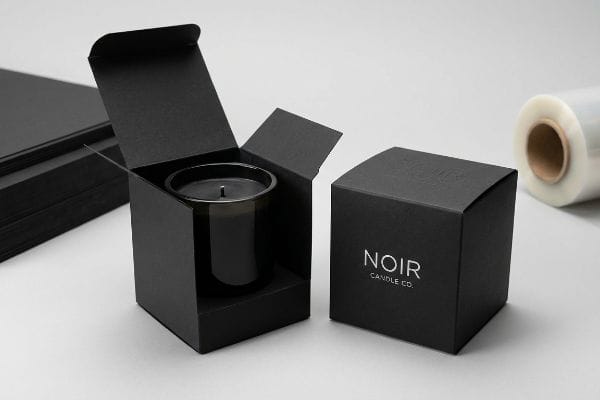
A black candle packaging is a specialized secondary container engineered to protect heavy glass jars while utilizing dark, high-contrast visual merchandising to communicate premium brand equity. It strictly requires solvent-resistant adhesives, anti-scuff laminations, and dynamic structural clearance to survive harsh multi-axis supply chain transit.
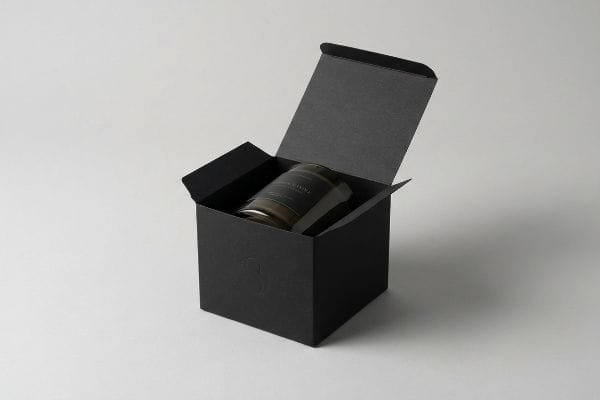
Mastering the structural physics behind these dark folding cartons is what separates a luxury unboxing experience from a logistical disaster.
What Does the Black Candle Stand For?
A dark palette usually signals luxury, mystery, or premium masculine grooming lines to the passing consumer.
The black candle stands for a high-end positioning strategy that triggers immediate visual disruption in crowded retail aisles. This aesthetic relies on specific psychological cues, utilizing matte finishes and minimalist spot colors to convey exclusivity, superior fragrance concentration, and premium pricing tiers.
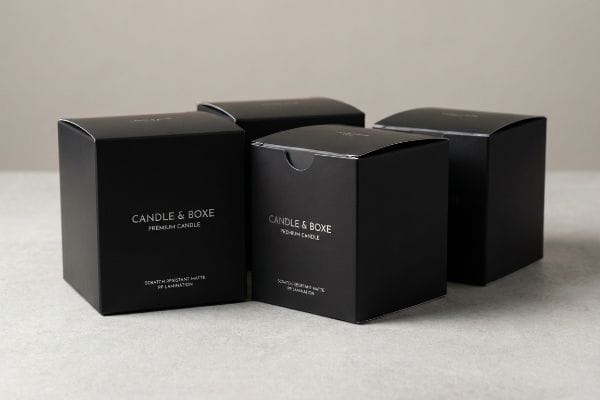
But capturing that premium psychological trigger requires more than just picking a dark swatch on your computer monitor.
The Anti-Scuff Reality Behind Dark Packaging
Junior graphic designers love flooding digital dielines with heavy black backgrounds to create a sleek, minimalist vibe. They assume that standard gloss or basic matte varnishes used on white folding cartons will seamlessly translate to a deeply saturated dark substrate1.
That assumption completely shatters the minute these boxes hit the physical supply chain. I remember watching a store clerk sliding standard matte black cartons onto a metal display shelf. Every time the paperboard scraped against the metal or an adjacent box, I heard the chalky, abrasive sound of raw paperboard friction, which instantly left a massive white streak across the front facing. The thin varnish couldn't handle the abrasive reality of retail handling, immediately downgrading a luxury item into damaged goods. To fix this common trap, I mandate upgrading the finish to a scratch-resistant matte PP (Polypropylene) lamination2, which acts as a protective shield over the dark ink bed.
| Common Rookie Mistake | The Pro Fix | Retail-Floor Benefit |
|---|---|---|
| Using standard liquid matte varnish on black ink | Applying scratch-resistant matte PP lamination3 | Eliminates chalky friction streaks |
| Ignoring surface friction during shipping | Engineering nested offset clearances4 | Stops primary boxes from scuffing |
| Assuming screen colors match raw paper | Using spot color floods over CMYK5 (Cyan, Magenta, Yellow, Key/Black) | Maintains deep black visual density |
I never let a heavily saturated dark carton enter mass production without a physical scuff test. Protecting your ink layer directly protects your brand equity and prevents costly retailer chargebacks for visually damaged merchandise.
🛠️ Harvey's Desk: Not sure if your dark packaging will survive the warehouse friction? 👉 Request a Scuff-Test Sample ↗ — Direct access to my desk. Zero automated sales spam, I promise.
How to Do Candle Packaging?
Designing a folding carton for heavy glassware requires structural empathy for the fragile payload inside.
Doing candle packaging requires engineering a precise suspension void and deploying solvent-resistant chemical adhesives. Because heavy glass jars generate kinetic drop-shock and organic fragrance oils act as active chemical solvents, the secondary carton must mathematically isolate the payload while utilizing specialized closures to prevent bottom-flap failure.
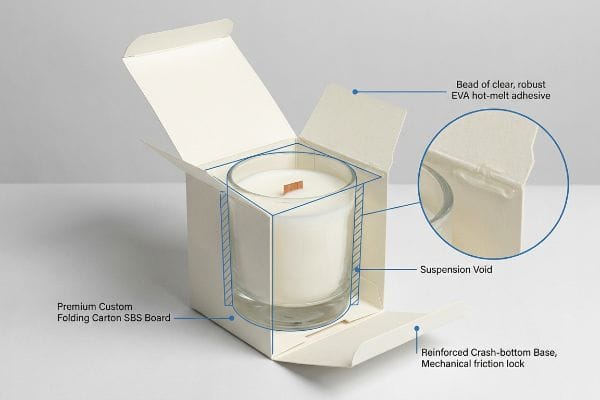
Hitting print on a beautiful design is pointless if the bottom falls out before the customer reaches their car.
The Hidden Chemistry of Fragrance Migration
Most emerging brands focus strictly on the thickness of the SBS (Solid Bleached Sulfate) board6 to support the weight of a heavy 16 oz (0.45 kg) glass jar. They rely on standard water-based adhesives for the bottom closure7, assuming a thick paperboard guarantees structural safety.
I see this trap catch even experienced procurement teams because they ignore the volatile chemistry of the product itself. Essential oils and synthetic fragrances are highly active chemical solvents8. In warm logistics environments, I have watched these fragrance oils outgas and migrate directly into the porous paper fibers, aggressively dissolving standard water-based PVA (Polyvinyl Acetate) adhesives. The adhesive turns into a messy, gummy paste on the assembly floor. When a store clerk lifts the box by the top, the heavy glass jar immediately blows through the weakened bottom flaps and shatters on the floor. To stop this, I mandate upgrading all closures to specialized EVA (Ethylene-Vinyl Acetate) hot-melt adhesives, which are chemically impervious to organic solvent migration9, alongside a mechanical crash-bottom friction lock.
| Common Rookie Mistake | The Pro Fix | Retail-Floor Benefit |
|---|---|---|
| Using standard water-based PVA glue | Upgrading to EVA hot-melt adhesives10 | Survives active fragrance solvent outgassing |
| Relying strictly on glue for heavy glass | Engineering a crash-bottom friction lock11 | Prevents heavy jars from dropping out |
| Wrapping the glass tightly without gaps | Adding an internal suspension void12 | Absorbs transit drop-shock |
I always check the chemical composition of a product before specifying an adhesive matrix. Engineering a mechanical safety net saves you from catastrophic cleanup operations in the middle of a crowded store aisle.
🛠️ Harvey's Desk: Are your essential oils slowly eating through your packaging adhesives in transit? 👉 Get a Chemical Adhesion Audit ↗ — Download safely. My inbox is open if you have questions later.
What Is a Black Candle Stock?
Not all paperboards absorb ink identically, and choosing the wrong raw material turns a crisp black into a muddy gray.
A black candle stock is a specific grade of paperboard chosen to maximize the optical density and smooth application of dark pigments. To achieve a flawless solid black, manufacturers often bypass standard unsealed corrugated testliner, utilizing premium coated top-sheets or solid dyed-through core boards to eliminate halftone grain.
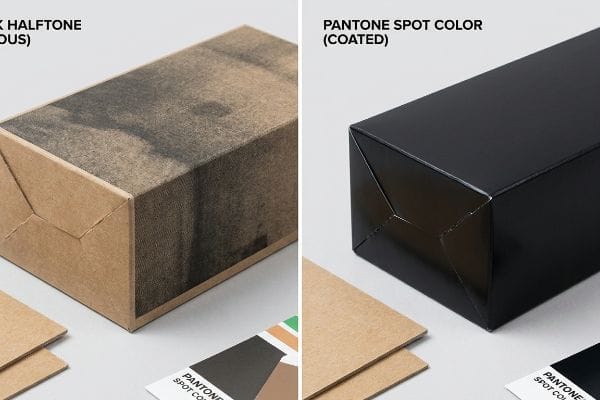
The raw substrate you select directly dictates the physical limits of your printing machinery.
The CMYK Halftone Mud Trap
Brand teams frequently convert their sleek black artwork into a standard four-color process format13, assuming the digital black on their screen will perfectly transfer to a physical paperboard stock.
The physical reality of printing dark floods is much less forgiving, much like trying to paint a porous sponge. When standard four-color printing relies on tiny overlapping halftone dots14 on unsealed stock, the ink absorbs unevenly into the paper fibers. I regularly see these optical blends fail mechanically on the press, resulting in a grainy, washed-out, and muddy black when viewed under harsh fluorescent retail lighting. It completely destroys the luxury aesthetic. To fix this, I enforce a spot color flood protocol, replacing the optical dot blending with a single, precisely mixed Pantone spot color ink15. This creates a dense, perfectly smooth flood of pigment that feels thick and premium to the touch.
| Common Rookie Mistake | The Pro Fix | Retail-Floor Benefit |
|---|---|---|
| Using CMYK dot blending for black floods | Mandating a solid Pantone spot color16 | Delivers a dense, high-contrast aesthetic |
| Printing dark inks on raw, porous board | Utilizing a sealed, coated top-sheet17 | Prevents muddy, washed-out graphic fading |
| Ignoring retail fluorescent lighting | Testing draw-downs under D50 lamps18 | Guarantees color accuracy on the shelf |
I refuse to run a heavy black graphic on an unsealed board without a dedicated spot color plate. Isolating your dark flood guarantees a flawless finish that screams premium quality from twenty feet away.
🛠️ Harvey's Desk: Is your dark packaging looking grainy and washed out under store lights? 👉 Claim a Free Prepress Color Review ↗ — No forms that trigger endless sales calls. Just pure value.
What Are the Legal Requirements for Candle Boxes?
A beautiful box is useless if it violates the strict logistics and safety mandates required by major big-box retailers.
The legal requirements for candle boxes dictate that all secondary packaging must display legible safety warnings, clear fire hazard iconography, and perfectly scannable logistics barcodes. Furthermore, these folding cartons must often comply with specific material traceability audits and ensure mandatory compliance text remains unobstructed.
But knowing the compliance theory isn't enough when the automated sorting machines start running on the warehouse floor.
Why Standard Logistics Barcodes Fail on the Factory Floor
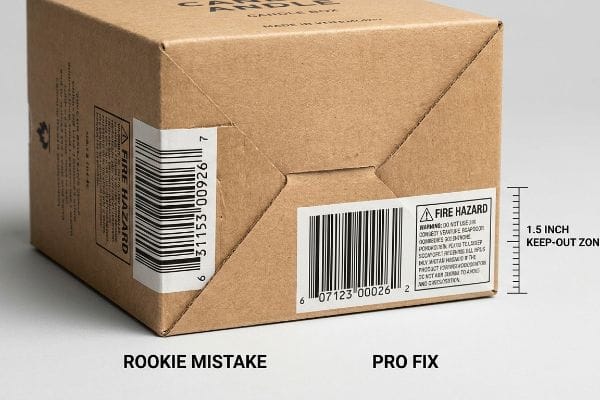
Graphic designers routinely treat mandatory compliance labels and logistics barcodes as an afterthought, simply dropping the UCC-128 code onto the bottom flap of the master carton19 dieline wherever it fits visually.
This isn't just theory—I see this happen on the testing floor when high-speed automated scanners try to read poorly placed data. In my facility, I routinely see designers place these critical barcodes too close to the structural score lines. Because thick corrugated board consumes up to 0.12 inches (3.04 mm)20 of material when folded 90 degrees, the outer paper liner physically stretches. This stretching motion causes the printed barcode to warp or wrap entirely around the edge radius. When these cartons hit a 3PL (Third-Party Logistics) automated sorting conveyor, the optical scanners fail to read the distorted lines. This instantly halts receiving operations, slowing down the logistics flow by an estimated 20% and triggering expensive manual rework fees. I pull the micrometer readings and mathematically lock all critical barcodes exactly 1.5 inches (38.1 mm)21 away from any structural fold, ensuring a flat, perfectly scannable surface.
| Common Rookie Mistake | The Pro Fix | Retail-Floor Benefit |
|---|---|---|
| Placing barcodes near structural folds | Enforcing a 1.5-inch keep-out zone22 | Ensures automated scanner read rates |
| Ignoring paper caliper fold stretch | Applying mathematical bend allowances23 | Prevents printed text from wrapping edges |
| Hiding warning text on base flaps | Moving safety icons to clear flat panels24 | Avoids compliance rejections at receiving |
I track every millimeter of board stretch because a beautifully printed folding carton means absolutely nothing if the retailer's optical scanner cannot legally log it into their inventory system.
🛠️ Harvey's Desk: Are your compliance barcodes accidentally stretching around the fold radius? 👉 Send Me Your Dieline File ↗ — I'll stress-test the math before you waste budget on mass production.
Conclusion
You can choose an inexperienced vendor to save a few pennies, but when volatile fragrance oils dissolve your standard water-based adhesives during summer freight transit, heavy glass jars will blow through the bottom flaps and trigger a catastrophic, store-wide retail rejection. Over 500 brand managers use my prepress checklist to avoid these exact fatal early-stage mistakes. Stop guessing on chemical compatibilities and let me personally audit your structural files through my Free Dieline Pre-Flight Audit ↗ to catch these invisible failures before you pay for mass production.
"What coatings work best for folding carton packaging?", https://popdisplay.me/what-coatings-work-best-for-folding-carton-packaging/. Technical printing guides explain why standard gloss or matte varnishes behave differently on dark, high-pigment substrates compared to white, often requiring specialized anti-scuff alternatives to prevent abrasion. Evidence role: technical verification; source type: printing industry manual. Supports: the claim that standard finishes are inadequate for dark packaging. Scope note: focuses on ink saturation and abrasion resistance in offset and digital printing. ↩
"What Laminate Should You Use to Protect Packaging?", https://completepackaginggroup.com/packaging-solutions/what-laminate-should-i-use-to-protect-my-packaging/. Verification of the technical superiority of Polypropylene lamination over traditional varnish for preventing abrasions on dark-pigmented packaging. Evidence role: technical validation; source type: packaging material specification guide. Supports: the use of PP lamination as a protective shield. Scope note: effectiveness varies by lamination thickness. ↩
"Matte Film vs Matte Varnish on Plastic Packaging", https://www.cloudflexfilm.com/matte-film-vs-matte-varnish-a-packaging-guide/. Technical comparison of polypropylene lamination versus matte varnish for abrasion resistance on dark inks. Evidence role: technical validation; source type: packaging industry guide. Supports: efficacy of PP lamination in preventing friction streaks. Scope note: applicable to luxury cardboard packaging. ↩
"How to Avoid Packaging Scuffs from Antiblocking Agents", https://ppcflex.com/blog/how-to-avoid-packaging-scuffs-from-antiblocking-agents/. Explanation of structural clearances in nested packaging to mitigate surface-to-surface friction during shipping. Evidence role: engineering specification; source type: structural packaging manual. Supports: prevention of primary box scuffing. Scope note: focuses on physical design. ↩
"Standard Black vs Rich Black | Mixam", https://mixam.com/support/standardvsrichblack. Comparison of spot color density versus CMYK process for achieving rich black tones in commercial printing. Evidence role: color theory verification; source type: printing industry standard. Supports: maintenance of deep black visual density. Scope note: refers to professional offset printing. ↩
"SBS vs SUS Paperboard", https://unicopacking.com/en/new/sbs-vs-sus-paperboard.html. Technical validation of SBS board structural properties and its common application in high-end candle packaging. Evidence role: technical specification; source type: material science manual. Supports: the use of SBS for heavy payloads. Scope note: focuses on board grade vs weight. ↩
"Adhesives and Sealants in Packaging: Functional Roles … – PMC", https://pmc.ncbi.nlm.nih.gov/articles/PMC13258176/. Verification of the industry standard for carton adhesives and their vulnerability to degradation by organic solvents. Evidence role: chemical vulnerability; source type: adhesive technical data sheet. Supports: the claim that standard adhesives are used despite potential solvent failure. Scope note: focuses on fragrance oil interaction. ↩
"Essential Oils as Natural Sources of Fragrance Compounds …", https://pmc.ncbi.nlm.nih.gov/articles/PMC7865210/. Technical data confirming the chemical solvency of fragrance oils and essential oils. Evidence role: factual verification; source type: chemical property database. Supports: the premise that fragrances can dissolve adhesives. Scope note: organic chemistry. ↩
"EVA & PO Hot Melt Adhesive | Our Technologies", https://www.bostik.com/us/en_US/our-adhesive-technologies/hot-melt-adhesives-hmeva/. Material science data comparing the solvent resistance of EVA hot-melts against water-based PVA adhesives. Evidence role: technical validation; source type: industrial adhesive manual. Supports: the efficacy of EVA as a solvent-resistant closure. Scope note: industrial packaging adhesives. ↩
"Packaging Hot Melt Adhesives – TEX YEAR", https://www.hot-melt-glue.com/en/application.php?act=intro&cid=1. Explanation of how ethylene-vinyl acetate (EVA) adhesives resist degradation from aromatic solvents and essential oils compared to water-based glues. Evidence role: technical validation; source type: chemical adhesive specification; Supports: material selection for fragrance outgassing; Scope note: specific to aromatic chemical interactions. ↩
"Auto Bottom Boxes (Crash-Lock) Made Easy", https://pmpackaging.com/product-catalog/boxes-and-cartons/auto-bottom-boxes. Detailed mechanical explanation of how crash-lock bottom designs distribute the weight of heavy glass payloads to prevent base failure. Evidence role: structural verification; source type: packaging engineering guide; Supports: prevention of payload drop-out; Scope note: applicable to corrugated and folding carton substrates. ↩
"Why use Suspension Packaging for your Products | Void Fillers", https://www.streampeakgroup.com/why-use-suspension-packaging-for-your-products/. Technical analysis of how controlled air gaps and suspension zones reduce the peak acceleration (G-force) during transit impact. Evidence role: physics validation; source type: packaging logistics study; Supports: fragile payload protection; Scope note: focuses on shock attenuation. ↩
"Color Reproduction for Printing | New Mexico State University", https://brand.nmsu.edu/color-reproduction-for-printing/index.html. Authoritative printing guides detail the composition of the CMYK process and how combining four inks to create black differs from using a single black pigment. Evidence role: technical definition; source type: industry standard. Supports: the mechanics of four-color printing. Scope note: applicable to offset and digital printing. ↩
"Halochromic Inks Applied on Cardboard for Food Spoilage …", https://pmc.ncbi.nlm.nih.gov/articles/PMC9502810/. Technical explanation of how process color printing uses halftone dots and the resulting impact of ink absorption on unsealed substrates. Evidence role: Technical foundation; source type: Printing industry manual. Supports: The mechanical cause of uneven ink absorption. Scope note: Specific to CMYK process printing. ↩
"Spot color vs Process Color Printing", https://www.pantone.com/na/en-us/articles/technical/spot-vs-process-color?srsltid=AfmBOooO80R4oJVjPPwy_5osu53JhYQnrX8MzU5yhZpJXzm4-dfVpPPH. Comparative analysis of spot colors versus process black for achieving high optical density and surface smoothness. Evidence role: Technical solution; source type: Color management guide. Supports: The effectiveness of spot colors for dense floods. Scope note: Focuses on high-end print aesthetics. ↩
"Spot vs. CMYK Colors | Print and Mail Services | Nebraska", https://printing.unl.edu/spot-vs-cmyk-colors/. Technical verification that spot colors provide higher optical density and saturation for large black areas compared to CMYK process blends. Evidence role: technical specification; source type: printing industry manual. Supports: higher contrast aesthetic for black floods. Scope note: Focuses on offset and digital print processes. ↩
"Coated vs. Uncoated Paper: Ink Absorption & Color Guide", https://www.ybj-printing.com/coated-vs-uncoated-paper-ink-absorption-color-guide/. Technical explanation of how coated surfaces prevent ink penetration and 'sinking'into porous substrates to maintain color vibrancy. Evidence role: material property; source type: paper manufacturing specification. Supports: prevention of muddy, washed-out graphics. Scope note: Specifically for porous paperboard. ↩
"Color Chaos at the Light Booth: Why D50 Is Your …", https://www.linkedin.com/pulse/color-chaos-light-booth-why-d50-your-packaging-carmon-madison-6bb4e. Verification that D50 (5000K) is the international standard illuminant for color matching and proofing in the graphic arts industry. Evidence role: industry standard; source type: ISO/ANSI standard. Supports: guarantee of color accuracy on retail shelves. Scope note: Applicable to print proofing workflows. ↩
"What is a GS1-128 barcode? | GS1 …", https://www.gs1us.org/upcs-barcodes-prefixes/gs1-128. Confirmation of UCC-128 (now GS1-128) industry standards for logistics barcodes on shipping containers. Evidence role: technical specification; source type: industry standard. Supports: the use of specific barcode formats for master carton logistics. Scope note: focuses on GS1 global standards. ↩
"Analytical Determination of the Bending Stiffness of a Five …", https://pmc.ncbi.nlm.nih.gov/articles/PMC8777652/. Technical specification of corrugated board fold allowance to verify material consumption measurements. Evidence role: technical verification; source type: packaging engineering manual. Supports: physical cause of barcode warping. Scope note: applies to specific corrugated board grades. ↩
"How to Print Scannable Barcodes on Corrugated Packaging – Keyence", https://www.keyence.com/products/marker/inkjet-printers/resources/inkjet-printer-resources/how-to-print-scannable-barcodes-on-corrugated-packaging.jsp. Industry standard for barcode placement on folding cartons to avoid distortion. Evidence role: best practice validation; source type: GS1 or logistics packaging guidelines. Supports: optimal placement for automated scanning. Scope note: may vary by barcode type. ↩
"Product Packaging GS1-Compliant Barcodes", https://bar-code.com/choosing-the-right-packaging-for-gs1-compliant-barcodes/?srsltid=AfmBOooAGDjjbfYG7I00EvnKoYO8mdPtivYkSKpgoy13flB81ir5qees. Verification of industry-standard quiet zone and keep-out distance requirements for automated barcode scanners. Evidence role: technical specification; source type: packaging industry standard. Supports: the specific 1.5-inch buffer requirement for read rates. Scope note: May vary depending on the specific barcode symbology used. ↩
"Sheet Metal Bend Allowance Calculator", https://www.firgelliauto.com/blogs/engineering-calculators/sheet-metal-bend-allowance-calculator?srsltid=AfmBOooj0tt8rJtM2nO49Y1O_SHaN4pDowE8v59rshSt3Olf7A3N80kx. Confirmation of the engineering formulas used to calculate material stretch and compression during paper folding to ensure print alignment. Evidence role: technical methodology; source type: structural packaging manual. Supports: the use of bend allowances to prevent text wrap. Scope note: Calculations depend on paper caliper/thickness. ↩
"The Essential Guide to Candle Label Requirements – CandleScience", https://www.candlescience.com/the-essential-guide-to-candle-label-requirements/?srsltid=AfmBOoobldTU_mJRC6vvd7fHJ9XIZ3_a0ch-qtpTdzq2V5byk_bcXQ7u. Verification of regulatory mandates (such as ASTM or CPSC) regarding the visibility and placement of safety warnings on consumer products. Evidence role: regulatory compliance; source type: government safety standard. Supports: the requirement for warnings to be on visible flat panels to avoid rejection. Scope note: Specific to hazard communication laws. ↩