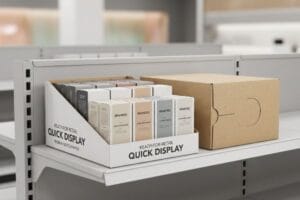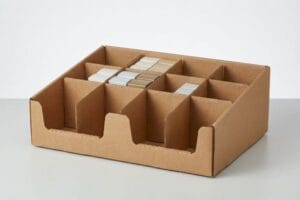
複雑な小売店展開に苦労し、店員を疲弊させ、製品発売を遅らせていませんか?時代遅れで手間のかかるパッケージング方法に頼っているせいで、貴重な販促時間を無駄にしている可能性があります。.
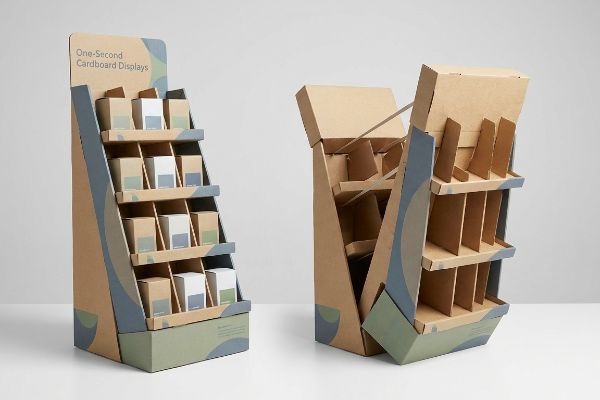
ワンセカンド段ボールディスプレイは、小売店での即時組み立てを目的とした、高度な技術を駆使した商品陳列什器です。これらの特殊な構造は、あらかじめ接着された機構とダイナミックなゴムバンドを利用することで、複雑な手作業による折り畳み作業を不要にし、ブランド各社が迅速な店舗展開を実現すると同時に、高額な店内商品陳列作業や運用上の摩擦を大幅に削減します。.
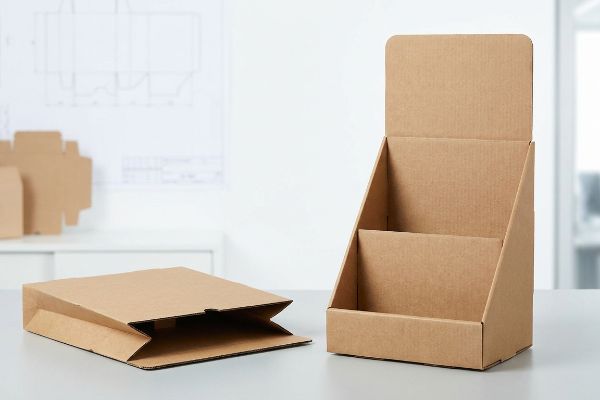
これらの自動組み立てシステムへの移行は、小売戦略を根本から変えるものです。これらのシームレスなユニットが実際に店頭で機能するための構造上のルールについてご説明しましょう。.
段ボール製のディスプレイは何と呼ばれますか?
次の大規模な小売キャンペーンを発注しようとする際に、ベンダーの専門用語につまずいてばかりいませんか?
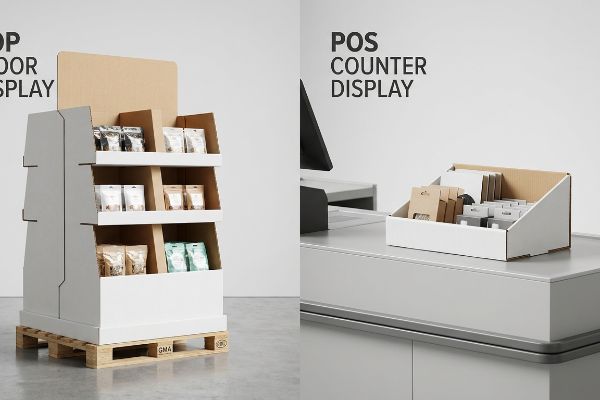
段ボール製の陳列什器は、設置場所によってPOP(Point of Purchase:購入時点)またはPOS(Point of Sale:販売時点)と呼ばれる。これらの仮設の段ボール製什器には、床置き棚、エンドキャップ、カウンター用トレイなどがあり、人通りの多い商業通路で視覚的なインパクトを最大限に高め、衝動買いを促すように設計されている。.
基本的な用語を知っておくことは良い出発点です。しかし、これらの異なる小売ゾーン間の物理的な境界線を曖昧にしてしまうと、ほとんどのキャンペーンは失敗に終わります。.
小売業界の専門用語を解読:POPとPOSの段ボール製ディスプレイの違い
ブランドマネージャーはPOPとPOSという言葉を聞くと、多くの場合、これらは全く同じ物理的な箱を指す単なるマーケティング用語だと考えがちです。よくある初心者のやり方は、巨大な48×40インチ(1219×1016 mm)のPOP フロアディスプレイ、工場に全く同じ構造ファイルを50%縮小してPOSカウンターのトレイとして使用するように依頼することです。彼らは物理的な小売形状を、サイズ変更可能なデジタル画像のように扱います。
この縮小してフィットさせる考え方は、米国の小売環境におけるこれら 2 つの別々のゾーンを規定する厳格な法的および物流上の規則を無視しています。POP フロア マーチャンダイザーは 厳格な GMA パレット寸法1 が、POS カウンター ユニットは、ADA 前方到達準拠ウィンドウに厳密に拘束されます。最近、店長が、前面の縁が高すぎるために縮小された カウンター ディスプレイ その結果、通過するショッピング カートが常に大きすぎるベースに接触し、イライラする大きな擦過音がしました。これを解決するために、エンジニアリング パイプラインを恒久的に分離します。POP ファイルは重量のある物流パレットに固定され、POS ファイルは 15 ~ 48 インチ (381 ~ 1219 mm) の ADA 準拠ウィンドウ2。
| 初心者によくある間違い | プロフィックス | 小売店舗におけるメリット |
|---|---|---|
| カウンターでの使用に適した小型フロアディスプレイ | ADAとGMAのエンジニアリングパイプラインは別々に運用する。3 | 小売店のチャージバックを防止します4 |
| 前方到達限界を無視する | POSを15~48インチ(381~1219mm)の窓に固定する5 | 登録レベルのコンプライアンスを確保します |
| POPとPOSを同義語として扱う | 各ゾーンごとに特定の形状を設計する | 衝動買いを促す視認性を最大限に高める |
私はクライアントにレジカウンター用のフロアディスプレイの計算式を再利用させることは決してありません。ダイラインを分割することで、コストのかかる手作業による再作業なしに、厳しい 小売業者のコンプライアンス 監査を確実に通過できます。
🛠️ ハーベイのデスク: カウンターのディスプレイが、知らず知らずのうちにADA(アメリカ障害者法)のリーチ制限に違反していませんか? 👉 空間コンプライアンスチェックを受ける ↗ — 私のデスクに直接アクセスできます。自動販売スパムは一切ありませんのでご安心ください。
段ボールでショーケースを作る方法
せっかく美しく仕上げた3Dモックアップが、実際に組み立てようとすると、しわくちゃで傾いたぐちゃぐちゃな状態に変わってしまうのはなぜだろう、とお悩みではありませんか?
段ボール製のショーケースの製作には、単純なグラフィックデザインではなく、精密な構造設計が求められます。製造工程では、平面の型抜き線を幾何学的モデルにマッピングし、特定の曲げ代を適用し、自動化されたCNC(コンピュータ数値制御)切断テーブルを使用して、高い耐久性と店舗でのスムーズな組み立てを保証します。.
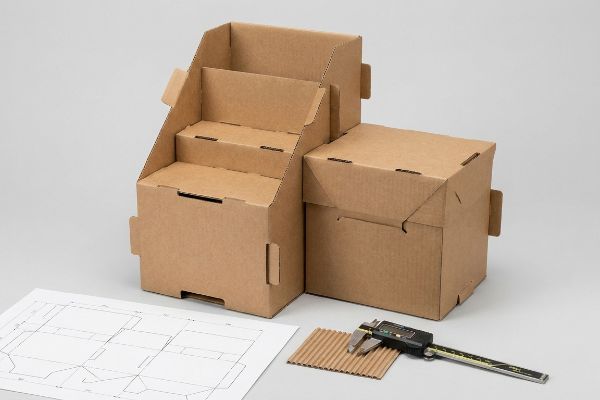
素晴らしいグラフィックレイアウトを作成したとしても、平面のアートを荷重を支える物理的な展示物にするには、高度な数学的補正が必要となる。.
ショーケース組立におけるキャリパー補正方程式
一般的な手順としては、グラフィックデザイナー6 Illustratorで箱の形状を描き、アートワークを適用し、フラットファイルを印刷業者に送るという流れになります。しかし、購入者からは、基本的な2Dベクター線を使って箱の折り目の位置を指定できるかどうかという問い合わせがよくあります。彼らは、画面上のタブの幅が2インチであれば、受け口の幅も正確に2インチであるべきだと考えているのです。
これは段ボールの物理的な厚みを完全に無視しています。厚い本を閉じようとすることを考えてみてください。背表紙がページを包み込むには余分なスペースが必要です。クライアントが調整されていないダイラインを提出すると、共同包装業者が苦労することになるのはわかっています。私は、大きすぎるタブを小さすぎるスロットに無理やり押し込もうとして、補正されていないEフルートの硬い抵抗に続いて、生の紙板の鈍い破れる音を事務員が経験するのを見てきました。私の経験則は、常にパラメトリックCADソフトウェアを使用して、すべての折り目に「キャリパー補正」を自動的に挿入することです。特定の 0.06インチ(1.5 mm)または0.12インチ(3.0 mm)のボードの厚さ7、ショーケースは梱包ライン上でほぼ自動的に組み立てられます。
| 初心者によくある間違い | プロフィックス | 小売店舗におけるメリット |
|---|---|---|
| 1:1のタブ比率でスロットを描画 | 曲げ代アルゴリズムの適用8 | タブの摩擦を解消 |
| 材料の厚さを無視する | フルートゲージに基づいてスロット幅を調整する9 | グラフィックトップシートの破れを防ぎます |
| 基本的な2D描画ソフトウェアを使用する | パラメトリック3D CADのエンジニアリングファイル | ユニットあたり約25秒の組み立て時間を節約できます。10 |
私は常に、正確な曲げ代を追加するために、Illustratorの平面ファイルを再構築します。数学的なクリアランス設定こそが、ブランドが透明な梱包テープでかろうじて繋ぎ合わされているような事態を防ぐ唯一の方法です。.
🛠️ ハーベイのデスク: 白いサンプルを組み立てる際に、ロックタブが危険なほどきつく感じますか? 👉 キャリパー許容値レビューを依頼する ↗ — 安全にダウンロードしてください。後で質問があれば、いつでもご連絡ください。
段ボールの5つの特性とは?
複数の業者から見積もりを取り寄せて比較しようとしているけれど、仕様書に書かれた専門用語に全くついていけず困っていませんか?
段ボールの一般的な特性は、厚さ、フルート形状、耐圧性、耐湿性、引張強度の5つです。これらの具体的な物理的特性を理解することで、複雑なサプライチェーン輸送中に発生する膨大な動的パレット荷重や厳しい大気条件下で、紙繊維がどのように機能するかを正確に把握できます。.
これら5つの特性を知っておくことは役立ちますが、輸送中にそれらがどのように動的に変化するかを考慮しないと、キャンペーンは失敗に終わります。.
環境物理学の習得:水分膨潤耐性
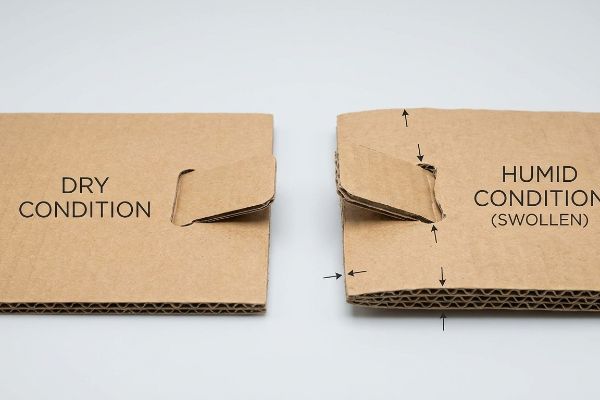
ほとんどの調達チームは、 ECT(エッジクラッシュテスト)評価32 の基板が空調の効いたオフィスと湿度の高い海外輸送コンテナ内で同じように動作するという前提で設計を承認します。彼らは紙基材を、決して形状が変わらない不活性なプラスチック片のように扱います。
段ボールは、まさに乾いたスポンジのように振る舞います。きつく折り畳まれたスロットは、乾燥した試験室では完璧にフィットするかもしれませんが、そのフラットパックがフロリダのような湿度の高い気候に出荷されると、 多孔質のテストライナーが周囲の湿気を吸収して物理的に膨張します12。私は倉庫の床を歩き、膨張したテストライナーの湿ったスポンジのような質感を感じ、組み立てチームが膨らんだタブをきついスロットに叩き込もうとして内部のフルートを潰しているのを見てきました。私の経験則は、印刷前にダイラインに直接厳密な湿度バッファを設計することです。すべての受け入れスロットに人工的に 0.04 インチ (1.0 mm) のクリアランス13 を 、紙の膨張を数学的に考慮し、倉庫の周囲の天候に関係なく摩擦のない組み立てを保証します。
| 初心者によくある間違い | プロフィックス | 小売店舗におけるメリット |
|---|---|---|
| 完全に乾燥したボード用のエンジニアリングスロット | 0.04インチ(1.0mm)の湿度緩衝材を追加する14 | スムーズな噛み合いを保証します |
| 地理的な水分変動を無視する | 最高湿度ゾーンの設計クリアランス | 構造的な溝の破損を防ぎます15 |
| 組み立てテストはドライラボでのみ実施してください。 | 膨張した基板の許容範囲を物理的にテストする16 | 高額な共同梱包の遅延を解消します |
大気中の水分量を考慮に入れずにダイラインを承認することは断固拒否します。環境物理現象に逆らうことはできませんが、数学的な緩衝材を用いてそれを完全に中和することは可能です。.
🛠️ ハーベイのデスク: ディスプレイは湿度の高い地域へ出荷されますか?それとも何週間も海上を航行しますか?👉 耐湿性監査を依頼する↗ — 延々と営業電話がかかってくるようなフォームはありません。純粋な価値だけを提供します。
段ボール製の映画用ディスプレイは何と呼ばれていますか?
次回の大型エンターテイメントイベントや製品発表会で、床から天井まで届くような、圧倒的な視覚的インパクトを生み出したいとお考えですか?
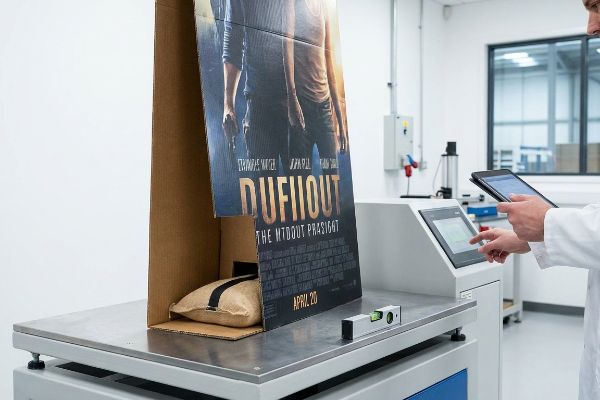
段ボール製の映画ディスプレイはスタンディーと呼ばれ、映画館のロビーなどに設置される大型の自立型販促物です。これらの巨大なディスプレイは、複雑な内部補強、特殊な構造的重み付け、そして精密な型抜きによるシルエットを必要とし、人通りの多い公共の場で高い物理的安定性を維持しながら、消費者の注目を集めます。.
しかし、理論を知っているだけでは、機械が実際に稼働し始めると十分ではない。標準的なディスプレイを人間の身長に合わせて拡大すると、危険な運動学的変数が生じる。.
標準的な映画用スタンディが工場で失敗する理由
経験豊富な調達チームでさえ、標準的な 床置きビンを 高さ60インチ(152.4cm)のスタンドにできると思い込んでいることが多い。彼らはアートワークを拡大し、高さを上げるが、通路スペースを節約するために、幅の狭い 24×20インチ(609×508mm)の1/4パレットのベース設置面積17を 。彼らは、原材料の 垂直方向の圧縮強度によって構造物が自然に直立すると18。
これは単なる理論ではなく、動的な重心移動を評価する際に、テスト現場で実際に起こる現象です。私の施設では、 小売業者が義務付けている傾斜プロトコル19。クライアントが小さな設置面積に高さ60インチ(152.4cm)のディスプレイを提出すると、それは消しゴムの上に立っている鉛筆とまったく同じように動作します。 標準的な15度の横方向傾斜テスト20、68.5ポンド(31.0kg)もの巨大なペイロードが中心からずれ、ユニット全体がリノリウムのテストフロアに激しく落下し、危険な音を立てるのを目撃しました。私はこれを修正するために、生産を直ちに停止し、ロックされた偽底を含むベース形状を再設計しました。マイクロメーターの測定値を取得し、物理的な砂袋アンカーを安全に収納する専用の内部空洞を組み込み、重心を転倒閾値以下に下げました。この安定した形状を徹底することで、転倒の危険性を完全に排除し、顧客が小売店から販売拒否されるという壊滅的な事態や、数千ドルに及ぶ可能性のある賠償責任罰金を回避できます。
| 初心者によくある間違い | プロフィックス | 小売店舗におけるメリット |
|---|---|---|
| ベースを拡張せずに高さをスケーリングする | 重心を機械的に下げる | 転倒の危険性を排除します |
| 安定性を空の波型ベースに頼る | 土嚢袋に隠された二重底を設ける工学的工夫 | 小売業者の厳しい傾斜テストに合格21 |
| 15度の傾斜要件を無視して22 | 最も重いSKUを最下層に配置する | 巨額の賠償金請求を防ぐ23 |
私は決して頭でっかちな構造物を製造現場から出荷しません。重心を適切なバラストで固定することこそ、人通りの多い小売店の通路で人々の安全を確保する唯一の方法です。.
🛠️ ハーベイのデスク: あなたの背の高い販促用スタンドは、ショッピングカートにぶつかると激しく揺れますか? 👉 ダイラインファイルを私に送ってください ↗ — 大量生産に予算を無駄にする前に、私が計算をストレステストします。
結論
理論的なデザインに賭けることもできますが、頭でっかちな映画スタンドが基本的な傾斜テストに合格せず、混雑した通路で倒れてしまった場合、小売店からのチャージバックや賠償責任問題によって、キャンペーンの利益は瞬時に消滅してしまいます。500人以上のブランドマネージャーが、こうした致命的な初期段階のミスを回避するために、私のプリプレスチェックリストを使用しています。物理的な展開を確実に成功させ、私の 高度な構造監査↗ 量産開始前に隠れた機械的欠陥を検出します。
「パレットディスプレイの種類:フル、ハーフ、クォーター – GreenDot Packaging」、 https://greendotpackaging.com/understanding-pallet-display-types-full-half-and-quarter-pallet-displays/。食料品製造業者協会(GMA)の標準パレット寸法が、倉庫効率のために小売フロアの陳列什器の設置面積をどのように決定するかについての簡単な説明。証拠の役割:技術仕様。情報源の種類:業界標準。裏付け:特定のパレットサイズを遵守する物流上の必要性。適用範囲に関する注記:主に北米のサプライチェーンに適用されます 。↩
「ADAアクセシブルデザイン基準タイトルIII規則28 CFR…」、 https://www.ada.gov/law-and-regs/design-standards/1991-design-standards/。公共空間における操作可能な部品および物体の到達範囲に関する米国障害者法(ADA)ガイドラインの簡単な説明。証拠の役割:法的要件。情報源の種類:政府規制。サポート:アクセシビリティを確保するためのPOSカウンターユニットの高さ制限。範囲に関する注記:前方到達高さ範囲を指します 。↩
「14種類の小売ディスプレイ | シカゴ、イリノイ州 – Wertheimer Box」、 https://wertheimerbox.com/types-of-retail-displays/。米国障害者法(ADA)および食料品製造業者協会(GMA)の基準が、小売ディスプレイの具体的な設計およびエンジニアリング要件をどのように規定しているかについての説明。証拠の役割:技術仕様。情報源の種類:規制/業界ガイドライン。サポート:明確な設計パイプラインの要件。適用範囲に関する注記:主に北米の小売業に適用可能 。↩
「契約包装のミスで小売業者のチャージバックが発生する理由とは?」、 https://www.industrialpackaging.com/blog/copacker-mistakes-retailer-chargebacks。小売店固有の陳列ガイドラインを遵守しなかった場合に、小売業者から罰金やチャージバックが課される仕組みに関する文書。証拠の役割:ビジネス慣行。情報源の種類:小売取引契約。裏付け:技術的遵守に対する金銭的動機。範囲に関する注記:特定のベンダーと小売業者の契約によって異なります 。↩
「第3章:操作可能な部分 – Access-Board.gov」、 https://www.access-board.gov/ada/guides/chapter-3-operable-parts/。販売時点情報管理(POS)ディスプレイ設置における、アクセス可能な前方到達距離に関する業界標準の測定の検証。証拠の役割:技術的指標、情報源の種類:アクセシビリティ標準。サポート:人間工学および法的到達距離ガイドラインへの準拠。範囲に関する注記:床面からの垂直高さを指します 。↩
「ダイラインとは何か?パッケージングと印刷のためのダイラインの作成方法」、 https://www.wecustomboxes.com/blog/what-is-a-dieline-how-to-make-it-for-packaging-and-printing/。権威ある外部情報源がこの主張をどのように裏付けているかについての簡単な説明。証拠の役割:プロセス検証。情報源の種類:業界マニュアル。裏付け:パッケージング生産の現在の設計基準。適用範囲に関する注記:一般的な商業用パッケージング業界 。↩
「段ボールと材料グレード – パッケージング戦略」、 https://www.packagingstrategies.com/articles/96269-corrugated-board-and-material-grades。特にディスプレイで使用される一般的なフルートタイプの段ボールキャリパーの業界標準測定値の検証。証拠の役割:技術仕様、情報源の種類:製造規格。サポート:板厚測定の精度。範囲に関する注記:正確な厚さは製造業者によって若干異なる場合があります 。↩
「5層構造の曲げ剛性の解析的決定…」、 https://pmc.ncbi.nlm.nih.gov/articles/PMC8777652/。折り畳み時の材料変形を計算することで、タブとスロットの組み立てにおける摩擦を低減する方法の説明。証拠の役割:技術仕様書。情報源の種類:包装工学マニュアル。サポート:タブの嵌合の最適化。適用範囲に関する注記:段ボールに特有 。↩
「段ボール箱究極ガイド – Shorr Packaging」、 https://www.shorr.com/resources/blog/ultimate-guide-corrugated-boxes/。段ボールのフルートタイプに応じたスロットのサイズ設定により、表面層への機械的ストレスが防止されることを検証。証拠の役割:材料科学、情報源の種類:包装業界標準。サポート:表面の裂け目の防止。適用範囲に関する注記:BやEなどの一般的なフルートサイズに適用可能 。↩
「設計および製図用2D CAD製図ソフトウェア – PTC」、 https://www.ptc.com/en/technologies/cad/2d-cad-software?srsltid=AfmBOoo43sQBHRibzEI0odZG4ALB56crzmsF8AC849s5ggvx91Vr1MqU。手動2D製図と比較してパラメトリックモデリングを使用した場合の組立エラーと作業時間の削減を定量化したデータ。証拠の役割:パフォーマンス指標。ソースタイプ:産業工学研究。サポート:3D CADの効率性。範囲に関する注記:平均的な商用組立ベンチマークに基づく 。↩
「全視野ひずみで強化された新しいエッジクラッシュテスト構成…」、 https://pmc.ncbi.nlm.nih.gov/articles/PMC8510352/。ASTMやTAPPIなどの団体の技術規格では、エッジクラッシュテストを段ボールの圧縮強度を測定するための標準的な方法として定義しています。証拠の役割:定義、情報源の種類:工業規格。裏付け:板材強度評価の技術的根拠。適用範囲に関する注記:垂直圧縮強度に特に適用されます 。↩
「湿度と温度が…の機械的特性に及ぼす影響」、 https://bioresources.cnr.ncsu.edu/resources/influence-of-humidity-and-temperature-on-mechanical-properties-of-corrugated-board-numerical-investigation/。紙ライナー中のセルロース繊維の吸湿性と、水分吸収が寸法不安定性につながる仕組みの説明。証拠の役割:基本特性、情報源の種類:材料科学ジャーナル。支持:湿度がテストライナーの物理的膨張を引き起こすという主張。適用範囲に関する注記:主に非コート紙に適用される 。↩
"[PDF] 段ボール仕様書 – ファイバーボックス協会", https://www.fibrebox.org/assets/2025/09/Walmart_Corrugated-Board_Specifications_Automation_Packaging_Standards.pdf。湿度の高い環境下での材料膨張を補正するための、包装ダイラインにおける推奨許容差調整の技術的検証。証拠の役割:技術仕様書、情報源の種類:包装工学ハンドブック。サポート:特定の0.04インチ/1.0 mmメートル法。範囲に関する注記:フルート形状とライナーグレードによって異なる場合があります 。↩
"[PDF] 段ボール包装材料の保管と取り扱い", https://www.fibrebox.org/assets/2025/07/B155_TR2-3_Storage_and_Handling_2018_Edition.pdf。段ボールスロット設計における湿度による膨張に対する業界標準許容値の検証。証拠の役割:技術仕様書、情報源の種類:包装工学マニュアル。サポート:推奨緩衝材の測定。適用範囲に関する注記:特に段ボール 。↩
「相対湿度が圧縮強度に及ぼす影響…」、 https://open.clemson.edu/all_theses/3225/。狭い公差内での水分による膨張が、波形フルートの圧縮または崩壊につながる仕組みに関する技術的な説明。証拠の役割:因果メカニズム。情報源の種類:材料科学出版物。支持するもの:湿度に基づくクリアランスの必要性。範囲に関する注記:波形板の構造的完全性に焦点を当てています 。↩
"[PDF] 圧縮に対する相対湿度の影響… – Clemson OPEN", https://open.clemson.edu/context/all_theses/article/4232/viewcontent/Brown_clemson_0050M_15634.pdf。組み立て適合性を確保するために、模擬高湿度試験を必要とする品質管理プロトコルの確認。証拠の役割:プロセス検証。ソースタイプ:品質保証規格。サポート:環境ストレス試験の要件。適用範囲に関する注記:共同包装および物流に適用可能 。↩
「クォーターパレットディスプレイ – Easypack Displays」、 https://www.easypack.uk.com/quarter-pallet-displays/。商業用店頭ディスプレイで使用されるクォーターパレットの設置面積に関する業界標準寸法の検証。証拠の役割:事実検証。情報源の種類:物流または製造規格。サポート:ベース寸法の仕様。適用範囲に関する注記:北米パレット規格 。↩
「段ボール箱の圧縮強度の推定…」、 https://pmc.ncbi.nlm.nih.gov/articles/PMC8467740/。自立構造における垂直圧縮強度(ECT)と横方向安定性または転倒抵抗を区別する技術的説明。証拠の役割:技術的説明。情報源の種類:構造工学または包装マニュアル。裏付け:スケーリング時の構造破壊の理由。範囲に関する注記:段ボールの物理学に焦点を当てる 。↩
「小売ディスプレイのパッケージングと物流計画 – Frank Mayer」、 https://www.frankmayer.com/blog/packaging-and-logistics-planning-for-retail-displays/。自立型販促ディスプレイを提供するベンダーに対し、大手小売業者が義務付けている安定性と安全性に関するガイドラインの文書化。証拠の役割:業界慣行の確認。情報源の種類:小売ベンダーのガイドライン。裏付け:小売業者が特定の傾斜および安定性プロトコルを遵守しているという主張。範囲に関する注記:これらのプロトコルは、ベンダーのマニュアルに記載されていることが多い 。↩
「傾斜台試験およびその他の刺激的な試験に関する推奨事項… – PMC」、 https://pmc.ncbi.nlm.nih.gov/articles/PMC8184725/。店頭ディスプレイの安定性試験における業界標準の安全基準として認められている15度の傾斜の検証。証拠の役割:技術的検証。情報源の種類:業界安全基準。裏付け:言及されている特定の試験角度の妥当性。範囲に関する注記:基準は小売業種によって異なる場合があります 。↩
「店頭ディスプレイ(POPディスプレイ):その仕組みと…」、 https://www.optisigns.com/post/point-of-purchase-pop-display-how-they-work-their-retail-impact。小売ベンダー向けのコンプライアンスマニュアルには、POPディスプレイの安定性および傾斜テストの正式な方法論が記載されています。証拠の役割:手順の確認。情報源の種類:小売コンプライアンスマニュアル。裏付け:標準化された安定性テストの存在。範囲に関する注記:テストは通常、プロトタイプの承認段階で実施されます 。↩
「AG 1091A:正面ゾーンにおける小売商品の陳列」、 https://www.seattle.gov/transportation/permits-and-services/permits/applicant-guides/ag-1091a。業界の安全ガイドラインでは、転倒防止のため、自立型看板の最大安定角度を規定しています。証拠の役割:技術仕様の検証。情報源の種類:業界安全基準。支持:特定の15度の安定性閾値。適用範囲に関する注記:要件は小売業者によって若干異なる場合があります 。↩
「ベンダーコンプライアンス料金:小売業者向け原因と解決策」、 https://www.linkedin.com/posts/quickbox-fulfillment_struggling-with-vendor-compliance-chargebacks-activity-7421637082487525376-VCk2。ベンダー契約には、安全違反または不適合なフロアディスプレイに対してサプライヤーに課される金銭的ペナルティまたはチャージバックが明記されています。証拠の役割:金銭的影響の確認。情報源の種類:商用ベンダー契約。裏付け:ディスプレイの不備がチャージバックにつながるという主張。範囲に関する注記:具体的なペナルティ額は小売業者の専有情報です 。↩