何ヶ月もかけて製品を完璧に仕上げたとしても、それをありきたりな箱に入れるのは大きな賭けです。混雑した小売店の通路では、標準的な箱は単なる目立たない背景の雑音になってしまいます。.
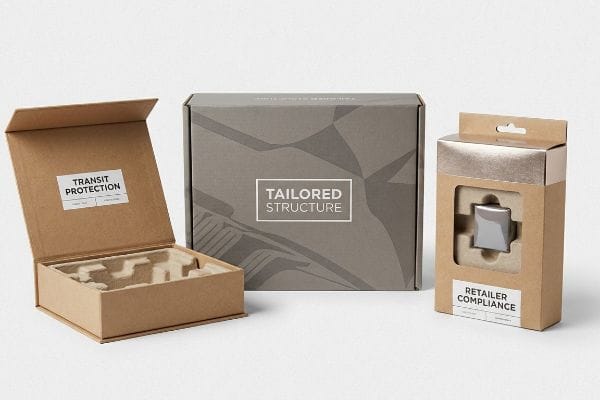
カスタムパッケージングとは、特定の製品を完璧に包み込むために、構造寸法、素材グレード、独自のビジュアルグラフィックを綿密に設計するプロセスです。この特殊なプロセスにより、輸送中の保護性能を最大限に高め、厳格な小売業者のコンプライアンス要件に適合させ、世界中の市場における混雑した店頭での消費者の関心を飛躍的に高めることができます。.
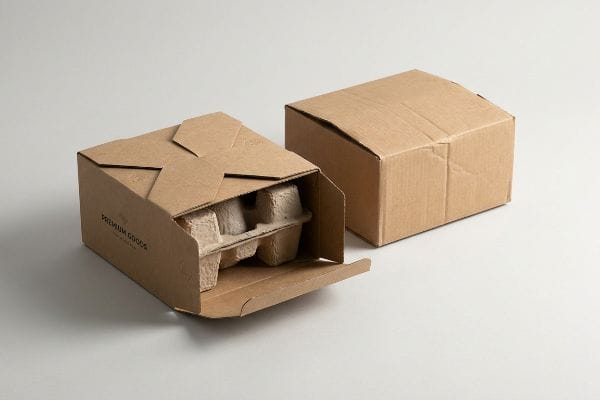
理論を理解することは第一歩に過ぎません。これらの特注構造が実際に現場でどのように機能するかを知ることが、導入の成功と高額なリコールを分ける決定的な要素となります。.
パッケージのカスタマイズが必要な理由とは?
既製の箱の寸法に頼ると、構造的な安全性と視覚的な印象の両方を妥協せざるを得ません。オーダーメイドの設計は、この重要なギャップを埋めます。.
既製の段ボール箱は、重いパレット積みに耐えるために必要な正確な幾何学的公差を満たしていないため、特注パッケージが必要となります。製品にぴったり合うように寸法を設計することで、内部の空隙をなくし、輸送中の衝撃による損傷を防ぎ、外装のグラフィックが買い物客の目の高さに完璧に合うようにすることができます。.
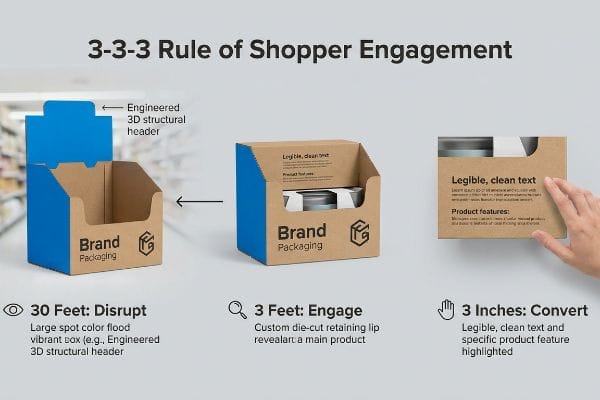
しかし、消費者が実際に店頭でどのように商品と接するのかを知らなければ、カスタムサイズの必要性を理解しても意味がない。.
買い物客エンゲージメントの3-3-3ルール
新しいブランドは、明るく照らされたコンピューターモニターで間近に見ることを前提にパッケージをデザインすることが多い。彼らは、ロゴが自分の机の上で鮮明に見えれば、巨大で混沌とした倉庫型量販店の中でも自然と注目を集めるだろうと考えている。これは、 人間が小売店の通路をどのように移動するかという物理的な現実を1。
マーケティングチームが、文字が多いほど価値が高まると考えて、あらゆる製品機能を前面パネルに詰め込んでいるのをよく見かけます。しかし、スピードが速い小売環境では、これは認知負荷を著しく高めます。3-3-3 ルール2。30フィート離れたところから視覚的にインパクトを与え、3フィートの距離で具体的な関心を引きつけ、3インチ(76.2mm)の距離で販売を成立させるのです。最近、店員が文字だらけの汎用的な小売用トレイを開梱するのに苦労しているのを見ました。生の紙板を無理やり開ける際の摩擦がひどく、前面の保持リップが高すぎるため、主要なブランドが完全に隠れてしまっていました。そこで、そのリップをカスタムダイカットして製品の視認性を85%にすることで、物理的な障壁を完全に取り除き、わずか3秒という短い時間の中で心理的なトリガーが確実に作動するようにしました。
| 初心者によくある間違い | プロフィックス | 小売店舗におけるメリット |
|---|---|---|
| 標準的な高壁トレイを使用する | カスタムダイカット保持リップ3 | 製品の視認性を最大限に高めます |
| すべてのパネルにテキストを詰め込む | 大胆なスポットカラーの塗りつぶし | 買い物客の認知負荷を軽減する4 |
| 平らな汎用ボックスに依存する | 設計された3D構造ヘッダー5 | 通路の視覚的な単調さを打破する |
私はクライアントに、構造ディスプレイに文字を大量に印刷させることは決して許可しません。パッケージが30フィート離れたところからでも買い物客の注意を強く引きつけない限り、3インチ(76.2mm)の小さな文字は全く意味がありません。.
🛠️ ハーベイのデスク: 現在お使いの店頭陳列トレイは、急いでいる買い物客から最も重要な製品の特徴を隠していませんか? 👉 陳列視認性監査を依頼する ↗ — 私のデスクに直接アクセスできます。自動販売スパムは一切ありませんのでご安心ください。
カスタムパッケージが必要なのは誰ですか?
もしあなたが消費者直販型のeコマースから実店舗型小売環境へと積極的に事業を拡大しているなら、物流モデルは根本的に変化していると言えるでしょう。.
カスタムパッケージを必要とするブランドは、大型小売店、会員制卸売店、または専門コンビニエンスストアへの積極的な進出を目指すブランドです。これらの厳しく規制された商業環境では、パレットの寸法、高い動的耐荷重、そして独自の販促スペースといった要件が厳密に定められており、汎用的な輸送用カートンでは、小売店から即座に拒否されることなくこれらの要件を満たすことは不可能です。.
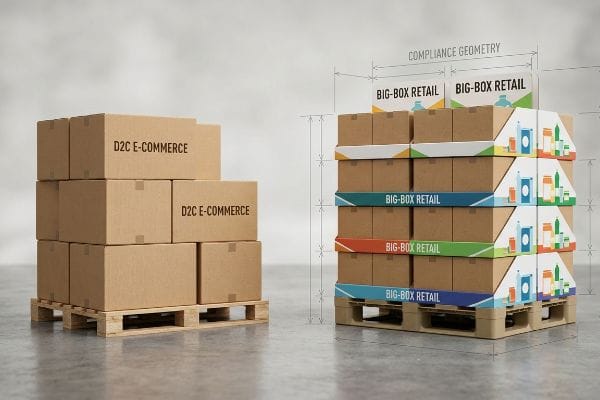
これらの店舗に荷物を持ち込むには専用の箱が必要だと知っていることと、実際に小売店に荷物を受け取ってもらうことは全く別の問題だ。.
大型小売店のフレームワークとの整合性
新興の消費財(CPG)ブランドは、売れる商品であれば店舗の種類に関係なく自然に売れると考える傾向がある。そのため、大型倉庫型量販店で使用するのと全く同じパッケージを、地元の薬局でも販売しようとする。.
よくある落とし穴は、貴重な通路スペースが厳しく制限されていることを理解せずに、大型小売店にフルサイズのフロアディスプレイを提案しようとすることです。彼らは、 5つのRのビジネスメカニズム、特に適切な場所という制約を無視しています。巨大な 48×40インチ(1219×1016 mm)のパレット7 が却下され、木製パレットが大きな音を立てて返品トラックに引き戻されたため、パニックになったバイヤーが私のところに来たことがあります。私は、キャンペーンをカスタム ハーフパレット とクォーターパレットに分割することでこれを解決しました。他のプロモーションと簡単にスペースを共有できるようにフットプリントを設計すると、小売バイヤーの摩擦がなくなり、バックルームに追いやられるのではなく、最高の場所を確保できます。
| 初心者によくある間違い | プロフィックス | 小売店舗におけるメリット |
|---|---|---|
| パレット単位での設置のみ | エンジニアリングにおける分数幾何学8 | 共有通路の密度を最大化する |
| B2B向けにD2Cボックスを使用する | 小売店向けトレイへのアップグレード9 | 棚への商品補充を迅速化します |
| 店舗の高さ制限を無視する | 地域的な到達範囲の制限への適応 | 厳格なコンプライアンス監査に合格する10 |
物理的な構造を特定の小売業者の運用上の制約に直接適合させることは、絶対に譲れない条件です。設計された形状が彼らの厳格なフロアプランの制約を無視した場合、プロモーションキャンペーン全体が荷積み場で即座に失敗に終わるでしょう。.
🛠️ ハーベイのデスク: あなたの今後の実店舗向け製品発売は、ターゲット小売店の売り場面積の制約と数学的に整合していますか? 👉 小売フレームワークをマッピングしましょう ↗ — 安全にダウンロードしてください。ご質問があれば、後ほどメールでお問い合わせください。
カスタムパッケージとはどういう意味ですか?
それは、既製の茶色の箱に自社ブランドのロゴを貼り付けるだけの単純な作業ではありません。真のカスタマイズとは、構造物理学における厳密な研究なのです。.
カスタムパッケージングとは、製品の正確な重量、輸送条件、および材料の折り曲げ許容範囲に合わせて、物理的な基材を数学的に設計することを意味します。この特殊なプロセスでは、精密なパラメトリックソフトウェアを使用して正確な厚みを計算し、連結タブと構造壁が厳しい物流ストレス下でも破れたり膨らんだりすることなく、シームレスに組み立てられるようにします。.
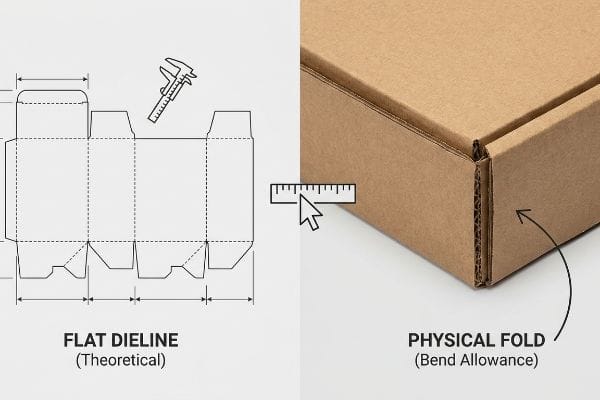
正確な寸法に関する理論は単純に聞こえるかもしれないが、組み立てラインでの実際の作業は、厚い紙を折り畳むことがいかに複雑であるかを明らかにする。.
曲げ加工における隠された物理学
グラフィックデザイナーは、基本的なベクターソフトウェアで平面の型抜き線を描くことが多いが、その際、 全く同じ幅11 自然に完璧に嵌まるものと想定している。彼らは、厚手の段ボールを、まるで完全に平らで重さのないデジタルペーパーであるかのように扱っている。
これは、厚いウェザーストリップが付いた頑丈なドアをヒンジを調整せずに閉めようとするようなものです。材料が物理的に邪魔になります。厚いBフルートボードを90度折り曲げると、 外側の半径が材料を消費し、コーナー12。私は、サイズが間違っている2枚のパネルを無理やり合わせようとして、イライラした共同梱包業者が汗だくになり、最終的には大きな音を立てて生の紙板を引き裂き、ユニットを出荷するためだけに汚い透明テープに頼るのを見てきました。私は、ファイルを コンピュータ支援設計(CAD)ソフトウェアに通して、キャリパー補正アルゴリズム13を、受け入れスロットを広げて物理的な曲げ許容値に完全に一致させることで、これを防止しています。
| 初心者によくある間違い | プロフィックス | 小売店舗におけるメリット |
|---|---|---|
| スロット幅を1:1で描画 | キャリパー補正を適用する14 | 組み立て時の摩擦を大幅に軽減します |
| ウェブラスターツールでのデザイン | パラメトリックソフトウェアにおけるエンジニアリング15 | 構造タブの破損を防ぎます |
| 材料の厚さを無視する | 物理的な曲げ代を追加する16 | パネルの見苦しい膨らみを防止します |
材料の厚みを無視した平面の型抜き線は認めません。なぜなら、数学は嘘をつかないからです。折り目が占める物理的なスペースを計算しなければ、どんなに美しいデザインでも、製品を保持する前に構造的に歪んでしまいます。.
🛠️ ハーベイのデスク: インターロッキングスロットは、選択した波形フルートの物理的な厚みを吸収するのに適切なサイズですか? 👉 ダイライン公差チェックを申し込む ↗ — 延々と営業電話がかかってくるようなフォームはありません。純粋な価値だけを提供します。
特注パッケージはなぜこんなに高価なのか?
数千個もの製品において完璧な一貫性を実現するには、精密な製造ツールへの多額の初期投資と、厳格な物理的テストが必要となる。.
特注パッケージは、特殊な構造設計、専用の金属切断金型、そして動的負荷に耐えうる高性能材料が必要となるため、高価です。こうした初期投資は必須ですが、輸送中の壊滅的な故障を防ぎ、コストのかかる手作業による組み立て遅延を解消し、大規模な物理的サプライチェーン展開における小売業者の厳格なコンプライアンスを保証します。.
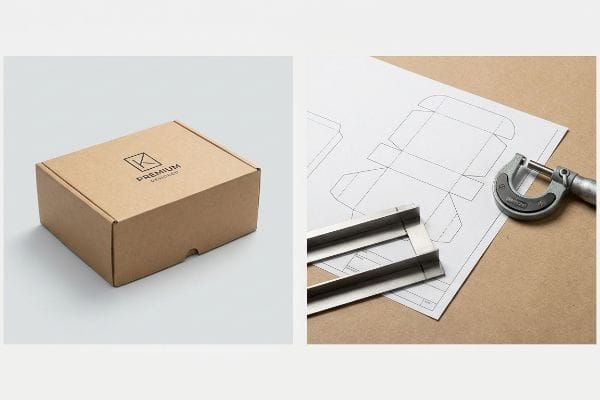
実験室でディスプレイを1台設置するのは簡単だが、安価な製造方法で500台を出荷しようとすると、厳しい現実が待ち受けている。.
工場現場で標準工具が失敗する理由
調達チームは、汎用的なスチール製金型で頑丈な材料の折り曲げ加工は十分可能だと考えているため、特注金型の費用に難色を示すことが多い。彼らは、型抜き加工を単純な型抜き機構と捉え、特別な調整は不要だと考えているのだ。.
私の工場では、バイヤーが32ECT(エッジクラッシュテスト)の厚手のバージンクラフト板に安価な金型を無理やり押し付けた結果、悲惨な事態が頻繁に発生しています。汎用の鋼製ブレードが適切なサポートなしに厚い板に当たると、内側の溝が激しく歪み、印刷された上面シートの折り目に沿って微細な亀裂が生じます。紙繊維がパキッと切れる音が聞こえます。マイクロメーターの測定値を取り、安価な汎用カットを精密なアンビルとして機能する特殊な雌型折り目マトリックスチャネル17に置き換えることで、繊維の正確な伸長を制御できることを実証しました。この1.2mm深い打撃許容範囲を適用することで、共同梱包の組み立て時間を1ユニットあたり35秒短縮し、リソクラックを完全に排除し、最終組み立て時の無駄な在庫18を推定15%削減できます。
| 初心者によくある間違い | プロフィックス | 小売店舗におけるメリット |
|---|---|---|
| プロファイルされていない汎用ダイを使用する | メスマトリックスチャンネルの取り付け19 | 印刷端のひび割れを解消します |
| 歪んだ木製工具の再利用 | 新たな鉄鋼規制の施行が20年で終了 | 切れ味抜群の折りたたみを保証します |
| 紙繊維の伸縮を無視する | 運動エネルギーによる打撃深度の制御21 | 手作業による箱の組み立てを迅速化します |
金型製作でコスト削減を図ると必ず裏目に出るため、私は購入者にカスタムマトリックスプロファイリングへの投資を強く勧めています。金型公差を厳密に管理するためにわずかな費用を支払うことで、摩擦のないスムーズな組み立てと、小売店での完璧な仕上がりを実現できるのです。.
🛠️ ハーベイのデスク: 2ミリの構造上の欠陥で500店舗展開を台無しにしないでください。👉 ダイラインファイルをお送りください↗ — 大量生産に予算を浪費する前に、計算をストレステストします。
結論
初期金型費用を避けるために安価なベンダーを選ぶこともできますが、誤ってカットされた 32ECT ボードが倉庫の湿気でひび割れたり反ったりすると、組み立て時の摩擦が大きくなり、共同梱包ラインの速度が推定 15% 低下し、プロジェクトの利益率が完全に失われます。これは、私のトップ 10 の小売クライアントが印刷不良ゼロを保証するために使用している仕様書です。曲げ公差を推測するのはやめて、大量生産を承認する前に致命的な機械的エラーを検出するために、私の無料のダイライン事前監査 ↗で構造ファイルを個人的にチェックさせてください。
「パッケージデザインの視覚要素が購買行動に与える影響…」、 https://pmc.ncbi.nlm.nih.gov/articles/PMC11851823/。小売環境心理学と人間のナビゲーションパターンが製品の視認性と買い物客のエンゲージメントにどのように影響するかについての説明。証拠の役割:概念的サポート。情報源の種類:行動科学研究。サポート:デジタルデザインが小売における視認性に直接結びつくわけではないという主張。適用範囲に関する注記:特に大量販売の小売環境に適用される 。↩
「3秒ルール:完璧なパッケージ前面パネルのデザイン – ECRM」、 https://ecrm.marketgate.com/Blog/2022/04/The-3-Second-Rule-Designing-a-Perfect-Package-Front-Panel。権威ある外部情報源がこの主張をどのように裏付けているかについての簡単な説明。証拠の役割:小売心理学フレームワークの検証。情報源の種類:業界ホワイトペーパーまたはマーケティング調査。裏付け:段階的な消費者エンゲージメント距離。範囲に関する注記:特定の距離指標は、小売フォーマットによって異なる場合があります 。↩
「14種類の小売ディスプレイ | シカゴ、イリノイ州 – Wertheimer Box」、 https://wertheimerbox.com/types-of-retail-displays/。パッケージングエンジニアリングのドキュメントによると、戦略的な型抜き加工により、製品の安全性を維持しながらプロファイルを低くすることができ、それによって可視表面積が増加します。証拠の役割:技術仕様書、情報源の種類:パッケージングエンジニアリングマニュアル。裏付け:カスタムリップが視認性を向上させるという主張。適用範囲に関する注記:トレイ型パッケージングに特化 。↩
「情報過多は消費者のオンライン意思決定にどのように影響するか…」、 https://pmc.ncbi.nlm.nih.gov/articles/PMC8567038/。ニューロマーケティング研究によると、テキスト密度を減らし、太字の視覚的手がかりを使用することで、買い物中の情報処理に必要な精神的労力を最小限に抑えることができる。証拠の役割:理論的検証、情報源の種類:学術誌。支持:スポットカラーが認知過負荷を防ぐという主張。範囲に関する注記:日用消費財に焦点を当てる 。↩
「製品パッケージデザインにおける視認性が重要な理由 – MTPak」、 https://mtpak.com/why-visibility-in-product-packaging-design-is-important/。小売デザインの原則では、構造的なヘッダーによって棚の二次元平面を破ることで、視覚的な顕著性が高まり、「通路の単調さ」効果が解消されることが示されています。証拠の役割:業界標準。情報源の種類:小売デザインハンドブック。支持:3Dヘッダーが注目を集める効果。適用範囲に関する注記:店頭ディスプレイに適用可能 。↩
「リバースロジスティクスの5つのRの管理 – ニューキャッスルシステムズ」、 https://www.newcastlesys.com/blog/managing-the-5-rs-of-reverse-logistics。サプライチェーンマネジメントの権威ある情報源は、5つのRフレームワーク(適切な製品、適切な場所、適切な時間、適切な数量、適切な状態)を業務効率の標準として挙げています。証拠の役割:理論的検証。情報源の種類:業界の教科書。裏付け:小売配置は、認知されたビジネスフレームワークによって管理されているという主張。範囲に関する注記:用語は、異なるロジスティクスモデル間で若干異なる場合があります 。↩
「48×40インチ GMAパレット | 最大手パレットメーカー&サプライヤー」、 https://www.palletone.com/products/gma-pallets/。食料品製造業者協会(GMA)は、北米の小売および物流における標準パレット寸法として48×40インチを指定しています。証拠の役割:技術仕様、情報源の種類:業界標準。裏付け:標準フルサイズパレットの寸法の正確性。適用範囲に関する注記:これは北米の主要標準です 。↩
「小売ディスプレイのためのパッケージングと物流計画 – Frank Mayer」、 https://www.frankmayer.com/blog/packaging-and-logistics-planning-for-retail-displays/。パッケージの寸法を分数形状で最適化することで、小売環境における保管効率と通路効率が向上する仕組みについて説明しています。エビデンスの役割:技術的検証。情報源の種類:物流ホワイトペーパー。サポート:パッケージ形状が通路密度に与える影響。範囲に関する注記:大型小売店のレイアウトに特化 。↩
「店頭陳列準備済みパッケージングがもたらすメリット:労働力、スピード、そして店頭への影響」、 https://www.linkedin.com/pulse/shelf-ready-packaging-pays-off-labor-speed-shelf-regje。店頭陳列準備済みパッケージング(RRP)は、個々のユニットの補充と比較して、労働時間を短縮し、棚への補充速度を向上させることを検証しています。エビデンスの役割:パフォーマンス指標。情報源の種類:業界調査。裏付け:店頭陳列準備済みトレイによる効率向上。範囲に関する注記:RRPと標準的なD2Cパッケージングを比較しています 。↩
「小売コンプライアンス:パッケージが州の規則を満たしていることを確認する方法」、 https://marijuanapackaging.com/blogs/how-to/retail-compliance-how-to-ensure-all-displayed-packaging-meets-state-rules?srsltid=AfmBOopXnGajmBolipZzET4YzShWVFlpmCsY3MS7xNyhTv1AaR1H1Fkr 。店舗固有の高さとリーチの制限を遵守することが、小売コンプライアンスおよび安全監査に合格するための標準要件であるという証拠。証拠の役割:規制上の確認。情報源の種類:小売業者コンプライアンスマニュアル。裏付け:パッケージの寸法と監査の成功との関連性。範囲に関する注記:特定の小売業者の要件によって異なります 。↩
「タブとスロットを備えた板金部品の設計 – SendCutSend」、 https://sendcutsend.com/blog/designing-sheet-metal-parts-with-tab-and-slots/?srsltid=AfmBOorSByCpmyhgLbyUKwItV5rBs6fcHJDL21uTgFy2A7beU4zjDADK 。構造包装の業界標準では、材料の厚さによって構造的破損を避けるためにスロットとタブの比率に許容差が必要になることが説明されています。証拠の役割:技術的検証。情報源の種類:エンジニアリングハンドブック。サポート:厚い基材の曲げ代を計算する必要性。適用範囲に関する注記:段ボールに限定 。↩
「5層構造の曲げ剛性の解析的決定…」、 https://pmc.ncbi.nlm.nih.gov/articles/PMC8777652/。段ボールの技術マニュアルでは、折り目の外半径が材料を消費し、曲げ代計算が必要になることが説明されています。証拠の役割:技術的検証。情報源の種類:製造ハンドブック。裏付け:90度折り曲げ時のBフルートの物理的挙動。適用範囲に関する注記:段ボール基材に適用されます 。↩
「プレスブレーキ曲げ半径の習得 – ADH Machine Tool」、 https://www.adhmt.com/press-brake-bend-radius/。パッケージ設計ソフトウェアの仕様では、材料の厚みに基づいてスロット幅を自動的に調整し、適切なフィットを確保するアルゴリズムが詳細に説明されています。証拠の役割:プロセス検証。ソースの種類:技術ソフトウェアドキュメント。サポート:CADにおける厚み補正の適用。範囲に関する注記:パラメトリック設計ツールを参照 。↩
"[PDF] Cal Poly BSAE ブレーキキャリパー", https://digitalcommons.calpoly.edu/cgi/viewcontent.cgi?filename=1&article=1899&context=mesp&type=additional。包装に関する技術製造規格では、スロット寸法に材料の厚さ(キャリパー)を考慮することで、干渉や組み立て時の摩擦を防ぐ方法が説明されています。証拠の役割:技術的検証。情報源の種類:製造ハンドブック。サポート:適切なフィットを確保するためのキャリパー補正の使用。適用範囲に関する注記:段ボール包装および硬質包装に適用可能 。↩
「AI Designer SuiteとpackQ:パッケージデザインに革命を起こす…」、 https://www.packagingdesignsoftware.com/post/ai-designer-suite-and-packq-revolutionizing-packaging-design-software-software。工業デザインの文献では、ラスターベースのグラフィックスとパラメトリックCADソフトウェアを区別し、後者はタブの構造的欠陥を防ぐために必要な正確な幾何学的制約を可能にすると指摘している。証拠の役割:方法論的検証。情報源の種類:工学教科書。支持するもの:構造パッケージにおけるパラメトリックツールの必要性。範囲に関する注記:美的デザインと構造工学の違いに焦点を当てている 。↩
「Kファクターとは?|板金曲げ代の説明」、 https://www.youtube.com/watch?v=kUizKC1gkg0。材料変形の物理学では、折り曲げ時に材料のよじれやパネルの膨らみを防ぐために、曲げ代は材料の厚さに基づいて計算する必要があると規定されています。証拠の役割:科学的原理。情報源の種類:材料科学ジャーナル。裏付け:曲げ代とパネルの平面度との関連性。適用範囲に関する注記:材料グレードと折り曲げ半径によって異なります 。↩
"[PDF] 折り目付けと折り畳み – BioResources", https://bioresources.cnr.ncsu.edu/wp-content/uploads/2019/01/2017.1.69.pdf。高耐久性段ボールのフルート座屈と表面亀裂を防ぐための、雌型折り目付けマトリックスのアンビルとしての機能に関する技術的説明。証拠の役割:技術的検証。情報源の種類:包装工学マニュアル。裏付け:特殊な工具が繊維の伸びを制御して材料の破損を防ぐという主張。適用範囲に関する注記:高ECT段ボールグレードに適用可能 。↩
「アナログおよびデジタル折り目線が機械的な…に及ぼす影響 – PMC」、 https://pmc.ncbi.nlm.nih.gov/articles/PMC9268991/。精密折り目ツールを導入した場合と一般的な切断方法を導入した場合の、不良率と材料廃棄物の削減に関する業界データ。証拠の役割:定量的検証。情報源の種類:業界ベンチマークレポート。サポート:特殊工具への初期投資の財務的正当性。範囲に関する注記:廃棄率は板紙のグレードと印刷タイプによって異なります 。↩
「板紙の型抜きと折り目加工 – Holmen Iggesund」、 https://www.iggesund.com/insights/paperboard-know-how/paperboard-manual/paperboard-manual-publication/printing-and-converting-performance/die-cutting-and-creasing/。マトリックスチャネルが型抜き時の受け台となり、端部でのインクや基材のひび割れを防ぐ仕組みについて説明しています。証拠の役割:技術的検証。情報源の種類:製造エンジニアリングマニュアル。裏付け:マトリックスチャネルによる端部のひび割れ防止効果。適用範囲に関する注記:特にコート紙向け 。↩
「スチールルールダイス101:概要、用途、利点 – Fremont Cutting Dies」、 https://fremontcuttingdies.com/steel-rule-dies-101-intro-uses-benefits/。寸法安定性と刃先の鋭さにおいて、木製工具よりもスチールルールダイスの方が優れていることを示す技術比較。証拠の役割:材料仕様。情報源の種類:工業用工具規格。裏付け:スチールダイスがより鋭い折り目を保証するという主張。範囲に関する注記:工業用ダイカットの公差に焦点を当てる 。↩
"[PDF] 段ボール箱が木製パレットの配送に及ぼす影響の調査", https://www.unitload.vt.edu/content/dam/unitload_vt_edu/graduate-research-and-subpages-pictures-and-docs/thesis-and-dissertations-/Clayton%20-%20ETD%20-%20Investigation%20of%20the%20Effect%20of%20Corrugated%20Boxes%20on%20the%20Distribution%20of%20Compression%20Stresses%20on%20the%20Top%20Surface%20of%20Wooden%20Pallets.pdf。 ストライク深さの調整が紙繊維の伸びをどのように管理し、折り目が手作業による組み立てに最適になるかの分析。 証拠の役割: プロセスの最適化。 ソースの種類: パッケージング生産ガイド。 サポート: ストライク深さと組み立て速度の相関関係。適用範囲に関する注記:段ボールおよび厚手のカードストックに適用されます 。↩