Make the Most of a Product Release with a Custom Retail Display

Make the Most of a Product Release with a Custom Retail Display

Launching a new CPG product into high-stakes retail requires more than just a great formula. It demands physical disruption that pulls shoppers off the aisle and forces engagement.

Making the most of a product release with a custom retail display requires structural engineering that aligns with exact merchandising frameworks. By optimizing spatial engagement, preventing visual cognitive overload, and ensuring rapid assembly, brands can transform raw cardboard into a profitable point-of-purchase asset.

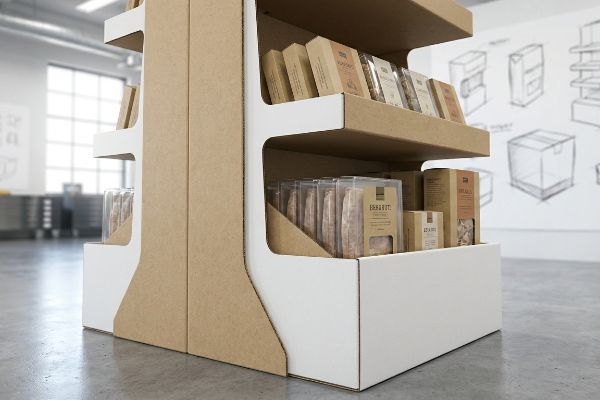
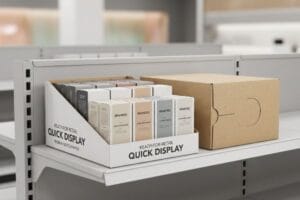
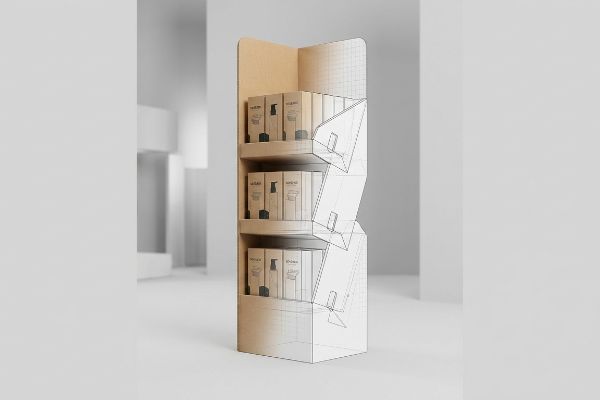
A multi-tiered cardboard retail display with white accents showcases Eberrit and Adam's CPG products in boxes and clear packaging.
Cardboard Retail Display Products

But knowing the theory behind a product launch isn't enough when you're facing big-box compliance mandates and aggressive physical retail environments. Let's look at the actual frameworks that dictate whether your campaign thrives or gets rejected at the receiving dock.

What are the 5 P's of retail?

Getting your product into a store is only half the battle; the real test is securing the transaction.

The 5 P's of retail—Product, Price, Place, Promotion, and People—form the fundamental commercial framework. Mastering these elements ensures your custom corrugated display aligns perfectly with the target store's specific operational ecosystem, maximizing both floor visibility and long-term merchandising profitability.

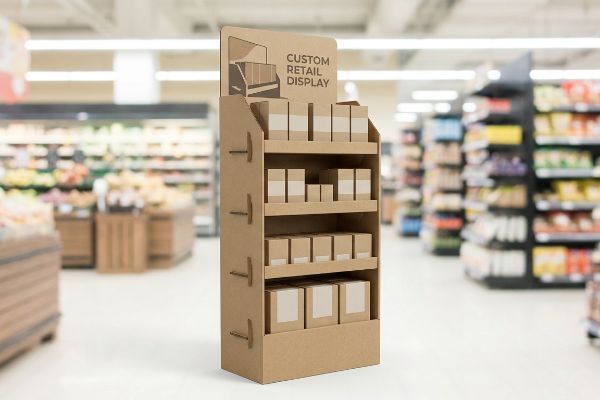
Brown corrugated cardboard custom retail display with four shelves of plain boxes, featuring a 'Custom Retail Display' header in a supermarket.
Custom Cardboard Retail Display

However, applying these theoretical principles to a physical merchandiser often reveals major gaps between marketing strategy and supply chain reality.

Applying the 5 P's to Physical Merchandising

New brands frequently attempt to launch products without mastering the foundational frameworks of commercial retail, assuming a good item will naturally sell itself. They try to design a universal POP (Point of Purchase) display that they think will magically fit every environment from a high-end pharmacy to a massive warehouse club.

Even experienced procurement teams often overlook this blind spot, handing me a massive promotional design that completely ignores the "Place" and "People" constraints of convenience stores. I remember a client who designed a stunning base out of heavy 32ECT virgin kraft1, but the footprint was a generic oversized square. When the display arrived at smaller shops, the stiff physical resistance of the thick board made it impossible to fold down for tight corner placements, causing frustrated clerks to simply toss the entire unit into the recycling bin. By systematically mapping the physical display strategy directly against the specific retailer category's operational model, I adjust the dielines to guarantee the unit actually fits the designated floor space, preventing instant rejection and saving thousands in wasted material.

Common Rookie MistakeThe Pro FixRetail-Floor Benefit
One-size-fits-all dimensionsCustomizing base footprint to specific store aislesPrevents clerks from discarding oversized units2
Ignoring demographic "People" trafficAdjusting height and reach limits for target shoppersIncreases impulse grab rate3
Generic promotional headersSwapping headers dynamically based on "Place"Reduces material waste per campaign4

I refuse to engineer a unit until we lock down exactly where it's going to sit. Mapping your physical layout to the specific retailer ecosystem is the only way to ensure your marketing spend actually converts on the floor.

🛠️ Harvey's Desk: Are your display dimensions clashing with your target store's aisle limits? 👉 Let Me Audit Your Retail Strategy ↗ — Direct access to my desk. Zero automated sales spam, I promise.

What makes a good retail display?

Standing out in a chaotic retail aisle requires more than just bright graphics.

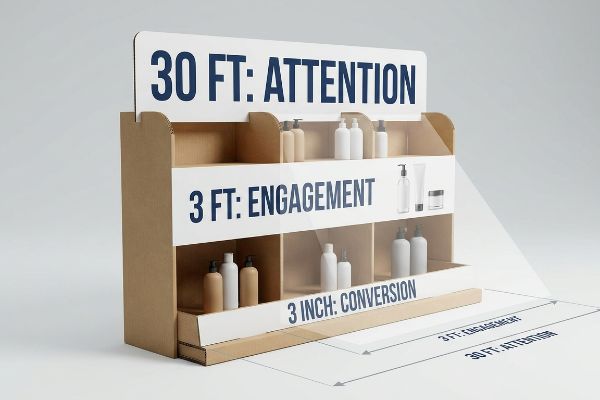
What makes a good retail display is the strict application of spatial engagement rules. A successful merchandiser must capture visual attention from a distance, invite closer inspection at mid-range, and eliminate all physical friction at the immediate point of tactile conversion.

Brown cardboard display with '30 Ft: Attention', '3 Ft: Engagement', '3 Inch: Conversion' and product bottles.
Retail Display 3-3-3 Rule

While this sounds straightforward on a computer screen, executing it on the production floor requires precise structural manipulation.

Mastering the 3-3-3 Spatial Engagement Rule

Junior marketing teams frequently design retail displays strictly for up-close viewing on backlit computer monitors, ignoring the physical reality of how shoppers navigate store aisles. They often fill the header with dense, tiny text, completely forgetting that a passing shopper is pushing a cart from several yards away.

It's a common trap that catches even veteran designers who forget about the "3-3-3 Rule5": capturing attention at 30 feet, engaging at 3 feet, and converting at 3 inches. I see this fail constantly when clients print intricate CMYK (Cyan, Magenta, Yellow, Key/Black) gradients that look muddy under harsh store lighting. One client brought me a beautifully detailed tray, but the front retaining lip was so high it hid the product labels at the crucial 3-inch conversion zone. I could literally hear the loud, frustrating sound of raw paperboard tearing as store clerks tried to rip the lip down just to make the merchandise visible. By cutting the retaining lip to guarantee 85% product visibility6 and utilizing bold spot colors for 30-foot disruption, I make sure the display pulls foot traffic and physically drives the impulse buy without requiring manual shelf modifications.

Common Rookie MistakeThe Pro FixRetail-Floor Benefit
Dense text on the headerBold die-cut shapes for 30-foot visual disruption7Grabs shopper attention instantly
High retaining lips blocking itemsSloping the front lip to ensure 85% visibility8Eliminates tactile friction at purchase
Relying entirely on flat graphicsIncorporating 3D structural elementsPrevents display from blending into shelves

I always evaluate my clients'artwork from across the factory floor before we finalize the plates. If I can't read your primary hook from thirty feet away, your shoppers won't either.

🛠️ Harvey's Desk: Is your header artwork getting lost under harsh fluorescent store lighting? 👉 Get a Visibility Check ↗ — Download safely. My inbox is open if you have questions later.

What are the six display guidelines?

Merchandising isn't just about putting items on a shelf; it's about choreographing how the shopper's eye moves.

The six display guidelines revolve around creating asymmetrical visual tension, optimizing product spacing, ensuring clear focal points, maintaining structural stability, simplifying restocking, and matching brand identity. Following these rules transforms static shelves into psychologically engaging product showcases that actively drive retail conversions.

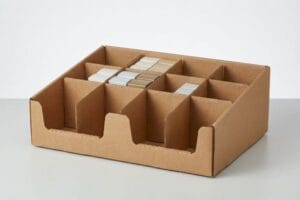
Corrugated tray with amber bottles showing 0.25 inches (6.35 mm) clearance for product spacing.
Bottle Tray Clearance Spacing

Knowing these guidelines is helpful, but the real challenge lies in designing a corrugated structure that naturally enforces them without requiring a manual.

The Physics of Visual Merchandising

Designers frequently attempt to flat-pack a dense, perfectly symmetrical grid of products onto a single display shelf, assuming maximum density yields higher sales9. They align every bottle or box into a rigid square formation, hoping it looks clean and orderly.

Think of it like a perfectly manicured lawn—it's so uniform that your eyes just glaze over it. I frequently receive dielines where the product pockets are engineered mathematically flush with the items, leaving zero breathing room. When I tested one of these hyper-dense trays on the floor, I watched a packer struggle to squeeze the final shampoo bottle in, resulting in the unmistakable, messy stickiness of cheap clear tape being used to repair the blown-out corrugated corner. I immediately applied the "3-5-7 Rule10", engineering modular dividers that separate the merchandise into odd-numbered clusters. This not only creates the required psychological visual tension for the shopper but also provides a critical 0.25 inches (6.35 mm) of clearance11, allowing clerks to restock the shelf seamlessly without destroying the structure.

Common Rookie MistakeThe Pro FixRetail-Floor Benefit
Packing items flush togetherAdding 0.25 inches (6.35 mm) of structural clearance12Prevents ripped packaging during restock
Symmetrical, boring gridsUsing odd-numbered (3-5-7) product clusters13Forces the human eye to engage
Ignoring modular dividersInstalling floating corrugated dividersKeeps high-turnover items organized

I never let a client sacrifice structural integrity just to squeeze one extra unit onto a tray. By enforcing strategic asymmetry, you actually sell more product because the display inherently demands the shopper's attention.

🛠️ Harvey's Desk: Are your store clerks tearing your display shelves during aggressive restocking? 👉 Request a Clearance Audit ↗ — No forms that trigger endless sales calls. Just pure value.

What are the 7 principles of retail?

Retail success is built on understanding consumer behavior, but translating that psychology into physical packaging is highly technical.

The 7 principles of retail focus on aligning occupants, objects, objectives, organizations, operations, occasions, and outlets. When engineered into physical displays, these principles dictate how a brand communicates its core value proposition, ensuring maximum relevance and reducing visual clutter during the three-second interaction window.

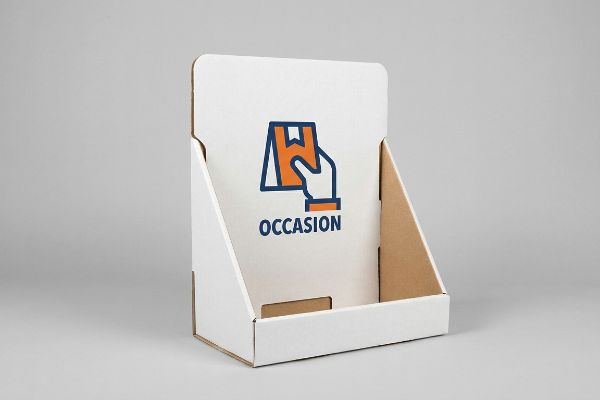
A white corrugated cardboard display features an orange and blue icon of a hand holding a package, with
Occasion Retail Display

But knowing the theory isn't enough when the machines start running and your beautifully complex consumer map turns into a confusing, unreadable mess.

Surviving the Cognitive Overload Trap

Brand marketers frequently utilize the "7 O's" framework to profile consumer behavior for seasonal retail campaigns. They map out the exact psychological demographics of their target audience and enthusiastically try to print every single layer of this research directly onto their physical corrugated displays.

Getting one display to stand up in a lab is easy, but here is the harsh reality when you ship 500 of them into a chaotic big-box environment. In my facility, I routinely see clients submit prepress files crammed with six paragraphs of marketing copy, assuming shoppers will stop and read. When I measure the visual impact under our calibrated D50 lighting booths, that dense typography just turns into a muddy blur on the porous paperboard. I had to reject a recent batch of test prints because the heavy ink load from all that text was causing the water-based PVA (Polyvinyl Acetate) adhesive to over-saturate14 during the litho-lamination phase, leading to minor edge warping. I pulled the design files and proved I didn't need a heavier lamination film; I just needed the client to ruthlessly distill their 7 O's research down to a single, high-contrast focal point. By stripping out the secondary copy and focusing strictly on the primary purchasing "Occasion", we cut the prepress setup time by 45 minutes and delivered a clean, punchy unit that actually stops rushing shoppers.

Common Rookie MistakeThe Pro FixRetail-Floor Benefit
Printing paragraphs of textDistilling to one high-contrast focal pointPrevents shopper cognitive overload
High ink coverage on copyUsing spot colors for a single Occasion triggerReduces moisture warp from heavy ink
Overcomplicating the messageRuthless objective-isolation in prepressMaximizes impulse engagement

I always tell my clients that a retail display is a billboard, not a brochure. If you try to tell the consumer your entire brand history on a piece of corrugated board, they will physically ignore the unit entirely.

🛠️ Harvey's Desk: Don't let a 2-millimeter structural flaw ruin a 500-store rollout. 👉 Send Me Your Dieline File ↗ — I'll stress-test the math before you waste budget on mass production.

Conclusion

You can choose a cheaper vendor, but when that overloaded, dense design causes the water-based PVA adhesive to over-saturate and warp your displays in a humid warehouse, the resulting base buckling will trigger an immediate retailer rejection and weeks of costly manual rework. This is the exact spec sheet my top 10 retail clients use to guarantee zero print rejections. Stop guessing on structural tolerances and let me personally run your files through my Free Dieline Audit ↗ to catch fatal errors before mass production begins.


  1. "[PDF] Corrugated Board Specifications – Fibre Box Association", https://www.fibrebox.org/assets/2025/09/Walmart_Corrugated-Board_Specifications_Automation_Packaging_Standards.pdf. [An authoritative industry standard for packaging would verify the physical properties, strength, and rigidity of 32ECT virgin kraft corrugated board]. Evidence role: technical specification; source type: packaging industry standard. Supports: The claim regarding the material's physical resistance and stiffness. Scope note: Applies to standard corrugated board ratings. 

  2. "Merchandising Best Practices: Compliance – Vanguard Companies", https://www.vanguardpkg.com/merchandising-best-practices-compliance/. [Trade marketing and store operations guides outline how non-compliant display dimensions lead to removal by store personnel to maintain aisle clearance]. Evidence role: operational verification; source type: retail management guide. Supports: benefit of custom footprints. Scope note: focuses on store compliance and safety standards. 

  3. "Effect of Space Order on Impulse Buying: Moderated by Self-Construal", https://pmc.ncbi.nlm.nih.gov/articles/PMC10451481/. [An authoritative source on retail ergonomics or consumer behavior would confirm how placing products within a target demographic's optimal reach increases conversion]. Evidence role: factual support; source type: academic journal or industry study. Supports: correlation between reach limits and impulse buys. Scope note: specifically for physical retail environments. 

  4. "The Complete Guide to Sustainable Retail Signage – 40 Visuals", https://40visuals.com/the-complete-guide-to-sustainable-retail-signage-materials-systems-and-best-practices/. [Research on sustainable retail design demonstrates that modular or dynamic components reduce the volume of single-use marketing materials discarded after campaigns]. Evidence role: factual support; source type: sustainability report or design manual. Supports: benefit of dynamic headers. Scope note: focused on environmental impact of POS materials. 

  5. "Subject 120-3-3 RULES AND REGULATIONS FOR THE … – GA R&R", https://rules.sos.ga.gov/gac/120-3-3. [A retail merchandising guide or spatial psychology manual would verify these specific distance thresholds for consumer visual engagement]. Evidence role: technical standard; source type: industry handbook. Supports: the spatial engagement framework. Scope note: specific to point-of-purchase (POP) displays. 

  6. "Retail Display Elements That Drive Impulse Buys – LinkedIn", https://www.linkedin.com/top-content/retail-merchandising/visual-standards-for-retail-displays/retail-display-elements-that-drive-impulse-buys/. [Empirical studies on visual merchandising and eye-tracking would validate the minimum visibility percentage required to trigger tactile conversion]. Evidence role: empirical metric; source type: market research study. Supports: the technical requirement for retaining lip height. Scope note: may vary by product category. 

  7. "Retail premises design for effective displays and customer flow", https://www.business.qld.gov.au/industries/manufacturing-retail/retail-wholesale/retail-displays. [Industry standards for visual hierarchy and signage typically define the distance at which high-contrast structural elements first capture shopper attention]. Evidence role: technical specification; source type: retail design guide. Supports: the effectiveness of die-cut shapes for long-distance visibility. Scope note: Actual distance may vary based on aisle width and lighting. 

  8. "How To Increase Retail Visibility With Point-Of-Purchase Displays", https://www.industrialpackaging.com/blog/increased-retail-visibility. [Ergonomic research into product placement and sightlines provides metrics on how sloping display lips increases the percentage of visible product surface area]. Evidence role: metric; source type: consumer behavior study. Supports: the benefit of sloping lips over high retaining lips. Scope note: Visibility percentages depend on the specific product dimensions. 

  9. "The Role of Visual Merchandising in Retail Excellence", https://weitnauer.com/the-role-of-visual-merchandising-in-retail-excellence. [Empirical studies in retail psychology examine whether increased product density on shelves correlates with higher sales or causes consumer choice overload]. Evidence role: corroboration; source type: retail psychology study. Supports: the assumption that product density affects sales. Scope note: applies to consumer retail environments. 

  10. "Ever heard of the 3-5-7 rule in decorating? It's the secret to styling …", https://www.instagram.com/reel/DM-7WJAyKaU/?hl=en. [An authoritative retail design source should define the 3-5-7 Rule and explain how odd-numbered groupings create visual interest and tension]. Evidence role: technical specification; source type: industry manual. Supports: the application of odd-numbered clusters for psychological engagement. Scope note: Application may vary by product category. 

  11. "5 Requirements for Shelf-Ready Packaging", https://greatnorthernpackaging.com/2025/11/19/5-requirements-for-shelf-ready-packaging/. [Packaging engineering standards should validate the minimum tolerance required for product insertion to prevent structural failure in corrugated displays]. Evidence role: technical metric; source type: engineering standard. Supports: the necessity of specific clearance for seamless restocking. Scope note: Specific to corrugated cardboard tolerances. 

  12. "Packaging and Logistics Planning for Retail Displays – Frank Mayer", https://www.frankmayer.com/blog/packaging-and-logistics-planning-for-retail-displays/. [Industry standards for minimum product spacing prevent friction and tearing of packaging during restocking]. Evidence role: technical specification; source type: retail operations manual. Supports: structural clearance measurement. Scope note: Applicability depends on product packaging type. 

  13. "The Rule of Three in Visual Merchandising: A Simple yet Effective …", https://www.linkedin.com/posts/visual-merchandiser_visualmerchandising-retaildesign-vmdisplaytips-activity-7387144667760439296-9fEU. [Design principles such as the 'Rule of Three'indicate that odd-numbered arrangements are more aesthetically pleasing and capture attention better than even ones]. Evidence role: psychological principle; source type: visual design guide. Supports: odd-numbered cluster engagement. Scope note: Applies to consumer visual psychology. 

  14. "[PDF] A study of on-demand books made by PVA cold emulsion adhesive", https://repository.rit.edu/cgi/viewcontent.cgi?article=4857&context=theses. [A technical manual on litho-lamination or packaging science would verify how high ink coverage affects the absorption and curing of water-based PVA adhesives. Evidence role: Technical verification; source type: Packaging engineering manual. Supports: The causal link between ink load and adhesive saturation/warping. Scope note: Applies specifically to porous paperboard substrates.] 

Industry resource

Need displays for apparel or accessories?

For fashion accessories, apparel programs and small hanging products, explore our hanging product displays designed for retail visibility and organized merchandising.

Related Articles

View All Articles