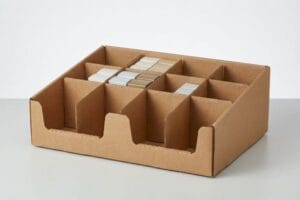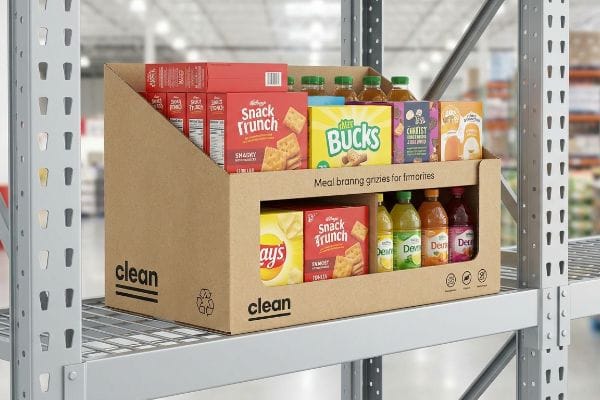
各ブランドは、会員制量販店の通路スペースを確保するために利益率を犠牲にして争うが、結局、劣悪なパッケージ構造のために、全く問題のない商品が床に埋もれてしまうのを目の当たりにするだけだ。.
PDQトレイディスプレイは、コストコの客足の多いエンドキャップ、通路内のスチールラック、中央パレットブロックなど、あらゆる場所で使用されています。これらのあらかじめ商品が詰められた、小売店ですぐに使用できる段ボール製のユニットは、FMCG(日用消費財)の迅速な棚への陳列を最大限に効率化し、厳格な空間寸法への構造的な適合性を確保しながら、買い物客の注目を瞬時に集めます。.

これらのユニットが倉庫内のどこに保管されているかを正確に把握することは、戦いの半分に過ぎない。そこまでの物理的な輸送を無事に終えるには、精密なエンジニアリングが必要となる。.
ディスプレイにおけるPDQとは何ですか?
頭字語の意味を理解するのは簡単だが、速度という物理的な現実を設計するには、段ボールが裁断台に乗せられる前に、綿密な計画が必要となる。.
PDQとは、小売業界でいう「Product Displayed Quickly(商品陳列迅速)」または「Pretty Darn Quick(かなり迅速)」の略です。これは、手作業による開梱を必要とせず、すぐに棚に陳列できる、小売店向けの段ボール包装を指します。これらのモジュール式ユニットは、商品があらかじめ完全に充填された状態で出荷されるため、店員は倉庫のスチール製ラックに直接スライドさせて陳列することができます。.
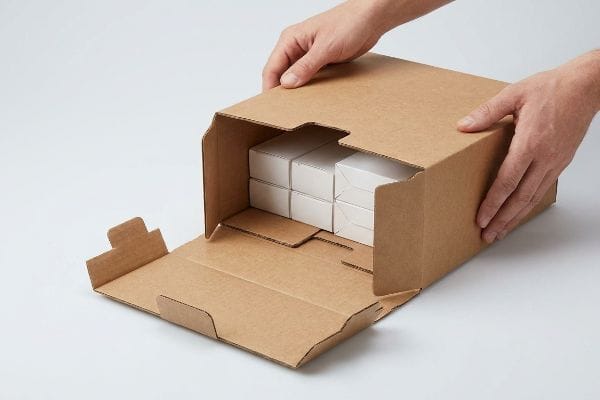
その定義は役員会議室では素晴らしく聞こえるかもしれないが、汚れた倉庫の床でスピードを出すのは全く別の話だ。.
組立速度を支えるエンジニアリング
多くのブランドマネージャーは、シンプルなミシン目入りの切り取り式ボックスで十分 小売店向け商品1。彼らは、小売店の店員が各ユニットを店舗レベルで5分かけて組み立ててくれるだろうと想定して、複雑な折りたたみパネルを設計する。理論的には、 フラットパックは輸送スペースを節約できる2が、訓練を受けていない店舗スタッフに複雑な折り紙構造を組み立てさせることは、運用上の大きなリスクとなる。
ベテランデザイナーでさえ、接着剤のコストを削減するために、大きくてぴったりと嵌まる連結タブ付きのトレイを設計することで、小売店での実行における人的要素を見落としがちです。急いでいる店員が、 32 ECT(エッジクラッシュテスト)の未加工のボードを無理やり と、紙板の溝が裂ける音が聞こえてきます。きれいなトレイの代わりに、破れた角を留めるために醜い透明な梱包テープを使うことになり、せっかくの高級ブランドイメージがたちまち損なわれてしまいます。だからこそ、私はセットアップの手間を省くために、あらかじめ接着されたモジュール式システムを推奨しているのです。
| 初心者によくある間違い | プロフィックス | 小売店舗におけるメリット |
|---|---|---|
| 複雑な接着されていないロックタブ | あらかじめ接着されたモジュール式のスナップオープンベース | トレイ1枚あたり45秒のセットアップ時間を節約できます4 |
| 安定性を確保するために透明テープを使用する | 隠し式セルフロックコーナーガセット | 見苦しいテープや破れた端をなくします |
| ぴったりとフィットする摩擦溝 | 1 mm (0.04 インチ) のスロット公差5 | 厚紙の反りを防ぎます6 |
段ボール箱の組み立てが面倒だからといって、素晴らしい製品が倉庫に眠ったままになるのは断じて許せません。トレイの仕組みを簡素化することで、お客様のキャンペーンが、まさにお客様が望むタイミングで販売フロアに届くことを保証します。.
🛠️ ハーベイのデスク: 店員が複雑な箱の組み立てを嫌がるため、店舗レベルでの実行率が低下していませんか? 👉 無料の組み立て監査を受ける ↗ — 私のデスクに直接アクセスできます。自動販売スパムは一切ありませんのでご安心ください。
コストコのパレットに関する規定は何ですか?
倉庫型量販店は徹底的な効率性を重視して運営されているため、購入注文を確定する前から、あなたの物理的な行動が厳しくチェックされる。.
コストコのパレットに関する規定では、GMA(食料品製造業者協会)規格の48インチ×40インチ(1219mm×1016mm)の木製ブロックベースを厳格に遵守することが義務付けられています。すべての主要構造物は、少なくとも2,500ポンド(1133kg)の動荷重に耐える必要があり、同時に、消費者が多方向からアクセスできる堅牢な構造性能を備えている必要があります。.
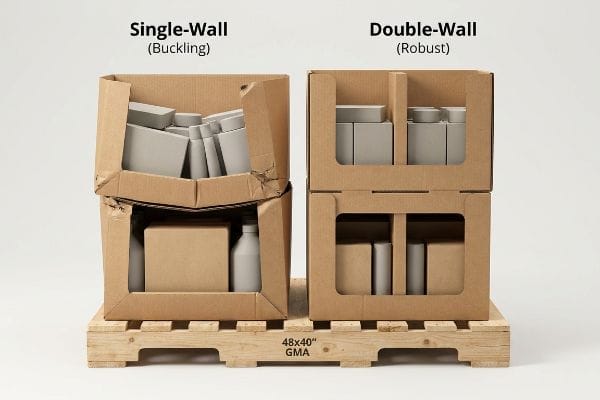
適切な木製土台を確保することは必須条件だが、その上に載せる波形構造の設計こそが、サプライチェーンを生き残れるかどうかを左右する。.
クラブストアの構造的要求を乗り切る
調達チームは、標準的な小売店の フロアマーチャンダイザーを 単に大きくしてクラブストア環境に設置すればよいと安易に考えがちです。標準的なシングルウォールベースに厚手のグラフィックを追加し、倉庫のスチールラックシステムの過酷な上部荷重に耐えられることを期待します。しかし、 標準的な大型小売店環境では、倉庫クラブのように輸送中や保管中に満載のディスプレイを7段も ません。
経験豊富な調達チームでさえ、大幅な下方圧力を考慮せずに包装予算を節約しようとすると、よくある落とし穴にはまってしまいます。会員制量販店の通路を歩きながら、安価な陳列棚の下段をよく見てください。重圧で段ボールパネルが外側に大きくたわんでいるのがはっきりとわかります。耐水性のPVA(ポリ酢酸ビニル)接着剤を使用した二重壁構造の内部構造を設計しないと、周囲の高い湿度によって硬い紙層が柔らかくなり、深刻な構造的な座屈が発生します。私は、窓付きの耐荷重構造を採用することで、この座屈を防いでいます。.
| 初心者によくある間違い | プロフィックス | 小売店舗におけるメリット |
|---|---|---|
| 単層波形ベース | 二重壁構造の「ショップスルー」背表紙8 | 大規模な動的トップロードに対応 |
| 高湿度による軟化を無視する | 耐水性PVA接着剤の試験9 | 土台のたわみや倒壊を防ぎます |
| 視覚的な製品ラインを遮断する | 窓付き耐荷重支持構造 | 360度どこからでも買い物客がアクセスできる |
私が特にクラブストアの存続を念頭に置いて設計しているのは、倉庫の陳列棚の土台が崩れることは、単に見栄えが悪いだけでなく、即座に安全上の違反となり、小売業者からの深刻なチャージバックを引き起こすからです。.
🛠️ ハーベイのデスク: 満載のマスターカートンは、二段積みの海上輸送で下段が潰れることなく、本当に無事に輸送されていますか? 👉 構造ストレステストを申請する ↗ — 安全にダウンロードしてください。ご質問があれば、後ほどメールでお問い合わせください。
コストコの20ドルルールとは何ですか?
高額商品を大量販売する環境で販売するには、在庫の確保と衝動買いを促すことの間で、繊細なバランスを取る必要がある。.
コストコの20ドルルールでは、この価格帯を超える商品は、最大限の視認性によって、その価格に見合う価値を証明しなければならないと規定している。段ボール製の陳列においては、前面の保持リップが低く設計されたトレイが必要となり、一次包装の少なくとも85%が買い物客から完全に見えるようにする必要がある。.
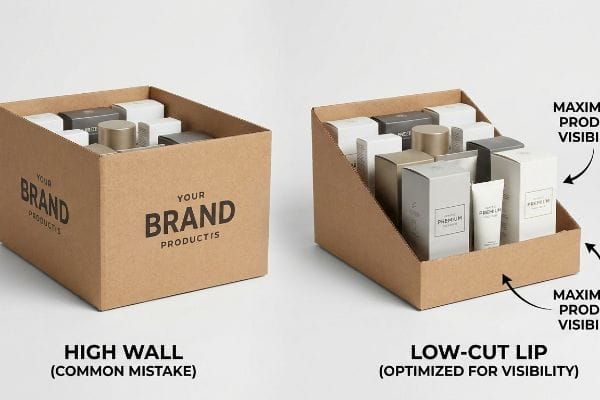
視認性を最大限に高めることは、純粋なマーケティング機能のように聞こえるが、製品の封じ込めを犠牲にすることなくそれを実現することは、厳密には構造物理学の問題である。.
封じ込め能力を損なうことなく、可視性を最大限に高める
デジタルCAD(コンピュータ支援設計)ソフトウェアを使用するグラフィックデザイナーは、鮮やかなCMYK(シアン、マゼンタ、イエロー、キー)のブランド印刷のための表面積を増やすため、奥行きがあり壁の高いトレイをデザインすることがよくあります。彼らはトレイの前面を主要な広告媒体として扱い、意図せず実際の商品の半分を覆い隠してしまいます。このような積極的なブランディング戦略は、実際に商品を見て購入したいと考える高級会員制ストアの顧客の基本的な心理に真っ向から反するものです。
精肉店で分厚い紙のシールで完全に覆われた高級ステーキを買うようなものだと考えてください。お金を使う前に霜降り具合を確認したいですよね。クライアントのダイラインを監査すると、高さ6インチ(152mm)の製品に対して、前面の保持リップが5インチ(127mm)の高さで設計されているのをよく見かけます。硬くて鋭い段ボールの端が、買い物客の視線を積極的に遮っています。私は前面の保持壁を 製品の高さの最大15%まで、物理的な製品にスポットライトを当てることで、自然と売上増加につながるようにしています。
| 初心者によくある間違い | プロフィックス | 小売店舗におけるメリット |
|---|---|---|
| 前面トレイ壁が高い | ローカット15%フロントリテーニングリップ11 | コア製品のブランディングを露出させる |
| トレイ前面を広告塔として活用する | キーグラフィックをヘッダーに移動12 | 衝動買いを加速させる |
| 深みのある、影のついたトレイの内側 | 光を反射する白い内側ライナー13 | 高級品を明るくする |
買い物客は段ボール製のトレイを買うのではなく、中に入っている高品質な商品を買うので、私は視界を遮る余分な段ボールを取り除きます。視認性を高めることで、売り場での販売速度が直接的に向上します。
🛠️ ハーベイのデスク: 現在のディスプレイは、大きすぎる不要な段ボールの縁で製品の最高の機能を隠していませんか? 👉 ダイラインの視認性チェックをリクエスト ↗ — 延々と営業電話がかかってくるようなフォームはありません。純粋な価値だけを提供します。
コストコの返品用パレットを購入するにはどうすればいいですか?
小売店の在庫処分という二次市場を扱う場合、通常のサプライチェーンでは無視される、全く異なる一連の物理的な包装上の脆弱性が生じる。.
コストコの返品パレットを購入するには、リバースロジスティクス貨物を処理する認定二次処分業者と提携する必要があります。購入者は、顧客返品または過剰在庫を含む混載LTL(混載貨物)パレットに入札します。しかし、これらのパレットの購入には、固定されていない輸送過程で発生する振動や取り扱いによる損傷など、重大な物理的リスクが伴います。.
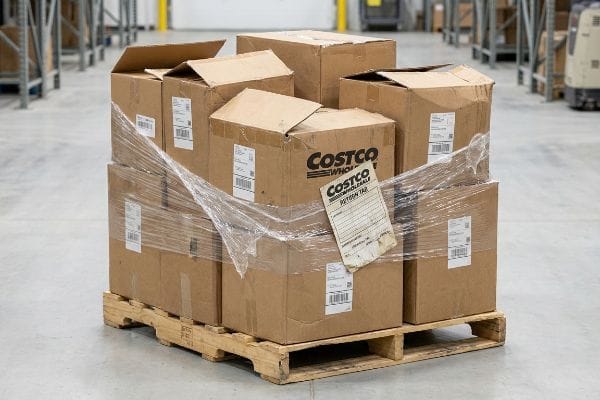
しかし、理論を知っているだけでは十分ではありません。機械が稼働し始め、マスターカートンの中に隠された損傷に気づいたときには、それだけでは足りないのです。.
逆方向貨物輸送の微小亀裂トラップ
清算品を仕入れるバイヤーは、外箱の段ボール箱の表面的な目視検査のみに基づいて利益率を計算することが多い。彼らは、マスターカートンが無傷であるのを見て、中の重い商品が工場出荷時の状態を保っていると論理的に想定する。この一見妥当な想定は、リバースロジスティクス14に内在する深刻な機械的損傷を無視している。リバースロジスティクスでは、商品はもはや工場出荷時のしっかりとした結束バンドで保護されていない。
実験室でディスプレイを1台立てるのは簡単ですが、断片化された返品ネットワークを通じて500台を返送する場合、厳しい現実が待っています。重量のある商品をしっかりと圧縮せずにLTL貨物で返送すると、振動が抑制されずに段ボールの芯に目に見えない微細な亀裂が生じます。私はTAPPI(製紙技術協会)のエッジクラッシュテスターを使用してこれをテストし、見た目には無傷の箱でも垂直方向の圧縮強度が38.4%低下することを日常的に確認しています。これが、 機械的な再張力調整手順 。
| 初心者によくある間違い | プロフィックス | 小売店舗におけるメリット |
|---|---|---|
| 外観の目視検査を信頼する | TAPPIエッジクラッシュテスト15 | 目に見えない繊維疲労を明らかにする |
| 使い古したマスターカートンの再利用 | 新品段ボールの代替品16 | 二次市場の崩壊を防ぐ |
| バラ積みLTL貨物の返品 | 機械的再張力調整手順17 | 輸送中の振動による損傷を防ぎます |
返品貨物の評価においては、目視ではなくマイクロメーターと圧縮試験機に頼っています。茶色で密封されているというだけで箱が安全だと決めつけるのは、輸送中の投資をすべて失う最も手っ取り早い方法です。.
🛠️ ハーベイのデスク: 結束されていないLTL(小口貨物輸送)の1回の返送後、箱の圧縮強度が何パーセント低下するか正確にご存知ですか? 👉 ダイラインファイルをお送りください ↗ — 大量生産に予算を無駄にする前に、私が計算をストレステストします。
結論
市場で最も安価な板紙を調達することはできますが、その単層板紙が2,500ポンド(1,133kg)の倉庫ラック上部荷重に耐えきれず崩壊した場合、結果として生じる構造的欠陥により、小売業者からの莫大なチャージバックが発生し、キャンペーンの利益率が瞬時に失われてしまいます。500人以上のブランドマネージャーが、こうした致命的な初期段階のミスを回避するために、私のプリプレスチェックリストを使用しています。動的荷重許容範囲を推測するのはやめて、量産開始前に、私がお客様の構造ファイルを 無料のダイライン監査↗ 、目に見えない機械的な脆弱性を発見しましょう。
「小売向けパッケージングとは? | Diagraphのブログ」、 https://www.diagraph.com/blog/what-is-retail-ready-packaging。[GS1などの業界標準では、小売向けパッケージングは、最小限の労力で小売店の棚に直接置けるユニットと定義されています]。証拠の役割:定義、情報源の種類:業界標準。サポート:RRPの定義。範囲に関する注記:仕様は小売業者によって異なる場合があります 。↩
「フラットパック vs. 組み立て済み硬質箱:どちらの配送方法が優れているか…」、 https://www.linkedin.com/pulse/flat-pack-vs-assembled-rigid-boxes-which-shipping-method-ricky-fang-4m4oc。[サプライチェーン物流調査によると、フラットパックはパレット密度を高め、輸送中の容積重量を削減します]。証拠の役割:技術的検証。情報源の種類:物流調査。サポート:配送効率。適用範囲に関する注記:特に段ボールおよび折りたたみ可能な材料に適用されます 。↩
"[PDF] 段ボール仕様書 – ファイバーボックス協会", https://www.fibrebox.org/assets/2025/09/Walmart_Corrugated-Board_Specifications_Automation_Packaging_Standards.pdf。[段ボールの技術規格では、32 ECT 材料の特定の耐荷重能力と構造的圧縮抵抗が定義されています]。証拠の役割: 技術仕様書、情報源の種類: 業界標準マニュアル。サポート: 小売ディスプレイ材料の物理的特性。適用範囲に関する注記: 特に単層段ボールの強度について言及しています] 。↩
「PDQディスプレイ:完全概要? – カスタム段ボール…」、 https://popdisplay.me/pdq-displays-a-complete-overview/。[業界ベンチマークまたはパッケージング効率調査では、手動ロックタブから接着済みモジュールベースへの移行によって達成される時間短縮を定量化しています]。証拠の役割:定量的指標。情報源の種類:業界ホワイトペーパー。サポート:モジュール設計による時間短縮効果。範囲に関する注記:実際の節約効果は、ディスプレイの規模と担当者のトレーニングによって異なります 。↩
「段ボール箱究極ガイド – Shorr Packaging」、 https://www.shorr.com/resources/blog/ultimate-guide-corrugated-boxes/。[構造包装エンジニアリングガイドラインでは、材料の完全性を損なうことなく確実な嵌合を確保するために必要な正確な公差範囲を規定しています]。証拠の役割:技術仕様書、情報源の種類:エンジニアリングマニュアル。サポート:摩擦スロット精度の業界標準。範囲に関する注記:使用する板紙の厚さによって異なる場合があります 。↩
「湿度と温度が…の機械的特性に及ぼす影響」、 https://bioresources.cnr.ncsu.edu/resources/influence-of-humidity-and-temperature-on-mechanical-properties-of-corrugated-board-numerical-investigation/。[材料科学の文書では、特定の公差がセルロース系ボードの構造座屈につながる過剰な圧縮応力をどのように防ぐかを説明しています]。証拠の役割:技術的メカニズム。情報源の種類:技術マニュアル。裏付け:精密なスロット公差の機能的結果。範囲に関する注記:折り畳みとスロットによる組み立て方法に特有 。↩
「コストコ事例研究:再設計されたパレットディスプレイで売上が3倍に | TPH」、 https://www.tphinc.com/custom-point-of-purchase-pop-pos-retail-store-displays-packaging-blog/case-study-redesigned-costco-display-triples-product-in-pallet/。[業界の物流ガイドや倉庫型量販店のベンダーマニュアルでは、従来の大型小売店と比較して、輸送中および保管中の満載ディスプレイの積み重ねに関する明確な要件が確認されています]。証拠の役割:技術的検証。情報源の種類:ベンダーコンプライアンスマニュアル。裏付け:倉庫型量販店が満載ディスプレイの垂直積み重ねを利用しているという主張。範囲に関する注記:輸送中およびバックヤード保管に特化 。↩
「二重壁段ボール包装の最適設計 – PMC」、 https://pmc.ncbi.nlm.nih.gov/articles/PMC8950760/。[段ボール材料の業界包装規格では、二重壁構造が単層構造よりも圧縮強度が高いことが検証される]。証拠の役割:技術仕様書、情報源の種類:エンジニアリングマニュアル。裏付け:二重壁構造がより高い動的荷重を支えるという主張。適用範囲に関する注記:段ボールの構造設計に特化 。↩
「段ボールに最適な接着剤とは? – Bolt Boxes」、 https://boltboxes.com/blog/best-glue-for-corrugated-cardboard-shipping-boxes/。[ポリ酢酸ビニル(PVA)に関する材料科学の資料は、耐水性配合が高湿度環境下での接着不良を防ぐ仕組みを実証するだろう]。証拠の役割:材料性能の検証。情報源の種類:技術データシート。裏付け:特定の接着剤がベースの反りを防ぐという主張。適用範囲に関する注記:工業用接着剤の試験に適用される 。↩
「店頭ディスプレイで小売店の視認性を高める方法」、 https://www.industrialpackaging.com/blog/increased-retail-visibility。[段ボール包装と消費者心理に関する業界ガイドラインは、一次包装の視覚的な障害を最小限に抑えることで、高額商品のコンバージョン率が向上することを実証しています]。証拠の役割:技術的検証、情報源の種類:小売マーチャンダイジングマニュアル。サポート:最適な視認性のための高さ15%制限。適用範囲に関する注記:特に倉庫のバルク環境に適用されます 。↩
「ADAアクセシブルデザイン基準タイトルIII規則28 CFR…」、 https://www.ada.gov/law-and-regs/design-standards/1991-design-standards/。[大量販売用什器の業界設計基準では、製品の収納と最大限の視認性のバランスを取るために必要な特定の高さの割合を検証します]。証拠の役割:技術仕様、情報源の種類:小売設計マニュアル。サポート:製品の視認性のための最適な寸法。範囲に関する注記:コストコのような大量販売の小売環境に特化 。↩
「あなたの製品にはどのようなタイプの小売ディスプレイが必要ですか?」、 https://www.creativedisplaysnow.com/what-type-of-retail-display-do-you-need/。[消費者の視線追跡と小売心理学の研究は、低い位置にあるトレイのブランディングよりも、高い位置にあるヘッダーグラフィックの方が衝動買いを促すのに効果的であるという主張を裏付けています]。証拠の役割:行動証拠。情報源の種類:マーケティング調査。裏付け:グラフィック配置の有効性。範囲に関する注記:一般的な小売マーチャンダイジングの原則 。↩
「塗料の光反射率:工業用照明と商業用照明…」、 https://www.paclights.com/explore/light-reflectance-value-of-paint-industrial-vs-commercial-lighting-design/。[光反射率(LRV)に関する技術データは、白色材料が深い陳列トレイの内部輝度を最大化し、製品の魅力を高めることを裏付けています]。証拠の役割:物理的特性の検証。情報源の種類:照明工学ガイド。サポート:高級商品への反射ライナーの使用。適用範囲に関する注記:特に影になる場所や深い内部照明器具に適用されます 。↩
「医薬品輸送中の機械的衝撃 – PubMed」、 https://pubmed.ncbi.nlm.nih.gov/31678248/。[物流業界のホワイトペーパーまたはサプライチェーン調査では、包装の劣化と元の工場での制約の欠如により、逆輸送における製品損傷率の増加が文書化されるだろう]。証拠の役割:技術的検証。情報源の種類:業界レポート。裏付け:逆物流は商品に対する物理的リスクが高いという主張。範囲に関する注記:特にLTLおよびパレット積みの返品に関して 。↩
「全視野ひずみで強化された新しいエッジクラッシュテスト構成…」、 https://pmc.ncbi.nlm.nih.gov/articles/PMC8510352/。[エッジクラッシュテスト(ECT)のTAPPI規格は、段ボールの圧縮強度を定量化し、繊維疲労として知られる構造劣化の検出を可能にします]。証拠の役割:技術仕様、情報源の種類:業界標準。裏付け:ECTを使用して目に見えない構造的弱点を特定する。適用範囲に関する注記:段ボール材料に特化。] ↩
"[PDF] バージンボード対再生ボード L. Lisa Zhao 論文…", https://vuir.vu.edu.au/18233/1/ZHAO_1993compressed.pdf。[バージン繊維は再生繊維よりも鎖が長く、構造的完全性が高いため、輸送用カートンの垂直荷重容量が大幅に増加します]。証拠の役割:材料科学的事実。情報源の種類:技術ホワイトペーパー。裏付け:バージンボードが構造崩壊を防ぐという主張。範囲に関する注記:バージン繊維と再生繊維の性能を比較します。] ↩
「低損傷貨物輸送のためのLTL運送業者の選び方」、 https://olimpwarehousing.com/ltl-carrier-low-damage-shipping/。[積荷固定の機械的再張力調整に関する物流基準は、混載貨物(LTL)輸送中の積荷のずれや調和振動による損傷を軽減します]。エビデンスの役割:物流のベストプラクティス。情報源の種類:サプライチェーンマニュアル。裏付け:輸送中の損傷を防ぐ再張力調整の有効性。範囲に関する注記:LTL貨物のダイナミクスに焦点を当てています。] ↩