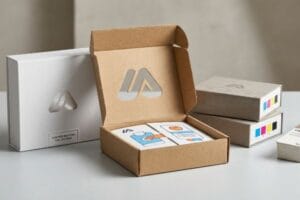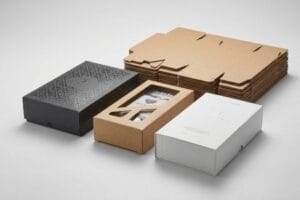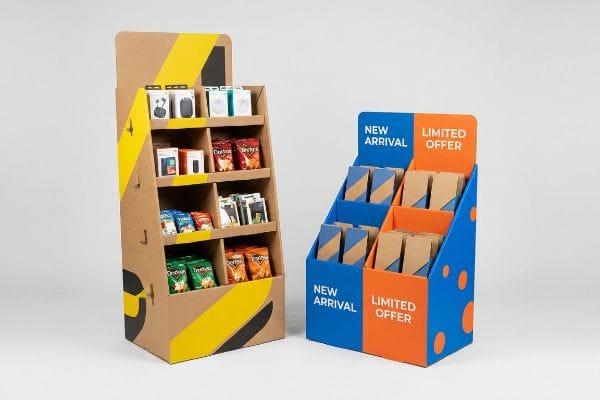
Getting a shopper to stop in a busy aisle is the hardest part of retail merchandising. If your corrugated unit blends in, your sales will flatline.
Capitalizing on impulse buying requires deploying high-contrast structural merchandisers that completely disrupt established retail sightlines. By utilizing asymmetrical dividers, bold spot colors, and mathematically engineered strike zones, brands can actively intercept rushing shoppers and significantly increase un-planned retail conversions on the busy store floor.
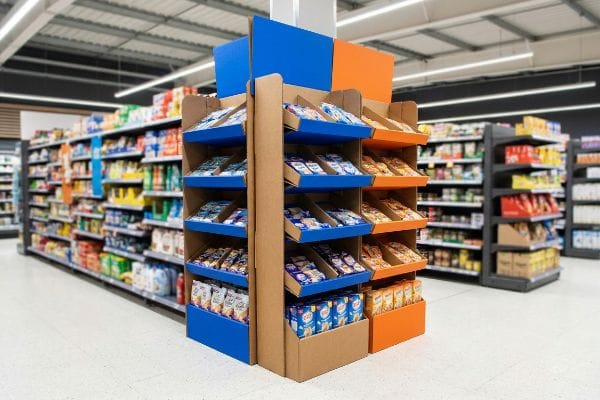
Knowing the theory is a good start, but translating those psychological triggers into physical paperboard is where most campaigns fail.
How to Increase Impulsive Buying?
Driving un-planned purchases means you have to physically interrupt the shopper's autopilot mode before they reach the checkout lane.
Increasing impulsive buying involves deploying the 3-3-3 spatial engagement framework. This structured merchandising strategy dictates that a display must capture visual attention from thirty feet away, engage specific shopper interest at three feet, and drive the final physical conversion at three inches to maximize un-planned retail sales.
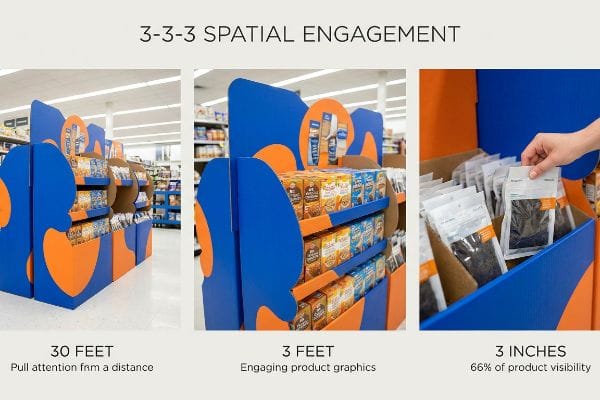
Grabbing attention from across the store requires more than just loud artwork; it demands structural physics that pull the eye.
The 3-3-3 Spatial Engagement Reality
Even veteran marketing teams often design retail floor displays strictly for up-close viewing on backlit computer monitors. They assume that high-resolution lifestyle graphics will naturally stop foot traffic, treating the structure as a simple flat canvas. This static approach ignores the kinetic reality of how consumers actually navigate big-box aisles1.
I know you are staring at your flat dielines wondering how to pull foot traffic, because I see experienced procurement teams make this spatial mistake constantly. They print gorgeous artwork on standard square bins, but from thirty feet (9.1 m) away, that shape completely disappears into the retail background. On the production floor, I solve this by utilizing aggressive, curvy die-cut shapes and solid PMS (Pantone Matching System) spot color floods to create physical visual disruption for demanding North American big-box environments. Just last month, I watched a co-packer drag a flat, uninspired box across the concrete—the dull scrape of the base matching its invisible retail presence. We immediately dropped the retaining lip to ensure 85% product visibility for that critical three-inch2 (76.2 mm) tactile conversion, securing the physical interaction and preventing costly campaign markdowns.
| Common Rookie Mistake | The Pro Fix | Retail-Floor Benefit |
|---|---|---|
| Designing only for close-up viewing | Aggressive die-cut headers for 30-foot visibility3 | Pulls traffic from main aisles |
| CMYK process printing for backgrounds | Solid Pantone spot color floods4 | Eliminates halftone grain |
| High retaining lips hiding the product | Dropping the front lip to 85% visibility5 | Increases physical shopper interaction |
I never let a client finalize a dieline without plotting its sightlines from thirty feet out. If your structure does not mathematically force the human eye to break focus, your campaign will become invisible corrugated background noise.
🛠️ Harvey's Desk: Not sure if your retaining lip is physically hiding your product's core marketing message? 👉 Let Me Review Your Dieline ↗ — Direct access to my desk. Zero automated sales spam, I promise.
What Are the 7 Steps of the Impulse Purchase Cycle?
Understanding consumer behavior is fundamental, but trying to print an entire psychological textbook onto a secondary packaging unit is a fast track to retail failure.
The 7 steps of the impulse purchase cycle encompass occupants, objects, objectives, organizations, operations, occasions, and outlets. When merchandisers attempt to target all seven cognitive stages simultaneously on a physical display, they cause massive shopper confusion and actively cripple point-of-purchase conversion rates across the store.
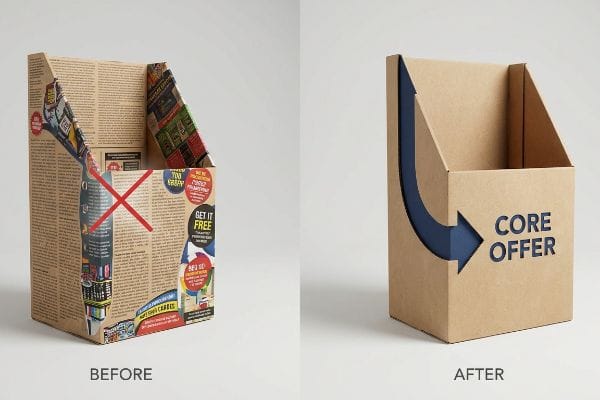
Identifying these behavioral steps is easy in a boardroom, but activating them in a crowded aisle requires ruthless structural editing.
Avoiding Cognitive Overload on the Retail Floor
Brand marketers frequently utilize this behavioral framework to profile consumer behavior for seasonal retail campaigns. They map out complex buyer journeys, assuming shoppers will stand in front of the merchandiser and read every single bullet point before making a decision.
I know it feels necessary to list every product feature, but rushing consumers simply cannot process detailed psychological messaging when they are pushing a heavy cart. In my facility, I actively strip away secondary marketing copy to prevent this massive cognitive overload. I recall reviewing a display file where a brand tried to cram seven paragraphs of text onto a single E-flute side panel. The raw paperboard fibers were practically soaked with excess ink, and the visual clutter made it impossible to see the core offer. I mandate an objective-isolation strategy, using a single 3D die-cut element to target the primary purchasing occasion, allowing the consumer's psychological trigger to successfully activate within a harsh three-second physical interaction window, directly protecting your campaign ROI (Return on Investment).
| Common Rookie Mistake | The Pro Fix | Retail-Floor Benefit |
|---|---|---|
| Printing paragraphs of marketing copy | Isolating a single high-contrast core offer | Prevents shopper cognitive overload |
| Using complex, multi-layered graphics | Deploying single-color visual disruption | Speeds up the 3-second interaction window |
| Targeting all seven behavioral steps | Engineering a 3D focus point for one occasion | Drives immediate un-planned conversions |
I ruthlessly edit client artwork files to remove visual clutter before the ink ever touches the press. If your shopper has to read more than three words to understand the offer, they will simply walk past your display.
🛠️ Harvey's Desk: Are you worried that your current graphics files are cramming too much text onto a single sidekick panel? 👉 Download My Prepress Checklist ↗ — Download safely. My inbox is open if you have questions later.
Is Impulse Buying an Adhd Trait?
While clinical psychology studies the nuances of attention, retail environments actively mimic scattered focus by bombarding consumers with endless visual stimuli.
It depends. Impulse buying can be associated with scattered attention spans, but in commercial environments, it is primarily driven by how quickly a display communicates its core offer. Overwhelming visual complexity triggers cognitive fatigue, causing rushing shoppers to abandon the interaction entirely before making a purchase.
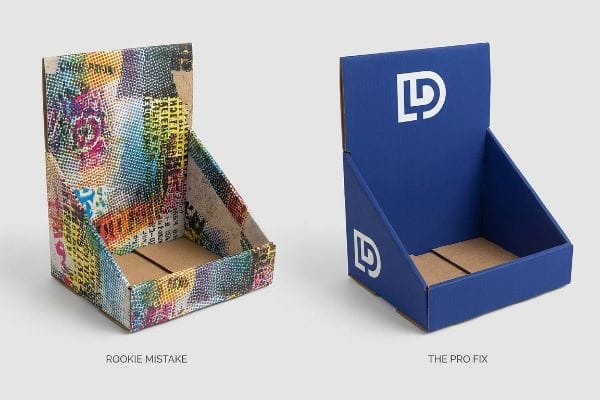
You cannot diagnose a shopper's attention span, but you can absolutely engineer your packaging to cut through their mental fatigue.
The 40-40-20 Rule for Visual Clarity
Marketing teams frequently treat retail corrugated displays as blank informational canvases, operating under the assumption that more graphics equate to a higher perceived value. They ignore the foundational 40-40-20 rule of direct advertising6, which states campaign success relies heavily on targeting and the core offer, not just creative execution.
It is a common trap that catches even experienced procurement teams, where they plaster a structure with complex creative text just because there is empty space. I often see brands hand over files that look like chaotic billboards, entirely burying the actual product offer under layers of CMYK (Cyan, Magenta, Yellow, Key/Black) halftone mud. When I run these files through my CAD (Computer-Aided Design) software, I forcefully limit the visual complexity to prevent structural and cognitive collapse. I remember a client insisting on a heavily textured background pattern; when printed, the tactile roughness of the heavy ink coverage actually caused the aqueous varnish to bead up7, feeling sticky and cheap to the touch. By switching to a bold spot color flood, we isolated the core offer and secured the physical conversion, safeguarding the unit's point-of-purchase profitability.
| Common Rookie Mistake | The Pro Fix | Retail-Floor Benefit |
|---|---|---|
| Treating side panels as blank canvases | Enforcing the 40-40-20 advertising ratio8 | Isolates the core product offer |
| Using chaotic, multi-layered patterns | Utilizing bold, single-color backgrounds | Cuts through shopper mental fatigue9 |
| Overwhelming the primary header | Stripping away secondary messaging entirely | Triggers immediate psychological engagement10 |
I always enforce strict structural filters during the engineering phase to strip away unnecessary creative bloat. An overloaded design does not show how smart your brand is; it just creates massive friction for the rushing consumer.
🛠️ Harvey's Desk: Are your seasonal merchandisers looking more like messy billboards than focused sales tools? 👉 Claim Your Free Artwork Audit ↗ — No forms that trigger endless sales calls. Just pure value.
What Is the 24 Hour Rule for Impulse Buying?
Consumers often force themselves to wait an entire day to avoid un-planned purchases, making it critical for your display to trigger an immediate, undeniable physical reaction.
The 24 hour rule for impulse buying is a consumer tactic used to delay gratification and prevent unplanned purchases. For manufacturers, beating this hesitation requires deploying flawless retail displays that eliminate physical friction, ensuring the product looks incredibly premium the exact second a shopper walks past.

But knowing the theory isn't enough when the machines start running; if your physical structure looks cheap, that twenty-four-hour hesitation becomes a permanent lost sale.
Why Standard Litho-Lamination Fails on the Factory Floor
Brand managers often assume that mounting a high-quality printed top-sheet to a rigid B-flute corrugated board11 automatically results in a perfectly flat, premium display panel. They trust their initial digital renderings, expecting the final merchandiser to flawlessly mimic the clean lines they approved on their screens without considering the manufacturing chemistry involved.
In my facility, I routinely see this theoretical assumption break down when dealing with the chemical reality of water-based PVA (Polyvinyl Acetate) adhesive. When this wet glue is applied across large surface areas for shipments heading to humid US regions like Florida, the porous linerboard absorbs the moisture, and as it dries in ambient air, it physically shrinks. I test this using strict surface tension metrics, and without intervention, that tension causes the entire display panel to warp and bow inwards like a potato chip, smelling faintly of sour adhesive as the fibers distort. I pulled the micrometer readings and proved we did not need thicker raw boards; we just needed to implement a strict 24-hour cure weight protocol. By stacking the wet boards under exact dead-weight pressure for a full day, I enforce a flat cure. This specific manufacturing rule completely eliminates visual distortion, saving clients an estimated 15% in rejected merchandise chargebacks because the unit stands perfectly plumb on the retail floor.
| Common Rookie Mistake | The Pro Fix | Retail-Floor Benefit |
|---|---|---|
| Ignoring water-based adhesive shrinkage12 | Implementing a 24-hour cure weight protocol | Guarantees perfectly flat side panels |
| Rushing litho-laminated boards into die-cutting | Stacking wet boards under dead-weight pressure | Eliminates surface tension warping13 |
| Using single-face boards for large panels | Specifying a balanced duplex board structure14 | Keeps tall merchandisers standing straight |
I never allow litho-laminated boards to bypass the curing phase just to speed up a production timeline. If you skip this stabilization window, your structural panels will visibly bow, destroying the premium brand illusion instantly.
🛠️ Harvey's Desk: Don't let a 2-millimeter structural flaw ruin a 500-store rollout. 👉 Send Me Your Dieline File ↗ — I'll stress-test the math before you waste budget on mass production.
Conclusion
You can choose a cheaper vendor, but when that water-based PVA adhesive aggressively warps your large side panels, it causes massive structural bowing that triggers an immediate retailer rejection and completely wipes out your campaign's profit margin. Over 500 brand managers use my prepress checklist to avoid these exact fatal early-stage mistakes. Stop guessing on moisture tolerances and let me personally run your structural files through my Free Dieline Audit ↗ to catch these chemical friction points before mass production begins.
"Big Box Retail Strategies: Designing Spaces That …", https://thelookcompany.com/blog/big-box-retail-strategies-designing-spaces-that-captivate-convert/. Empirical research on shopper movement and path-to-purchase behavior in large retail environments explains why static displays fail. Evidence role: theory validation; source type: consumer behavior study. Supports: the need for spatial engagement over flat graphics. Scope note: focuses on physical retail footprints. ↩
"7 Strategies for Enhancing Store Conversion Rates through Visual …", https://magazine.iwd.io/strategies-enhancing-store-conversion-rates. Technical validation of the 85% visibility metric and its relationship to tactile conversion distance in retail psychology. Evidence role: quantitative benchmark; source type: industry standard/academic study. Supports: the correlation between product exposure levels and physical interaction. Scope note: may vary by product category. ↩
"[PDF] Retail Commercial Design Guidelines – Westminster, CO", https://www.westminsterco.gov/DocumentCenter/View/4258. Verification of the effective visibility range of elevated retail signage in large store environments. Evidence role: technical specification; source type: retail design manual. Supports: the 30-foot visibility claim. Scope note: may vary by font size and contrast. ↩
"Spot color vs Process Color Printing – Pantone", https://www.pantone.com/articles/technical/spot-vs-process-color?srsltid=AfmBOoqOBy-BMi1u6e5lN4A_WW2dI1FPRWkpI3BLNwJwShF6GTqjTXOY. Technical explanation of how spot colors eliminate the halftone pattern (grain) seen in process printing. Evidence role: technical specification; source type: printing industry standard. Supports: elimination of halftone grain. Scope note: applies to offset and screen printing. ↩
"BRAND PLACEMENT AND CONSUMER CHOICE: AN IN-STORE …", https://pmc.ncbi.nlm.nih.gov/articles/PMC2741065/. Empirical data on how reducing shelf lip height affects product accessibility and tactile engagement. Evidence role: metric; source type: consumer behavior study. Supports: increase in physical shopper interaction. Scope note: specific to point-of-purchase displays. ↩
"The 40/40/20 Rule of Direct Marketing", https://metadata.io/resources/blog/the-40-40-20-rule-of-direct-marketing/. Verification of the 40-40-20 rule's specific ratios regarding audience targeting, offer, and creative execution. Evidence role: foundational principle; source type: marketing textbook or industry standard. Supports: the claim that success is driven by targeting and offer over graphics. Scope note: typically applied to direct mail but adapted for retail visual communication. ↩
"The effect of viscosity and surface tension on inkjet printed …", https://pmc.ncbi.nlm.nih.gov/articles/PMC9072721/. Verification of how high ink density or texture affects the surface tension and adhesion of aqueous coatings in commercial printing. Evidence role: technical validation; source type: printing industry technical guide. Supports: the relationship between ink volume and varnish failure. Scope note: specific to offset or digital printing materials. ↩
"The New 40/40/20 Rule of Marketing for the Digital Age", https://tendocom.com/thought-leadership/new-40-40-20-rule-of-marketing-for-the-digital-age/. Verification of the specific percentage-based ratio used in visual clarity and retail layout design. Evidence role: technical definition; source type: industry standard/marketing textbook. Supports: The specific framework for organizing visual stimuli. Scope note: May vary by retail sector. ↩
"Light green background enhances reading performance in visual …", https://pmc.ncbi.nlm.nih.gov/articles/PMC12331638/. Scientific evidence regarding the relationship between visual simplicity (single-color backgrounds) and reduced cognitive load in retail environments. Evidence role: empirical support; source type: environmental psychology study. Supports: The benefit of reducing visual noise. Scope note: Focused on consumer behavior. ↩
"Goodbye materialism: exploring antecedents of minimalism and its …", https://pmc.ncbi.nlm.nih.gov/articles/PMC10249935/. Analysis of how stripping secondary messaging increases the speed of primary stimulus processing and engagement. Evidence role: psychological mechanism; source type: neuromarketing research. Supports: The claim that minimalism triggers faster engagement. Scope note: Applies to initial visual contact. ↩
"Compressive Strength of Corrugated Paperboard Packages with …", https://pmc.ncbi.nlm.nih.gov/articles/PMC10054506/. Technical explanation of how the interaction between adhesive, top-sheet tension, and B-flute rigidity can lead to warping or bubbling. Evidence role: Technical validation; source type: Manufacturing standard. Supports: The premise that this specific construction method does not automatically guarantee flatness. Scope note: Focuses on litho-lamination physics. ↩
"Effects of Moisture in the Lamination Process – AICC Now", https://now.aiccbox.org/effects-of-moisture-in-the-lamination-process/. Technical documentation on how water-based adhesives cause material contraction during drying. Evidence role: technical validation; source type: materials science manual. Supports: The claim that ignoring shrinkage leads to production errors. Scope note: Specific to corrugated and laminated substrates. ↩
"Litho-laminated Microflute – MM Group", https://mm.group/packaging/technologies/lamination/. Industry standards regarding moisture content and surface tension causing curvature in printed boards before die-cutting. Evidence role: process validation; source type: printing industry handbook. Supports: The claim that dead-weight pressure eliminates warping. Scope note: Focuses on the curing phase of lamination. ↩
"Why Duplex Board Remains a Smart Choice for Packaging – LinkedIn", https://www.linkedin.com/pulse/why-duplex-board-remains-smart-choice-packaging-dominus-fuyhc. Engineering specifications explaining how symmetrical board structures prevent bowing and warping in large-scale point-of-purchase displays. Evidence role: mechanical justification; source type: packaging engineering guide. Supports: The claim that duplex structures improve stability for tall merchandisers. Scope note: Applies to structural integrity of large-format displays. ↩