किसी वेयरहाउस क्लब में अपने उत्पाद को स्वीकार करवाना तो आधी लड़ाई है; उनकी सख्त लॉजिस्टिकल सप्लाई चेन में टिके रहने के लिए त्रुटिहीन यांत्रिक निष्पादन और कड़े अनुपालन की आवश्यकता होती है।.
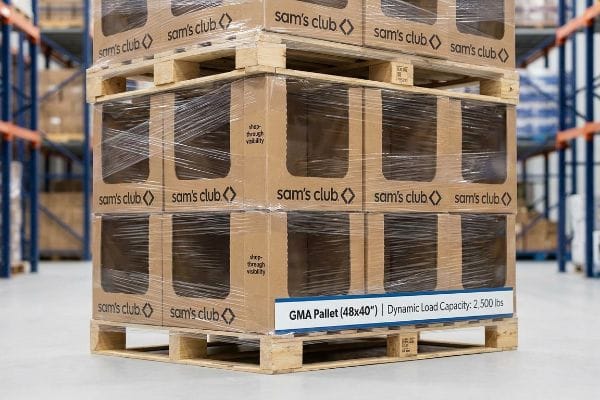
सैम्स क्लब के फुल पैलेट डिस्प्ले की आवश्यकताओं के अनुसार, 48×40 इंच का जीएमए फुटप्रिंट और 2,500 पाउंड (1,133 किलोग्राम) की डायनेमिक लोड क्षमता आवश्यक है। यह सख्त अनुपालन सुनिश्चित करता है कि बल्क मर्चेंडाइजर परिवहन के दौरान डबल-स्टैकिंग से सुरक्षित रहें, साथ ही वेयरहाउस कर्मचारियों को शॉप-थ्रू विजिबिलिटी प्रदान करें और सुरक्षा ऑडिट पास करें।.
लेकिन जब कारखाने में डाई-कटिंग मशीनें चलने लगती हैं, तो सैद्धांतिक नियमों की जानकारी होना ही काफी नहीं होता। डिजिटल प्रस्तुति और वास्तविक परिणाम के बीच का अंतर ही वह बिंदु है जहाँ लाभ मार्जिन या तो सुरक्षित रहता है या पूरी तरह नष्ट हो जाता है।.
सैम्स क्लब के लिए पैलेट के मानक क्या हैं?
वेयरहाउस क्लबों के लिए एक मर्चेंडाइजर डिजाइन करने का मतलब है औद्योगिक सुरक्षा की मानसिकता अपनाना, जहां संरचनात्मक अखंडता आपके पूरे अभियान की सफलता निर्धारित करती है।.
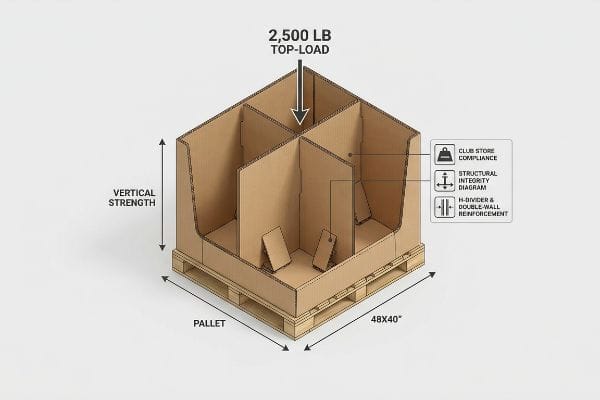
सैम्स क्लब के पैलेट मानकों में सटीक संरचनात्मक आयाम और मजबूती की सीमाएं निर्धारित हैं। प्रत्येक मर्चेंडाइज़र को बिना किसी अतिरिक्त उभार के एक मानकीकृत 48×40 इंच के लकड़ी के बेस को सुचारू रूप से फिट करना होगा। खुदरा विक्रेता गोदाम की अधिकतम सुरक्षा, कुशल स्वचालित हैंडलिंग और उत्पाद की क्षति को रोकने के लिए इन सख्त इंजीनियरिंग नियमों का कड़ाई से पालन करते हैं।.
किसी कॉर्पोरेट बोर्डरूम में यह काफी सरल लगता है, लेकिन टन भर थोक माल रखने के लिए एक गलियारे के डिस्प्ले को बड़ा करने से गंभीर गतिज तनाव बिंदु उत्पन्न होते हैं।.
2,500 पाउंड की सीमा के पीछे छिपी इंजीनियरिंग
यहां तक कि अनुभवी खरीद टीमें भी अक्सर इस भ्रम में पड़ जाती हैं कि यदि वे भारी 32 ईसीटी (एज क्रश टेस्ट) पेपरबोर्ड1, तो संरचना स्वाभाविक रूप से क्लब स्टोर की आवश्यकताओं को पूरा कर लेगी। वे गलत धारणा रखते हैं कि कच्चे माल की मोटाई स्वतः ही गतिशील ऊर्ध्वाधर मजबूती के बराबर होती है। यह मिथक खुदरा वातावरण की भौतिक वास्तविकता को नजरअंदाज करता है, जहां बड़े-बड़े पैलेटों को फोर्कलिफ्ट द्वारा तेजी से स्थानांतरित किया जाता है, एक दूसरे के ऊपर रखा जाता है, और उच्च आर्द्रता के संपर्क में लाया जाता है, जिससे आधार संरचना के कोनों को पूरे लॉजिस्टिकल भार को वहन करना पड़ता है।
यह सिर्फ़ सिद्धांत नहीं है—मैं परीक्षण के दौरान लगातार इस समस्या का सामना करता हूँ। हाल ही में एक ग्राहक मेरे पास स्नैक डिस्प्ले का एक शानदार डिज़ाइन लेकर आया, जो कथित तौर पर सॉफ़्टवेयर सिमुलेशन में सफल रहा था। हमारे आंतरिक परीक्षण के दौरान, BCT (बॉक्स कम्प्रेशन टेस्ट)2 लोड-सेल 1,815.5 पाउंड (823 किलोग्राम) पर ही स्थिर हो गया। स्थिर भार विक्षेपण 1.3 इंच (33 मिमी) से अधिक हो गया, और पूरी प्राथमिक सपोर्ट स्पाइन अंदर की ओर बुरी तरह मुड़ गई। एजेंसी ने खरीदारी के लिए सुंदर खुली खिड़कियाँ तो डिज़ाइन की थीं, लेकिन ऊर्ध्वाधर फ्लूट अलाइनमेंट3था। मैंने तुरंत डिजिटल टेम्पलेट को हटा दिया और एक मुड़े हुए डबल-वॉल हेडर और एक आंतरिक H-डिवाइडर का उपयोग करके "शॉप-थ्रू" आर्किटेक्चर को फिर से डिज़ाइन किया। ऊर्ध्वाधर ग्रेन दिशा को गणितीय रूप से लॉक करके और भार वहन करने वाले कोनों को सुदृढ़ करके, नई ज्यामिति आसानी से 2,650 पाउंड (1,202 किलोग्राम) का भार सहन कर सकी। इस सटीक संरचनात्मक पुनर्वितरण को लागू करके, मैंने गोदाम के ढहने के जोखिम को समाप्त कर दिया, जिससे खुदरा विक्रेताओं द्वारा तत्काल अस्वीकृति को रोका जा सका और ग्राहक को अपने पूरे मौसमी लाभ मार्जिन को खत्म होने से बचाया जा सका।
| इंजीनियर समाधान | भौतिक परिणाम | वित्तीय/अनुपालन आरओआई |
|---|---|---|
| आंतरिक एच-डिवाइडर एकीकरण | ऊर्ध्वाधर बीसीटी की ताकत को बहाल करता है4 | चार्जबैक के जोखिम को समाप्त करता है |
| बांसुरी अनाज संरेखण5 | रीढ़ की हड्डी के क्षैतिज झुकाव को रोकता है | परिवहन के दौरान होने वाले नुकसान से बचाता है |
| फोल्डेड डबल-वॉल सपोर्ट | यह 2,500+ पाउंड के ऊपरी भार को अवशोषित करता है।6 | क्लब स्टोर के अनुपालन को सुनिश्चित करता है |
मैं त्रुटिपूर्ण सैद्धांतिक ढाँचों को बड़े पैमाने पर उत्पादन को निर्देशित करने की अनुमति नहीं दूंगा। गतिज ज्यामिति को सिद्ध किए बिना कच्चे माल के विनिर्देशों पर भरोसा करना, माल को प्राप्ति स्थल पर ही नष्ट होते देखने का एक निश्चित तरीका है।.
🛠️ हार्वे का डेस्क: क्या आपके मौजूदा फ्लोर डिस्प्ले 2,500 पाउंड के डायनामिक कम्प्रेशन टेस्ट में टिकने के लिए गणितीय रूप से इंजीनियर किए गए हैं? 👉 बीओएम ऑडिट का अनुरोध करें ↗ — मैं 24 घंटों के भीतर प्रत्येक संरचनात्मक फ़ाइल की व्यक्तिगत रूप से समीक्षा करता हूँ।
पैलेट के लिए क्या आवश्यकताएं हैं?
सही बुनियाद तैयार करना वैश्विक आपूर्ति श्रृंखला प्रबंधन की मूलभूत आवश्यकता है; इसे नजरअंदाज करने से ऊपर की हर चीज खतरे में पड़ जाती है।.
पैलेटों के लिए मुख्य आवश्यकता ग्रेड-ए, चार-तरफ़ा प्रवेश वाले लकड़ी के आधारों का उपयोग करना है जो भारी लचीलेपन का प्रतिरोध कर सकें। खरीद टीमों को यह सुनिश्चित करना होगा कि डेक बोर्डों के बीच उचित दूरी हो और कीटों से बचाव के लिए उन्हें ऊष्मा-उपचारित किया गया हो। इन बुनियादी विशिष्टताओं को पूरा करने से अंतरराष्ट्रीय सीमा शुल्क में होने वाली देरी और परिवहन के दौरान होने वाले गंभीर नुकसान से पूरी तरह बचा जा सकता है।.
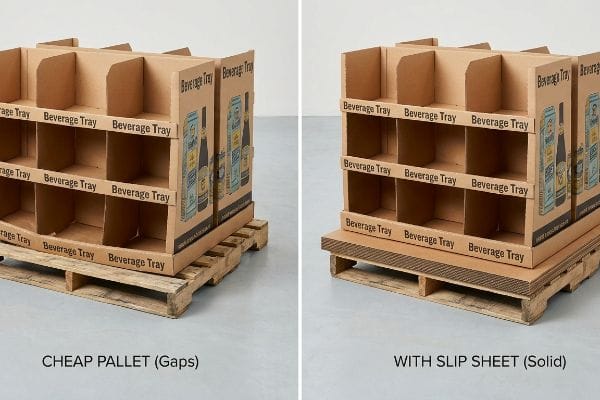
लेकिन लकड़ी की मूल श्रेणी जानने का कोई फायदा नहीं है अगर आपको यह समझ नहीं आता कि खुरदरी लकड़ी की पट्टियों के खिलाफ जोर से दबाए जाने पर नालीदार रेशे कैसे प्रतिक्रिया करते हैं।.
सस्ते लकड़ी के डेक कार्डबोर्ड डिस्प्ले को क्यों खराब कर देते हैं?
कई ब्रांड मैनेजर स्वाभाविक रूप से यह मान लेते हैं कि कोई भी मानक लकड़ी का निर्यात प्लेटफॉर्म उनके पहले से भरे हुए खुदरा विक्रेताओं के परिवहन के लिए पूरी तरह से सुरक्षित है। वे पूरी तरह से कलाकृति और उत्पाद पर ध्यान केंद्रित करते हैं, लकड़ी के आधार को एक सस्ती, बदली जा सकने वाली वस्तु मानते हैं। वे निम्न-श्रेणी के पैलेटों के ऊपरी डेक बोर्डों के बीच मौजूद विशाल भौतिक अंतरालों को पूरी तरह से अनदेखा कर देते हैं । जब समुद्री परिवहन के दौरान टन भर स्थिर भार नीचे की ओर दबाव डालता है, तो कार्डबोर्ड के पास नीचे जाने के अलावा कोई और रास्ता नहीं बचता।
यह सिर्फ़ सिद्धांत नहीं है—मैं परीक्षण के दौरान टूटी हुई परियोजनाओं को ठीक करते समय इस समस्या का सामना करता हूँ। पिछले साल, एक परेशान व्यापारिक कंपनी ने मुझे फ़ोन किया जब उनके पूरे कंटेनर को गुणवत्ता नियंत्रण (QA) द्वारा दोषपूर्ण घोषित कर दिया गया। उन्होंने भारी पेय ट्रे सीधे सस्ते, चौड़े गैप वाले लकड़ी के पैलेट पर लाद दी थीं। मैंने अपने ISTA (अंतर्राष्ट्रीय सुरक्षित परिवहन संघ) कंपन तालिका पर एक प्रतिकृति तैयार की। ठीक 812.4 पाउंड (368 किलोग्राम) के नीचे की ओर बल पर, नालीदार आधार के बिना सहारे वाले हिस्से सीधे लकड़ी के खाली स्थानों में धंसने लगे। आप सचमुच कागज़ के रेशों के फटने की आवाज़ सुन सकते थे और अत्यधिक सतह तनाव के कारण पानी आधारित PVA (पॉलीविनाइल एसीटेट) चिपकने वाले पदार्थ के छिलने की गंध महसूस कर सकते थे। मैंने तुरंत परीक्षण रोक दिया और एक "ठोस डेक प्रोटोकॉल" शुरू किया। मैंने लकड़ी के स्ट्रिंगर्स पर लंबवत रूप से फैली एक भारी-भरकम, ठोस नालीदार स्लिप शीटलगाकर । इस भौतिक हस्तक्षेप ने गतिज झटके को खाली स्थानों पर केंद्रित करने के बजाय पूरे क्षेत्र में समान रूप से फैला दिया। इस स्लिप शीट को जोड़ने से, निचले स्तर का झुकाव पूरी तरह से समाप्त हो गया, जिससे आधार की संरचनात्मक अखंडता संरक्षित रही और ग्राहक को क्षतिग्रस्त माल के राइट-ऑफ में अनुमानित 18% की बचत हुई।
| इंजीनियर समाधान | भौतिक परिणाम | वित्तीय/अनुपालन आरओआई |
|---|---|---|
| ठोस नालीदार स्लिप शीट | लकड़ी के डेक के गैप को कवर करता है | सबसे निचले स्तर के नुकसान को कम करता है10 |
| लंबवत बांसुरी लेआउट | स्थिर भार को नीचे की ओर फैलाता है11 | आधार की अखंडता को बनाए रखता है |
| उच्च श्यानता चिपकने वाला पदार्थ | तनाव के कारण होने वाली त्वचा की छिलने की समस्या को रोकता है12 | इससे दोबारा काम करने की मेहनत खत्म हो जाती है |
मैं कुछ पैसे बचाने के चक्कर में बुनियाद से समझौता करने में विश्वास नहीं रखता। एक प्रीमियम रिटेल डिस्प्ले पूरी तरह से बेकार है अगर उसका आधार ही इतना कमजोर हो कि उसे स्टोर में रखा ही न जा सके।
🛠️ हार्वे का डेस्क: क्या आपका मौजूदा सप्लायर आपके भारी प्री-फिल्ड शिपर्स के लिए गैप-ब्रिजिंग स्लिप शीट्स को स्वचालित रूप से इंजीनियर करता है? 👉 अपना 3D स्ट्रेस सिमुलेशन प्राप्त करें ↗ — 100% गोपनीय। आपके अप्रकाशित रिटेल डिज़ाइन मेरे पास सुरक्षित हैं।
एक ट्रक पर 48×40 आकार के कितने खाली पैलेट रखे जा सकते हैं?
लॉजिस्टिक्स ऑप्टिमाइजेशन आयतन संबंधी गणित का एक खेल है, जहां ऊर्ध्वाधर स्थान का हर व्यर्थ इंच आपके परिचालन बजट को सक्रिय रूप से कम करता है।.
एक मानक 53-फुट ट्रक पर कितने खाली 48×40 पैलेट आ सकते हैं, यह पूरी तरह से स्टैकिंग सीमाओं पर निर्भर करता है। एक सामान्य ड्राई वैन में लगभग 400 से 500 खाली यूनिट आ सकती हैं। हालांकि, जब तैयार संरचनात्मक पैकेजिंग से भरा होता है, तो ट्रेलर की आंतरिक ऊंचाई को अधिकतम करने के लिए ऊपरी स्तर के कुचलने से बचने के लिए सटीक गणितीय संरेखण की आवश्यकता होती है।.
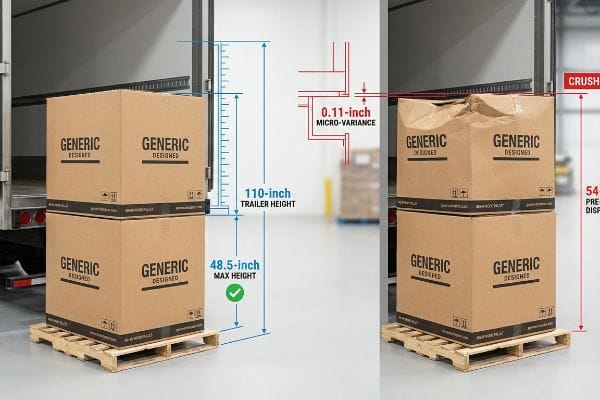
खाली लकड़ी के प्लेटफार्मों को गिनना तो आसान गणित है, लेकिन जैसे ही आप पूरी तरह से असेंबल किए गए, उत्पाद से भरे नालीदार ढांचों को उसी ट्रेलर के आयतन में डालते हैं, डबल-स्टैकिंग का भौतिकी का नियम निर्मम हो जाता है।.
कारखाने में दोहरी स्टैकिंग से होने वाला आघात
जूनियर लॉजिस्टिक्स कोऑर्डिनेटर अक्सर 110 इंच (2,794 मिमी) की आंतरिक ट्रेलर ऊंचाई को देखकर यह मान लेते हैं कि वे दो 54 इंच (1,371 मिमी) के पहले से भरे हुए डिस्प्ले को एक दूसरे के ऊपर आसानी से रख सकते हैं और जगह भी बच जाएगी। वे नालीदार बोर्ड को ठोस स्टील की तरह मानते हैं, मशीन की सटीकता की वास्तविकता को अनदेखा करते हैं। बड़े पैमाने पर उत्पादन के दौरान, डाई-कटिंग दबाव या मोड़ने के घर्षण में मामूली बदलाव के कारण डिस्प्ले सीएडी फ़ाइल में निर्दिष्ट ऊंचाई से कुछ इंच ऊंचा हो सकता है, जिससे सैद्धांतिक रूप से एकदम सही फिट एक भयंकर घर्षण लॉक में बदल जाता है।
यह सिर्फ़ सिद्धांत नहीं है—मैंने इसे अपने अनुसंधान एवं विकास प्रयोगशाला में कठिन अनुभव से सीखा है। 2022 में, मैंने अपने प्रमुख पैकेजिंग इंजीनियर, मार्क से एक विशाल बिग-बॉक्स रोलआउट पर क्लीयरेंस सिमुलेशन चलाने को कहा। हमने एक सुंदर, मज़बूत फ्लैट-पैक बेस डिज़ाइन किया था जिसकी तकनीकी माप ठीक 49 इंच (1,244 मिमी) थी। हमें लगा कि हमारे पास पर्याप्त क्लीयरेंस है। मैं पूरी तरह गलत था। तीन दिन बाद, जलवायु कक्ष में, नकली डबल-स्टैकिंग दबाव के तहत, मैंने शीर्ष स्तर के बी-फ्लूट के ढहने की भयानक आवाज़ सुनी। फ़ैक्टरी फ़्लोर पर रोटरी स्लॉटर में एक सूक्ष्म विचलन था, जिससे प्राथमिक स्कोर लाइनों पर 0.11 इंच (2.8 मिमी) की अतिरिक्त जगह रह गई थी। स्टैक करने पर, यूनिट हमारे परीक्षण जिग की अधिकतम सीमा तक पहुँच गई, जिससे सभी गतिज कंपन सीधे हेडर में समाहित हो गए। मैं तुरंत उत्पादन फ़्लोर पर गया, लाइन बंद कर दी और डाई-कटर पर डायनामिक स्ट्रिपिंग मैट्रिक्स को कस दिया। आक्रामक स्कोर गहराई सुनिश्चित करने के लिए एनविल दबाव को मैन्युअल रूप से पुनः कैलिब्रेट करके, हमने गणितीय रूप से मुड़ी हुई ऊंचाई को 48.5 इंच (1,231 मिमी) की अधिकतम सीमा तक सीमित कर दिया। इस तत्काल यांत्रिक समायोजन ने न केवल हेडर को ढहने से रोका, बल्कि ट्रेलर में घर्षण रहित डबल-स्टैकिंग की गारंटी भी दी, जिससे ब्रांड की कुल आउटबाउंड माल ढुलाई लागत में अनुमानित 45% की कमी आई ।
| इंजीनियर समाधान | भौतिक परिणाम | वित्तीय/अनुपालन आरओआई |
|---|---|---|
| रोटरी स्लॉटर रीकैलिब्रेशन | अतिरिक्त तह की ऊंचाई को समाप्त करता है | माल ढुलाई की लागत आधी हो जाती है15 |
| आक्रामक स्कोर गहराई | सटीक सीएडी आयामों को लागू करता है | शीर्ष स्तर के कुचलने को रोकता है16 |
| सख्त 48.5 इंच ऊंचाई वाला लॉक17 | सुरक्षित डबल-स्टैकिंग को सक्षम बनाता है | ट्रेलर घनत्व को अधिकतम करता है |
मैंने शुरू में ही सीख लिया था कि अगर आपकी भारी मशीनरी उन मापों को लागू करने के लिए कैलिब्रेट नहीं की गई है, तो सॉफ्टवेयर द्वारा किए गए मापों का कोई मतलब नहीं होता। गोदाम के गुरुत्वाकर्षण को मात देने का एकमात्र तरीका मशीन की सटीक सहनशीलता है।.
🛠️ हार्वे का डेस्क: क्या आपके मास्टर कार्टन में कहीं-कहीं ऐसी सूक्ष्म खामियां हैं जो माल ढुलाई के दौरान सुरक्षित रूप से डबल-स्टैकिंग में बाधा डालती हैं? 👉 स्ट्रक्चरल इंजीनियरिंग में सुधार करवाएं ↗ — बीच में कोई अकाउंट मैनेजर नहीं। आप सीधे स्ट्रक्चरल इंजीनियरों से बात करें।
कॉस्टको में पैलेट की ऊंचाई सीमा क्या है?
दुनिया के सबसे सख्त खुदरा वातावरण के लिए डिजाइन करने का मतलब यह स्वीकार करना है कि भौतिक कार्डबोर्ड की तरह ही स्थानिक वातावरण को भी कड़ाई से विनियमित किया जाता है।.
कॉस्टको में पैलेट की ऊंचाई की सीमा लकड़ी के आधार सहित ठीक 48 से 52 इंच (1,219 से 1,320 मिमी) है। इस अधिकतम ऊंचाई सीमा का सख्ती से पालन करने से रिटेल लॉजिस्टिक्स टीमें स्टील रैकिंग सिस्टम में माल को आसानी से डबल-स्टैक कर सकती हैं, जिससे ऊपर से होने वाली टक्करों का कोई बड़ा खतरा नहीं रहता।.
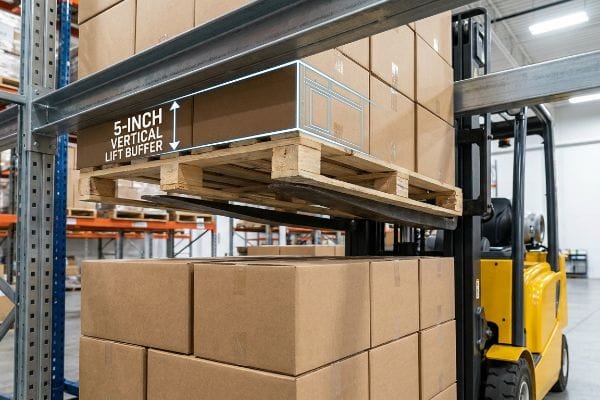
हालांकि, छत की सटीक ऊंचाई जानना और एक ऐसी इकाई को डिजाइन करना जो वास्तव में उस शेल्फ पर रखे जाने की यांत्रिक प्रक्रिया को सहन कर सके, बिल्कुल अलग बातें हैं।.
फोर्कलिफ्ट बफर के पीछे की इंजीनियरिंग यांत्रिकी
कई डिज़ाइन एजेंसियां किसी रिटेलर के अनुपालन मैनुअल को देखती हैं, उसमें 52 इंच (1,320 मिमी) की अधिकतम रैकिंग स्लॉट18, और उत्पाद घनत्व को अधिकतम करने के लिए तुरंत अपने डिस्प्ले को ठीक 51.5 इंच ऊंचा बना देती हैं। वे मान लेते हैं कि एक तंग, समतल फिट ही स्थान का सबसे कुशल उपयोग है। वे औद्योगिक मशीनरी की गतिज गति को समझने में विफल रहते हैं। फोर्कलिफ्ट एकदम सीधी, समतल, क्षैतिज रेखाओं में नहीं चलतीं; उन्हें अपने भारी स्टील के फोर्क को ऊपर की ओर झुकाने के लिए स्थानिक आयतन की आवश्यकता होती है ताकि वे सुरक्षित रूप से भारी भार को उठा सकें।
जब ग्राहक मुझसे पूछते हैं कि व्यवहार में यह कैसा दिखता है, तो मैं आमतौर पर अपने कच्चे माल के गोदाम में इस्तेमाल होने वाले भारी स्टील रैक की ओर इशारा करता हूँ। अगर कागज़ का एक ढेर क्रॉसबीम से सटा हुआ हो, तो फोर्कलिफ्ट ऑपरेटर के पास गलती की कोई गुंजाइश नहीं रहती। उन्हें ढेर को उठाने के लिए मास्ट को पीछे की ओर झुकाना पड़ता है, और पर्याप्त ऊर्ध्वाधर स्थान न होने के कारण, ऊपर की ओर यांत्रिक झुकाव से लोड का ऊपरी हिस्सा सीधे ऊपर स्थित स्टील बीम से टकरा जाता है। इस समस्या को अपने सभी संरचनात्मक फाइलों में ठीक करने के लिए, मैं अनिवार्य रूप से "वर्टिकल लिफ्ट बफर" लागू करता हूँ। रिटेलर की अधिकतम ऊँचाई विनिर्देश चाहे जो भी हो, मैं अपने CAD सॉफ़्टवेयर में अधिकतम ऊँचाई सीमा से गणितीय रूप से ठीक 5 इंच (127 मिमी) घटा देता हूँ। यह इंजीनियर किया गया स्थानिक रिक्त स्थान यह सुनिश्चित करता है कि फोर्कलिफ्ट ऑपरेटर उच्च गति पर भी यूनिट को सुरक्षित रूप से झुका, उठा और निकाल सके। जानबूझकर इस खाली स्थान को डिज़ाइन करके, हम गोदाम में अव्यवस्थित छँटाई कार्यों के दौरान कुचले हुए हेडर और ऊपरी स्तर के माल के नष्ट होने के जोखिम को पूरी तरह से समाप्त कर देते हैं।
| इंजीनियर समाधान | भौतिक परिणाम | वित्तीय/अनुपालन आरओआई |
|---|---|---|
| वर्टिकल लिफ्ट बफर | 5 इंच का ऊर्ध्वाधर रिक्त स्थान बनाता है 20 | ऊपर से होने वाली टक्करों को रोकता है |
| फोर्कलिफ्ट झुकाव मुआवजा21 | सुरक्षित यांत्रिक निष्कर्षण की अनुमति देता है | गोदाम में होने वाले नुकसान को कम करता है |
| उप-अधिकतम सीएडी सीमा22 | क्रॉसबीम के प्रभाव को रोकता है | लॉजिस्टिक्स सॉर्टिंग को गति देता है |
खाली जगह के लिए इंजीनियरिंग उतनी ही महत्वपूर्ण है जितना कि खुद पेपरबोर्ड। फोर्कलिफ्ट की यांत्रिक वास्तविकता को नज़रअंदाज़ करने से यह सुनिश्चित होता है कि स्टील के गोदाम रैक आपके डिस्प्ले को ग्राहक के देखने से बहुत पहले ही नष्ट कर देंगे।.
🛠️ हार्वे का डेस्क: क्या आपकी मौजूदा संरचनात्मक डाईलाइन में उच्च गति वाले वेयरहाउस सॉर्टिंग के लिए एक समर्पित मैकेनिकल लिफ्ट बफर शामिल है? 👉 संपूर्ण प्रोजेक्ट प्रोटोटाइपिंग समीक्षा का दावा करें ↗ — मैं प्रत्येक संरचनात्मक फ़ाइल की व्यक्तिगत रूप से 24 घंटों के भीतर समीक्षा करता हूँ।
निष्कर्ष
आप सस्ते एक्सपोर्ट डेक और सैद्धांतिक सॉफ्टवेयर टेम्प्लेट का इस्तेमाल करके लागत कम करने की कोशिश कर सकते हैं, लेकिन जब वह बिना सहारे वाला 32ECT बेस पैलेट के गैप में धंस जाता है और 2,500 पाउंड (1,133 किलोग्राम) के ऊपरी भार के नीचे ढह जाता है, तो इससे गोदाम में भारी गड़बड़ी होती है, 3PL असेंबली लाइन की गति लगभग 30% धीमी हो जाती है, और आपके प्रोजेक्ट का सारा मुनाफा खत्म हो जाता है। हाल ही में एक इंजीनियरिंग समीक्षा में उत्पादन से पहले एक बड़े राष्ट्रीय स्तर पर लॉन्च के दौरान 2 मिमी की घातक टॉलरेंस त्रुटि पकड़ी गई। क्लब स्टोर डिस्प्ले के ढहने पर अपना मार्केटिंग बजट बर्बाद करना बंद करें और मुझे व्यक्तिगत रूप से आपके अगले लॉन्च को इंजीनियर करने दें ↗ ताकि परिवहन के दौरान कोई नुकसान न हो और खुदरा विक्रेताओं द्वारा पूर्ण अनुपालन सुनिश्चित हो।
"[PDF] नालीदार बोर्ड विनिर्देश - फाइबर बॉक्स एसोसिएशन", https://www.fibrebox.org/assets/2025/09/Walmart_Corrugated-Board_Specifications_Automation_Packaging_Standards.pdf। पैकेजिंग इंजीनियरिंग पर एक आधिकारिक स्रोत भारी-भरकम गोदाम क्लब की आवश्यकताओं के सापेक्ष 32 ECT पेपरबोर्ड की भार वहन क्षमता को सत्यापित करेगा। साक्ष्य की भूमिका: तकनीकी विनिर्देश; स्रोत प्रकार: उद्योग पैकेजिंग मानक। समर्थन: यह दावा कि केवल सामग्री ग्रेड ही गतिशील ऊर्ध्वाधर शक्ति की गारंटी नहीं देता है। कार्यक्षेत्र नोट: विशेष रूप से नालीदार फाइबरबोर्ड की शक्ति पर लागू होता है। ↩
"बीसीटी और ईसीटी परीक्षण: नालीदार बक्से की मजबूती का आकलन | मेट्रोपैक", https://www.metropack.eu/definition/materials/corrugated-cardboard/ect-edge-crush-test-and-bct-box-compression-test-corrugated-box। यह तकनीकी दस्तावेज़ नालीदार बक्सों की भार वहन क्षमता मापने की मानकीकृत पद्धति को परिभाषित करता है। साक्ष्य की भूमिका: तकनीकी परिभाषा; स्रोत प्रकार: उद्योग मानक। समर्थन: संरचनात्मक विफलता के प्राथमिक मापक के रूप में बीसीटी के उपयोग की वैधता। कार्यक्षेत्र संबंधी टिप्पणी: वैश्विक पैकेजिंग इंजीनियरिंग मानकों पर लागू होता है। ↩
"नालीदार तख्ते की किनारों की कुचलने की प्रतिरोधकता का अनुमान लगाना ...", https://pmc.ncbi.nlm.nih.gov/articles/PMC9961700/। सामग्री विज्ञान के अनुसार यह व्याख्या की गई है कि ऊर्ध्वाधर खांचे की दिशा नालीदार तख्ते में संपीडन शक्ति और भार वहन क्षमता को कैसे अधिकतम करती है। प्रमाण की भूमिका: वैज्ञानिक सिद्धांत; स्रोत प्रकार: इंजीनियरिंग हैंडबुक। समर्थन: इस दावे का कि खांचे की दिशा में विचलन से संरचनात्मक बकलिंग होती है। कार्यक्षेत्र संबंधी टिप्पणी: नालीदार कार्डबोर्ड निर्माण के लिए विशिष्ट। ↩
"कॉरुगेटेड बोर्ड बॉक्स की संपीडन सामर्थ्य का अनुमान...", https://pmc.ncbi.nlm.nih.gov/articles/PMC9864211/। यह तकनीकी दस्तावेज़ बताता है कि आंतरिक संरचनात्मक विभाजक बॉक्स संपीडन परीक्षण (BCT) रेटिंग को कैसे बढ़ाते हैं। साक्ष्य की भूमिका: तकनीकी सत्यापन; स्रोत प्रकार: पैकेजिंग इंजीनियरिंग मैनुअल। सहायक: ऊर्ध्वाधर भार वहन क्षमता। कार्यक्षेत्र संबंधी टिप्पणी: उच्च-शक्ति वाले कॉरुगेटेड सामग्रियों पर लागू। ↩
"संपीड़न सामर्थ्य के आकलन में बकलिंग की भूमिका...", https://pmc.ncbi.nlm.nih.gov/articles/PMC7602429/। संरचनात्मक विफलता को कम करने के लिए नालीदार खांचे के अभिविन्यास से संबंधित औद्योगिक अभियांत्रिकी सिद्धांत। साक्ष्य भूमिका: सिद्धांत सत्यापन; स्रोत प्रकार: औद्योगिक डिजाइन मानक। समर्थन: क्षैतिज स्पाइन बकलिंग की रोकथाम। कार्यक्षेत्र टिप्पणी: नालीदार बोर्ड के भौतिक भौतिकी पर केंद्रित। ↩
"सैम्स क्लब पैकेजिंग दिशानिर्देश – खुदरा अनुपालन सॉफ़्टवेयर", https://www.retailerhub.ai/retailer-compliance/sams-club-packaging-guidelines। वेयरहाउस क्लबों में पैलेटाइज्ड संरचनात्मक अखंडता के लिए आवश्यक विशिष्ट भार सीमा का सत्यापन। साक्ष्य भूमिका: सत्यापन; स्रोत प्रकार: विक्रेता अनुपालन मार्गदर्शिका। समर्थन: भार क्षमता विनिर्देश। कार्यक्षेत्र संबंधी टिप्पणी: भारी-भरकम वेयरहाउस क्लब मानकों के लिए विशिष्ट। ↩
"[PDF] 40-इंच GMA-शैली के लकड़ी के पैलेट - दक्षिणी अनुसंधान केंद्र", https://www.srs.fs.usda.gov/pubs/VT_Publications/05t10.pdf। औद्योगिक पैलेट मानकों द्वारा डेक बोर्ड रिक्ति को परिभाषित करने और भार स्थिरता पर इसके प्रभाव का संक्षिप्त विवरण। साक्ष्य भूमिका: तकनीकी विनिर्देश; स्रोत प्रकार: रसद मानक। समर्थन: अंतरालों के कारण संरचनात्मक विफलता का जोखिम। कार्यक्षेत्र नोट: लकड़ी के निर्यात पैलेटों पर लागू। ↩
"पैलेट के ऊपरी डेक की कठोरता के नालीदार कार्डबोर्ड पर प्रभाव की जांच...", https://pmc.ncbi.nlm.nih.gov/articles/PMC8585293/। एक आधिकारिक बाहरी स्रोत इस दावे का समर्थन कैसे करता है, इसका संक्षिप्त विवरण। साक्ष्य की भूमिका: तकनीकी सत्यापन; स्रोत का प्रकार: पैकेजिंग इंजीनियरिंग गाइड। समर्थन: संपीड़न के तहत निरंतर समर्थन के अभाव में नालीदार कार्डबोर्ड की यांत्रिक विफलता। कार्यक्षेत्र संबंधी टिप्पणी: उच्च भार वाले ऊर्ध्वाधर भारों के लिए विशिष्ट। ↩
"कार्डबोर्ड कोरुगेटेड स्लिप शीट्स – न्यूवे पैकेजिंग कॉर्पोरेशन", https://www.newaypkgshop.com/catsearch/2/corrugated-sheets। एक आधिकारिक बाहरी स्रोत इस दावे का समर्थन कैसे करता है, इसका संक्षिप्त विवरण। साक्ष्य की भूमिका: तकनीकी सत्यापन; स्रोत का प्रकार: आपूर्ति श्रृंखला लॉजिस्टिक्स मैनुअल। समर्थन: पैलेट स्ट्रिंगर्स पर वजन को समान रूप से वितरित करने और आधार विरूपण को रोकने के लिए स्लिप शीट्स का उपयोग। कार्यक्षेत्र संबंधी टिप्पणी: पैलेट-टू-डिस्प्ले इंटरफ़ेस से संबंधित। ↩
"पेपरबोर्ड स्लिप शीट्स बनाम नालीदार कार्डबोर्ड: कौन सा बेहतर है?", https://www.southernpackaginglp.com/blog/why-you-should-never-use-a-corrugated-slip-sheet। लॉजिस्टिक्स केस स्टडीज़ दर्शाती हैं कि लकड़ी के पैलेट्स और डिस्प्ले के बीच एक बफर लेयर जोड़ने से पंचर और घर्षण से होने वाले नुकसान को कम किया जा सकता है। साक्ष्य की भूमिका: अनुभवजन्य साक्ष्य; स्रोत प्रकार: लॉजिस्टिक्स श्वेतपत्र। समर्थन: स्लिप शीट्स का वित्तीय ROI। स्कोप नोट: स्लिप शीट सामग्री की गुणवत्ता पर निर्भर। ↩
"नालीदार बोर्ड बक्सों की संपीडन सामर्थ्य का अनुमान ...", https://pmc.ncbi.nlm.nih.gov/articles/PMC8467740/। नालीदार बोर्ड पर तकनीकी अभियांत्रिकी विनिर्देश बताते हैं कि कैसे खांचे की दिशा ऊर्ध्वाधर संपीडन सामर्थ्य को अनुकूलित करती है। साक्ष्य भूमिका: तकनीकी विनिर्देश; स्रोत प्रकार: पैकेजिंग अभियांत्रिकी पुस्तिका। समर्थन: लंबवत खांचे का संरचनात्मक लाभ। कार्यक्षेत्र नोट: विशेष रूप से स्थिर भार वहन करने वाले परिदृश्यों पर लागू होता है। ↩
"कॉरुगेटिंग एडहेसिव्स की तैयारी – Pkg Solutions", http://pkgsolutions.co.uk/kb/Corrugating_Adhesives.php। एडहेसिव रियोलॉजी पर पदार्थ विज्ञान डेटा इंगित करता है कि उच्च चिपचिपाहट वाले एडहेसिव छिद्रपूर्ण सब्सट्रेट में छिलने वाले बलों के खिलाफ मजबूत बंधन प्रदान करते हैं। साक्ष्य भूमिका: पदार्थ गुण सत्यापन; स्रोत प्रकार: रासायनिक तकनीकी डेटा शीट। समर्थन: संरचनात्मक अखंडता के लिए उच्च-चिपचिपाहट वाले एडहेसिव्स का उपयोग। कार्यक्षेत्र नोट: विशिष्ट कॉरुगेट बोर्ड ग्रेड तक सीमित। ↩
"[PDF] ड्राई वैन ट्रेलर – स्ट्रीम लॉजिस्टिक्स", https://streamlogistics.com/wp-content/themes/steam-logistics-theme4/docs/trailer_type_pdfs/Trailer_Details.pdf। एक आधिकारिक बाहरी स्रोत इस दावे का समर्थन कैसे करता है, इसका संक्षिप्त विवरण। साक्ष्य की भूमिका: तथ्यात्मक सत्यापन; स्रोत का प्रकार: तकनीकी विनिर्देश। समर्थन: 53 फुट के ट्रेलर की मानक आंतरिक क्लीयरेंस। स्कोप नोट: मानक ड्राई वैन आयाम। ↩
"स्टैकेबल फ्रेट: स्टैकिंग और स्पेस मैक्सिमाइजिंग के लिए गाइड", https://www.fleetworks.ai/resources/stackable-freight। वॉल्यूमेट्रिक ऑप्टिमाइजेशन और डबल-स्टैकिंग क्षमताओं के माध्यम से प्राप्त लॉजिस्टिक्स लागत बचत पर उद्योग के बेंचमार्क। साक्ष्य की भूमिका: पुष्टि; स्रोत प्रकार: लॉजिस्टिक्स उद्योग रिपोर्ट। समर्थन: इस दावे का कि ट्रेलर की ऊंचाई को अधिकतम करने से माल ढुलाई खर्च में काफी कमी आती है। स्कोप नोट: वास्तविक बचत लोड वजन और क्षेत्रीय मूल्य निर्धारण पर निर्भर करती है। ↩
"कॉरुगेटेड बॉक्स प्रिंटर स्लॉटर मशीन मार्केट – 2036", https://www.futuremarketinsights.com/reports/corrugated-box-printer-slotter-machine-market। रोटरी स्लॉटर एडजस्टमेंट के माध्यम से पैकेजिंग फोल्ड की ऊंचाई कम करने से कुल घन आयतन और माल ढुलाई खर्च में कमी आती है, इसका विश्लेषण। साक्ष्य की भूमिका: मात्रात्मक सत्यापन; स्रोत प्रकार: लॉजिस्टिक्स केस स्टडी। समर्थन: पैकेजिंग अनुकूलन का वित्तीय ROI। स्कोप नोट: परिणाम वाहक और कार्गो प्रकार के अनुसार भिन्न हो सकते हैं। ↩
"पैलेटिंग के दौरान नाज़ुक पैकेजिंग की सुरक्षा कैसे करें", https://www.toptier.com/en-us/blog-events/blog/how-to-protect-fragile-packaging-during-palletizing। स्टैक्ड पैलेट्स में ढहने से बचाने के लिए गहरी स्कोर लाइनें संरचनात्मक अखंडता और सटीकता कैसे सुनिश्चित करती हैं, इसका तकनीकी विवरण। साक्ष्य भूमिका: तकनीकी सत्यापन; स्रोत प्रकार: पैकेजिंग इंजीनियरिंग मैनुअल। सहायक: स्टैक्ड इकाइयों की संरचनात्मक स्थिरता। कार्यक्षेत्र संबंधी टिप्पणी: सामग्री की गुणवत्ता और भार पर निर्भर करता है। ↩
"मानक पैलेट शिपिंग और आयाम", https://ntslogistics.com/knowledge_base/pallet-shipping-dimensions/। मानक ट्रेलर ऊंचाइयों के भीतर सुरक्षित ऊर्ध्वाधर स्टैकिंग सुनिश्चित करने के लिए आवश्यक विशिष्ट ऊंचाई सीमा का सत्यापन। साक्ष्य भूमिका: विनिर्देश जांच; स्रोत प्रकार: परिवहन सुरक्षा दिशानिर्देश। समर्थन: डबल-स्टैकिंग के लिए आयामी आवश्यकताएं। स्कोप नोट: मानक 53 फीट ट्रेलर आंतरिक ऊंचाई मानी गई है। ↩
"कॉस्टको पैलेट ऊंचाई संबंधी सुझाव - लिंक्डइन", https://www.linkedin.com/pulse/costco-pallet-height-recommendations-the-costco-packaging-guys-yqakc। एक आधिकारिक बाहरी स्रोत द्वारा इस दावे का समर्थन करने का संक्षिप्त विवरण। साक्ष्य की भूमिका: सत्यापन; स्रोत का प्रकार: खुदरा अनुपालन मैनुअल। समर्थन: पैलेट स्लॉट के लिए अधिकतम ऊर्ध्वाधर क्लीयरेंस। स्कोप नोट: कॉस्टको रैकिंग मानकों के लिए विशिष्ट। ↩
"फोर्कलिफ्ट गलियारे की चौड़ाई और ऊंचाई - इंटरलेक मेकालक्स", https://www.interlakemecalux.com/warehouse-manual/warehouse-design/forklift-aisle-width। पैलेट निकालते समय ओवरहेड टक्करों को रोकने के लिए फोर्कलिफ्ट मास्ट टिल्ट के लिए आवश्यक उद्योग मानक क्लीयरेंस का सत्यापन। साक्ष्य भूमिका: तकनीकी विनिर्देश; स्रोत प्रकार: औद्योगिक इंजीनियरिंग मैनुअल। समर्थन: पैलेट के ऊपर स्थानिक रिक्ति के लिए इंजीनियरिंग आवश्यकता। कार्यक्षेत्र नोट: आवश्यकताएँ फोर्कलिफ्ट मास्ट वर्ग के आधार पर भिन्न हो सकती हैं। ↩
"कॉस्टको पैलेट डिस्प्ले: आकार, आवश्यकताएँ और डिज़ाइन गाइड | वोटिव", https://www.votiveco.com/costco-pallet-displays। उच्च मात्रा वाले खुदरा वातावरण में ऊर्ध्वाधर लिफ्ट बफ़र्स के लिए आवश्यक विशिष्ट क्लीयरेंस माप का सत्यापन। साक्ष्य भूमिका: तकनीकी सत्यापन; स्रोत प्रकार: उद्योग विनिर्देश। समर्थन: रिक्त स्थान की सटीक आयामी आवश्यकता। कार्यक्षेत्र संबंधी टिप्पणी: खुदरा भंडारण मानकों के लिए विशिष्ट। ↩
"1910.178 – संचालित औद्योगिक ट्रक। | व्यावसायिक सुरक्षा … – OSHA", http://www.osha.gov/laws-regs/regulations/standardnumber/1910/1910.178। तकनीकी दस्तावेज जो यह बताता है कि टिल्ट कंपनसेशन तंत्र रैकिंग से पैलेट को सुरक्षित रूप से हटाने में कैसे सहायक होते हैं। साक्ष्य की भूमिका: यांत्रिक प्रमाण; स्रोत प्रकार: इंजीनियरिंग मैनुअल। समर्थन: गोदाम में होने वाले नुकसान को कम करने में टिल्ट कंपनसेशन का कार्य। कार्यक्षेत्र संबंधी टिप्पणी: औद्योगिक फोर्कलिफ्ट संचालन पर लागू। ↩
"पैलेट रैक सुरक्षा क्लीयरेंस: क्या जानना चाहिए - सिस्को-ईगल", https://www.cisco-eagle.com/blog/2021/05/11/pallet-rack-clearances-lateral-vertical-and-building-structures/?srsltid=AfmBOoqPV_aaN8FsiwqAfbzfVuJXRuvHQ_5xBqK0eWqpjab-Sk12yqJK। संरचनात्मक क्रॉसबीम से टकराव को रोकने के लिए ऊंचाई की सीमा निर्धारित करने हेतु सीएडी मॉडलिंग के उपयोग से संबंधित इंजीनियरिंग दिशानिर्देश। साक्ष्य भूमिका: डिज़ाइन मानक; स्रोत प्रकार: तकनीकी दिशानिर्देश। समर्थन: उप-अधिकतम ऊंचाई मॉडलिंग की निवारक प्रकृति। कार्यक्षेत्र नोट: वास्तुशिल्प लॉजिस्टिक्स योजना पर केंद्रित। ↩