रिटेल स्टोर में बहुत भीड़ होती है, और स्थिर रखे सामान को आसानी से नज़रअंदाज़ कर दिया जाता है। अगर आपका उत्पाद शेल्फ में घुलमिल जाता है, तो आप उन ब्रांडों से बिक्री खो रहे हैं जो ध्यान आकर्षित करने के लिए घूमते रहते हैं।.
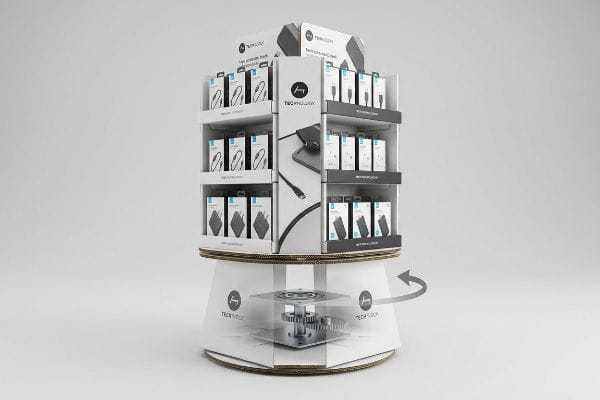
एक घूमने वाला डिस्प्ले स्टैंड एक केंद्रीय धुरी तंत्र (आमतौर पर एक छिपी हुई बेयरिंग प्लेट) का उपयोग करके काम करता है, जिससे ग्राहक यूनिट को 360 डिग्री तक घुमा सकते हैं। यह गतिशील पैकेजिंग संरचना कम जगह में खुदरा उत्पादों की दृश्यता को अधिकतम करती है, जिससे अतिरिक्त गलियारे की जगह की आवश्यकता के बिना ग्राहकों की रुचि बढ़ती है।.
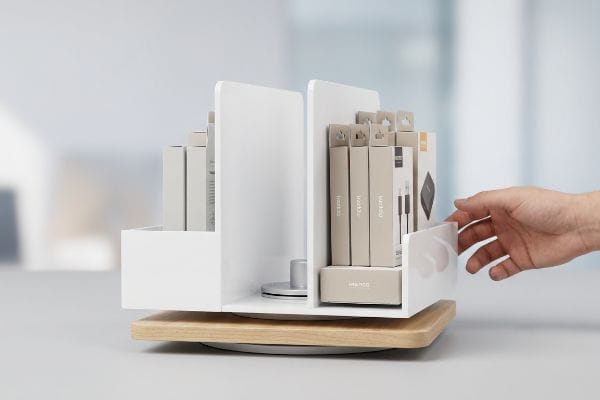
3डी सॉफ्टवेयर में किसी संरचना को घुमाना आसान है, लेकिन उसे आक्रामक खरीदारों के सामने टिकने के लिए इंजीनियर करना भौतिक यांत्रिकी की गहरी समझ की आवश्यकता होती है।.
रोटेटिंग डिस्प्ले क्या होता है?
इस प्रारूप को समझने का अर्थ है सतही ग्राफिक्स से परे जाकर पूरी तरह से ग्राहक के साथ होने वाली बातचीत पर ध्यान केंद्रित करना। स्पिनर एक उच्च-यातायात वाला, बहु-पक्षीय विपणन उपकरण है जो भारी मैन्युअल सहभागिता के लिए बनाया गया है।.
रोटेटिंग डिस्प्ले एक स्वतंत्र या काउंटरटॉप मर्चेंडाइजिंग यूनिट है जिसे एक अक्ष पर घूमने के लिए डिज़ाइन किया गया है। यह खुदरा विक्रेताओं को एक छोटे से क्षेत्र में विभिन्न पैनलों पर कई उत्पाद SKU (स्टॉक कीपिंग यूनिट) प्रदर्शित करने की अनुमति देता है, जिससे सख्त खुदरा वातावरण में अधिकतम दृश्य आकर्षण और कुशल इन्वेंट्री घनत्व सुनिश्चित होता है।.

आपको लग सकता है कि किसी भी सामान्य कार्डबोर्ड बॉक्स को घुमाने के लिए संशोधित किया जा सकता है, लेकिन खुदरा दुकानों में ग्राहकों की आवाजाही की वास्तविकता कहीं अधिक कठिन है।.
फ्लोर पर "50-टच रूल" से कैसे निपटा जाए
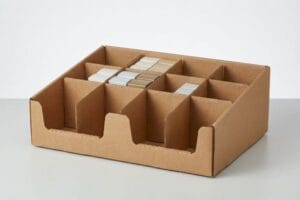
अधिकांश शुरुआती डिज़ाइनर स्पिनर को एक स्थिर शेल्फ की तरह मानते हैं। वे एक मानक सिंगल-वॉल कार्डबोर्ड फ्रेम1, उसके निचले हिस्से पर एक प्लास्टिक बेयरिंग2 , और मान लेते हैं कि यह ठीक रहेगा। हालांकि यह प्रारंभिक डिजिटल डिज़ाइन चरण में स्वीकार्य लगता है, लेकिन यह भौतिक खुदरा वातावरण की गतिशील प्रकृति को पूरी तरह से अनदेखा करता है।
मैं इसे "50-टच रूल" का जाल कहता हूँ। एक घूमने वाली मशीन लगातार मानवीय संपर्क को बढ़ावा देती है, जिसका मतलब है कि ग्राहक दिन भर उसे खींचते, पकड़ते और किनारों पर झुकते रहते हैं। मैंने एक बार एक ब्रांड को एक साधारण सिंगल-वॉल स्पिनर लॉन्च करते देखा, और दो दिनों के भीतर ही, कागज़ के फटने की कर्कश आवाज़ पूरे गलियारे में गूंजने लगी क्योंकि उसका आधार टॉर्क के कारण टूट गया था। इसका समाधान केवल डबल-वॉल नालीदार आधार3 । सामग्री में यह साधारण बदलाव आधार को ढहने से रोकता है, मशीन को सुचारू रूप से घुमाता रहता है और खुदरा विक्रेता द्वारा तुरंत अस्वीकृति का जोखिम समाप्त कर देता है।
| नौसिखियों की आम गलती | प्रो फिक्स | रिटेल-फ्लोर लाभ |
|---|---|---|
| सिंगल-वॉल बेस का उपयोग करना | दोहरी दीवार वाली नालीदार सुदृढ़ीकरण4 | लगातार खरीदारी के दबाव को सहन करता है |
| मानव गतिज बल की अनदेखी करते हुए | 50-टच नियम के लिए इंजीनियरिंग | अभियान के बीच में आधार के पतन को रोकता है |
| कमजोर तल घर्षण | मजबूत बॉटम लोड सपोर्ट जोड़ना5 | घूर्णन के दौरान होने वाले कंपन को समाप्त करता है |
मैं हमेशा हिलने-डुलने वाले किसी भी डिस्प्ले के लिए संरचनात्मक रूप से अत्यधिक मजबूत निर्माण की मांग करता हूं। यदि आपका आधार ज़ोर से खींचने पर भी टिका नहीं रह सकता, तो पहले सप्ताहांत के समाप्त होने से पहले ही स्टोर मैनेजर आपके पूरे अभियान को रद्द कर देंगे।.
🛠️ हार्वे का डेस्क: क्या आप इस बात को लेकर असमंजस में हैं कि आपकी बेस सामग्री ग्राहकों के लगातार दबाव को झेल पाएगी या नहीं? 👉 मुझे अपनी फ्लैट डाइलाइन भेजें ↗ — सीधे मेरे डेस्क से संपर्क करें। मैं वादा करता हूँ, कोई स्वचालित बिक्री संबंधी स्पैम नहीं होगा।
डिस्प्ले स्टैंड का उद्देश्य क्या है?
माल रखने के अलावा, एक मर्चेंडाइज़र आपके मूक विक्रेता के रूप में कार्य करता है। इसका प्राथमिक कार्य ग्राहक की स्वतःस्फूर्त चाल को बाधित करना और उसे उत्पाद के साथ तत्काल संपर्क स्थापित करने के लिए बाध्य करना है।.
डिस्प्ले स्टैंड का उद्देश्य ब्रांड की दृश्यता को अधिकतम करना और अधिक भीड़भाड़ वाले रिटेल गलियारों में इन्वेंट्री को कुशलतापूर्वक व्यवस्थित करना है। ये स्टैंड उत्पादों को सामान्य शेल्फ से ऊपर उठाते हैं, रणनीतिक प्लेसमेंट और संरचनात्मक डिज़ाइन का उपयोग करके आवेगपूर्ण खरीदारों को आकर्षित करते हैं और तेजी से बिकने वाले उपभोक्ता सामानों की कुल बिक्री दर में उल्लेखनीय वृद्धि करते हैं।.
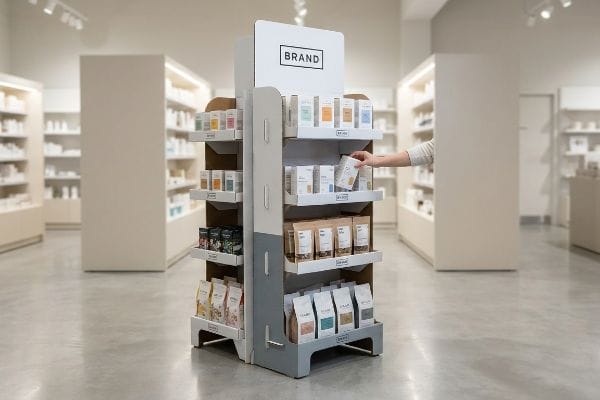
किसी रिटेलर से वह प्रीमियम फ्लोर स्पेस प्राप्त करना तो बस पहली बाधा है; असली चुनौती तो यह साबित करना है कि आपका संरचनात्मक निवेश फायदेमंद साबित हुआ है।.
"3-सेकंड लिफ्ट" के ROI को साबित करना
ब्रांड मैनेजर अक्सर मुझसे पूछते हैं कि प्रीमियम स्टैंडअलोन स्ट्रक्चर की लागत को अपने वित्तीय विभागों के सामने कैसे सही ठहराया जाए। वे अक्सर मूल्य की गणना केवल कार्डबोर्ड की कच्ची सामग्री लागत और सामान के खुदरा मूल्य के आधार पर करने की कोशिश करते हैं, जबकि वे इसमें शामिल वास्तविक मनोवैज्ञानिक तंत्र को पूरी तरह से अनदेखा कर देते हैं।
असल मकसद उस फॉर्मूले पर आधारित है जिसे मैं "3-सेकंड लिफ्ट" फॉर्मूला कहता हूं। रिटेल में विज़ुअल डिस्टर्बेंस का खेल बेहद चुनौतीपूर्ण है। मैंने देखा है कि ग्राहक साधारण भूरे रंग के शिपर्स पर निर्भर रहते हैं, लेकिन फिर भी शिकायत करते हैं कि ग्राहक बिना रुके उनके पास से गुजर जाते हैं। जब आप एक खास तौर पर डिज़ाइन किए गए, आकर्षक दिखने वाले स्टैंड का इस्तेमाल करते हैं, तो आप उस महत्वपूर्ण तीन सेकंड के समय में ग्राहकों का ध्यान खींच लेते हैं । मुझे याद है एक टेस्ट जिसमें एक ग्राहक ने फ्लैट बिन की जगह एक स्ट्रक्चर्ड रोटेटिंग टावर लगाया था; असेंबली के दौरान मॉड्यूलर शेल्फ के अपनी जगह पर फिट होने की तेज़ आवाज़ संतोषजनक थी, लेकिन असली जीत तो अचानक होने वाली बिक्री में ज़बरदस्त उछाल देखकर मिली। शुरुआती विज़ुअल पॉज़ को ध्यान में रखकर डिज़ाइन करने से हमने बिना बिके स्टॉक को काफी कम कर दिया , जिससे यह साबित हुआ कि यह स्ट्रक्चर सीधे दैनिक बिक्री को बढ़ाकर खुद ही अपना खर्च निकाल लेता है।
| नौसिखियों की आम गलती | प्रो फिक्स | रिटेल-फ्लोर लाभ |
|---|---|---|
| डिस्प्ले को साधारण बक्सों की तरह मानना | दृश्य व्यवधान के लिए डिजाइन करना | यह तुरंत ग्राहकों का ध्यान आकर्षित करता है। |
| केवल कार्डबोर्ड की लागत पर ध्यान केंद्रित करना | 3-सेकंड लिफ्ट फॉर्मूला लागू करना 8 | प्रत्यक्ष खुदरा बिक्री पर निवेश पर लाभ (ROI) साबित करता है |
| दुकानों की अलमारियों में घुलमिल जाना | स्वतंत्र संरचनात्मक विरोधाभास का उपयोग करना9 | आवेगपूर्ण खरीदारी व्यवहार को बढ़ावा देता है |
मैं हर ग्राहक से कहता हूं कि डिस्प्ले एक सक्रिय मार्केटिंग टूल है, न कि निष्क्रिय भंडारण पात्र। अगर यह खरीदार को रुककर देखने के लिए मजबूर नहीं करता, तो यह अपने मूल उद्देश्य में विफल हो गया है।.
🛠️ हार्वे का डेस्क: क्या आपको यह गणना करने में कठिनाई हो रही है कि आपकी मौजूदा पैकेजिंग से स्टोर में बिक्री में वास्तव में कितनी वृद्धि हो रही है? 👉 अपना ROI (निवेश पर रिटर्न) कैलकुलेट करें ↗ — सुरक्षित रूप से डाउनलोड करें। बाद में कोई प्रश्न होने पर आप मुझसे संपर्क कर सकते हैं।
स्पिनिंग डिस्प्ले कैसे काम करते हैं?
घूर्णन की क्रियाविधि पूर्ण संरचनात्मक संतुलन पर निर्भर करती है। यदि आंतरिक भार वितरण में कोई खामी हो, तो पूरी इकाई झुक जाएगी, जाम हो जाएगी और अंततः काउंटर।
स्पिनिंग डिस्प्ले एक भार वहन करने वाली केंद्रीय स्पाइन और कम घर्षण वाले आधार तंत्र को एकीकृत करके काम करते हैं। इससे बाहरी पैनल एक स्थिर कोर के चारों ओर सुचारू रूप से घूम सकते हैं। डिस्प्ले को पलटने से बचाने और निरंतर उपभोक्ता संपर्क के दौरान संरचना को पूरी तरह से सीधा रखने के लिए उचित भार वितरण अत्यंत आवश्यक है।.
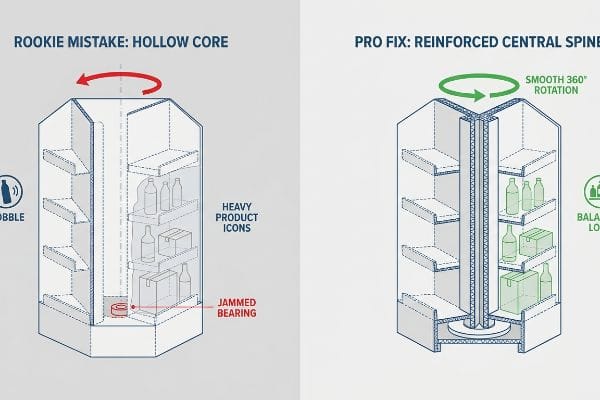
संतुलित घूर्णन का भौतिकी सिद्धांत सीधा-सादा लगता है, लेकिन असमान उत्पाद लोडिंग से सुचारू रूप से घूमने वाला स्पिनर जल्दी ही एक खतरनाक स्थिति में बदल जाता है।.
परजीवी भार वितरण को रोकना
जब कोई घूमने वाली इकाई बनाते हैं, तो अक्सर एक खोखला चौकोर डिब्बा बनाकर उसे लेज़ी सुसान बेयरिंग से जोड़ देना आसान लगता है। डिज़ाइनर यह मान लेते हैं कि जब तक उत्पाद हुक या शेल्फ पर फिट होते हैं, तब तक डिस्प्ले घूमते समय स्वाभाविक रूप से संतुलित हो जाएगा , और वे कार्डबोर्ड को ठोस स्टील की तरह मानते हैं।
यह परजीवी भार वितरण की वास्तविकता को पूरी तरह से अनदेखा करता है। एक लट्टू के बारे में सोचें; यदि आप एक तरफ सिक्का चिपका दें, तो वह तुरंत डगमगाने लगता है और गिर जाता है। एक बार मेरे एक ग्राहक ने एक सिंगल-वॉल खोखले स्पिनर पर 50 पाउंड (22.6 किलोग्राम) भारी कांच के सौंदर्य प्रसाधन । जैसे ही मैंने इसे कारखाने में घुमाकर देखा, मुझे भारी, असमान प्रतिरोध महसूस हुआ, और पूरी इकाई खतरनाक रूप से बाईं ओर झुक गई, जिससे बेयरिंग जाम हो गई। मेरा समाधान बीच में दोहरी परत वाली नालीदार रीढ़ की11।यह आंतरिक एंकर भारी असममित भार को आधार पर समान रूप से वितरित करता है12, जिससे डगमगाहट पूरी तरह से समाप्त हो जाती है और घर्षण रहित, सुचारू घूर्णन सुनिश्चित होता है जो खुदरा विक्रेताओं की शिकायतों को रोकता है।
| नौसिखियों की आम गलती | प्रो फिक्स | रिटेल-फ्लोर लाभ |
|---|---|---|
| खोखले कोर डिजाइन | दोहरी परत वाली नालीदार रीढ़ | डिस्प्ले को पूरी तरह से लंबवत रखता है |
| असममित लोडिंग को अनदेखा करना | केंद्रीकृत भार लंगर | आधार घर्षण और जाम होने से रोकता है |
| पूरी तरह से बाहरी दीवारों पर निर्भर | इंजीनियरिंग द्वारा निर्मित आंतरिक सहायक स्तंभ | यह 360 डिग्री पर सुचारू रूप से घूमने की सुविधा सुनिश्चित करता है। |
मैं बिना मजबूत केंद्रीय स्पाइन वाली स्पिनिंग डाईलाइन को मंजूरी देने से इनकार करता हूँ। एक अस्थिर इकाई तुरंत आपके ब्रांड की छवि खराब करती है और स्टोर कर्मचारियों के लिए इसे दोबारा स्टॉक करने में भारी परेशानी पैदा करती है।.
🛠️ हार्वे का डेस्क: क्या आपको चिंता है कि आपके उत्पाद का असममित लेआउट आपके स्पिनर को टेढ़ा कर जाम कर सकता है? 👉 बैलेंस चेक का अनुरोध करें ↗ — कोई फॉर्म नहीं जो अंतहीन बिक्री कॉल को ट्रिगर करे। बस शुद्ध मूल्य।
मैं अपने डिस्प्ले को कैसे घुमाऊं?
एक रोटेशनल यूनिट के सफल उत्पादन के लिए कठोर हार्डवेयर को लचीले पेपरबोर्ड के साथ जोड़ना आवश्यक है। इसके लिए सटीक सूक्ष्म माप की आवश्यकता होती है ताकि यह सुनिश्चित किया जा सके कि कार्डबोर्ड के खांचे घूमने वाली बेस प्लेट के साथ पूरी तरह से फिट हो जाएं।.
एक मजबूत नालीदार आधार को व्यावसायिक स्तर के बॉल-बेयरिंग टर्नटेबल पर लगाकर डिस्प्ले को घुमाया जाता है। संरचनात्मक डाईलाइन को इस हार्डवेयर में ठीक से फिट होने के लिए सटीक रूप से डिज़ाइन किया जाना चाहिए। सटीक बेंड अलाउंस का उपयोग यह सुनिश्चित करता है कि कार्डबोर्ड मैकेनिज़्म को पूरी तरह से लपेटे, जिससे संरचनात्मक झुकाव के बिना घर्षण रहित घूर्णन सुनिश्चित होता है।.
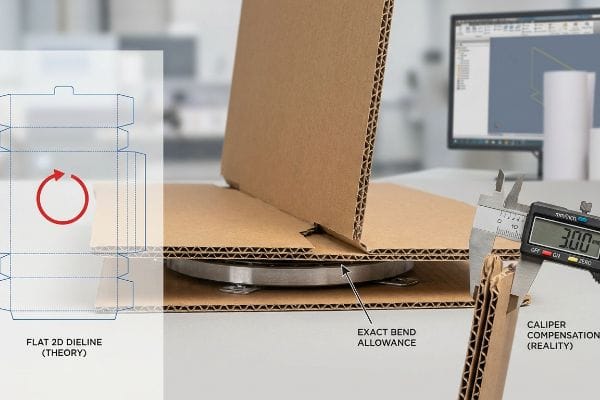
लेकिन जब मशीनें चलने लगती हैं और आपके मोटे नालीदार डाई-कट कठोर हार्डवेयर के साथ मेल खाने से इनकार कर देते हैं, तो केवल सिद्धांत जानना पर्याप्त नहीं होता है।.
कैलिपर कंपनसेशन की वास्तविकता की जाँच
ग्राफिक टीमें अक्सर एक सामान्य घूर्णन टेम्पलेट डाउनलोड करती हैं और यह मानकर अपनी कला फ़ाइलें बनाती हैं कि सपाट डिजिटल रेखाएँ घूमते हुए हार्डवेयर के चारों ओर पूरी तरह से मुड़ जाएँगी। वे नालीदार बोर्ड 13 की भौतिक मोटाई की गणना करने में विफल रहते हैं , यह मानते हुए कि एक मानक 90-डिग्री मोड़ के लिए कठोर प्लास्टिक टर्नटेबल में लॉक करते समय किसी अतिरिक्त स्थान की आवश्यकता नहीं होती है।
मेरी सुविधा में, मैं अक्सर देखता हूँ कि यह सैद्धांतिक धारणा को-पैकिंग फ्लोर पर असेंबली की भयानक विफलताओं का कारण बनती है । जब आप 0.12 इंच (3 मिमी) मोटी बोर्ड को लेते हैं और उसे बेयरिंग प्लेट में लॉक करने के लिए मोड़ते हैं, तो उस भौतिक मोड़ से सामग्री की खपत होती है । एक बार मैंने एक को-पैकिंग टीम को पसीना बहाते और कोसते हुए देखा, जब वे एक खूबसूरती से मुद्रित बेस को प्लास्टिक टर्नटेबल में जबरदस्ती फिट करने की कोशिश कर रहे थे क्योंकि रिसीविंग स्लॉट बहुत तंग थे। मोटा पेपरबोर्ड बाहर की ओर झुक गया, और मैं सचमुच दबाव में भीतरी खांचों के कुचलने की आवाज़ सुन सकता था। मैंने माइक्रोमीटर रीडिंग ली और साबित किया कि हमें महंगे कस्टम हार्डवेयर की आवश्यकता नहीं थी; हमें केवल CAD (कंप्यूटर-एडेड डिज़ाइन) सॉफ़्टवेयर पर सटीक कैलिपर क्षतिपूर्ति एल्गोरिदम लागू करने की आवश्यकता थी । मोड़ के बाहरी त्रिज्या की भरपाई के लिए रिसीविंग स्लॉट को गणितीय रूप से चौड़ा करके, मैंने सुनिश्चित किया कि को-पैकिंग असेंबली का समय लगभग 25 प्रतिशत कम हो गया, जिससे ग्राहक के मैनुअल श्रम शुल्क में काफी बचत हुई और एक स्थायी रूप से विकृत संरचना को रोका जा सका।
| नौसिखियों की आम गलती | प्रो फिक्स | रिटेल-फ्लोर लाभ |
|---|---|---|
| फ्लैट 2डी स्लॉट चौड़ाई ड्राइंग | कैलिपर क्षतिपूर्ति एल्गोरिदम16 | घर्षण-मुक्त असेंबली की गारंटी देता है |
| बोर्ड की मोटाई को अनदेखा करना | डाईलाइन में बेंड अलाउंस जोड़ना17 | बांसुरी और धनुष के कुचलने से बचाता है |
| तंग हार्डवेयर फिट को जबरदस्ती करना | सटीक सूक्ष्म-माप आकार निर्धारण18 | मैनुअल को-पैकिंग में लगने वाले समय में भारी कमी आती है |
मैं किसी भी 3D गतिशील भाग के लिए सपाट डिजिटल ड्राइंग पर कभी भरोसा नहीं करता। यदि आप सामग्री की भौतिक मोटाई के लिए गणितीय रूप से क्षतिपूर्ति नहीं करते हैं, तो आपका घूर्णनशील आधार दुकान तक पहुँचने से पहले ही विकृत हो जाएगा।.
🛠️ हार्वे की सलाह: 2 मिलीमीटर की संरचनात्मक खामी को 500 स्टोरों में अपना कारोबार ठप न करने दें। 👉 मुझे अपनी डाइलाइन फ़ाइल भेजें ↗ — बड़े पैमाने पर उत्पादन पर बजट बर्बाद करने से पहले मैं गणितीय गणनाओं की गहन जांच कर लूंगा।
निष्कर्ष
आप ऐसे सप्लायर को चुन सकते हैं जो भौतिक सामग्री की मोटाई को नज़रअंदाज़ करता है, लेकिन जब नमी वाले गोदाम में रोटेशनल हार्डवेयर के चारों ओर वह बिना समायोजित संरचनात्मक बोर्ड मुड़ जाता है, जिससे असेंबली लाइन लगभग 40% धीमी हो जाती है, तो आपके उत्पाद का लॉन्च पूरी तरह से रुक जाएगा। 500 से अधिक ब्रांड मैनेजर इन शुरुआती चरण की घातक गलतियों से बचने के लिए मेरी प्रीप्रेस चेकलिस्ट का उपयोग करते हैं। संरचनात्मक सहनशीलता के बारे में अनुमान लगाना बंद करें और मुझे व्यक्तिगत रूप से अपनी फ़ाइलों को मेरे मुफ़्त डाइलाइन प्री-फ़्लाइट ऑडिट ↗ ताकि बड़े पैमाने पर उत्पादन शुरू होने से पहले घातक आयामी त्रुटियों को पकड़ा जा सके।
"स्तरित नालीदार कार्डबोर्ड की मजबूती के विकल्प: एकल-दीवार बनाम दोहरी-दीवार...", https://ufppackaging.com/insights/layered-corrugated-strength-options। [पैकेजिंग इंजीनियरिंग मानक एकल-दीवार बनाम दोहरी-दीवार नालीदार कार्डबोर्ड की क्रश शक्ति और मरोड़ स्थिरता पर विशिष्ट डेटा प्रदान करते हैं]। साक्ष्य भूमिका: तकनीकी विनिर्देश; स्रोत प्रकार: सामग्री विज्ञान पुस्तिका। समर्थन: घूर्णनशील डिस्प्ले के लिए एकल-दीवार फ्रेम की संरचनात्मक अपर्याप्तता। कार्यक्षेत्र नोट: ऊर्ध्वाधर और घूर्णी भार पर केंद्रित। ↩
"मर्चेंडाइजिंग सॉल्यूशंस! | उत्पाद सूचकांक", https://www.midwaydisplays.com/product_index.asp?srsltid=AfmBOopQkuWvA_s_pEuJyhgLkhGOdyQXmshLzn0LeWDn_8fqyGg-vjnc. [यांत्रिक अभियांत्रिकी डेटा उच्च-चक्र अनुप्रयोगों में स्टील बियरिंग की तुलना में पॉलिमर बियरिंग के घिसाव प्रतिरोध और भार वहन क्षमता की तुलना करता है]। साक्ष्य भूमिका: तकनीकी तुलना; स्रोत प्रकार: यांत्रिक अभियांत्रिकी मार्गदर्शिका। समर्थन: भारी मैन्युअल उपयोग के तहत बुनियादी प्लास्टिक बियरिंग क्यों विफल हो सकती हैं। कार्यक्षेत्र नोट: खुदरा फिक्स्चर में अक्षीय और रेडियल भार के लिए विशिष्ट। ↩
"सिंगल वॉल बनाम डबल वॉल नालीदार बक्से | अल्टीमेट गाइड", https://lansbox.com/single-wall-vs-double-wall-corrugated-boxes/। [नालीदार पैकेजिंग विनिर्देशों पर एक तकनीकी मैनुअल यह सत्यापित करेगा कि सिंगल वॉल की तुलना में डबल वॉल बोर्ड काफी अधिक क्रश प्रतिरोध और टॉर्सनल स्ट्रेंथ प्रदान करता है। साक्ष्य भूमिका: तकनीकी सत्यापन; स्रोत प्रकार: पैकेजिंग इंजीनियरिंग मानक। समर्थन: यह दावा कि डबल वॉल निर्माण टॉर्क के तहत संरचनात्मक पतन को रोकता है। कार्यक्षेत्र नोट: कागज आधारित खुदरा फिक्स्चर पर लागू।] ↩
"शिपिंग बॉक्स की मजबूती को समझना – इकोएनक्लोज", https://www.ecoenclose.com/blog/understanding-shipping-box-strength/?srsltid=AfmBOorm2iqXbsHcv6VqCipf7NaGJydLNv9hTCOLX5KyzjxtgGvbmovi. [पैकेजिंग सामग्री विनिर्देशों पर एक प्रामाणिक स्रोत यह सत्यापित करेगा कि दोहरी दीवार वाली नालीदार सामग्री एकल दीवार वाली नालीदार सामग्री की तुलना में काफी अधिक संरचनात्मक अखंडता और टॉर्क के प्रति प्रतिरोध प्रदान करती है]। साक्ष्य भूमिका: तकनीकी विनिर्देश; स्रोत प्रकार: सामग्री विज्ञान मार्गदर्शिका। समर्थन: घूर्णनशील डिस्प्ले के लिए दोहरी दीवार वाली सामग्रियों का उपयोग। कार्यक्षेत्र नोट: नालीदार कार्डबोर्ड अनुप्रयोगों के लिए विशिष्ट। ↩
"BAOSHISHAN रोटेटिंग डिस्प्ले स्टैंड की अनबॉक्सिंग और समीक्षा", https://www.youtube.com/watch?v=Ica-qgcibQ8। [गुरुत्वाकर्षण केंद्र और भार वितरण से संबंधित यांत्रिक अभियांत्रिकी सिद्धांत इस बात की पुष्टि करते हैं कि नीचे से भारी सपोर्ट घूर्णनशील संरचनाओं में दोलन को समाप्त कर देता है]। प्रमाण का स्रोत: अभियांत्रिकी सिद्धांत; स्रोत प्रकार: तकनीकी मैनुअल। सपोर्ट: घूर्णन के दौरान डगमगाहट का उन्मूलन। कार्यक्षेत्र: संरचनात्मक स्थिरता का सामान्य अनुप्रयोग। ↩
"माइक्रो-मोमेंट बैटल: 3-सेकंड अटेंशन वॉर जीतें!", https://amaboston.org/the-micro-moment-battle-win-the-3-second-attention-war/। [खुदरा मनोविज्ञान और उपभोक्ता व्यवहार में अनुसंधान इस बात की पुष्टि करता है कि एक खरीदार को किसी डिस्प्ले पर रुकने का निर्णय लेने में बहुत कम समय लगता है।] साक्ष्य की भूमिका: व्यवहारिक सत्यापन; स्रोत प्रकार: विपणन अनुसंधान अध्ययन। समर्थन: तत्काल दृश्य व्यवधान की आवश्यकता। स्कोप नोट: विंडो की अवधि खुदरा वातावरण के अनुसार भिन्न हो सकती है। ↩
"खरीदारी स्थल: खुदरा विक्रेता खरीदारी करने वालों को कैसे प्रभावित कर सकते हैं...", https://blog.intouch.com/posts/points-of-purchase-displays। [खरीदारी स्थल (POP) मार्केटिंग पर उद्योग के आंकड़े बेहतर डिस्प्ले संरचनाओं और बढ़ी हुई बिक्री दरों के बीच सीधा संबंध दर्शाते हैं]। साक्ष्य की भूमिका: वित्तीय सत्यापन; स्रोत प्रकार: उद्योग रिपोर्ट। समर्थन: यह दावा कि इंजीनियर डिस्प्ले बर्बादी को कम करते हैं। कार्यक्षेत्र संबंधी टिप्पणी: उत्पाद श्रेणी और स्थान पर निर्भर करता है। ↩
"अपने रिटेल डिस्प्ले और फिक्स्चर निवेश पर ROI कैसे मापें", https://www.bishopfixtures.com/how-to-measure-roi-retail-display-fixture-investment/। [एक उद्योग मानक या रिटेल एनालिटिक्स श्वेतपत्र पॉइंट-ऑफ-परचेस डिस्प्ले की तत्काल रूपांतरण दर को मापने के लिए उपयोग किए जाने वाले 3-सेकंड लिफ्ट सूत्र को परिभाषित करता है]। साक्ष्य भूमिका: तकनीकी विनिर्देश; स्रोत प्रकार: उद्योग श्वेतपत्र। समर्थन: डिस्प्ले के लिए एक विशिष्ट ROI मीट्रिक का अस्तित्व और अनुप्रयोग। स्कोप नोट: विभिन्न रिटेल कंसल्टेंसी फर्मों में शर्तें थोड़ी भिन्न हो सकती हैं।] ↩
"खरीदारी के बिंदु पर अंतर्दृष्टि: खुदरा पॉप डिस्प्ले का प्रभाव...", https://www.bcipkg.com/point-of-purchase-insights-the-impact-of-retail-pop-displays-on-consumer-behavior/। [पर्यावरण मनोविज्ञान और खुदरा डिजाइन में अकादमिक शोध बताता है कि संरचनात्मक विरोधाभास किस प्रकार खरीदारों के 'स्वचालित' चलने के पैटर्न को बाधित करके उत्पाद के साथ परस्पर क्रिया को बढ़ाता है।] साक्ष्य की भूमिका: मनोवैज्ञानिक सिद्धांत; स्रोत प्रकार: अकादमिक पत्रिका। समर्थन: यह दावा कि संरचनात्मक विरोधाभास परस्पर क्रिया और आवेगपूर्ण खरीदारी को बढ़ावा देता है। स्कोप नोट: उच्च-यातायात वाले खुदरा वातावरण में प्रभाव सबसे अधिक स्पष्ट होते हैं।] ↩
"गुरुत्वाकर्षण केंद्र | ग्लेन रिसर्च सेंटर – नासा", https://www1.grc.nasa.gov/beginners-guide-to-aeronautics/center-of-gravity/। [घूर्णीय यांत्रिकी पर एक प्रामाणिक स्रोत जो बताता है कि असममित भार वितरण घूर्णनशील संरचनाओं में अस्थिरता और डगमगाहट का कारण क्यों बनता है]। प्रमाण की भूमिका: सैद्धांतिक प्रमाण; स्रोत का प्रकार: भौतिकी की पाठ्यपुस्तक। समर्थन: सटीक भार वितरण की आवश्यकता। कार्यक्षेत्र संबंधी टिप्पणी: विशेष रूप से कार्डबोर्ड जैसे गैर-कठोर पदार्थों पर लागू। ↩
"दोहरी दीवार वाले नालीदार कार्डबोर्ड पैकेजिंग का इष्टतम डिज़ाइन – PMC", https://pmc.ncbi.nlm.nih.gov/articles/PMC8950760/। पॉइंट-ऑफ-परचेज़ डिस्प्ले निर्माण पर एक प्रामाणिक मार्गदर्शिका इस बात की पुष्टि करती है कि प्रबलित स्पाइन घूर्णन इकाइयों के लिए भार वहन क्षमता और ऊर्ध्वाधर संरेखण में सुधार करते हैं। साक्ष्य भूमिका: तकनीकी विनिर्देश; स्रोत प्रकार: विनिर्माण मानक। समर्थन: स्थिरता के समाधान के रूप में प्रबलित स्पाइन। कार्यक्षेत्र नोट: नालीदार कार्डबोर्ड डिस्प्ले के लिए विशिष्ट। ↩
"घूर्णनशील द्रव्यमानों का संतुलन – विकिपीडिया", https://en.wikipedia.org/wiki/Balancing_of_rotating_masses। द्रव्यमान केंद्र और घूर्णी जड़त्व से संबंधित यांत्रिक अभियांत्रिकी सिद्धांत बताते हैं कि कैसे केंद्रीकृत संरचनात्मक समर्थन असमान भार वितरण के कारण होने वाली अस्थिरता को कम करता है। साक्ष्य की भूमिका: सैद्धांतिक सिद्धांत; स्रोत प्रकार: अभियांत्रिकी पाठ्यपुस्तक। समर्थन: घूर्णन में केंद्रीय लंगरों की प्रभावशीलता। कार्यक्षेत्र संबंधी टिप्पणी: सामान्य घूर्णी यांत्रिकी पर लागू होता है। ↩
"[PDF] नालीदार बोर्ड की बेंडिंग कठोरता", https://www.fpl.fs.usda.gov/documnts/pdf1992/luo92a.pdf। [संरचनात्मक पैकेजिंग डिज़ाइन पर एक प्रामाणिक स्रोत यह प्रदर्शित करेगा कि नालीदार बोर्ड में सटीक तह सुनिश्चित करने के लिए सामग्री कैलिपर और बेंड अलाउंस की आवश्यकता कैसे होती है]। साक्ष्य भूमिका: तकनीकी विनिर्देश; स्रोत प्रकार: इंजीनियरिंग मैनुअल। समर्थन: डाइलाइन डिज़ाइन में बोर्ड की मोटाई को ध्यान में रखने की आवश्यकता। कार्यक्षेत्र नोट: विशेष रूप से कठोर नालीदार सब्सट्रेट पर लागू होता है। ↩
"के-फैक्टर क्या है? | शीट मेटल बेंड अलाउंस की व्याख्या", https://www.youtube.com/watch?v=kUizKC1gkg0। [नालीदार पैकेजिंग के लिए उद्योग मानक बेंड अलाउंस को मोड़ बनाने के लिए आवश्यक सामग्री की मात्रा के रूप में परिभाषित करते हैं, यह पुष्टि करते हुए कि मोटाई अंतिम आयामों को प्रभावित करती है]। साक्ष्य की भूमिका: तकनीकी सिद्धांत; स्रोत प्रकार: उद्योग मानक। समर्थन: इस दावे का कि मोड़ने में सामग्री की खपत होती है। कार्यक्षेत्र संबंधी टिप्पणी: नालीदार सामग्रियों के लिए विशिष्ट। ↩
"सॉलिडवर्क्स शीटमेटल का उपयोग करके कार्डबोर्ड बॉक्स कैसे डिज़ाइन करें...", https://www.youtube.com/watch?v=xP5rb6Rhhjg। [CAD पैकेजिंग सॉफ़्टवेयर के लिए इंजीनियरिंग दस्तावेज़, सामग्री की मोटाई की परवाह किए बिना इंटरलॉकिंग भागों की उपयुक्तता सुनिश्चित करने के लिए ऑफ़सेट और क्षतिपूर्ति एल्गोरिदम के अनुप्रयोग का वर्णन करता है]। साक्ष्य भूमिका: तकनीकी विनिर्देश; स्रोत प्रकार: सॉफ़्टवेयर मैनुअल। समर्थन: CAD-आधारित क्षतिपूर्ति की प्रभावकारिता। कार्यक्षेत्र नोट: सटीक डाई-कटिंग पर लागू। ↩
"कैलिपर: सबसे कम प्रभावी गुणवत्ता नियंत्रण माप – एआईसीसी नाउ", https://now.aiccbox.org/caliper-the-least-effective-quality-control-measurement/। [संरचनात्मक पैकेजिंग डिज़ाइन पर एक प्रामाणिक स्रोत यह समझाएगा कि वास्तविक सामग्री कैलिपर के लिए समायोजन कैसे सुनिश्चित करता है कि घटक अत्यधिक घर्षण के बिना ठीक से फिट हों।] साक्ष्य भूमिका: तकनीकी विनिर्देश; स्रोत प्रकार: इंजीनियरिंग मैनुअल। समर्थन: घर्षण-मुक्त संयोजन। कार्यक्षेत्र नोट: इंटरलॉकिंग कार्डबोर्ड घटकों पर लागू होता है। ↩
"पांच-परत वाली सामग्री की बेंडिंग कठोरता का विश्लेषणात्मक निर्धारण...", https://pmc.ncbi.nlm.nih.gov/articles/PMC8777652/। [नालीदार कार्डबोर्ड डिज़ाइन पर तकनीकी दस्तावेज़ निर्दिष्ट करता है कि बेंड अलाउंस मोड़ने के दौरान सामग्री संपीड़न और संरचनात्मक झुकाव को रोकता है।] साक्ष्य भूमिका: उद्योग मानक; स्रोत प्रकार: पैकेजिंग दिशानिर्देश। समर्थन: कुचले हुए खांचे और झुकाव की रोकथाम। कार्यक्षेत्र नोट: नालीदार पेपरबोर्ड के लिए विशिष्ट। ↩
"को-पैकिंग, किटिंग और असेंबली सेवाएं – मैकमिलन्को", https://mcmillancomfg.com/warehousing-distribution/services-co-packing-kitting-and-assembly/। [पैकेजिंग असेंबली के लिए उद्योग मानक दर्शाते हैं कि घटक आकार में सख्त सहनशीलता को-पैकिंग के दौरान मैनुअल समायोजन और श्रम समय को कम करती है।] साक्ष्य भूमिका: दक्षता मीट्रिक; स्रोत प्रकार: विनिर्माण अध्ययन। समर्थन: मैनुअल को-पैकिंग समय में कमी। कार्यक्षेत्र नोट: मैनुअल श्रम दक्षता पर केंद्रित। ↩