संरचनात्मक लक्ष्यों को समझे बिना किसी कस्टम मर्चेंडाइज़र को उत्पादन प्रक्रिया में जल्दबाजी करने के लिए कहना, आपके रिटेल लॉन्च के उचित समय को चूकने का एक निश्चित तरीका है।.
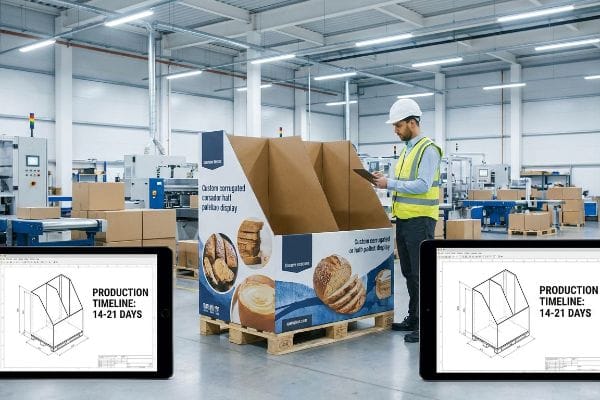
कस्टम हाफ पैलेट डिस्प्ले के लिए डिलीवरी का समय आमतौर पर अंतिम आर्टवर्क की स्वीकृति के बाद 14 से 21 दिन होता है। इस उत्पादन अवधि में संरचनात्मक सीएडी (कंप्यूटर-एडेड डिज़ाइन) सैंपलिंग, आईएसटीए (इंटरनेशनल सेफ ट्रांजिट एसोसिएशन) ट्रांजिट टेस्टिंग, लिथो-लेमिनेशन क्योरिंग और हाई-स्पीड ऑटोमेटेड डाई-कटिंग शामिल हैं ताकि रिटेलर के सभी मानकों का पूर्ण अनुपालन सुनिश्चित हो सके।.
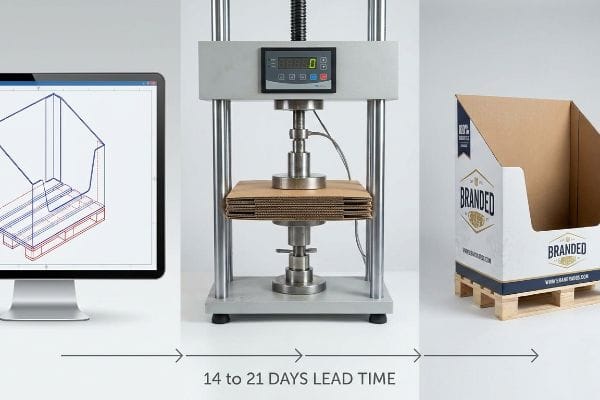
अपने अभियान की तारीखें तय करने से पहले, आपको यह समझना होगा कि कारखाने में कौन से भौतिक घटक और इंजीनियरिंग संबंधी बाधाएं इस समयसीमा को निर्धारित करती हैं।.
डिस्प्ले-रेडी पैलेट क्या होता है?
प्रीमियम रिटेल फ्लोर स्पेस हासिल करने के लिए ऐसी पैकेजिंग की आवश्यकता होती है जो पूरी तरह से पहले से ही व्यवस्थित हो और तुरंत ही अधिक भीड़-भाड़ वाले स्थानों पर रखने के लिए तैयार हो।.
डिस्प्ले के लिए तैयार पैलेट एक संरचनात्मक रूप से इंजीनियर किया गया मर्चेंडाइज़र है जो सीधे लकड़ी या नालीदार शिपिंग बेस पर बनाया जाता है, जिससे रिटेल क्लर्क व्यक्तिगत उत्पाद ट्रे को मैन्युअल रूप से अनपैक या असेंबल किए बिना पूरी यूनिट को डिलीवरी ट्रक से बिक्री फ्लोर पर तुरंत स्थानांतरित कर सकते हैं।.
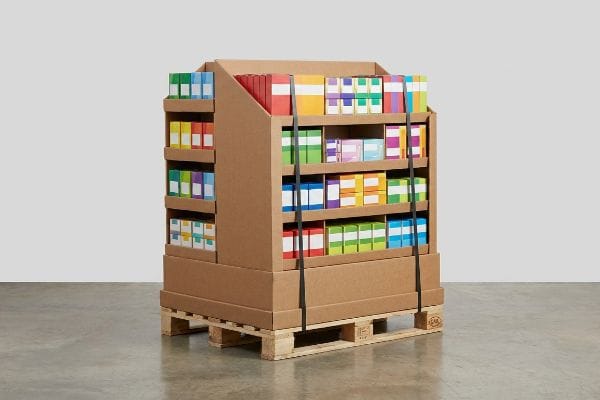
हालांकि मार्केटिंग टीमों के लिए यह अवधारणा सरल लगती है, लेकिन एक जटिल आपूर्ति श्रृंखला में इसे लागू करने के लिए स्थानिक ज्यामिति का कड़ाई से पालन करना आवश्यक है।.
फ्रैक्शनल पैलेट मर्चेंडाइजर के पीछे की इंजीनियरिंग यांत्रिकी
मैं डिस्प्ले के लिए तैयार पैलेट्स को इस तरह डिज़ाइन करता हूँ कि वे गोदाम की कठोर लॉजिस्टिक्स और आकर्षक रिटेल गलियारों के बीच एक एकीकृत सेतु का काम करें। स्टोर के कर्मचारियों पर निर्भर रहने के बजाय, जो नाजुक POP (पॉइंट ऑफ परचेज़) फ्लोर यूनिट्स बनाने का काम करते हैं, हम नालीदार संरचना को एक ठोस स्लिप शीट और बेस पैलेट से स्थायी रूप से जोड़ देते हैं। यह एकीकृत प्रणाली गतिज परिवहन के झटकों को छिद्रयुक्त कागज़ के खांचों के बजाय सीधे लकड़ी के डेक 1 में स्थानांतरित करती है, जिससे आपके मर्चेंडाइजिंग डिस्प्ले की संरचनात्मक अखंडता बनी रहती है और स्टोर में श्रम की आवश्यकता में भारी कमी आती है।
जब ग्राहक मुझसे पूछते हैं कि इस जगह का अधिकतम उपयोग कैसे किया जाए, तो मैं आमतौर पर बड़े स्टोरों के गलियारों की स्थानिक वास्तविकता की ओर इशारा करता हूँ। हाल ही में मैंने एक खरीदार के साथ काम किया, जिसने यह मान लिया था कि ध्यान आकर्षित करने के लिए उन्हें पूरे 48×40 इंच (121×101 सेमी) के जीएमए (ग्रोसरी मैन्युफैक्चरर्स एसोसिएशन) बेस2 पर एकाधिकार करना होगा, जिससे गलियारे में भीड़भाड़ के कारण खुदरा विक्रेता ने तुरंत इसे अस्वीकार कर दिया। मैंने उन्हें कारखाने में हमारे आंशिक पैलेट ज्यामिति के बारे में विस्तार से बताया—विशेष रूप से हमारे आधे पैलेट और चौथाई पैलेट सेटअप के बारे में। हमारे कोंग्सबर्ग कटिंग टेबल के तेज़ वैक्यूम सक्शन के बगल में खड़े होकर, मैंने उन्हें दिखाया कि कैसे उस मानक लकड़ी के बेस को विभाजित करने से दो अलग-अलग प्रचार अभियान एक ही भौतिक स्थान को सहजता से साझा कर सकते हैं। ज्यामिति को छोटा करके और निचले स्तर को झुकने से रोकने के लिए एक ठोस डेक का उपयोग करके3, हमने भारी परिवहन क्षमता को बनाए रखा, साथ ही यूनिट को उन खुदरा प्रबंधकों के लिए अत्यधिक आकर्षक बनाया जो अपने स्थान का सख्ती से उपयोग करते हैं।
| इंजीनियर समाधान | भौतिक परिणाम | लॉजिस्टिक्स आरओआई |
|---|---|---|
| आंशिक (48×20) पदचिह्न | एक GMA पैलेट पर दो कैंपेन फिट हो जाते हैं4 | फर्श घनत्व अनुमोदन दोगुना |
| पहले से लॉक किया हुआ नालीदार आधार | मैनुअल ट्रे असेंबली की आवश्यकता को समाप्त करता है | प्रति यूनिट 15 मिनट की श्रम अवधि बचती है5 |
| ठोस डेक स्लिप शीट | लकड़ी की पट्टियों के बीच बांसुरी के झुकने को रोकता है6 | आधार स्तर के विरूपण को समाप्त करता है |
मैं खराब स्थानिक योजना के कारण उत्पाद के लॉन्च को ट्रक तक पहुंचने से पहले ही विफल नहीं होने दूंगा। मैं सूक्ष्म ज्यामितियों को ध्यान में रखते हुए इंजीनियरिंग करता हूं, जिससे यह सुनिश्चित होता है कि आपका डिस्प्ले बिना किसी अनुपालन संबंधी बाधा के खुदरा व्यवस्था में आसानी से समाहित हो जाए।.
🛠️ हार्वे का डेस्क: क्या आपके मौजूदा फ्लोर डिस्प्ले स्थानिक अनुपालन जांच में विफल हो रहे हैं और बड़े स्टोर प्रबंधकों द्वारा अस्वीकृति का सामना कर रहे हैं? आइए एक हाफ-पैलेट रणनीति तैयार करें। 👉 आंशिक फुटप्रिंट ऑडिट का अनुरोध करें ↗ — मैं 24 घंटों के भीतर प्रत्येक संरचनात्मक फ़ाइल की व्यक्तिगत रूप से समीक्षा करता हूँ।
पैलेट की अधिकतम ऊंचाई कितनी हो सकती है?
ऊर्ध्वाधर व्यापारिक स्थान को अधिकतम करना अधिक एसकेयू (स्टॉक कीपिंग यूनिट) मात्रा को बढ़ाने का एक स्मार्ट तरीका लगता है, लेकिन गुरुत्वाकर्षण और माल ढुलाई की सीमाएं इस पर लागू नहीं होतीं।.
शिपिंग के लिए उपयुक्त पैलेट की अधिकतम ऊंचाई आमतौर पर 48 से 50 इंच (121 से 127 सेंटीमीटर) होती है, ताकि मानक शिपिंग कंटेनरों और घरेलू सेमी-ट्रेलरों के अंदर सुरक्षित रूप से डबल-स्टैकिंग की जा सके। इस ऊंचाई सीमा से अधिक होने पर परिवहन के दौरान कुचलने का खतरा काफी बढ़ जाता है और माल को समेकित करने की संभावना समाप्त हो जाती है।.
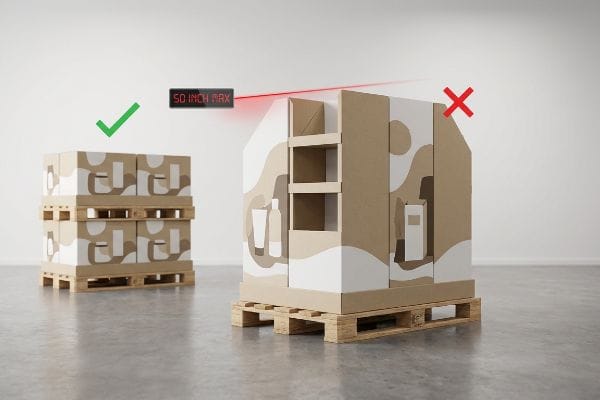
अपने डिजाइन को इस ऊर्ध्वाधर सीमा से आगे बढ़ाना न केवल सौंदर्य संबंधी नुकसान को आमंत्रित करता है; बल्कि यह वैश्विक शिपिंग लॉजिस्टिक्स के गणित को भी मौलिक रूप से बिगाड़ देता है।.
डबल-स्टैक्ड फ्रेट के पीछे की इंजीनियरिंग यांत्रिकी
मैं प्रत्येक बल्क डिस्प्ले के Z-अक्ष की बारीकी से निगरानी करता हूँ क्योंकि ऊर्ध्वाधर ऊँचाई ही आपके पूरे अभियान की अंतिम माल ढुलाई लागत निर्धारित करती है। जब आप 50 इंच (127 सेमी)7, तो आप लॉजिस्टिक्स कंपनियों को मानक 40HQ (हाई क्यूब) समुद्री कंटेनर या मानक 110 इंच (279 सेमी) घरेलू ट्रेलर8। इस सीमा से नीचे अधिकतम ऊँचाई बनाए रखकर और शून्य ओवरहैंग बाउंडिंग बॉक्स डिज़ाइन करके, हम यह सुनिश्चित करते हैं कि भारी-भरकम नालीदार कोने आपके शिपमेंट के ऊपर की कीमती, खाली ऊर्ध्वाधर जगह को बर्बाद किए बिना भारी टॉप-लोड संपीड़न को सुरक्षित रूप से सहन कर सकें।
यहां तक कि अनुभवी डिज़ाइनर भी अक्सर इस कमी को नज़रअंदाज़ कर देते हैं, यह मानकर कि रिटेलर का 54 इंच (137 सेमी) का विज़ुअल स्ट्राइक ज़ोन9 स्वचालित रूप से मास्टर शिपिंग कार्टन पर लागू होता है। पिछले महीने मेरी एक ब्रांड टीम से बातचीत हुई, जिसने क्लब स्टोर के गलियारे में सबसे अलग दिखने के लिए 60 इंच (152 सेमी) ऊंचे प्री-फिल्ड यूनिट की मांग की। मुझे उन्हें फ़ैक्टरी में बुलाकर गणितीय गणना करके दिखाना पड़ा। हमने उनके बड़े प्रोटोटाइप को एक लकड़ी के स्किड पर लादा, और जब हमने उसे बंद करने की कोशिश की, तो मैंने उन्हें 32ECT वर्जिन क्राफ्ट बोर्ड के कड़े प्रतिरोध का अनुभव कराया। मैंने उन्हें दिखाया कि कैसे इसके ऊपर कुछ भी रखना तुरंत असंभव हो गया। अगर हम इसे उस ऊंचाई पर भेजते, तो उन्हें प्रशांत महासागर के पार 50 इंच (127 सेमी) खाली हवा भेजने का खर्च उठाना पड़ता, जिससे उनकी प्रति यूनिट माल ढुलाई लागत दोगुनी हो जाती10।मैंने उनकी समय-सीमा और संरचना को पूरी तरह से फिर से डिज़ाइन किया, हेडर कार्ड को एक मॉड्यूलर, फ्लैट-पैक्ड टुकड़े में विभाजित किया जो पूरी तरह से 48 इंच (121 सेमी) के मास्टर शिपर में फोल्ड हो जाता है।
| ऊर्ध्वाधर बाधा | भौतिक परिणाम | माल ढुलाई पर रिटर्न ऑन इन्वेस्टमेंट (ROI) |
|---|---|---|
| 50 इंच (127 सेमी) की सीमा के भीतर11 | यह निर्बाध 40HQ डबल-स्टैकिंग की अनुमति देता है। | कंटेनर की लागत में 50% की कटौती12 |
| मॉड्यूलर फोल्डिंग हेडर कार्ड | मास्टर कार्टन के Z-अक्ष को कम करता है | खाली माल ढुलाई को रोकता है |
| शून्य ओवरहैंग बाउंडिंग बॉक्स | लकड़ी के डेक पर कोनों को सख्ती से बनाए रखें | 100% गतिशील शक्ति बनाए रखता है13 |
मैं कभी भी सौंदर्य संबंधी मांगों को लॉजिस्टिक्स संबंधी भौतिकी पर हावी नहीं होने देता। पहले दिन से ही सीएडी फाइलों में सख्त ऊर्ध्वाधर सीमाएं निर्धारित करके, मैं आपके मुनाफे को माल ढुलाई की कीमतों में होने वाली भारी वृद्धि से बचाता हूं।.
🛠️ हार्वे का डेस्क: क्या आपके बड़े आकार के डिस्प्ले आपको खाली शिपिंग कंटेनर की हवा के लिए दोगुनी कीमत चुकाने पर मजबूर कर रहे हैं? आइए, आपके वर्टिकल पेलोड को ऑप्टिमाइज़ करें। 👉 Z-एक्सिस फ्रेट ऑडिट का दावा करें ↗ — 100% गोपनीय। आपके अप्रकाशित रिटेल डिज़ाइन मेरे पास सुरक्षित हैं।
निष्कर्ष
आप ऐसे विक्रेता का चयन कर सकते हैं जो ऊर्ध्वाधर सीमाओं को अनदेखा करता हो, लेकिन जब एक बड़ा 60 इंच (152 सेमी) का पैलेट भौतिक रूप से डबल-स्टैकिंग को रोकता है, तो आप अंततः खाली सामान भेजेंगे और रातोंरात अपने कंटेनर माल ढुलाई खर्च को दोगुना कर देंगे। हाल ही में एक इंजीनियरिंग समीक्षा में उत्पादन से पहले एक बड़े राष्ट्रीय स्तर पर किए जाने वाले लॉन्च में 2 मिमी की घातक त्रुटि पकड़ी गई। अन-स्टैक करने योग्य इन्वेंट्री पर अपने लॉजिस्टिक्स बजट को बर्बाद करना बंद करें और मुझे व्यक्तिगत रूप से आपके फ्रैक्शनल पैलेट को ऑप्टिमाइज़ करने दें ↗ ताकि आपके अगले अभियान पर अधिकतम ROI की गारंटी मिल सके।
"परिवहन के दौरान बेहतर टिकाऊपन के लिए अभिनव डिजाइन वाली नालीदार बोर्ड पैकेजिंग ...", https://bioresources.cnr.ncsu.edu/resources/corrugated-board-packaging-with-innovative-design-for-enhanced-durability-during-transport/। कठोर आधार एकीकरण द्वारा प्रभाव बलों को पुनर्निर्देशित करके नालीदार खांचे की संरचनात्मक विफलता को कैसे रोका जाता है, इसका तकनीकी सत्यापन। साक्ष्य की भूमिका: यांत्रिक सत्यापन; स्रोत प्रकार: पैकेजिंग इंजीनियरिंग मैनुअल। समर्थन: यह दावा कि एकीकृत पैलेट सिस्टम डिस्प्ले की अखंडता की रक्षा करते हैं। कार्यक्षेत्र संबंधी टिप्पणी: नालीदार और लकड़ी की हाइब्रिड संरचनाओं के लिए विशिष्ट। ↩
"48×40" जीएमए पैलेट्स | सबसे बड़ा पैलेट निर्माता और आपूर्तिकर्ता", https://www.palletone.com/products/gma-pallets/। ग्रोसरी मैन्युफैक्चरर्स एसोसिएशन के उद्योग मानक उत्तरी अमेरिका में मानक शिपिंग पैलेट्स के लिए इन्हें सार्वभौमिक आयाम के रूप में पुष्टि करते हैं। साक्ष्य भूमिका: तथ्य सत्यापन; स्रोत प्रकार: उद्योग मानक। समर्थन: मानक पैलेट आकार। कार्यक्षेत्र संबंधी टिप्पणी: उत्तरी अमेरिकी लॉजिस्टिक्स के लिए विशिष्ट। ↩
"क्लोज्ड डेक बनाम ओपन डेक प्लास्टिक पैलेट्स - कब चुनें", https://www.zobonpack.com/news/closed-deck-vs-open-deck-plastic-pallets-when-to-choose-each.html। पैकेजिंग इंजीनियरिंग दिशानिर्देश बताते हैं कि ठोस डेक सतहें परिवहन के दौरान उत्पाद के विरूपण और झुकने से बचाने के लिए समान समर्थन कैसे प्रदान करती हैं। साक्ष्य की भूमिका: तकनीकी औचित्य; स्रोत प्रकार: लॉजिस्टिक्स इंजीनियरिंग मैनुअल। समर्थन: आंशिक पैलेट्स की संरचनात्मक अखंडता। कार्यक्षेत्र संबंधी टिप्पणी: भारी-भरकम खुदरा डिस्प्ले पर लागू होता है। ↩
"मानक पैलेट आकार — 48×40 GMA और 6 अन्य सामान्य आयाम", https://www.wearewarp.com/standard-pallet-sizes। मानक 48×40 GMA पैलेट पर 48×20 डिस्प्ले की स्थानिक दक्षता का सत्यापन। साक्ष्य भूमिका: तकनीकी विनिर्देश; स्रोत प्रकार: लॉजिस्टिक्स हैंडबुक। समर्थन: फर्श घनत्व और पैलेट अनुकूलन से संबंधित दावे। स्कोप नोट: मानक GMA पैलेट आकार माना गया है। ↩
"पैकेजिंग में सरल बदलाव करके पैक-लाइन श्रम लागत कम करें", https://www.pacificbox.com/box-resources/cut-pack-line-labor-costs-with-simple-packaging-changes। खुदरा परिवेश में मैनुअल असेंबली बनाम प्री-लॉक्ड नालीदार बेस के लिए श्रम समय का तुलनात्मक विश्लेषण। साक्ष्य की भूमिका: मात्रात्मक मीट्रिक; स्रोत प्रकार: उद्योग श्वेतपत्र। समर्थन: श्रम दक्षता के दावे। स्कोप नोट: समय श्रमिक कौशल स्तर के अनुसार भिन्न हो सकता है। ↩
"पैकेजिंग पैलेट लोडिंग को कैसे प्रभावित करती है? – पॉपडिस्प्ले", https://popdisplay.me/how-does-packaging-affect-pallet-loading/। तकनीकी व्याख्या कि कैसे स्लिप शीट पैलेट के गैप पर नालीदार खांचे की संरचनात्मक विफलता को रोकने के लिए ऊर्ध्वाधर भार को वितरित करती हैं। साक्ष्य भूमिका: यांत्रिक गुण; स्रोत प्रकार: पैकेजिंग इंजीनियरिंग मैनुअल। समर्थन: आधार स्तर विरूपण पर दावा। कार्यक्षेत्र नोट: नालीदार सामग्रियों पर लागू होता है। ↩
"एक कंटेनर या ट्रेलर में कितने पैलेट फिट हो सकते हैं? – ICE ट्रांसपोर्ट", https://www.icetransport.com/blog/how-many-pallets-can-fit-in-a-container-or-trailer। आधिकारिक लॉजिस्टिक्स गाइड कंटेनर और ट्रेलर के आंतरिक आयामों के आधार पर डबल-स्टैकिंग के लिए अनुमत अधिकतम पैलेट ऊंचाई की पुष्टि करते हैं। साक्ष्य भूमिका: तथ्यात्मक सत्यापन; स्रोत प्रकार: उद्योग लॉजिस्टिक्स मैनुअल। समर्थन: डबल-स्टैकिंग के लिए 50 इंच की ऊंचाई सीमा। कार्यक्षेत्र नोट: मानक शिपिंग उपकरणों पर लागू होता है। ↩
"ड्राई वैन के आयाम और क्षमताएँ: 53′, 48′, + 40 … – हेल ट्रेलर", https://haletrailer.com/blog/dry-van-dimensions-capacities/। घरेलू ड्राई वैन ट्रेलरों के लिए तकनीकी विनिर्देश मानक आंतरिक ऊँचाई की पुष्टि करते हैं। साक्ष्य भूमिका: तकनीकी विनिर्देश; स्रोत प्रकार: माल ढुलाई उपकरण निर्माता। सहायक: घरेलू ट्रेलरों की आंतरिक ऊँचाई। कार्यक्षेत्र नोट: मानक ड्राई वैन आयाम। ↩
"स्ट्राइक ज़ोन | शब्दावली – MLB.com", https://www.mlb.com/glossary/rules/strike-zone। उद्योग के मर्चेंडाइजिंग दिशानिर्देश उपभोक्ता उत्पाद दृश्यता और परस्पर क्रिया के लिए इष्टतम ऊंचाई सीमा को परिभाषित करते हैं। साक्ष्य भूमिका: तकनीकी विनिर्देश; स्रोत प्रकार: खुदरा डिजाइन मानक। समर्थन: दृश्य स्ट्राइक ज़ोन आयाम। कार्यक्षेत्र संबंधी टिप्पणी: विशिष्ट खुदरा श्रृंखला के अनुसार भिन्न हो सकता है। ↩
"पैकिंग नॉन-स्टैकेबल फ्रेट और पैलेट्स: हमारी सलाह | पार्सलब्रोकर", https://parcelbroker.co.uk/packaging-advice/non-stackable-freight/। लॉजिस्टिक्स डेटा दर्शाता है कि कंटेनर में पैलेट्स को डबल-स्टैक करने में असमर्थता वॉल्यूमेट्रिक दक्षता को कम करती है, जिससे आमतौर पर प्रति यूनिट शिपिंग लागत बढ़ जाती है। साक्ष्य की भूमिका: आर्थिक प्रभाव; स्रोत प्रकार: फ्रेट लॉजिस्टिक्स विश्लेषण। समर्थन: नॉन-स्टैकेबल फ्रेट की लागत। स्कोप नोट: सटीक गुणक कार्गो घनत्व और कंटेनर प्रकार पर निर्भर करता है। ↩
"40 फुट ड्राई हाई-क्यूब कंटेनर | विनिर्देश और आयाम", https://www.bws.net/toolbox/container-specifications/40-foot-dry-high-cube। कंटेनर आयामों के लिए उद्योग मानक पुष्टि करते हैं कि पैलेट की ऊंचाई को एक विशिष्ट सीमा से कम रखने पर 40 फुट हाई-क्यूब कंटेनर में दो यूनिट को स्टैक किया जा सकता है। साक्ष्य भूमिका: तकनीकी विनिर्देश का सत्यापन; स्रोत प्रकार: लॉजिस्टिक्स मैनुअल। समर्थन: 40HQ कंटेनरों में स्टैकिंग की व्यवहार्यता। स्कोप नोट: मानक पैलेट बेस ऊंचाई मानी गई है। ↩
"क्यूबिक कैपेसिटी बनाम डबल स्टैक: लॉजिस्टिक्स की तुलना – यूएनआईएस", https://www.unisco.com/comparison/double-stack-vs-cubic-capacity। माल ढुलाई लागत विश्लेषण से पता चलता है कि प्रति कंटेनर पैलेट घनत्व को दोगुना करने से प्रति यूनिट शिपिंग लागत प्रभावी रूप से आधी हो जाती है। साक्ष्य की भूमिका: आर्थिक दावे का सत्यापन; स्रोत प्रकार: आपूर्ति श्रृंखला विश्लेषण। समर्थन: माल ढुलाई आरओआई मेट्रिक्स। स्कोप नोट: विशेष रूप से परिवहन लागतों पर लागू होता है। ↩
"मेरा पैलेट कितना भार वहन कर सकता है?", https://unitload.vt.edu/education/white-papers/5-wp-load-carrying-capacity-of-pallets.html। संरचनात्मक अभियांत्रिकी डेटा दर्शाता है कि शून्य ओवरहैंग यह सुनिश्चित करता है कि भार पैलेट डेक द्वारा पूरी तरह से समर्थित है, जिससे रेटेड गतिशील शक्ति का नुकसान नहीं होता है। साक्ष्य की भूमिका: तकनीकी सत्यापन; स्रोत प्रकार: संरचनात्मक अभियांत्रिकी अध्ययन। समर्थन: पैलेट की संरचनात्मक अखंडता। कार्यक्षेत्र संबंधी टिप्पणी: परिवहन के दौरान गतिशील भार को संदर्भित करता है। ↩