खुदरा बजट का प्रबंधन करना अक्सर एक अनिश्चित खेल जैसा लगता है। जब भौतिक संरचनाएं आपूर्ति श्रृंखला की कठोर वास्तविकताओं से टकराती हैं, तो छिपे हुए विनिर्माण खर्च आपके प्रारंभिक पैकेजिंग अनुमानों को तुरंत नष्ट कर देते हैं।.
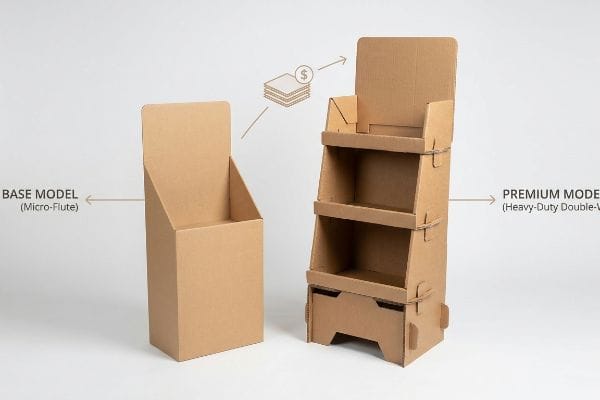
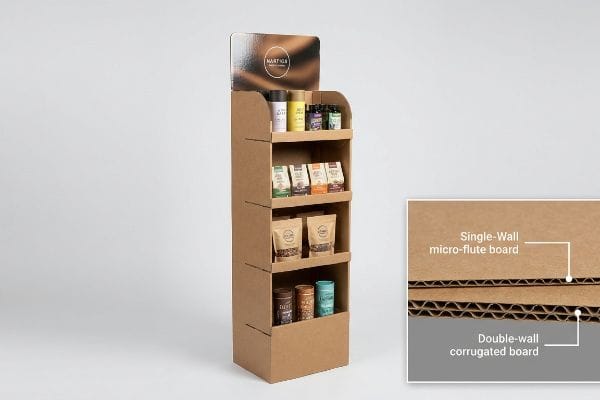
कस्टम डिस्प्ले स्टैंड से जुड़ी लागत संरचनात्मक जटिलता, सामग्री की गुणवत्ता और प्रिंट फिनिशिंग पर निर्भर करती है। साधारण मॉडल अस्थायी प्रचार के लिए माइक्रो-फ्लूट कार्डबोर्ड का उपयोग करते हैं, जबकि प्रीमियम रिटेल मर्चेंडाइज़र को हेवी-ड्यूटी डबल-वॉल नालीदार बेस की आवश्यकता होती है, जिससे अंतिम उत्पादन और लॉजिस्टिक्स खर्च में काफी बदलाव आता है।.
लेकिन जब मशीनें चलना शुरू हो जाती हैं और संरचनात्मक भौतिकी अपना काम करने लगती है, तो सैद्धांतिक मूल्य निर्धारण स्तरों को जानना ही पर्याप्त नहीं होता है।.
एक प्रदर्शनी स्टैंड की कीमत कितनी होती है?
किसी बड़े पैमाने की प्रदर्शनी इकाई के लिए बजट तैयार करने की शुरुआत अक्सर ग्राफिक डिजाइन से होती है, जिसमें संरचनात्मक आधार को पूरी तरह से नजरअंदाज कर दिया जाता है।.
किसी प्रदर्शनी स्टैंड की लागत का आकलन करने के लिए कच्चे माल के घनत्व और उसमें किए जाने वाले सजावटी तत्वों की तुलना करना आवश्यक है। अस्थायी व्यापार प्रदर्शनी स्टैंडों में अक्सर हल्के नालीदार प्रोफाइल का उपयोग किया जाता है, जबकि दीर्घकालिक आयोजनों के लिए विशेष संरचनात्मक इंजीनियरिंग और उच्च गुणवत्ता वाली लिथो-लेमिनेशन की आवश्यकता होती है, जो सीधे तौर पर समग्र परियोजना निवेश और शिपिंग मात्रा को प्रभावित करती है।.
सैद्धांतिक रूप से यह सुझाव दिया जाता है कि आप बजट को पूरा करने के लिए सामग्रियों की अदला-बदली कर सकते हैं, लेकिन कारखाने में घटिया सामग्रियों की क्रूर वास्तविकता सामने आती है।.
कॉस्मेटिक उत्पादों पर होने वाला अनावश्यक खर्च संरचनात्मक बजट को क्यों नष्ट कर देता है?
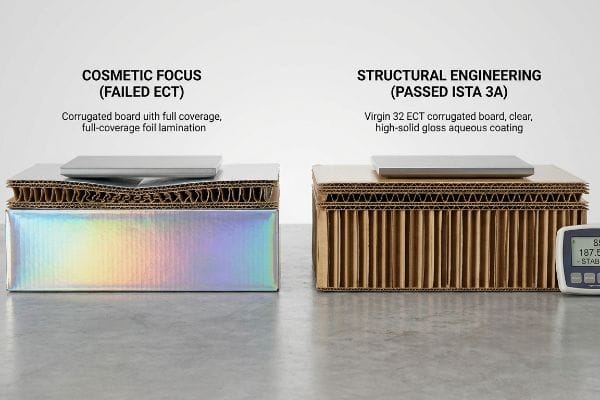
खरीद टीमें अक्सर महंगे कॉस्मेटिक फिनिश, जैसे कि फुल-कवरेज फॉइल लेमिनेशन, को उच्च स्तरीय आयोजनों के लिए एक अनिवार्य मार्केटिंग आवश्यकता मानती हैं। इन उच्च उत्पादन लागतों की भरपाई करने और एक विशिष्ट लक्ष्य मूल्य प्राप्त करने के लिए, वे प्रति यूनिट कुछ पैसे बचाने के लिए बेस कोरुगेटेड बोर्ड की ECT (एज क्रश टेस्ट) रेटिंग को गुपचुप तरीके से 1 तक कम कर देते हैं।
यह सिर्फ़ सिद्धांत नहीं है—मैं परीक्षण के दौरान इसका सामना करता हूँ। एक ब्रांडिंग एजेंसी ने हाल ही में मेरे कारखाने में एक प्रदर्शनी टेम्पलेट भेजा, यह मानकर कि मानक 26 ECT बोर्ड एक भारी होलोग्राफिक फिल्म का भार सहन कर सकता है। पहले तो मुझे लगा कि हम नमी के तनाव को संतुलित कर लेंगे। मैं पूरी तरह गलत था। ISTA (इंटरनेशनल सेफ ट्रांजिट एसोसिएशन) 3A कंपन परीक्षण2, मैंने देखा कि कमजोर कोर फ्लूटिंग के हिंसक रूप से टूटने से लोड-सेल 187.5 पाउंड (85 किलोग्राम) पर स्थिर हो गया। मैंने माइक्रोमीटर रीडिंग निकाली और साबित किया कि हमें भारी फ़ॉइल फिल्म की आवश्यकता नहीं थी। मैंने डिज़ाइन में बदलाव किया, सामग्री को मूल 32 ECT मानक3 और उच्च-ठोस चमक वाले जलीय कोटिंग का उपयोग करके वांछित प्रीमियम प्रतिबिंब प्राप्त किया। इस सख्त सामग्री अंशांकन को लागू करके, मैंने सुनिश्चित किया कि संरचनात्मक कोने अपनी गतिशील भार क्षमता का 100% बनाए रखें, जिससे ग्राहक को परिवहन के दौरान होने वाले संभावित नुकसान में लगभग 30% की बचत हुई और प्रदर्शनी के दिन एक बड़े पैमाने पर ढहने से बचा जा सका।
| कॉस्मेटिक री-अलाइनमेंट | भौतिक परिणाम | वित्तीय/अनुपालन आरओआई |
|---|---|---|
| 32 ECT बोर्ड के लिए उन्नत आधार4 | कोर फ्लूट की कठोरता बहाल की गई | परिवहन के दौरान होने वाली भीषण क्षति को समाप्त करता है |
| उच्च-ठोस जलीय चमक का अनुप्रयोग | भारी पन्नी लेमिनेशन को बदल दिया गया | विशेष निपटान शुल्क को दरकिनार करता है5 |
| शून्य-ओवरहैंग फुटप्रिंट को अनिवार्य बनाना | अधिकतम बीसीटी (बॉक्स कम्प्रेशन टेस्ट)6 | डबल-स्टैक्ड फ्रेट बचत सुनिश्चित करता है |
मैं सतही दिखावटीपन के लिए आंतरिक फाइबर घनत्व से समझौता करने से इनकार करता हूँ। जब आप अत्यधिक कठिन प्रदर्शन वातावरण, तो वास्तविक लागत दक्षता आधार सब्सट्रेट को गणितीय रूप से इस तरह से इंजीनियर करने से आती है कि वह वैश्विक माल ढुलाई के कठोर भौतिक दबावों को झेल सके।
🛠️ हार्वे का डेस्क: क्या आपको पता है कि आपके सप्लायर ने प्रीमियम प्रिंटिंग की लागत को कवर करने के लिए आपके बोर्ड की ECT रेटिंग को गुपचुप तरीके से कम कर दिया है? 👉 BOM ऑडिट का अनुरोध करें ↗ — मैं 24 घंटों के भीतर हर संरचनात्मक फ़ाइल की व्यक्तिगत रूप से समीक्षा करता हूँ।
एक कस्टम एंटरटेनमेंट सेंटर बनवाने में कितना खर्च आता है?
इलेक्ट्रॉनिक्स के लिए भारी मालवाहक यंत्रों को तैनात करने के लिए पूर्ण संरचनात्मक सटीकता की आवश्यकता होती है, क्योंकि भारी हार्डवेयर भार के नीचे मानक पेपरबोर्ड तुरंत विफल हो जाता है।.
कस्टम एंटरटेनमेंट सेंटर डिस्प्ले के निर्माण में उन्नत पेलोड इंजीनियरिंग और उच्च घनत्व वाले सबस्ट्रेट्स का उपयोग होता है। भारी-भरकम इलेक्ट्रॉनिक्स मर्चेंडाइज़र गतिज झटकों को सुरक्षित रूप से फैलाने के लिए डबल-वॉल नालीदार स्पाइन और वर्जिन क्राफ्ट सामग्री पर निर्भर करते हैं, जिससे अत्यधिक बहु-अक्षीय परिवहन स्थितियों के दौरान निचले स्तर के झुकने का जोखिम काफी कम हो जाता है।.
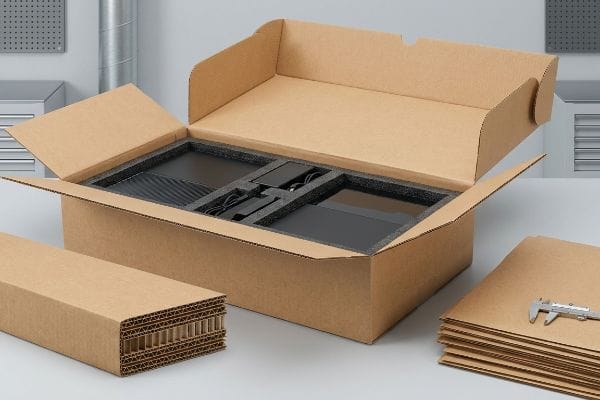
यह 3डी रेंडरिंग में एकदम सही दिखता है, लेकिन जैसे ही आप ट्रे में भारी गेमिंग कंसोल लोड करते हैं, भौतिकी के नियम आक्रामक रूप से अपना असर दिखाने लगते हैं।.
भारी भार के तहत फाइबर की कमी की छिपी हुई कीमत
अधिकतम स्थिरता के लिए प्रयासरत खरीद टीमें अक्सर भारी-भरकम इलेक्ट्रॉनिक खुदरा डिस्प्ले के लिए 100% पुनर्नवीनीकरण किए गए टेस्टलाइनर को अनिवार्य कर देती हैं, यह मानते हुए कि इसमें नए बोर्ड के समान भौतिक अखंडता होती है। वे कागज के पुनर्गमन की सूक्ष्म यांत्रिक वास्तविकता को अनदेखा कर देते हैं, जहां कई पुनर्चक्रण चक्रों के बाद सेल्युलोज फाइबर भौतिक रूप से छोटे हो जाते हैं और संरचनात्मक रूप से कमजोर हो जाते हैं ।
यह सिर्फ़ सिद्धांत नहीं है—मैं परीक्षण के दौरान इसका सामना करता हूँ। पिछली तिमाही में, एक परेशान ग्राहक ने मुझे फ़ोन किया क्योंकि उनका शुरुआती इलेक्ट्रॉनिक्स प्रोटोटाइप अनिवार्य ISTA ड्रॉप टेस्ट में फेल हो गया था, जिससे एक थर्ड-पार्टी लॉजिस्टिक्स (3PL) गोदाम में महंगा हार्डवेयर बिखर गया था। उनके पिछले सप्लायर ने उन्हें बिना बताए वर्जिन क्राफ्ट पेपर की जगह रिसाइकल्ड टेस्टलाइनर का इस्तेमाल कर दिया था। पहले तो मैंने सोचा कि स्टैंडर्ड 32 ECT रिसाइकल्ड बोर्ड8 145.5 पाउंड (66 किलोग्राम) का भार सहन कर सकता है। मैं पूरी तरह गलत था। हमारे आंतरिक संपीड़न सिमुलेशन के दौरान, मैंने खुद महसूस किया कि बोर्ड का कड़ा प्रतिरोध गायब हो गया क्योंकि नीचे की ओर लगने वाले बल से आंतरिक खांचे तुरंत ढह गए। मैंने एजेंसी द्वारा तैयार किया गया डिज़ाइन हटा दिया और शुरू से गणना की। मैंने एक महत्वपूर्ण सामग्री अपग्रेड शुरू किया, जिसमें 30% वर्जिन क्राफ्ट सामग्री9 । लंबे, ताज़े कागज़ के रेशों के इस रणनीतिक उपयोग से गतिशील संपीड़न शक्ति तुरंत बहाल हो गई, जिससे डिस्प्ले समुद्री माल ढुलाई में सुरक्षित रहा और खुदरा विक्रेताओं द्वारा संभावित शुल्क वापसी में भारी कमी आई।
| पेलोड इंजीनियरिंग | भौतिक परिणाम | वित्तीय/अनुपालन आरओआई |
|---|---|---|
| 30% वर्जिन क्राफ्ट फाइबर इंजेक्ट किए गए10 | बांसुरी की झटके सोखने की क्षमता बहाल कर दी गई है। | हार्डवेयर के विनाशकारी नुकसान को रोकता है |
| डबल-वॉल स्पाइन में अपग्रेड किया गया11 | अत्यधिक गतिज अपरूपण बल को अवशोषित किया | बड़े रिटेलर चार्जबैक में कटौती करता है |
| इंजीनियरड फ्रैक्शनल पैलेट बेस12 | संरचनात्मक गुरुत्वाकर्षण केंद्र नीचे किया गया | महंगे स्टोर फ्लोर स्पेस का अधिकतम उपयोग करता है |
भारी-भरकम रिटेल आर्किटेक्चर डिजाइन करते समय मैं घिसे-पिटे कागज़ के रेशों के साथ जोखिम नहीं लेता। अगर आपके आंतरिक खांचों में आवश्यक यांत्रिक मजबूती नहीं है, तो आपका पूरा एंटरटेनमेंट सेंटर प्रोजेक्ट बाज़ार में आने से पहले ही एक बड़ा जोखिम बन जाता है।.
🛠️ हार्वे का डेस्क: क्या आपका मौजूदा आपूर्तिकर्ता गुपचुप तरीके से ऐसे पुनर्चक्रित रेशों का उपयोग करता है जो संरचनात्मक रूप से कमजोर हो चुके हैं और आपके भारी उत्पाद भार के नीचे दबकर टूट सकते हैं? 👉 कच्चे माल के बारे में पूरी जानकारी प्राप्त करें ↗ — 100% गोपनीय। आपके अप्रकाशित खुदरा डिज़ाइन मेरे पास सुरक्षित हैं।
एक स्टैंड की कीमत कितनी होती है?
किसी खुदरा दुकान के सामान पर होने वाले वास्तविक खर्च का पता लगाने के लिए, छपे हुए चित्रों से परे जाकर उन छिपे हुए विनिर्माण कारकों का विश्लेषण करना आवश्यक है जो आपके अंतिम बिल को निर्धारित करते हैं।.
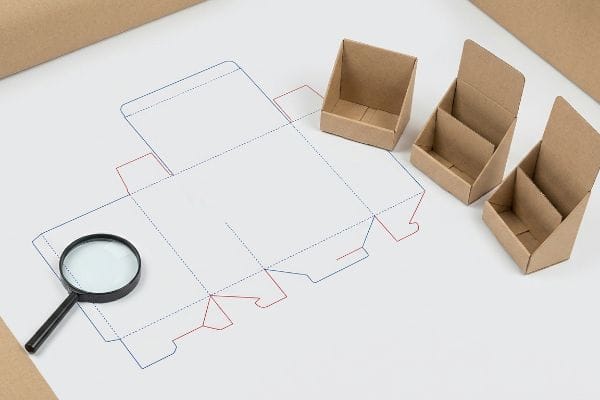
किसी स्टैंड की कीमत तय करते समय बुनियादी संरचनात्मक सटीकता और मानकीकृत संयोजन कारकों का मूल्यांकन करना आवश्यक होता है। अनुकूलित फोल्डिंग टेम्पलेट्स का उपयोग करने से सामग्री की बर्बादी कम होती है, जिससे खुदरा बिक्री के लिए स्टैंड को सुचारू रूप से स्थापित किया जा सकता है और साथ ही समग्र बिक्री अभियान को बजट की सीमा के भीतर रखा जा सकता है।.
लेकिन जब आप बड़े पैमाने पर उत्पादन शुरू करते हैं तो बुनियादी रणनीति जानना ही पर्याप्त नहीं होता है।.
अपुष्ट रिटेल टेम्पलेट्स का छिपा हुआ खर्च
डिजाइनर अक्सर यह मान लेते हैं कि एक साधारण डिजिटल डाईलाइन बिना किसी यांत्रिक जटिलता के स्वचालित रूप से एक त्रुटिहीन भौतिक डिस्प्ले तैयार कर देती है। वे जीवंत सतह ग्राफिक्स और ब्रांड संदेशों को प्राथमिकता देते हैं, और इस बात को पूरी तरह से अनदेखा कर देते हैं कि वास्तविक पैकेजिंग सुविधा में मानक कार्डबोर्ड कैसे मुड़ता और झुकता है 13। यह अति सरलीकृत दृष्टिकोण यह मानता है कि सैद्धांतिक डिजाइन टेम्पलेट बिना किसी विशिष्ट यांत्रिक समायोजन की आवश्यकता के आसानी से मजबूत खुदरा फिक्स्चर में परिवर्तित हो जाएंगे 14 ।
जब सामान्य फाइलें स्वचालित को-पैकिंग लाइन तक पहुंचती हैं, तो खुदरा क्षेत्र की वास्तविकता कहीं अधिक कठोर होती है। ब्रांड अक्सर पाते हैं कि अप्रमाणित स्कोर लाइनों के कारण उनके प्रचार आइटम असमान रूप से मुड़ जाते हैं , जिससे खुदरा प्रस्तुति में गड़बड़ी होती है और संरचनात्मक अखंडता कमजोर हो जाती है। प्रारंभिक सटीकता की इस कमी के कारण असेंबली के दौरान महंगा मैनुअल रीवर्क करना पड़ता है, जिससे लाभ मार्जिन तेजी से घट जाता है। शुरुआत से ही सटीक संरचनात्मक सहनशीलता को ध्यान में रखकर, ब्रांड अपनी आपूर्ति श्रृंखला को सुव्यवस्थित करते हैं, अप्रत्याशित श्रम लागत में कटौती करते हैं और सभी खुदरा परिवेशों में एक सुसंगत दृश्य प्रभाव सुनिश्चित करते हैं।
| रणनीतिक संरेखण | भौतिक परिणाम | वित्तीय/अनुपालन आरओआई |
|---|---|---|
| अनुकूलित टेम्पलेट डिज़ाइन | नियंत्रित सामग्री तह | मैनुअल असेंबली श्रम लागत में भारी कटौती करता है16 |
| मानकीकृत डाई-लाइनें | असुविधाजनक संरेखणों को दूर किया गया | कॉस्मेटिक रिटेलर द्वारा किए गए शुल्क वापसी को रोकता है17 |
| सत्यापित खुदरा उपस्थिति | एकसमान आयामों की गारंटी | बहुस्तरीय वितरण दक्षता को अधिकतम करता है18 |
लाभदायक खुदरा बिक्री अभियानों के लिए डाई-कटिंग चरण में यांत्रिक सटीकता अत्यंत आवश्यक है। सही फोल्डिंग टॉलरेंस की अनदेखी करने से असेंबली लाइन पर गंभीर को-पैकिंग देरी के कारण आपका बजट तेजी से बर्बाद हो जाएगा।.
🛠️ हार्वे का डेस्क: क्या अप्रमाणित डिजिटल टेम्पलेट्स आपके डिस्प्ले फोल्ड्स में अलाइनमेंट की समस्या पैदा कर रहे हैं और आपके को-पैकिंग लेबर को बढ़ा रहे हैं? आइए, मैं आपकी डाई-लाइन्स का विश्लेषण करता हूँ। 👉 1-ऑन-1 स्ट्रक्चरल 3D स्ट्रेस सिमुलेशन का अनुरोध करें ↗ — कोई अकाउंट मैनेजर बीच में नहीं। आप सीधे स्ट्रक्चरल इंजीनियरों से बात करेंगे।
डिस्प्ले विज्ञापनों की कीमत कितनी होती है?
भौतिक डिस्प्ले विज्ञापन के लिए निवेश का मूल्यांकन करते समय संरचनात्मक योजना की कड़ी जांच की आवश्यकता होती है, जहां सूक्ष्म स्तर की गलत गणना आसानी से भारी परिणामी खर्चों को जन्म दे सकती है।.
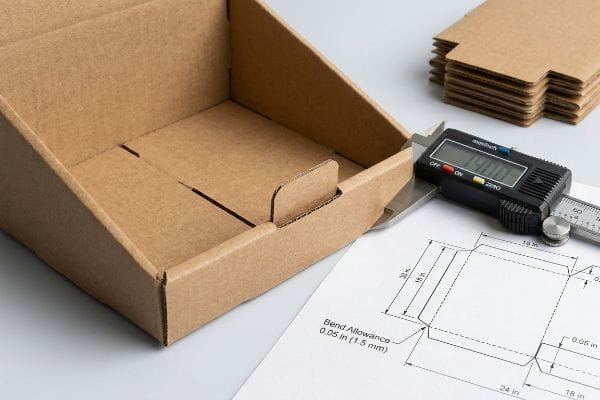
भौतिक डिस्प्ले विज्ञापनों की लागत का निर्धारण पूरी तरह से संरचनात्मक सहनशीलता और स्वचालित विनिर्माण क्षमताओं पर निर्भर करता है। बेंड अलाउंस और सीएडी (कंप्यूटर-एडेड डिज़ाइन) कैलिपर क्षतिपूर्ति एल्गोरिदम का उचित उपयोग घर्षणरहित असेंबली सुनिश्चित करता है, श्रम-प्रधान पुनर्कार्य को काफी हद तक कम करता है और प्रचार सामग्री की भौतिक अखंडता की रक्षा करता है।.
लेकिन जब मशीनें चलना शुरू हो जाती हैं और संरचनात्मक भौतिकी अपना वर्चस्व स्थापित कर लेती है, तो सैद्धांतिक खाका जानना ही पर्याप्त नहीं होता।.
अनदेखे बेंड अलाउंस का अदृश्य खर्च
ग्राफिक डिज़ाइनर अक्सर डिजिटल सॉफ़्टवेयर में इंटरलॉकिंग टैब और फोल्डिंग स्लॉट को मिलान पैनल की सटीक चौड़ाई पर बनाते हैं। वे मुड़े हुए नालीदार बोर्ड के भौतिक व्यास की गणना करने में पूरी तरह से विफल रहते हैं, इस बात को नज़रअंदाज़ करते हुए कि एक मोटा संरचनात्मक पैनल 19 डिग्री पर मुड़ने पर काफी सामग्री की खपत करता है ।
यह सिर्फ़ सिद्धांत नहीं है—मैं परीक्षण के दौरान इसका सामना करता हूँ। एक विशाल सामान्य डिस्प्ले बॉक्स हमें भेजा गया था, जो मानक 3PL सह-पैकिंग असेंबली के दौरान बार-बार टूट रहा था। पहले तो मैंने सोचा कि मानक बी-फ्लूट पैरामीटर स्वाभाविक रूप से स्लॉट के अनुरूप हो जाएँगे। मैं पूरी तरह गलत था। मैंने क्षतिग्रस्त प्रोटोटाइप की फटी हुई ऊपरी शीट को फाड़कर अलग किया और आंतरिक फ्लूटिंग पर लगे अत्यधिक घर्षण अवरोध को महसूस किया, जहाँ जबरदस्ती लगाए गए टैब ने उसे कुचल दिया था। मैंने माइक्रोमीटर रीडिंग लीं और साबित किया कि हमें महंगे प्लास्टिक सुदृढ़ीकरण क्लिप की आवश्यकता नहीं थी—हमें केवल 0.05 इंच (1.5 मिमी) की अधिक सटीक फोल्ड टॉलरेंस की।स्प्रेडशीट अनुमानों के बजाय अत्यधिक पर्यावरणीय परीक्षण कक्षों पर भरोसा करते हुए, मैंने सटीक कैलिपर क्षतिपूर्ति लागू करने के लिए पैरामीट्रिक CAD एल्गोरिदम का उपयोग करके स्लॉट को गणितीय रूप से पुनर्निर्मित किया। इस सूक्ष्म समायोजन को लागू करके, मैंने घर्षण अवरोध को तोड़ दिया और यह सुनिश्चित किया कि सह-पैकिंग असेंबली का समय अनुमानित 30% कम हो गया, जिससेमहंगेमैनुअल रीवर्क शुल्क पूरी तरह से समाप्त हो गए।
| सहनशीलता इंजीनियरिंग | भौतिक परिणाम | वित्तीय/अनुपालन आरओआई |
|---|---|---|
| सटीक कैलिपर क्षतिपूर्ति लागू की गई | इंटरलाकिंग टैब घर्षण को समाप्त किया गया | महंगे 3PL रीवर्क शुल्क को समाप्त करता है22 |
| रिसीविंग स्लॉट को 1.5 मिमी तक चौड़ा किया गया है।23 | बोर्ड फोल्ड त्रिज्या को ध्यान में रखा गया | मैनुअल असेंबली का समय काफी कम हो जाता है। |
| भारी प्लास्टिक क्लिप निकाल दिए | 100% एकल-सामग्री संरचना को बरकरार रखा गया 24 | पर्यावरण संबंधी सख्त नियमों के उल्लंघन के लिए लगने वाले जुर्माने से बचा जाता है |
मैं अप्रमाणित डिजिटल ब्लूप्रिंट को भौतिक विनिर्माण की वास्तविकताओं को निर्धारित करने नहीं दूंगा। जब आप नालीदार कार्डबोर्ड की मोटाई को नज़रअंदाज़ करते हैं, तो आप न केवल असेंबली लाइन को धीमा कर रहे होते हैं, बल्कि आप अपने भौतिक विज्ञापन अभियान में संरचनात्मक विफलता को भी शामिल कर रहे होते हैं।.
🛠️ हार्वे का डेस्क: क्या आपकी डाईलाइन में 1.5 मिमी की बेंडिंग अलाउंस की कमी आपके को-पैकर की असेंबली लाइन पर भारी फ्रिक्शन लॉक का कारण बन रही है? 👉 अपनी पैकेजिंग टॉलरेंस का ऑडिट करें ↗ — मैं 24 घंटों के भीतर हर स्ट्रक्चरल फाइल की व्यक्तिगत रूप से समीक्षा करता हूँ।
निष्कर्ष
आप किसी सस्ते विक्रेता को चुन सकते हैं, लेकिन जब नमी वाले गोदाम में भारी भार के कारण संरचनात्मक रूप से कमजोर पुनर्नवीनीकृत टेस्टलाइनर टूट जाता है और खुदरा विक्रेता तुरंत उसे अस्वीकार कर देता है, तो आपकी शुरुआती बचत खत्म हो जाती है। पिछले महीने ही, मेरे संरचनात्मक ऑडिट ने 3 ब्रांडों को 10,000 डॉलर से अधिक के बेकार माल और खुदरा विक्रेताओं द्वारा किए गए शुल्क से बचने में मदद की। असफल डिस्प्ले पर अपना बजट बर्बाद करना बंद करें और मुझे व्यक्तिगत रूप से आपके अगले रिटेल रोलआउट को इंजीनियर करने दें ↗ ताकि अधिकतम ROI की गारंटी मिल सके।
"ईसीटी रेटिंग्स की व्याख्या: आपके नालीदार कार्डबोर्ड के लिए इनका क्या अर्थ है...", https://epackagesupply.com/blogs/packaging-guide/ect-ratings-explained-what-they-mean-for-your-corrugated-packaging?srsltid=AfmBOoq5ucsLR5g-XDkgFnHv-Fx7G0f-nbtq4f0UO5lwVwhGQYJkwscy। नालीदार कार्डबोर्ड में एज क्रश टेस्ट (ईसीटी) रेटिंग्स का सामग्री लागत और संरचनात्मक भार वहन क्षमता से संबंध का सत्यापन। साक्ष्य की भूमिका: तकनीकी विनिर्देश; स्रोत प्रकार: उद्योग इंजीनियरिंग मानक। समर्थन: यह दावा कि ईसीटी रेटिंग कम करने से इकाई लागत कम हो जाती है। कार्यक्षेत्र संबंधी टिप्पणी: नालीदार कार्डबोर्ड मानकों पर लागू होता है। ↩
"ISTA पैकेजिंग परीक्षण – इंटरटेक", https://www.intertek.com/performance-testing/packaging/ista/। नालीदार पैकेजिंग में परिवहन कंपन और झटकों का अनुकरण करने के लिए ISTA 3A परीक्षण मानक मापदंडों का सत्यापन। साक्ष्य भूमिका: प्रमाणीकरण; स्रोत प्रकार: उद्योग मानक। समर्थन: वर्णित परीक्षण प्रक्रिया की तकनीकी विश्वसनीयता। कार्यक्षेत्र संबंधी टिप्पणी: सामान्य परिवहन अनुकरण पर लागू होता है। ↩
"ईसीटी रेटिंग्स की व्याख्या: आपके लिए इनका क्या अर्थ है...", https://epackagesupply.com/blogs/packaging-guide/ect-ratings-explained-what-they-mean-for-your-corrugated-packaging?srsltid=AfmBOopFtigWppMeX86oVStHFI51my6fRbt7bqLGD0WyamUR9T_iR4Xj। 26 ईसीटी बोर्ड की तुलना में 32 ईसीटी बोर्ड की संरचनात्मक श्रेष्ठता और भार वहन क्षमता को सत्यापित करने के लिए एज क्रश टेस्ट (ईसीटी) रेटिंग्स की तकनीकी तुलना। साक्ष्य की भूमिका: तकनीकी विनिर्देश; स्रोत प्रकार: सामग्री डेटा शीट। समर्थन: यह दावा कि ईसीटी रेटिंग को अपग्रेड करने से संरचनात्मक क्षमता बहाल हो जाती है। स्कोप नोट: नालीदार फाइबरबोर्ड मानकों के लिए विशिष्ट। ↩
"[PDF] नालीदार कार्डबोर्ड विनिर्देश - फाइबर बॉक्स एसोसिएशन", https://www.fibrebox.org/assets/2025/09/Walmart_Corrugated-Board_Specifications_Automation_Packaging_Standards.pdf। एज क्रश टेस्ट (ECT) रेटिंग द्वारा नालीदार सामग्रियों की ऊर्ध्वाधर भार वहन क्षमता और कठोरता का निर्धारण कैसे किया जाता है, इसका तकनीकी विवरण। साक्ष्य भूमिका: तकनीकी विनिर्देश; स्रोत प्रकार: पैकेजिंग उद्योग मानक। समर्थन: संरचनात्मक कठोरता को बहाल करने के लिए 32 ECT बोर्ड का उपयोग। कार्यक्षेत्र नोट: नालीदार कार्डबोर्ड विनिर्देशों के लिए विशिष्ट। ↩
"प्रिंटिंग और पैकेजिंग के लिए एक्वस कोटिंग क्या है?", https://www.customboxmakers.com/what-is-aqueous-coating/?srsltid=AfmBOooT-P4JvT0u91tClrvCTOZE8KoBKW8C2menJgH1m3kWHwV7zo7o। पुनर्चक्रण योग्य एक्वस कोटिंग्स और गैर-पुनर्चक्रण योग्य कंपोजिट फॉयल लैमिनेट्स के लिए अपशिष्ट प्रबंधन लागतों का तुलनात्मक अध्ययन। साक्ष्य की भूमिका: वित्तीय अनुपालन; स्रोत प्रकार: पर्यावरण विनियमन मार्गदर्शिका। समर्थन: यह दावा कि एक्वस ग्लॉस निपटान खर्चों को कम करता है। कार्यक्षेत्र संबंधी टिप्पणी: क्षेत्रीय अपशिष्ट प्रबंधन कानूनों के अधीन। ↩
"[PDF] बॉक्स की संपीडन शक्ति पर नमी की मात्रा का प्रभाव: FBA BCT …", https://renewablebioproducts.gatech.edu/sites/default/files/2025-12/4effects-of-moisture-content-on-box-compression-strength.pdf। इंजीनियरिंग विश्लेषण दर्शाता है कि कैसे सटीक संरेखण और ओवरहैंग को हटाने से BCT द्वारा मापी गई ऊर्ध्वाधर स्टैकिंग शक्ति को अधिकतम किया जा सकता है। साक्ष्य की भूमिका: संरचनात्मक सत्यापन; स्रोत प्रकार: सामग्री विज्ञान मैनुअल। समर्थन: शून्य-ओवरहैंग डिज़ाइन और BCT परिणामों के बीच सहसंबंध। कार्यक्षेत्र संबंधी टिप्पणी: माल ढुलाई में संपीडन शक्ति से संबंधित। ↩
"पुनर्चक्रित सामग्री की कागज़ बनाने की क्षमता पर श्रेडिंग की मात्रा का प्रभाव...", https://pmc.ncbi.nlm.nih.gov/articles/PMC8410872/। कागज़ पुनर्चक्रण में बार-बार की जाने वाली यांत्रिक और रासायनिक प्रक्रियाओं द्वारा रेशों की लंबाई और मजबूती में होने वाली कमी का तकनीकी विवरण। साक्ष्य की भूमिका: तकनीकी सत्यापन; स्रोत प्रकार: सामग्री विज्ञान पत्रिका। समर्थन: पुनर्चक्रित टेस्टलाइनर की संरचनात्मक गिरावट। कार्यक्षेत्र संबंधी टिप्पणी: विशेष रूप से सेल्युलोज-आधारित सब्सट्रेट पर लागू होता है। ↩
"शिपिंग बॉक्स की मजबूती को समझना", https://www.ecoenclose.com/blog/understanding-shipping-box-strength/?srsltid=AfmBOooFQSfEfamvYaB-pX9k-3vmaesklVB9ma0n49IG4KSzgvYNbCle। 32 ECT पुनर्चक्रित नालीदार बोर्ड की भार वहन क्षमता और संपीड़न शक्ति की पुष्टि करने वाला तकनीकी डेटा, जो 145.5 पाउंड से कम भार पर विफलता को प्रमाणित करता है। साक्ष्य की भूमिका: तकनीकी विनिर्देश; स्रोत प्रकार: पैकेजिंग इंजीनियरिंग हैंडबुक। समर्थन: संरचनात्मक विफलता सीमा। कार्यक्षेत्र संबंधी टिप्पणी: पुनर्चक्रित बनाम वर्जिन फाइबर के प्रदर्शन पर केंद्रित। ↩
"नालीदार पेपरबोर्ड पैकेजों की संपीडन शक्ति...", https://pmc.ncbi.nlm.nih.gov/articles/PMC10054506/। सामग्री विज्ञान डेटा दर्शाता है कि कैसे शुद्ध क्राफ्ट फाइबर के विशिष्ट अनुपात नालीदार सब्सट्रेट में गतिशील संपीडन शक्ति को बढ़ाते हैं। साक्ष्य भूमिका: सामग्री विज्ञान प्रमाण; स्रोत प्रकार: तकनीकी पत्रिका। समर्थन: संरचनात्मक अखंडता की बहाली। कार्यक्षेत्र नोट: परिणाम फ्लूट ज्यामिति के आधार पर भिन्न हो सकते हैं। ↩
"नालीदार पैकेजिंग का पर्यावरणीय प्रभाव", https://www.internationalpaper.com/resources/blog/environmental-impact-corrugated-packaging-why-balanced-fiber-approach-best। नालीदार कार्डबोर्ड में फाइबर संरचना पर तकनीकी डेटा यह साबित करता है कि वर्जिन क्राफ्ट फाइबर मिलाने से शॉक एब्जॉर्बेंस क्षमता बढ़ती है। साक्ष्य की भूमिका: तकनीकी विनिर्देश; स्रोत प्रकार: सामग्री विज्ञान पत्रिका। समर्थन: सामग्री गुण दावा। कार्यक्षेत्र संबंधी टिप्पणी: विशेष रूप से भारी पेलोड पैकेजिंग के लिए। ↩
"दोहरी दीवार वाली नालीदार कार्डबोर्ड पैकेजिंग का इष्टतम डिज़ाइन", https://pmc.ncbi.nlm.nih.gov/articles/PMC8950760/। इंजीनियरिंग मानक यह दर्शाते हैं कि एकल दीवार की तुलना में दोहरी दीवार वाली संरचनाएं अपरूपण बलों के प्रति प्रतिरोध बढ़ाती हैं। साक्ष्य की भूमिका: संरचनात्मक सत्यापन; स्रोत प्रकार: पैकेजिंग इंजीनियरिंग मैनुअल। समर्थन: भौतिक परिणाम का दावा। कार्यक्षेत्र संबंधी टिप्पणी: ऊर्ध्वाधर संरचनात्मक समर्थन पर केंद्रित। ↩
"पैलेट लोड स्थिरता: भौतिकी, झुकाव कोण और स्ट्रेच रैप - पैककैल्क", https://packcalc.com/resources/pallet-load-stability-physics-tilt-angles। आधार आयामों और भार वितरण का विश्लेषण दर्शाता है कि कैसे आंशिक पैलेट डिज़ाइन स्थिरता के लिए गुरुत्वाकर्षण केंद्र को नीचे लाते हैं। साक्ष्य की भूमिका: यांत्रिक प्रमाण; स्रोत प्रकार: लॉजिस्टिक्स इंजीनियरिंग श्वेतपत्र। समर्थन: स्थिरता का दावा। कार्यक्षेत्र संबंधी टिप्पणी: खुदरा प्रदर्शन इकाइयों पर लागू होता है। ↩
"[PDF] क्रीज़िंग और फोल्डिंग – बायो रिसोर्सेज", https://bioresources.cnr.ncsu.edu/wp-content/uploads/2019/01/2017.1.69.pdf। सामग्री विज्ञान संबंधी यह दस्तावेज़ फोल्डिंग प्रक्रिया के दौरान नालीदार कार्डबोर्ड के भौतिक विरूपण और संपीड़न की व्याख्या करता है। साक्ष्य की भूमिका: तकनीकी सत्यापन; स्रोत प्रकार: इंजीनियरिंग हैंडबुक। समर्थन: उत्पादन में सामग्री के व्यवहार की भौतिक वास्तविकता। कार्यक्षेत्र संबंधी टिप्पणी: नालीदार कार्डबोर्ड पर लागू होता है। ↩
"डिस्प्ले बॉक्स के आयामों, आकारों और टेम्पलेट की डाइलाइन - BoxesGen", https://boxesgen.com/dieline-of-display-box-dimensions-sizes-template/?srsltid=AfmBOooXLzl3flbQCJb5v3i5H1EJP8e3-I8Jseb79O_9o10TwLJQsep5। पैकेजिंग इंजीनियरिंग मानक सामग्री की मोटाई और क्रीज सहनशीलता को ध्यान में रखते हुए सैद्धांतिक डाइलाइन में आवश्यक समायोजन का विवरण देते हैं। साक्ष्य की भूमिका: प्रक्रिया सत्यापन; स्रोत प्रकार: उद्योग मानक। समर्थन: डिजिटल टेम्पलेट्स के संरचनात्मक परिशोधन की आवश्यकता। कार्यक्षेत्र संबंधी टिप्पणी: खुदरा फिक्स्चर निर्माण तक सीमित। ↩
"इंटरैक्टिव रिटेल के लिए डिस्प्ले स्ट्रक्चरल डिज़ाइन ...", https://www.bcipkg.com/display-structural-design-for-interactive-retail-displays/। नालीदार पैकेजिंग मानकों पर तकनीकी दस्तावेज़ यह दर्शाता है कि कैसे अस्पष्ट स्कोर लाइनें फोल्डिंग विचलन और संरचनात्मक अस्थिरता का कारण बनती हैं। साक्ष्य की भूमिका: तकनीकी सत्यापन; स्रोत प्रकार: उद्योग विनिर्माण मैनुअल। समर्थन: इस दावे का कि अप्रमाणित टेम्पलेट फोल्डिंग त्रुटियों का कारण बनते हैं। कार्यक्षेत्र संबंधी टिप्पणी: स्वचालित सह-पैकिंग प्रक्रियाओं पर ध्यान केंद्रित। ↩
"पैकेजिंग रिटेल डिस्प्ले प्रोग्राम की सफलता को कैसे प्रभावित करती है", https://www.frankmayer.com/blog/how-packaging-shapes-retail-display-program-success/। एक उद्योग विनिर्माण अध्ययन जो दर्शाता है कि सटीक टेम्पलेट डिज़ाइन भौतिक असेंबली के लिए आवश्यक श्रम घंटों को कैसे कम करता है। साक्ष्य की भूमिका: अनुभवजन्य समर्थन; स्रोत प्रकार: उद्योग श्वेतपत्र। समर्थन: श्रम लागत में कमी। कार्यक्षेत्र संबंधी टिप्पणी: पॉइंट-ऑफ-परचेज़ डिस्प्ले के लिए विशिष्ट। ↩
"कॉन्ट्रैक्ट पैकेजिंग की कौन सी गलतियाँ रिटेलर चार्जबैक को ट्रिगर करती हैं?", https://www.industrialpackaging.com/blog/copacker-mistakes-retailer-chargebacks। रिटेलर कंप्लायंस मैनुअल या वेंडर एग्रीमेंट में डिस्प्ले के कॉस्मेटिक या अलाइनमेंट मानकों को पूरा न करने पर लगने वाले वित्तीय दंड का दस्तावेजीकरण किया गया है। साक्ष्य की भूमिका: जोखिम का सत्यापन; स्रोत प्रकार: रिटेल कंप्लायंस गाइड। समर्थन: चार्जबैक की रोकथाम। स्कोप नोट: प्रमुख बिग-बॉक्स रिटेलर्स पर लागू। ↩
"आपूर्ति श्रृंखला का डिजिटलीकरण और प्रदर्शन: एक नियंत्रित … – पीएमसी", https://pmc.ncbi.nlm.nih.gov/articles/PMC10881317/। लॉजिस्टिक्स विश्लेषण दर्शाता है कि सत्यापित आयामी स्थिरता पैलेटाइजेशन और वेयरहाउस थ्रूपुट को कैसे अनुकूलित करती है। साक्ष्य की भूमिका: परिचालन सत्यापन; स्रोत प्रकार: आपूर्ति श्रृंखला विश्लेषण। सहायक: वितरण दक्षता। कार्यक्षेत्र संबंधी टिप्पणी: माल ढुलाई और भंडारण अनुकूलन पर केंद्रित। ↩
"[PDF] नालीदार बोर्ड की बेंडिंग कठोरता", https://www.fpl.fs.usda.gov/documnts/pdf1992/luo92a.pdf। नालीदार सामग्रियों के लिए बेंड अलाउंस पर इंजीनियरिंग दिशानिर्देश, जो मोड़ने के दौरान सामग्री के विस्थापन की व्याख्या करते हैं। साक्ष्य की भूमिका: तकनीकी सत्यापन; स्रोत प्रकार: विनिर्माण विनिर्देश। समर्थन: यह दावा कि मोड़ने से सामग्री की खपत होती है। कार्यक्षेत्र संबंधी टिप्पणी: मोटे गेज वाले संरचनात्मक बोर्डों पर लागू होता है। ↩
"पांच-परत वाली सामग्री की बेंडिंग कठोरता का विश्लेषणात्मक निर्धारण...", https://pmc.ncbi.nlm.nih.gov/articles/PMC8777652/। एक आधिकारिक बाहरी स्रोत इस दावे का समर्थन कैसे करता है, इसका संक्षिप्त विवरण। साक्ष्य की भूमिका: तकनीकी सत्यापन; स्रोत का प्रकार: पैकेजिंग इंजीनियरिंग मैनुअल। समर्थन: फ्लूटिंग कोलैप्स और फ्रिक्शन लॉक को रोकने के लिए विशिष्ट फोल्ड टॉलरेंस का उपयोग। स्कोप नोट: वास्तविक टॉलरेंस सामग्री ग्रेड और बोर्ड की मोटाई के आधार पर भिन्न हो सकते हैं। ↩
"भार वहन क्षमता पर छिद्रों के प्रभाव की जांच...", https://pmc.ncbi.nlm.nih.gov/articles/PMC11396172/। एक आधिकारिक बाहरी स्रोत इस दावे का समर्थन कैसे करता है, इसका संक्षिप्त विवरण। साक्ष्य की भूमिका: प्रदर्शन मीट्रिक; स्रोत का प्रकार: औद्योगिक केस स्टडी या संचालन रिपोर्ट। समर्थन: सटीक सीएडी सहनशीलता और मैनुअल रीवर्क शुल्क में कमी के बीच सहसंबंध। स्कोप नोट: यह एक सार्वभौमिक स्थिरांक के बजाय एक विशिष्ट प्रदर्शन परिणाम को दर्शाता है। ↩
"किट बनाने, पैकेजिंग और रीवर्क में छिपी लागत बचत...", https://kanbanlogistics.com/blog/the-hidden-cost-savings-in-kitting-packaging-and-rework-when-it-pays-to-use-a-3pl। पूर्ति के दौरान भौतिक पैकेजिंग त्रुटियों को ठीक करने के लिए विशिष्ट तृतीय-पक्ष लॉजिस्टिक्स (3PL) अधिभारों पर उद्योग डेटा। साक्ष्य भूमिका: वित्तीय बेंचमार्क; स्रोत प्रकार: लॉजिस्टिक्स उद्योग रिपोर्ट। समर्थन: परिशुद्ध इंजीनियरिंग का ROI। स्कोप नोट: शुल्क सेवा स्तर समझौतों पर निर्भर करते हैं। ↩
"[PDF] नालीदार पेपरबोर्ड के लिए विनिर्देश - राष्ट्रीय अभिलेखागार", https://www.archives.gov/files/preservation/storage/pdf/corrugated-board.pdf। नालीदार डिस्प्ले इंजीनियरिंग में सामग्री तह त्रिज्या के लिए मानक सहनशीलता समायोजन का तकनीकी सत्यापन। साक्ष्य भूमिका: तकनीकी विनिर्देश; स्रोत प्रकार: इंजीनियरिंग मैनुअल। समर्थन: संयोजन के लिए सटीक भौतिक आयाम। कार्यक्षेत्र नोट: विशेष रूप से कठोर बोर्ड सामग्री पर लागू होता है। ↩
"पैकेजिंग नीति में नया क्या है? पैकेजिंग नीति का सारांश", https://sustainablepackaging.org/2026/06/22/packaging-policy-news/। पर्यावरण पैकेजिंग विनियमों और बहु-सामग्री गैर-पुनर्चक्रणीय घटकों से जुड़े वित्तीय दंडों का विश्लेषण। साक्ष्य की भूमिका: नियामक सत्यापन; स्रोत प्रकार: सरकारी पर्यावरण एजेंसी। समर्थन: अनुपालन जुर्माने से बचाव। कार्यक्षेत्र संबंधी टिप्पणी: क्षेत्रीय अधिकार क्षेत्र के अनुसार भिन्न होता है। ↩