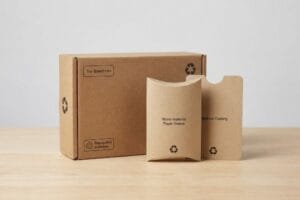
Trying to meet retailer green mandates without blowing your budget? It's a common trap. When sustainability compromises structural integrity, you risk catastrophic supply chain failures. Let's fix that.
The benefits of sustainable packaging include reduced material waste, lower carbon footprints, and compliance with strict retail environmental scorecards. By utilizing repulpable corrugated boards and eliminating heavy plastics, brands optimize container shipping weight, avoid hazardous disposal fines, and seamlessly meet global recycling standards without sacrificing structural compression strength.
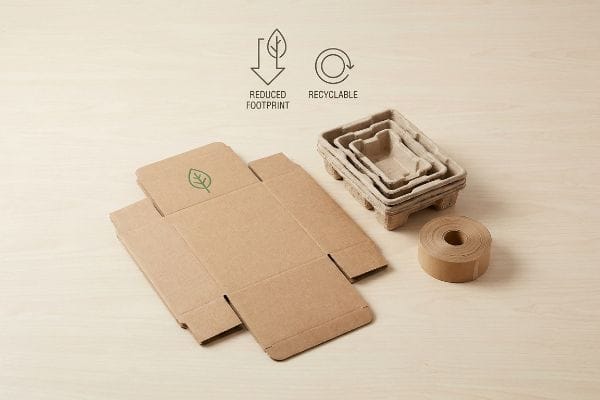
Shifting from basic eco-friendly concepts to actual factory floor application requires a hard look at how these materials survive global transit.
What Are the 5 Importances of Packaging?
We often boil packaging down to just holding a product, but that oversimplification destroys profit margins.
The 5 importances of packaging encompass physical product protection, supply chain convenience, brand communication, structural concept stability, and overall cost efficiency. Balancing these elements ensures that corrugated master cartons survive ocean transit while simultaneously engaging retail shoppers and minimizing assembly friction on the factory floor.

Understanding these pillars is one thing, but balancing them during mass production is where most campaigns derail.
The 4 C's Strategy and Why Cost-Cutting Ruins Communication
Brands usually use the 4 C's of packaging—Cost, Concept, Convenience, Communication1—to guide their retail rollouts. However, procurement teams frequently isolate and obsess strictly over the primary cost metric, hollowing out structural board grades to save upfront pennies. This creates a severe imbalance that completely destroys the other three pillars before the display ever reaches the store.
I see this happen when buyers downgrade raw material just to afford fancy printing. When that weakened box hits the shipping line, the physical concept buckles under the heavy pallet weight2. I have watched store clerks try to assemble these flattened, distorted dielines, frustrated by the tearing sound of raw paperboard as the friction locks fail3. Because the convenience is ruined, they use ugly clear tape to hold it together, which instantly erases your brand communication.
| Common Rookie Mistake | The Pro Fix | Retail-Floor Benefit |
|---|---|---|
| Downgrading board ECT4 to save pennies | Mathematical 4 C's assessment | Prevents transit crushed graphics |
| Ignoring assembly friction | Precision die-cut clearances | Saves 25s assembly time per unit5 |
| Treating cost as an isolated metric | Linking board cost to supply chain survival | Eliminates catastrophic retailer chargebacks6 |
I never let procurement isolate cost from physical performance. By anchoring your structural budget directly to downstream supply chain survival, you protect your visual branding and keep your retail rollout highly profitable.
🛠️ Harvey's Desk: Are your procurement cost cuts secretly destroying your packaging's structural integrity? Send me your raw specifications, and I will find the friction points before printing. 👉 Get a Structural Dieline Audit ↗ — Direct access to my desk. Zero automated sales spam, I promise.
What Are the 7 Rs of Sustainable Packaging?
Meeting eco-friendly mandates requires more than just printing a recycling logo on your box. It requires mastering the specific lifecycle limits of your materials.
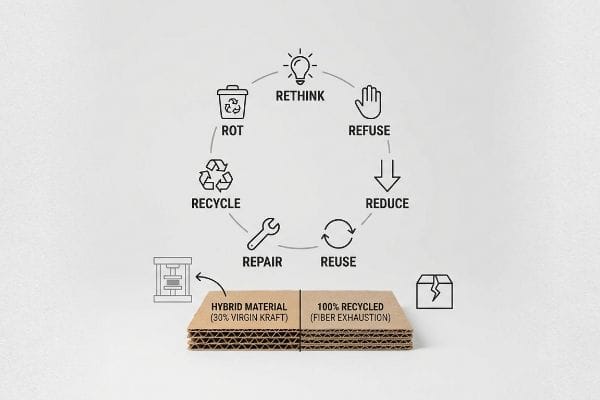
Sustainable packaging utilizes 7 Rs: rethink, refuse, reduce, reuse, repair, recycle, and rot. Implementing these distinct principles requires engineering retail displays with precise, right-sized structural designs and selecting highly repulpable mono-materials. This approach actively minimizes excess packaging volume to drastically lower heavy global carbon emissions.
While "recycle" is the most popular of the 7 Rs, pushing it too far creates invisible weaknesses in your supply chain.
The Fiber Exhaustion Limit of Recycled Board
Procurement teams striving for maximum sustainability often mandate 100% recycled testliner for heavy-duty retail displays. They assume that heavily recycled cardboard possesses the exact same physical compression integrity as fresh, virgin board7. This well-intentioned mandate completely ignores the microscopic mechanical reality of the paper repulping process.
When paper is repeatedly repulped, the cellulose fibers physically shorten and become exhausted after about five cycles8. I test these boards using a TAPPI T811 Edge Crush Test9, and the sound of short, over-recycled flutes instantly snapping under the press is a harsh reality check. To fix this, I inject a precise 30% ratio of virgin kraft material directly into the load-bearing flutes. This introduces long, fresh paper fibers that instantly restore dynamic compression strength, ensuring your display survives double-stacked ocean freight.
| Common Rookie Mistake | The Pro Fix | Retail-Floor Benefit |
|---|---|---|
| Mandating 100% recycled testliner | Injecting 30% virgin kraft material10 | Survives double-stacked ocean freight |
| Ignoring paper fiber exhaustion11 | TAPPI T811 Edge Crush Test validation12 | Prevents bottom-tier display collapse |
| Assuming all cardboard is equal | Strategic hybrid material sourcing | Meets ESG goals without breaking |
I strictly enforce a hybrid material mandate for all heavy merchandisers. Balancing recycled content with fresh structural fibers guarantees you meet strict retail sustainability quotas without suffering massive logistics failures.
🛠️ Harvey's Desk: Are your 100% recycled displays secretly suffering from severe fiber exhaustion that will fail during transit? 👉 Request a Material Strength Review ↗ — Download safely. My inbox is open if you have questions later.
What Is Sustainable Packaging and Give 5 Examples?
True eco-packaging isn't about using exotic materials; it is about ensuring those materials actually survive standard municipal recycling streams without causing friction.
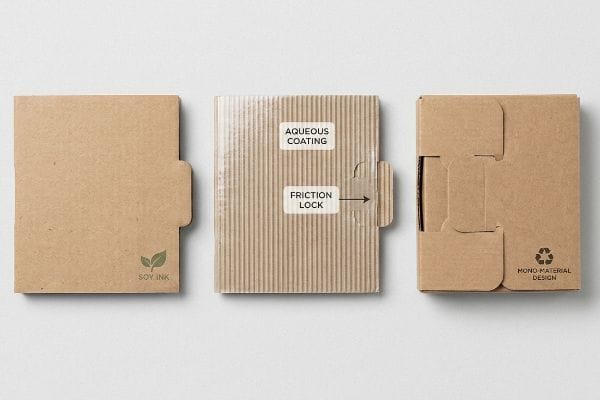
Sustainable packaging minimizes environmental harm using renewable materials. Five excellent examples include lightweight micro-fluted corrugated boards, water-based aqueous coatings, soy-based printing inks, mono-material paper friction locks, and unbleached virgin kraft paperboard. These alternatives seamlessly replace traditional plastics while easily surviving strict heavy-duty retail supply chains.
However, some heavily marketed "eco-friendly" examples actually sabotage the recycling process when they hit the real world.
The Composting Trap of Bio-Plastics
Brands frequently mandate PLA (Polylactic Acid) bio-plastic laminations13, assuming this corn-based film ensures complete eco-compliance for their corrugated retail displays. They trust the marketing labels without understanding how these materials behave inside standard municipal sorting facilities14.
Think of it like pouring oil into a glass of water; the two simply do not mix. PLA forms a solid physical film that actively repels water15 during standard OCC (Old Corrugated Containers) repulping processes. When I inspect rejected batches, the slick, sticky resistance of that bio-plastic film is obvious, and it forces the entire cardboard structure to be diverted directly to a landfill. As a rule of thumb, always substitute solid plastic films with liquid aqueous coatings, which dissolve seamlessly into paper mill vats16.
| Common Rookie Mistake | The Pro Fix | Retail-Floor Benefit |
|---|---|---|
| Using PLA bio-plastic laminations | Liquid aqueous coating protocol17 | Ensures 100% curbside recyclability |
| Mixing plastics with paperboard | Mono-material engineering | Avoids municipal sorting rejections18 |
| Relying on commercial composting | Designing for standard OCC repulping19 | Seamless retailer ESG compliance |
I completely ban solid PLA films over corrugated boards for my eco-mandated campaigns. Switching to water-based finishes guarantees your packaging remains frictionless for recycling centers and completely landfill-free.
🛠️ Harvey's Desk: Is your "eco-friendly" lamination secretly sending your retail displays straight to the landfill? Send me your finishing specs and I will verify them. 👉 Claim Your Eco-Compliance Check ↗ — No forms that trigger endless sales calls. Just pure value.
What Are the Advantages of Sustainability?
Going green isn't just a marketing talking point. When engineered correctly, sustainable choices actively strip dead weight and regulatory friction out of your supply chain.
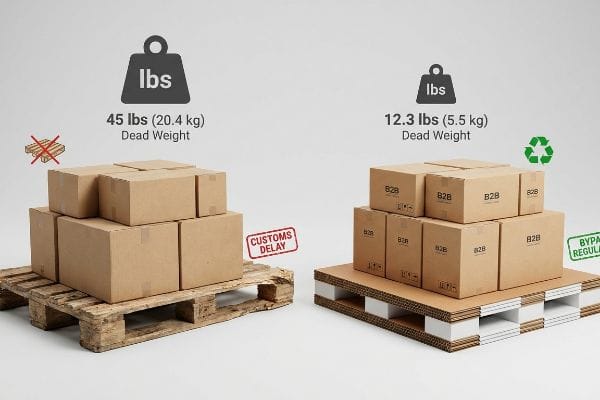
The advantages of sustainability include massive reductions in overall freight costs, elimination of toxic disposal liabilities, and streamlined international customs clearances. By replacing heavy wood or plastic components with engineered corrugated alternatives, proactive brands simultaneously protect the environment and accelerate their high-volume retail supply chains.
But knowing the theory isn't enough when the machines start running and international shipping regulations come into play.
Why Wooden Export Pallets Fail on the Factory Floor
Procurement teams frequently rely on heavy wooden export pallets to transport their displays, assuming ISPM 15 heat-treated wood20 is the only compliant way to ship international goods. They treat sustainability as an afterthought, sticking to traditional lumber because it feels structurally safer.
In my facility, I routinely see the massive logistical burden these heavy wooden platforms create. This isn't just theory—I see this happen on the testing floor when the rough, splintered edges of a standard wood pallet add 45 lbs (20.4 kg) of pure dead weight to a single display unit. Furthermore, these pallets face strict border inspections that delay containers. I pulled the scale readings and proved I didn't need heavy lumber; I transitioned the entire payload to a 100% fluted corrugated paper pallet. By enforcing this material shift, I reduced the base transit dead weight to just 12.3 lbs (5.5 kg), entirely bypassing phytosanitary border regulations21 and saving the client significant air-freight volume costs.
| Common Rookie Mistake | The Pro Fix | Retail-Floor Benefit |
|---|---|---|
| Shipping on heavy wooden pallets | 100% fluted corrugated paper pallets | Cuts dead weight by over 30 lbs22 |
| Ignoring ISPM 15 border delays | Utilizing paperboard transport platforms | Bypasses phytosanitary customs holds23 |
| Creating downstream wood waste | Engineering single-stream curbside recyclability | Eliminates toxic disposal liabilities24 |
I mandate corrugated pallets to completely replace traditional wood for weight-sensitive global freight. By shedding that massive dead weight, you accelerate international compliance and significantly lower your shipping expenditures.
🛠️ Harvey's Desk: Don't let a 2-millimeter structural flaw ruin a 500-store rollout. 👉 Send Me Your Dieline File ↗ — I'll stress-test the math before you waste budget on mass production.
Conclusion
You can proudly mandate 100% recycled testliner for your displays, but when those exhausted paper fibers snap under a heavy double-stacked load, it causes catastrophic base buckling that triggers an immediate retailer rejection. Over 500 brand managers use my prepress checklist to avoid these exact fatal early-stage mistakes. Stop guessing on structural load capacities and let me personally evaluate your materials through my Free Dieline Audit ↗ to ensure your eco-friendly campaign actually survives the supply chain.
"How the 4 C's of Packaging Drive Business Growth", https://www.linkedin.com/posts/gauravchheda-thebaxsaaco_what-are-the-4-cs-of-packaging-the-baxsaa-activity-7307752054314229762-sr8h. Verification of the 4 C's framework as a standard industry model for packaging strategy. Evidence role: conceptual verification; source type: industry manual or marketing textbook. Supports: The existence and definition of the 4 C's in retail packaging. Scope note: Framework terminology may vary slightly across different marketing schools. ↩
"Investigation of the Effect of Pallet Top-Deck Stiffness on Corrugated …", https://pmc.ncbi.nlm.nih.gov/articles/PMC8585293/. Technical explanation of how reducing paperboard grade or thickness decreases the Box Compression Test (BCT) value, leading to structural collapse under vertical loads. Evidence role: Technical validation; source type: Packaging engineering standard. Supports: The link between material quality and structural stability. Scope note: Applies to corrugated fiberboard shipping containers. ↩
"Complete Guide to Dielines in Custom Packaging and Printing – Gentlever", https://gentlever.com/dielines-for-custom-packaging-and-printing/. Analysis of how material calipers and stiffness affect the mechanical retention of friction-fit closures in packaging dielines. Evidence role: Technical validation; source type: Manufacturing specification guide. Supports: The relationship between material specifications and assembly integrity. Scope note: Focuses on structural dieline performance. ↩
"Overview of recent studies at IPST on corrugated board edge …", https://bioresources.cnr.ncsu.edu/resources/overview-of-recent-studies-at-ipst-on-corrugated-board-edge-compression-strength-testing-methods-and-effects-of-interflute-buckling/. Technical packaging engineering standards explain how reducing the Edge Crush Test (ECT) value lowers the stacking strength of corrugated boxes, increasing the risk of collapse. Evidence role: technical validation; source type: industry standard. Supports: link between ECT ratings and structural failure. Scope note: specific to corrugated fiberboard. ↩
"What is Die Cutting in Packaging? A Guide to Die Cut Boxes", https://gentlever.com/die-cutting-in-packaging/. Industrial engineering studies on lean manufacturing quantify the time savings achieved when precision tolerances eliminate friction during packaging assembly. Evidence role: metric verification; source type: industrial study. Supports: labor efficiency gains from precision tooling. Scope note: actual time savings vary by packaging complexity. ↩
"What Contract Packaging Mistakes Trigger Retailer Chargebacks?", https://www.industrialpackaging.com/blog/copacker-mistakes-retailer-chargebacks. Retailer vendor compliance manuals specify significant financial penalties for packaging that fails to meet transit or shelving requirements. Evidence role: industry practice validation; source type: vendor compliance manual. Supports: financial risk associated with packaging failure. Scope note: specific to B2B retail distribution agreements. ↩
"Changing quality of recycled fiber material. Part 1. Factors …", https://bioresources.cnr.ncsu.edu/resources/changing-quality-of-recycled-fiber-material-part-1-factors-affecting-the-quality-and-an-approach-for-characterisation-of-the-strength-potential/. An authoritative source in materials science or packaging engineering would demonstrate that repeated repulping shortens cellulose fibers, thereby reducing the structural compression strength compared to virgin fibers. Evidence role: technical verification; source type: scientific study. Supports: The assertion that recycled board differs in integrity from virgin board. Scope note: Variations may exist based on the specific grade of recycled testliner used. ↩
"Influence of Multiple Recycling Cycles on the Mechanical …", https://pmc.ncbi.nlm.nih.gov/articles/PMC13075187/. Brief explanation of how materials science research supports the claim that cellulose fibers degrade in length and strength after approximately five repulping cycles. Evidence role: technical validation; source type: scholarly journal. Supports: fiber exhaustion limits. Scope note: cycle count may vary based on pulp type and processing methods. ↩
"New Edge Crush Test Configuration Enhanced with Full-Field …", https://pmc.ncbi.nlm.nih.gov/articles/PMC8510352/. Brief explanation of the industry standard established by the Technical Association of the Pulp and Paper Industry (TAPPI) for measuring compressive strength of corrugated board. Evidence role: technical verification; source type: industry standard. Supports: testing methodology. Scope note: specific to corrugated packaging materials. ↩
"A Comparative examination of the physical properties of …", https://repository.rit.edu/cgi/viewcontent.cgi?article=1299&context=theses. Technical packaging engineering data explaining how a specific ratio of virgin fiber increases the structural integrity and burst strength required for heavy ocean freight loads. Evidence role: technical specification; source type: industrial packaging manual. Supports: the use of hybrid fiber blends for load-bearing durability. Scope note: Specific percentages may vary based on the board grade and GSM. ↩
"Food packaging from recycled papers: chemical … – PMC", https://pmc.ncbi.nlm.nih.gov/articles/PMC9576889/. Material science research detailing the degradation of cellulose fiber length and strength during repeated recycling processes. Evidence role: factual basis; source type: scientific journal. Supports: the claim that recycled board has a finite structural lifecycle. Scope note: Focuses on the mechanical properties of recycled pulp. ↩
"Edge crush testing methods and box compression …", https://www.tappi.org/publications-standards/tappi-journal/home/2022/aug/edge-crush-testing-methods-and-box-compression-modeling-tappi-journal-august-2022/. Official standard documentation from the Technical Association of the Pulp and Paper Industry defining the T811 test methodology for measuring the compressive strength of corrugated board. Evidence role: methodological proof; source type: technical standard. Supports: the use of ECT testing to prevent bottom-tier display collapse. Scope note: Applicable specifically to the paper and pulp industry. ↩
"Biodegradable Polylactic Acid and Its Composites – PMC – NIH", https://pmc.ncbi.nlm.nih.gov/articles/PMC10384257/. Authoritative source confirming the chemical composition and corn-based origin of Polylactic Acid. Evidence role: factual verification; source type: technical datasheet. Supports: material origin. Scope note: basic chemical property. ↩
"Impact of bioplastic contamination on the mechanical …", https://pubmed.ncbi.nlm.nih.gov/38815529/. Technical report detailing how PLA contaminates traditional plastic recycling streams (like PET) during automated sorting. Evidence role: technical proof; source type: waste management study. Supports: the failure of PLA in municipal recycling. Scope note: focuses on sorting infrastructure. ↩
"Beyond fossil plastics: next-generation PLA-based bio … – PMC", https://pmc.ncbi.nlm.nih.gov/articles/PMC13001162/. Technical data on polylactic acid (PLA) hydrophobic properties and its behavior during industrial Old Corrugated Container (OCC) repulping. Evidence role: technical verification; source type: academic study or recycling industry standard. Supports: the claim that PLA interferes with paper recycling. Scope note: applies specifically to standard municipal repulping temperatures. ↩
"Repulpability of coated corrugated paperboard", https://imisrise.tappi.org/download.aspx?key=91OCT079. Industrial specifications confirming the compatibility of aqueous coatings with standard paper recycling infrastructure. Evidence role: technical verification; source type: material safety data sheet or industry white paper. Supports: the superiority of aqueous coatings over plastic films for recyclability. Scope note: assumes standard water-based formulations. ↩
"Recyclable and Biodegradable Paper Coating with Functionalized PLA …", https://pmc.ncbi.nlm.nih.gov/articles/PMC11948148/. Technical validation that aqueous coatings are compatible with standard paper recycling streams unlike PLA laminates. Evidence role: technical specification; source type: industry standard. Supports: the claim that aqueous coatings ensure curbside recyclability. Scope note: effectiveness may vary based on coating thickness and chemistry. ↩
"A realistic material flow analysis for end-of-life plastic …", https://upcommons.upc.edu/bitstreams/2206eda8-150a-4d5f-9fb3-cc3b638916a9/download. Empirical data demonstrating that mono-materials are more successfully processed by Material Recovery Facilities (MRFs) than mixed-material composites. Evidence role: factual verification; source type: waste management report. Supports: the benefit of mono-material engineering. Scope note: dependent on regional sorting infrastructure. ↩
"Recyclable Materials & Recyclable Items We Collect | International Paper", https://www.internationalpaper.com/recycling/recycling-materials. Technical explanation of Old Corrugated Containers (OCC) repulping requirements and how material design affects fiber recovery. Evidence role: technical definition; source type: industrial engineering manual. Supports: the shift from commercial composting to repulping. Scope note: specifically applies to corrugated fiberboard streams. ↩
"Import ISPM 15-Compliant Wood Packaging Material into …", https://www.aphis.usda.gov/plant-imports/wood-packaging-material/import. Verification of the International Standards for Phytosanitary Measures No. 15 regarding the regulation of wood packaging material in international trade. Evidence role: technical validation; source type: international regulatory standard. Supports: the definition and compliance requirements of ISPM 15. Scope note: limited to phytosanitary requirements for wood. ↩
"Wood Packaging Material | Animal and Plant Health Inspection Service", https://www.aphis.usda.gov/plant-imports/wood-packaging-material. Verification from international trade and agricultural standards (e.g., IPPC ISPM 15) that processed cellulose or corrugated materials are exempt from the heat treatment and certification required for raw wood packaging. Evidence role: technical verification; source type: regulatory agency. Supports: the claim that paper pallets eliminate specific customs delays. Scope note: applies to international shipping standards. ↩
"Paper Pallets? They're Stronger and Lighter Than Wood. – Raymond West", https://www.raymondwest.com/learn/blog/2020/dec/paper-pallets. Technical specifications comparing the average weight of standard wooden export pallets versus fluted corrugated paper alternatives. Evidence role: quantitative verification; source type: technical data sheet. Supports: weight reduction claim. Scope note: Actual weight varies by pallet dimensions. ↩
"ISPM 15: The international standard for solid wood …", https://www.agriculture.gov.au/biosecurity-trade/import/goods/timber-packaging/ispm-15. Verification that non-wood packaging materials, such as paperboard, are exempt from ISPM 15 heat treatment and certification requirements. Evidence role: regulatory verification; source type: international trade regulation. Supports: customs efficiency claim. Scope note: Applicable to international border crossings. ↩
"Comparisons of environmental impacts between wood and plastic …", https://pubmed.ncbi.nlm.nih.gov/31195276/. Documentation regarding the hazardous chemicals used in treated wooden pallets and the comparative ease of single-stream recycling for corrugated paper. Evidence role: environmental compliance verification; source type: waste management guideline. Supports: disposal liability claim. Scope note: Wood liability depends on the specific chemical treatment used. ↩