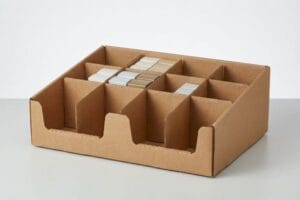
किसी विशाल रिटेल चेन में उत्पाद लॉन्च करने के लिए अच्छी पैकेजिंग से कहीं अधिक की आवश्यकता होती है। आपको एक ऐसी संरचित रणनीति चाहिए जो आपूर्ति श्रृंखला में भी कारगर रहे और माल को तुरंत स्टोर तक पहुंचा सके।.
वॉलमार्ट पीडीक्यू शेल्फ डिस्प्ले एक प्री-पैकेज्ड मर्चेंडाइज़र है जिसे रिटेल स्टोर्स में तेजी से लगाने के लिए डिज़ाइन किया गया है। ये नालीदार डिब्बे सामान से भरे हुए आते हैं, जिससे स्टोर के कर्मचारी सामान को सीधे शिपिंग कार्टन से शेल्फ पर रख सकते हैं। इससे उत्पादों की दृश्यता अधिकतम होती है और रिटेलर के रूटिंग दिशानिर्देशों का भी सख्ती से पालन होता है।.
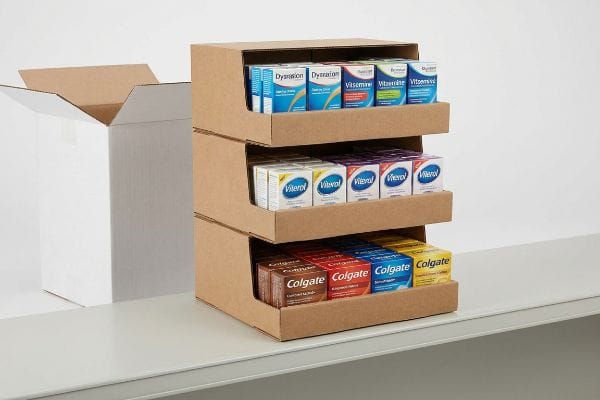
इन संरचनात्मक इकाइयों में महारत हासिल करना ही महंगे अनुपालन शुल्क से बचने और अपने स्टॉक को तेजी से आगे बढ़ाने का एकमात्र तरीका है।.
क्या आप वॉलमार्ट के डिस्प्ले खरीद सकते हैं?
कई ब्रांड संस्थापकों को लगता है कि पूर्व-अनुमोदित खुदरा विक्रेताओं की एक गुप्त सूची होती है जिसे वे सीधे अपनी कार्ट में जोड़ सकते हैं। लेकिन बड़े स्टोरों से खरीदारी की वास्तविकता कहीं अधिक कठोर होती है।.
नहीं। आप Walmart के रेडीमेड पीडीक्यू शेल्फ डिस्प्ले किसी सामान्य शेल्फ से नहीं खरीद सकते। प्रत्येक यूनिट को आपके उत्पाद के विशिष्ट आयामों के अनुसार कस्टम-इंजीनियर किया जाना चाहिए, साथ ही रिटेलर के मालिकाना संरचनात्मक दिशानिर्देशों का सख्ती से पालन करना चाहिए, ताकि पैकेजिंग गोदाम परिवहन के दौरान सुरक्षित रहे और निर्धारित गलियारे में पूरी तरह से फिट हो जाए।.
इन इकाइयों को बिल्कुल नए सिरे से क्यों बनाया जाता है, यह समझने से आप बेकार के सामान्य बक्सों में निवेश करने से बच जाते हैं।.
जेनरिक मर्चेंडाइजर वॉलमार्ट के पीडीक्यू मानकों पर खरा क्यों नहीं उतरते?
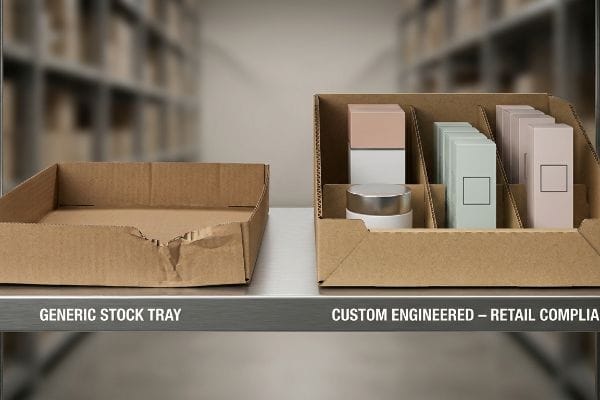
खरीददार अक्सर ऑनलाइन पैकेजिंग आपूर्तिकर्ताओं से मानक, खाली नालीदार ट्रे खरीदकर खुदरा बिक्री शुरू करने की कोशिश करते हैं। वे मान लेते हैं कि जब तक उत्पाद डिब्बे के अंदर ठीक से फिट हो जाता है, खुदरा विक्रेता उसे स्वीकार कर लेगा। यह सामान्य दृष्टिकोण शेल्फ स्पेस को नियंत्रित करने वाले सख्त कानूनी और लॉजिस्टिकल नियमों कीहैजो नियमों का पालन न करने वाली इकाइयों को अस्वीकार कर देते हैं।
मैं अक्सर देखता हूँ कि जूनियर खरीदार सामान्य सिंगल-वॉल डिब्बे ऑर्डर करते हैं, लेकिन रिटेल स्टोर में पहुँचते ही वे तुरंत विफल हो जाते हैं। आम गलती यह मान लेना है कि स्टॉक ट्रे भारी कॉस्मेटिक सामान। जब स्टोर क्लर्क 15 पाउंड (6.8 किलोग्राम) की सामान्य ट्रे को धातु की शेल्फ पर रखने की कोशिश करता है, तो आप सचमुच कच्चे पेपरबोर्ड के घिसने और फटने की आवाज़ सुन सकते हैं क्योंकि बेस को रिटेलर की विशिष्ट स्लिप-शीट टॉलरेंस2 को। मैं इस समस्या को रिटेलर स्पेसिफिकेशन्स के हमारे आंतरिक डेटाबेस का उपयोग करके हल करता हूँ, एक कस्टम डबल-वॉल बेस बनाता हूँ जो शेल्फ की गहराई और वजन सीमा से पूरी तरह मेल खाता है, जिससे ग्राहक को अनुमानित 30% रिटेलर रिजेक्शन रेट3।
| नौसिखियों की आम गलती | प्रो फिक्स | रिटेल-फ्लोर लाभ |
|---|---|---|
| सामान्य स्टॉक ट्रे खरीदना | रिटेलर की विशिष्टताओं के अनुसार कस्टम डाईलाइन4 | गलियारे में अनुपालन संबंधी अस्वीकृतियों को समाप्त करता है |
| विशिष्ट शेल्फ गहराईयों को अनदेखा करना | आंतरिक बड़े डेटाबेस का संदर्भ लेना | लटकने और पलटने के खतरों को रोकता है |
| मानक सिंगल-वॉल बेस का उपयोग करना | भार वहन करने वाली दोहरी दीवार का विनिर्देशन5 | स्लाइडिंग के दौरान बेस के फटने को रोकता है |
मैं कभी भी ग्राहकों को स्टॉक बॉक्स पर अपना माल दांव पर लगाने नहीं देता। खुदरा विक्रेता की सटीक आवश्यकताओं के अनुसार कस्टम लेआउट तैयार करना ही एकमात्र तरीका है जिससे मैं यह सुनिश्चित कर सकता हूं कि आपका माल वास्तव में गोदाम से बाहर निकल जाए।
🛠️ हार्वे का डेस्क: क्या आप इस बात को लेकर असमंजस में हैं कि आपकी मौजूदा ट्रे बड़े स्टोरों के लिए निर्धारित मानकों को पूरा करती है या नहीं? 👉 मुफ़्त स्पेसिफिकेशन ऑडिट करवाएं ↗ — सीधे मेरे डेस्क से संपर्क करें। मैं वादा करता हूँ, आपको कोई स्वचालित बिक्री संबंधी स्पैम नहीं भेजा जाएगा।
वॉलमार्ट में पीडीक्यू का क्या मतलब है?
नए उपभोक्ता ब्रांडों के लिए विक्रेता की शब्दावली को समझना पहली चुनौती है। प्रमुख खुदरा विक्रेताओं द्वारा उपयोग किए जाने वाले संक्षिप्त रूप यह निर्धारित करते हैं कि भौतिक रूप से पहुंचने पर आपकी पैकेजिंग को कैसा प्रदर्शन करना चाहिए।.
वॉलमार्ट में पीडीक्यू का मतलब "प्रीटी डार्न क्विक" या "प्रोडक्ट डिस्प्ले क्विकली" होता है। इस विशिष्ट परिचालन मानक के अनुसार, सेकेंडरी रिटेल पैकेजिंग को अनबॉक्स करते ही पूरी तरह से डिस्प्ले के लिए तैयार होना चाहिए, और यूनिट को बिक्री शेल्फ पर रखने से पहले स्टोर कर्मचारियों द्वारा किसी भी प्रकार की जटिल असेंबली, फोल्डिंग या बॉक्स कटिंग की आवश्यकता नहीं होनी चाहिए।.
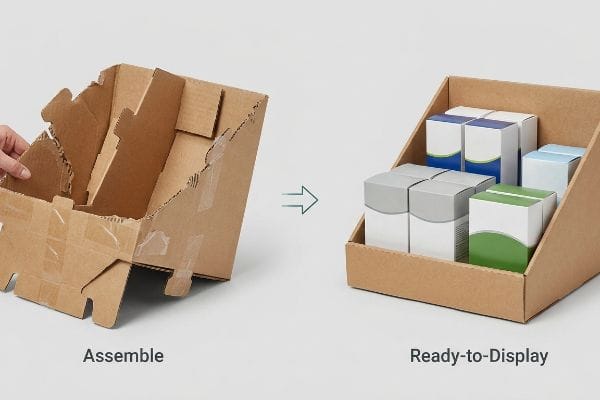
इस गति के मानक को हासिल करने के लिए आपको अपने संपूर्ण संरचनात्मक डिजाइन पर शुरू से ही पुनर्विचार करना होगा।.
"शून्य-निराशा" वाले पीडीक्यू अनबॉक्सिंग का इंजीनियरिंग
डिजाइनर अक्सर अपने डिस्प्ले को प्रीमियम दिखाने के लिए जटिल इंटरलॉकिंग टैब और छिपी हुई सपोर्ट वॉल का इस्तेमाल करते हैं। वे इन पेचीदा फोल्ड्स का परीक्षण एक शांत, नियंत्रित तापमान वाले ऑफिस में करते हैं, यह मानकर कि अंतिम उपयोगकर्ता भी यूनिट को सावधानीपूर्वक असेंबल करने के लिए उतना ही धैर्य रखेगा। लेकिन एक व्यस्त सुपरसेंटर की कठोर वास्तविकता में, कर्मचारियों के पास कार्डबोर्ड की पहेली को सुलझाने के लिए दस मिनट का समय नहीं होता।.
मैंने देखा है कि जल्दबाज़ी में काम करने वाले कर्मचारी जटिल डिस्प्ले को पूरी तरह से बर्बाद कर देते हैं क्योंकि वे फोल्डिंग सीक्वेंस को समझ नहीं पाते। नौसिखियों की सबसे आम गलती होती है बिना चिपके, कई चरणों वाले मेल/फीमेल इंटरलॉकिंग टैब का इस्तेमाल करना, जिन्हें मैन्युअल रूप से अलाइन करना पड़ता है। जब कोई कर्मचारी जल्दी में होता है, तो वे बस ज़ोर से टैब को आपस में टकरा देते हैं, और ई-फ्लूट 6 के टूटने की तेज़ आवाज़ गलियारे में गूंजती है, इससे पहले कि वे उसे भद्दे पारदर्शी शिपिंग टेप से चिपका दें। मैं इस समस्या को ऑटो-बॉटम स्टैकिंग सिस्टम 7 से लैस पहले से चिपके हुए मॉड्यूलर ट्रे बनाकर खत्म करता हूँ , जिससे यूनिट ठीक दो सेकंड में खुल जाती है, जो श्रम की बर्बादी को काफी कम कर देता है और ब्रांड की सुंदरता को बरकरार रखता है।
| नौसिखियों की आम गलती | प्रो फिक्स | रिटेल-फ्लोर लाभ |
|---|---|---|
| जटिल इंटरलॉकिंग टैब | पहले से चिपकाए गए मॉड्यूलर संरचनाएं8 | असेंबली का समय मिनटों में कम हो जाता है |
| मैनुअल फोल्डिंग पर निर्भर रहना | ऑटो-बॉटम पॉप-अप डिज़ाइन9 | जबरदस्ती जोड़ने से होने वाले टूटने-फूटने से बचाता है |
| यह मानते हुए कि क्लर्क नियमावली पढ़ते हैं | सहज और एक-चरणीय तैनाती10 | भद्दे टेप की आवश्यकता को समाप्त करता है |
मैं ऐसी किसी भी डाईलाइन को मंज़ूरी नहीं दूंगा जिसमें एक साधारण ट्रे के लिए भी निर्देश पुस्तिका की आवश्यकता हो। यदि इसे तैयार करने में तीन सेकंड से अधिक समय लगता है, तो यह त्वरित खुदरा वातावरण के लिए मेरे बुनियादी मानक को पूरा नहीं करता है।.
🛠️ हार्वे का डेस्क: क्या आपके स्टोर क्लर्क जटिल टैब की वजह से टूटे हुए डिस्प्ले को चुपके से टेप से जोड़ रहे हैं? 👉 अपनी संरचना का मूल्यांकन करें ↗ — सुरक्षित रूप से डाउनलोड करें। बाद में कोई प्रश्न होने पर मेरा इनबॉक्स खुला है।
डिस्प्ले में PDQ का मतलब क्या होता है?
किसी एक खुदरा विक्रेता तक सीमित न रहकर, व्यापक पैकेजिंग उद्योग इस शब्द को एक सार्वभौमिक मानक के रूप में उपयोग करता है। यह माल की बिक्री की गति की जिम्मेदारी सीधे स्टोर से निर्माता पर स्थानांतरित कर देता है।.
डिस्प्ले में, PDQ का अर्थ है "प्रोडक्ट डिस्प्ले क्विकली", जो तत्काल रिटेल उपयोग पर केंद्रित संरचनात्मक इंजीनियरिंग दर्शन को दर्शाता है। इसके लिए द्वितीयक पैकेजिंग को दोहरे उद्देश्य की पूर्ति करनी होती है: एक तरफ यह सुरक्षात्मक परिवहन सामग्री के रूप में कार्य करती है, वहीं दूसरी तरफ बिना किसी अतिरिक्त मर्चेंडाइजिंग उपकरण की आवश्यकता के तुरंत एक उच्च-दृश्यता वाले मर्चेंडाइज ट्रे में परिवर्तित हो जाती है।.
शिपिंग बॉक्स से डिस्प्ले को बाहर निकालना आसान लगता है, लेकिन जब आपको कच्चे माल के घर्षण का सामना करना पड़ता है तो यह आसान हो जाता है।.
पीडीक्यू रिटेल सिस्टम्स में मास्टर कार्टन फ्रिक्शन लॉक
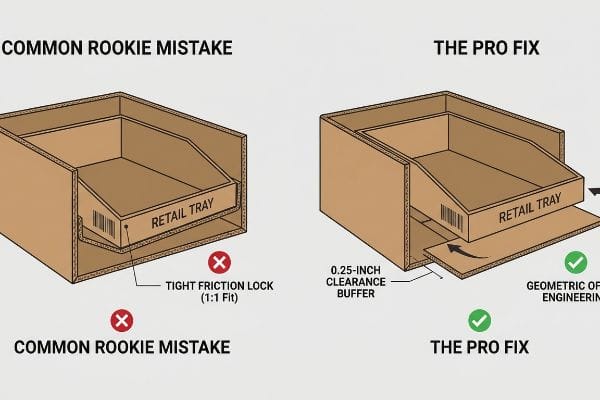
पैकेजिंग इंजीनियर अक्सर मास्टर शिपिंग कार्टन निर्दिष्ट करते हैं जो पहले से भरे हुए रिटेल ट्रे के बाहरी आयामों से बिल्कुल मेल खाते हैं । वे इस धारणा पर काम करते हैं कि पूरी तरह से फिट होने से माल के हिलने-डुलने से अधिकतम सुरक्षा मिलती है । हालाँकि, यह एकदम सटीक ज्यामिति बैक रूम में पहुँचने पर एक बड़ी परिचालन समस्या बन जाती है।
इसे ऐसे समझें जैसे किसी वाइन की बोतल से कसकर बंद कॉर्क को बिना कॉर्कस्क्रू के निकालने की कोशिश करना। ब्रांड अक्सर यह गलती करते हैं, कच्चे नालीदार टेस्टलाइनर के आपस में रगड़ने से होने वाले अत्यधिक घर्षण को अनदेखा करते हैं। मैंने एक बार एक क्लर्क को एक शिपर से कसकर पैक की गई 24 इंच (60.9 सेमी) की ट्रे को खींचने की कोशिश करते देखा, और भारी शारीरिक प्रतिरोध के कारण उसे यूनिट को निकालने के लिए प्रिंटेड रिटेनिंग लिप को पूरी तरह से फाड़ना पड़ा। मैं एक ज्यामितीय ऑफसेट टॉलरेंस अनिवार्य करके इसे रोकता हूं, जिसमें एक सटीक 0.25 इंच (6.35 मिमी) का आंतरिक क्लीयरेंस बफर12 जो घर्षण लॉक को तोड़ता है और एक सहज, बिना फटे अनपैकिंग का अनुभव सुनिश्चित करता है।
| नौसिखियों की आम गलती | प्रो फिक्स | रिटेल-फ्लोर लाभ |
|---|---|---|
| 1:1 तंग नेस्टेड आयाम | 0.25 इंच का क्लीयरेंस बफर13 | कार्टन को आसानी से निकालने की गारंटी देता है |
| कागज के रेशों के घर्षण को अनदेखा करना | ज्यामितीय ऑफसेट इंजीनियरिंग14 | फटे हुए होंठों को रोकता है |
| मास्टर बॉक्स में ज़रूरत से ज़्यादा सामान भरना | कैलिब्रेटेड अनपैकिंग क्लीयरेंस15 | बैक रूम प्रोसेसिंग को गति देता है |
मैं अपने डिज़ाइनरों को हमेशा याद दिलाता हूँ कि अगर अनबॉक्सिंग के दौरान कोई सुरक्षित ट्रे टूट जाए तो वह बेकार है। उस चौथाई इंच की जगह को बनाए रखना, त्रुटिहीन खुदरा बिक्री के लिए एक अनिवार्य कदम है।.
🛠️ हार्वे का डेस्क: क्या अनपैकिंग के दौरान आपकी रिटेल ट्रे मास्टर कार्टन के अंदर फंस जाती हैं? 👉 क्लीयरेंस चेक का अनुरोध करें ↗ — कोई फॉर्म नहीं जो अंतहीन सेल्स कॉल को ट्रिगर करे। बस शुद्ध मूल्य।
वॉलमार्ट में दुकानों में सामान रखना कब शुरू होता है?
स्टोर के संचालन का समय आपके पैकेजिंग के प्रबंधन को काफी हद तक प्रभावित करता है। जब दरवाजे बंद हो जाते हैं और गलियारे खाली हो जाते हैं, तो आपकी संरचनात्मक सामग्रियों पर भौतिक तनाव कई गुना बढ़ जाता है।.
वॉलमार्ट मुख्य रूप से रात की शिफ्ट के दौरान, आमतौर पर रात 10:00 बजे से सुबह 7:00 बजे के बीच, अलमारियों में सामान भरना शुरू करता है। इस तेज़ गति से सामान भरने के माहौल में, पीडीक्यू ट्रे का संरचनात्मक रूप से मजबूत होना आवश्यक है, क्योंकि रात की शिफ्ट के कर्मचारी सुबह स्टोर खुलने से पहले तय परिचालन लक्ष्यों को पूरा करने के लिए तेज़ी से सामान अलमारियों पर रखते हैं।.
लेकिन जब मशीनें चलना शुरू हो जाती हैं और रात भर में तैयार किए गए पैलेट बंदरगाह पर पहुंचते हैं, तो केवल सिद्धांत जानना ही पर्याप्त नहीं होता है।.
नाइट शिफ्ट में परफेक्ट प्रोडक्ट डेंसिटी क्यों विफल हो जाती है?
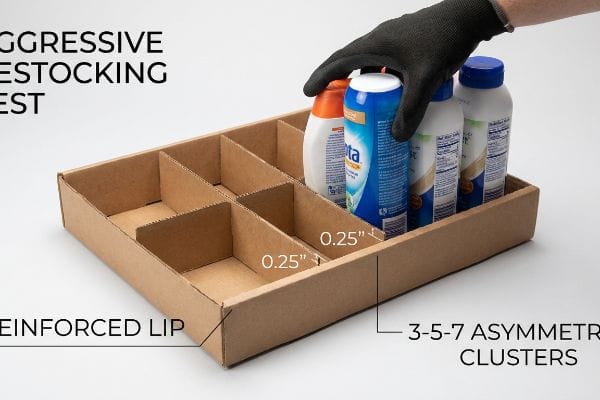
जूनियर डिज़ाइनर अक्सर उत्पादों की एक सघन, पूर्णतः सममित ग्रिड को एक ही डिस्प्ले शेल्फ में व्यवस्थित करने का प्रयास करते हैं, यह मानते हुए कि एसकेयू (स्टॉक कीपिंग यूनिट) घनत्व16 से बिक्री की मात्रा अधिकतम हो जाती है। वे अपनी स्क्रीन पर डाई-कट ट्रे की रूपरेखा इस प्रकार बनाते हैं कि प्रत्येक बोतल या डिब्बा पूरी तरह से किनारे से किनारे तक स्पर्श करे।
मेरी सुविधा में, मैं अक्सर देखता हूँ कि ग्राहक ऐसे डिज़ाइन प्रस्तुत करते हैं जो रातोंरात सामान भरने की गतिज वास्तविकता को पूरी तरह से अनदेखा कर देते हैं। यह गलती इस धारणा पर आधारित है कि क्लर्क के पास उत्पाद को सावधानीपूर्वक और तंग खांचे में डालने का समय होता है। जब मैं भारी उपभोक्ता वस्तुओं, तो स्थानिक स्थान की कमी से अत्यधिक घर्षण उत्पन्न होता है; क्लर्क वस्तुओं को ज़ोर से ठूंसते हैं, जिससे सामने का नालीदार किनारा मुड़ जाता है और फट जाता है। मैं 3-5-7 विषमता नियम17, जिसमें 0.25 इंच (6.35 मिमी) का सख्त भौतिक स्थान18 है। इन सटीक सहनशीलताओं को एकीकृत करके, मैं यह सुनिश्चित करता हूँ कि सह-पैकिंग असेंबली का समय प्रति इकाई 42 सेकंड कम हो जाए, जिससे स्टोर में सामान भरते समय कच्चे पेपरबोर्ड के फटने की समस्या पूरी तरह से समाप्त हो जाती है।
| नौसिखियों की आम गलती | प्रो फिक्स | रिटेल-फ्लोर लाभ |
|---|---|---|
| सममित किनारे से किनारे तक पैकिंग | असममित 3-5-7 उत्पाद क्लस्टरिंग19 | मनोवैज्ञानिक दृश्य तनाव उत्पन्न करता है |
| शून्य रीस्टॉकिंग क्लीयरेंस | 0.25 इंच के स्पेसिंग बफर के लिए विशेष इंजीनियरिंग की गई है।20 | फटे हुए नालीदार किनारों को रोकता है |
| सावधानीपूर्वक संभालने की शर्त को ध्यान में रखते हुए | मॉड्यूलर डिवाइडर सुदृढ़ीकरण21 | आक्रामक रात्रिकालीन मोज़े का सामना करता है |
मैं सैद्धांतिक उत्पाद घनत्व के लिए भौतिक भार सहनशीलता का कभी त्याग नहीं करता। सामान को हिलने-डुलने की जगह देना ही एकमात्र तरीका है जिससे मैं यह सुनिश्चित करता हूँ कि डिस्प्ले रात की शिफ्ट की भीषण गति को झेल सके।.
🛠️ हार्वे का डेस्क: क्या आपको पता है कि आपके मौजूदा डिस्प्ले लिप में रातोंरात होने वाली भारी रीस्टॉकिंग को झेलने के लिए आवश्यक मिलीमीटर क्लीयरेंस है या नहीं? 👉 मुझे अपनी डाइलाइन फ़ाइल भेजें ↗ — बड़े पैमाने पर उत्पादन पर बजट बर्बाद करने से पहले मैं गणितीय गणना की गहन जांच कर लूंगा।
निष्कर्ष
आप सस्ता विक्रेता चुन सकते हैं, लेकिन जब जल्दबाजी में बनाए गए बैक रूम में कसकर पैक किए गए मास्टर कार्टन में घर्षण के कारण रुकावट आ जाती है, जिससे आक्रामक हैंडलिंग होती है और आपके डिस्प्ले का किनारा फट जाता है, तो आपको तुरंत रिटेलर द्वारा अस्वीकृति का सामना करना पड़ता है। यह वही सटीक स्पेसिफिकेशन शीट है जिसका उपयोग मेरे शीर्ष 10 रिटेल ग्राहक प्रिंट अस्वीकृति को शून्य करने के लिए करते हैं। अनलोडिंग टॉलरेंस के बारे में अनुमान लगाना बंद करें और मुझे अपने मुफ़्त डाइलाइन प्री-फ़्लाइट ऑडिट ↗ ताकि विनिर्माण क्षेत्र में पहुंचने से पहले ही घातक घर्षण त्रुटियों को पकड़ा जा सके।
"वॉलमार्ट के द्वितीयक पैकेजिंग मानक क्या हैं? – सप्लायरविकि", https://www.spscommerce.com/community/articles/what-are-walmarts-secondary-packaging-standards। आधिकारिक खुदरा विक्रेता खरीद नियमावली या विक्रेता मार्गदर्शिकाएँ जो शेल्फ-रेडी पैकेजिंग के लिए अनिवार्य संरचनात्मक और लॉजिस्टिकल विशिष्टताओं का विवरण देती हैं। साक्ष्य भूमिका: सत्यापन; स्रोत प्रकार: कॉर्पोरेट दिशानिर्देश। समर्थन: खुदरा प्रदर्शन के लिए कठोर मानकों का अस्तित्व। कार्यक्षेत्र संबंधी टिप्पणी: प्रमुख अमेरिकी बिग-बॉक्स खुदरा विक्रेताओं पर लागू होता है। ↩
"रिटेल में पीडीक्यू पैकेजिंग को समझना - लिंक्डइन", https://www.linkedin.com/pulse/understanding-pdq-packaging-retail-moss-tvthc। शेल्फ पर रखते समय संरचनात्मक विफलता को रोकने के लिए स्लिप-शीट टॉलरेंस की आवश्यकता को स्पष्ट करने वाला तकनीकी दस्तावेज। साक्ष्य भूमिका: तकनीकी विनिर्देश; स्रोत प्रकार: पैकेजिंग इंजीनियरिंग मैनुअल। समर्थन: सामान्य ट्रे के बजाय कस्टम इंजीनियरिंग की आवश्यकता। कार्यक्षेत्र नोट: विशेष रूप से भारी-भरकम रिटेल डिस्प्ले पर लागू होता है। ↩
"POP बनाम PDQ डिस्प्ले - विशेषताओं में अंतर", https://popdisplay.me/pt/pop-vs-pdq-exibem-diferencas-em-recursos/। संरचनात्मक या आयामी विशिष्टताओं को पूरा न करने वाले खुदरा पैकेजिंग के लिए उद्योग के औसत अस्वीकृति दरों का सत्यापन। साक्ष्य की भूमिका: मात्रात्मक सत्यापन; स्रोत प्रकार: उद्योग रिपोर्ट। समर्थन: यह दावा कि गैर-अनुरूप डिस्प्ले खुदरा विक्रेताओं द्वारा महत्वपूर्ण अस्वीकृति का कारण बनते हैं। स्कोप नोट: दरें खुदरा विक्रेता और उत्पाद श्रेणी के अनुसार भिन्न हो सकती हैं। ↩
"वॉलमार्ट और टारगेट के अनुरूप पैकेजिंग कैसे डिज़ाइन करें...", https://popdisplay.me/how-to-design-walmart-target-compliant-packaging-dielines-for-dual-market-baby-products-australia-us/। आधिकारिक खुदरा खरीद दिशानिर्देश निर्दिष्ट करते हैं कि कस्टम डाईलाइन यह सुनिश्चित करती हैं कि आयाम सख्त गलियारे अनुपालन मानकों को पूरा करते हैं। साक्ष्य की भूमिका: तकनीकी आवश्यकता; स्रोत प्रकार: उद्योग मानक। समर्थन: खुदरा स्वीकृति के लिए कस्टम डाईलाइन की आवश्यकता। कार्यक्षेत्र संबंधी टिप्पणी: बड़े रिटेल स्टोर परिवेशों पर लागू होता है। ↩
"एकल दीवार और दोहरी दीवार वाले बक्सों की तुलना: अंतर को समझना...", https://arvco.com/articles/comparing-single-wall-and-double-wall-boxes-understanding-the-differences/। सामग्री विज्ञान और पैकेजिंग मानक इस बात की पुष्टि करते हैं कि दोहरी दीवार वाले नालीदार कार्डबोर्ड में एकल दीवार वाले कार्डबोर्ड की तुलना में काफी अधिक संपीडन शक्ति और फटने का प्रतिरोध होता है। साक्ष्य की भूमिका: तकनीकी विनिर्देश; स्रोत प्रकार: सामग्री इंजीनियरिंग मैनुअल। समर्थन: फटने से बचाने के लिए दोहरी दीवार वाले आधारों का उपयोग। कार्यक्षेत्र संबंधी टिप्पणी: पीडीक्यू की संरचनात्मक अखंडता पर केंद्रित। ↩
"कस्टम कोरुगेटेड कार्डबोर्ड डिस्प्ले", https://blingblingpackaging.com/products/custom-pop-displays/custom-corrugated-displays/। ई-फ्लूट कोरुगेटेड कार्डबोर्ड की तकनीकी विशिष्टताएँ और खुदरा पॉइंट-ऑफ-परचेज़ डिस्प्ले में इसका सामान्य उपयोग। साक्ष्य भूमिका: सामग्री विशिष्टता; स्रोत प्रकार: पैकेजिंग उद्योग मार्गदर्शिका। सहायक: पीडीक्यू डिस्प्ले में प्रयुक्त सामग्री की पहचान। कार्यक्षेत्र संबंधी टिप्पणी: फ्लूट के आकार और संरचनात्मक अखंडता पर केंद्रित। ↩
"ऑटो बॉटम बॉक्स (क्रैश-लॉक) को आसान बनाएं", https://pmpackaging.com/product-catalog/boxes-and-cartons/auto-bottom-boxes। ऑटो-बॉटम (क्रैश-लॉक) पैकेजिंग के लिए इंजीनियरिंग मानक और स्टोर स्तर पर असेंबली समय को कम करने पर इसका प्रभाव। साक्ष्य की भूमिका: तकनीकी सत्यापन; स्रोत प्रकार: पैकेजिंग इंजीनियरिंग दस्तावेज़ीकरण। समर्थन: यह दावा कि ऑटो-बॉटम सिस्टम श्रम संबंधी कठिनाई को कम करते हैं। स्कोप नोट: मैनुअल इंटरलॉकिंग टैब से तुलना पर केंद्रित। ↩
"आधुनिक विनिर्माण के लिए असेंबली और पैकेजिंग की सर्वोत्तम पद्धतियाँ", https://www.theclintoncourier.net/2026/04/14/assembly-and-packaging-best-practices-for-modern-manufacturing/। खुदरा बिक्री के लिए तैयार पैकेजिंग (RRP) के लिए उद्योग मानक दर्शाते हैं कि पहले से चिपकाई गई संरचनाएँ मैन्युअल फोल्डिंग की तुलना में श्रम समय को काफी कम कर देती हैं। साक्ष्य की भूमिका: तकनीकी सत्यापन; स्रोत प्रकार: पैकेजिंग इंजीनियरिंग गाइड। समर्थन: पहले से चिपकाई गई डिज़ाइनों की दक्षता। कार्यक्षेत्र संबंधी टिप्पणी: PDQ/RRP मानकों पर लागू होता है। ↩
"भारी उत्पादों के लिए ऑटो लॉक बॉटम बॉक्स | कस्टम पैकेजिंग", https://www.boxcoop.com/box-styles/auto-lock-bottom। ऑटो-बॉटम पैकेजिंग के तकनीकी विनिर्देश बताते हैं कि ये डिज़ाइन असेंबली के दौरान यांत्रिक तनाव और टूट-फूट को कैसे कम करते हैं। साक्ष्य की भूमिका: संरचनात्मक प्रमाण; स्रोत प्रकार: विनिर्माण विनिर्देश। समर्थन: पॉप-अप डिज़ाइनों की टिकाऊपन। स्कोप नोट: सेटअप के दौरान संरचनात्मक अखंडता पर केंद्रित। ↩
"पैकेजिंग रिटेल डिस्प्ले प्रोग्राम की सफलता को कैसे प्रभावित करती है", https://www.frankmayer.com/blog/how-packaging-shapes-retail-display-program-success/। 'जीरो-फ्रस्ट्रेशन' पैकेजिंग पर केस स्टडी बताती हैं कि कैसे एक-चरणीय तैनाती से टेप जैसे द्वितीयक चिपकने वाले पदार्थों की आवश्यकता समाप्त हो जाती है। साक्ष्य की भूमिका: डिज़ाइन की प्रभावशीलता; स्रोत प्रकार: पैकेजिंग UX अध्ययन। सहायक: रिटेल सेटिंग्स में टेप को हटाना। स्कोप नोट: विक्रेता द्वारा आपूर्ति किए गए PDQs के लिए विशिष्ट। ↩
"इंजीनियरिंग फिट - विकिपीडिया", https://en.wikipedia.org/wiki/Engineering_fit। पैकेजिंग इंजीनियरिंग हैंडबुक या तकनीकी गाइड यह सत्यापित करेगी कि क्या मास्टर कार्टन और आंतरिक ट्रे के बीच सख्त सहनशीलता को उत्पाद की हलचल को कम करने के प्राथमिक तरीके के रूप में मान्यता प्राप्त है। साक्ष्य भूमिका: तकनीकी सत्यापन; स्रोत प्रकार: उद्योग हैंडबुक। समर्थन: यह दावा कि सख्त ज्यामिति से हलचल कम होती है। कार्यक्षेत्र संबंधी टिप्पणी: केवल कठोर खुदरा-तैयार पैकेजिंग तक सीमित। ↩
"तेज़ सेटअप और खुदरा बिक्री पर ज़बरदस्त प्रभाव के लिए निर्मित नालीदार पीडीक्यू डिस्प्ले", https://www.abbottaction.com/packaging/corrugated-pdq-displays/। तकनीकी पैकेजिंग विनिर्देश या नालीदार इंजीनियरिंग गाइड, नेस्टेड डिस्प्ले में सतह घर्षण को रोकने के लिए क्लीयरेंस टॉलरेंस के लिए उद्योग मानक प्रदान करते हैं। साक्ष्य भूमिका: तकनीकी विनिर्देश; स्रोत प्रकार: इंजीनियरिंग हैंडबुक। समर्थन: बिना किसी टूट-फूट के अनपैकिंग सुनिश्चित करने के लिए उपयोग किया जाने वाला विशिष्ट माप। स्कोप नोट: टॉलरेंस नालीदार फ्लूट के आकार और सामग्री कैलिपर के आधार पर भिन्न हो सकता है। ↩
"कॉरुगेटेड पीडीक्यू काउंटर डिस्प्ले – पैकेजिंग कंसल्टेंट्स, इंक.", https://pci-packaging.com/project/titleist-point-of-sale-display/। नेस्टेड रिटेल डिस्प्ले के लिए आवश्यक उद्योग-मानक स्थानिक सहनशीलता का तकनीकी सत्यापन, ताकि उन्हें आसानी से निकाला जा सके। साक्ष्य की भूमिका: तकनीकी विनिर्देश; स्रोत प्रकार: पैकेजिंग इंजीनियरिंग मैनुअल। समर्थन: कार्टन को आसानी से निकालने के लिए अनुशंसित माप। कार्यक्षेत्र संबंधी टिप्पणी: कॉरुगेटेड फाइबरबोर्ड सहनशीलता से संबंधित। ↩
"टोपोलॉजी ऑप्टिमाइजेशन का उपयोग करके मोल्डेड पेपर पल्प पैकेजिंग डिज़ाइन ...", https://d.lib.msu.edu/etd/50152। नेस्टेड कार्डबोर्ड घटकों के बीच सतह-से-सतह घर्षण को कम करने के लिए उपयोग की जाने वाली संरचनात्मक डिज़ाइन तकनीकों की व्याख्या। साक्ष्य भूमिका: इंजीनियरिंग सिद्धांत; स्रोत प्रकार: पदार्थ विज्ञान या पैकेजिंग डिज़ाइन गाइड। समर्थन: रिटेनिंग लिप्स की संरचनात्मक विफलता को रोकने के लिए ऑफसेट का उपयोग। स्कोप नोट: पेपर फाइबर के घर्षण गुणांक पर केंद्रित। ↩
"आपूर्तिकर्ताओं के लिए द्वितीयक पैकेजिंग आवश्यकताएँ – एसपीएस कॉमर्स", https://www.spscommerce.com/community/articles/secondary-packaging-requirements-for-suppliers। श्रम गति को अनुकूलित करने के लिए आंतरिक आयतन बनाम बाहरी कंटेनर आयामों की सटीकता के संबंध में उद्योग दिशानिर्देश। साक्ष्य भूमिका: परिचालन मानक; स्रोत प्रकार: खुदरा लॉजिस्टिक्स हैंडबुक। समर्थन: यह दावा कि विशिष्ट क्लीयरेंस बैक रूम प्रोसेसिंग को गति देता है। कार्यक्षेत्र संबंधी टिप्पणी: खुदरा विक्रेता की आवश्यकताओं के अनुसार भिन्न होता है। ↩
"रिटेल लीडर्स कम SKU पर दांव क्यों लगा रहे हैं - सेंट्रिक सॉफ्टवेयर", https://www.centricsoftware.com/blog/why-retail-leaders-are-betting-on-fewer-skus। प्लानोग्रामिंग पर एक रिटेल एनालिटिक्स रिपोर्ट या शोध लेख यह डेटा प्रदान करेगा कि क्या उच्च उत्पाद घनत्व कुल बिक्री मात्रा को बढ़ाता है। साक्ष्य की भूमिका: सत्यापन; स्रोत प्रकार: खुदरा उद्योग रिपोर्ट। समर्थन: SKU घनत्व और बिक्री के बीच संबंध। स्कोप नोट: परिणाम उत्पाद श्रेणी के अनुसार भिन्न हो सकते हैं। ↩
"सजावट में 3-5-7 नियम क्या है? – मोंटकार्टा", https://montcarta.com/blogs/art-guide-inspiration/3-5-7-rule-interior-decorating-guide?srsltid=AfmBOopk2pyUHKPHpSdMw7dtJdVelciBkq_GpngMNHYJ8gvHNXdlvWvv। खुदरा पैकेजिंग डिवाइडर के लिए एक मान्यता प्राप्त संरचनात्मक डिजाइन मानक के रूप में 3-5-7 असममितता नियम का सत्यापन। साक्ष्य भूमिका: तकनीकी सत्यापन; स्रोत प्रकार: पैकेजिंग इंजीनियरिंग मैनुअल। समर्थन: घर्षण को कम करने के लिए असममित मॉड्यूलरिटी का उपयोग। कार्यक्षेत्र नोट: यह एक विशिष्ट उद्योग संबंधी अनुमानी पद्धति हो सकती है। ↩
"पीडीक्यू बनाम आरआरपी? – पॉपडिस्प्ले – कार्डबोर्ड डिस्प्ले निर्माता", https://popdisplay.me/pdq-vs-rrp%EF%BC%9F/। उच्च गति से मैन्युअल रीस्टॉकिंग के दौरान सामग्री के मुड़ने से रोकने के लिए आवश्यक उद्योग-मानक क्लीयरेंस टॉलरेंस का सत्यापन। साक्ष्य भूमिका: विनिर्देश बेंचमार्क; स्रोत प्रकार: विनिर्माण मानक। समर्थन: 0.25 इंच टॉलरेंस विनिर्देश। कार्यक्षेत्र नोट: नालीदार पेपरबोर्ड सामग्री पर लागू। ↩
"डिस्प्ले सिस्टम: विज़ुअल मर्चेंडाइजिंग और बिक्री का मनोविज्ञान...", https://thelookcompany.com/blog/display-systems-the-psychology-of-visual-merchandising-and-selling/। विशिष्ट संख्यात्मक क्लस्टरिंग पैटर्न का सत्यापन और ग्राहकों को आकर्षित करने के लिए दृश्य तनाव पैदा करने में इसकी प्रभावशीलता। साक्ष्य की भूमिका: तकनीकी सत्यापन; स्रोत प्रकार: खुदरा विपणन अध्ययन। समर्थन: असममित उत्पाद प्लेसमेंट का मनोवैज्ञानिक प्रभाव। कार्यक्षेत्र संबंधी टिप्पणी: उपभोक्ता दृश्य धारणा पर केंद्रित। ↩
"दोहरी दीवार वाले नालीदार कार्डबोर्ड पैकेजिंग का इष्टतम डिज़ाइन - पीएमसी", https://pmc.ncbi.nlm.nih.gov/articles/PMC8950760/। पुनः भंडारण के दौरान नालीदार कार्डबोर्ड के किनारों की संरचनात्मक विफलता को रोकने के लिए आवश्यक इष्टतम अंतराल चौड़ाई के संबंध में तकनीकी विनिर्देश। साक्ष्य भूमिका: तकनीकी विनिर्देश; स्रोत प्रकार: पैकेजिंग इंजीनियरिंग मैनुअल। सहायक: नालीदार किनारों के फटने की रोकथाम। कार्यक्षेत्र नोट: नालीदार फाइबरबोर्ड सामग्री पर लागू होता है। ↩
"परिवहन के दौरान बेहतर टिकाऊपन के लिए अभिनव डिजाइन वाली नालीदार कार्डबोर्ड पैकेजिंग ...", https://bioresources.cnr.ncsu.edu/resources/corrugated-board-packaging-with-innovative-design-for-enhanced-durability-during-transport/। यह विश्लेषण कि मॉड्यूलर आंतरिक विभाजक आक्रामक भौतिक हैंडलिंग के विरुद्ध पैकेजिंग की संरचनात्मक अखंडता को कैसे बढ़ाते हैं। साक्ष्य की भूमिका: संरचनात्मक विश्लेषण; स्रोत प्रकार: लॉजिस्टिकल पैकेजिंग गाइड। समर्थन: यह दावा कि सुदृढ़ीकरण आक्रामक भंडारण का सामना कर सकता है। कार्यक्षेत्र संबंधी टिप्पणी: द्वितीयक पैकेजिंग के आंतरिक भागों को संदर्भित करता है। ↩