आपके हाथ में एक सपाट भूरा बोर्ड है, और आप सोच रहे हैं कि बजट बिगाड़े बिना इसे भीड़भाड़ वाली दुकानों की अलमारियों पर आकर्षक कैसे बनाया जाए। आपके शुरुआती संरचनात्मक विकल्प ही सब कुछ तय करते हैं।.
सही डिज़ाइन तत्वों का चयन करने के लिए संरचनात्मक अभियांत्रिकी, सामग्री विज्ञान और प्रभावशाली खुदरा ब्रांडिंग में महारत हासिल करना आवश्यक है। आपको नालीदार खांचे की दिशा, कच्चे टेस्टलाइनर पर स्याही अवशोषण दर और भौतिक अनबॉक्सिंग एर्गोनॉमिक्स का रणनीतिक रूप से मूल्यांकन करना होगा। इन मूलभूत कारकों में महारत हासिल करने से सर्वोपरि लॉजिस्टिक्स सुनिश्चित होता है और चेकआउट के समय ग्राहकों की तत्काल खरीदारी सुनिश्चित होती है।.
अपने ब्रांड के सौंदर्यशास्त्र के बारे में सिर्फ अनुमान न लगाएं; आइए विस्तार से जानें कि ऐसे भौतिक तत्वों को कैसे डिजाइन किया जाए जो वास्तव में स्टोर में प्रभावी ढंग से काम करें।.
पैकेजिंग डिजाइन के चार 'सी' क्या हैं?
सौंदर्यशास्त्र और आपूर्ति श्रृंखला भौतिकी के बीच संतुलन बनाना ही वह जगह है जहां अधिकांश खुदरा अभियान छपाई शुरू होने से पहले ही विफल हो जाते हैं।.
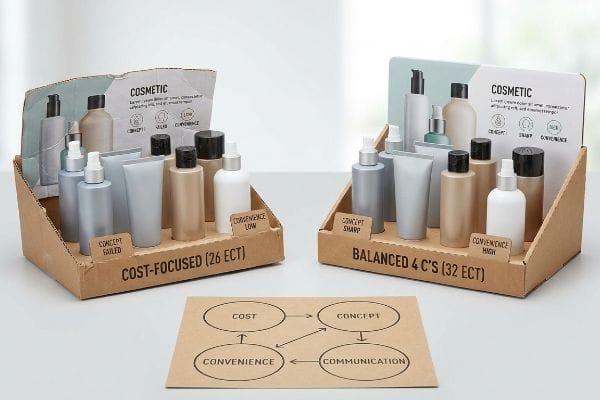
पैकेजिंग डिज़ाइन के चार 'सी' लागत (कॉस्ट), अवधारणा (कॉन्सेप्ट), सुविधा (कन्वीनियंस) और संचार (कम्युनिकेशन) को दर्शाते हैं। यह रणनीतिक ढांचा बताता है कि खुदरा व्यापारी कच्चे माल के बजट को संरचनात्मक सौंदर्यशास्त्र, आपूर्ति श्रृंखला में तेजी से संयोजन और स्पष्ट उपभोक्ता संदेश के साथ कैसे संतुलित करते हैं, जिससे अंततः महत्वपूर्ण ब्रांड बाजार साख को खोए बिना सफल खुदरा बिक्री सुनिश्चित हो सके।.
सिद्धांत का ज्ञान होना सहायक होता है, लेकिन शोरगुल भरे और तेज गति वाले कारखाने में इन चार स्तंभों को लागू करने के लिए सख्त तकनीकी अनुशासन की आवश्यकता होती है।.
लागत पर अत्यधिक ध्यान केंद्रित करने से अवधारणा और सुविधा दोनों ही नष्ट हो जाती हैं
ब्रांड टीमें अक्सर 4 C's फ्रेमवर्क1 । हालांकि, खरीद विभाग अक्सर प्राथमिक "लागत" मीट्रिक पर ही केंद्रित हो जाते हैं और उसी पर अत्यधिक ध्यान देते हैं, संरचनात्मक बोर्ड ग्रेड2 । वे गलत धारणा रखते हैं कि कम गुणवत्ता वाला बोर्ड भी मूल अवधारणा के भौतिक आकार को बरकरार रखेगा।
मैं अक्सर देखता हूँ कि ग्राहक डिस्प्ले ट्रे के लिए सस्ते 26 ECT (एज क्रश टेस्ट) बोर्ड 3 की मांग करते हैं , जिससे खुदरा बिक्री में यह समस्या उत्पन्न होती है। कोर फ्लूटिंग से महत्वपूर्ण पेपर फाइबर घनत्व को हटा देने से प्रस्तुति प्रभावित होती है। सामान के वजन के कारण भौतिक "अवधारणा" विफल हो जाती है, डाई-कट स्लॉट के गलत संरेखण के कारण असेंबली की "सुविधा" कम हो जाती है, और विकृत ग्राफिक्स के कारण शेल्फ "संचार" प्रभावित होता है। इसे ठीक करने के लिए, मैं एक एकीकृत मूल्यांकन अनिवार्य करता हूँ: सामग्री की लागत को सीधे खुदरा बिक्री प्रदर्शन से जोड़ना। कठोर 32 ECT बोर्ड पर वापस जाने से आकर्षक प्रस्तुति सुनिश्चित होती है और मैनुअल को-पैकिंग का समय लगभग 30% 4 तक कम हो जाता है , जिससे उच्च-गुणवत्ता वाली सामग्री की लागत आसानी से वसूल हो जाती है।
| नौसिखियों की आम गलती | प्रो फिक्स | रिटेल-फ्लोर लाभ |
|---|---|---|
| लागत कम करने के लिए बोर्ड ECT को डाउनग्रेड करना5 | एकीकृत सामग्री और श्रम मूल्यांकन | परिवहन के दौरान ग्राफिक्स को खराब होने से बचाता है |
| संयोजन की सुविधा को अनदेखा करना | सटीक डाई-कट टॉलरेंस लागू करना | को-पैकिंग का समय 30% तक कम हो जाता है6 |
| चारों 'सी' को अलग-अलग इकाइयों के रूप में मानना | अवधारणा और भौतिकी के बीच संतुलन | रिटेलर द्वारा किए जाने वाले चार्जबैक को पूरी तरह से समाप्त करता है7 |
किसी काल्पनिक बजट लक्ष्य को पूरा करने के लिए अपनी संरचनात्मक अखंडता का त्याग करना, खुदरा बाजार में आपके ब्रांड की छवि को अनिवार्य रूप से खराब कर देगा।.
🛠️ हार्वे का डेस्क: क्या आपके खरीद लक्ष्य अनजाने में आपकी संरचनात्मक अखंडता को नष्ट कर रहे हैं? 👉 मुझे आपकी BOM (बोर्ड ऑफ मैनेजमेंट) का ऑडिट करने दें ↗ — सीधे मेरे डेस्क तक पहुंच। मैं वादा करता हूं, कोई स्वचालित बिक्री स्पैम नहीं होगा।
कस्टम बॉक्स कैसे डिजाइन करें?
किसी विशिष्ट प्रकार का कंटेनर बनाने के लिए स्क्रीन पर केवल एक सपाट ग्राफिक बनाने से कहीं अधिक की आवश्यकता होती है।.
किसी कस्टम बॉक्स को सही ढंग से डिज़ाइन करने के लिए, ब्रांड्स को विशिष्ट संरचनात्मक सहनशीलता को विशिष्ट सौंदर्य संबंधी आवश्यकताओं के साथ एकीकृत करना होगा। इस कठोर प्रक्रिया में सटीक बेंड अलाउंस की गणना, गतिशील भार क्षमता का मूल्यांकन और विशिष्ट रिटेल आइल आयामों का मानचित्रण शामिल है, जिससे यह सुनिश्चित होता है कि आपका अंतिम भौतिक कंटेनर वैश्विक परिवहन के दौरान होने वाली कठोर टूट-फूट को पूरी तरह से सहन कर सके।.
उस डिजिटल प्रतिपादन को भौतिक कार्डबोर्ड में अनुवादित करने का मतलब है कच्चे माल के अप्रत्याशित भौतिकी के साथ तालमेल बिठाना।.
रॉ क्राफ्ट पर विंडो पैच तनाव आपदा
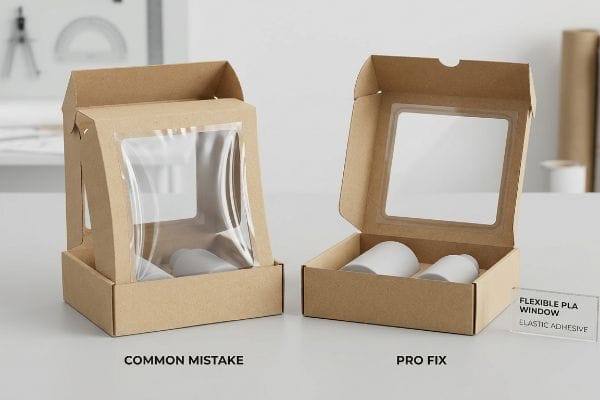
ब्रांड अक्सर उपभोक्ताओं को अंदर रखे उत्पाद को देखने की सुविधा देने के लिए कस्टम क्राफ्ट पेपर विंडो बॉक्स का अनुरोध करते हैं। मानक तरीका यह है कि डाई-कट वॉइड8 , यह मानते हुए कि कठोर प्लास्टिक केवल एक पारदर्शी दीवार के रूप में कार्य करेगा।
यहां तक कि अनुभवी डिज़ाइनर भी बदलते खुदरा वातावरण में सामग्रियों की परस्पर क्रिया को नज़रअंदाज़ कर देते हैं। कठोर पीईटी (पॉलीइथिलीन टेरेफ्थालेट) प्लास्टिक और छिद्रयुक्त क्राफ्ट पेपर अलग-अलग दरों पर फैलते और सिकुड़ते हैं।जब स्टोर में आर्द्रता का स्तर बदलता है, तो कठोर फिल्म सपाट कार्टन को अंदर की ओर मोड़ सकती है, जिससे शेल्फ पर रखी वस्तु की सुंदरता बिगड़ जाती है। इस समस्या को हल करने के लिए, मैं एक लचीले विंडो पैच प्रोटोकॉल का उपयोग करता हूँ जिसमें एक लोचदार, मौसम-प्रतिरोधी चिपकने वाला पदार्थ होता है जो आसानी से खिंच जाता है। इसके अलावा, मैं कठोर पेट्रोलियम फिल्म को उच्च-स्पष्टता वाले पीएलए (पॉलीलैक्टिक एसिड) विंडो से बदल देता हूँ, जो क्राफ्ट बोर्ड के साथ स्वाभाविक रूप से लचीला होता है, जिससे खुदरा डिलीवरी पर एक साफ-सुथरा और सपाट प्रदर्शन सुनिश्चित होता है।
| नौसिखियों की आम गलती | प्रो फिक्स | रिटेल-फ्लोर लाभ |
|---|---|---|
| छिद्रयुक्त क्राफ्ट पर कठोर पीईटी का उपयोग करना | लचीली पीएलए विंडो फ़िल्में11 | प्लास्टिक को फटने से रोकता है |
| खिड़कियों पर मानक कठोर गोंद | जलवायु-प्रतिरोधी लोचदार चिपकने वाला पदार्थ12 | कार्टन को अंदर की ओर मुड़ने से रोकता है |
| विस्तार दरों की अनदेखी करना | सामग्री के लचीलेपन गुणों का मिलान13 | शेल्फ पर हमेशा बेदाग दिखने को सुनिश्चित करता है |
प्रत्येक कस्टम विंडो कटआउट में निर्मित लचीले टेंशन बफर यह सुनिश्चित करते हैं कि आपकी पैकेजिंग डिस्प्ले पर एक प्रीमियम, पूरी तरह से सपाट सौंदर्य बनाए रखे।.
🛠️ हार्वे का डेस्क: क्या आप इस बात को लेकर चिंतित हैं कि आपकी कठोर प्लास्टिक की खिड़की परिवहन के दौरान आपके क्राफ्ट बोर्ड को नुकसान पहुंचाएगी या नहीं? 👉 सामग्री सहनशीलता जांच का अनुरोध करें ↗ — सुरक्षित रूप से डाउनलोड करें। बाद में कोई प्रश्न होने पर मेरा इनबॉक्स खुला है।
डिजाइन के 10 तत्व क्या हैं?
भौतिक पैकेजिंग पर सैद्धांतिक दृश्य सिद्धांतों को लागू करने से जुड़ाव के नियम पूरी तरह से बदल जाते हैं।.
डिजाइन के 10 तत्वों में रंग, टाइपोग्राफी, आकार, रूप, स्थान, बनावट, रेखा, मूल्य, पदानुक्रम और पैमाना शामिल हैं। खुदरा पैकेजिंग पर व्यवस्थित रूप से लागू किए जाने पर, ये मूलभूत दृश्य कारक उपभोक्ता के मनोवैज्ञानिक जुड़ाव को निर्धारित करते हैं, जिससे यह सुनिश्चित होता है कि आपका उत्पाद भीड़भाड़ वाले व्यावसायिक शॉपिंग गलियारों में भी स्पष्ट रूप से अलग दिखे।.
उन उच्चस्तरीय दृश्य तत्वों को बिना सील किए हुए कागज के रेशों पर उतारने से भारी यांत्रिक जोखिम उत्पन्न होते हैं।.
हाफटोन मड ट्रैप: छिद्रयुक्त क्राफ्ट पर रंग सिद्धांत का अनुप्रयोग
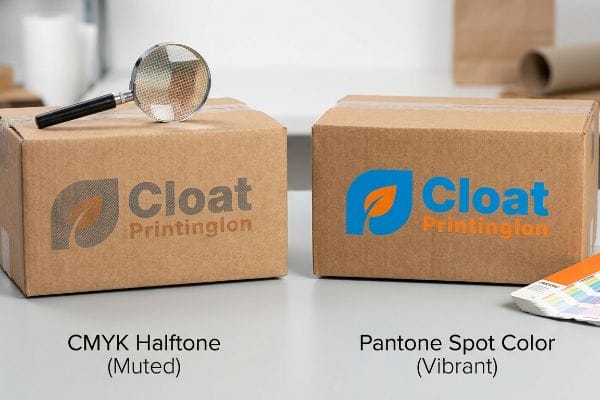
मार्केटिंग टीमें अक्सर ठोस कॉर्पोरेट लोगो को मानक CMYK प्रारूपों में परिवर्तित करती हैं, यह मानते हुए कि प्रोसेस प्रिंटिंग उनके डिजिटल स्क्रीन से सहजता से मेल खाएगी14।वे "रंग" और "मूल्य" के डिज़ाइन तत्व पर भरोसा करते हैं जो सैद्धांतिक रूप से पूरी तरह से काम करते हैं, और अंतिम बॉक्स पर एक जीवंत, उच्च-कंट्रास्ट परिणाम की उम्मीद करते हैं।
छिद्रयुक्त नालीदार पेपर लाइनर पर सीधे मानक डिजिटल रंग प्रोफाइल प्रिंट करने से अक्सर खुदरा बिक्री में निराशाजनक परिणाम मिलते हैं। मानक चार-रंग प्रिंटिंग में छोटे-छोटे ओवरलैपिंग हाफटोन डॉट्स का उपयोग होता है जो पेपर फाइबर में असमान रूप से अवशोषित होते हैं¹⁵ , जिसके परिणामस्वरूप एक फीकी, धुंधली फिनिश मिलती है जो ग्राहकों का ध्यान आकर्षित करने में विफल रहती है। तेज रोशनी में ऑप्टिकल ब्लेंडिंग स्पष्ट रूप से उभरकर नहीं आती। इससे निपटने के लिए, मैं एक सख्त स्पॉट कलर फ्लड प्रोटोकॉल का पालन करता हूं। ऑप्टिकल डॉट ब्लेंडिंग को सटीक रूप से मिश्रित पैंटोन स्पॉट कलर इंक से बदलकर, मैं पिगमेंट का एक जीवंत, चिकना फ्लड सुनिश्चित करता हूं जो शॉपिंग आइल में 20 फीट¹⁶ (6.09 मीटर) की दूरी से उच्च-कंट्रास्ट ब्रांड दृश्यता को अधिकतम करता है।
| नौसिखियों की आम गलती | प्रो फिक्स | रिटेल-फ्लोर लाभ |
|---|---|---|
| कच्चे क्राफ्ट पेपर पर CMYK प्रिंटिंग17 | पैंटोन स्पॉट कलर फ्लडिंग | धुंधले और फीके लोगो को हटाता है |
| ऑप्टिकल हाफटोन डॉट्स पर निर्भर | एकल पूर्व-मिश्रित वर्णक अनुप्रयोग18 | उच्च दृश्यता वाला कंट्रास्ट उत्पन्न करता है |
| सब्सट्रेट अवशोषण को अनदेखा करना | अनसील्ड फाइबर के लिए स्याही का निर्माण19 | ब्रांड के रंगों की सटीकता को सख्ती से बनाए रखता है |
जब आपके ब्रांड को राहगीरों को आकर्षित करने के लिए उच्च दृश्यता वाले कंट्रास्ट की आवश्यकता होती है, तो मानक वाणिज्यिक प्रिंट प्रोफाइल को कभी भी बिना सील किए हुए क्राफ्ट बोर्ड को नहीं छूना चाहिए।.
🛠️ हार्वे का डेस्क: क्या आपको चिंता है कि भूरे रंग के नालीदार कार्डबोर्ड पर आपके डिजिटल रंग धुंधले पड़ जाएँगे? 👉 अपना कस्टम इंक प्रोफाइल ऑडिट करवाएँ ↗ — कोई फॉर्म नहीं, जिससे बार-बार सेल्स कॉल आएं। बस शुद्ध मूल्य।
2026 के लिए पैकेजिंग डिजाइन के प्रमुख रुझान क्या हैं?
भविष्य को देखते हुए, यह उद्योग भौतिक सामग्रियों के पर्यावरण के साथ परस्पर क्रिया करने के तरीके में एक बड़ा बदलाव ला रहा है।.
वर्तमान में पैकेजिंग डिज़ाइन के प्रमुख रुझान एकल सामग्री की स्थिरता, निर्बाध मॉड्यूलर असेंबली, अति-हल्के संरचनात्मक इंजीनियरिंग और घर्षणरहित पुनर्चक्रण क्षमता पर ज़ोर देते हैं। इन पर्यावरण-अनुकूल संरचनात्मक नवाचारों की ओर बढ़ने से दीर्घकालिक लॉजिस्टिक्स लागत में भारी कमी आती है, साथ ही विभिन्न अंतरराष्ट्रीय बाजारों में बढ़ते वैश्विक खुदरा विक्रेताओं के पर्यावरणीय अनुपालन संबंधी अनिवार्यताओं को भी सहजता से पूरा किया जा सकता है।.
लेकिन जब मशीनें चलने लगती हैं तो केवल सिद्धांत जानना ही पर्याप्त नहीं होता; अप्रमाणित पर्यावरण-अनुकूल रुझानों को बड़े पैमाने पर उत्पादन में लागू करने से अक्सर भारी नुकसान होता है।.
पीएलए बायो-प्लास्टिक का बढ़ता चलन लैंडफिल में कचरे को क्यों अस्वीकार कर रहा है?
ब्रांड अक्सर अपने नए अभियानों के लिए पीएलए बायोप्लास्टिक लेमिनेशन को अनिवार्य कर देते हैं, यह मानते हुए कि यह " मक्का आधारित" फिल्म उनके नालीदार खुदरा डिस्प्ले के लिए पूर्ण पर्यावरण अनुपालन सुनिश्चित करती है । वे इसे कस्टम क्राफ्ट बॉक्स पर बड़े पैमाने पर लगाते हैं ताकि एक प्रीमियम लुक प्राप्त हो सके और साथ ही अपने खुदरा खरीदारों के लिए स्थिरता के मानदंड को भी पूरा किया जा सके।
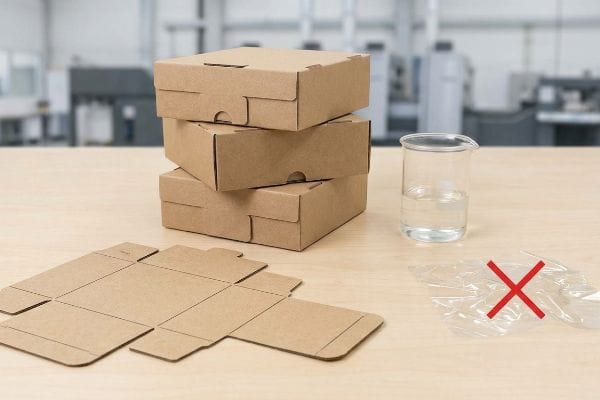
मेरे कारखाने में, सामग्री सत्यापन के दौरान यह प्रवृत्ति अक्सर बुरी तरह विफल हो जाती है। पीएलए एक ठोस भौतिक परत बना लेता है जो पानी को दूर भगाती है। एक मानक ओसीसी रिपल्पिंग परीक्षण के दौरान, मैं देखता हूँ कि चिपचिपी, प्लास्टिक जैसी परत घुलने से साफ इनकार कर देती है, जिससे पल्पिंग टैंक जाम हो जाते हैं और एक्सट्रैक्शन ब्लेड उलझ जाते हैं। जब मानक नगरपालिका पुनर्चक्रण केंद्र छँटाई के दौरान इस 0.05 इंच (1.27 मिमी) मोटी बायो-प्लास्टिक परत कोरोकते , तो पूरी नालीदार संरचना को तुरंत अस्वीकार कर दिया जाता है और सीधे लैंडफिल में भेज दिया जाता है। इस समस्या को हल करने के लिए, मैं ठोस पीएलए परत को पूरी तरह से हटा देता हूँ और एक तरल जलीय कोटिंग प्रोटोकॉल लागू करता हूँ। क्योंकि पानी आधारित जलीय फिनिश एक तरल पॉलिमर मैट्रिक्स22 जो बिना किसी भारी प्लास्टिक अवशेष छोड़े आसानी से घुल जाती है, इसलिए पैकेजिंग 100% कर्बसाइड पुनर्चक्रण योग्य बनी रहती है, जिससे खुदरा विक्रेताओं पर लगने वाले गंभीर ईएसजी जुर्माने से बचा जा सकता है और मानक पेपर मिल टैंकों के लिए पूरी तरह से घर्षण रहित प्रसंस्करण सुनिश्चित होता है।
| नौसिखियों की आम गलती | प्रो फिक्स | रिटेल-फ्लोर लाभ |
|---|---|---|
| क्राफ्ट पेपर को पीएलए फिल्म से लेमिनेट करना23 | तरल जलीय कोटिंग अनुप्रयोग | इससे पूरे बैच को लैंडफिल में जाने से रोका जा सकता है। |
| लुगदी बनाने की प्रक्रिया की यांत्रिकी को अनदेखा करना | जल में घुलनशील बहुलक मैट्रिक्स का उपयोग करना 24 | सड़क किनारे निर्बाध पुनर्चक्रण की गारंटी देता है |
| पर्यावरण अनुपालन का दिखावा करना | वास्तविक एकल-सामग्री संरचनाओं का निर्माण25 | बड़े खुदरा विक्रेताओं के ESG चार्जबैक से बचाता है |
बोर्डरूम में देखने में आकर्षक लगने वाले ट्रेंडी बायो-प्लास्टिक्स असल दुनिया में कागज रीसाइक्लिंग प्रक्रिया को सक्रिय रूप से नष्ट कर देंगे और गंभीर अनुपालन संबंधी अस्वीकृतियों को जन्म देंगे।.
🛠️ हार्वे का डेस्क: क्या आपको पता है कि आपकी मौजूदा "पर्यावरण-अनुकूल" लेमिनेशन प्रक्रिया वास्तव में कचरे को लैंडफिल में जाने से रोक रही है? 👉 मुझे अपनी डाइलाइन फ़ाइल भेजें ↗ — बड़े पैमाने पर उत्पादन पर बजट बर्बाद करने से पहले मैं गणितीय गणना की गहन जांच कर लूंगा।
निष्कर्ष
आप ट्रेंडी डिज़ाइन एलिमेंट्स और सस्ते मटीरियल्स के पीछे भाग सकते हैं, लेकिन जब ट्रांजिट के दौरान आपकी कस्टम बॉक्स से कठोर PET विंडो अचानक टूट जाती है, जिससे देखने में भारी गड़बड़ी होती है, तो इससे पूरा रिसीविंग डॉक धीमा हो जाता है और रिटेलर्स तुरंत रिजेक्शन कर देते हैं। यह वही स्पेसिफिकेशन शीट है जिसका इस्तेमाल मेरे टॉप 10 रिटेल क्लाइंट्स प्रिंट रिजेक्शन को रोकने के लिए करते हैं। सबस्ट्रेट फिजिक्स के बारे में अंदाज़ा लगाना बंद करें और मुझे व्यक्तिगत रूप से आपकी स्ट्रक्चरल फाइलों को अपने फ्री डाइलाइन ऑडिट ↗ ताकि बड़े पैमाने पर उत्पादन शुरू होने से पहले ही मटीरियल से जुड़ी गंभीर समस्याओं का पता चल सके।
"पैकेजिंग के 4 C कैसे व्यापार वृद्धि को बढ़ावा देते हैं", https://www.linkedin.com/posts/gauravchheda-thebaxsaaco_what-are-the-4-cs-of-packaging-the-baxsaa-activity-7307752054314229762-sr8h। खुदरा पैकेजिंग डिजाइन और तैनाती के लिए एक मान्यता प्राप्त रणनीतिक ढाँचे के रूप में 4 C की पुष्टि। साक्ष्य की भूमिका: वैचारिक सत्यापन; स्रोत प्रकार: उद्योग नियमावली या डिजाइन पाठ्यपुस्तक। समर्थन: 4 C पद्धति की वैधता। कार्यक्षेत्र संबंधी टिप्पणी: खुदरा पैकेजिंग और मर्चेंडाइजिंग से संबंधित। ↩
"परिवहन के दौरान बेहतर स्थायित्व के लिए अभिनव डिजाइन वाली नालीदार बोर्ड पैकेजिंग ...", https://bioresources.cnr.ncsu.edu/resources/corrugated-board-packaging-with-innovative-design-for-enhanced-durability-during-transport/। तकनीकी प्रमाण बताते हैं कि सामग्री की मोटाई कम करने या बोर्ड ग्रेड बदलने से पैकेजिंग की भौतिक स्थिरता और आकार बनाए रखने पर क्या प्रभाव पड़ता है। प्रमाण की भूमिका: तकनीकी सत्यापन; स्रोत प्रकार: सामग्री विज्ञान या पैकेजिंग इंजीनियरिंग अध्ययन। समर्थन: लागत-आधारित सामग्री ग्रेड में कमी और संरचनात्मक विफलता के बीच संबंध। कार्यक्षेत्र संबंधी टिप्पणी: नालीदार फाइबरबोर्ड जैसी सामग्री के प्रकार के आधार पर भिन्न होता है। ↩
"फ्लूट ग्रेड, ECT रेटिंग और दीवार की मोटाई की व्याख्या 2025", https://anchorbox.com/corrugated-box-strength/। नालीदार फाइबरबोर्ड के लिए एज क्रश टेस्ट (ECT) रेटिंग और परिणामस्वरूप भार वहन क्षमता में अंतर को परिभाषित करने वाले तकनीकी मानक। साक्ष्य भूमिका: तकनीकी परिभाषा; स्रोत प्रकार: पैकेजिंग इंजीनियरिंग मानक। आधार: उल्लिखित बोर्ड के भौतिक गुण। कार्यक्षेत्र नोट: नालीदार सामग्रियों के लिए मानक उद्योग मेट्रिक्स। ↩
"विनिर्माण में नालीदार कार्डबोर्ड ग्रेड को समझना", https://www.linkedin.com/posts/the-cardboard-box-company-ltd_board24-corrugatedboard-sheetboard-activity-7449418622478909440-_Q9v। उद्योग डेटा या केस स्टडी जो यह दर्शाती हैं कि सामग्री की कठोरता बढ़ने से खुदरा पैकेजिंग में असेंबली त्रुटियां और मैन्युअल श्रम समय कैसे कम होता है। साक्ष्य की भूमिका: मात्रात्मक सत्यापन; स्रोत प्रकार: लॉजिस्टिक्स श्वेतपत्र या परिचालन अध्ययन। समर्थन: सामग्री उन्नयन से दक्षता लाभ के दावे का। स्कोप नोट: उत्पाद की जटिलता के आधार पर प्रतिशत भिन्न हो सकते हैं। ↩
"पर्वरों के भार वहन क्षमता पर प्रभाव की जांच...", https://pmc.ncbi.nlm.nih.gov/articles/PMC11396172/। नालीदार सामग्रियों की भार वहन क्षमता को निर्धारित करने और कुचलने से बचाने के लिए एज क्रश टेस्ट (ECT) रेटिंग किस प्रकार काम करती हैं, इसका संक्षिप्त विवरण। साक्ष्य की भूमिका: तकनीकी विनिर्देश; स्रोत प्रकार: सामग्री विज्ञान पुस्तिका। समर्थन: सामग्री ग्रेड और परिवहन क्षति के बीच संबंध। कार्यक्षेत्र संबंधी टिप्पणी: मुख्य रूप से नालीदार कार्डबोर्ड पर लागू होता है। ↩
"कस्टम डाई कट टेप से असेंबली का समय कम करें | MPI Matco", https://mpi-matco.com/converting/how-custom-die-cut-tape-reduces-assembly-time/। मानकीकृत डाई-कट टॉलरेंस से मैनुअल असेंबली त्रुटियों को कैसे कम किया जा सकता है और को-पैकिंग वर्कफ़्लो को कैसे गति दी जा सकती है, इसका संक्षिप्त विवरण। साक्ष्य की भूमिका: मात्रात्मक सत्यापन; स्रोत प्रकार: उद्योग बेंचमार्क रिपोर्ट। समर्थन: सटीक इंजीनियरिंग से श्रम दक्षता में वृद्धि। स्कोप नोट: पैकेजिंग की जटिलता के आधार पर प्रतिशत भिन्न हो सकता है। ↩
"कॉन्ट्रैक्ट पैकेजिंग की कौन सी गलतियाँ खुदरा विक्रेताओं द्वारा शुल्क वापसी का कारण बनती हैं?", https://www.industrialpackaging.com/blog/copacker-mistakes-retailer-chargebacks। खुदरा लॉजिस्टिक्स के नियमों का पालन करने से शिपिंग क्षति और गैर-अनुपालन दंड से कैसे बचा जा सकता है, इसका संक्षिप्त विवरण। साक्ष्य की भूमिका: कारण संबंध; स्रोत प्रकार: खुदरा लॉजिस्टिक्स मैनुअल। समर्थन: डिज़ाइन अनुकूलन के माध्यम से वित्तीय दंड में कमी। स्कोप नोट: 'पूरी तरह से' डिज़ाइन द्वारा रोके जा सकने वाले शुल्क वापसी को संदर्भित करता है। ↩
"कार्डबोर्ड बॉक्स: प्रकार, सामग्री और निर्माण प्रक्रिया", https://www.iqsdirectory.com/articles/corrugated-boxes/cardboard-boxes.html। प्रामाणिक पैकेजिंग डिज़ाइन मैनुअल, डाई-कट छिद्रों में पॉलिमर फिल्मों के आसंजन द्वारा विंडो बॉक्स बनाने की मानक उद्योग विधि को सत्यापित करते हैं। साक्ष्य भूमिका: प्रक्रियात्मक सत्यापन; स्रोत प्रकार: तकनीकी मैनुअल। समर्थन: विंडो बॉक्स के लिए मानक निर्माण विधि। कार्यक्षेत्र संबंधी टिप्पणी: खुदरा कार्डबोर्ड पैकेजिंग तक सीमित। ↩
"पॉलीइथिलीन टेरेफ्थालेट (पीईटी) की बोतलों का आपस में पुनर्चक्रण – पीएमसी", https://pmc.ncbi.nlm.nih.gov/articles/PMC9231234/। आर्द्रता परिवर्तन के तहत पीईटी प्लास्टिक और क्राफ्ट पेपर के विस्तार गुणांकों की तकनीकी तुलना। साक्ष्य की भूमिका: तकनीकी सत्यापन; स्रोत प्रकार: पदार्थ विज्ञान पुस्तिका। समर्थन: यह दावा कि पदार्थ बेमेल होने से तनाव उत्पन्न होता है। कार्यक्षेत्र संबंधी टिप्पणी: मानक खुदरा आर्द्रता उतार-चढ़ाव पर लागू होता है। ↩
"क्राफ्ट पेपर/पीएलए फ़ॉइल और … में क्या अंतर है?", https://www.vp-packaging.com/foil-structure/compostable-pla-foil-laminate/kraft-paper-bopla-laminate/whats-the-difference-of-kraft-paper-pla-and-kraft-paper-plapbat/। सेल्युलोज बोर्ड से बॉन्डिंग के समय पीएलए और पीईटी की लोच और मापांक का तुलनात्मक विश्लेषण। साक्ष्य भूमिका: तकनीकी सत्यापन; स्रोत प्रकार: पॉलिमर इंजीनियरिंग डेटा शीट। समर्थन: यह दावा कि पीएलए तनाव-प्रेरित विरूपण को कम करता है। कार्यक्षेत्र नोट: उच्च-स्पष्टता वाली पीएलए फिल्मों के लिए विशिष्ट। ↩
"पैकेजिंग के लिए PET बनाम PLA विंडो फिल्म: मजबूती और टिकाऊपन", https://packzino.com/pet-vs-pla-window-films/। यह लेख इस बात का तकनीकी सत्यापन प्रस्तुत करता है कि PLA के भौतिक गुण कठोर PET की तुलना में छिद्रयुक्त सतहों पर बेहतर लचीलापन और आसंजन प्रदान करते हैं, जिससे परतें अलग होने से बचती हैं। साक्ष्य की भूमिका: तकनीकी सत्यापन; स्रोत प्रकार: सामग्री विज्ञान पत्रिका या पैकेजिंग तकनीकी मार्गदर्शिका। सहायक: क्राफ्ट विंडो के लिए PLA का उपयोग। विषयवस्तु संबंधी टिप्पणी: सतह की छिद्रयुक्तता पर केंद्रित। ↩
"कार्डबोर्ड के लिए 5 सर्वश्रेष्ठ गोंद 2026! शीर्ष मजबूत चिपकने वाले पदार्थ", https://www.youtube.com/watch?v=vdyBA5bfoKY। यह सत्यापित किया गया है कि लोचदार चिपकने वाले पदार्थ विभिन्न जलवायु परिस्थितियों में तापीय और आर्द्रता-संचारी सामग्री की गति को समायोजित करते हैं, जिससे कार्टन की संरचनात्मक विकृति को रोका जा सके। साक्ष्य की भूमिका: तकनीकी सत्यापन; स्रोत प्रकार: चिपकने वाले पदार्थ निर्माता का विनिर्देश या पैकेजिंग इंजीनियरिंग मैनुअल। सहायक: कार्टन विकृति की रोकथाम। कार्यक्षेत्र संबंधी टिप्पणी: विंडो पैच एप्लिकेशन के लिए विशिष्ट। ↩
"पॉलिमरों का रैखिक तापीय प्रसार गुणांक … – पीएमसी", https://pmc.ncbi.nlm.nih.gov/articles/PMC12693757/। उस इंजीनियरिंग सिद्धांत की व्याख्या जिसमें विंडो फिल्म और कार्डबोर्ड के बीच प्रसार और लचीलेपन के गुणांक का मिलान तनाव-प्रेरित विरूपण को रोकता है। साक्ष्य भूमिका: तकनीकी सिद्धांत; स्रोत प्रकार: इंजीनियरिंग पाठ्यपुस्तक या औद्योगिक डिजाइन मानक। सहायक: शेल्फ की दिखावट स्थिरता। कार्यक्षेत्र टिप्पणी: बहु-सामग्री बंधन से संबंधित। ↩
"RGB बनाम CMYK: परफेक्ट प्रिंट रंगों के लिए 2026 गाइड", https://www.jukeboxprint.com/blog/rgb-vs-cmyk-for-print। स्क्रीन में उपयोग किए जाने वाले एडिटिव RGB कलर मॉडल और प्रोसेस प्रिंटिंग में उपयोग किए जाने वाले सबट्रैक्टिव CMYK मॉडल के बीच तकनीकी अंतर की व्याख्या। साक्ष्य भूमिका: तकनीकी सत्यापन; स्रोत प्रकार: रंग विज्ञान मैनुअल। समर्थन: स्क्रीन के रंगों को प्रिंट में पूरी तरह से क्यों नहीं दोहराया जा सकता। स्कोप नोट: मानक वाणिज्यिक प्रोसेस प्रिंटिंग पर लागू होता है। ↩
"मुद्रण के लिए गणितीय मॉडलिंग और क्षतिपूर्ति रणनीतियाँ...", https://pmc.ncbi.nlm.nih.gov/articles/PMC12574880/। बिना लेपित छिद्रयुक्त सतहों में स्याही के रिसाव और अवशोषण के कारण हाफटोन डॉट गेन और संतृप्ति हानि की तकनीकी व्याख्या। साक्ष्य भूमिका: तकनीकी तंत्र; स्रोत प्रकार: मुद्रण उद्योग तकनीकी मैनुअल। समर्थन: क्राफ्ट पेपर पर CMYK प्रिंटिंग में मंद फिनिश का कारण। कार्यक्षेत्र नोट: विशेष रूप से बिना लेपित छिद्रयुक्त कागजों पर लागू होता है। ↩
"उत्पाद दृश्य रणनीति और इकाई के प्रभाव पर नेत्र-ट्रैकिंग साक्ष्य...", https://pmc.ncbi.nlm.nih.gov/articles/PMC13010595/। वाणिज्यिक खुदरा वातावरण में उपभोक्ताओं द्वारा उच्च-विपरीत रंगों को पहचानने योग्य दूरी पर अनुभवजन्य डेटा। साक्ष्य की भूमिका: अनुभवजन्य मीट्रिक; स्रोत प्रकार: दृश्य मर्चेंडाइजिंग या खुदरा मनोविज्ञान अध्ययन। समर्थन: लंबी दूरी की दृश्यता के लिए स्पॉट कलर फ्लडिंग की प्रभावशीलता। स्कोप नोट: स्टोर की रोशनी और गलियारे की चौड़ाई के आधार पर दूरी भिन्न हो सकती है। ↩
"कस्टम ब्रांडेड पैकेजिंग के लिए पैनटोन बनाम CMYK – EcoEnclose", https://www.ecoenclose.com/blog/pantone-vs-cmyk-for-custom-branded-packaging?srsltid=AfmBOoonu7F8Zjcbtu4vDtO96aZuIR1Asqf5M2y-u66ejpCbTFThHU7K। इसमें बताया गया है कि CMYK स्याही की पारदर्शिता भूरे रंग के सब्सट्रेट के साथ किस प्रकार परस्पर क्रिया करती है, जिससे अपारदर्शी स्पॉट रंगों की तुलना में 'धुंधला' प्रभाव उत्पन्न होता है। साक्ष्य की भूमिका: तकनीकी विनिर्देश; स्रोत प्रकार: मुद्रण मैनुअल। समर्थन: यह दावा कि क्राफ्ट पेपर पर CMYK के उपयोग से लोगो धुंधले हो जाते हैं। स्कोप नोट: छिद्रयुक्त भूरे रंग के पेपर स्टॉक के लिए विशिष्ट। ↩
"हाफटोन का नया प्रभाव वह तरकीब है जिसका इस्तेमाल प्रिंटिंग हमेशा से नकली प्रभाव पैदा करने के लिए करती रही है...", https://www.instagram.com/reel/DZpeysiNmGy/। तकनीकी विश्लेषण बताता है कि कैसे ठोस पिगमेंट की परत हाफटोन स्क्रीन के अंतरालों से भूरे रंग के सब्सट्रेट को दिखने से रोकती है। साक्ष्य की भूमिका: तकनीकी तुलना; स्रोत प्रकार: ग्राफिक आर्ट्स की पाठ्यपुस्तक। समर्थन करता है: इस दावे का कि पहले से मिश्रित पिगमेंट उच्च दृश्यता कंट्रास्ट उत्पन्न करते हैं। विषयवस्तु: भूरे सब्सट्रेट पर ऑप्टिकल कंट्रास्ट पर केंद्रित है। ↩
"क्राफ्ट पेपर पर प्रिंटिंग: रंगों को साफ और चमकदार कैसे रखें", https://zhibangpackaging.com/printing-on-kraft-paper-how-to-keep-colors-clean-and-sharp/। सील बंद न किए गए पेपर फाइबर के अवशोषण (विकिंग) प्रभाव को कम करने के लिए स्याही की चिपचिपाहट और पिगमेंट लोड को समायोजित करने संबंधी दस्तावेज। साक्ष्य भूमिका: तकनीकी प्रक्रिया; स्रोत प्रकार: औद्योगिक स्याही गाइड। समर्थन: यह दावा कि विशेष फॉर्मूलेशन ब्रांड के रंग की सटीकता बनाए रखता है। स्कोप नोट: सब्सट्रेट की सरंध्रता से संबंधित। ↩
"कॉर्नस्टार्च आधारित बायोप्लास्टिक्स का विकास और लक्षण वर्णन...", https://pmc.ncbi.nlm.nih.gov/articles/PMC8539400/। यह सत्यापित किया गया है कि पॉलीलैक्टिक एसिड (PLA) एक जैव-अपघटनीय थर्मोप्लास्टिक है जो आमतौर पर पौधों के स्टार्च, मुख्य रूप से मक्का के किण्वन से प्राप्त होता है। साक्ष्य की भूमिका: तकनीकी सत्यापन; स्रोत प्रकार: पदार्थ विज्ञान डेटाबेस। समर्थन: पदार्थ की संरचनात्मक उत्पत्ति। कार्यक्षेत्र संबंधी टिप्पणी: मानक औद्योगिक PLA उत्पादन पर लागू होता है। ↩
"PLA पर बहस के भीतर, पैकेजिंग उद्योग का...", https://www.packagingdive.com/news/polylactic-acid-pla-bioplastic-compostable-packaging/728875/। नगरपालिका पुनर्चक्रण धाराओं में नालीदार संरचनाओं की अस्वीकृति का कारण बनने वाली PLA फिल्मों की विशिष्ट मोटाई का सत्यापन। साक्ष्य भूमिका: तकनीकी विनिर्देश; स्रोत प्रकार: अपशिष्ट प्रबंधन दिशानिर्देश। समर्थन: इस दावे का कि PLA की विशिष्ट मोटाई लैंडफिल में जाने को प्रेरित करती है। स्कोप नोट: मोटाई सहनशीलता क्षेत्रीय सुविधा के अनुसार भिन्न हो सकती है। ↩
"पुनर्चक्रण योग्य और जैव-अपघटनीय पेपर कोटिंग के साथ... – पीएमसी", https://pmc.ncbi.nlm.nih.gov/articles/PMC11948148/। यह तकनीकी व्याख्या है कि कैसे जलीय कोटिंग्स प्लास्टिक अवशेष छोड़े बिना पुनर्गूदा बनाने की प्रक्रिया के दौरान घुल जाती हैं। साक्ष्य की भूमिका: सामग्री विज्ञान तुलना; स्रोत प्रकार: पैकेजिंग इंजीनियरिंग मैनुअल। समर्थन: यह दावा कि जलीय फिनिश कर्बसाइड पुनर्चक्रण सुनिश्चित करते हैं। कार्यक्षेत्र संबंधी टिप्पणी: मानक पेपर मिल वैट प्रसंस्करण पर केंद्रित। ↩
"पीएलए लेमिनेशन फिल्म: पर्यावरण के अनुकूल विकल्प...", https://naturepoly.com/pla-lamination-film-sustainable-packaging/। यह सत्यापित किया गया है कि क्राफ्ट पेपर पर पीएलए कोटिंग अक्सर पेपर रीसाइक्लिंग धाराओं को दूषित करती है, जिसके परिणामस्वरूप इसे लैंडफिल में डालना पड़ता है। साक्ष्य की भूमिका: तकनीकी सत्यापन; स्रोत प्रकार: सामग्री विज्ञान अध्ययन। समर्थन करता है: कुछ बायो-प्लास्टिक लैमिनेट को रीसाइक्लिंग सुविधाओं द्वारा क्यों अस्वीकार किया जाता है। कार्यक्षेत्र संबंधी टिप्पणी: मानक कर्बसाइड रीसाइक्लिंग प्रणालियों पर लागू होता है। ↩
"मल्टीलेयर से पॉलिमर के विलायक-आधारित पुनर्चक्रण में प्रगति... – पीएमसी", https://pmc.ncbi.nlm.nih.gov/articles/PMC11207984/। तकनीकी पुष्टि कि जल-घुलनशील पॉलिमर कागज पुनर्चक्रण प्रक्रिया के दौरान पल्पिंग वैट में निर्बाध विघटन को सक्षम बनाते हैं। साक्ष्य भूमिका: तकनीकी विनिर्देश; स्रोत प्रकार: पॉलिमर रसायन विज्ञान पत्रिका। समर्थन: पीएलए के पुनर्चक्रण विकल्प के रूप में घुलनशील मैट्रिक्स का उपयोग। कार्यक्षेत्र नोट: जलीय-आधारित पुनर्चक्रण धाराओं तक सीमित। ↩
"पैकेजिंग सस्टेनेबिलिटी जवाबदेही के युग में प्रवेश कर रही है", https://www.packagingdigest.com/sustainability/packaging-sustainability-enters-the-age-of-accountability। खुदरा उद्योग द्वारा आपूर्तिकर्ताओं पर लगाए गए वित्तीय दंड या ESG चार्जबैक का दस्तावेजीकरण, जो गैर-पुनर्चक्रणीय बहु-सामग्री पैकेजिंग का उपयोग करते हैं। साक्ष्य की भूमिका: उद्योग मानक; स्रोत प्रकार: कॉर्पोरेट सस्टेनेबिलिटी दिशानिर्देश। समर्थन: एकल-सामग्री अपनाने के लिए व्यावसायिक प्रोत्साहन। कार्यक्षेत्र संबंधी टिप्पणी: क्षेत्रीय खुदरा विनियमों के अनुसार भिन्न-भिन्न। ↩